1. Create Activity-Based Play Zones
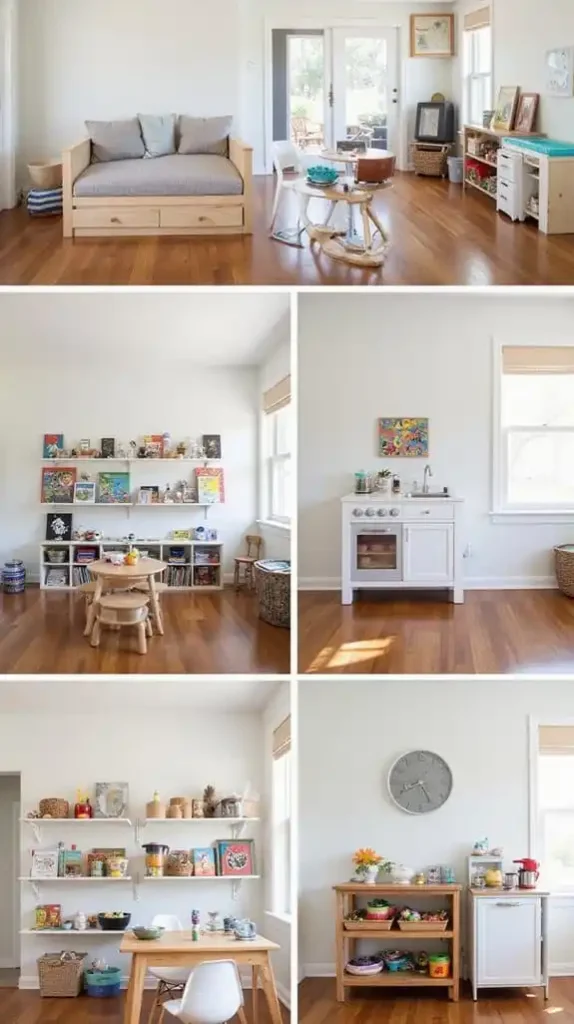
Instead of separating toys by category (like cars, dolls, or puzzles), organize them by how your child uses them. For example, create a construction zone with blocks and magnetic tiles, an art corner with crayons and paper, and a pretend-play area with costumes and dolls.
This setup mirrors how kids naturally play, allowing them to stay engaged longer without constantly switching locations or making a mess searching for related items. It also makes cleanup easier since everything used in one activity belongs in one space.
2. Rotate Toys to Keep Things Fresh
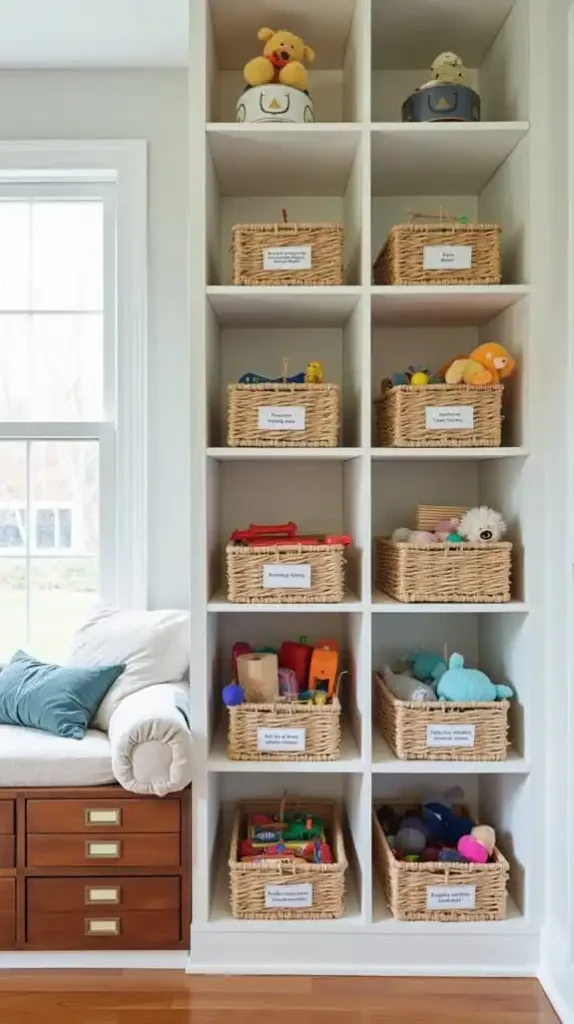
Children don’t need access to every toy at once. In fact, having too many options can lead to overwhelm and shorter attention spans. By rotating toys every few weeks, you create a sense of novelty without buying anything new.
Store a portion of toys in labeled bins and bring them out on a schedule. When toys reappear, they feel exciting again—almost like new. This method also reduces visible clutter and encourages more focused, creative play.
3. Keep Everyday Favorites Within Easy Reach
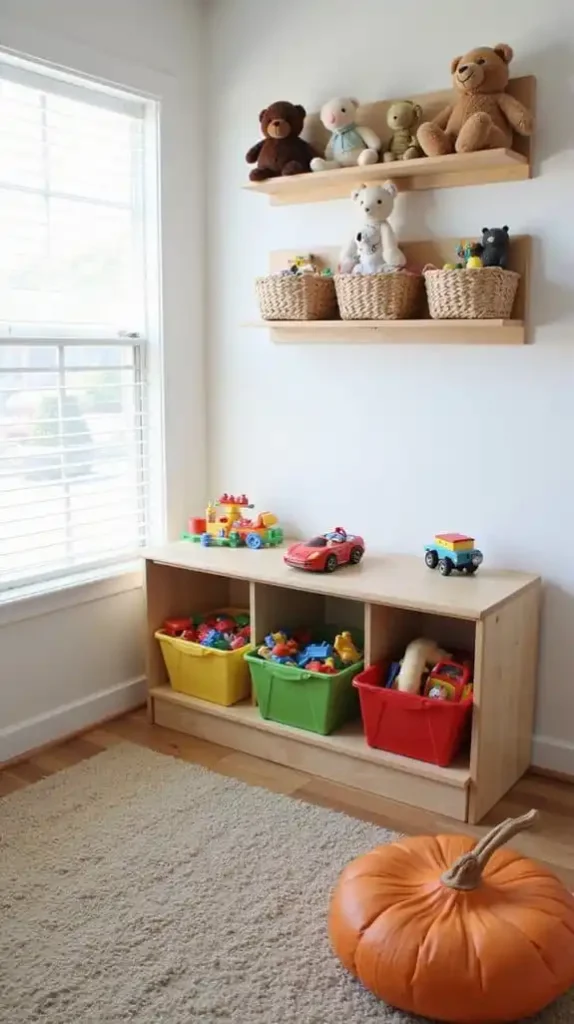
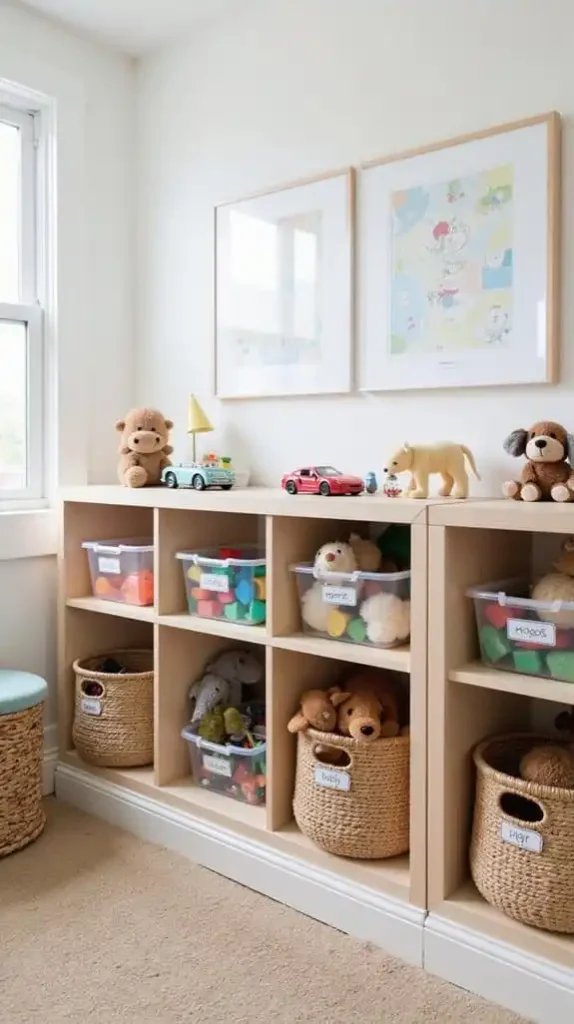
Think about which toys your child uses daily—those should be the easiest to access. Place them on open shelves, low bins, or baskets without lids.
When children can grab and return items effortlessly, they’re more likely to play independently and clean up afterward. Complicated storage (like tight lids or high shelves) often leads to toys being left out instead of put away.
4. Use Clear Storage Bins for Visibility
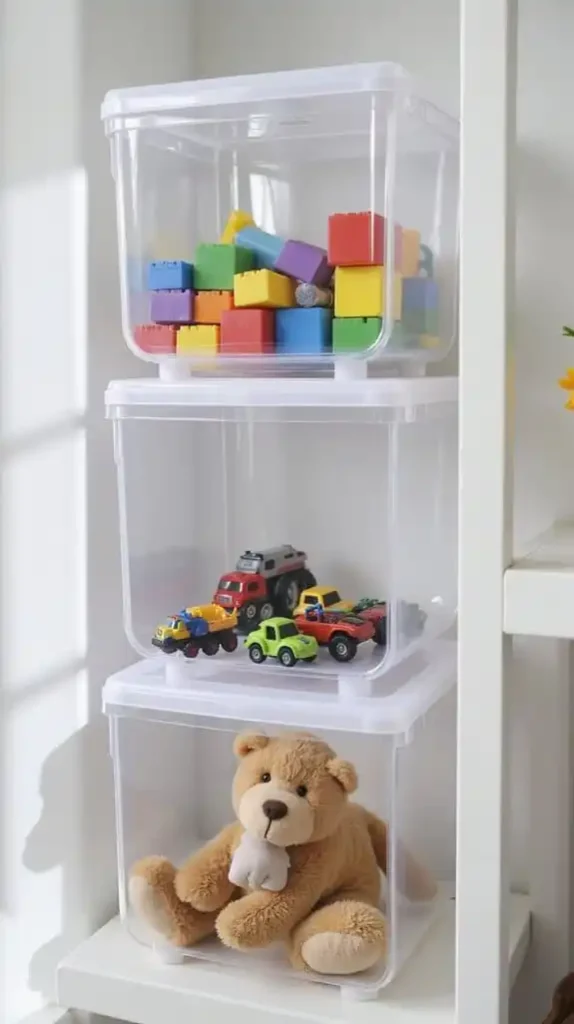
Clear bins eliminate the frustration of digging through containers to find one specific toy. When everything is visible, children can quickly identify what they want and where it belongs.
This not only reduces mess but also builds independence. Kids learn to manage their own belongings without needing constant help, making your organization system more sustainable long-term.
5. Label Everything With Pictures and Words
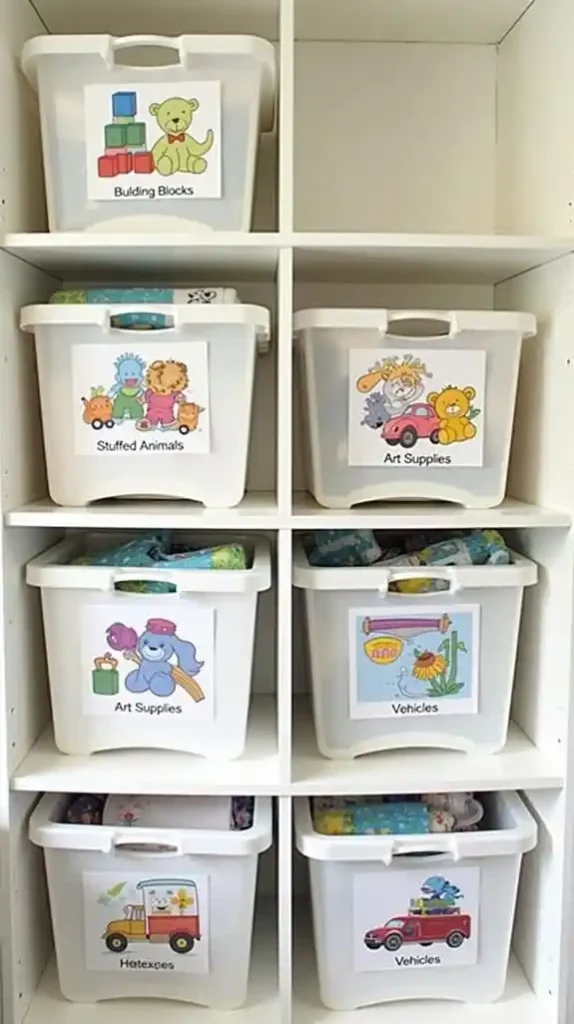
Labels take organization to the next level. Adding both pictures and words ensures that children of all ages can understand where items belong.
For younger kids, images act as visual cues. For older children, words reinforce reading skills. Over time, this builds habits and makes cleanup feel straightforward rather than overwhelming.
6. Store Toys at Your Child’s Height
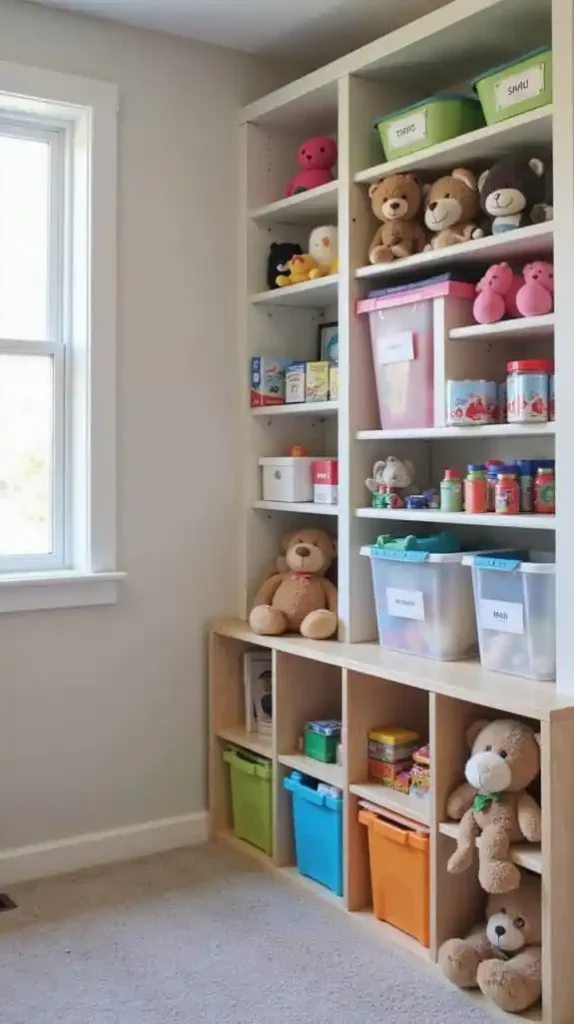
Accessibility plays a huge role in whether kids actually follow your system. If they can’t reach something, they won’t put it away.
Arrange shelves, bins, and hooks at your child’s level so they can independently take out and return toys. This simple adjustment encourages responsibility and reduces the need for constant reminders.
7. Use Vertical Space to Maximize Storage
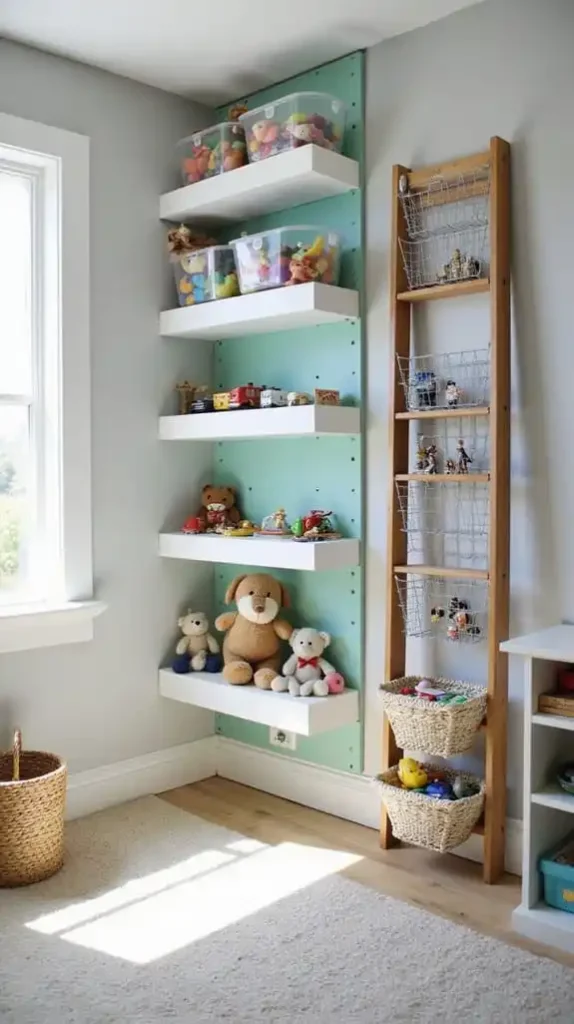
When floor space is limited, walls become your best friend. Install floating shelves, pegboards, or hanging organizers to store toys without crowding the room.
Vertical storage keeps the area open for play while still offering plenty of room for organization. It also helps visually declutter the space, making the room feel bigger and more breathable.
8. Invest in Multi-Functional Furniture
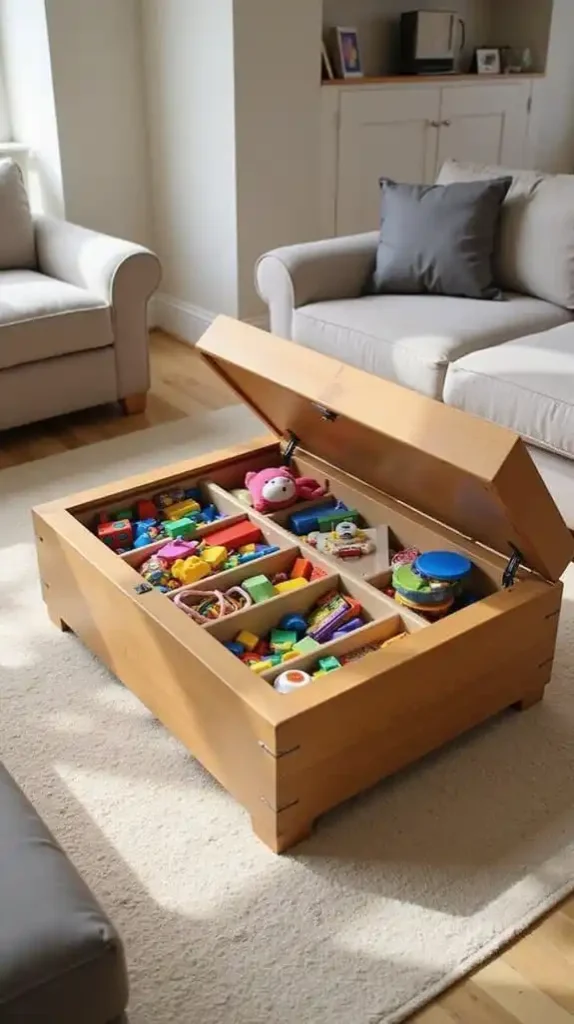
Furniture that doubles as storage is a game-changer—especially in smaller homes. Ottomans with hidden compartments, beds with drawers, or benches with lift-up lids can store toys out of sight while still being functional.
This approach helps you maintain a clean look without sacrificing storage space, making it ideal for shared living areas like the living room.
9. Use Mesh Bags for Small Toy Pieces
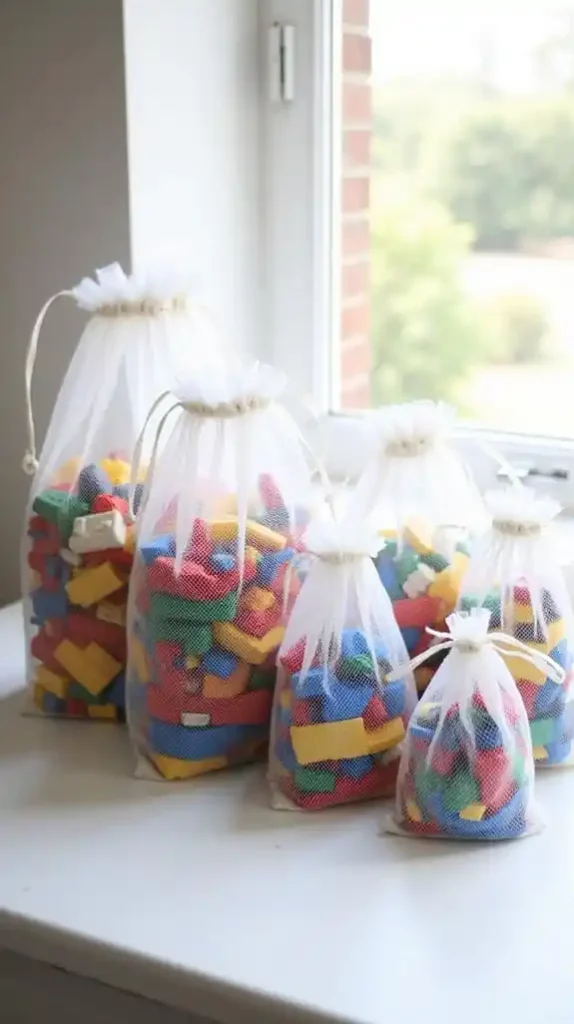
Small toy pieces are often the biggest source of clutter. Mesh bags are a simple solution—they keep items contained while allowing you to see what’s inside.
They’re perfect for LEGO, puzzle pieces, or action figure accessories. You can hang them, stack them, or toss them into larger bins, keeping everything organized and easy to find.
10. Store Batteries, Manuals, and Accessories Separately
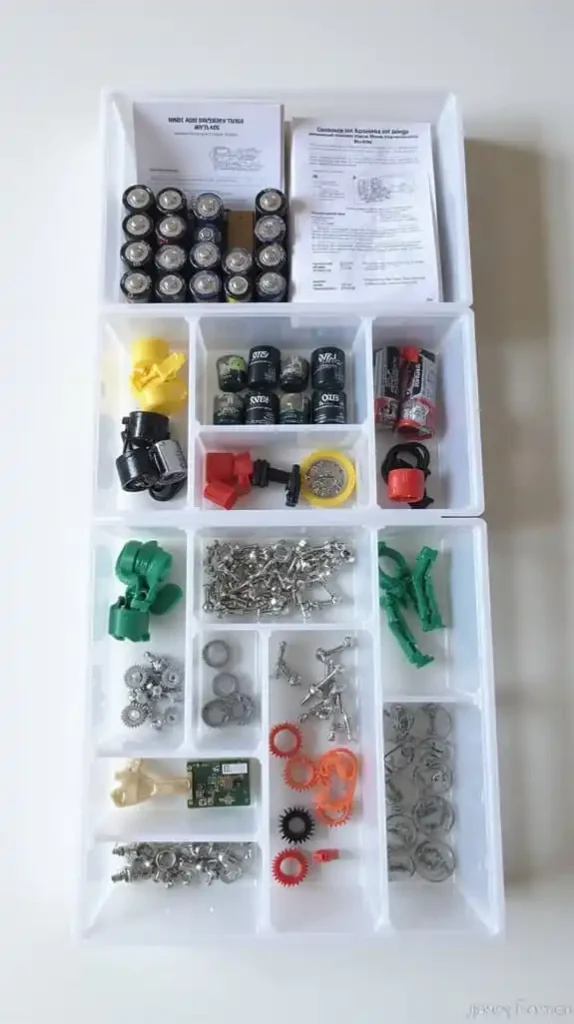
Few things are more frustrating than a toy that doesn’t work because you can’t find the batteries or instructions. Keep a dedicated container for these essentials.
Organizing them separately ensures that toys are always ready to use and saves you time when something needs fixing or replacing.
11. Limit Container Sizes to Prevent Clutter
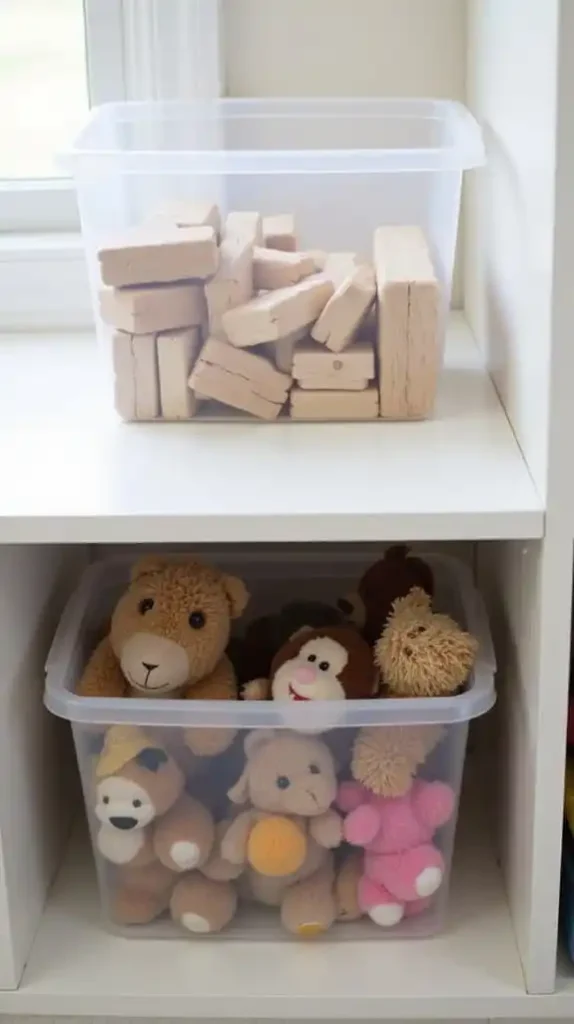
Large bins may seem helpful, but they often lead to overstuffing. Smaller containers create natural limits, forcing you to be more selective about what stays.
This keeps your collection manageable and prevents clutter from building up again. It also makes cleanup quicker and less overwhelming for kids.
12. Implement the “One In, One Out” Rule
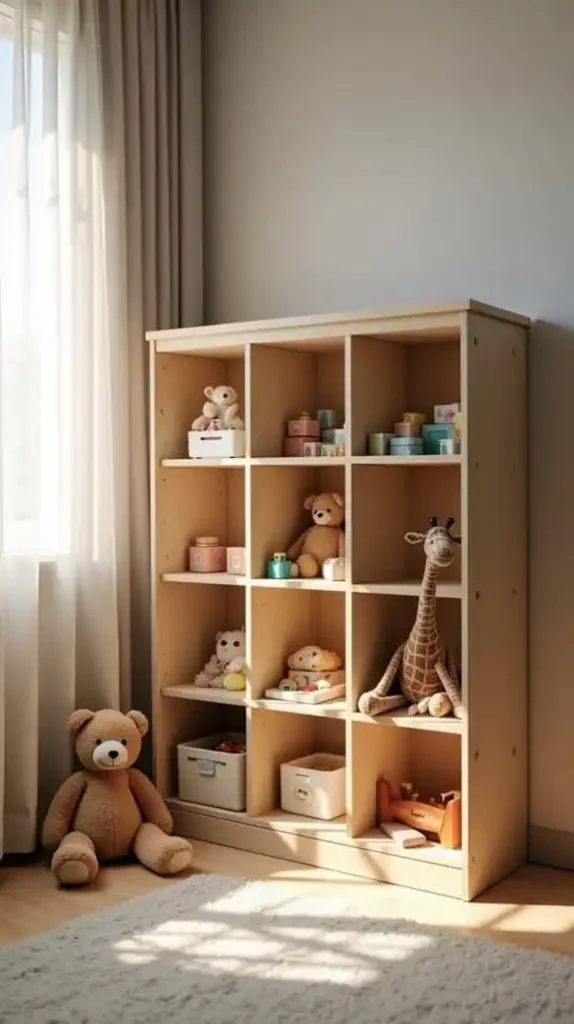
To maintain balance, adopt a simple rule: every time a new toy comes in, one goes out. This prevents accumulation and keeps your space under control.
Involve your child in choosing which toy to donate. This teaches them valuable lessons about sharing, gratitude, and mindful consumption.
13. Set Up a Donation Station
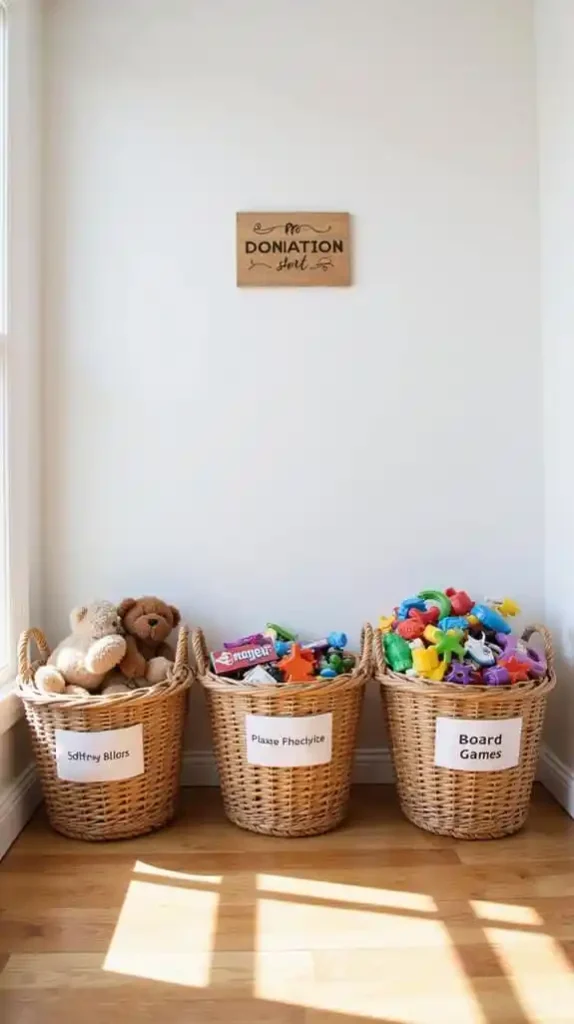
Instead of waiting for a big decluttering session, create an ongoing system. Keep a donation bin in your home where unused or outgrown toys can be placed anytime.
Once it’s full, donate everything at once. This keeps clutter from building up and makes letting go of items a normal habit.
14. Try a Toy Library System
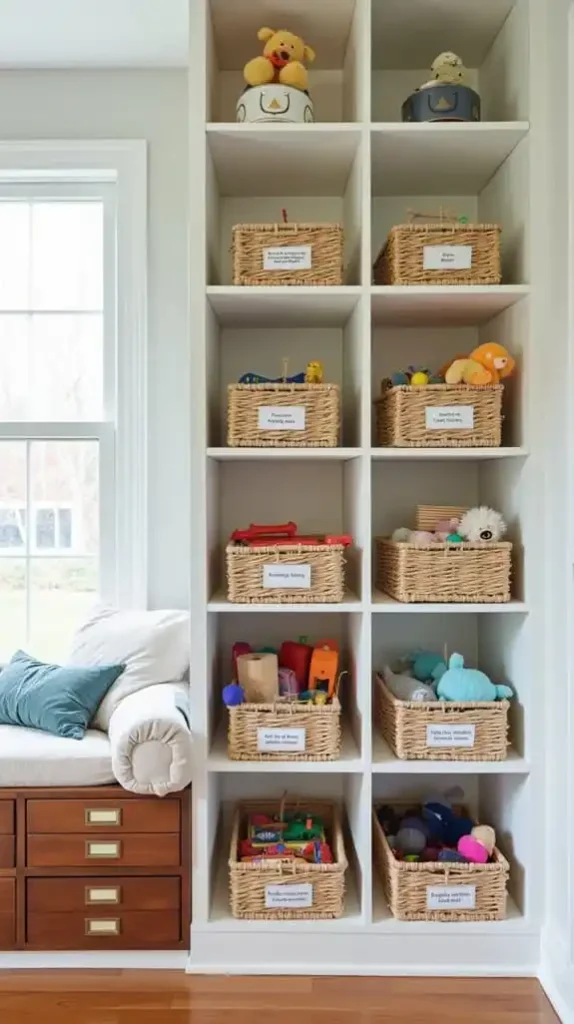
A toy library system works similarly to rotation but with more structure. Keep only a portion of toys available and store the rest away.
Swap toys weekly or monthly to maintain interest while keeping your home organized. This approach also helps children focus better since they’re not overwhelmed by too many options.
15. Create a “Homeless Toy” Basket
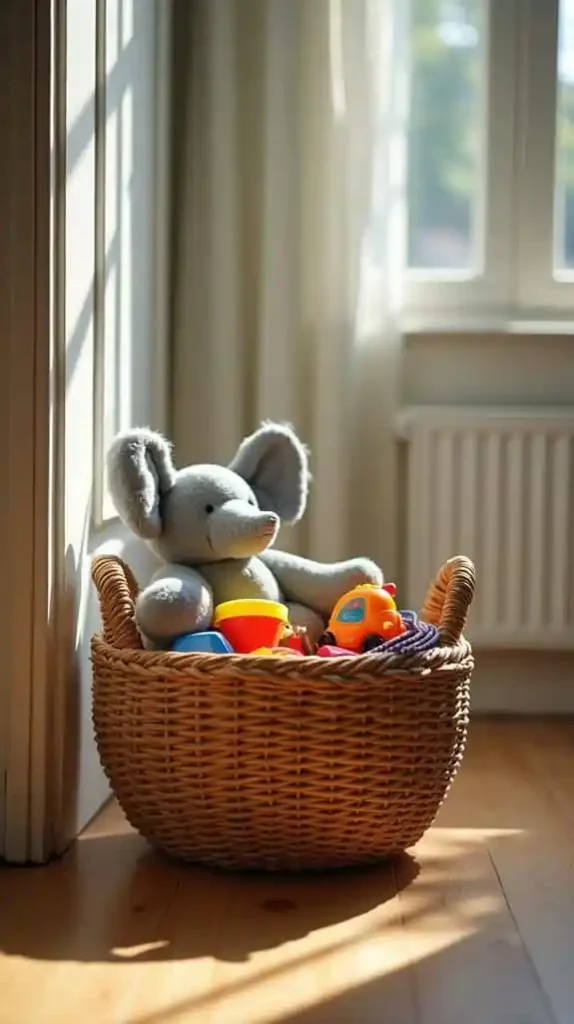
Not every toy will have a designated place immediately—and that’s okay. Use a temporary basket for items that don’t yet belong anywhere.
Set a weekly time to sort through it and decide whether to assign a permanent spot or remove the item. This prevents random clutter from spreading throughout the house.
16. Establish a Nightly 10-Minute Cleanup Routine
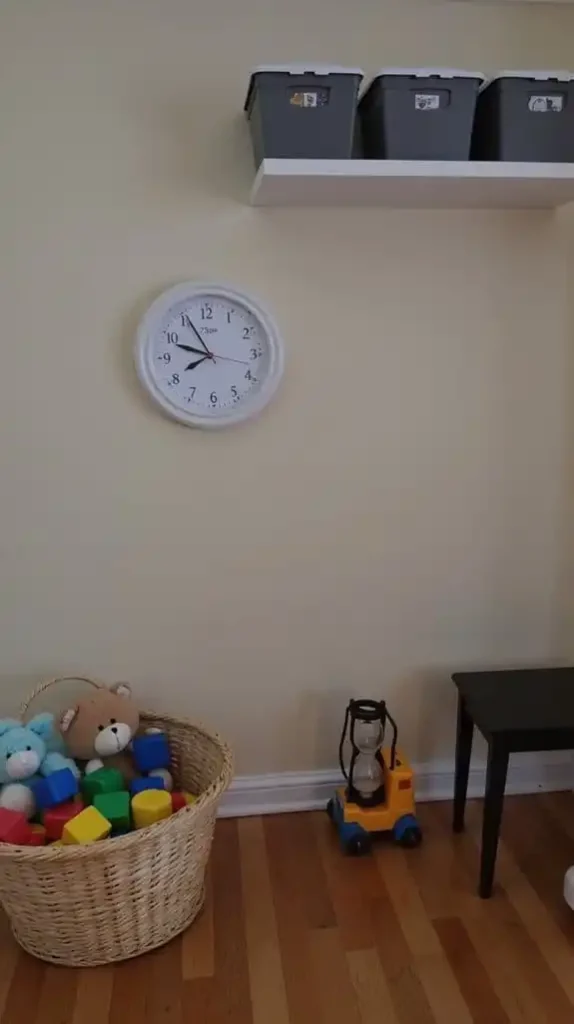
Consistency is more important than perfection. A short daily cleanup routine can prevent mess from piling up.
Turn it into a fun activity—set a timer, play music, or make it a game. Over time, this becomes a habit that keeps your home organized with minimal effort.
17. Involve Your Kids in the Process
The best organization system is one your kids actually follow. Involve them in choosing storage solutions, labeling bins, and deciding where things go.
When children feel ownership over the system, they’re more likely to maintain it. Plus, they develop important life skills like responsibility and organization.
Conclusion
Toy organization doesn’t have to be overwhelming. By creating simple systems that match your child’s behavior and keeping routines consistent, you can maintain a space that feels calm, functional, and easy to manage. Start with just one or two ideas, build from there, and you’ll gradually create a home where both play and cleanup feel effortless.
Leave a Reply