Terracotta is emerging as a standout trend in kitchen design, bringing warmth and earthiness to the heart of the home. This rich, sun-kissed shade is transforming spaces by adding depth and character, whether it’s featured on cabinet fronts, backsplashes, or subtle accents. Its natural, grounded tones harmonize beautifully with materials like brass fixtures, reclaimed wood, and artisanal ceramics, creating an inviting atmosphere that encourages mindful cooking and gathering.
As designers and homeowners explore terracotta’s versatility, its presence ranges from bold floor tiles to understated earthenware accessories. Embracing this color palette infuses kitchens with a sense of authenticity and timelessness, making every culinary moment feel intentional and connected to nature. Whether you’re ready to fully embrace terracotta or simply want to introduce hints of it, this trend promises to add unexpected warmth and charm to your kitchen space.
1. Natural Greenery for Terracotta Kitchens: Potted Herbs and Plants
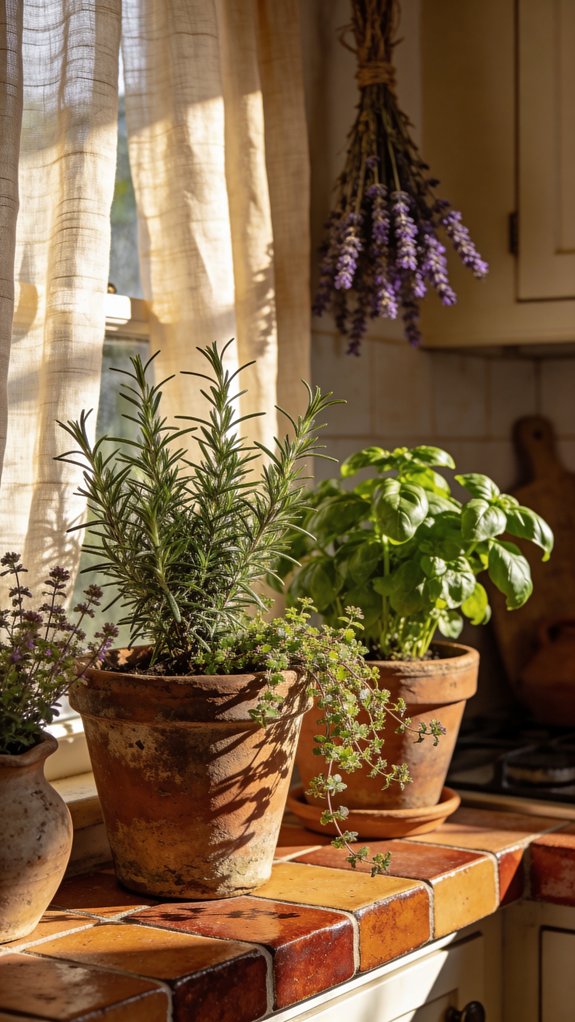
Bringing potted herbs and plants into a terracotta kitchen adds a vibrant, living element that feels both authentic and inviting. Position a rosemary plant on a sunny window ledge where its fragrant, woodsy aroma pairs perfectly with the warm, earthy tones of terracotta. For a softer, more flowing look, let trailing ivy cascade along open shelves, providing a natural contrast to the kitchen’s structured lines.
When selecting containers, opt for terracotta pots equipped with drainage holes to maintain healthy soil moisture—keeping the soil slightly dry helps avoid root rot. Arrange your plants in groups of odd numbers, mixing different heights and leaf textures to create visual interest. Incorporate herbs like sage, thyme, and basil, which not only enhance the kitchen’s appearance but also offer fresh flavors for cooking, making the space feel lively and genuinely rooted in nature.
2. Essential Terracotta Cookware to Showcase on Your Kitchen Counter

A seasoned terracotta pot resting on your countertop serves more than just a utilitarian purpose—it embodies a philosophy of slow, mindful cooking. Renowned makers such as La Chamba and Romertopf produce clay cookware that ensures even heat distribution, resulting in deeply developed flavors that are difficult to achieve with conventional pans. Complement your cookware with handcrafted pitchers to introduce an artistic yet practical element to your kitchen display.
Proper maintenance is key to preserving these clay pieces. Applying natural sealants like beeswax or linseed oil helps protect their porous surfaces, significantly prolonging their durability. Keeping your favorite terracotta pots in plain sight not only enhances the aesthetic of your kitchen but also encourages a more intentional and thoughtful approach to meal preparation.
Pro Tip: Displaying terracotta cookware is more than decoration—it’s a subtle encouragement to embrace patience and care in cooking.
3. The Perfect Pairing of Terracotta and Sage Green
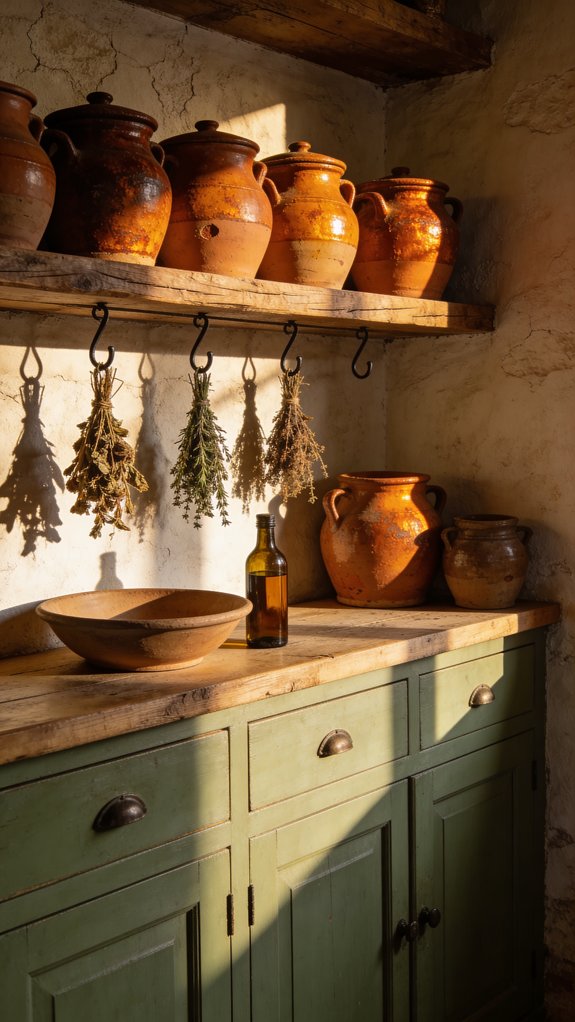
Combining terracotta with sage green creates a beautifully grounded yet refreshing palette inspired by nature’s contrasts. The warm, earthy tone of terracotta brings a cozy, clay-like richness to any space, while sage green offers a subtle, cool balance that feels calm and understated. Together, these colors evoke a sense of natural calm and timelessness.
To incorporate this duo, consider styling open shelves with natural elements like ceramic pots, soft linen kitchen towels, and trailing herbs for an organic touch. For example, pairing a soft sage paint, such as Farrow & Ball’s ‘Mizzle’, with terracotta tiles softens the intensity of the clay hues without dulling their impact. This combination channels the essence of a Mediterranean kitchen, infusing your cooking area with warmth, simplicity, and life.
4. Elevating Terracotta in a Modern Farmhouse Kitchen
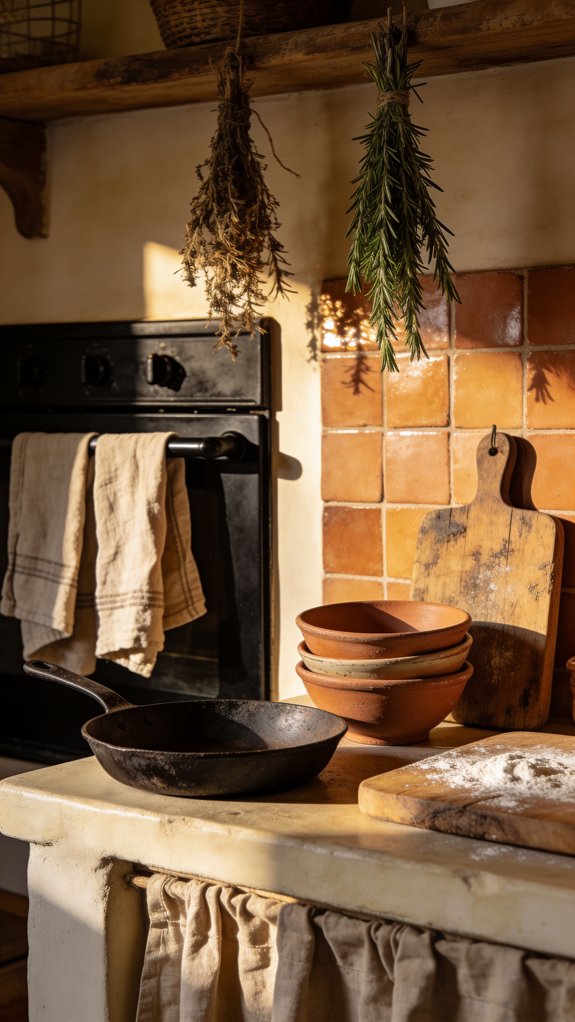
Farmhouse kitchens often fall into predictable patterns, especially when terracotta elements start to feel overused and cliché. Instead of crowding the space with multiple rustic details, focus on incorporating a single, thoughtfully chosen terracotta piece to create a subtle yet impactful statement. For example, opt for enamelware in warm clay shades from brands like Crow Canyon Home, and balance it with sleek matte black fixtures and soft linen fabrics rather than typical gingham patterns. This blend brings a contemporary earthiness that keeps the kitchen feeling fresh and intentional without relying on tired motifs.
Avoid the temptation to fill your space with distressed signs or too many rustic accents. Instead, let a terracotta pot, perhaps placed casually on an open shelf and filled with fresh herbs, serve as a quiet focal point. This simple touch offers a refined, understated charm that communicates warmth and authenticity without overwhelming the room’s aesthetic.
5. Terracotta Kitchen Decor Inspired by Mediterranean Coastal Charm
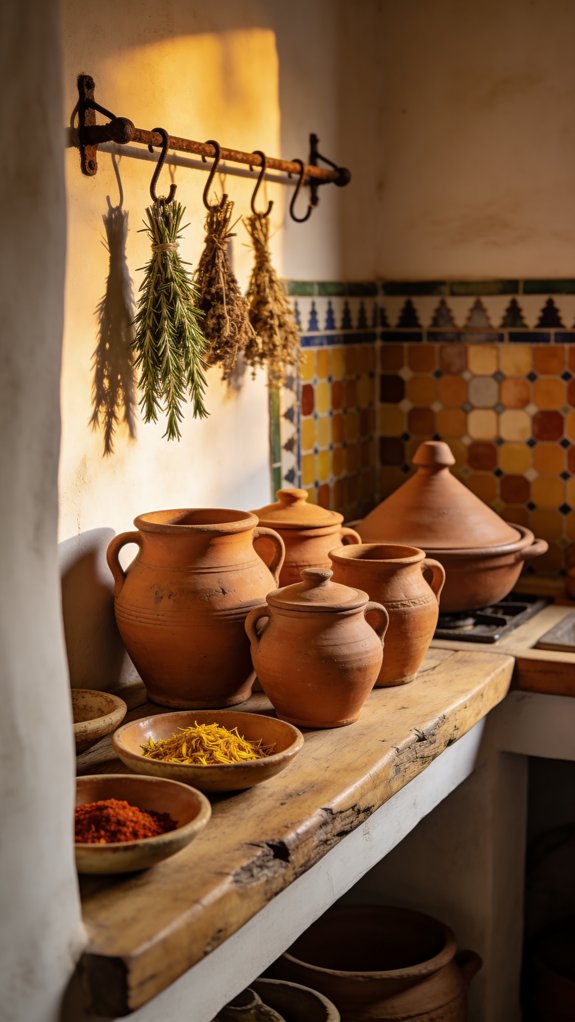
Small, thoughtful changes can lay the groundwork for a kitchen that feels warm and inviting. Drawing from Mediterranean coastal aesthetics, you can create a space that blends earthy textures with vibrant pops of color, evoking the sun-drenched shores and rich cultural heritage of the region. This style emphasizes the interplay between natural materials and bold hues to produce a look that is both layered and lively.
By incorporating sun-warmed terracotta elements alongside striking cobalt blue accents, your kitchen gains a sense of intentional contrast that is both dynamic and welcoming. The combination of tactile fabrics, rustic pottery, and fresh herbs brings depth and authenticity, capturing the essence of Mediterranean living in a modern context.
Key Design Elements
- Place terracotta tagines next to vivid cobalt blue ceramic dishes for a striking visual pairing
- Suspend woven esparto grass baskets above open shelves to add texture and coastal character
- Introduce coarse linen fabrics in rich ochre and burnt sienna shades for warmth and texture
- Group rosemary and thyme plants in natural terracotta pots to bring fresh greenery and earthiness
Pro Tip: Embrace the boldness of Mediterranean design by layering rugged terracotta textures with vibrant cobalt accents, creating a balanced contrast that feels both intentional and evocative of sunlit coastal landscapes.
6. Balancing Terracotta and White for a Cozy Kitchen Ambiance
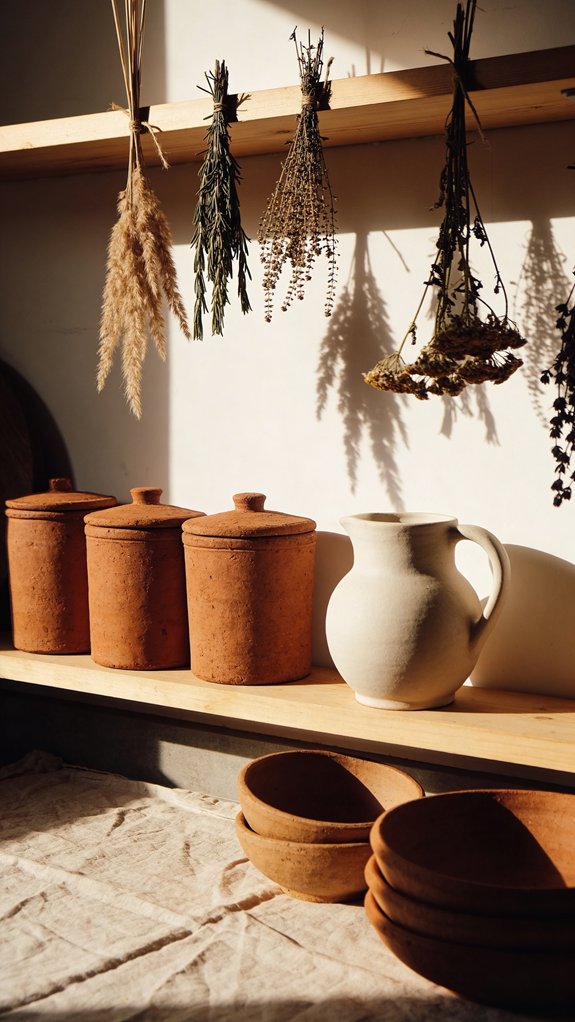
Combining terracotta with white might seem straightforward, but achieving the perfect harmony is key to creating a kitchen that feels inviting rather than cold. Opt for warm white shades instead of bright, clinical whites that can diminish the earthy depth of terracotta. Colors like Benjamin Moore’s ‘White Dove’ or Sherwin-Williams’ ‘Alabaster’ work beautifully, maintaining a subtle warmth that complements the clay tones.
Incorporate terracotta as accent details, such as trim around cabinets or window casings, to provide structure and grounding to the room. This gentle contrast creates an airy atmosphere without making the space feel too stark. To unify the look, add small terracotta-inspired elements like ceramic knobs, pottery on open shelves, or textiles in natural fiber, spreading the warmth evenly without overwhelming any single area.
7. Creative Terracotta Backsplash Inspirations to Remember

Terracotta backsplashes offer an incredibly adaptable foundation for adding color, texture, and pattern to your kitchen design. You can make a striking statement by using handcrafted mosaic tiles, piecing together uneven clay shapes into eye-catching geometric designs that beautifully reflect natural light throughout the day. Another effective approach is combining matte terracotta with glossy ceramic elements, which introduces contrast and visual interest without overpowering the space.
For a balance of rustic charm and modern simplicity, consider subway-style terracotta tiles from brands like Fireclay Tile. Their warm, earthy tones paired with clean, straight lines bring a welcoming and polished feel to your kitchen. Don’t shy away from letting your backsplash take center stage; a bold terracotta installation can instantly redefine the ambiance and character of your entire cooking area.
8. Artisan Ceramic Pieces Perfect for Open Shelf Displays
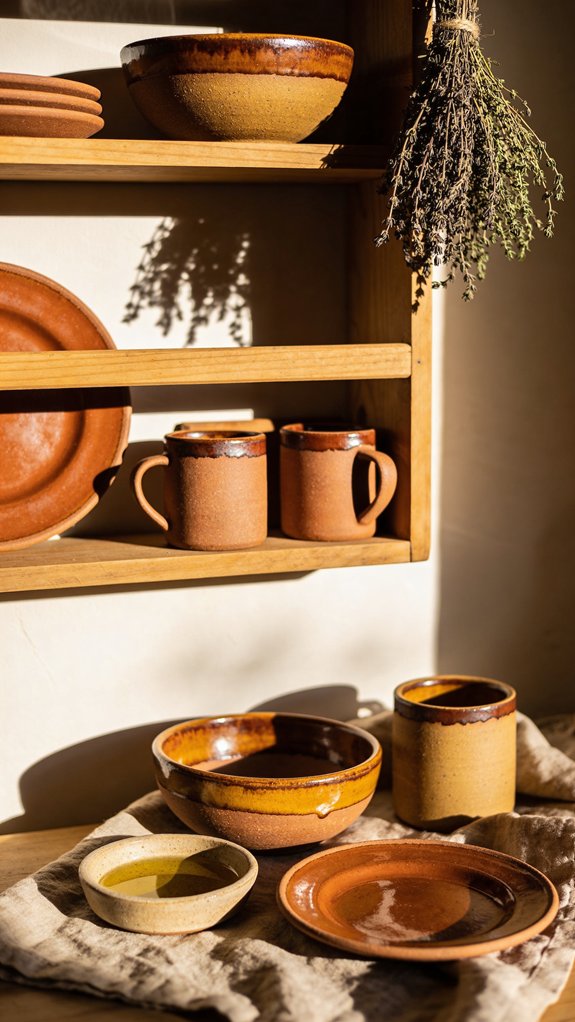
Ceramic items crafted by hand add a unique, tactile charm to open shelving that factory-made dishes simply can’t match. When selecting handmade platters, look for those featuring irregular glazes, natural, uneven edges, and subtle terracotta hues. These small imperfections add deliberate character and depth, making each piece visually captivating.
To create an appealing display, consider grouping bowls from artisan makers such as East Fork Pottery or Jono Pandolfi by color instead of size. This approach results in a harmonious, layered look. For arrangement tips, try stacking shallow bowls in sets of two, placing platters leaning vertically against the shelf’s back, and maintaining plenty of empty space around each object to avoid a cluttered feel. Giving each piece room to breathe helps highlight their craftsmanship and makes the display genuinely eye-catching.
9. Showcasing Terracotta on Shelves Without Overcrowding
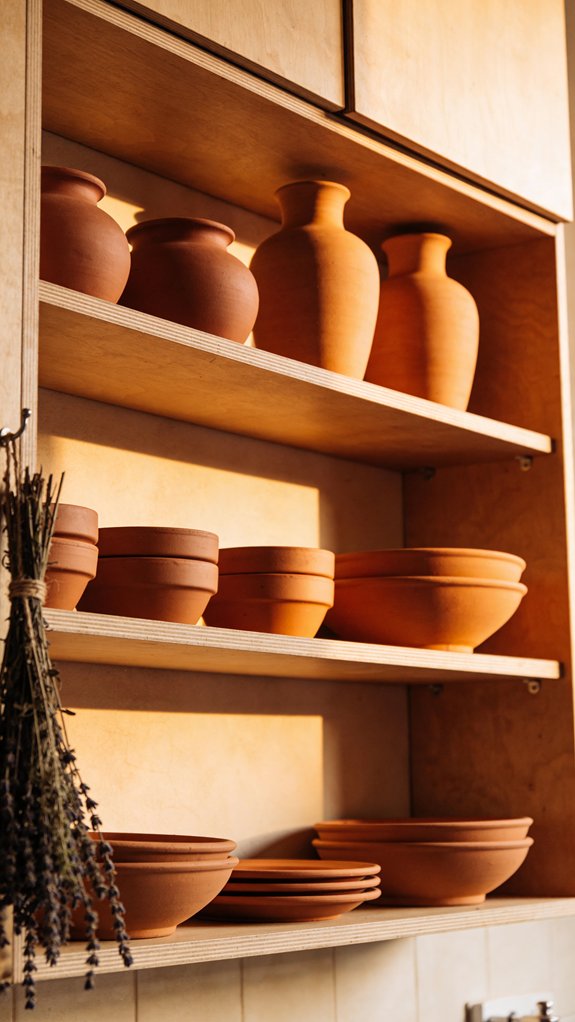
After you’ve nailed the right color combinations, the next step is to display your terracotta pieces thoughtfully so your shelves don’t end up looking chaotic or overfilled. Creating intentional groupings and leaving space around your items helps each piece stand out and prevents the display from feeling overwhelming. Curated clusters add visual interest while maintaining an airy and organized vibe.
By arranging your terracotta objects in small, balanced collections rather than scattering them randomly, you can achieve a polished look. Incorporating elements with varying heights and textures enhances the overall composition and brings harmony to the shelf styling. Remember, less is more when it comes to keeping your terracotta arrangements neat and appealing.
Key Design Elements
- Keep no more than three terracotta items per shelf to avoid clutter
- Combine pieces of different heights, such as a tall pitcher, a medium planter, and a small dish
- Create intentional gaps between groups to give each item room to breathe
- Balance terracotta clusters by including a neutral accent like a wooden bowl or soft fabric
10. Warm Terracotta Kitchen Linens in Linen and Cotton to Elevate Your Space
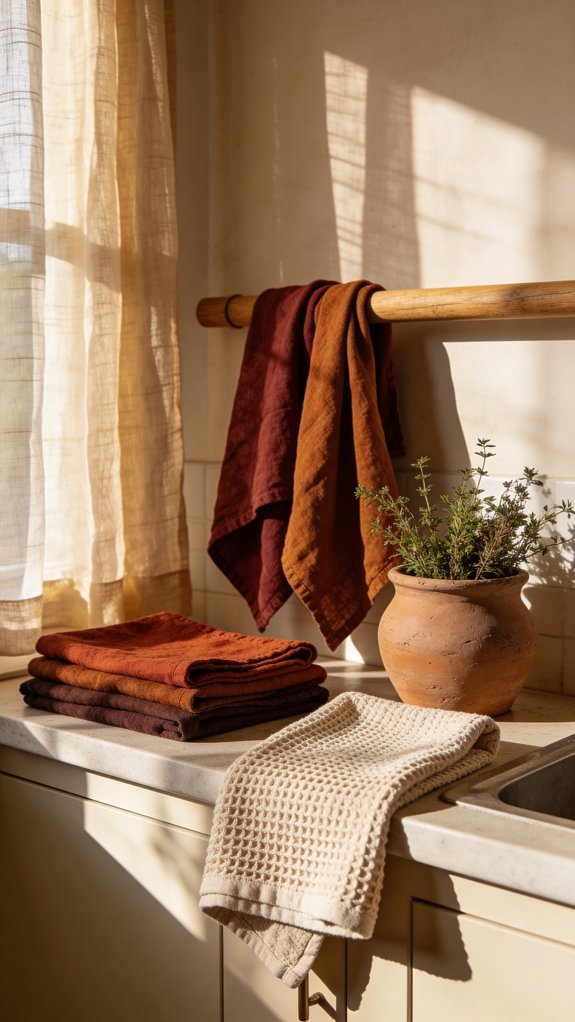
A handful of thoughtfully selected kitchen linens can transform the atmosphere of your cooking area, especially when they feature the cozy hues of terracotta. Incorporating earthy towels and napkins in shades like burnt sienna, clay, and muted amber helps ground your kitchen’s palette without overpowering it. By layering these textiles with intention—such as hanging dish towels over oven handles or placing folded napkins next to your ceramic dinnerware—you create a space that feels inviting and intentional.
These small yet purposeful details contribute to a kitchen environment that is both warm and authentically lived-in. Choosing pieces made from natural fibers like linen and cotton not only adds texture but ensures durability and comfort in daily use. Embrace these warm, nature-inspired tones to subtly infuse your kitchen with personality and charm.
Key Design Elements
- Rust-colored linen towels from Fog Linen Work
- Terracotta-hued cotton kitchen cloths by Tekla
- Amber-dyed organic napkin sets from Coyuchi
- Clay-toned washed linen textiles by Society Limonta
11. Harmonizing Terracotta with Rich Wood Hues
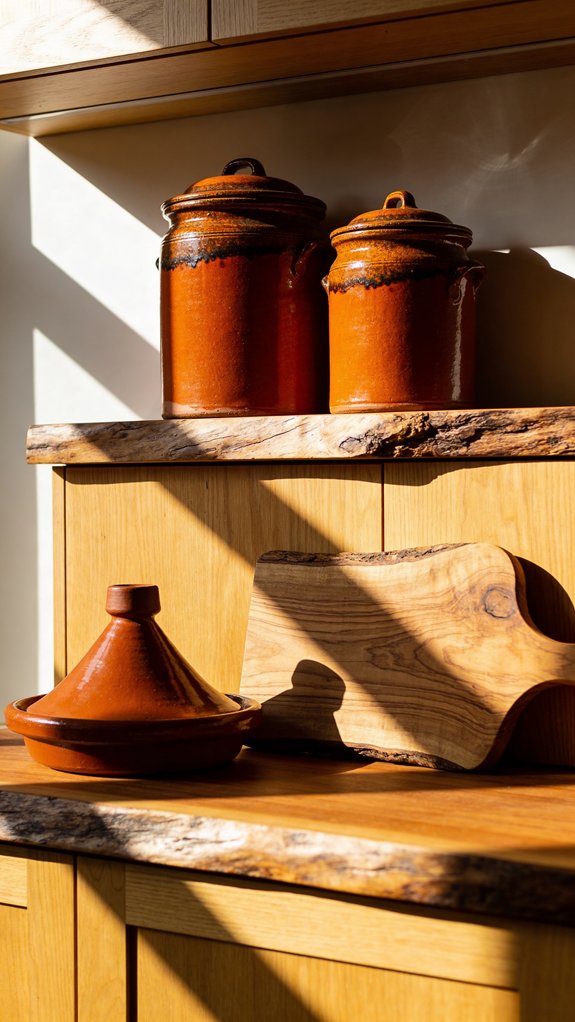
Terracotta and warm wood shades naturally complement each other, both drawing from earthy tones that create a welcoming kitchen atmosphere. When terracotta walls meet walnut cabinets with artisanal joinery, the interplay between the textured, rugged wood and the smooth, clay-like plaster adds subtle depth and interest without overwhelming the space. Alternatively, lighter woods like oak can balance the richness of terracotta by introducing a softer, airier feel.
Interior designer Sarah Sherman Samuel suggests opting for warm metallic finishes, such as brushed brass, for hardware to keep the overall look cohesive and inviting. This approach embraces a palette inspired by nature, where every material contributes to a harmonious, thoughtful design that feels both grounded and warm.
12. Mastering Terracotta Layers for a Balanced Look
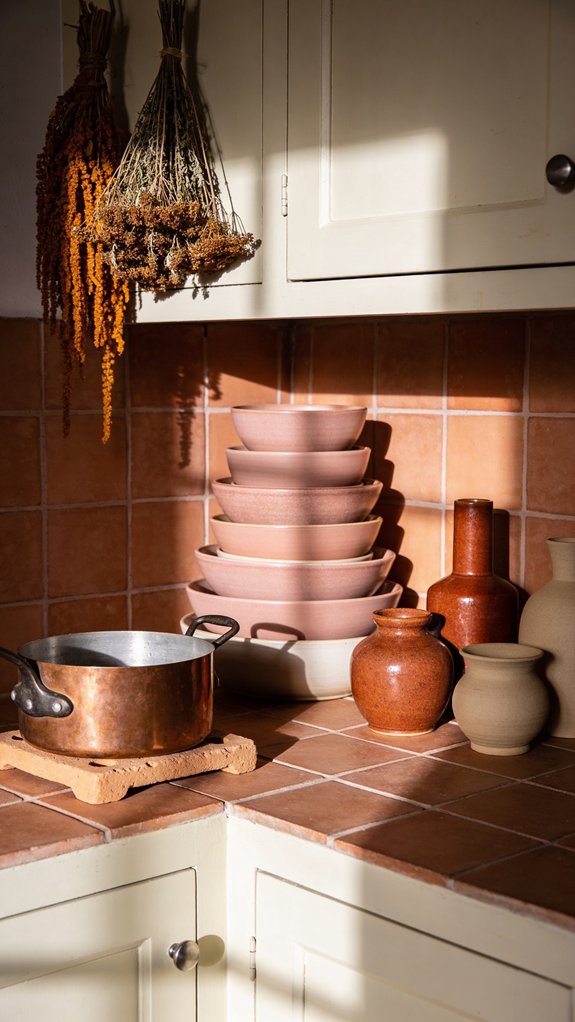
To create a harmonious terracotta palette, think of the hues as a smooth transition rather than a single flat color. Begin by painting your walls in a soft, muted terracotta shade—something close to a pale blush with warm undertones. Gradually build depth by incorporating medium terracotta elements like linen kitchen towels, handwoven placemats, and handcrafted pottery, which add texture and variation without overpowering the room.
For the final touch, ground your space with richer terracotta accents such as ceramic tiles or a bold backsplash. Use crisp neutrals like off-whites and creamy shades as breathing space between these deeper hues to maintain balance and prevent the colors from feeling too heavy. This gradual layering technique ensures that each terracotta element complements the others, creating a cohesive and inviting atmosphere.
Pro Tip: Choose terracotta shades that differ by at least two tones to build dimension and avoid overwhelming the senses.
13. Terracotta Touches Perfect for Renters with No Hassle
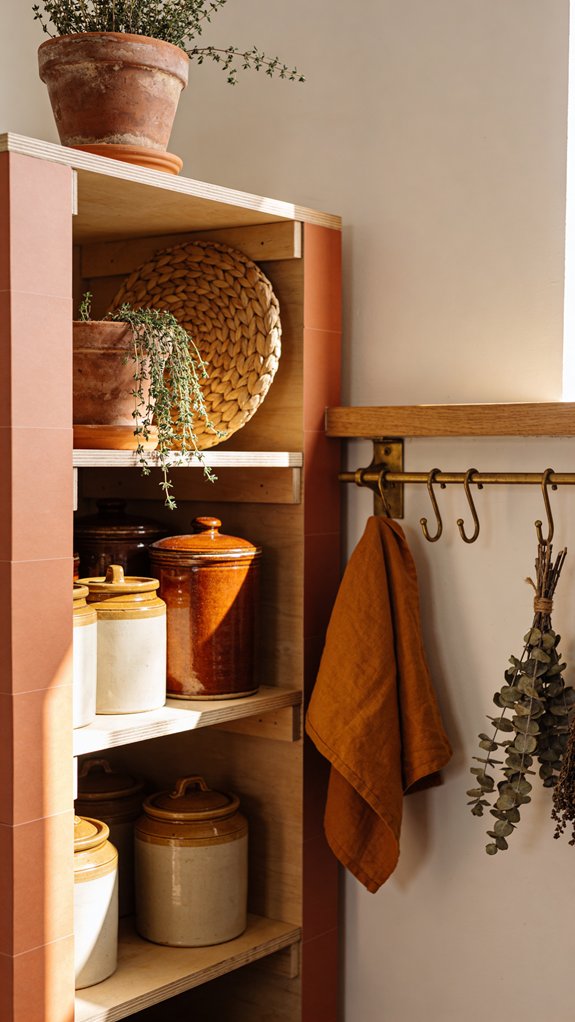
Just because you rent your space doesn’t mean you have to compromise on style. Incorporating terracotta elements is an excellent way to infuse warmth and a natural vibe without making permanent changes. These earthy tones can be introduced effortlessly, enhancing your home’s ambiance while keeping everything completely move-in and move-out friendly.
Think about gathering terracotta pottery and arranging it thoughtfully on countertops, shelves, or windowsills to create a harmonious, grounded aesthetic. The best part? These updates don’t require drilling, painting, or permission from your landlord, so you can enjoy them stress-free during your tenancy and leave without any worries when it’s time to relocate.
Key Design Elements
- Replace drawer or cabinet handles with terracotta-colored knobs or pulls
- Apply removable peel-and-stick terracotta patterns to backsplash areas
- Showcase stacked terracotta bowls as decorative, usable pieces
- Incorporate woven terracotta placemats to add rich, tactile layers
14. Embracing Terracotta: Plates, Platters, and Table Rituals to Inspire
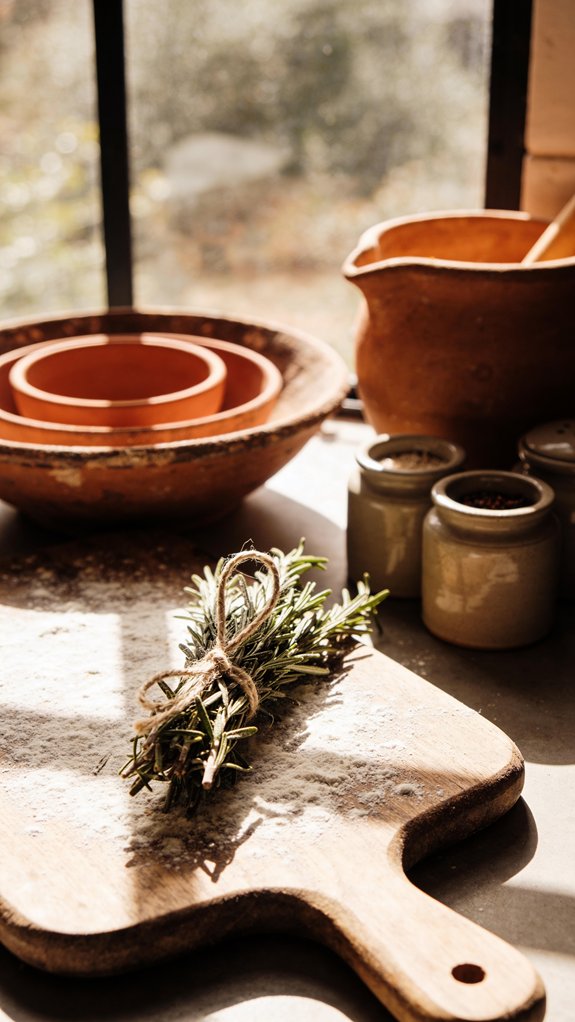
Serving meals in terracotta cookware elevates everyday dining into a mindful and earthy experience. When you begin incorporating pieces like the Emile Henry Burgundy Tagine or La Chamba bowls, you naturally attune to the unique qualities of earthenware, such as its excellent heat retention, which influences the rhythm of your meal. This encourages a thoughtful pace that enhances both flavor and enjoyment.
Consider the order in which you present your dishes—carefully moving proteins, grains, and vegetables from the kitchen to the table in a sequence that honors temperature and visual appeal. Complement terracotta with wooden boards to add contrasting textures and anchor the centerpiece, creating a tactile element your guests will remember long after the meal is over. This blend of materials encourages a more connected and intentional dining atmosphere.
15. Incorporating Jute, Rattan, and Linen to Enhance Terracotta Hues
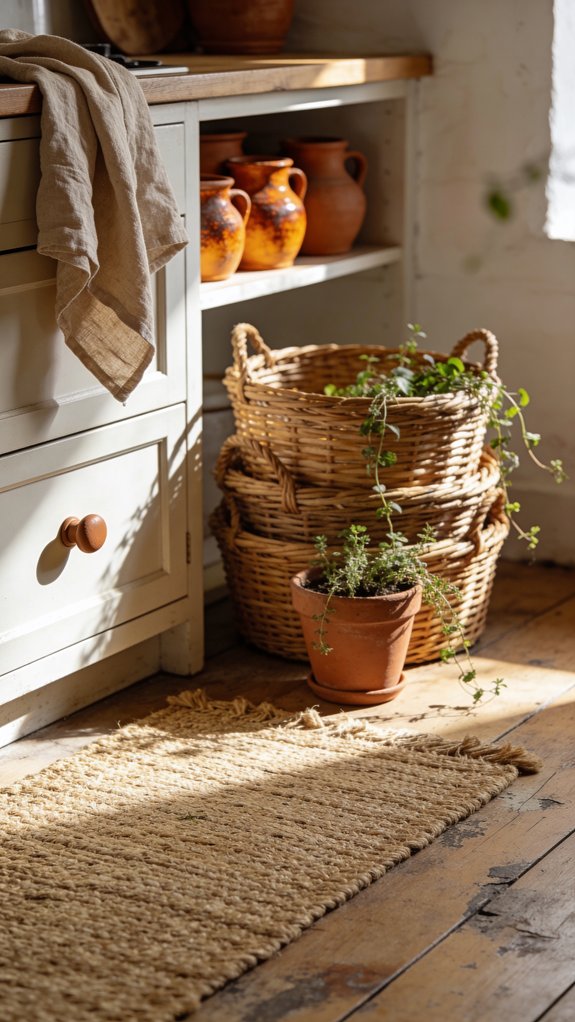
Incorporate natural materials like jute, rattan, and linen to enrich the warm tones of terracotta, creating a kitchen space that feels earthy and harmonious. Place jute runners along shelves or counters to introduce a tactile, woven element that resonates with terracotta’s organic warmth. These runners add subtle texture while maintaining a grounded, natural vibe.
Use rattan baskets beneath your counters for practical storage of fruits, linens, or miscellaneous items. Their warm, honey-like colors add depth and neutral layers that complement terracotta’s rustic charm. For a simple yet effective touch, hang linen towels on oven handles. Their soft, breathable fabric brings an understated texture that ties the whole kitchen’s natural aesthetic together, merging function with style effortlessly.
Pro Tip: When working with terracotta, layering natural textures like jute, rattan, and linen creates an inviting atmosphere that feels thoughtfully put together rather than overly styled.
16. Collecting Timeless Terracotta Treasures at Flea Markets and Estate Sales
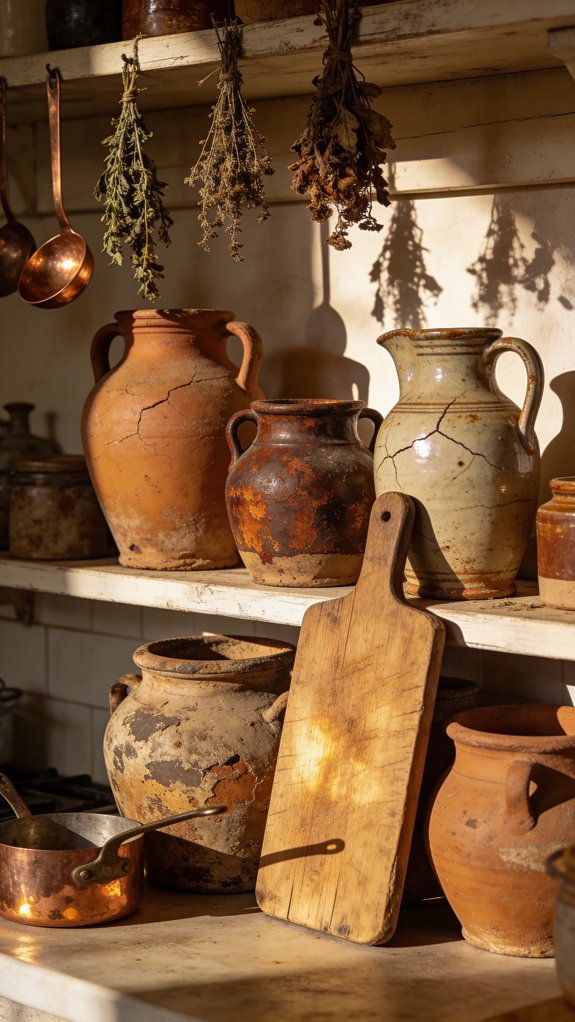
Exploring thrift shops, estate auctions, and weekend flea markets can uncover terracotta items rich with unique aging and charm that modern pieces often lack. Focus your search on antique terracotta crocks, hand-crafted Mexican bean pots, and vintage Italian baking dishes that still have their original glaze. These authentic finds bring a depth and warmth that mass-produced replicas seldom capture.
Look out for Spanish cazuelas, Portuguese serving bowls, and mid-century Bunzlauer pottery from Germany to add genuine character to your collection. When examining older terracotta, be mindful of hairline cracks, ensure lids fit snugly, and if possible, verify that the glaze is free from harmful lead. Patience and a keen eye will usually lead to rewarding and distinctive acquisitions.
17. Affordable Methods to Evaluate Terracotta Before Fully Committing
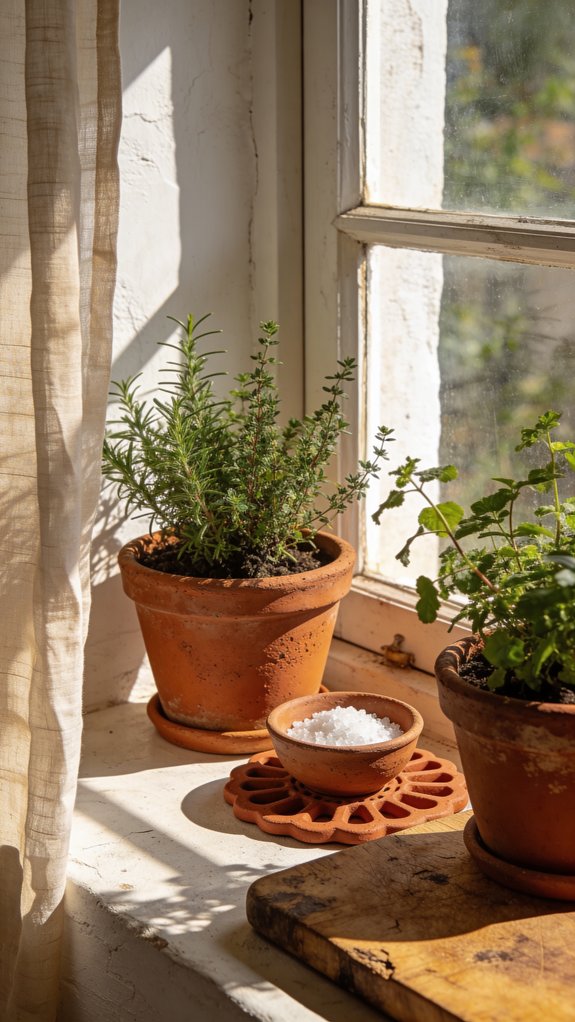
Before embarking on a complete kitchen makeover featuring terracotta, taking some careful, budget-conscious steps to test your options can help you avoid costly errors. Start by ordering paint samples from brands like Sherwin-Williams or Benjamin Moore and place them on your current cabinets, countertops, and backsplash to see how the colors interact with your existing elements. Additionally, obtaining tile samples from companies such as Fireclay Tile or Cle allows you to experience the true texture, absorbency, and subtle color shifts that can occur in your own kitchen environment.
Spend several days living with these samples in place, paying close attention to how natural morning light and artificial evening lighting affect the tones and ambiance. This hands-on approach ensures you understand how terracotta will truly look throughout the day. Investing in these small trial steps up front can save you from expensive mistakes and provide peace of mind as you move forward with confidence into your warm, earthy terracotta kitchen design.
18. Essential Terracotta Containers and Stylish Countertop Organizers
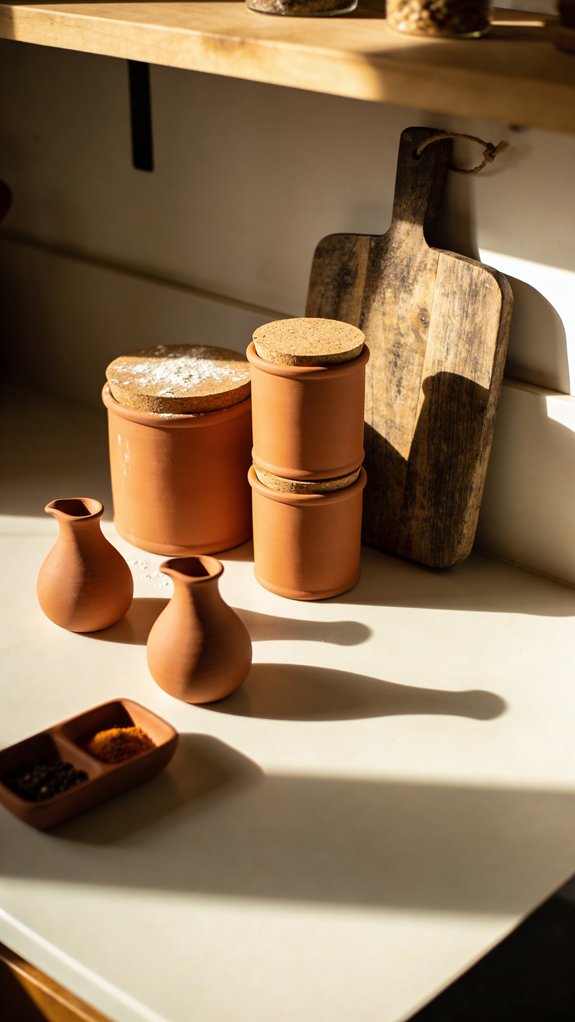
The items you keep on your kitchen countertops can reveal as much personality as the artwork you choose to display. Terracotta containers provide a charming and practical solution for storing staples like coffee, salt, and flour, while adding a natural, warm touch that factory-made jars often lack. These handcrafted pieces bring character and a sense of craftsmanship to your space.
To maintain a tidy yet inviting countertop, use simple, low-profile trays to gather frequently used objects. This helps create deliberate groupings that look thoughtfully arranged instead of chaotic. The combination of rustic terracotta and minimalist organizers strikes a balance between functionality and aesthetic appeal.
Key Design Elements
- Opt for unglazed terracotta containers to allow air circulation around dry ingredients
- Combine lids with a matte finish and textured terracotta bases to create an appealing contrast
- Arrange an odd number of containers together to achieve an eye-pleasing display
- Utilize shallow trays to neatly hold oil bottles and kitchen tools in place
19. How Terracotta Floors Bring Warmth and Depth to Your Kitchen
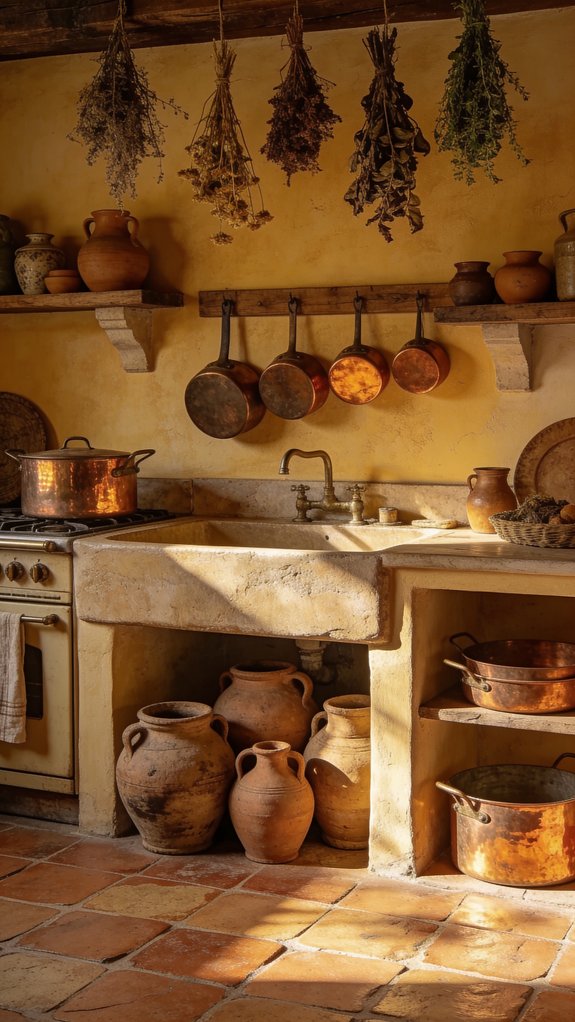
Installing terracotta tiles in your kitchen elevates the space from purely utilitarian to genuinely inviting and full of character. This natural material, crafted by sun-drying clay, offers a sturdy and substantial base that harmonizes every element above it, from cabinets to countertops and fixtures. For spacious kitchens, consider opting for larger tiles to enhance openness, or add a decorative patterned section near the island to introduce subtle visual intrigue without overpowering the design.
To maintain the rich, earthy hues and protect the porous surface, apply a quality penetrating sealer such as Miracle Sealants 511. This type of finish safeguards your floor while allowing its natural warmth and texture to shine through. Ultimately, the terracotta flooring sets the tone for the entire kitchen, creating a grounded and comforting atmosphere that welcomes you before you even begin cooking.
Pro Tip: Terracotta flooring does more than just provide a surface; it infuses your kitchen with an ageless warmth and vitality that you can feel beneath your feet.
20. Pendant Lighting Ideas to Brighten a Terracotta Kitchen
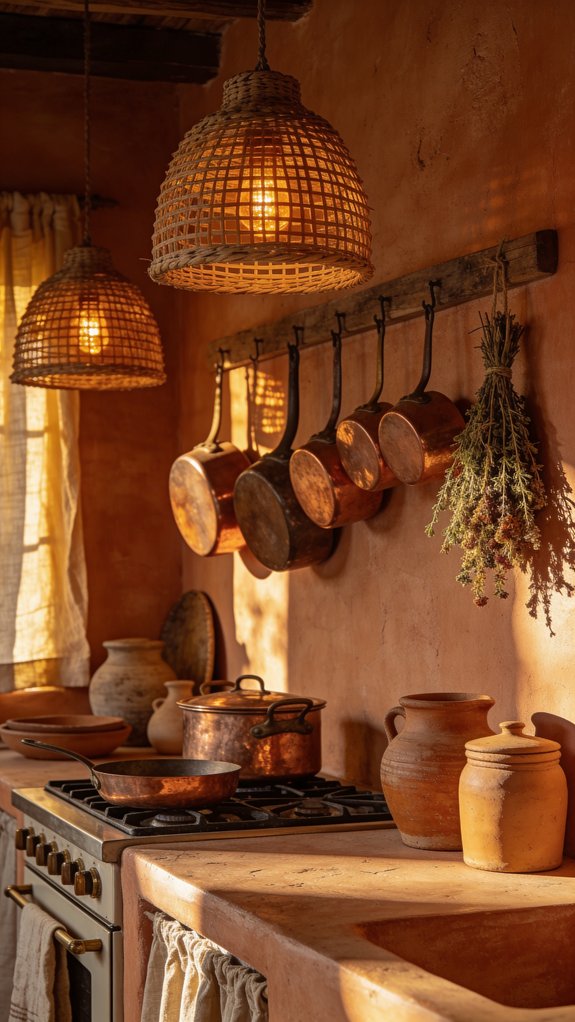
The right lighting can elevate a terracotta kitchen from cozy to brilliantly inviting, and pendant lights offer a stylish and effective way to achieve this. Opt for fixtures with matte finishes in natural hues like earthy browns, black wrought iron, or antique brass to complement the rich tones of terracotta surfaces. Position these pendants low above kitchen islands or workstations to provide targeted illumination that enhances both function and ambiance.
To maintain the warmth characteristic of terracotta, use bulbs with a color temperature around 2700K. This warm glow avoids the harshness of cool white lighting, preserving the kitchen’s inviting atmosphere. Thoughtfully selected pendants can serve as both practical lighting solutions and decorative accents that reinforce the kitchen’s organic and rustic charm.
Key Design Elements
- Woven rattan pendants introduce a natural, tactile element that harmonizes with clay-inspired colors.
- Fixtures in black iron offer striking visual contrast that highlights terracotta walls.
- Brass fixtures with an aged patina bring a timeless, cohesive feel to the space.
- Arranging multiple smaller pendants creates a gentle, even light distribution compared to a single large lamp.
21. Seasonal Refresh Ideas for Your Terracotta Kitchen Accents
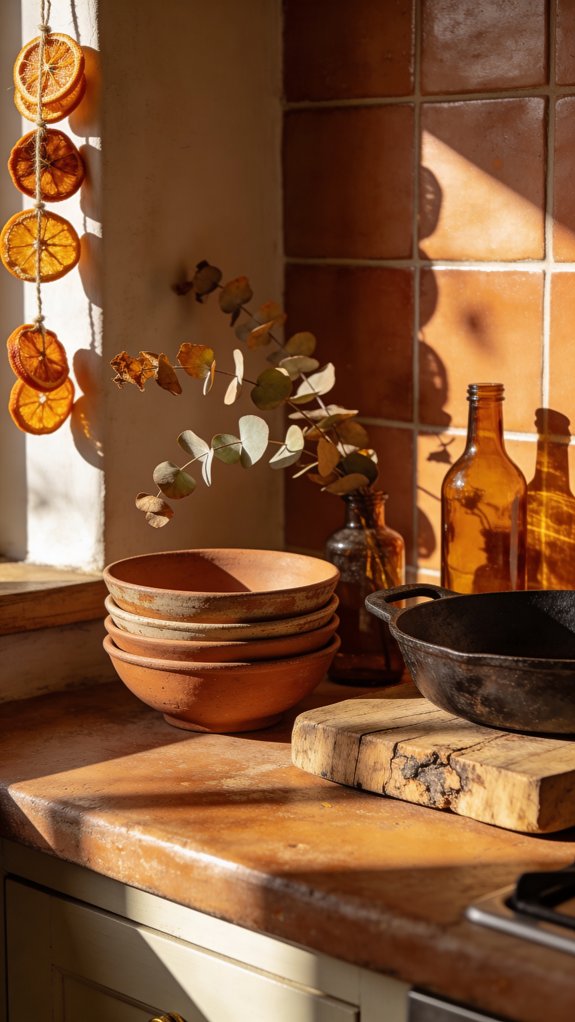
The natural tones of terracotta make it a versatile choice that can easily transition through the year, offering your kitchen an updated vibe without the need for drastic changes. By simply switching out your seasonal textiles—such as linen towels, woven placemats, and cotton table runners—you can mirror the ambiance of each season with ease. Additionally, consider adjusting your herb garden indoors, highlighting heartier varieties like rosemary and thyme during colder months, and switching to fresher options like basil and mint when the weather warms up.
Embracing these small swaps allows your terracotta pieces to shine in different ways throughout the year, enhancing the welcoming and earthy feel of your kitchen space. This approach keeps your decor feeling intentional and harmonious with the changing seasons.
Key Design Elements
- Place cozy amber-toned candles beside your terracotta pots during autumn for a warm glow
- Add dried orange or lemon slices near clay containers to evoke a crisp winter atmosphere
- Incorporate fresh eucalyptus sprigs into your springtime floral displays for a refreshing touch
- Arrange bundles of sun-dried lavender around your kitchen in summer for a fragrant, rustic look
22. Striking Terracotta Cabinets as the Kitchen’s Anchor

Opt for muted, lighter walls around your kitchen to allow terracotta cabinetry to truly stand out without overwhelming the space. The rich, warm tones of terracotta serve as an immediate eye-catcher and provide a solid visual foundation for the overall kitchen design. This approach ensures the cabinets take center stage while maintaining a balanced atmosphere.
To enhance the natural warmth, complement your cabinets with brushed brass pulls and knobs, adding a touch of subtle elegance. Incorporate countertops made from natural stone materials like marble or granite to reinforce the organic, grounded feel of the room. Together, these elements create a harmonious and inviting environment that feels both sophisticated and earthy.
23. Add Warmth with Removable Terracotta Wallpaper for Kitchen Walls
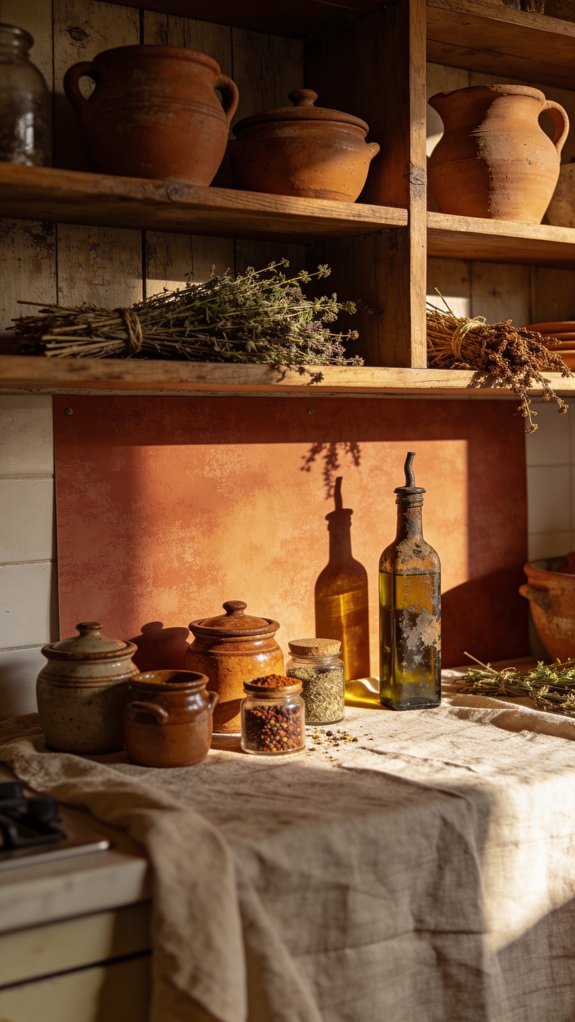
If you’ve mastered incorporating terracotta hues through pottery and fabrics but hesitate to commit to painting your walls, removable terracotta wallpaper offers an easy alternative. This option brings a cozy, earthy vibe to your kitchen without the permanence of paint. Before you fully decorate, order some sample pieces to see how the color shifts in natural light and fits your overall style.
Many peel-and-stick wallpapers from companies like Chasing Paper and Tempaper can be applied and removed with minimal effort, making them ideal for renters or anyone wanting a temporary update. These wallpapers also work well as accent backdrops inside open shelves, adding depth and texture to your kitchen design without any damage to surfaces.
Key Design Elements
- Temporary wallpaper murals offer bold accent walls without leaving a trace
- Peel-and-stick sheets can be installed quickly and removed cleanly whenever needed
- Testing sample swatches helps you gauge true color tones before full installation
- Removable wallpaper enhances open shelving areas with subtle warmth and pattern
Pro Tip: Removable terracotta wallpaper is a hassle-free way to infuse warmth—just peel, apply, and when you’re ready for a change, peel it right off without any paint or fuss.
24. The Appeal of a Terracotta Kitchen Island
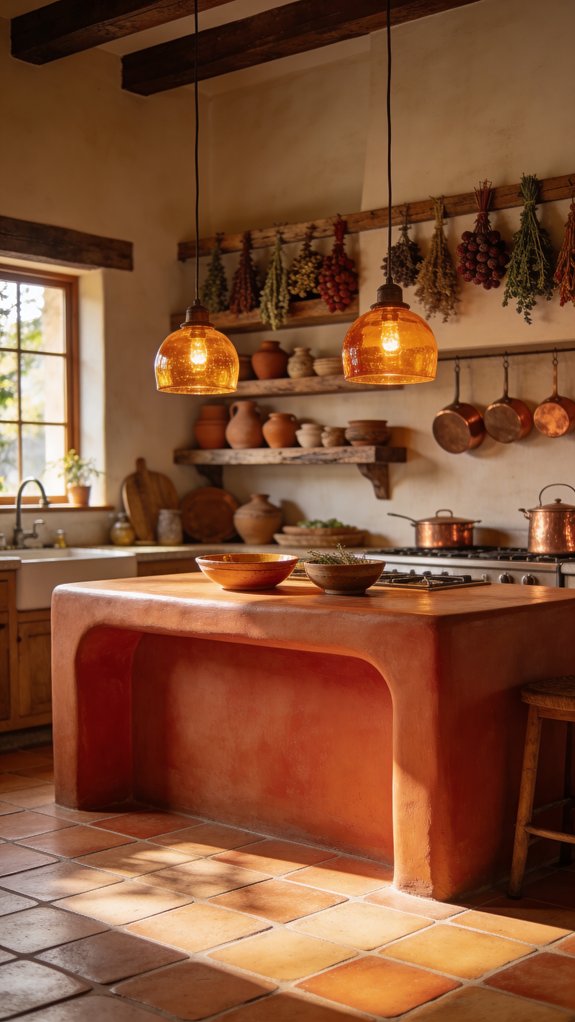
The kitchen island often serves as the busiest and most multifunctional spot in your kitchen, so giving it a striking look with terracotta hues can enhance both its practicality and aesthetic appeal. A handcrafted island finished in rich, earthy shades offers a warm centerpiece that naturally anchors the room’s design. This creates a welcoming atmosphere that immediately attracts attention and adds depth to your kitchen space.
To complement the warm tones of terracotta, consider pairing your island with sleek stainless steel sinks that don’t have apron fronts. The minimalist style of these sinks maintains a clean silhouette, allowing the vibrant clay-inspired color to stand out without distraction. The combination of the warm, natural terracotta with the cool, polished metal elements brings a thoughtful contrast that feels both elegant and harmonious, blending seamlessly with various cabinetry and countertop styles.
25. Terracotta Wall Paints That Enhance Your Space
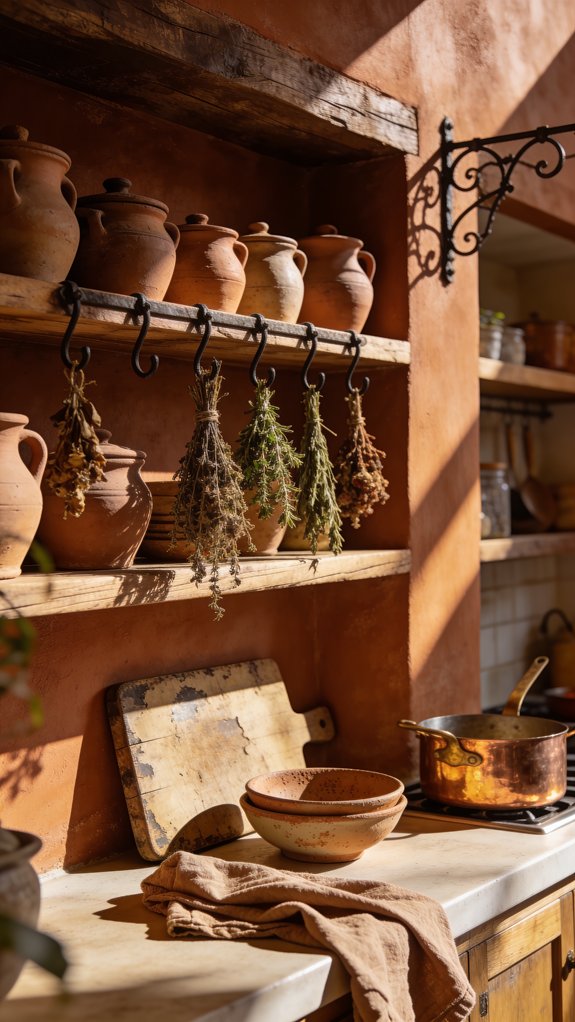
Extending terracotta hues from kitchen islands to entire walls allows you to fully embrace its inviting warmth. Selecting the right shade is key to creating a vibrant atmosphere rather than one dominated by harsh orange tones. Softer, earthy reds like Benjamin Moore’s ‘Roasted Sesame’ add richness and complexity without overpowering cabinetry or other design elements. Meanwhile, subtler ochre-inspired colors such as Sherwin-Williams’ ‘Antique White’ introduce gentle warmth with a refined, muted feel.
To get the best result, try out paint samples under different lighting conditions—both natural sunlight and indoor lighting—since terracotta tones can look quite different throughout the day. This shifting quality brings out deeper, more grounded shades that bring character and authenticity, far surpassing the flatness of inexpensive orange paints.
26. Incorporating Terracotta into Sleek Modern Kitchens
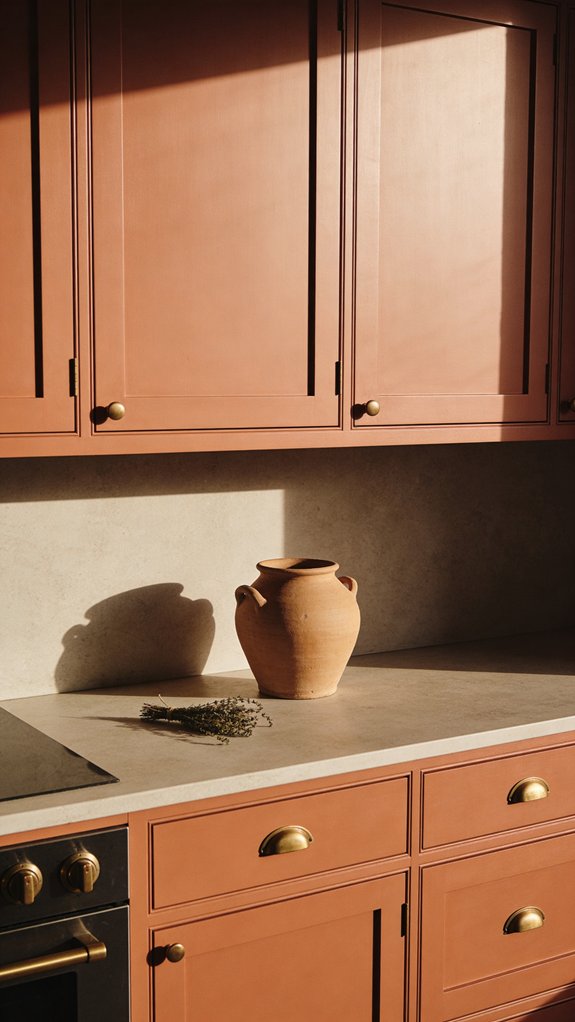
While terracotta may initially seem at odds with the clean lines of modern minimalist kitchens, it can actually introduce a warm, tactile dimension when used thoughtfully. Against a backdrop of crisp white cabinetry, a single terracotta piece adds subtle texture and depth, standing out without creating visual clutter. The key is to treat terracotta elements as sculptural highlights rather than as part of a larger assortment.
Embracing simplicity ensures that each terracotta accent feels purposeful and refined. By balancing scale and spacing carefully, these earthy tones can soften the sleekness of contemporary surfaces, lending a grounded yet sophisticated vibe to the room. Minimalism thrives on intentionality, and a well-chosen terracotta object can be both an artful statement and a harmonious complement.
Key Design Elements
- Opt for one bold terracotta item instead of grouping multiple smaller pieces
- Combine terracotta with concrete countertops to create an appealing interplay of textures
- Allow ample empty space around terracotta objects to maintain a clean aesthetic
- Select terracotta with a matte finish to harmonize with smooth, flat kitchen cabinetry
Pro Tip: A lone terracotta vessel nestled against white cabinets can communicate more visual interest than an entire collection ever might.
27. The Impact of Natural Light on Terracotta Colors in Your Kitchen
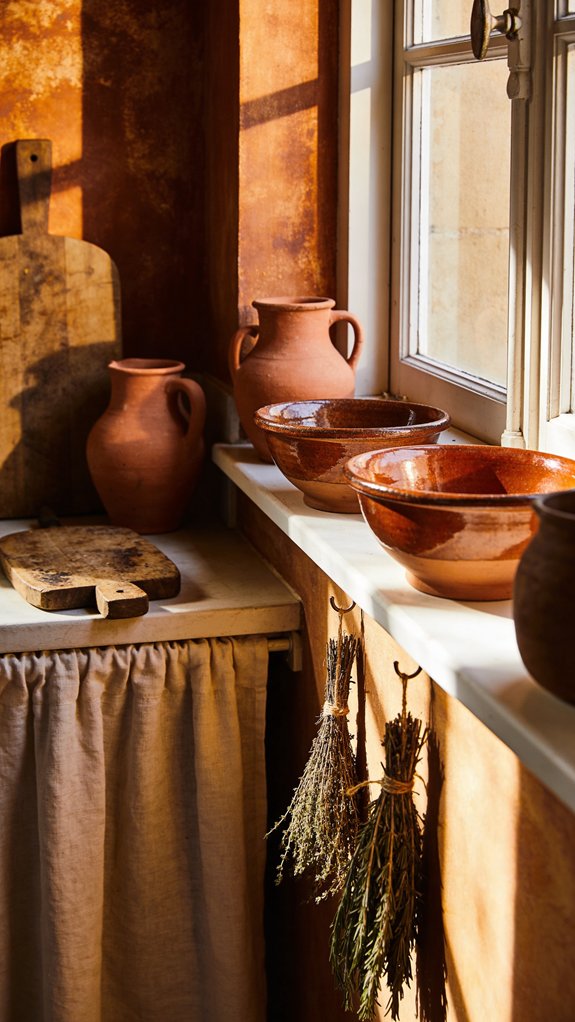
The way natural light interacts with terracotta elements in your kitchen can significantly influence their appearance throughout the day. In the early hours, sunlight enhances the warm, earthy tones of terracotta, making surfaces like tiles and walls radiate a vibrant, amber glow that energizes the room and creates a welcoming ambiance. As the day progresses, the light softens and shadows deepen, causing the terracotta shades to take on richer, more muted clay hues that contribute to a cozy and intimate environment.
Understanding the direction your kitchen faces is crucial when selecting terracotta colors. North-facing kitchens tend to receive cooler, less direct light, which can make terracotta tones appear more subdued. To counteract this effect and preserve the warmth and depth characteristic of terracotta, consider choosing warmer shades to brighten the space and maintain its inviting feel. Observing your kitchen’s natural lighting patterns at various times can help you make an informed decision and achieve the perfect balance in your color palette.
28. Choosing the Ideal Grout Shade for Terracotta Floors
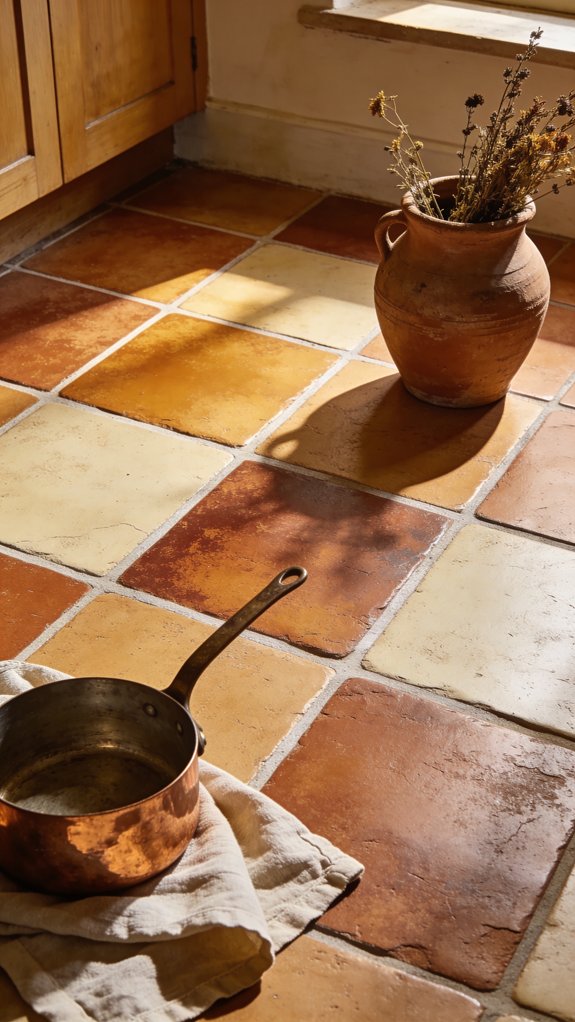
The color of grout can significantly influence the overall appearance of terracotta tile flooring, often playing a more crucial role than homeowners might expect. Selecting a grout tone that harmonizes with the warm, earthy reds and oranges of terracotta helps create a cohesive and natural-looking surface that feels thoughtfully designed. Shades like warm browns or muted golds work beautifully to blend the tiles into a unified pattern without drawing attention away from their rustic charm.
On the other hand, opting for cooler grout colors introduces contrast, making each tile stand out individually and adding a sense of definition to the floor. This approach can be useful if you want to highlight the shape and layout of the tiles, but it may disrupt the warm, organic feel typically associated with terracotta. Ultimately, deciding between warm or cool grout depends on whether you prefer a seamless flow or clear separation between tiles. It’s always wise to try out grout samples directly on your tiles before making a final choice to see how the colors interact in your space.
Pro Tip: Interior designer Joanna Gaines famously said that grout acts like the punctuation marks of your flooring, giving it structure and meaning.
29. Five Subtle Terracotta Updates to Elevate Your Kitchen Hardware and Accessories
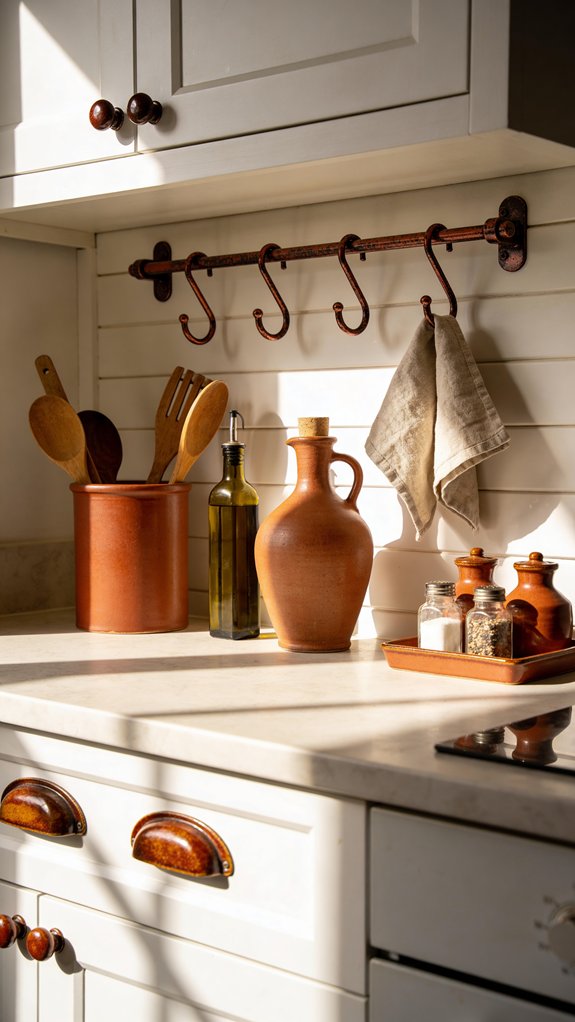
Incorporating small terracotta elements can make a significant impact on your kitchen’s overall aesthetic, especially when paired with complementary materials and colors. Consider updating your cabinet handles to brass ones with warm tones that harmonize beautifully with the earthy matte finish of terracotta. Adding rope hooks near your cooking area not only provides practical hanging space but also introduces natural texture that enhances the space’s intentional design.
Place clay trivets on your countertops to protect surfaces while contributing to an organic, grounded feel. Swapping out a standard dish soap dispenser for a terracotta ceramic version brings a subtle yet impactful touch of warmth. Finally, replace plain storage containers with unglazed clay canisters to add rustic charm. These thoughtful changes accumulate warmth and character over time, refreshing your kitchen without the need for extensive renovations or major commitments.
Conclusion
Transforming your kitchen into a space that radiates warmth and thoughtful design doesn’t require an extensive overhaul. Incorporating terracotta elements—whether it’s a single handcrafted clay jar, a subtle matte tile backsplash, or a softly worn linen runner—can instantly infuse your kitchen with a rich, inviting character. These carefully chosen accents create a foundation that gently shifts the atmosphere, making the space feel both timeless and personal.
Approach your design journey with patience and intention: experiment with colors under various lighting, introduce natural materials gradually, and allow your kitchen to evolve organically. By embracing terracotta’s earthy hues and textures, you cultivate not just a beautiful environment, but a welcoming retreat where moments are savored and memories made.
Leave a Reply