Transforming a cramped city apartment into a lush, nature-filled retreat is entirely possible with biophilic design. You do not need a sprawling home to create a green sanctuary; smart strategies that layer plants, natural textures, and organic elements can revitalize even the tiniest living room. These twenty-three ideas work beautifully whether you are renting a studio or maximizing a modest one-bedroom. By thoughtfully sequencing your design choices—from foundational layout decisions to finishing sensory details—you can craft a cohesive, restorative space.
Phase 1: Establish the Foundation (Layout & Light)
Before bringing in plants or decor, optimize your room’s layout and natural light to create a welcoming environment for both you and your future greenery.
1. Position Your Sofa Near Windows for Sunlight
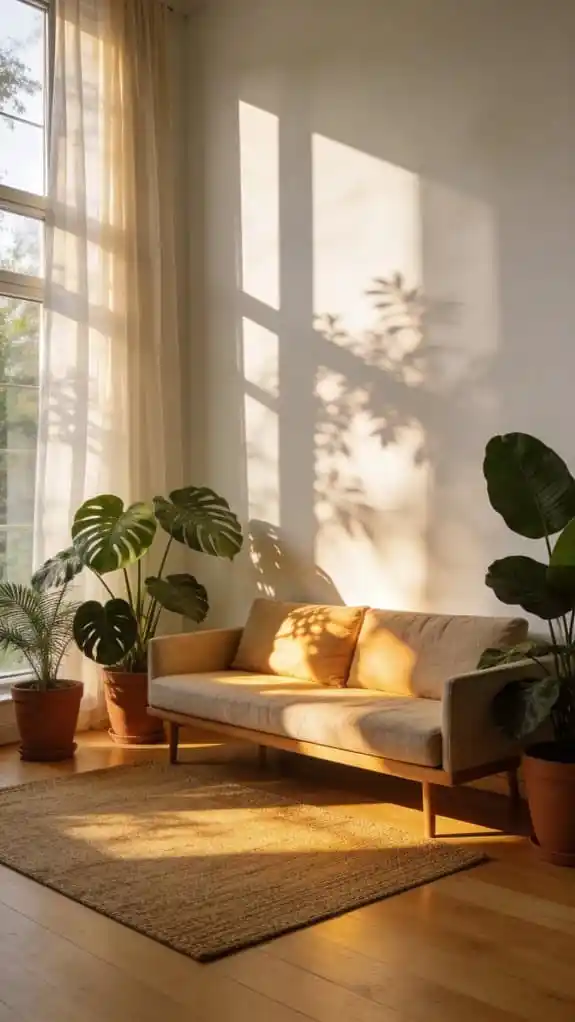
Positioning your sofa where sunlight streams through windows creates an immediate connection to the outdoors that transforms ordinary relaxation into a restorative experience. Natural light flooding your seating area brightens the space, elevates your mood, regulates your circadian rhythm, and makes your living room feel expansive.
2. Frame Outdoor Views as Living Artwork
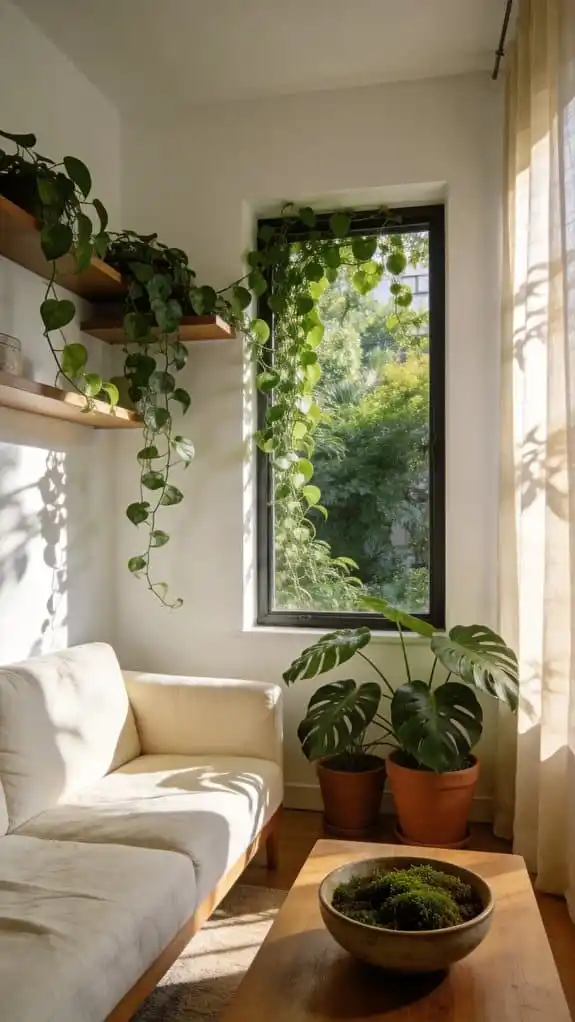
Why confine nature’s beauty to potted plants when your windows offer an ever-changing masterpiece? Strategic window framing transforms ordinary glass panes into curated galleries of the natural world. Remove heavy curtains that block scenery, replacing them with sheer panels that filter light while preserving your view. Position furniture to face windows, creating intentional sightlines that draw eyes outward.
3. Use Mirrors to Reflect Natural Light and Greenery
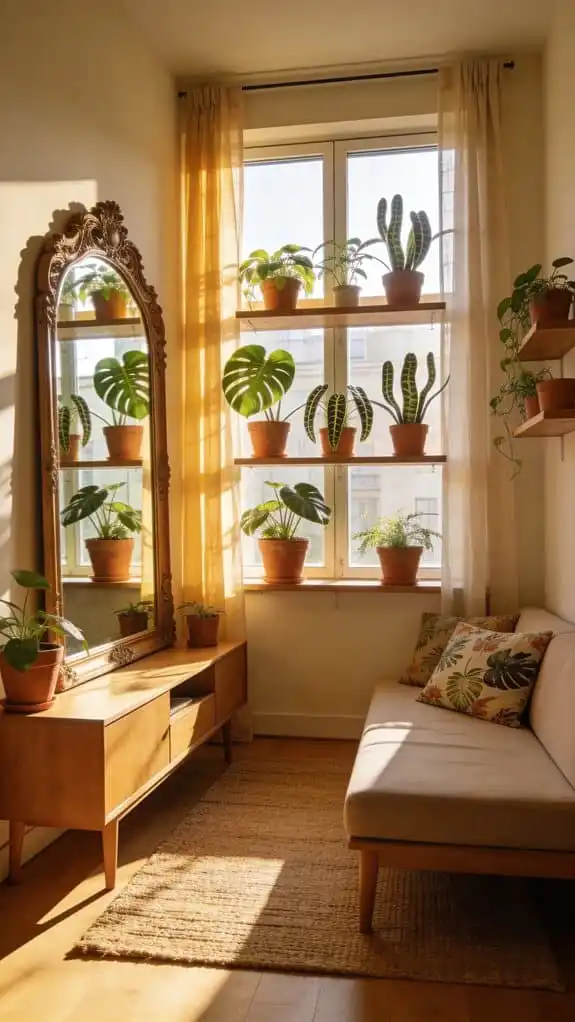
Strategically placed mirrors multiply the biophilic impact by capturing and reflecting both natural light and your carefully curated greenery throughout the room. Position mirrors opposite or perpendicular to windows to bounce sunlight deeper into your apartment and create the illusion of expanded space. Floor-length mirrors offer perfect proportions for small apartments, drawing the eye upward while maximizing reflections.
4. Paint Walls in Earthy Terracotta and Sage Tones
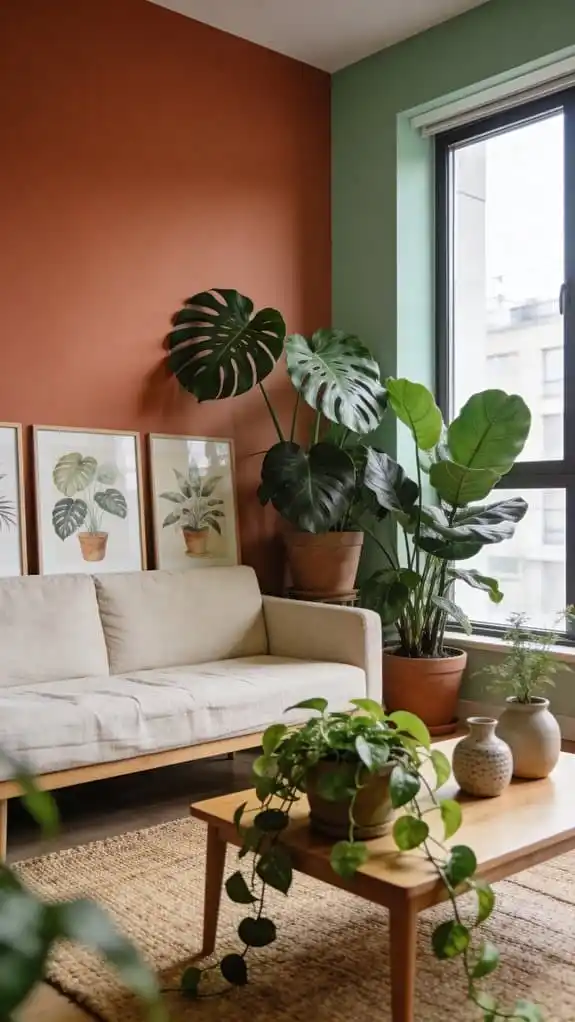
Color is a powerful tool for grounding your living room in nature’s palette. Earthy terracotta and sage tones transform bare walls into warm, nurturing backdrops. These hues connect you directly to sunbaked clay and forest canopies. Paint an accent wall in rich terracotta while keeping remaining walls in soft sage to create a soothing ambiance.
5. Add Reclaimed Wood Accent Walls
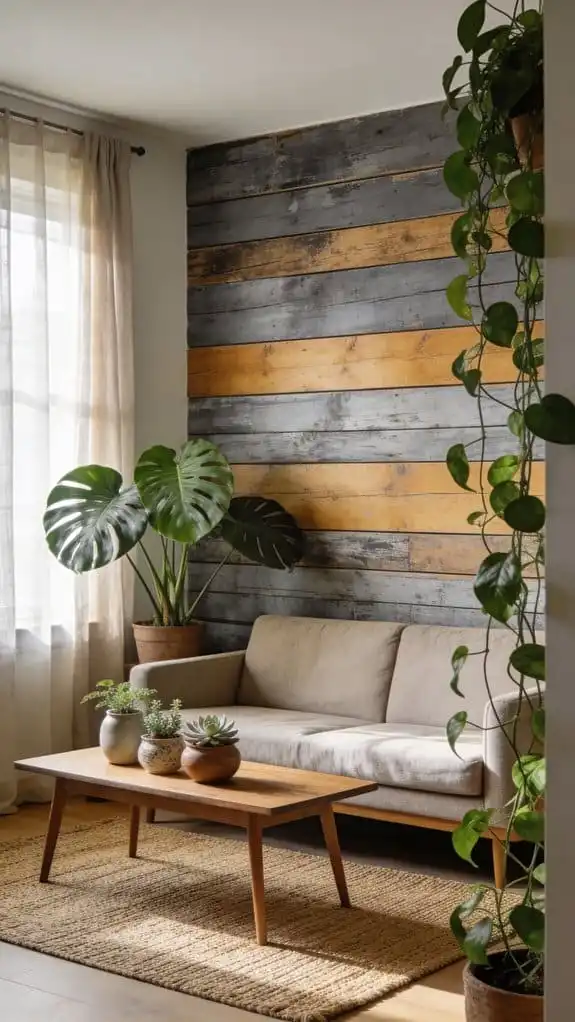
Reclaimed wood accent walls introduce dramatic vertical interest that transforms ordinary spaces into nature-inspired retreats. The wood grain patterns create authentic natural texture that draws your eye upward. Install weathered barn wood planks horizontally or arrange vertical wood strips to emphasize ceiling height, bringing authentic character while supporting sustainable design principles.
Phase 2: Select Organic Furniture & Textures
With the layout and backdrop established, choose furniture and textiles that mimic the natural world.
6. Choose Furniture Made From Natural Wood and Rattan
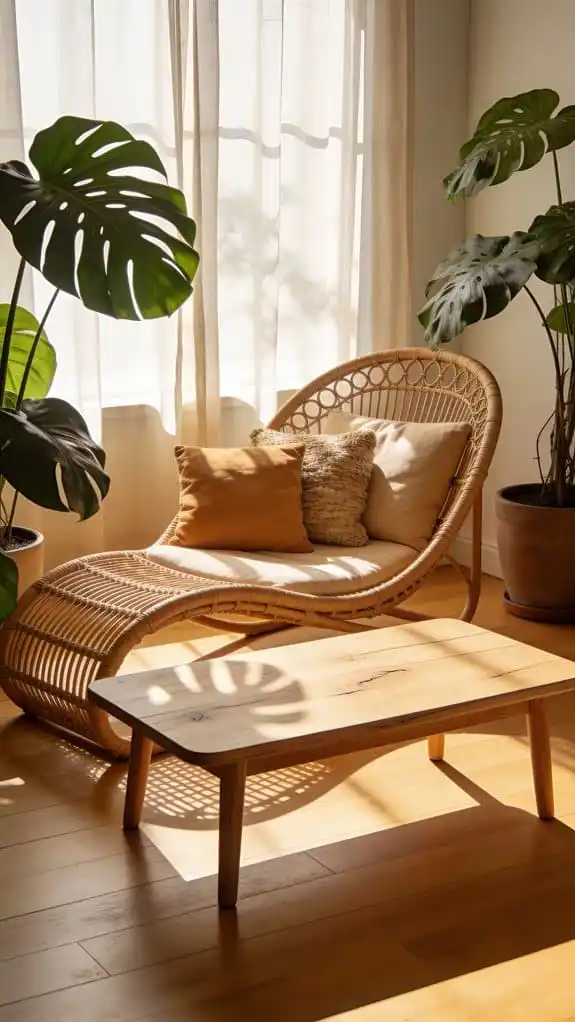
Natural materials speak a primal language that connects us to the organic world. In small spaces, consider biophilic furniture choices like rattan accent chairs that introduce texture while maintaining visual lightness, walnut or oak coffee tables with live edges, and bamboo shelving units. Mixing smooth finished wood with textured rattan weaving creates harmony within your curated living space.
7. Select Curved Sofas and Round Coffee Tables
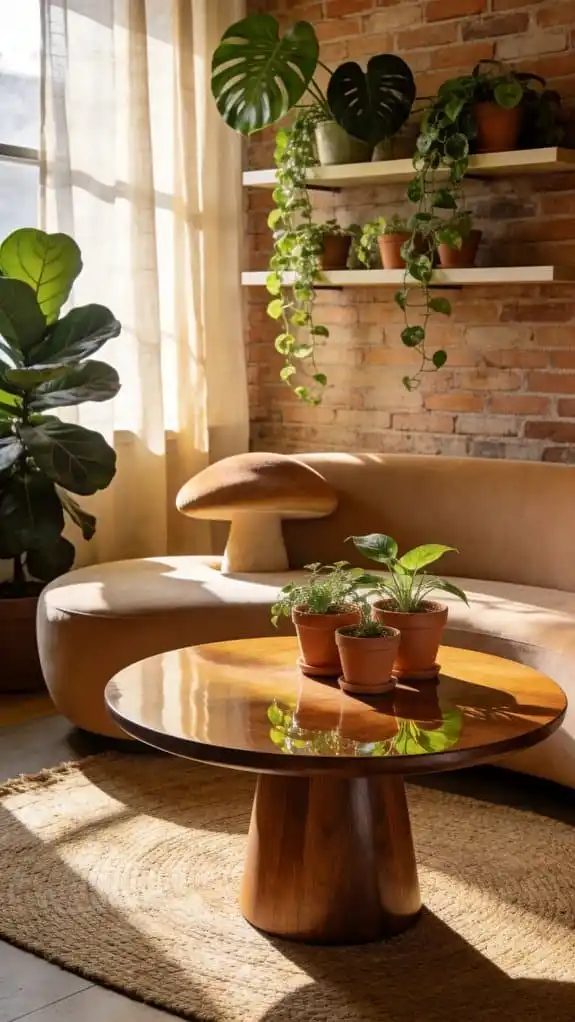
Biophilic design extends to the furniture that shapes your living room’s flow. Curved sofas and round coffee tables mimic the organic forms found in nature. These pieces create harmony through soft edges that encourage movement and conversation. Crescent-shaped sectionals, oval coffee tables, and rounded armchairs reduce visual clutter, making your compact living room feel larger and calmer.
8. Layer Jute Rugs With Linen Throw Pillows
Texture’s transformative power becomes apparent when you combine jute’s earthy, tactile foundation with linen’s soft, inviting drape. Achieve compelling texture contrast by positioning a chunky jute rug beneath your seating area, then scattering linen throw pillows across your sofa in warm neutrals. These natural layers soften hard surfaces while maintaining an organic aesthetic.
Phase 3: Maximize Space with Vertical & Structural Greenery
Now, introduce plants strategically to define zones and draw the eye upward without cluttering the floor.
9. Use Multifunctional Planters as Room Dividers
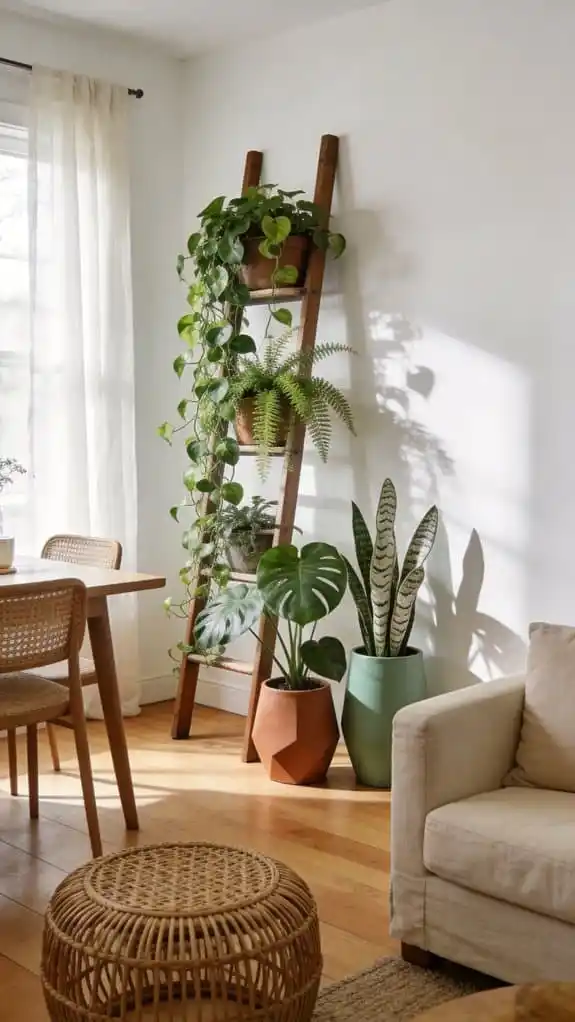
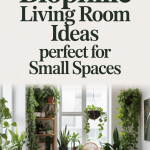
In an open-concept apartment or studio, strategically positioned planters filled with tall greenery create natural boundaries. These living walls carve out private zones without the permanence of traditional walls. Use tall, narrow planters to maximize vertical impact without consuming precious floor space.
10. Place a Statement Fiddle Leaf Fig in Empty Corners
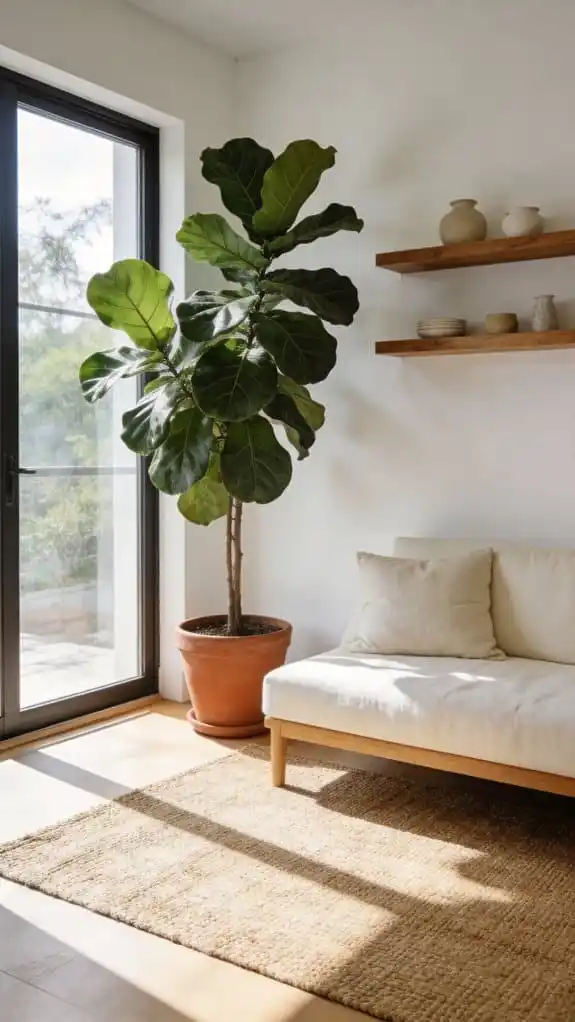
Empty corners create visual dead zones, but a towering fiddle leaf fig becomes an architectural focal point that fills vertical space with drama. Position your fig where it will receive bright, indirect sunlight. This single statement plant transforms forgotten corners into intentional design moments.
11. Create a Living Wall With Vertical Planters
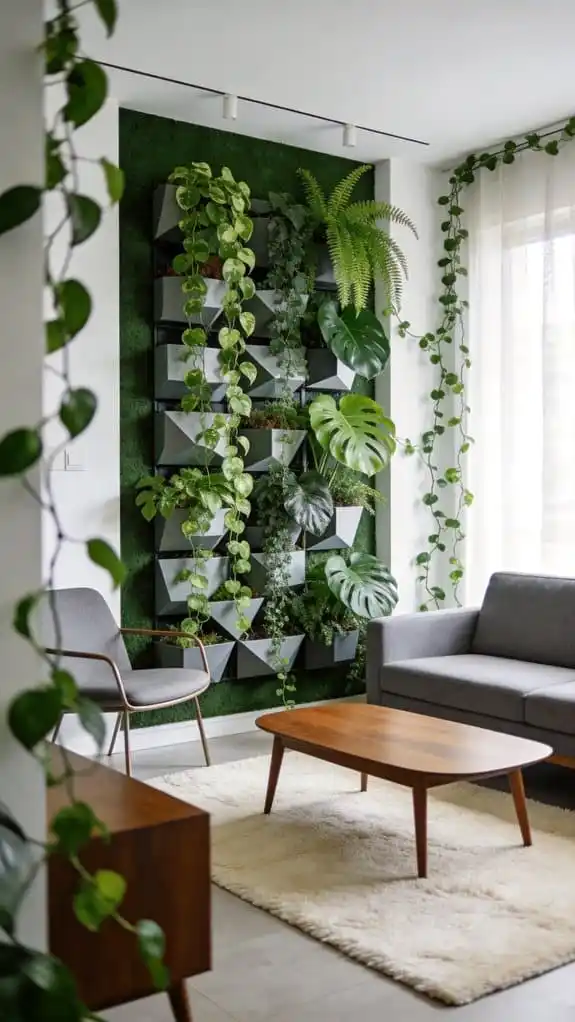
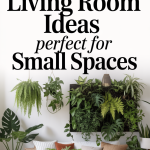
A living wall transforms an ordinary vertical surface into a stunning focal point that brings the outdoors inside. Modular vertical planters offer flexibility in arrangement, allowing you to create custom patterns that suit your space perfectly. Start with a small section to build confidence, then expand your living tapestry as you gain experience. Choose low-maintenance varieties like pothos, ferns, or succulents that thrive indoors. This vertical installation maximizes limited floor space while delivering maximum visual impact, turning a blank wall into a breathing artwork that purifies your air.
12. Install Floating Shelves for Cascading Plants
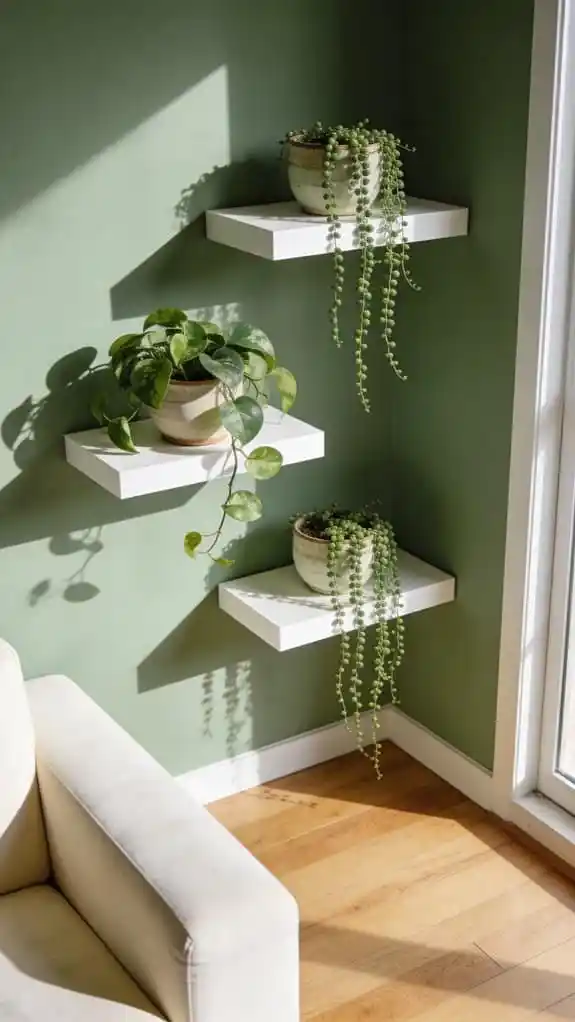
While living walls make a bold statement, floating shelves offer a more flexible approach that is easier to install and adjust as your plant collection grows. Arrange pothos, string of pearls, and trailing philodendrons across staggered shelf heights to create natural waterfalls of greenery that draw the eye upward and make your space feel larger. Choose shelf materials wisely—rustic wood adds warmth, sleek metal provides modern aesthetics, and minimalist glass disappears into the background.
13. Hang Macramé Plant Hangers to Save Floor Space
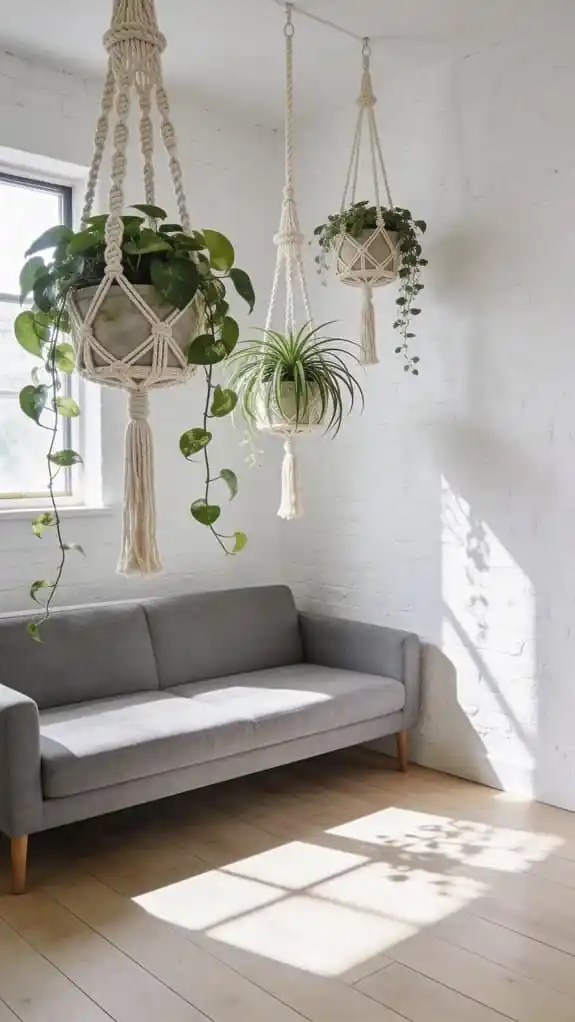
Macramé plant hangers bring vertical dimension to your living room without claiming precious square footage. They are perfect if you are working with limited space or want to keep surfaces clear for other decorative pieces. Suspend trailing pothos, delicate ferns, or cascading spider plants from ceiling hooks to create lush layers of greenery. Hang multiple planters at varying heights to build depth, and position them near windows where your plants will thrive.
Phase 4: Integrate Accessible & Low-Maintenance Plants
Fill in the gaps with plants that are easy to care for and provide immediate benefits.
14. Choose Low-Maintenance Air-Purifying Plants

Snake plants, pothos, and spider plants work double duty by filtering toxins from the air while requiring almost no effort to keep alive. They are perfect choices if you are new to indoor gardening or have a busy schedule. Position them near seating areas where you will breathe cleaner air while relaxing.
15. Turn Windowsills Into Mini Herb Gardens
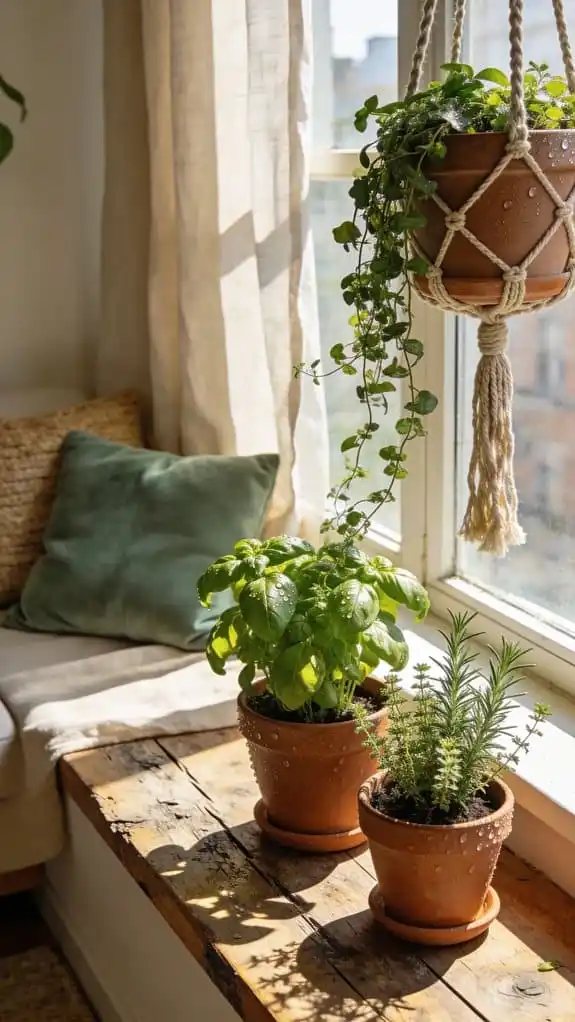
Transform sunny windowsills into productive, fragrant herb gardens that bring fresh flavors to your cooking while filling your living room with natural greenery. Start with beginner-friendly herbs like basil, mint, and rosemary in shallow containers. This simple transformation combines practical kitchen functionality with biophilic design principles.
16. Install Grow Lights for Dark Corners
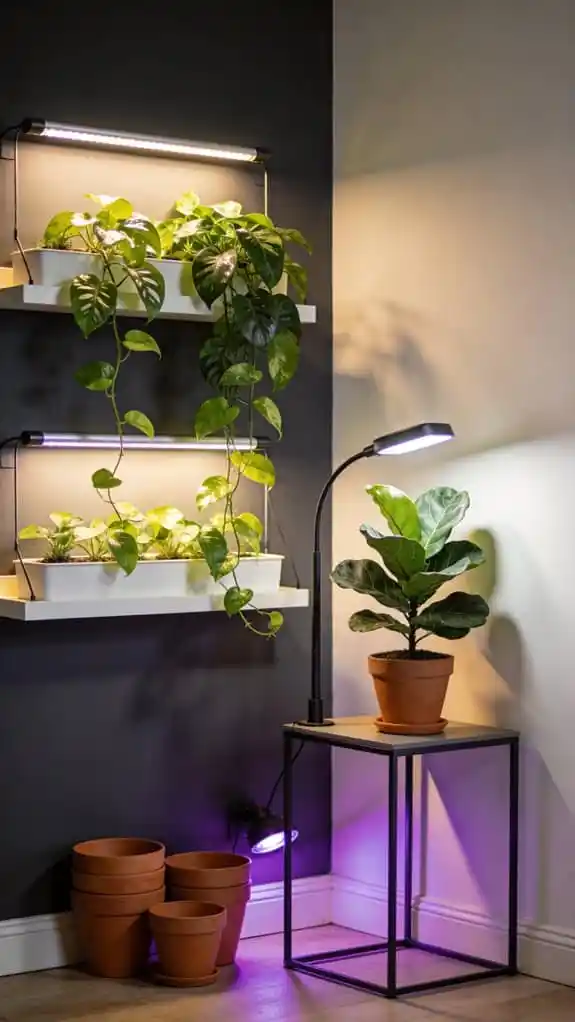
When shadowy corners threaten to limit your plant collection, grow lights become your secret weapon. Transform dim spaces into thriving green sanctuaries by using LED grow lights, which consume less electricity while providing ideal spectrum output. Full-spectrum bulbs mimic natural sunlight patterns for healthier plant development, turning your darkest corners into verdant focal points.
Phase 5: Add Nature-Inspired Art & Decor
Enhance the biophilic atmosphere with artwork and decorative elements that echo the outdoors.
17. Add Leaf Prints and Botanical Wallpaper
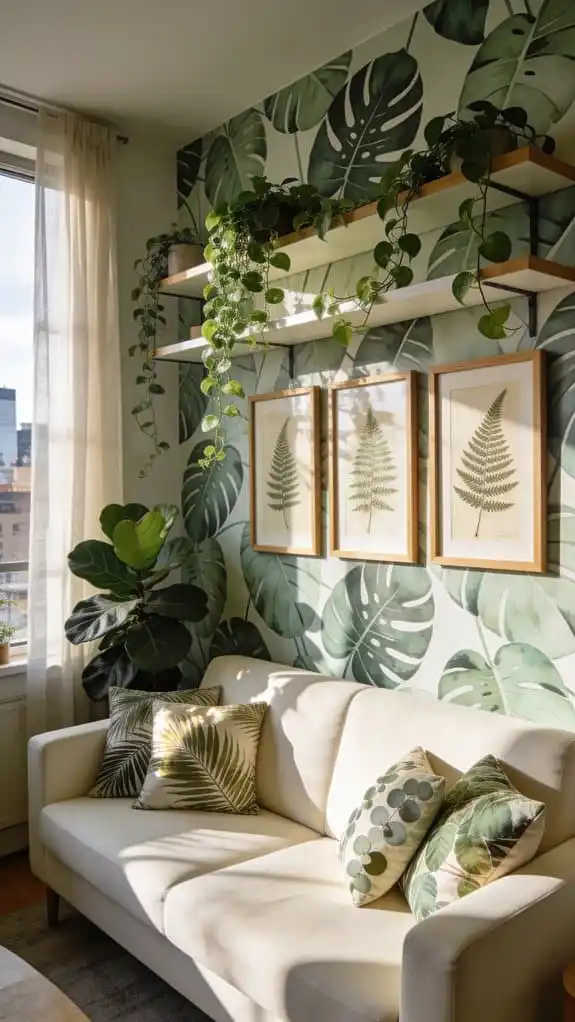
Botanical wallpaper transforms your walls into living galleries of nature. Create instant visual impact with nature-inspired designs featuring intricate leaf patterns or sprawling fern fronds. Apply botanical prints to a single accent wall to maximize impact while preventing visual overwhelm in compact spaces.
18. Display Framed Nature Photography Above the Sofa
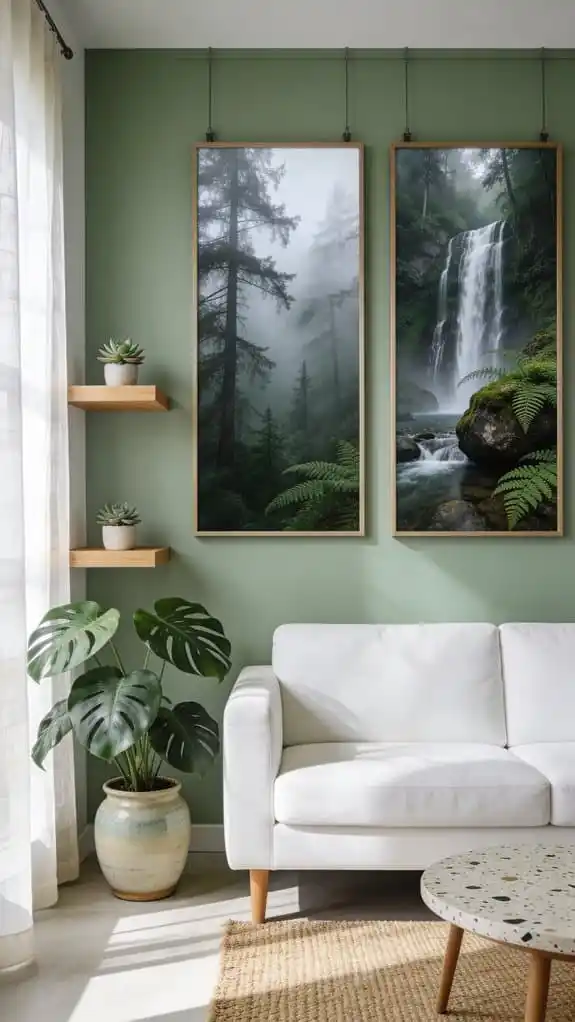
Make a strong statement by placing framed nature photography directly above your sofa. Create a gallery wall featuring forest scenes, ocean waves, and mountain vistas that transport your mind outdoors. Ensure your nature print curation follows a cohesive color palette to elevate your entire living space.
19. Create Moss Wall Art for Textural Interest
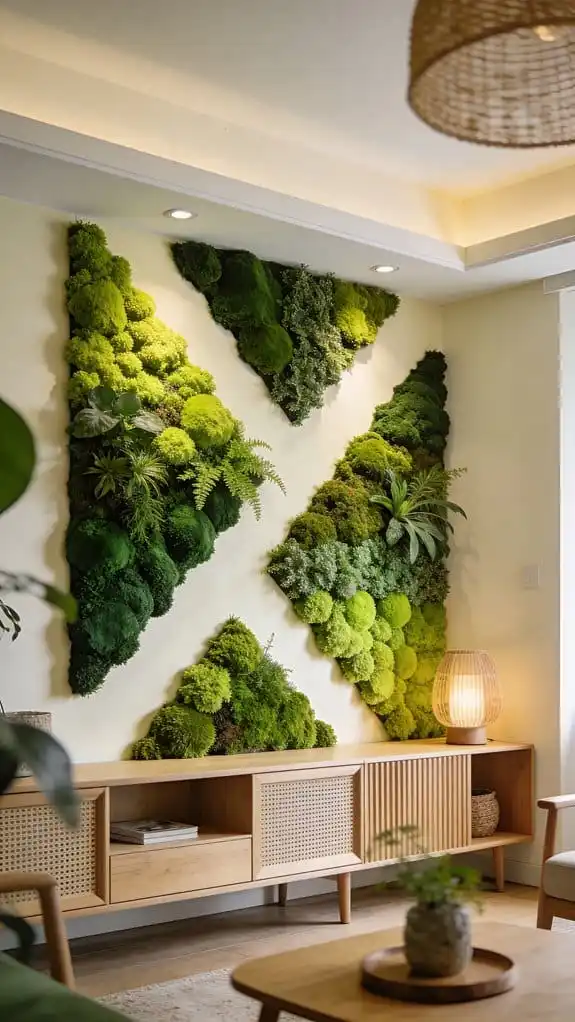
Moss wall art brings the forest floor’s lush, velvety texture directly into your living room. This three-dimensional natural masterpiece draws the eye and invites touch. Use preserved reindeer or sheet moss varieties that do not need watering or sunlight, making this design choice perfect for busy apartment dwellers.
Phase 6: Refine with Sensory Details
Complete your sanctuary by engaging the senses of touch, smell, and sound.
20. Introduce River Rocks and Stone Coasters
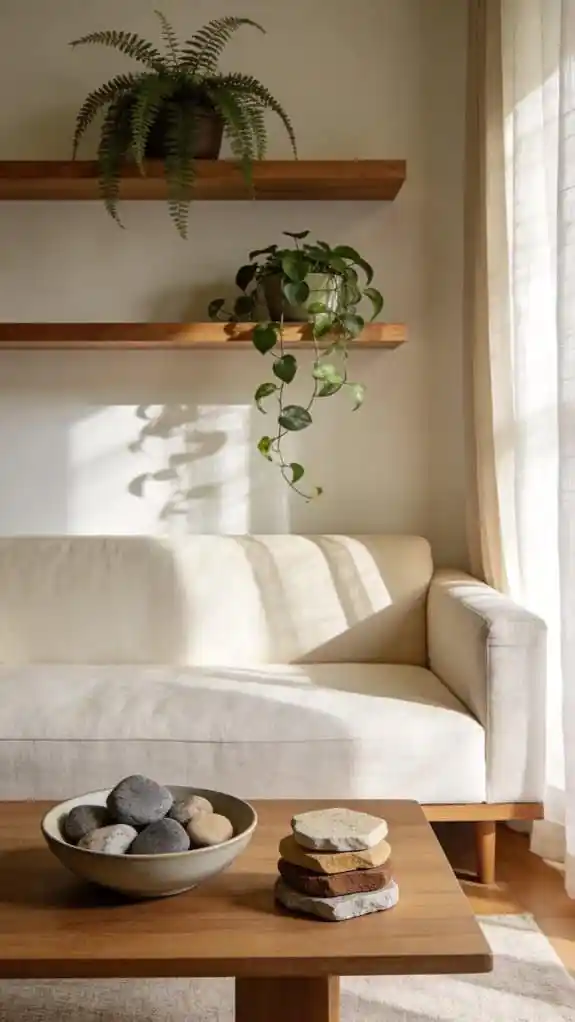
Smooth river rocks and handcrafted stone coasters bring earth’s geological beauty directly into your living space. Arrange a collection of polished river rocks in a shallow wooden bowl on your coffee table, allowing guests to feel their smooth surfaces. Use stone coasters beneath your beverages to protect furniture while adding earthy elegance.
21. Display Small Terrariums on Coffee Tables

Small terrariums create stunning focal points on your coffee table, bringing miniature landscapes of moss and succulents into arm’s reach. These tiny ecosystems thrive inside glass enclosures, requiring minimal maintenance while delivering maximum biophilic impact.
22. Fill Vases With Eucalyptus and Fresh Flowers
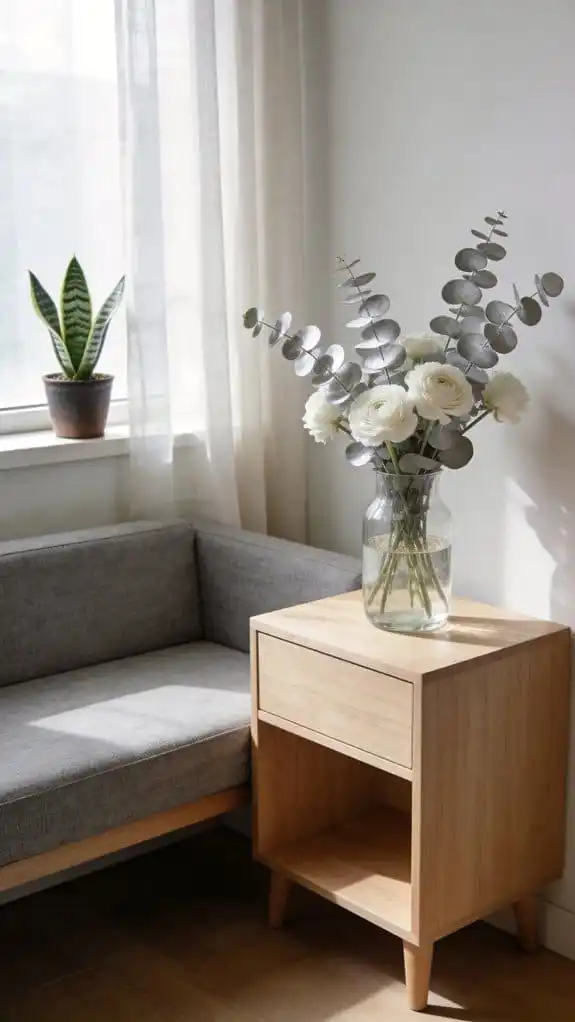
Fresh botanical arrangements transform your living room into a sensory-rich space. The therapeutic properties of eucalyptus combine with the vibrant beauty of seasonal blooms to create an ever-changing display. Eucalyptus releases stress-relieving compounds while fresh flowers inject color and life into your apartment.
23. Install a Tabletop Water Fountain for Ambient Sound
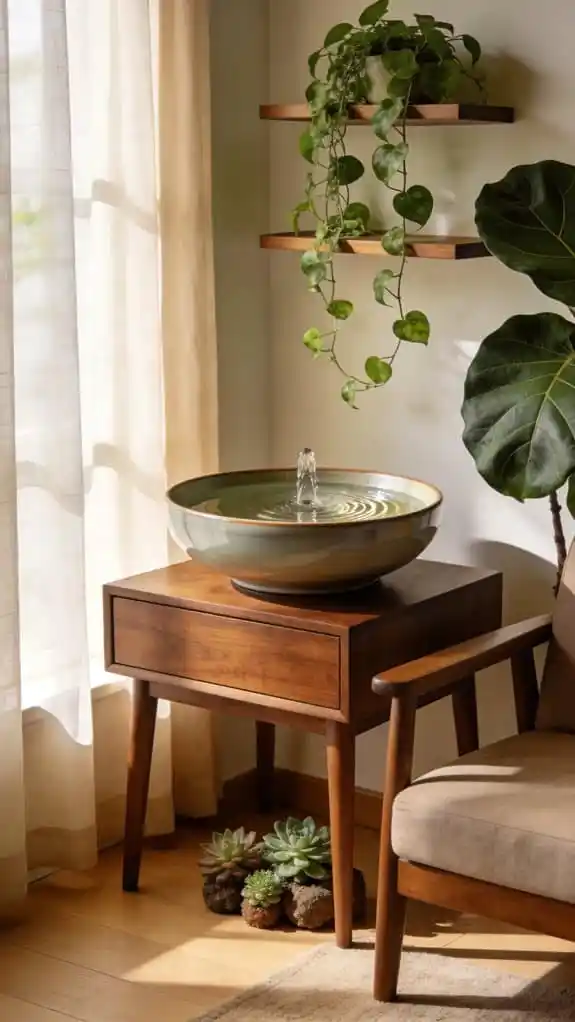
Sound plays a powerful role in creating a biophilic sanctuary. A tabletop water fountain introduces the gentle, rhythmic sound of water flow that naturally calms your nervous system. The continuous natural soundtrack masks urban noise pollution, helping you disconnect from city stress.
Frequently Asked Questions
How Do I Prevent Overwatering Plants in a Small Apartment?
Prevent overwatering by checking soil moisture before watering—stick your finger one inch deep into the soil. Use pots with proper drainage solutions, including drainage holes and well-draining potting mix to avoid root rot.
What’s the Ideal Humidity Level for Biophilic Living Rooms?
Maintain 40-60% humidity for ideal plant health and comfort. Use humidity meters to monitor levels, especially during winter months when indoor heating dries the air.
How Often Should I Rotate Plants for Even Growth?
Rotate your plants every week or two. Rotating guarantees balanced light exposure, prevents lopsided growth patterns, and keeps your plants symmetrical. Quarter-turn rotations work best.
Can Biophilic Design Work in Apartments With Pets or Children?
Yes, you can succeed with biophilic design around pets and children by prioritizing safety. Choose non-toxic plants, use sturdy planters, elevate shelving, and secure pots to protect everyone.
What’s the Average Cost to Create a Biophilic Living Room?
You can expect to spend $200-$2,000 depending on your budget planning approach. Plant selection markedly impacts costs—start with affordable pothos and snake plants, then add natural materials and lighting as finances allow.
By mastering the art of strategic plant placement, good lighting, and natural textures, you can transform your cramped apartment into a lush urban jungle. Nature has moved in, and it is paying rent in oxygen.
Leave a Reply