When a bedroom feels cramped, it affects sleep, mood, and how we use the rest of the home. We’ve learned that making a small bedroom feel larger isn’t about knocking down walls, it’s about how we design, edit, and light the space so our eyes perceive more room. This guide compiles 15 practical, contemporary tricks that work together: color, furniture choices, storage, lighting, mirrors, flooring, and daily habits. Each tactic is actionable, budget-aware, and suited to modern 2026 aesthetics, whether you’re renting, staging for resale, or finally tackling a long-postponed makeover. Read on and pick the three changes we can carry out this weekend to start seeing immediate visual gain.
Why Visual Space Matters: Function, Comfort, And Resale Value
Perceived space, what our eyes tell our brains, is arguably more important than square footage. When a bedroom looks open, it changes how we use the room: we sleep better, we can add a workspace or reading nook, and guests feel welcome. For homeowners, visual space impacts resale. Listings that photograph as airy and uncluttered consistently attract more views and higher offers. From an emotional standpoint, cramped bedrooms elevate stress and inhibit restful routines. Practically, small but smart design choices allow us to fit essentials without creating visual noise. That means prioritizing multifunctional furniture, streamlining patterns and colors, and preserving clear sightlines. We’ll cover solutions that increase perceived roominess without costly renovations, strategies that realtors, designers, and rental-minded owners can carry out quickly. The aim isn’t deception: it’s making the most of what we have so the room supports sleep, storage, and style. Throughout this piece we’ll balance aesthetics with function, offering tricks that look intentional rather than “small-space afterthoughts.”
Use A Light, Cohesive Color Palette To Open The Room
Color is the single most efficient visual trick to enlarge a room. Light, cohesive palettes reflect more light and blur boundaries between floor, walls, and ceiling, so walls seem to recede and ceilings feel higher. We recommend starting with a dominant neutral (soft white, warm cream, pale greige) and introducing one or two muted accent tones in linens or art. Keep contrast low to moderate: high-contrast stripes or dark feature walls close space: subtle tonal contrasts expand it. For a modern 2026 update, try warm off-whites paired with a single desaturated color, sage, dusty blue, or blush, used sparingly. Maintain consistent trim and door colors instead of painting them dark: uniformity lengthens sightlines. If you crave pattern, choose large-scale, low-contrast patterns rather than busy small prints. Finally, test paint colors in the room at different times of day: natural and artificial light change how a shade reads, and the wrong “light” color can appear dingy. With a cohesive palette, our furnishings read as part of one continuous environment rather than competing visual elements.
Furniture Strategy: Create Flow Without Clutter
Furniture dictates how our eyes travel through a room. In small bedrooms, the wrong pieces or placement kill flow and make the space feel congested. We should prioritize a calm arrangement that preserves walking paths and visual breathing room. Start by measuring the room and the bed: a queen in a very narrow room may feel overpowering, consider a full-size bed or a low-profile platform instead. Keep larger pieces against walls to open central floor space, and avoid floating too many items in the middle. Choose furniture with exposed legs or slender frames to increase the sense of openness: solid, blocky silhouettes sit visually heavy. Finally, create purposeful negative space: an intentionally empty corner or a clear pathway near the door gives the eye room to rest, which contributes disproportionately to perceived spaciousness.
Multi-Functional Pieces That Save Space And Look Intentional
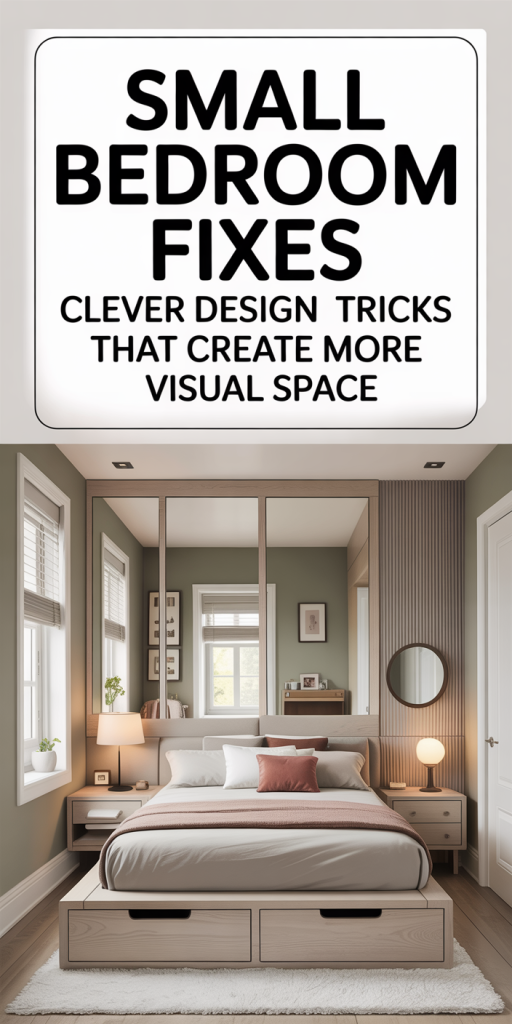
We can dramatically reduce clutter by choosing furniture that earns its place. Think storage beds with drawers, headboards with built-in shelving, or nightstands that double as slim desks. Wall-mounted fold-down desks and Murphy beds are more refined than they used to be, many modern options are streamlined and look built-in rather than mechanical. Bench storage at the foot of the bed provides seating and hides bulky items. Look for ottomans with removable tops, nesting tables, and slender chests that can function as nightstands and dressers. When selecting multi-use pieces, favor consistent materials and finishes to avoid a mismatched, ad-hoc feel. The key is to design solutions that read like intentional furniture choices, not last-minute hacks.
Scale And Placement: How To Choose And Position Furniture For Maximum Visual Space
Scale matters. Oversized headboards, thick mattresses, and deep armchairs shrink visual space. We recommend a low-profile headboard and a shallower mattress depth (but not at the expense of comfort). Place the bed so the longer side faces into the room rather than the foot, this reduces the sensation of a barrier at the doorway. Keep nightstands small and avoid blocking windows with tall dressers. If we must include a dresser, place it opposite the bed to create balance and reflective sightlines. Floating shelves are preferable to bulky bookcases because they preserve wall continuity. As we reposition, we should walk the path ourselves to ensure movement feels natural: if our route requires sidestepping furniture, it’s a sign we need to scale down or relocate pieces.
Smart Storage Solutions That Hide Stuff And Free Visual Real Estate
Visible clutter is one of the fastest ways to make a room look small. Storage that hides belongings while staying accessible improves both function and perception. Under-bed storage is the most underused asset: shallow rolling bins hold out-of-season clothes, while deeper drawers store bulky bedding. Built-in wardrobes with flush doors create a monolithic wall that reads as architecture rather than furniture. For renters, sleek armoires or tall narrow dressers provide vertical storage with a small footprint. Use uniform baskets or bins inside open shelving to avoid visual chaos. Another trick: move the laundry basket out of view, placing it inside a closet or a storage bench maintains calm. We also recommend a dedicated drop zone, one slim tray or shallow wall hook near the door, so small items don’t accumulate on surfaces. When storage looks organized and consistent, the room breathes.
Layered Lighting, Mirrors, And Reflective Surfaces To Expand Depth
Lighting and reflection manipulate depth more convincingly than expensive renovations. Layered lighting, ambient, task, and accent, adds dimension. Overhead fixtures should be soft and diffuse: combine them with bedside sconces or pendant lights to free up nightstand surface area. Task lighting for reading or dressing keeps activity zones defined. Mirrors are essential: a full-length mirror placed opposite a window or behind a light source doubles perceived depth by bouncing light and sightlines. Consider mirrored closet doors for a large visual punch, or a strategically hung horizontal mirror above the headboard to widen the room. Reflective surfaces don’t have to be full mirrors: glossy lacquered furniture, a polished metal lamp, or even a subtle metallic wallpaper on one wall can increase brightness and perceived space. Use mirrors thoughtfully, avoid placing them where they simply reflect clutter. The goal is depth and light, not visual repetition of mess.
Flooring, Rugs, And Visual Lines That Extend The Room
The floor is an underappreciated tool for elongating a bedroom. Continuous flooring throughout the apartment or from the hallway into the bedroom creates flow and seamless transition, making the room feel like part of a larger whole. Choose long planks or narrow tiles laid lengthwise with the longest dimension of the room, the resultant lines guide the eye outward. Rugs should be large enough so at least the front two-thirds of the bed sit on them: a tiny rug isolates the bed and fragments the visual field. If using multiple rugs, keep textures and tones similar to avoid a patchwork effect. For renters, a single neutral rug and consistent flooring tones in visible adjoining spaces will yield the best optical expansion. We also recommend minimizing abrupt thresholds, raised door sills or mismatched flooring breaks create perceived boundaries that shrink space.
Edit, Declutter, And Maintain Clear Sightlines Daily
Design tricks work best when paired with simple daily habits. We advocate a five-minute nightly reset: clear surfaces, fold or hang clothes, stash anything left out in designated bins. A nightly ritual resets our visual field and prevents cumulative clutter. We should be ruthless about what stays on display, limit surfaces to a lamp, one framed photo, and perhaps a plant. Keep windows unobstructed: curtains that pool or heavy drapery block light and shrink the room. For artwork, one large, well-placed piece creates a stronger sense of scale than multiple small frames. Maintain sightlines by avoiding stacks of items in corners or on window sills: if we can see from one side of the room to the other without interruption, the space will feel larger. Finally, schedule quarterly purges: clothing that hasn’t been worn, accessories we don’t use, and décor that doesn’t contribute to function should go. Small, consistent housekeeping beats occasional deep cleans for preserving perceived space.
Conclusion
Small bedroom fixes compound. When we pair a light, cohesive palette with scaled furniture, smart hidden storage, layered lighting, and disciplined editing, the room reads larger even without structural changes. Start with two visible wins, a lighter paint and a large mirror, and layer in functional pieces like a storage bed or wall-mounted lights. These choices deliver immediate visual payoff and long-term comfort, increasing both daily satisfaction and market appeal. Remember: perceived space is as much about restraint as it is about design savvy. With a few intentional swaps and simple habits, any tiny bedroom can feel open, restful, and distinctly ours.
Leave a Reply