We love design, the mood shifts, the clever hacks, the way a single object can make a room feel new. But trends don’t stay fresh forever. Some looks that once signaled savvy style now read as tired, overexposed, or simply impractical. In this piece we’ll call out 16 decor trends that peaked years ago, explain why they fell from grace, and offer alternatives that feel current, livable, and smart. Whether you’re planning a full refresh or just thinking about swapping a throw pillow, our goal is to help you make choices that age well without sounding like a cautious bore.
Why Design Trends Fade — Psychology, Overuse, And Context
Trends are cultural shorthand: they tell other people we’re current, creative, or aspirational. But that shorthand can calcify. Psychologically, novelty triggers dopamine, we love new textures, patterns, and silhouettes, but once the novelty becomes ubiquitous, the signal flips. What once read as innovative becomes background noise. Overuse accelerates that flip: the more a trend is photographed, hashtagged, and mass-produced, the faster it loses its punch. Context matters too. A trend that makes sense in a small modern loft might look ridiculous when copied into a century-old farmhouse without adaptation. Practical issues also play a role: trends that trade durability or comfort for style often wear out emotionally (and literally) sooner. Finally, cultural cycles and changing values (sustainability, authenticity) shift what we find desirable. In short: trends fade because they were either overexposed, mismatched to the contexts people actually live in, or out of step with evolving cultural priorities. Understanding those forces helps us avoid repeating the same mistakes when choosing our next upgrade.
Bold Patterns And Prints That Topped Out
Big, loud patterns grabbed attention for a while, and for good reason. They can inject personality and energy into neutral rooms. But several pattern-heavy approaches reached a saturation point where they stopped feeling chic and started feeling gimmicky. The problem wasn’t the patterns per se: it was scale, placement, and the sheer visual noise when everything competed for attention. We’re now more interested in using pattern strategically: a single focal wall, a patterned rug that grounds furniture, or art that echoes motifs subtly. Texture and tone-on-tone patterning let us keep visual interest without exhausting the eye. Instead of trying to out-loud the neighbors, think about rhythm and restraint: give your room moments to breathe between pattern hits, and choose patterns that age because they’re rooted in craft and material rather than novelty.
Over-The-Top Furniture Moments That Lost Their Edge
Furniture can be the personality of a room, but when pieces become architectural gestures without regard for proportion or function, they stop being beautiful and start being theater. Overscaled, overly sculptural furniture was thrilling for social-media-friendly rooms, yet in everyday life we found many of those pieces impractical. They dominated small spaces, interfered with circulation, and often sacrificed comfort for Instagram angles. We’re rediscovering the virtue of furniture that balances form with utility: things that look purposeful, feel comfortable, and scale correctly to the room. Investment pieces should be timeless in silhouette and generous in workmanship rather than extreme in size or shape.
Techy, Futuristic, And Novelty Fads That Dated Fast
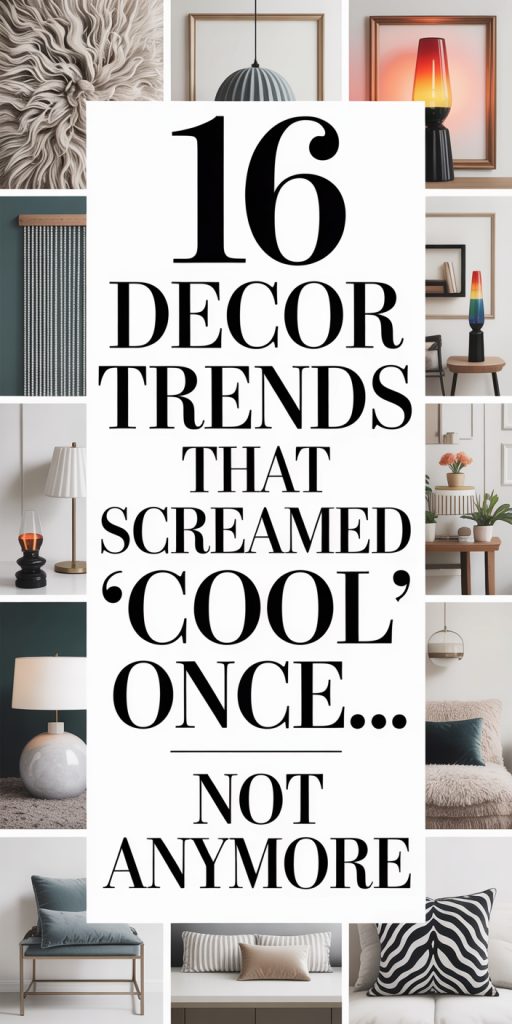
Design that leans too hard into the future can look instantly retro when that future doesn’t arrive. Chrome details, overly glossy finishes, holographic accents, and gimmicky novelty lighting were exciting for a spell, especially in show homes and staged photos. But many of these elements lacked longevity: finishes scratched, novelty materials yellowed, and the look aged out of taste quickly. We now favor tech and modernity when they’re integrated elegantly, hidden charging stations, discreet smart lighting, or minimalist AV solutions, instead of loud futuristic ornament. Embracing technology is sensible: trading lasting aesthetics for fleeting wow-factor is not.
Open Shelving Overload, Floating TVs, And Invisible Tech
Open shelving once felt like an antidote to cabinet clutter and too-much built-in storage. But when every wall became a display case, living spaces started to resemble curated shops rather than lived-in homes. Floating TVs and attempts at invisible tech promised a streamlined look, yet they often created awkward sightlines and sacrificed ergonomics for the sake of a clean photo. The current shift is toward intentional display: closed storage for messy needs, open shelves for objects we love and use daily, and TV placements that prioritize viewing comfort. Invisible tech should be subtle, not stealthy to the point of inconvenience. We want smart integration that respects how we live, not just how our rooms look on camera.
Eco, Natural, And Rustic Looks That Became Predictable
The turn toward natural materials and rustic finishes was a corrective to cold, manufactured interiors. Timber, stone, rattan, and linen brought human scale and warmth back into rooms. Problem is: when everyone copies the same wood-tone, hammered-metal, and ceramic-ware checklist, the result is predictable rather than authentic. We also noticed surface-level ‘eco’ decorating that prioritized look over lifecycle, thin veneer wood or short-lived woven accents passed off as sustainable. To make natural materials feel current, we focus on provenance and variation: mixed woods in complementary tones, locally made ceramics with imperfections, and textiles woven with intention. Patina and age become assets, not problems, but only when materials are real and cared for. That said, we should avoid nostalgia for its own sake. Rustic needs context: a crisp, modern sofa beside a reclaimed-wood table feels curated: the same table in a sea of distressed finishes feels staged and tired.
Conclusion, How We Move Forward
Trends will always cycle, but our job as thoughtful decorators is to choose what endures. We favor materials with substance, proportions that respect a room’s size, and accents that reflect our lives, not just our follower counts. When a trend starts shouting, it’s a good time to listen: ask whether a piece improves daily life, ages gracefully, and fits with the story you want your home to tell. If the answer is yes, keep it. If not, replace it with something quieter, better-made, and more honestly you.
Leave a Reply