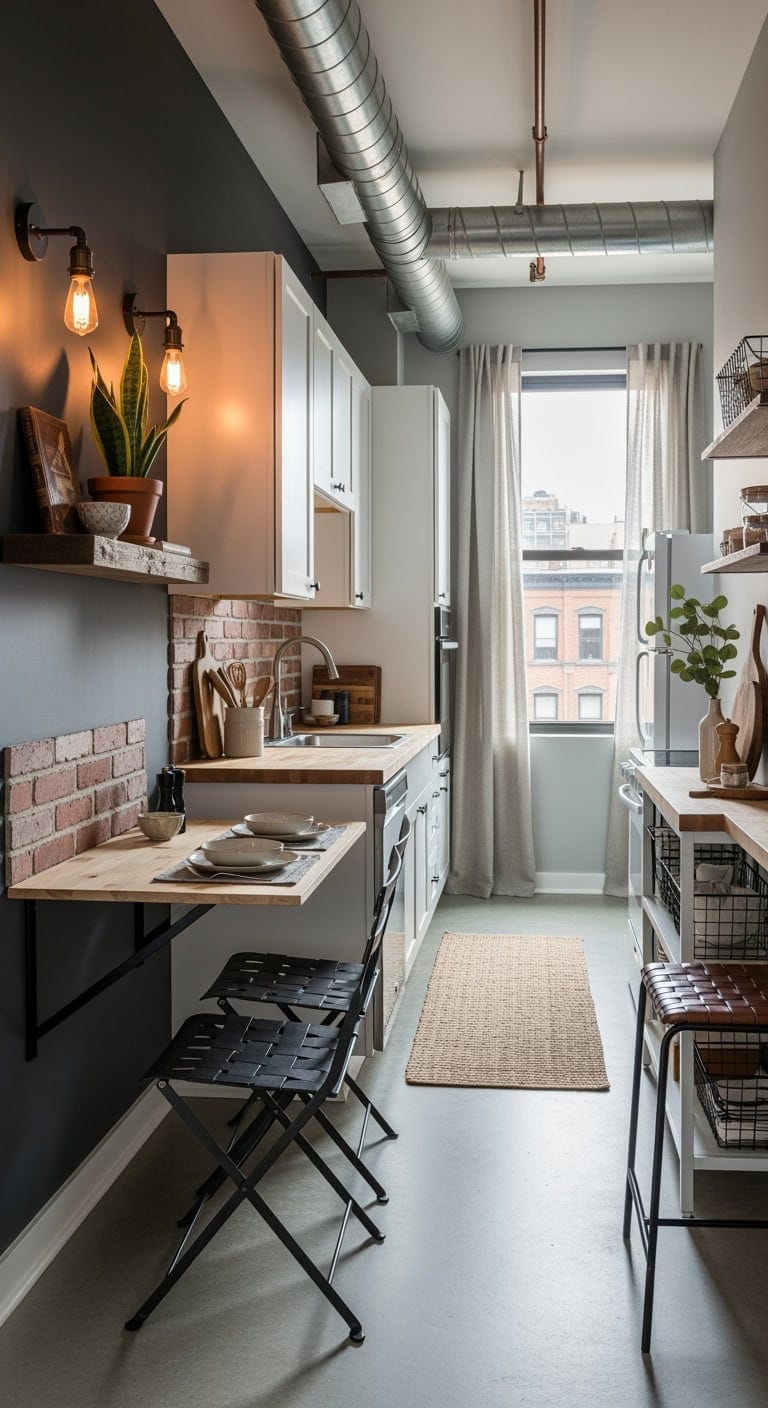
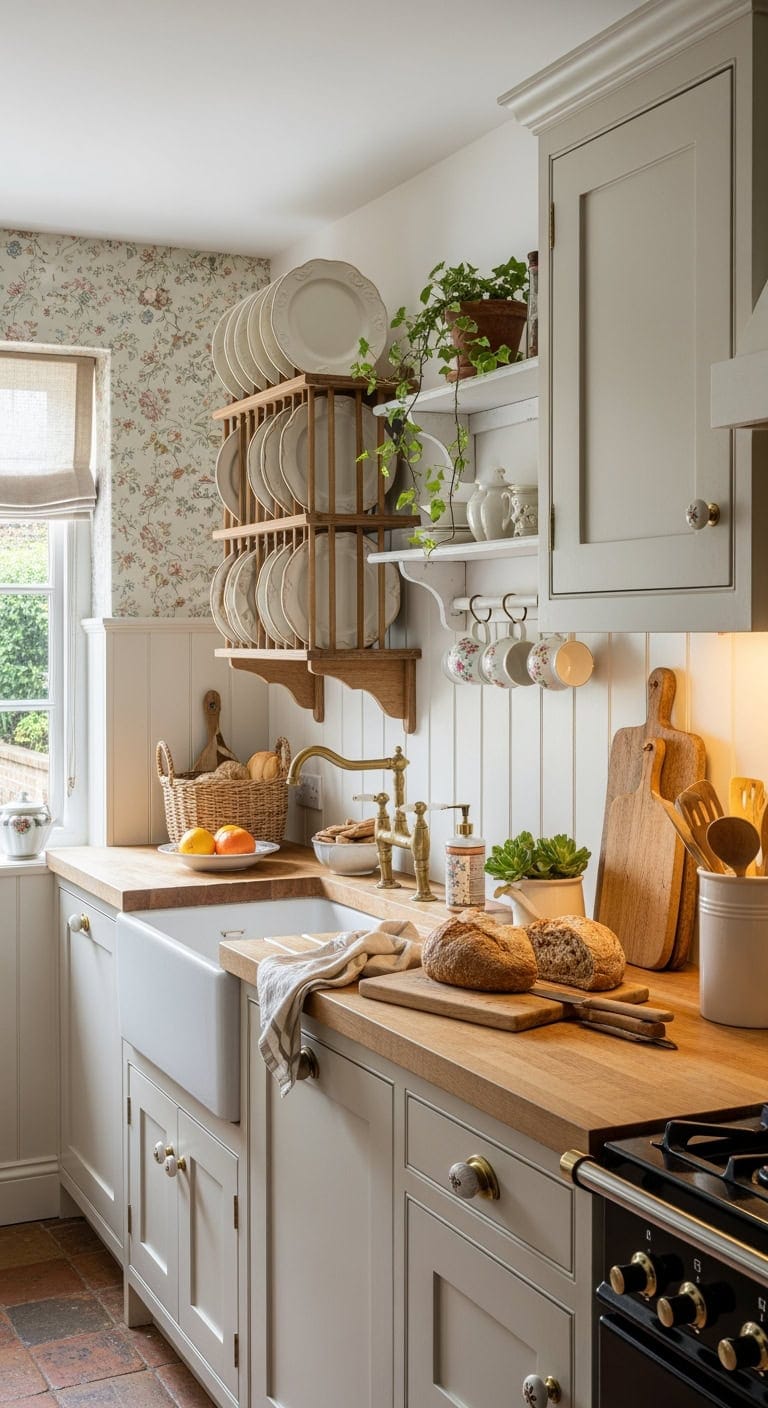
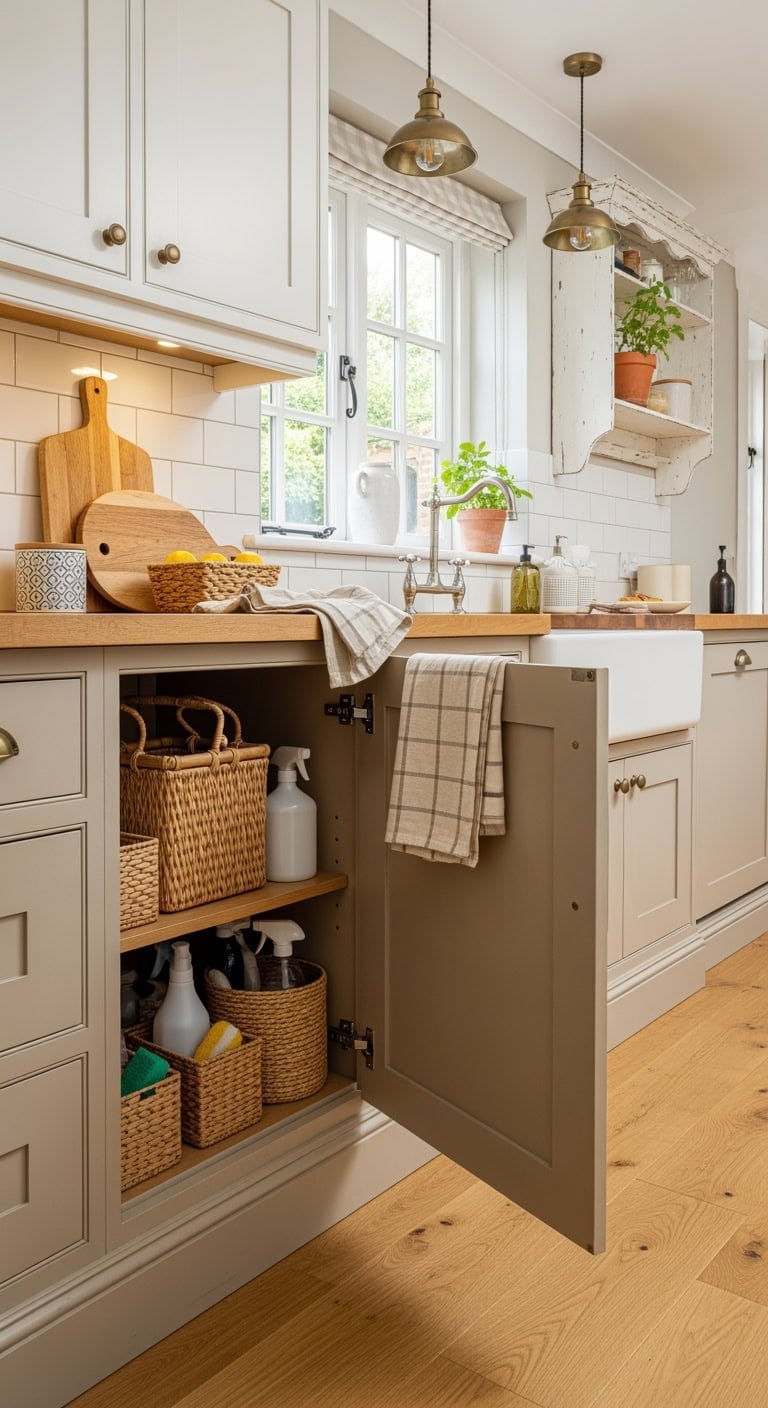
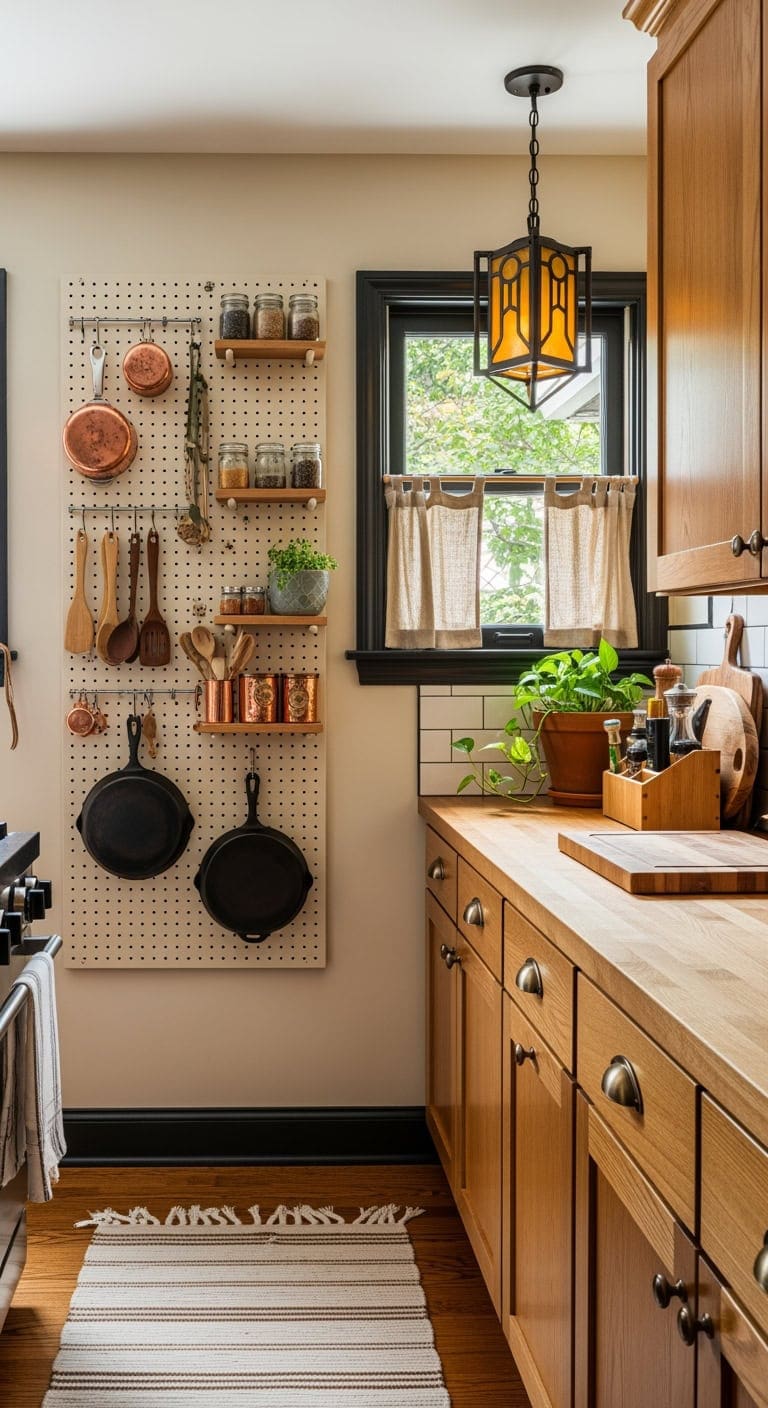
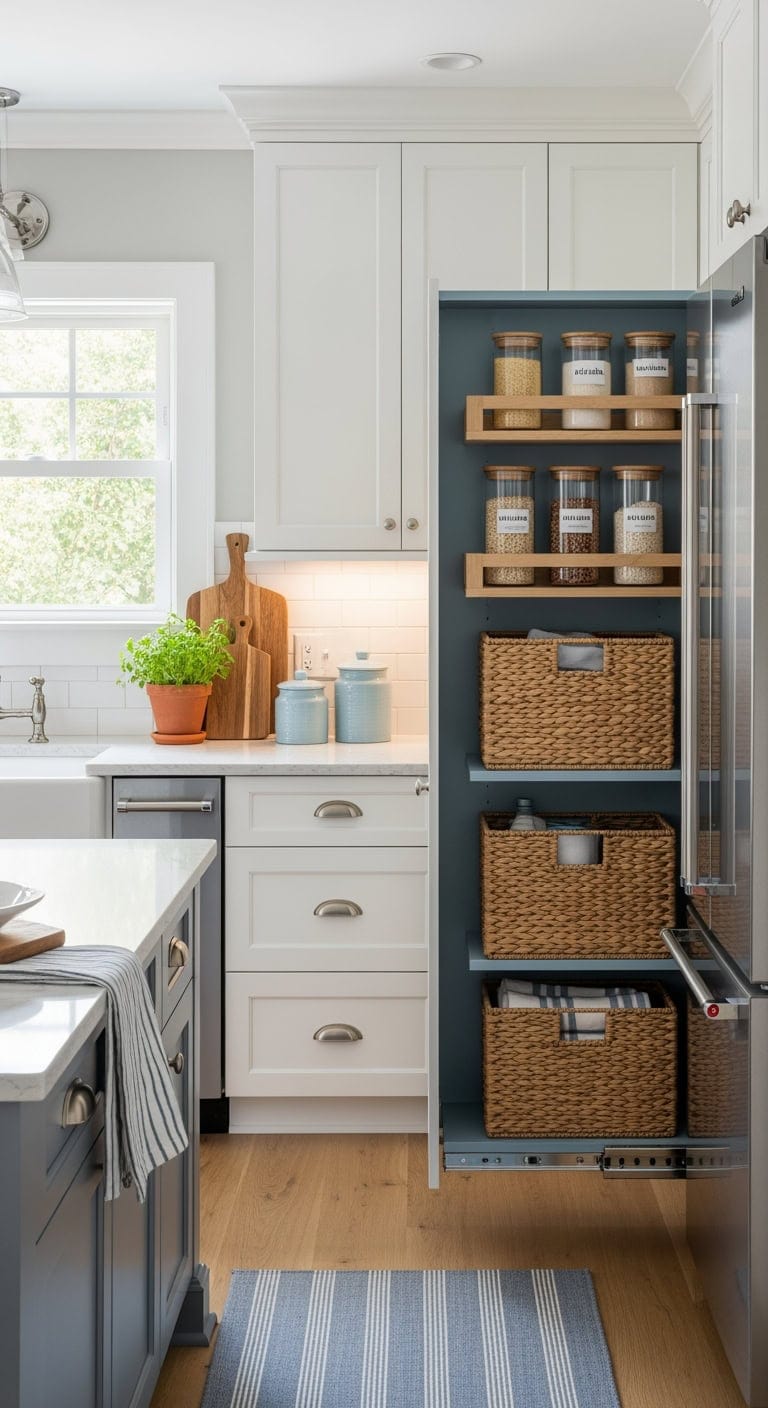
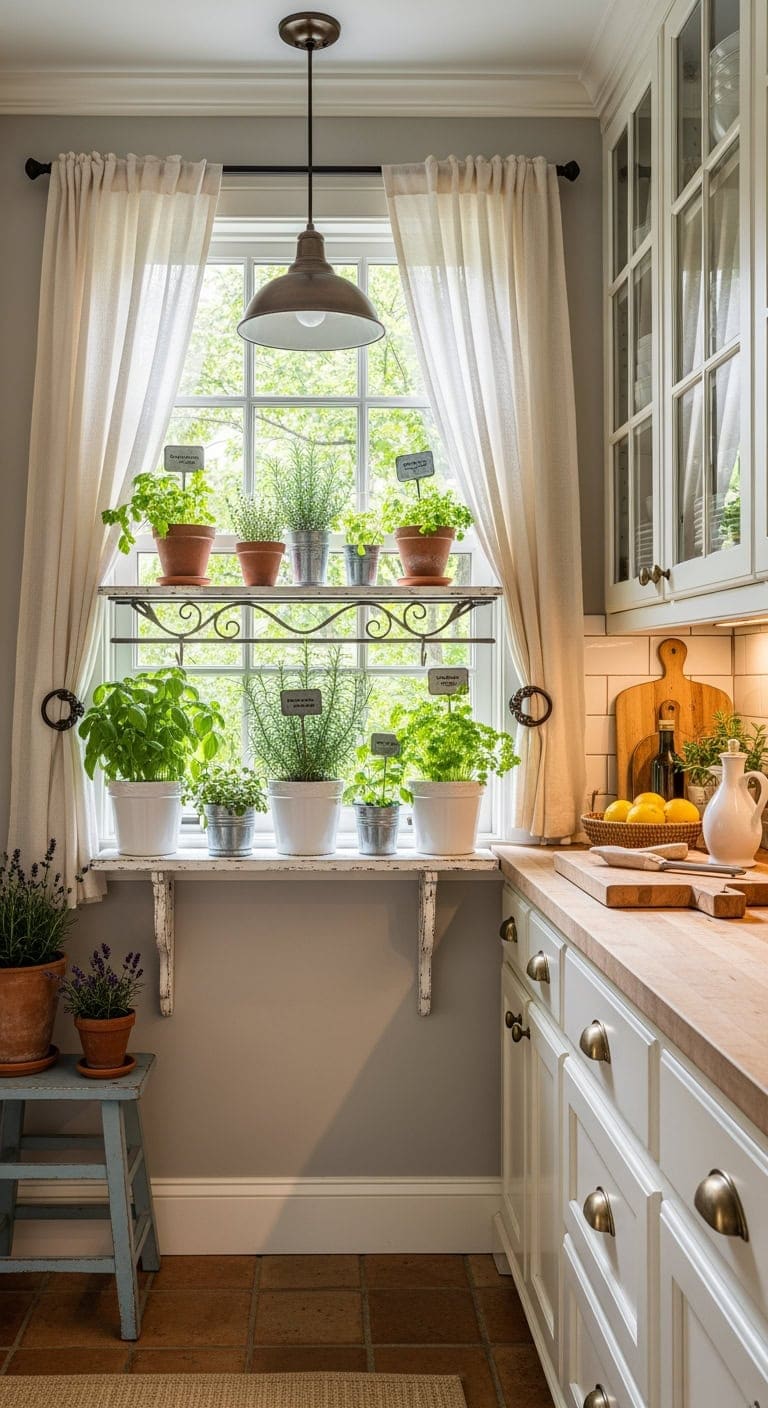
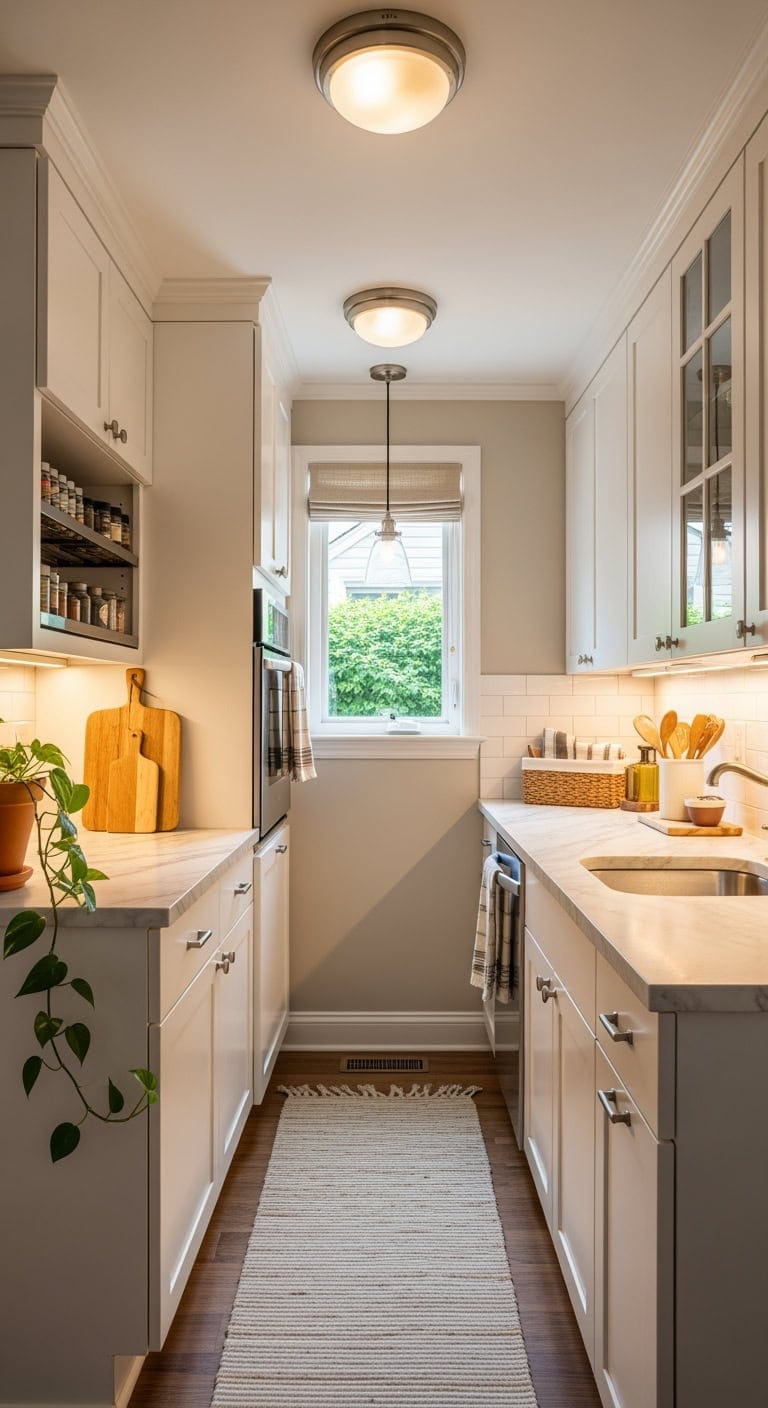
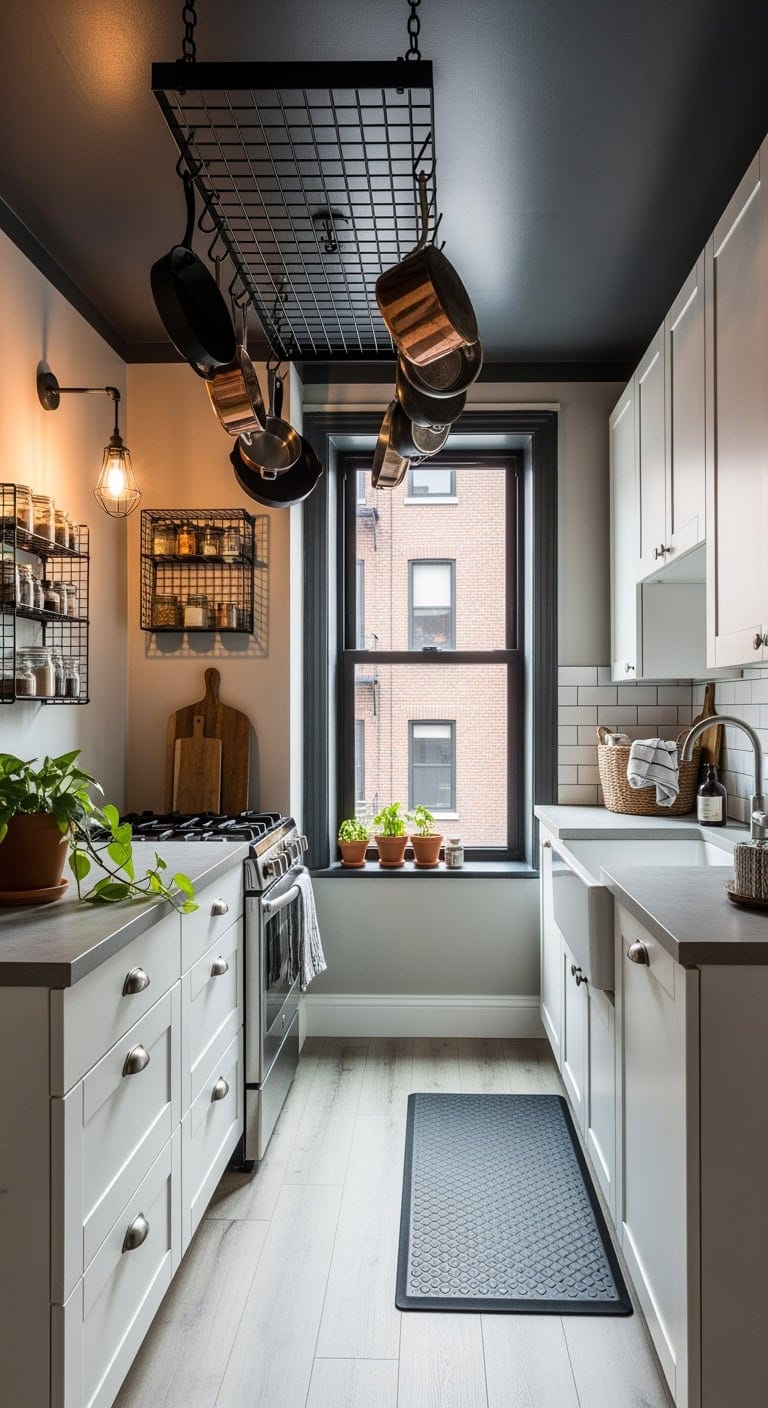
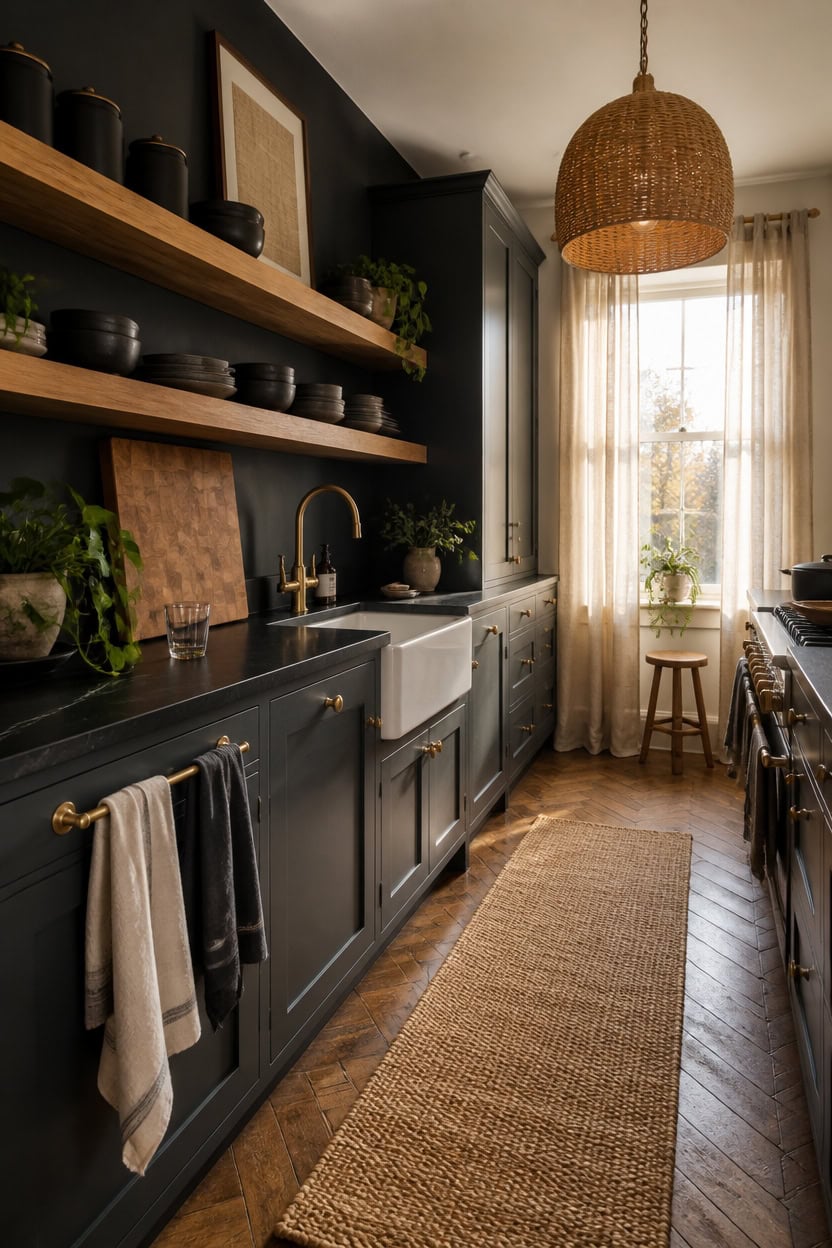
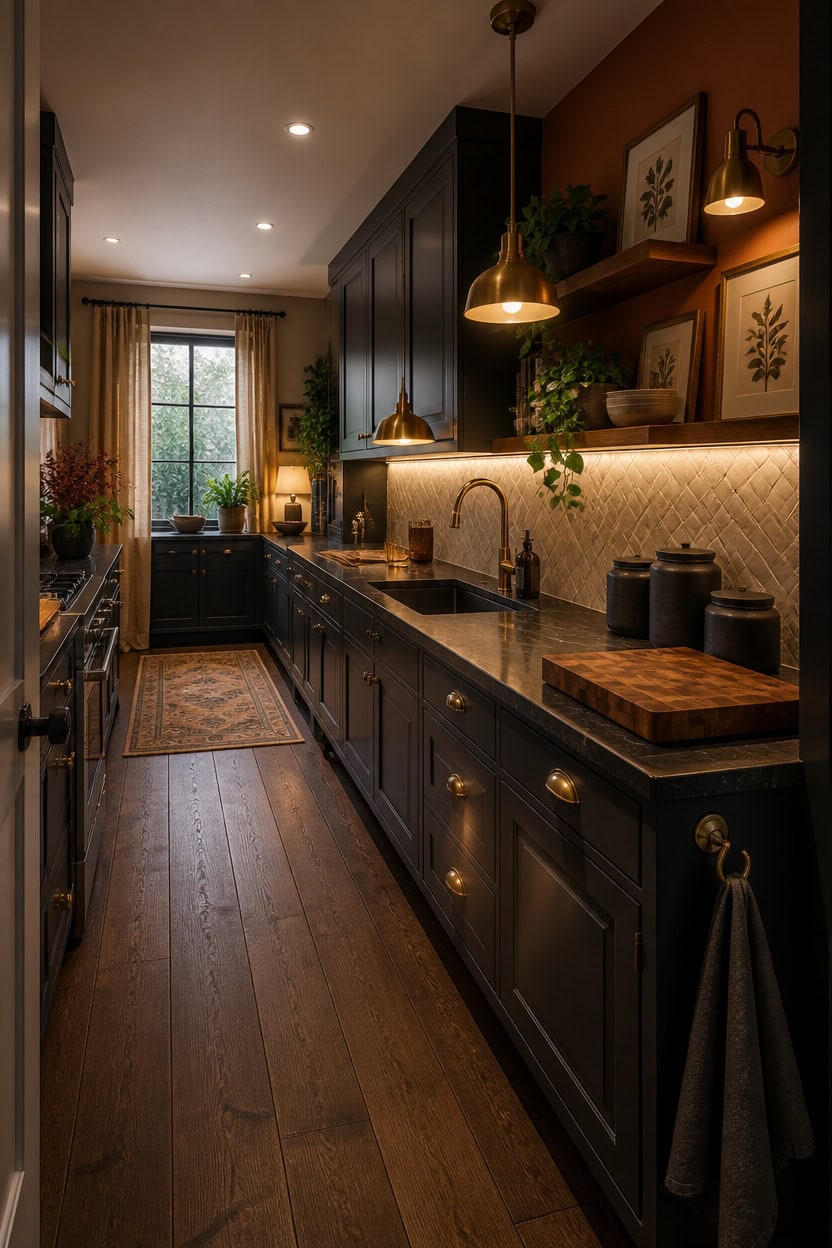
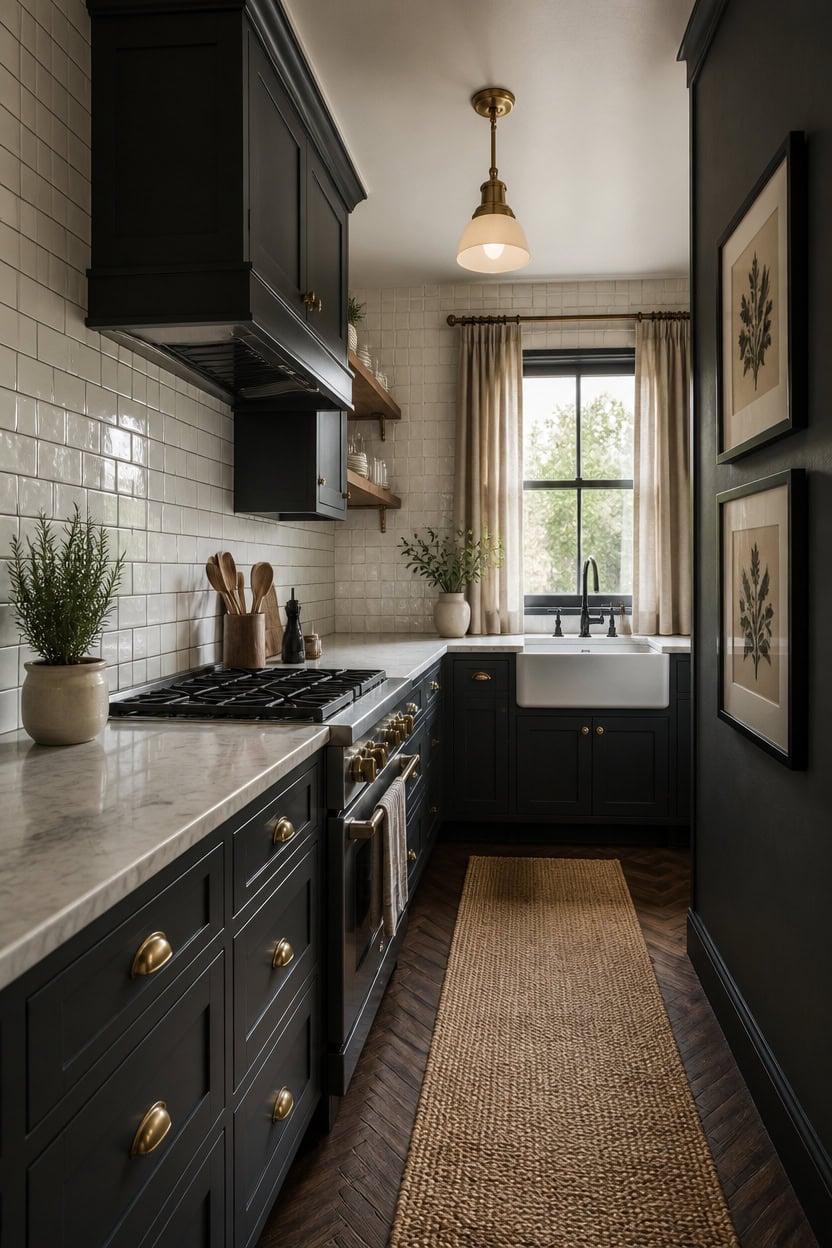
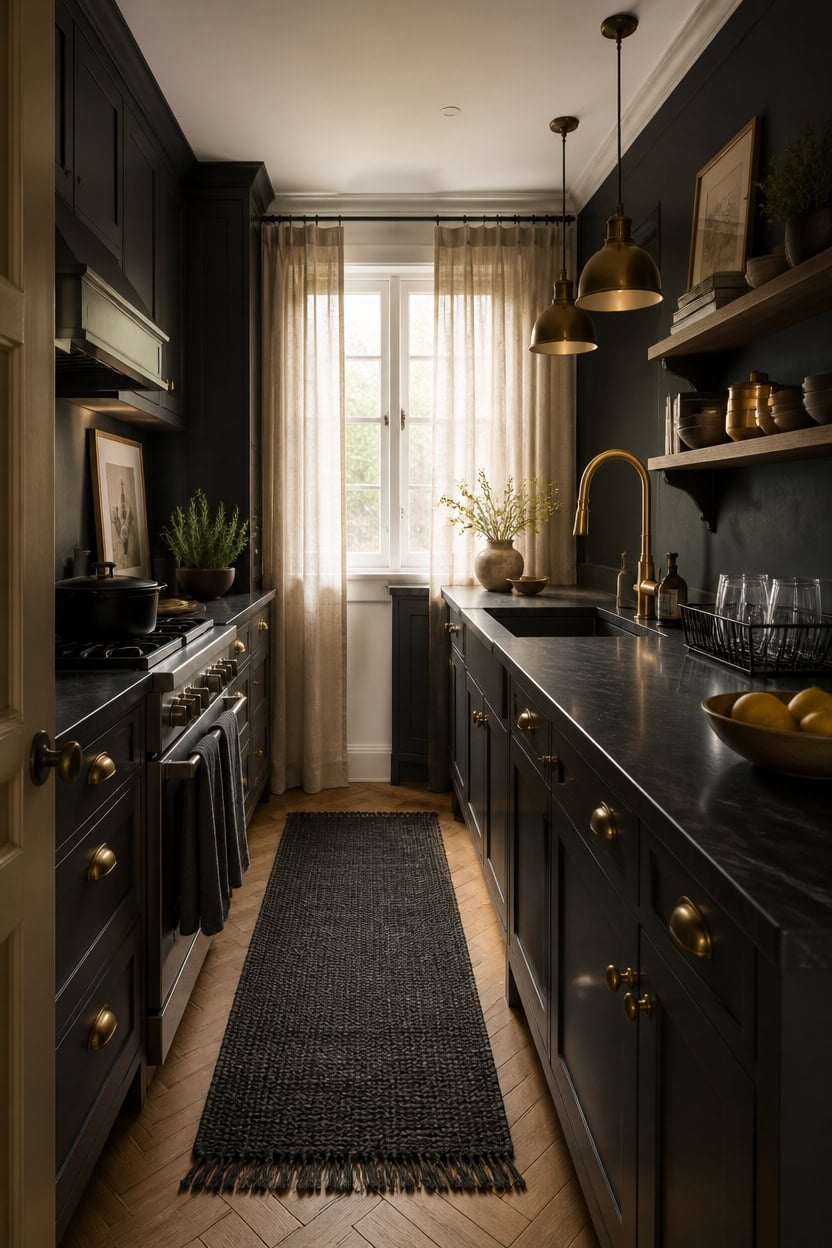
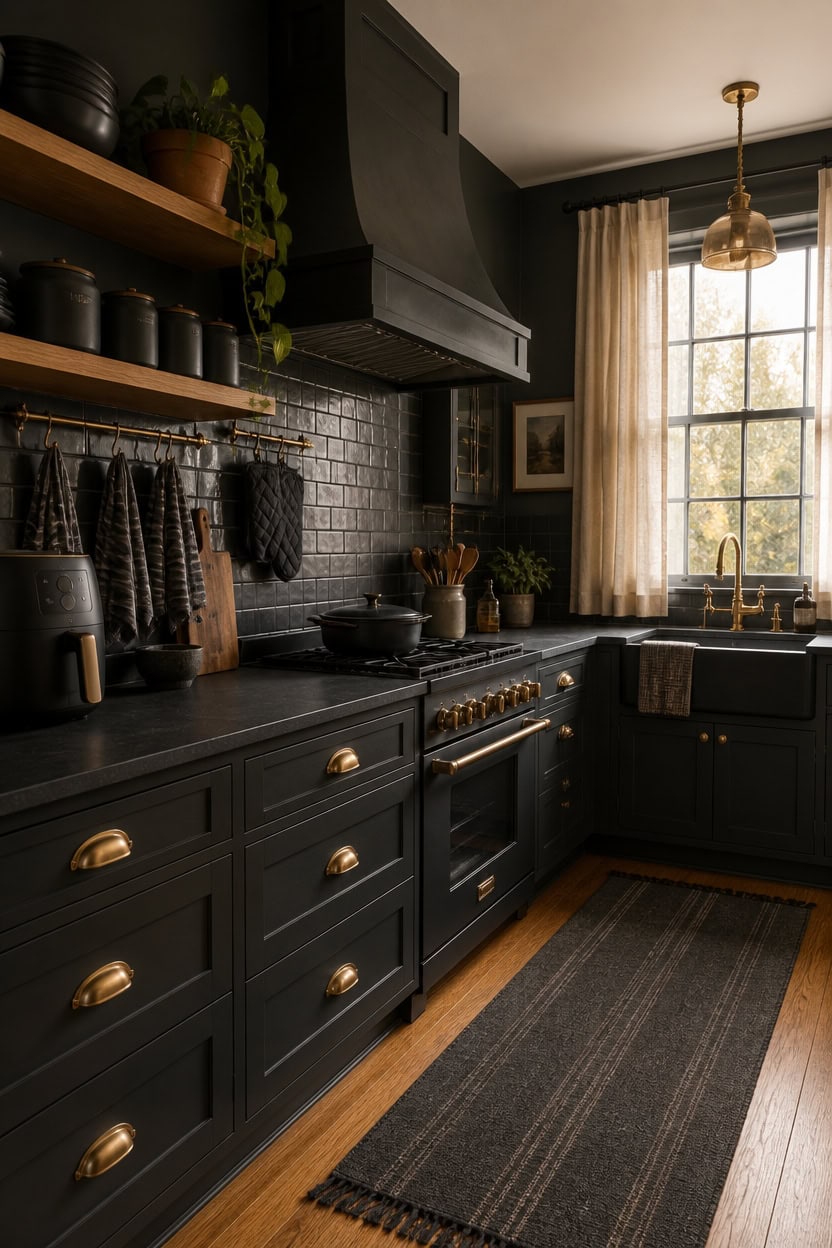
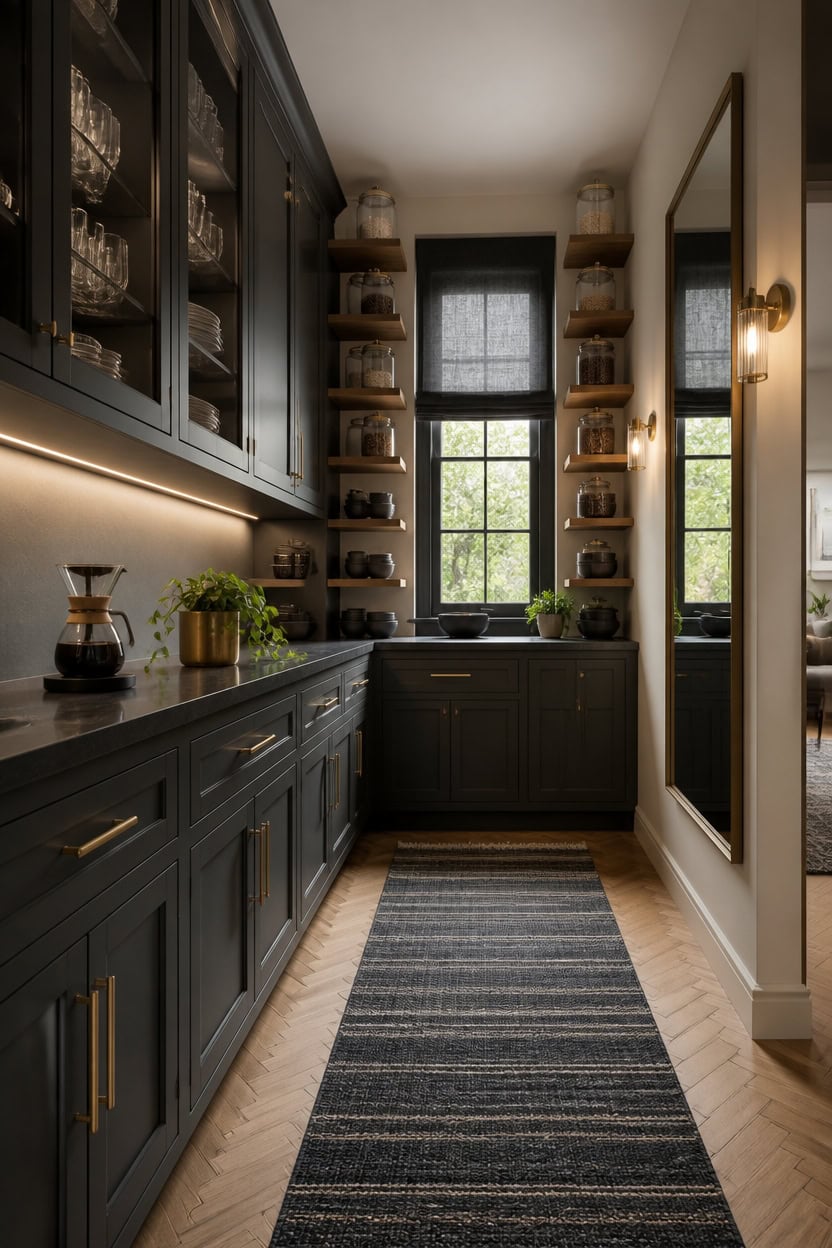
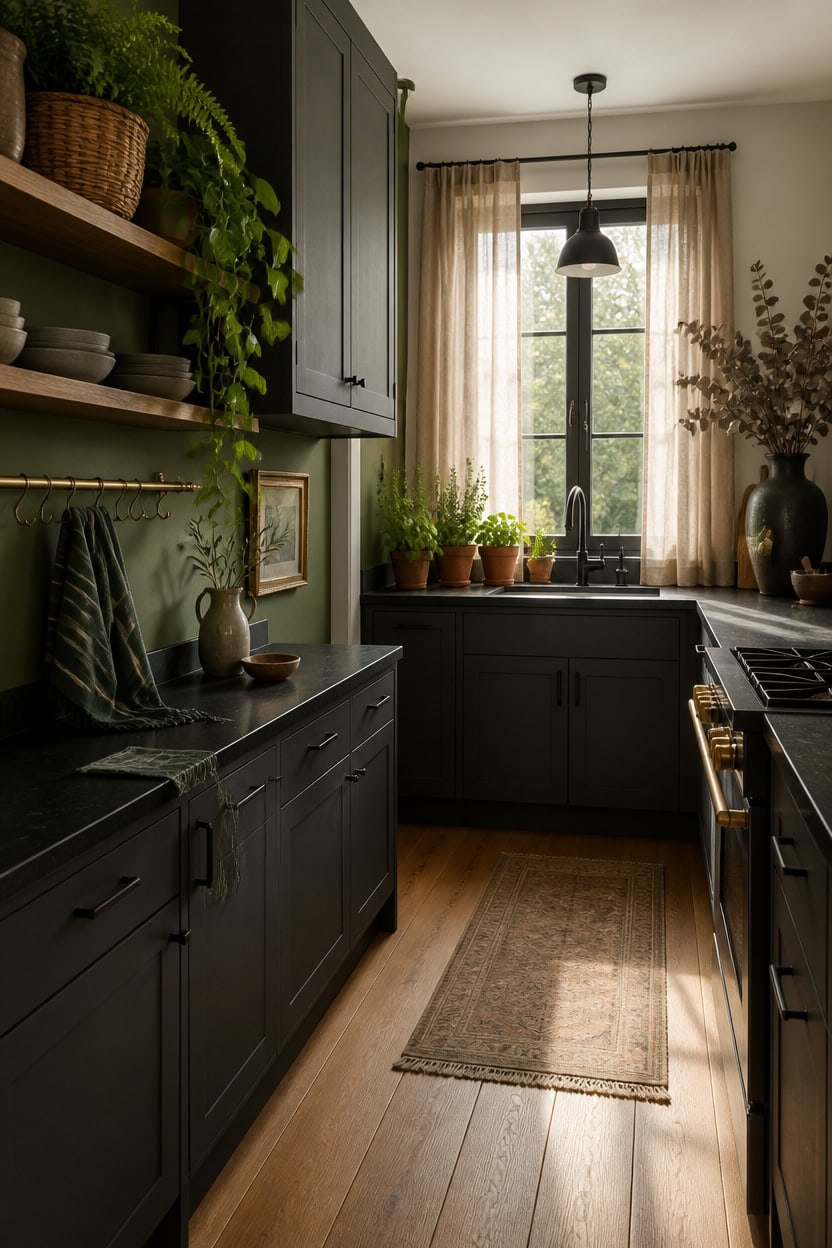
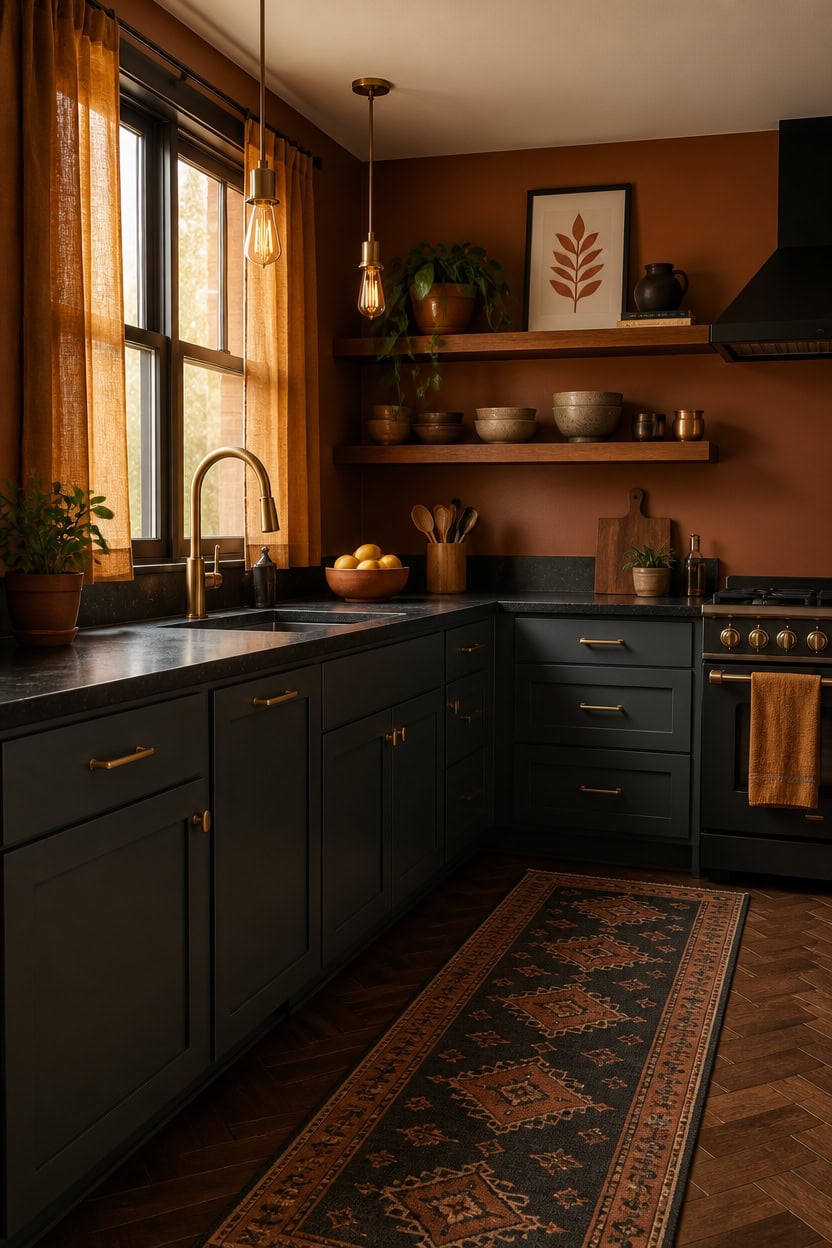
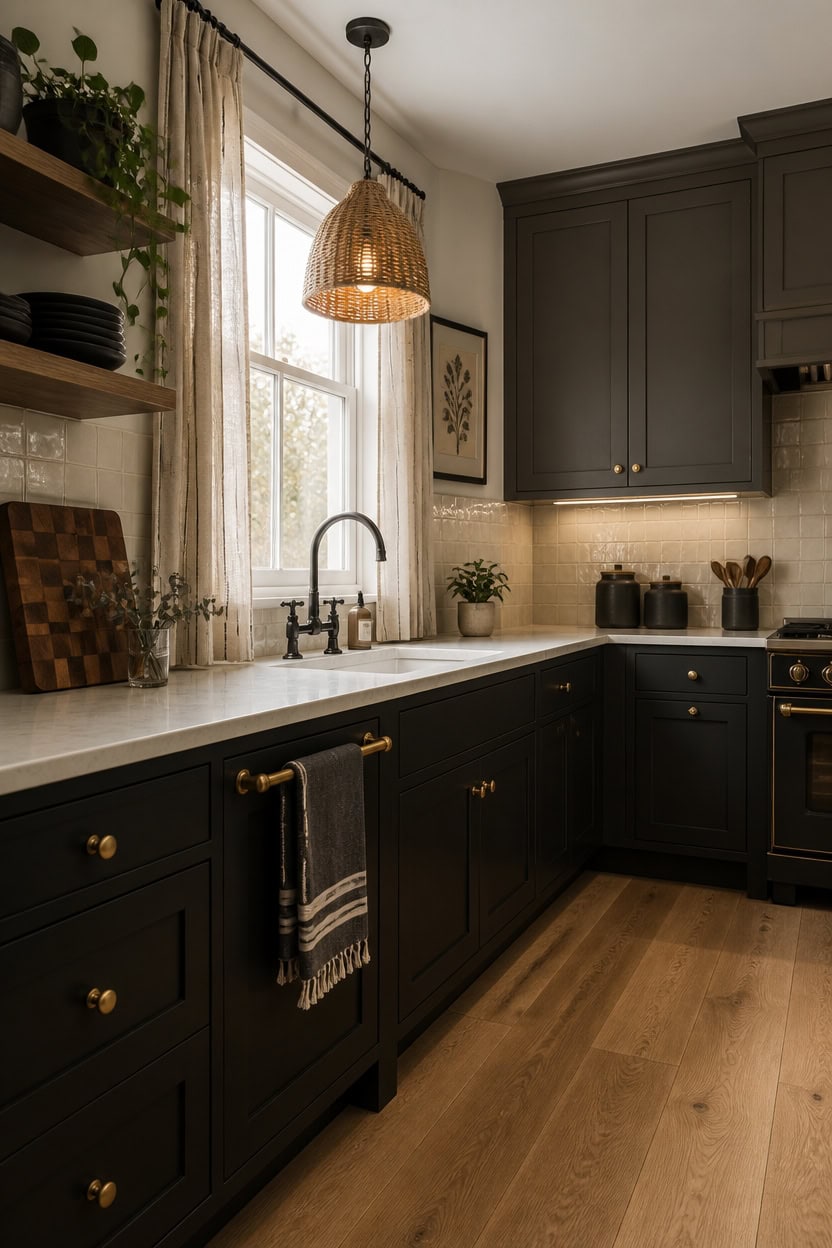
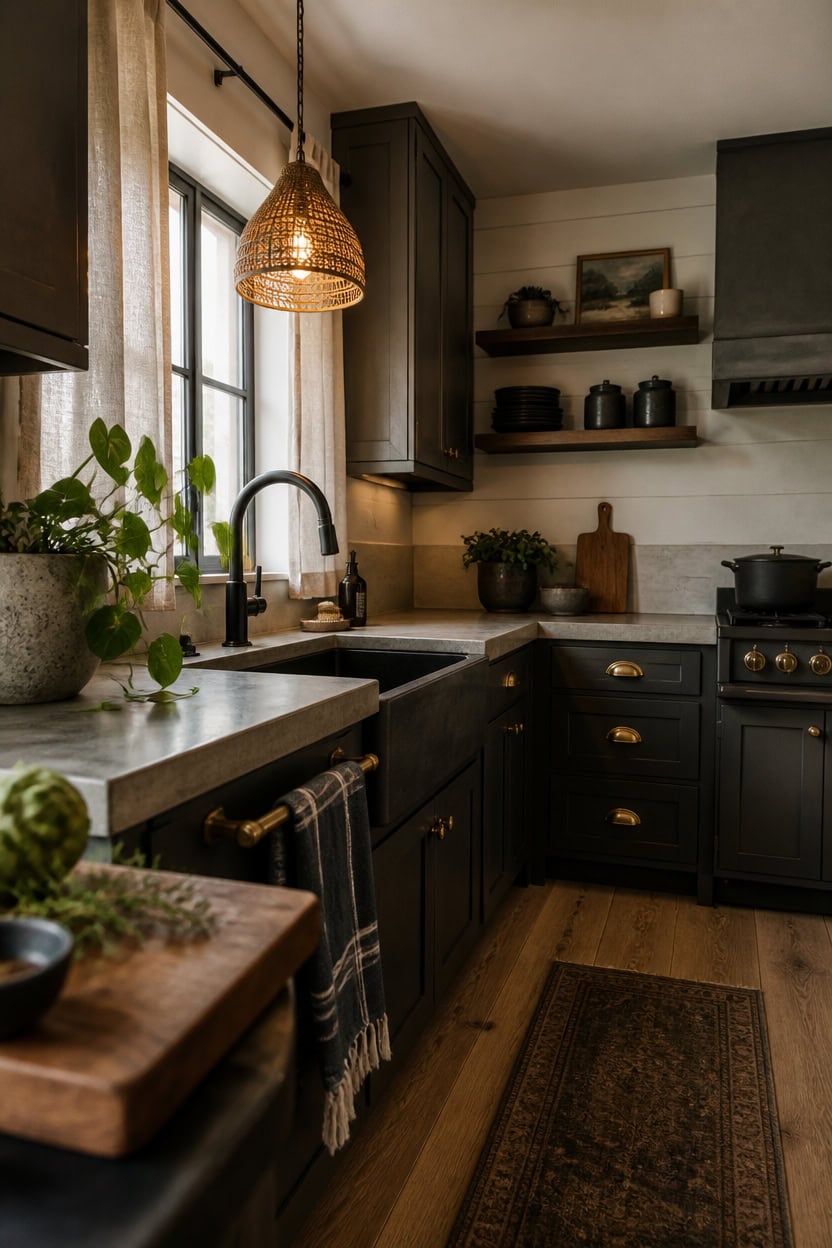
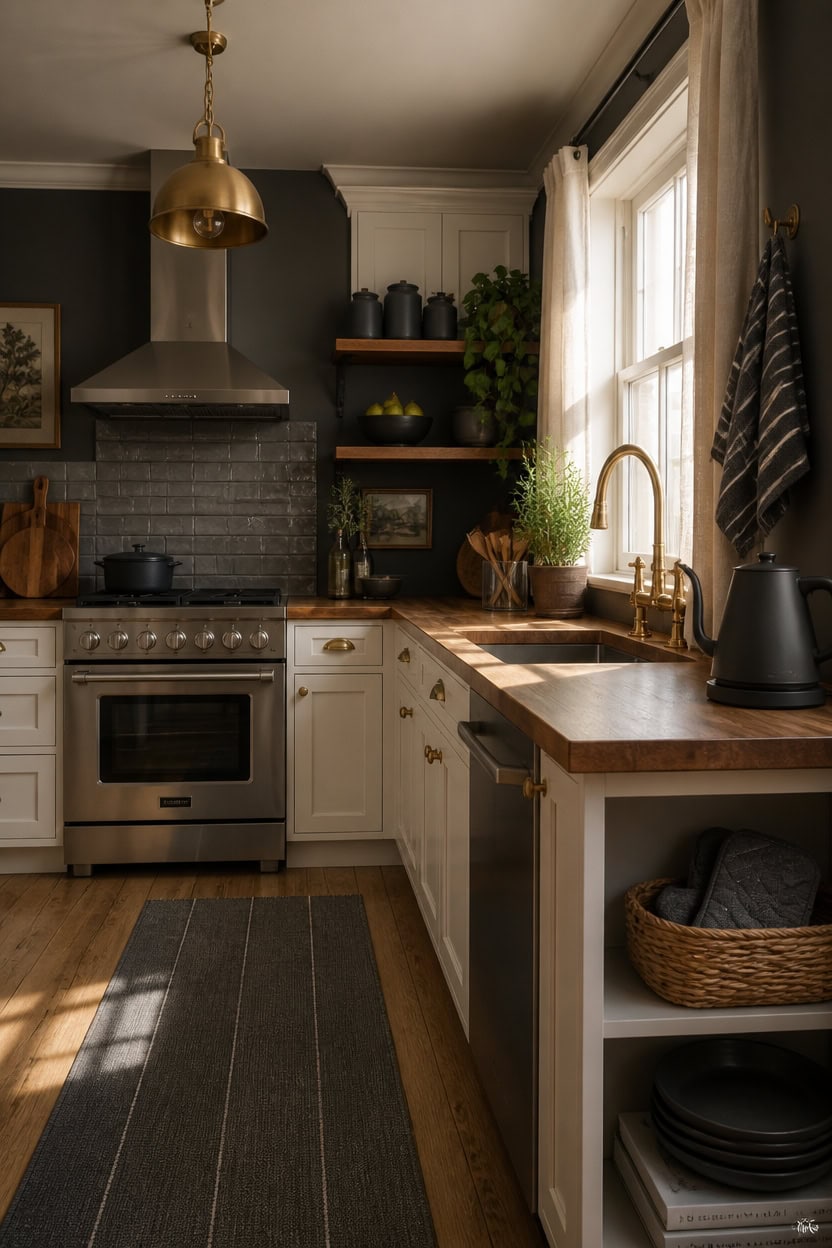
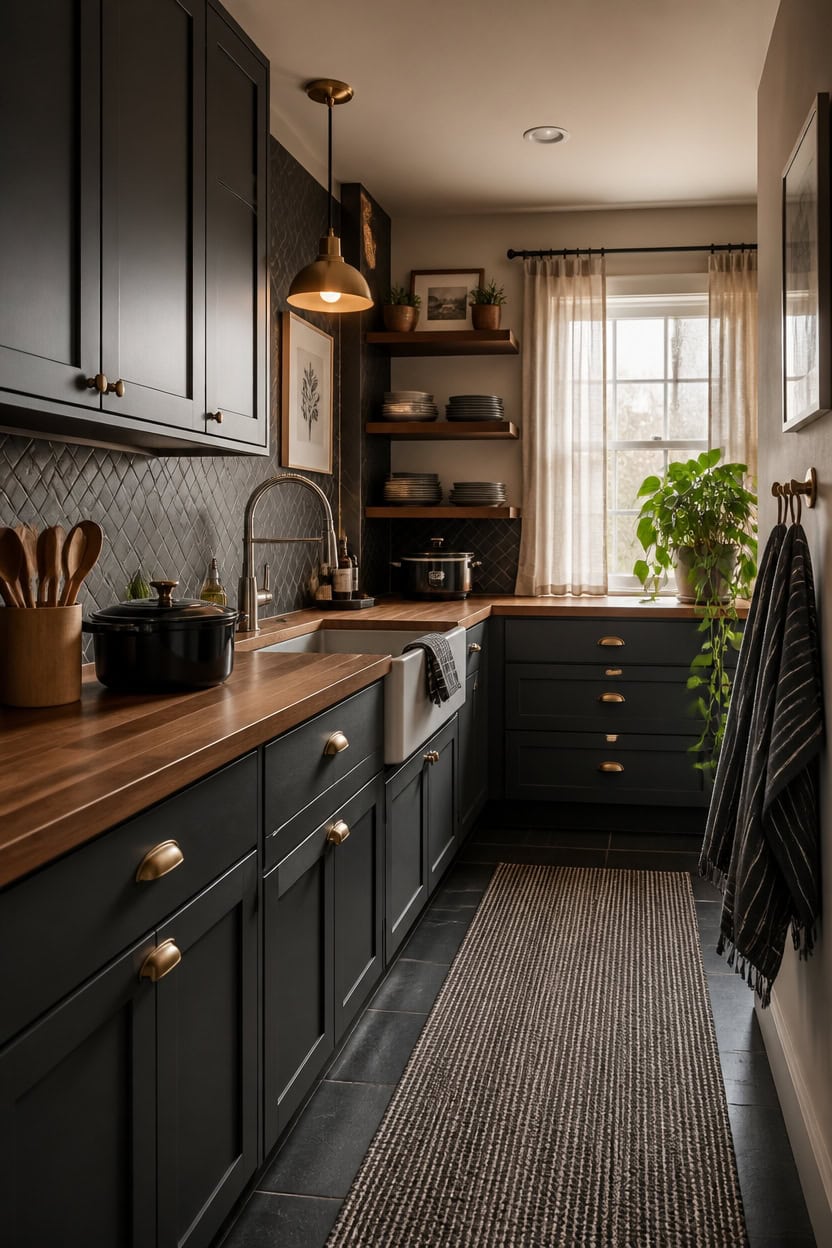
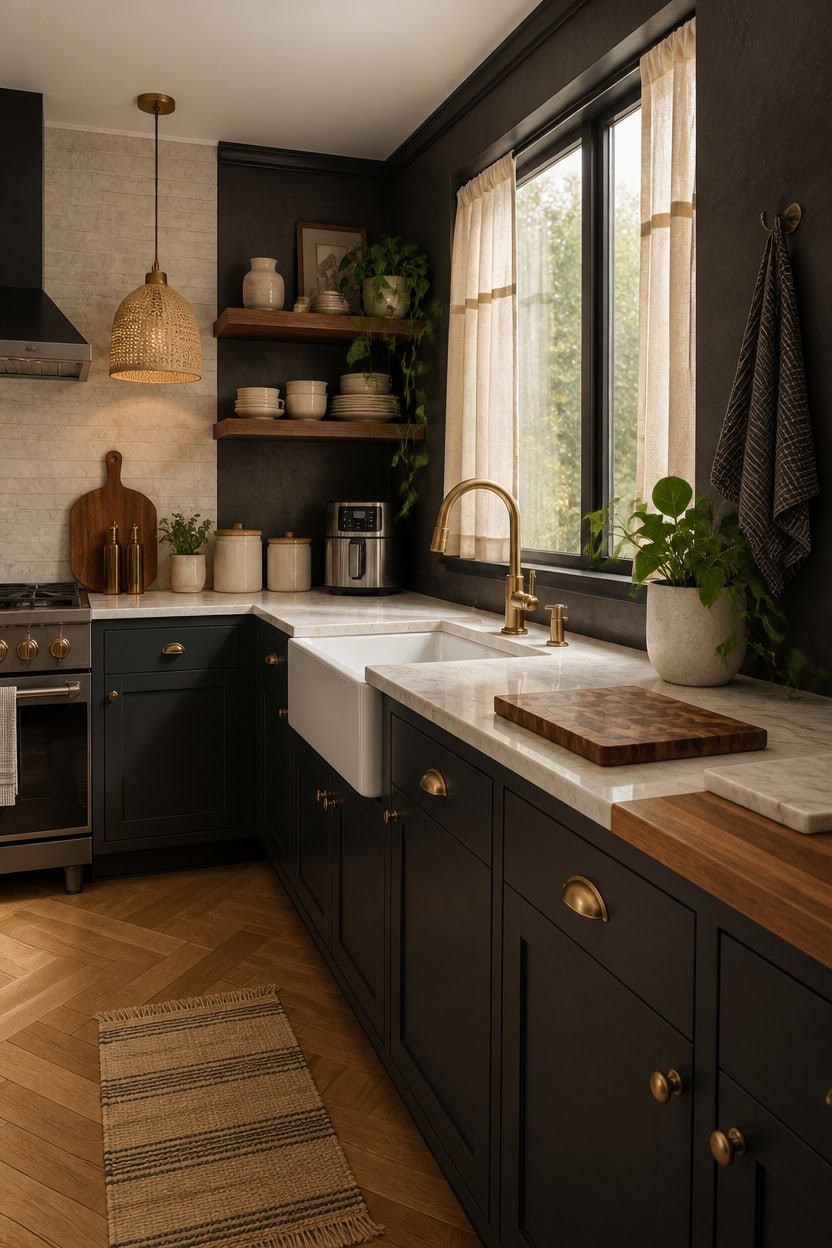
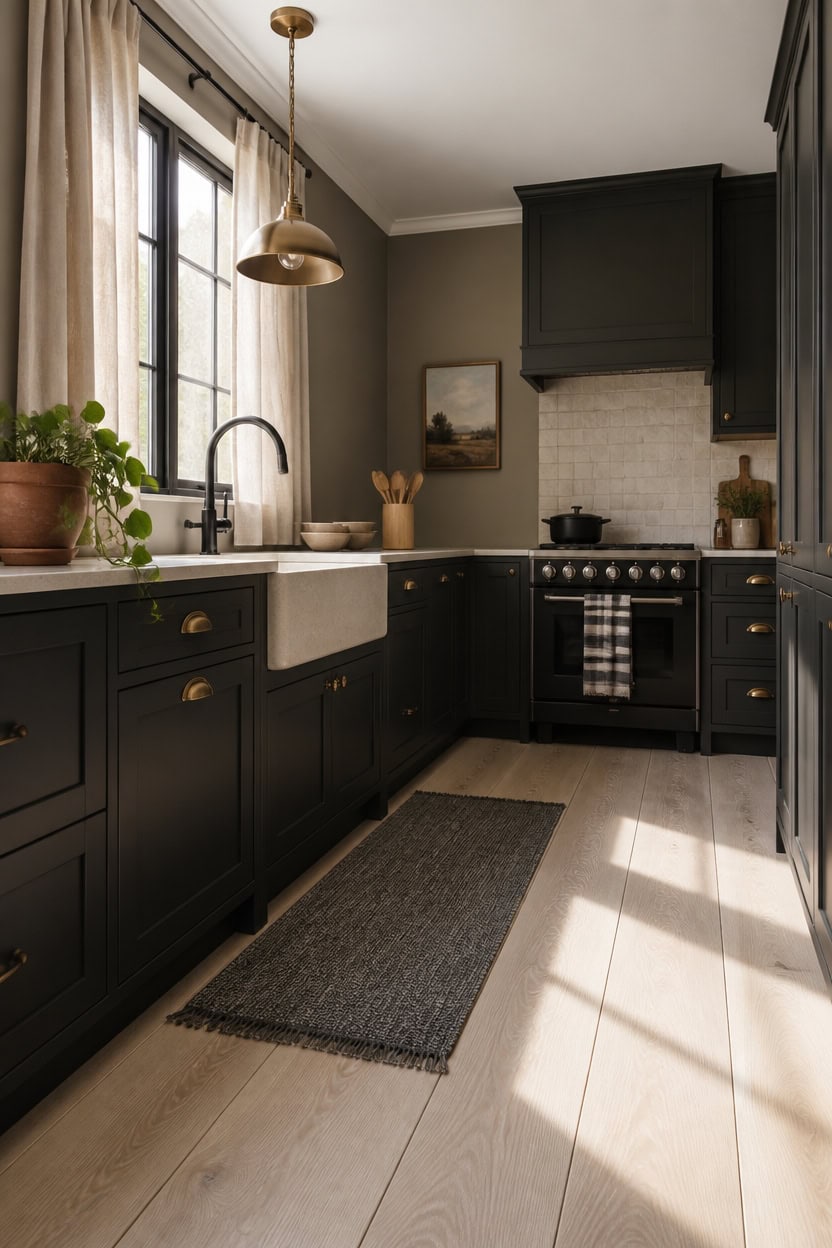
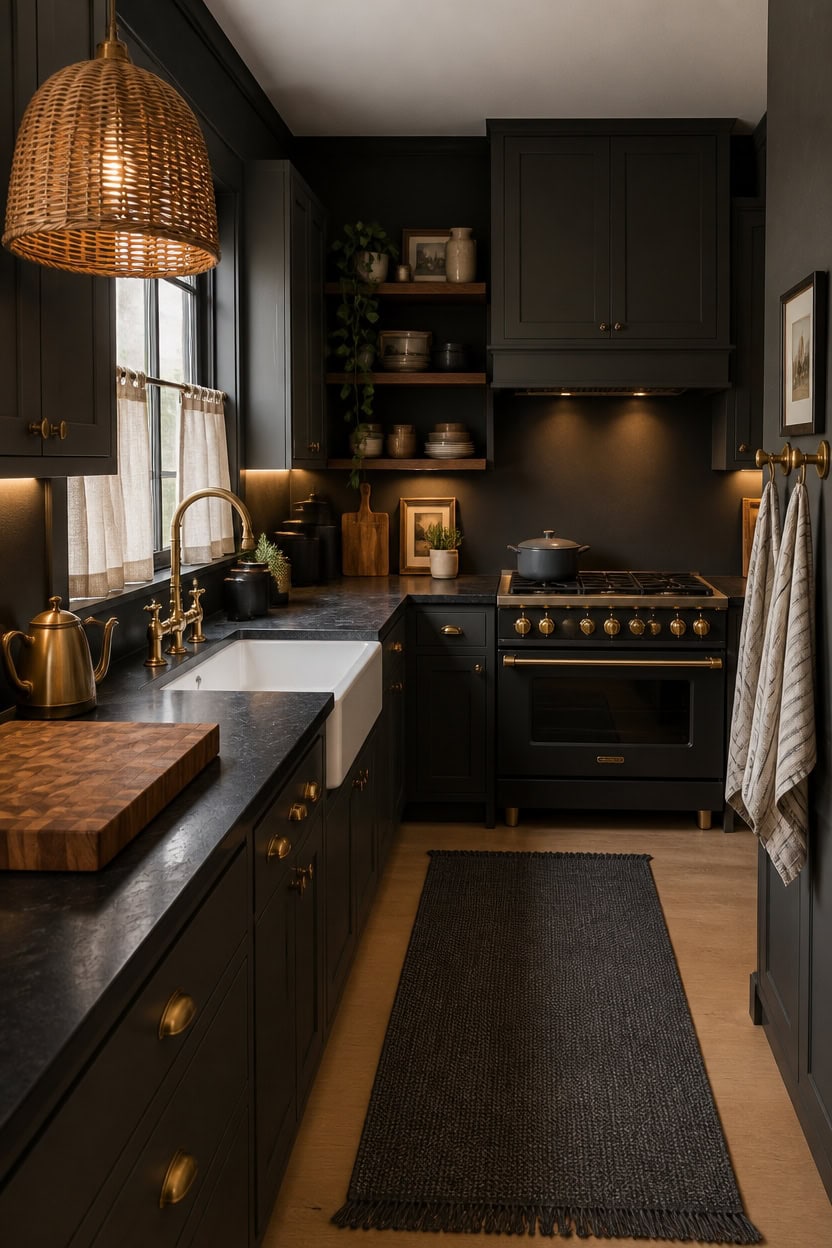
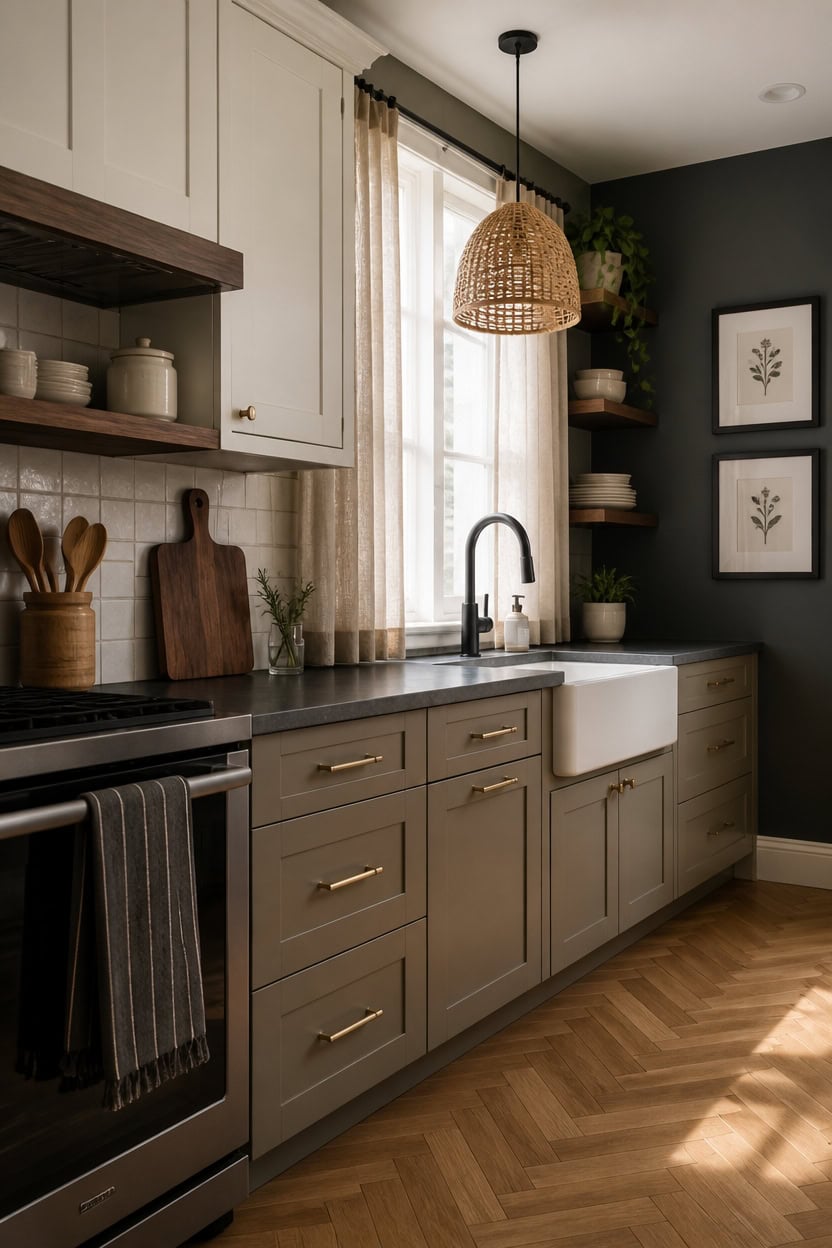
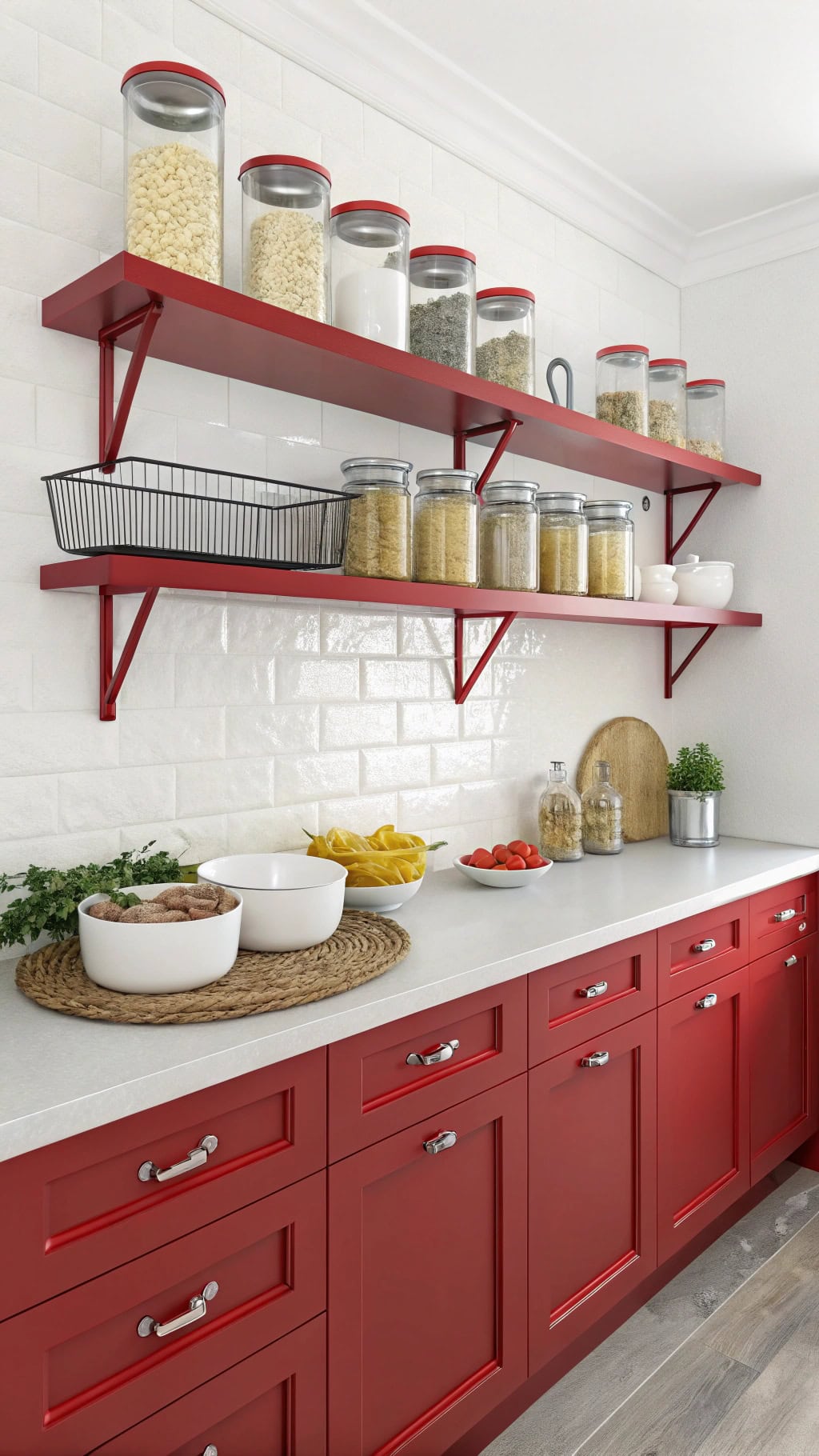
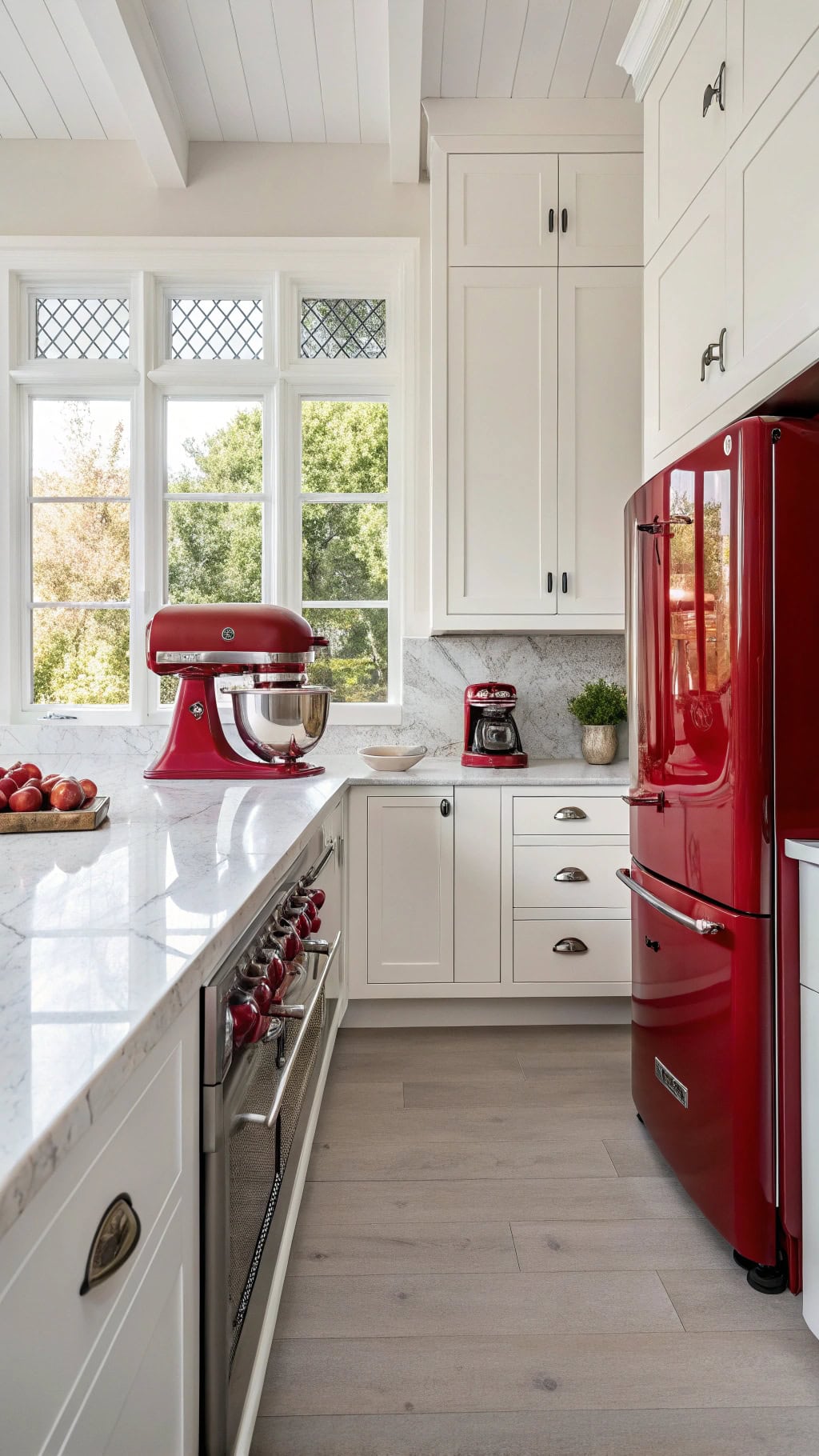
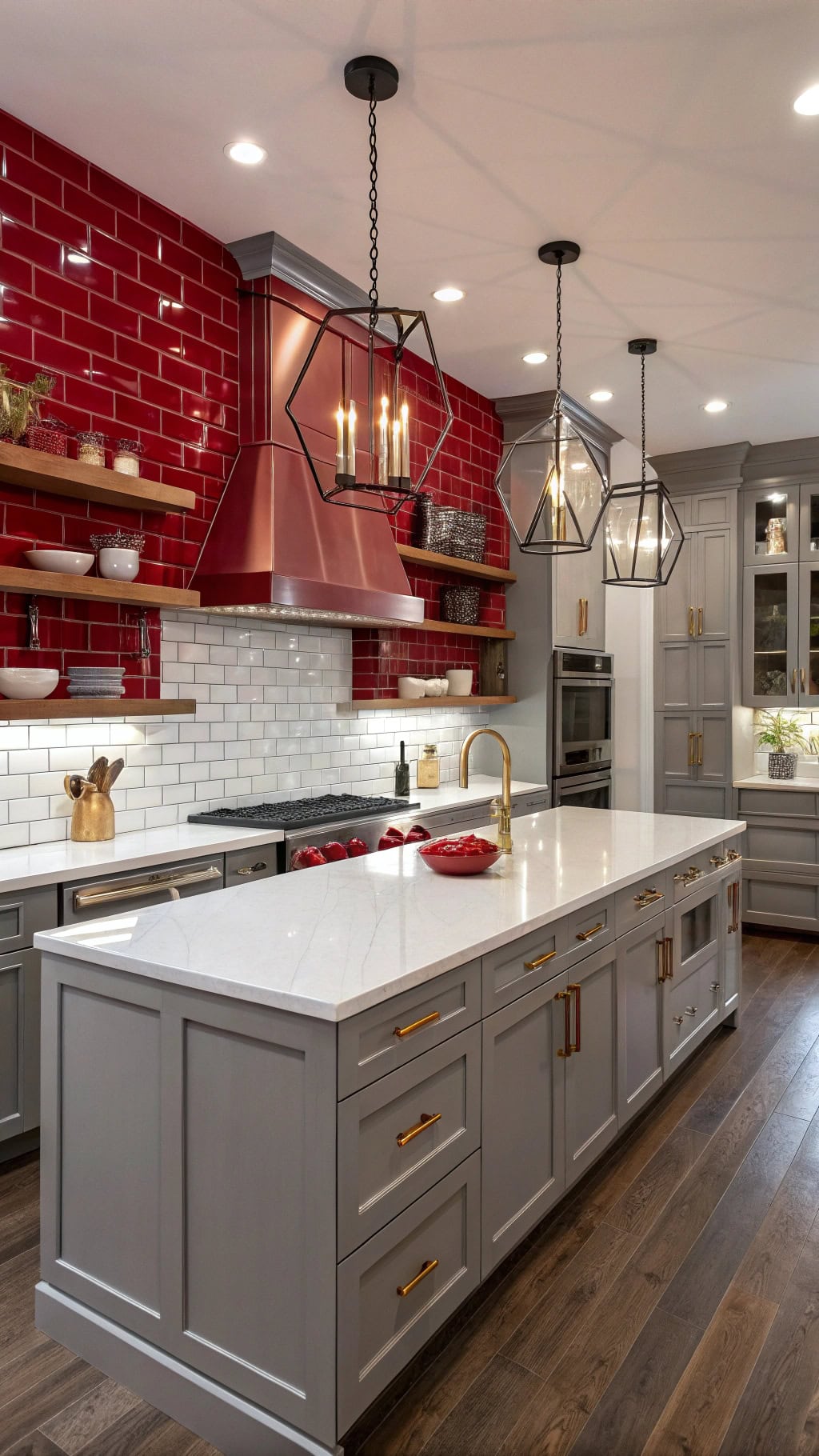
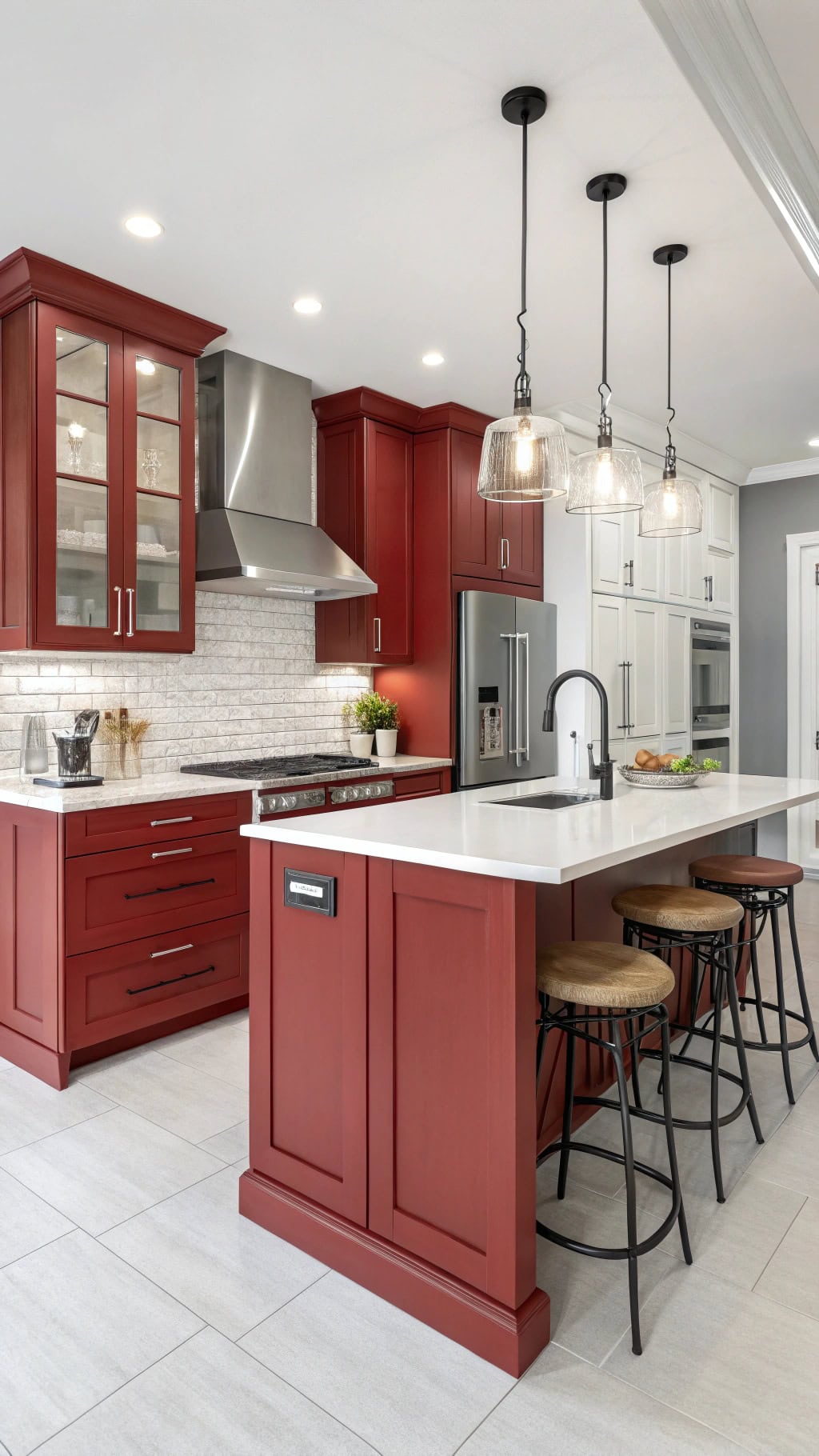
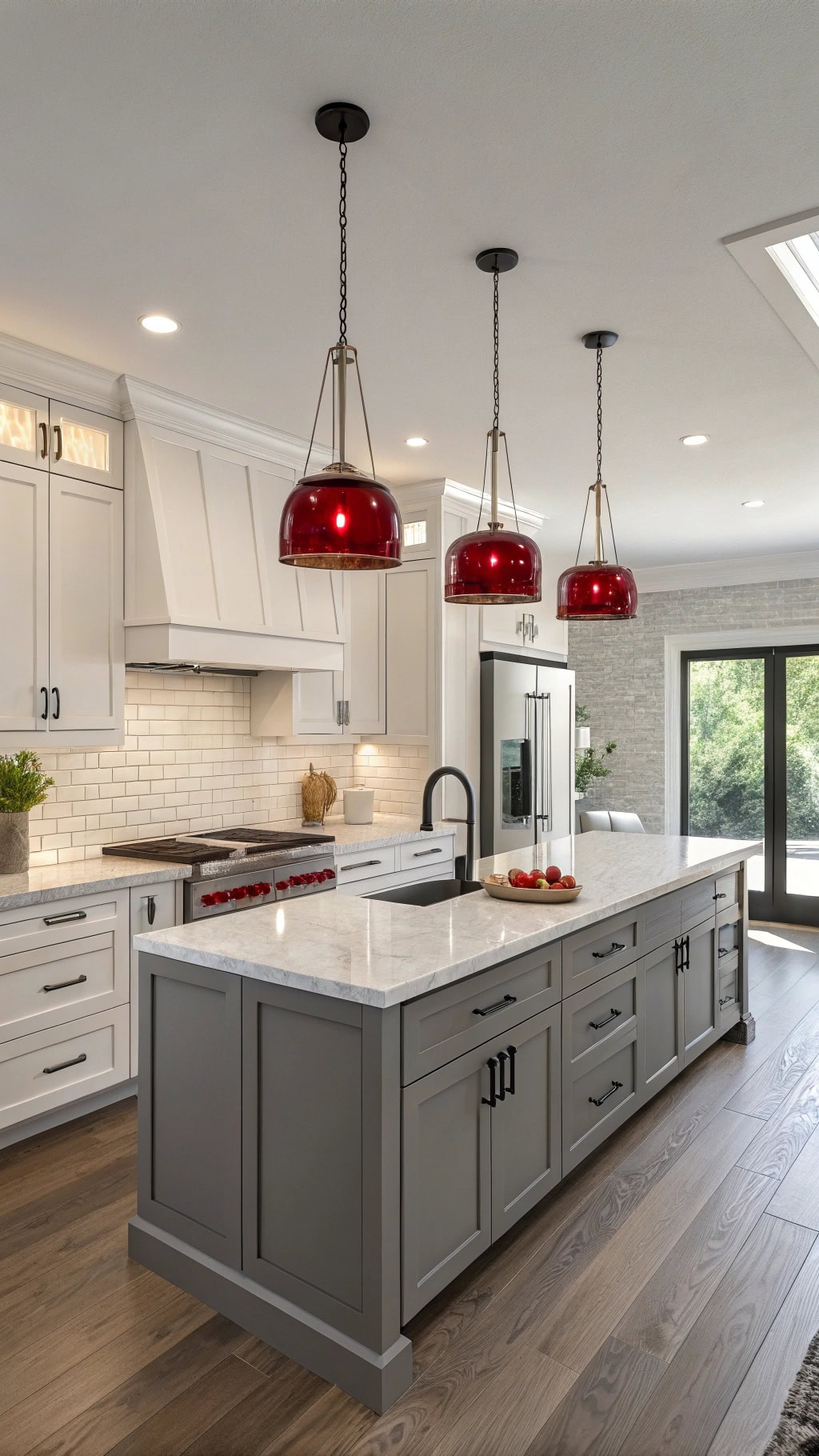
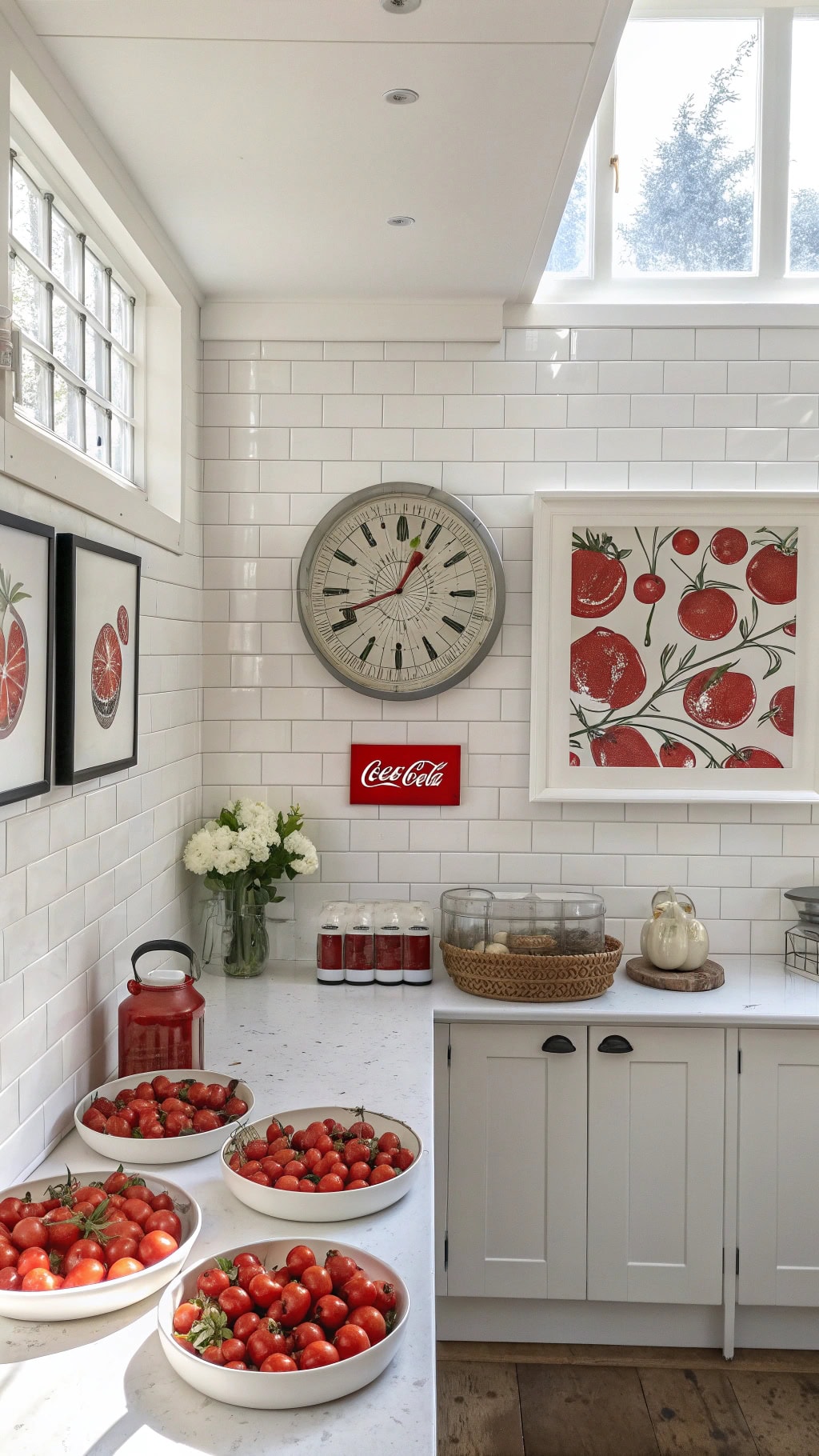
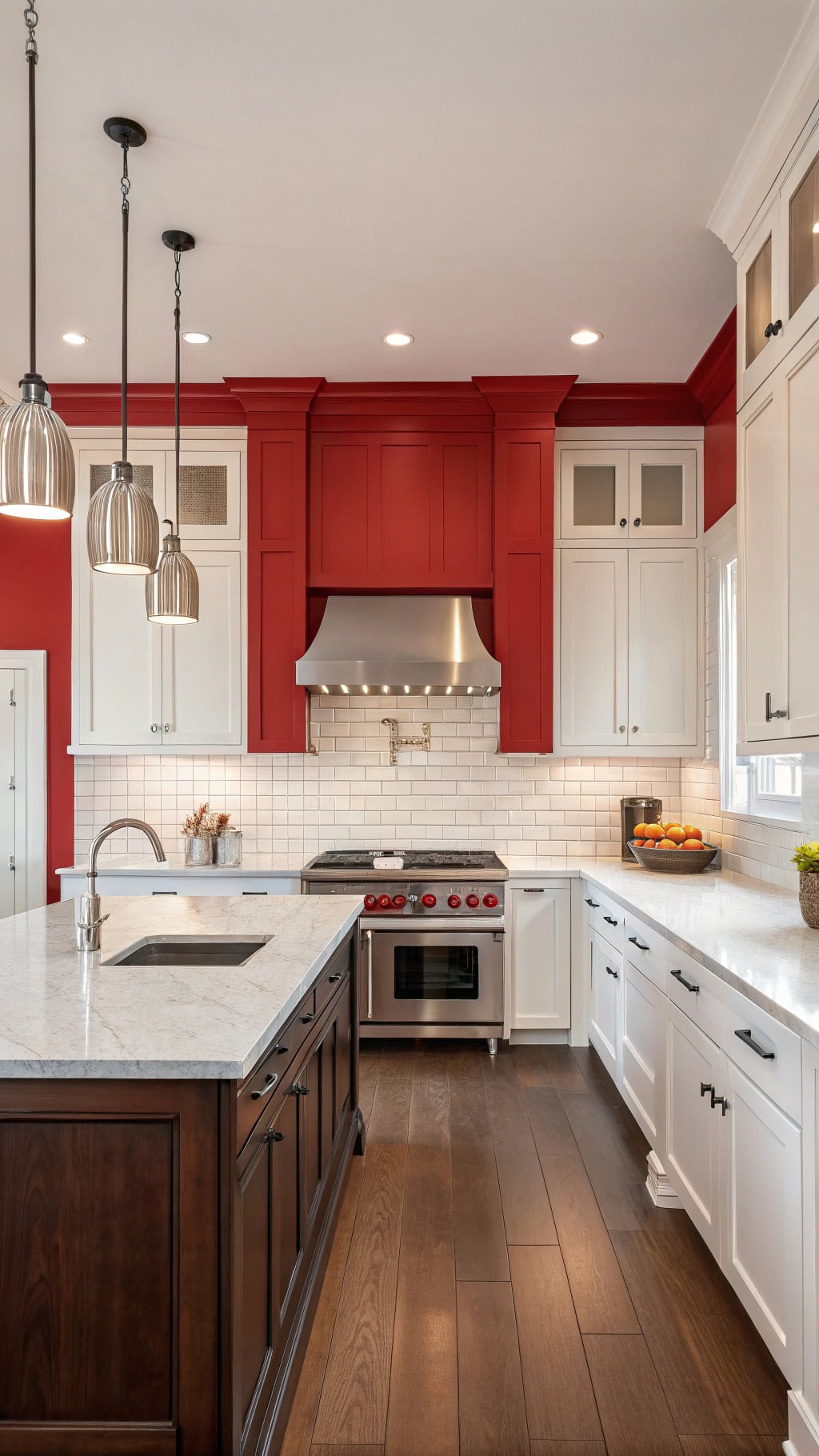
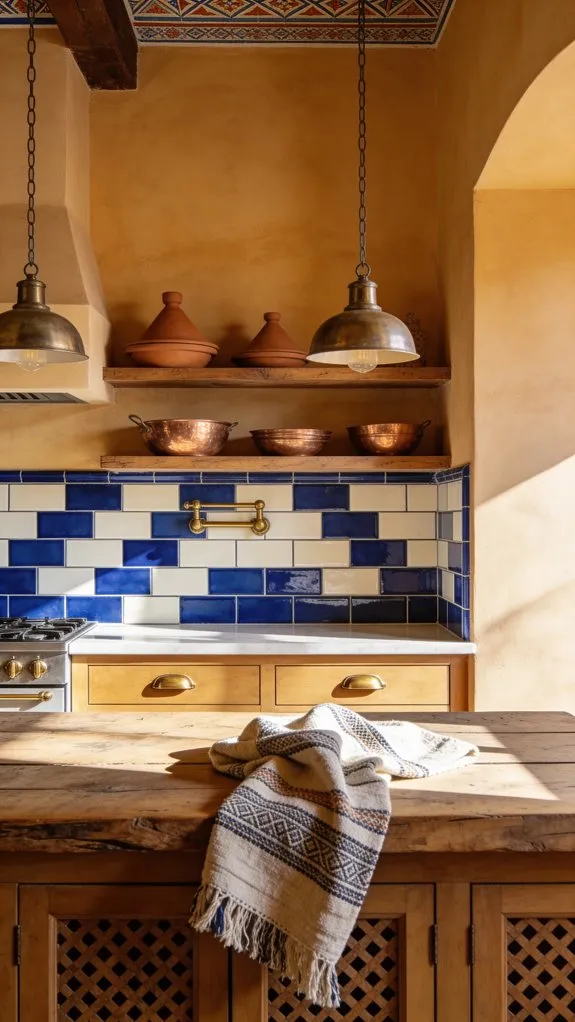
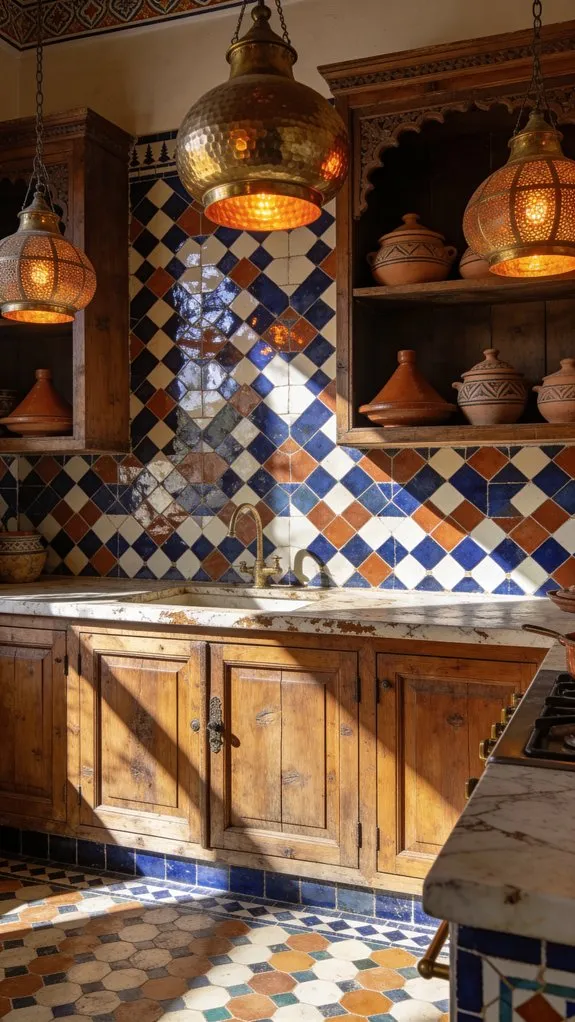
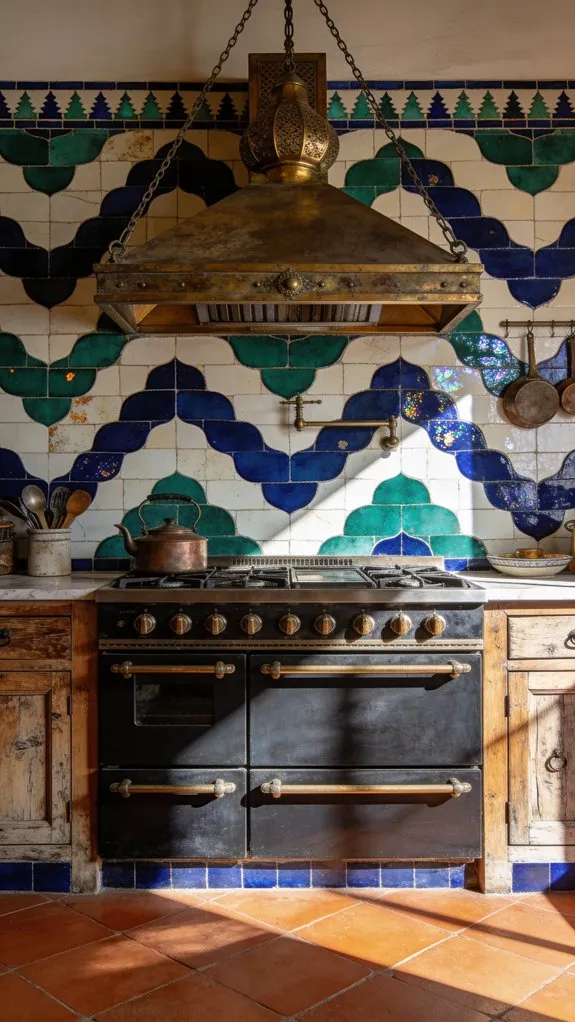
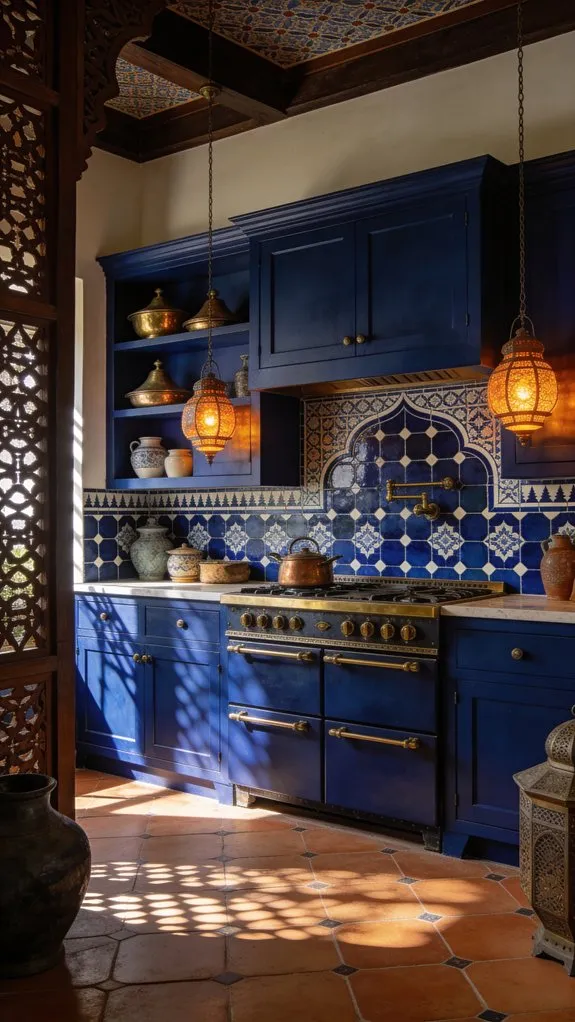
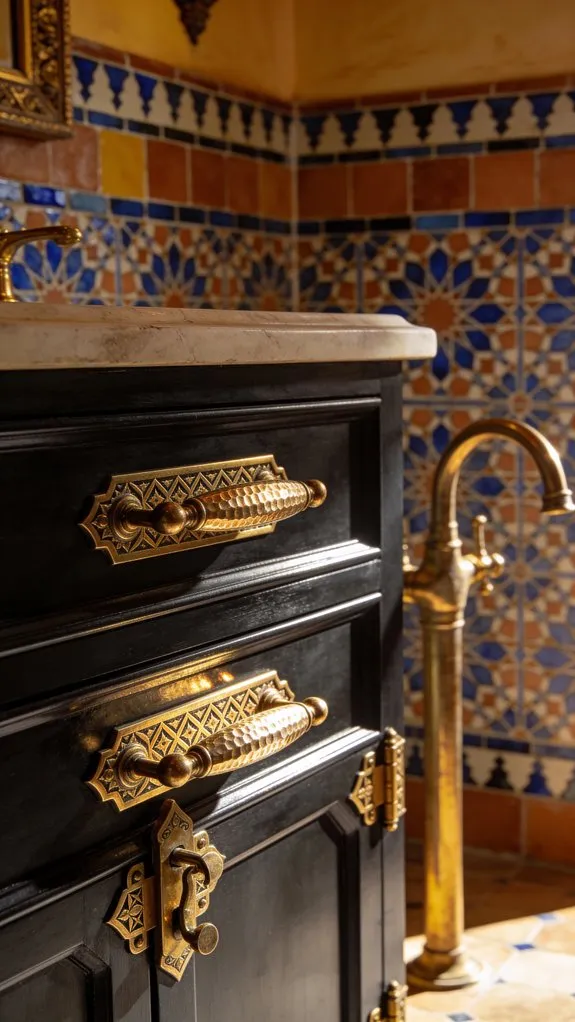
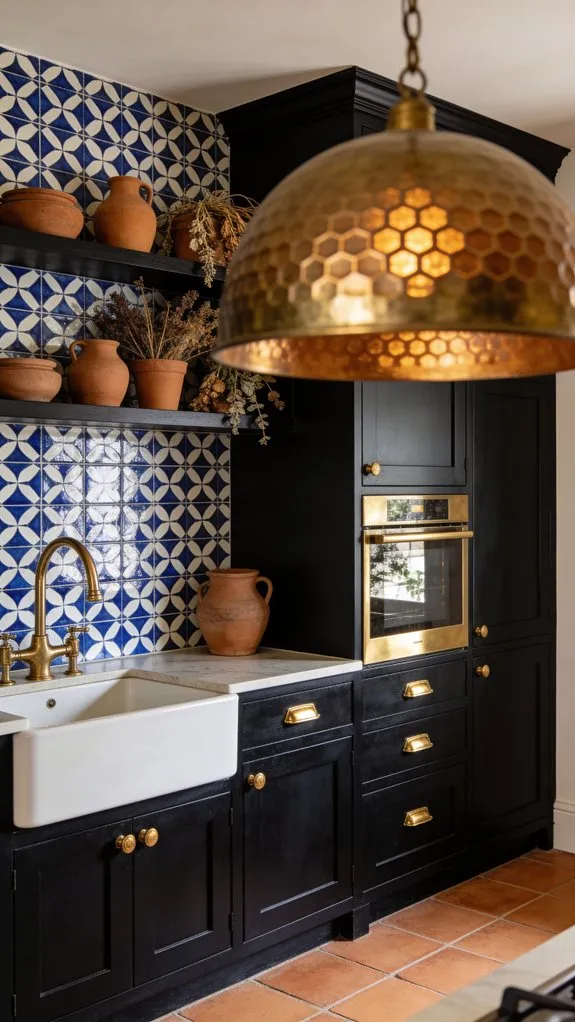
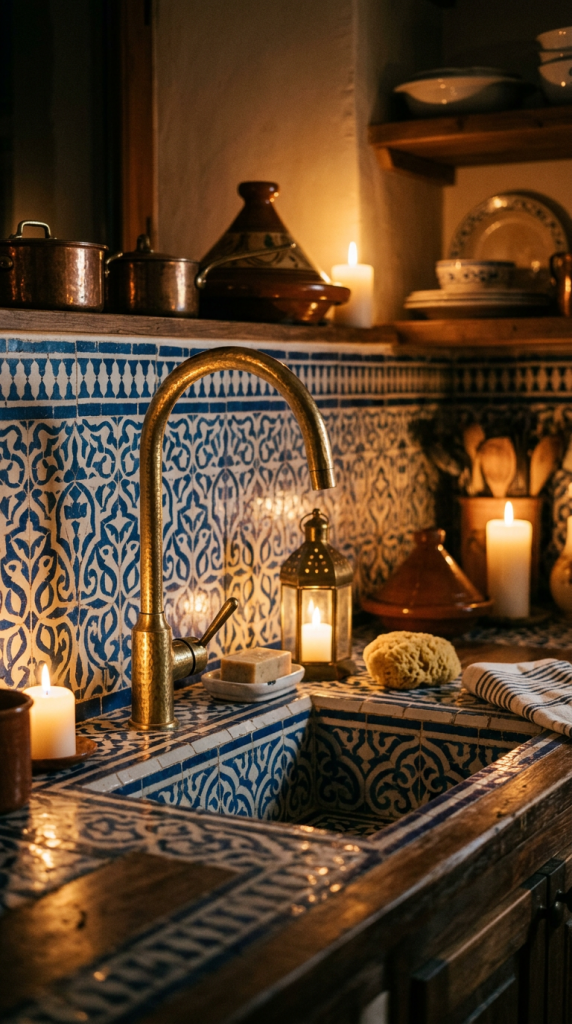
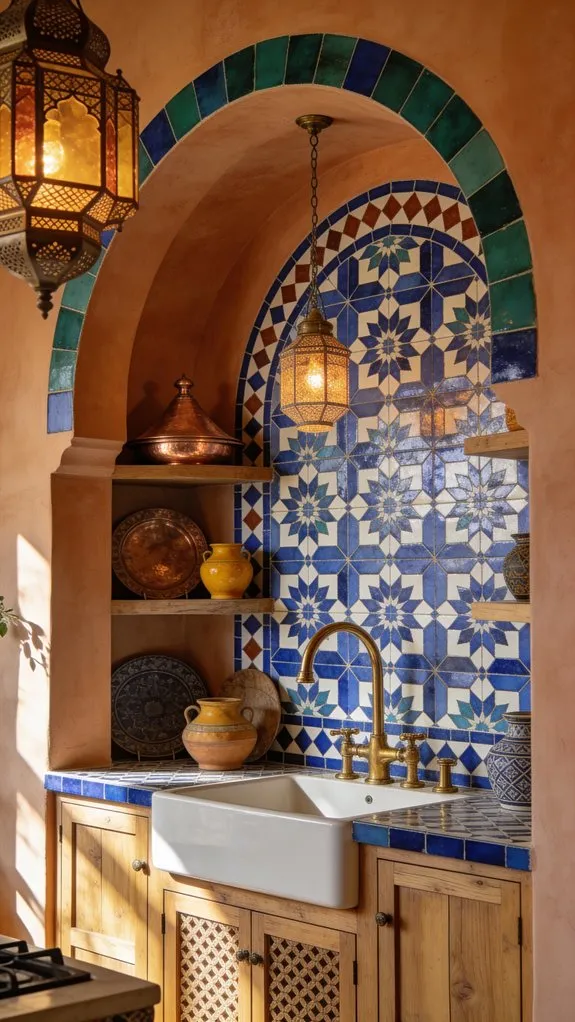
Contrary to traditional design advice, small kitchens no longer have to rely on bright, neutral tones to feel open and inviting. Innovative designers are boldly incorporating deep, rich hues to elevate these compact areas into stylish and refined culinary havens. By integrating shades like charcoal and midnight blue, they’re proving that darkness can add depth and character rather than shrink a space.
These moody color schemes bring a sense of luxury and purpose to kitchens that might otherwise feel cramped or bland. Rather than diminishing the size, the thoughtful use of darker finishes creates a striking, intimate atmosphere that feels both deliberate and elegant. Prepare to challenge your preconceptions about small kitchen design and discover how embracing bold colors can transform even the tiniest cooking quarters into sophisticated spaces.
1. Sophisticated Charm: Elevating Compact Dark Kitchens with Luxurious Espresso Finishes and Warm Ambient Lighting
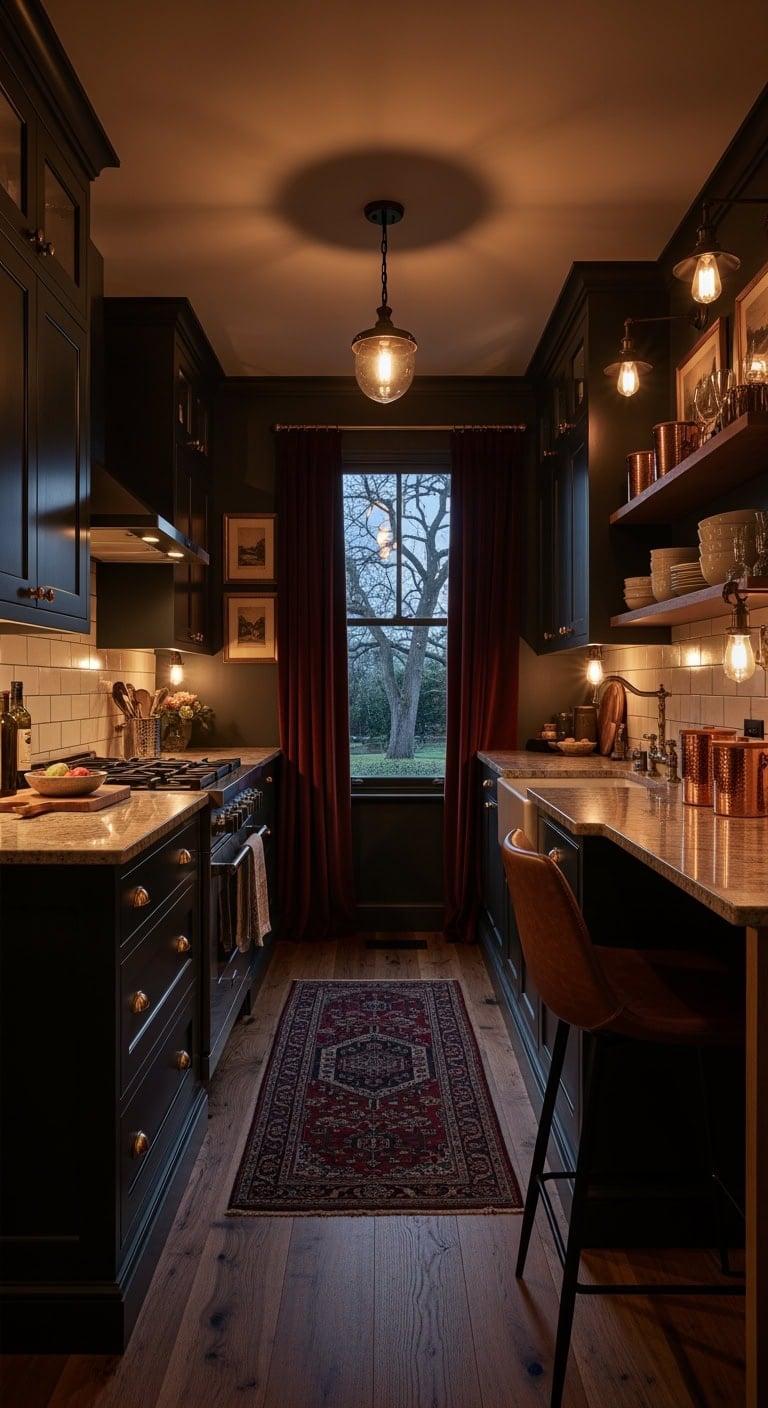
Embrace the allure of a refined, intimate kitchen space featuring deep espresso cabinetry that effortlessly conceals everyday wear. This style creates an inviting atmosphere reminiscent of an upscale wine lounge, where elegance seamlessly blends with practical design.
Key Design Elements
- Deep espresso shaker cabinets accented with antique brass pulls
- Round breakfast table crafted from rich dark walnut
- Cognac-toned tufted leather stools for comfortable seating
- Warm oil-rubbed bronze pendant lighting fixtures
- Burgundy and navy Persian-inspired runner rug
- Mini Edison bulb pendants with matte black metal details
- Luxurious velvet café curtains in a deep wine shade
- Copper storage jars topped with natural wood lids
- Classic brass frames showcasing moody landscape art
Pro Tip: Refresh your cabinetry by painting lower cabinets in Benjamin Moore’s ‘Black Forest Green’ combined with Sherwin Williams’ ‘Caviar’ on an accent wall and lighten the ceiling using Benjamin Moore’s ‘Cloud White’ for balanced contrast.
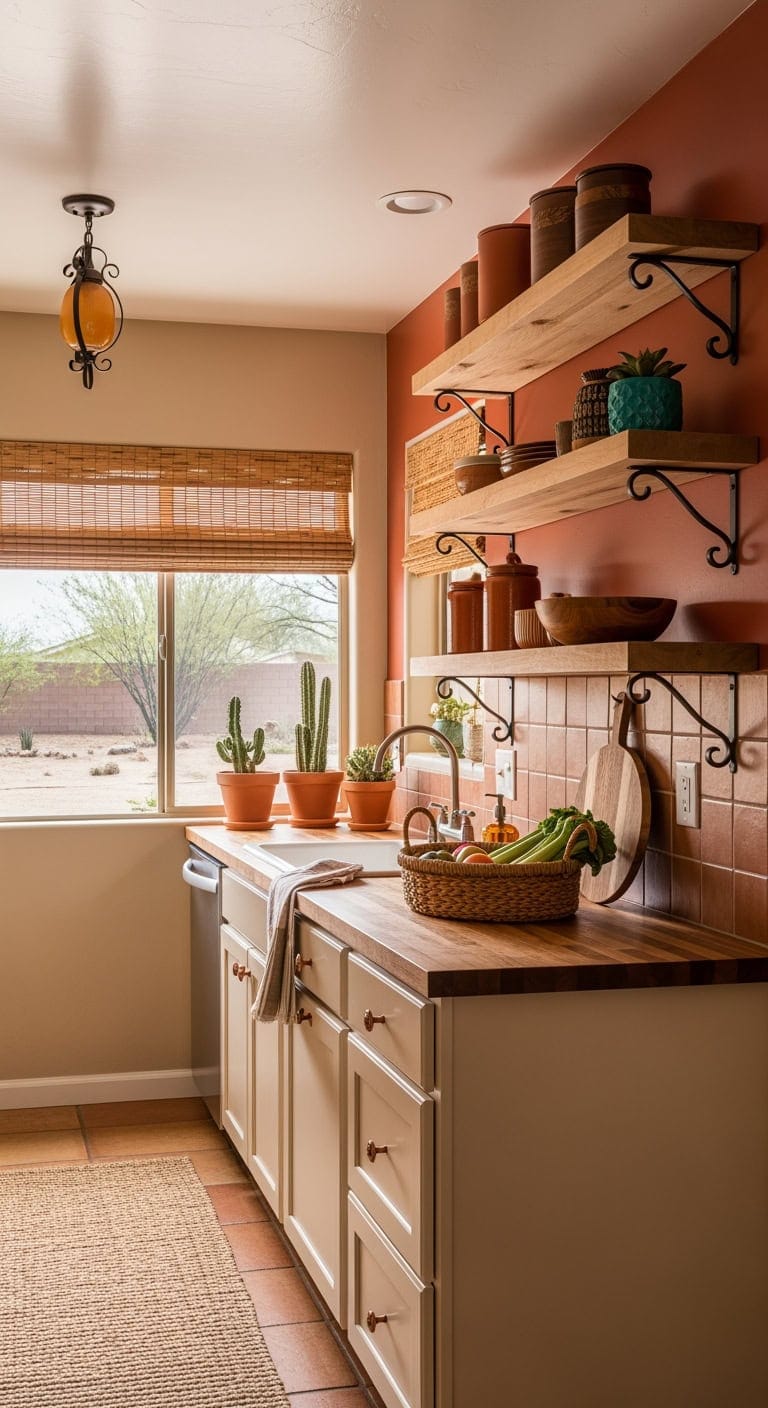
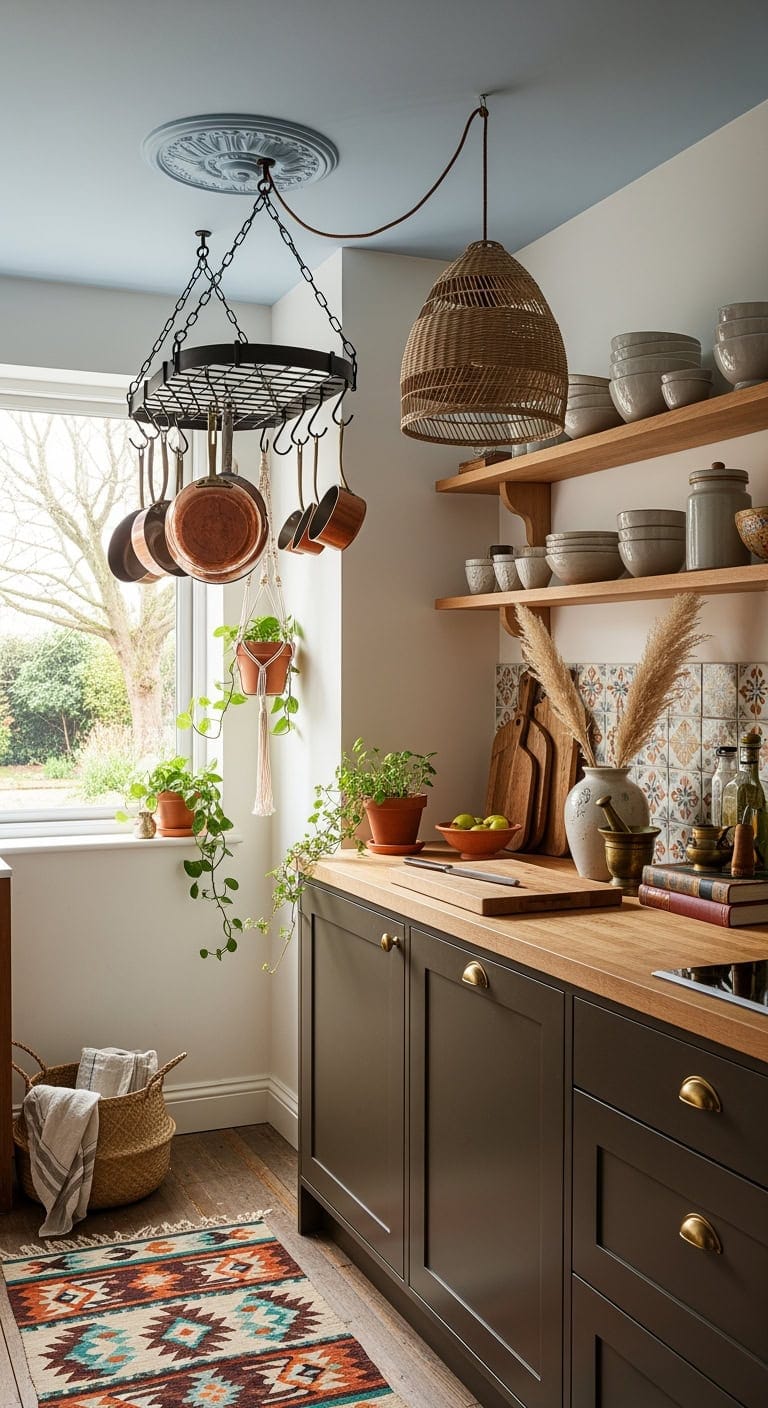
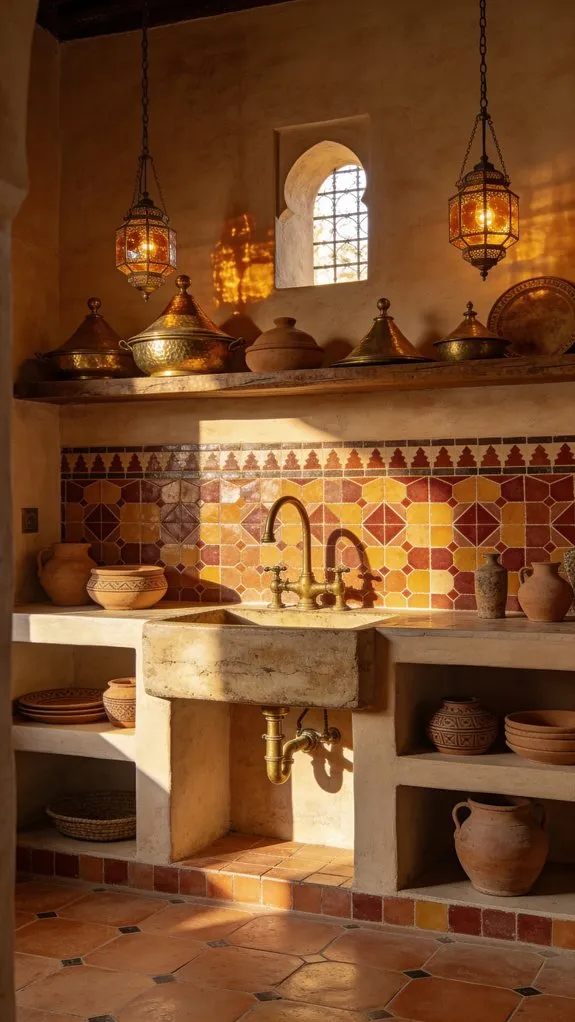
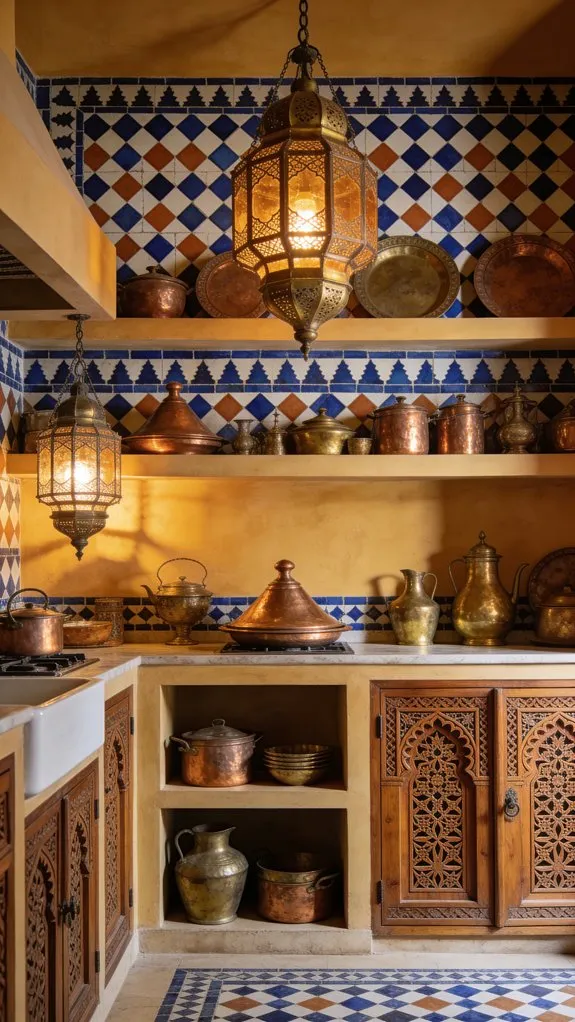
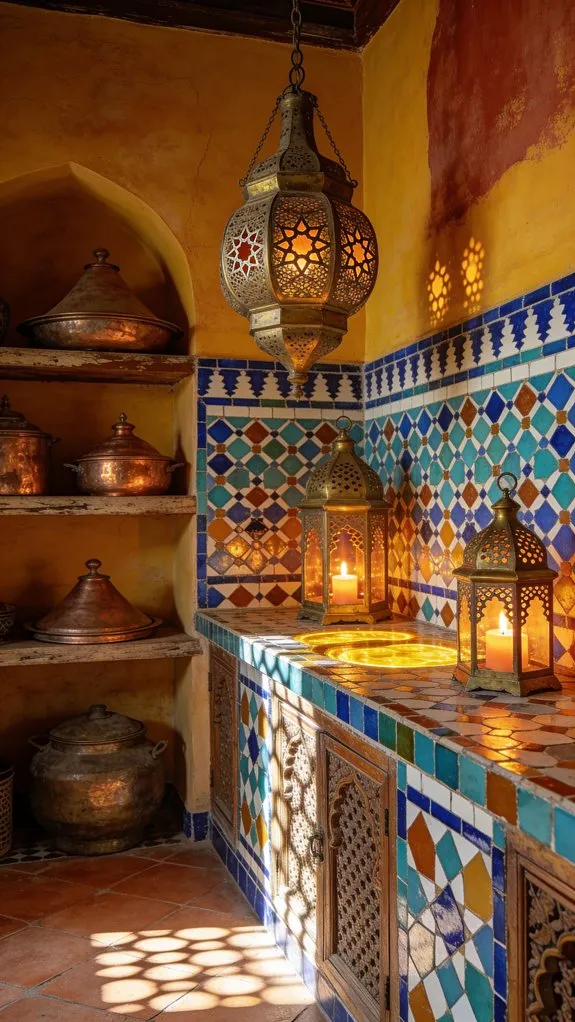
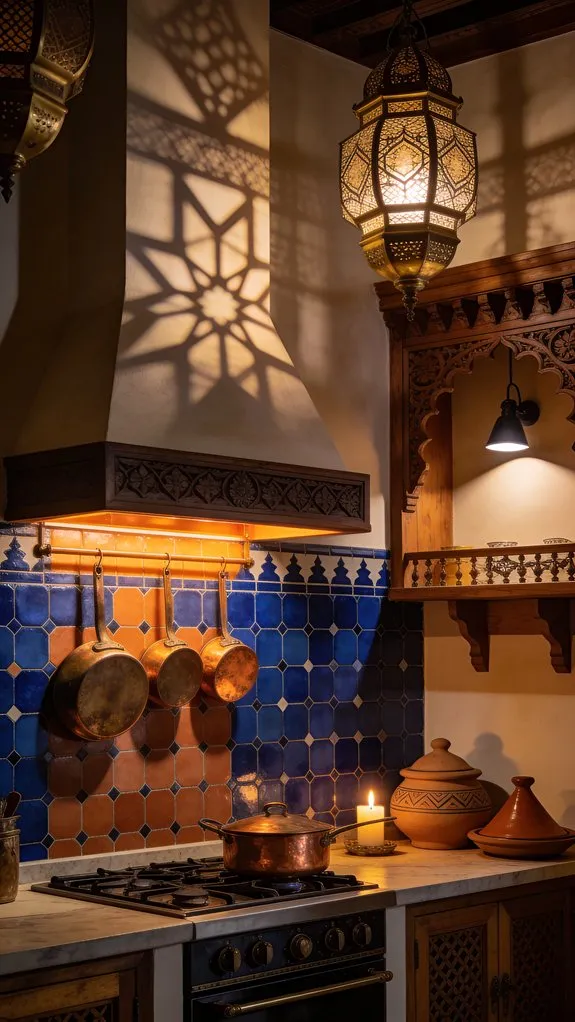
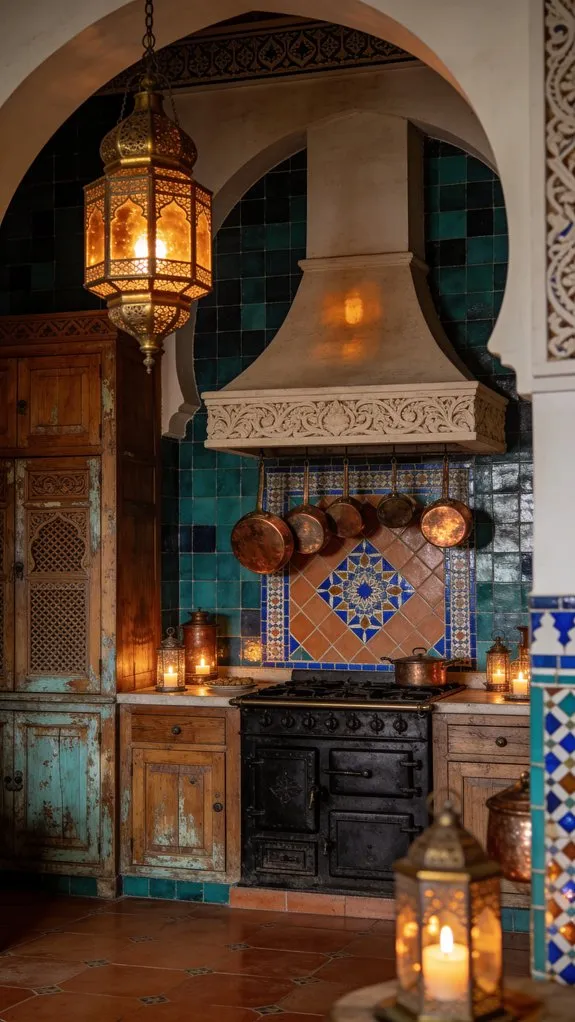
2. Warm Mediterranean Charm: Brightening Compact Kitchens with Earthy Bronze and Terra Cotta Accents
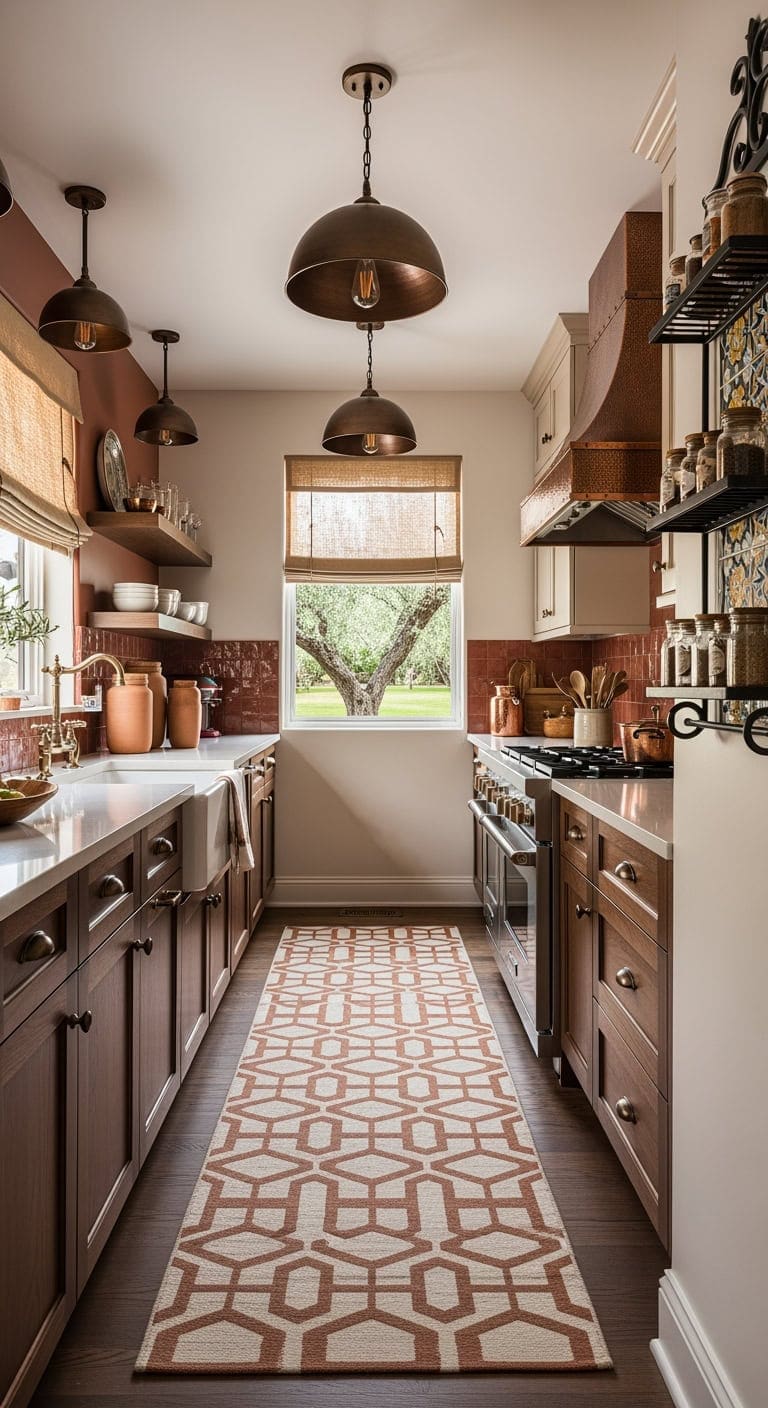
Imagine stepping into a kitchen inspired by sun-kissed Mediterranean villas, where rich bronze hardware gleams softly against terracotta tones that envelop the space in inviting warmth. This style effortlessly blends rustic Italian elegance with contemporary urban comfort, perfect for transforming narrow galley kitchens into cozy culinary retreats.
Key Design Elements
- Rich walnut cabinetry accented with vintage bronze handles
- Handcrafted wood dining table featuring graceful Mediterranean curves
- Dark-stained wooden chairs with woven rush seats
- Textured copper range hood or pendant lights with an aged bronze finish
- Terracotta and cream patterned runner rug sized for narrow kitchens
- Bronze dome-shaped pendant lighting with warm filament bulbs
- Natural burlap Roman shades fitted with bronze curtain rods
- Terra cotta jars with cork tops for stylish storage
- Wrought iron spice rack with decorative ceramic tile inlays
Pro Tip: Refresh your kitchen cabinets by painting lower units in Benjamin Moore ‘Salamander’ and upper units in Sherwin Williams ‘Accessible Beige’, adding depth and warmth with a Benjamin Moore ‘Café Ole’ accent wall.
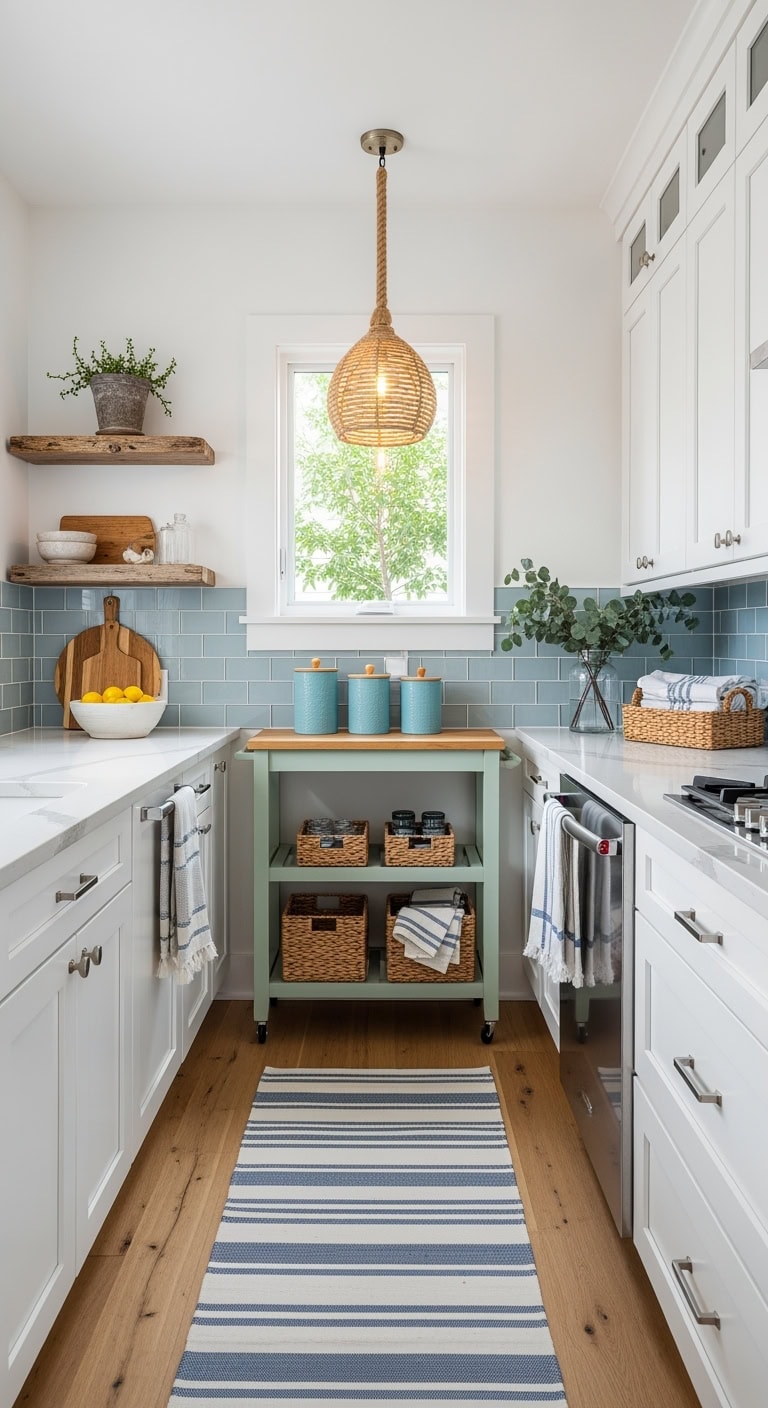
3. Elevated Coastal Charm: Enhancing Compact Dark Kitchens with Dusty Blue Cabinets and Warm Accents
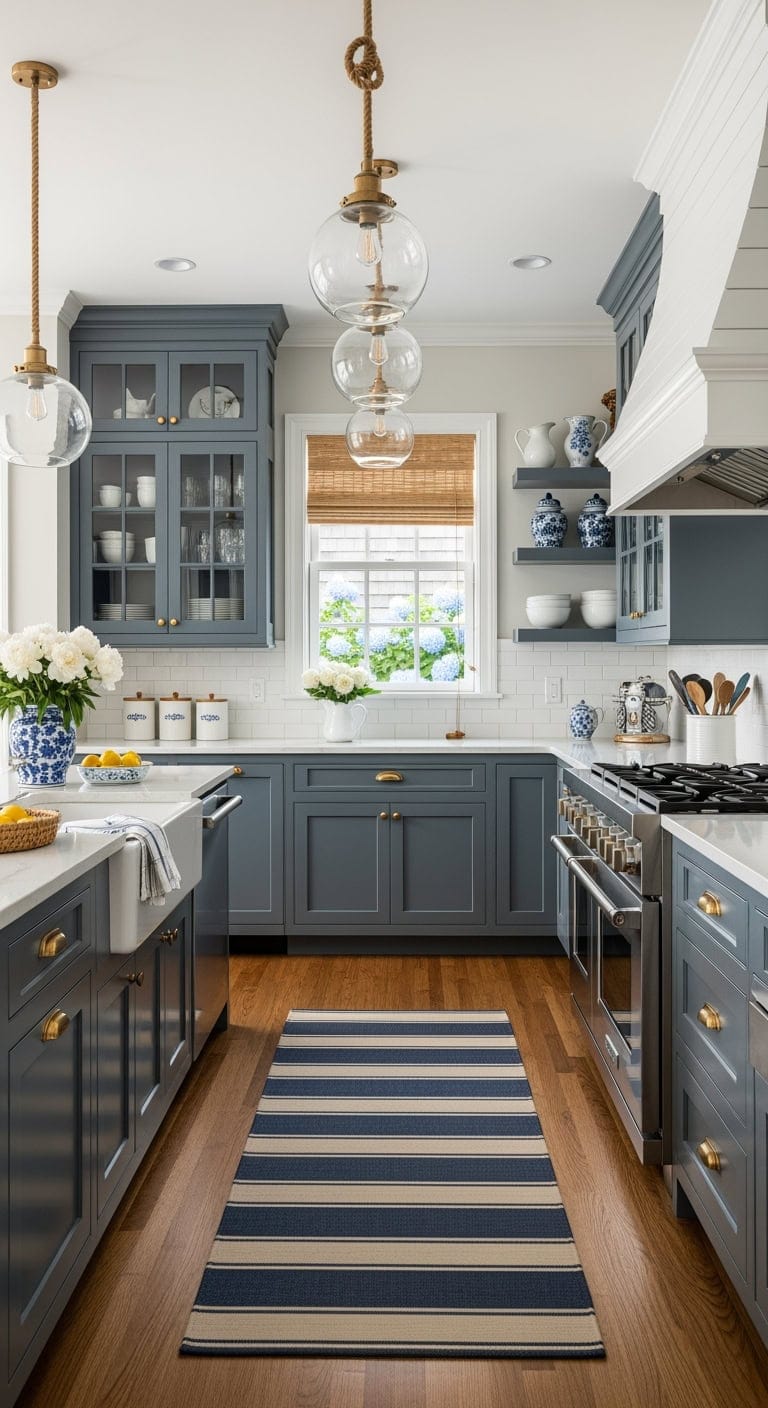
Embodying a refined coastal elegance reminiscent of upscale beach homes, this kitchen style uses muted blue cabinetry to add richness and dimension, while organic materials introduce inviting warmth. The design strikes a perfect balance between polished sophistication and approachable comfort, ideal for compact layouts.
Key Design Elements
- Dusty blue shaker cabinets accented with matte brass pulls
- Marble countertop kitchen island featuring tapered legs
- Woven rattan bar stools with soft ivory cushions
- Beadboard-paneled range hood topped with decorative crown molding
- Striped navy and cream runner rug sized approximately 2.5’x7′
- Transparent glass pendant fixtures wrapped with natural rope accents
- White bamboo roman shades or navy gingham cafe curtains for windows
- White ceramic storage jars with wooden lids for countertop organization
- Coastal-inspired artwork or ceramic pitchers displayed on open shelving
Pro Tip: For a harmonious palette, paint lower cabinets in Benjamin Moore ‘Nimbus Gray’, the island in Sherwin Williams ‘Pure White’, and walls in Benjamin Moore ‘White Heron’ to enhance light and contrast.
4. Rustic Alpine Retreat: Elevate Compact Kitchens with Deep Wood Finishes and Cozy Rustic Flair
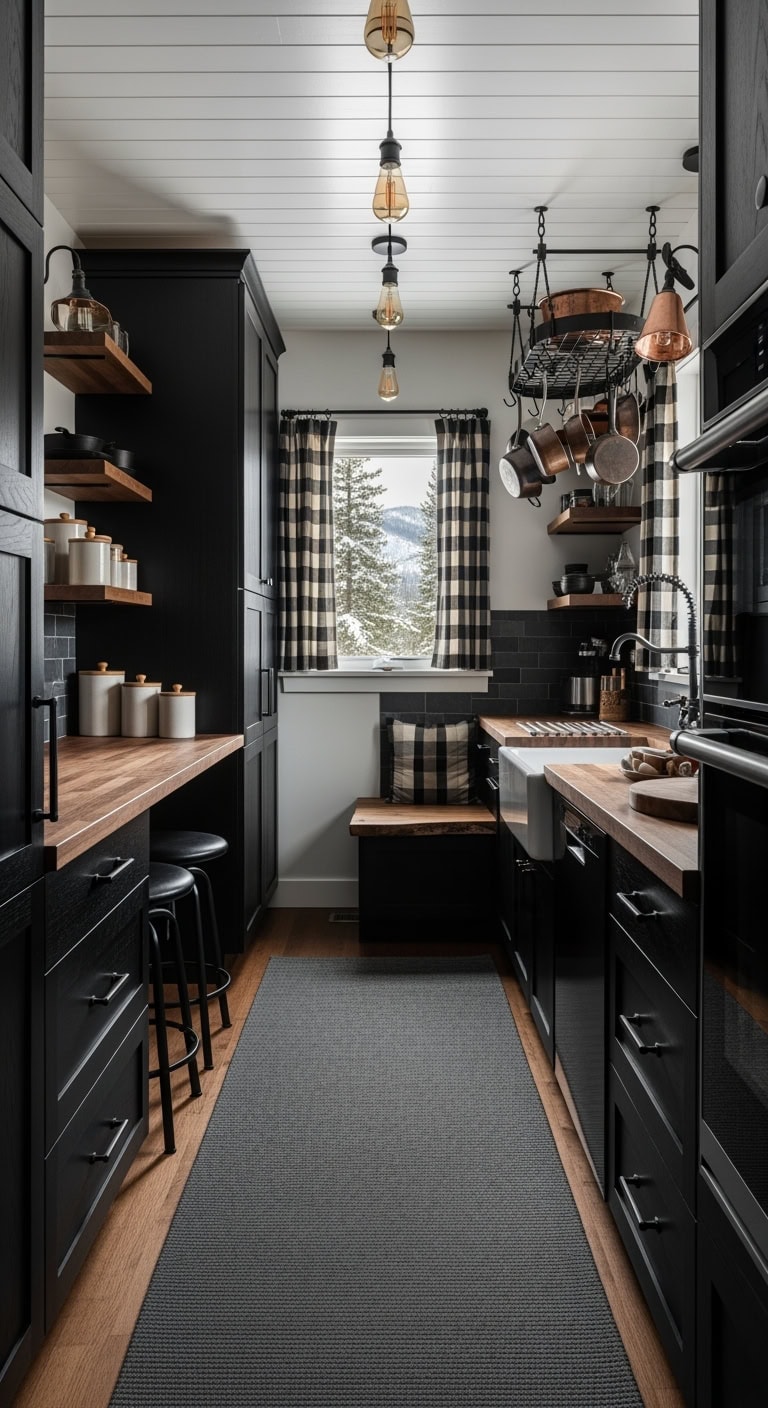
Embrace the inviting charm of a mountain cabin right in your kitchen by blending rich, dark wood tones with intimate, alpine-inspired design elements. This style balances moody elegance with a warm, approachable atmosphere, perfect for compact spaces craving character and comfort.
Key Design Elements
- Deep walnut-stained cabinetry paired with matte black pull handles
- Live-edge reclaimed wood island or dining bench
- Industrial-style leather bar chairs featuring black steel frames
- Blackened wrought iron hanging pot racks or minimalist cage pendant lamps
- Textured charcoal wool runner rug measuring approximately 2.5’ by 10’
- Exposed filament bulb fixtures suspended with matte black cords
- Classic buffalo plaid curtains in neutral blacks and creams
- Neutral-toned stoneware jars with natural wood lids for countertop storage
- Rustic wooden floating shelves adorned with vintage alpine-themed artwork
Pro Tip: For a rich, layered look, paint cabinetry using a deep matte black like Benjamin Moore’s ‘Black Beauty’ and complement with an accent wall in Sherwin Williams’ ‘Urbane Bronze’ to enhance warmth.
5. Classic Southern Charm: Infusing Cozy Elegance into Compact Dark Kitchens with Rich Wood Tones and Deep Crown Molding
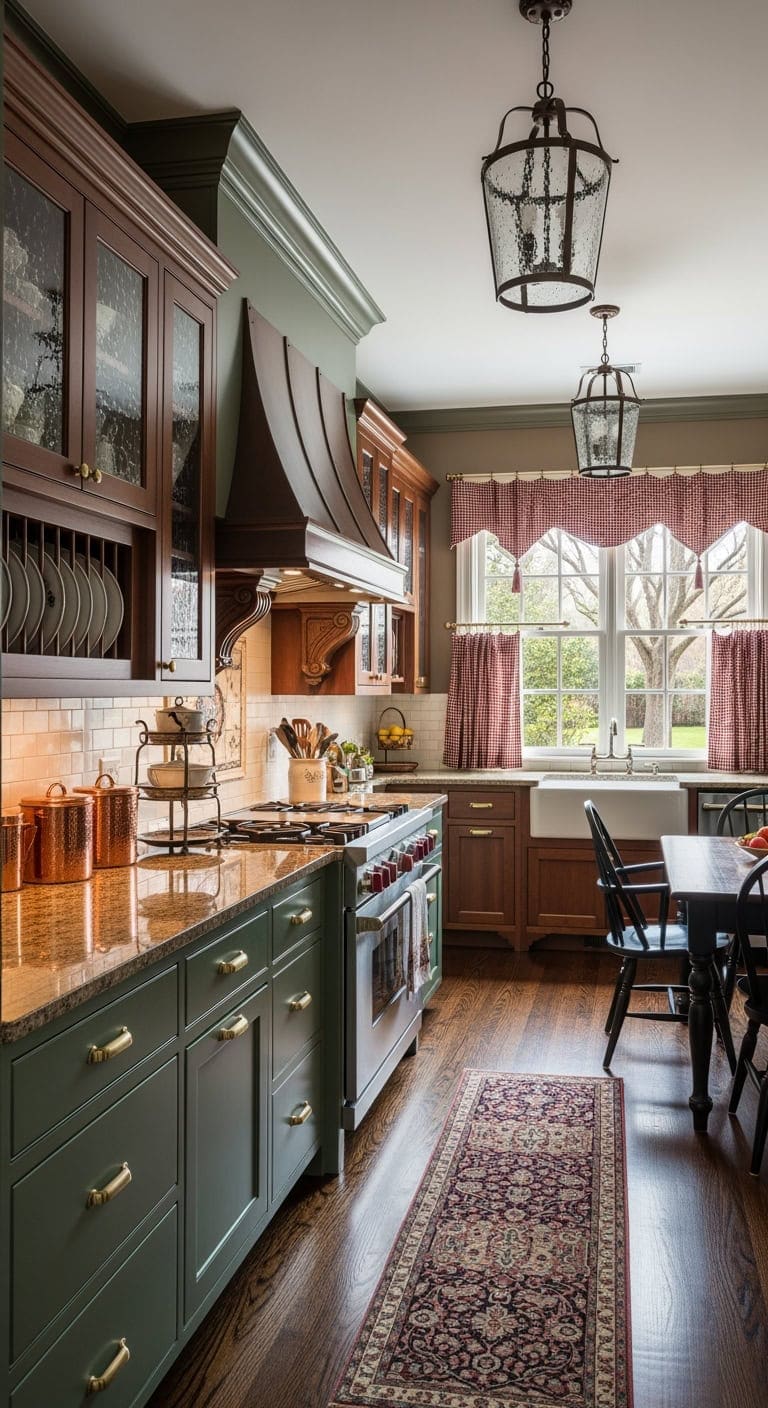
Transform your small, shadowed kitchen into a refined gathering space where classic Southern warmth meets modern sophistication. By combining robust wood finishes and intricate molding details, this style strikes the perfect balance between traditional comfort and elegant charm.
Key Design Elements
- Shaker-style cabinets finished in deep mahogany with vintage brass hardware
- Solid walnut farmhouse table featuring traditional turned legs
- Black Windsor dining chairs with natural wood seats for contrast
- Oil-rubbed bronze range hood accented with ornate corbels
- Burgundy and cream Persian-inspired runner (2.5’x10′) to add texture
- Seeded glass lantern pendant fixtures for ambient lighting
- Burgundy plaid or gingham café curtains to enhance warmth
- Hammered copper canisters adding rustic metallic accents
- Classic plate rack showcasing cherished heirloom dishware
Pro Tip: Refresh your cabinetry by painting lower cabinets in Benjamin Moore’s ‘Black Forest Green’ and crown molding in ‘Wrought Iron’ to deepen shadows, while softening surrounding walls with ‘Rustic Taupe’ for balanced warmth.
6. Mediterranean Charm: Elevating Compact Kitchens with Rich Espresso Tones and Timeless Old-World Details
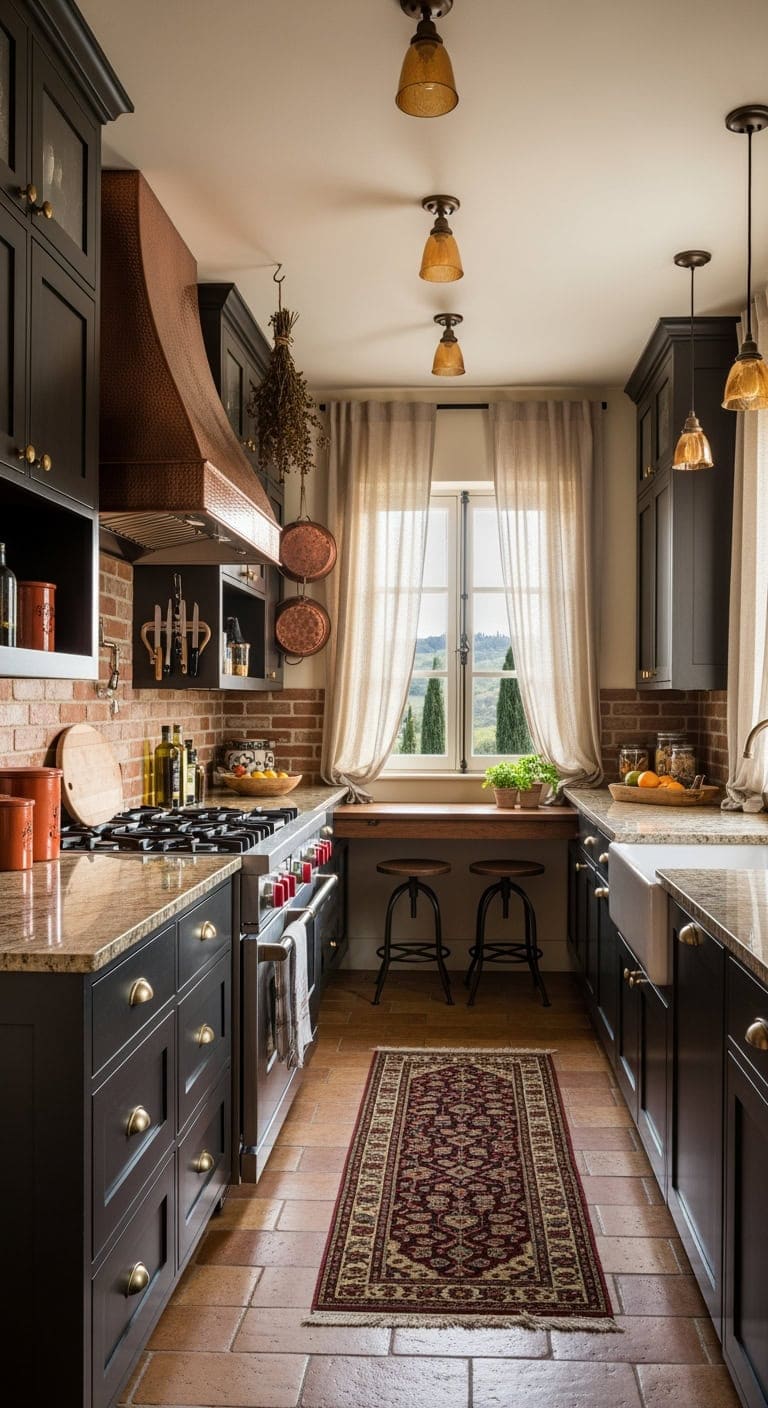
Transform your small kitchen into a warm and inviting Mediterranean haven where deep espresso cabinetry sets a sophisticated yet cozy mood. Complemented by rustic accents and softly glowing lights, this style evokes the intimate charm of a beloved neighborhood trattoria.
Key Design Elements
- Deep espresso shaker cabinets accented with vintage brass pulls
- Solid walnut farmhouse-style dining table with a distressed finish
- Wrought iron stools featuring plush linen upholstery
- Ornate copper or aged bronze range hood with artisanal craftsmanship
- Classic Persian runner rug showcasing rich burgundy and gold tones
- Amber-hued mini pendant lighting for an inviting glow
- Natural linen or burlap Roman shades with subtle stripe patterns
- Handcrafted terracotta storage jars topped with cork lids
- Rustic wooden shelving adorned with olive oil bottles and Mediterranean prints
Pro Tip: For authentic warmth, paint your lower cabinets in Benjamin Moore’s ‘Black Forest Green’ and create an accent wall using Sherwin Williams’ ‘Tuscany’ while keeping the ceiling crisp with Benjamin Moore’s ‘Linen White’.
7. Urban Industrial Elegance: Elevating Compact Kitchens with Bold Metal Accents and Cozy Urban Vibes
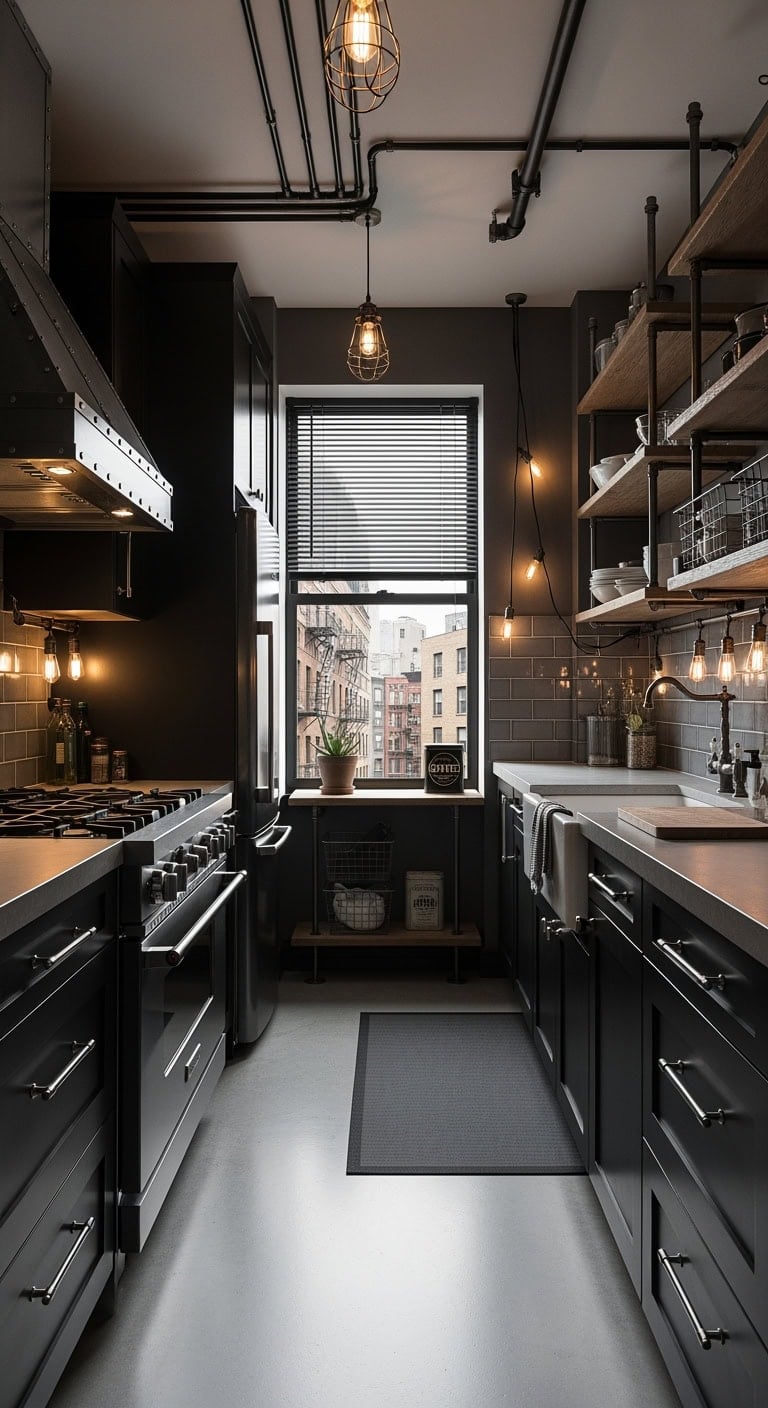
Imagine the sleek charm of a city loft where raw metal meets warm, textured surfaces. This design approach redefines small kitchens by integrating rugged steel details and rich, dark tones to create an inviting yet edgy atmosphere perfect for contemporary urban living.
Key Design Elements
- Flat-front black matte cabinetry paired with industrial-style iron handles
- Dining table crafted from salvaged timber and black steel piping
- Metal-framed stools with worn leather upholstery in deep charcoal
- Steel range hood featuring riveted and brushed metal finishes
- Dark slate gray washable kitchen runner (approximately 2.5’x7′)
- Bronze cage pendant lighting fixtures with an antique finish
- Matte black aluminum mini blinds or textured dark gray roller shades
- Black wire mesh storage bins for open shelving or pantry organization
Pro Tip: For a cohesive look, paint all cabinetry with Benjamin Moore’s ‘Iron Mountain’ (2134-30) and use Sherwin Williams’ ‘Black Fox’ (SW 7020) on an accent wall to highlight industrial elements.
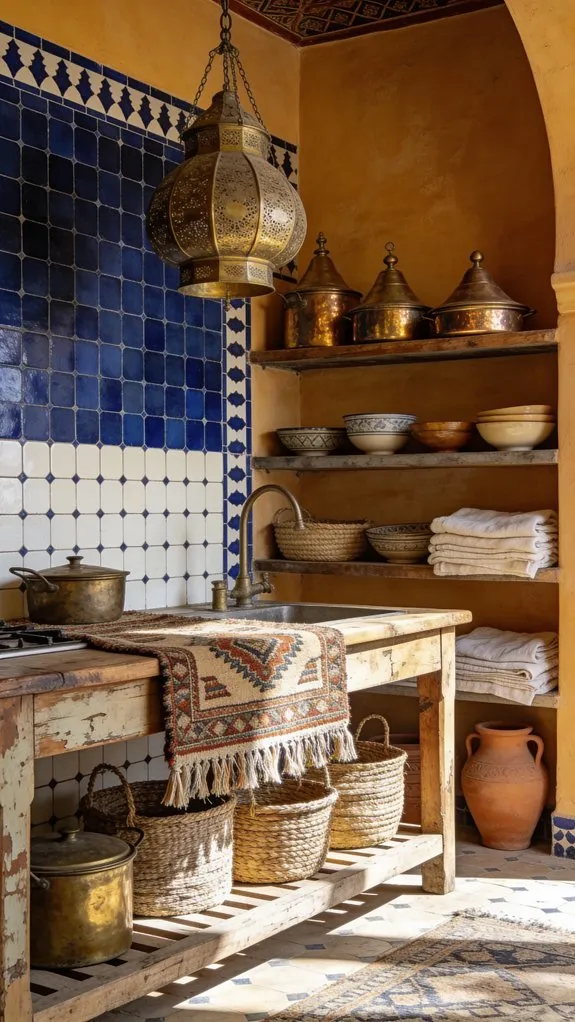
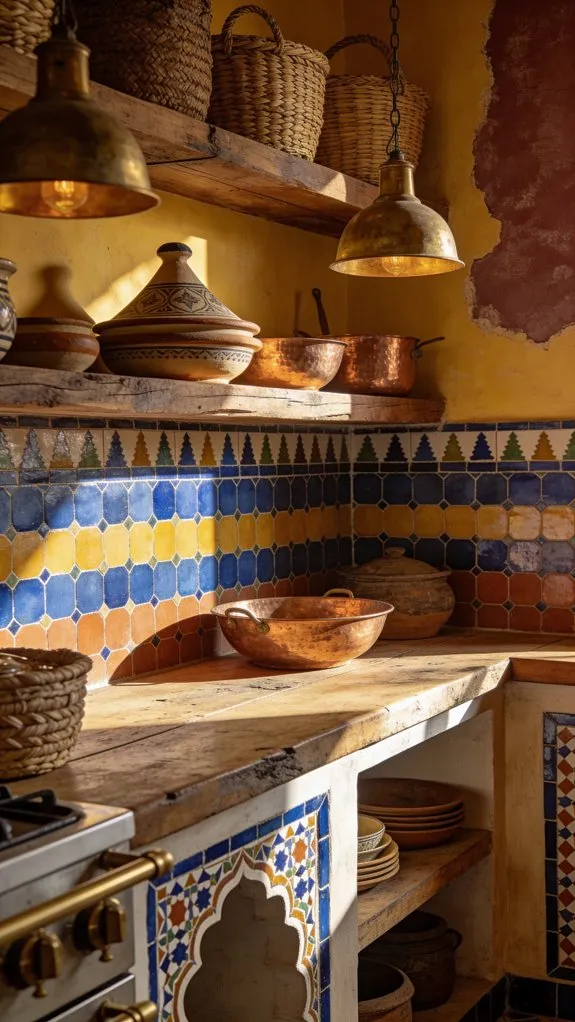
8. Moody Boho Charm: Transforming Compact Kitchens with Deep Blue Tiles and Rich Textural Layers
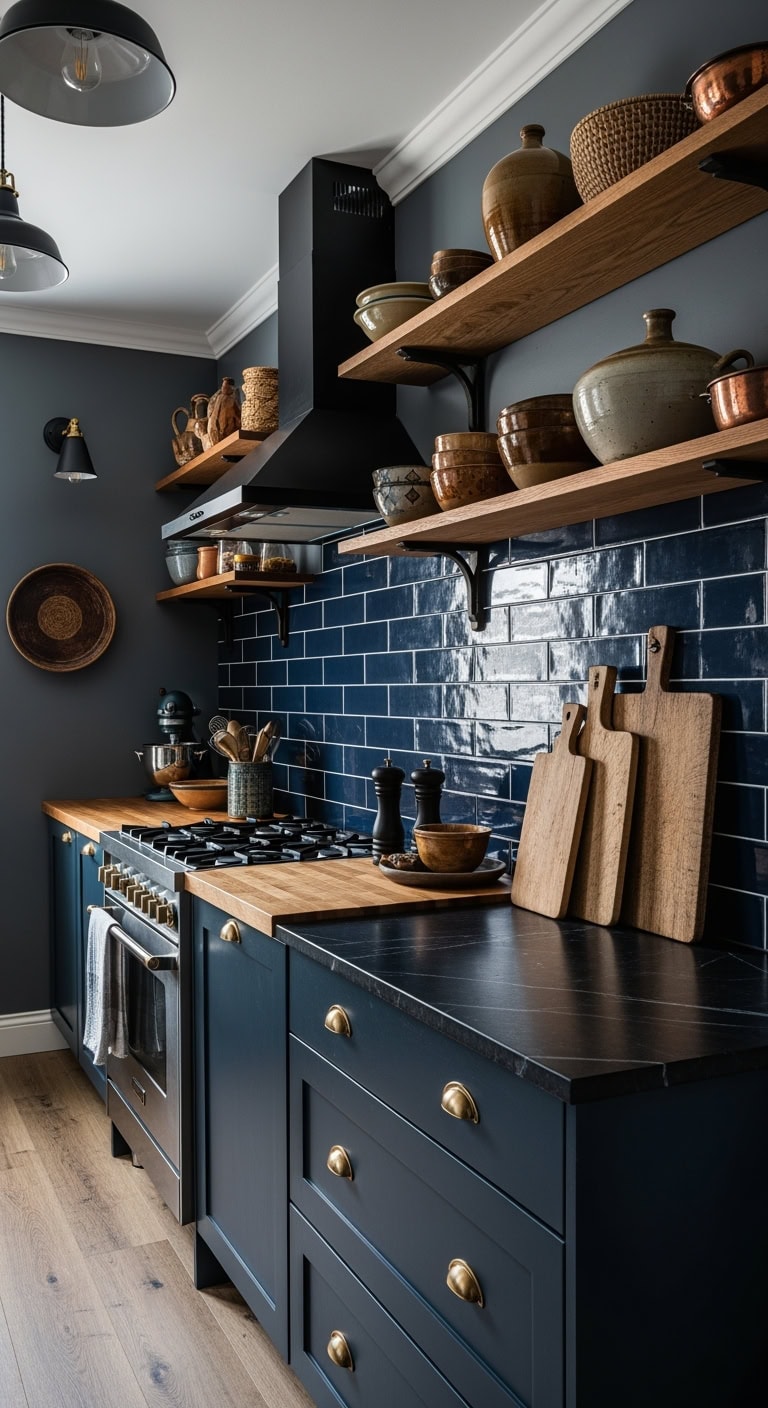
Inspired by the cozy allure of artisanal cafés, this kitchen design blends deep blue tiles with an eclectic mix of textures, creating an inviting space that sparks creativity. It channels a sophisticated bohemian spirit with a hint of scholarly mystique, perfect for intimate urban kitchens.
Key Design Elements
- Deep navy shaker cabinetry accented with vintage brass pulls
- Distressed reclaimed wood dining bench paired with industrial metal details
- Woven rattan and matte black steel bar stools (set of 4)
- Copper hammered range hood or a Moroccan-style pendant light
- Oriental-inspired runner in rich navy and burnt orange hues (2.5’x10′)
- Eclectic metal pendant lamps featuring tinted glass shades
- Boho macramé curtains or intricately patterned Roman blinds
- Antique brass storage jars alongside natural woven baskets
- Curated gallery wall showcasing thrifted frames or open shelving with artisanal ceramics
Pro Tip: For a cohesive look, paint lower cabinets in Sherwin Williams ‘Naval’ and balance the ceiling with Benjamin Moore’s ‘Gentleman’s Gray’, adding an accent wall in Benjamin Moore ‘Hale Navy’ for depth and drama.
9. Gothic Elegance: Transforming Compact Kitchens with Dark Accents and Refined Ironwork
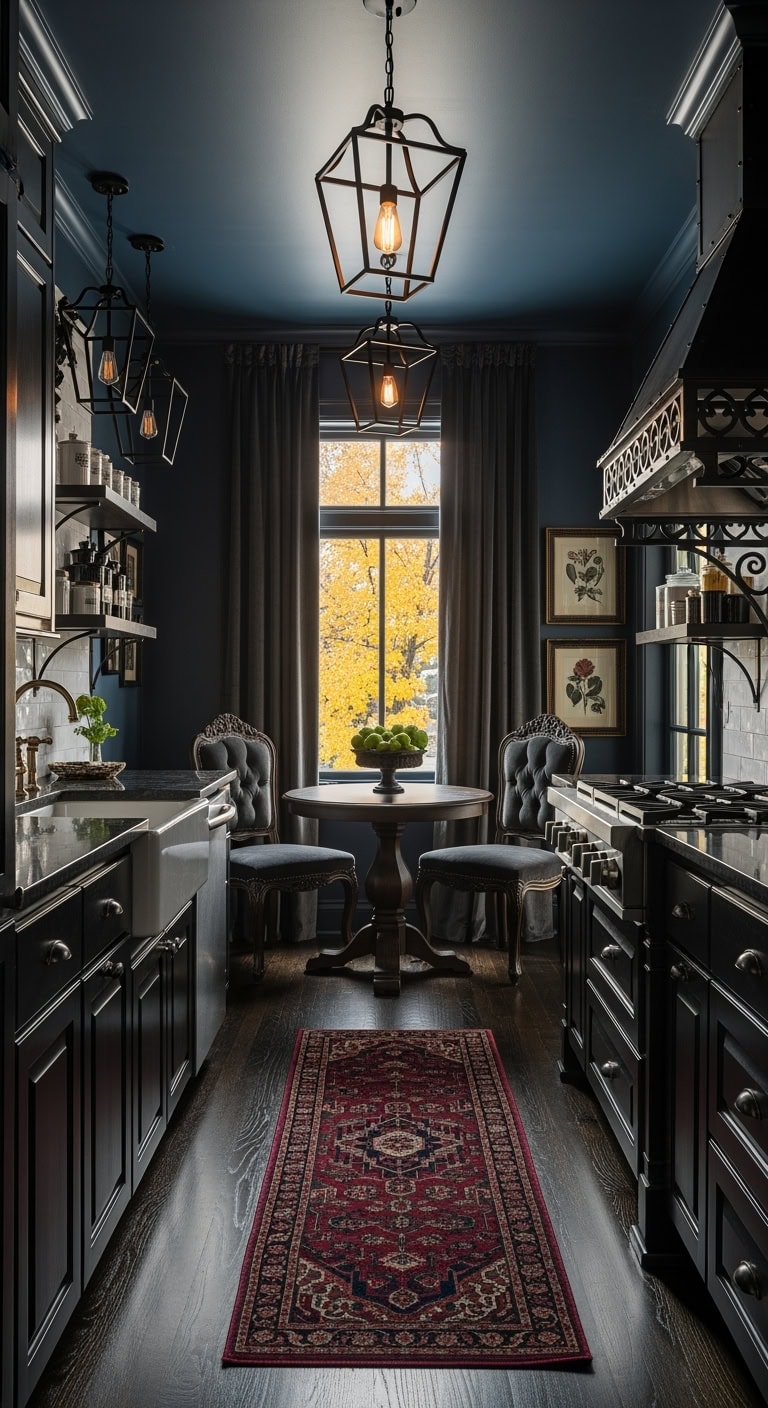
Embrace a strikingly moody vibe in your small kitchen by blending deep wood tones with intricate black iron details. This sophisticated look turns confined spaces into bold, inviting areas reminiscent of classic gothic charm infused with modern luxury.
Key Design Elements
- Richly stained cabinetry in deep ebony with detailed wrought iron handles
- Space-saving round pedestal dining table crafted from dark walnut wood
- Dining chairs upholstered in plush velvet featuring intricately carved wooden frames
- Black iron range hood showcasing elegant scrollwork and gothic motifs
- Runner rug with Persian-inspired patterns in shades of deep crimson and maroon
- Blackened metal pendant lanterns fitted with vintage-style Edison filament bulbs
- Thick velvet cafe curtains in moody charcoal or forest green hues
- Glass apothecary jars topped with matte black lids for stylish storage
- Framed antique botanical illustrations in ornately designed black frames
Pro Tip: For a dramatic yet cohesive palette, paint cabinets with Benjamin Moore’s ‘Black Beauty’ (2128-10) and introduce a Sherwin Williams ‘Caviar’ (SW 6990) accent wall for depth and contrast.
10. Cozy English Retreat: Transforming Compact Dark Kitchens with Rich Forest Green Cabinets and Charming Dining Corners
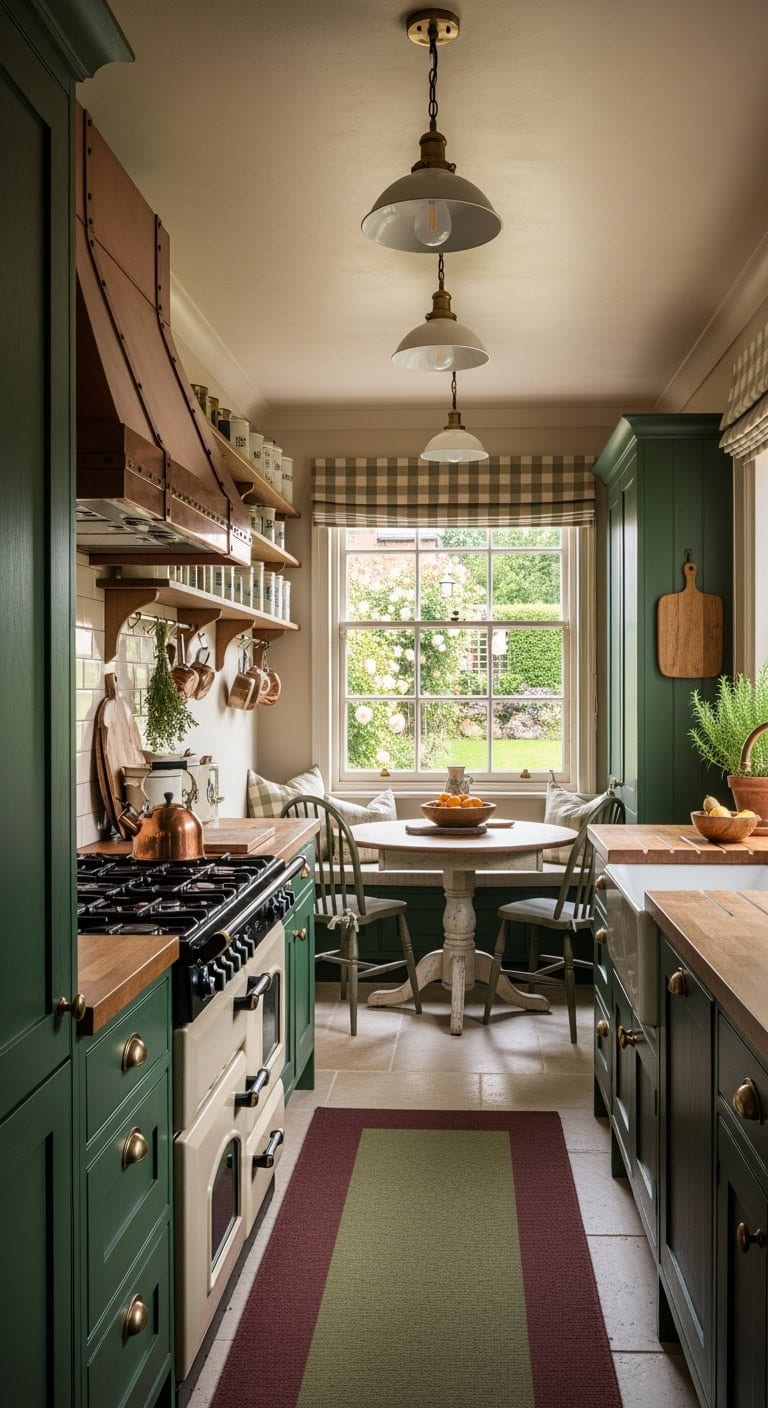
Inspired by timeless English countryside charm, this kitchen style uses lush forest green cabinetry to infuse warmth and personality into small, dimly lit spaces. The design embraces intimate dining areas and vintage-inspired accents to create a snug, inviting environment perfect for everyday comfort and style.
Key Design Elements
- Forest green shaker cabinets adorned with vintage brass handles
- Distressed wood round pedestal table ideal for intimate breakfasts
- Classic Windsor dining chairs finished in natural wood tones
- Aged brass or copper range hood featuring ornamental straps
- Handwoven wool runner in deep reds and greens (2’x6′)
- Brass pendant lighting with frosted milk glass shades
- Cream and green gingham cafe curtains for a quaint touch
- Ceramic ironstone storage jars topped with wooden lids
- Copper cookware and hanging dried herbs showcased on open shelves
Pro Tip: Refresh cabinetry with Benjamin Moore ‘Hunter Green’ (2041-10) paint and complement with Sherwin Williams ‘Urbane Bronze’ (SW 7048) on an accent wall to deepen the cozy atmosphere.
11. Timeless Elegance: Enhancing Compact Kitchens with Soft Gray Tones and Charming Vintage Details
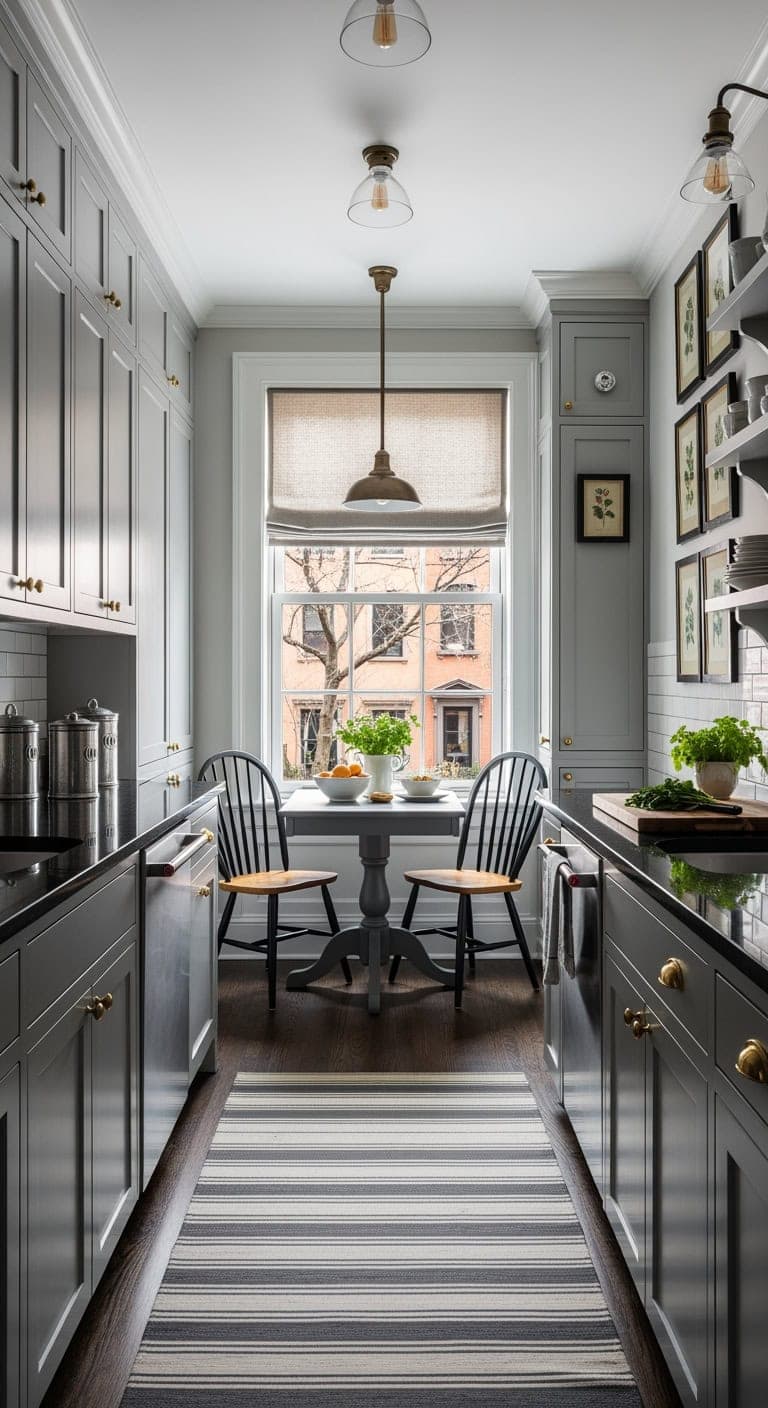
Capture the essence of classic charm in your small kitchen by blending gentle gray hues with thoughtfully scaled, vintage-inspired millwork. This design evokes the comforting warmth of a cherished heritage space, creating an inviting atmosphere that pairs seamlessly with modern living.
Key Design Elements
- Classic shaker cabinets painted in soft dove gray accented with antique brass cup handles
- Compact round pedestal dining table in weathered slate finish
- Traditional Windsor dining chairs in matte black with natural wood seats
- Brass dome pendant lighting fixtures or retro-inspired schoolhouse lights
- Striped runner rug in muted charcoal and cream tones, sized 2.5’x7′
- Miniature glass pendant lamps featuring vintage-style Edison bulbs
- Natural linen Roman shades in a creamy oatmeal color
- Pewter-finished storage canisters adorned with classic detailing
- Curated displays of framed vintage botanical artworks or collections of pewter plates
Pro Tip: Use a high-quality matte paint like Benjamin Moore’s ‘Kendall Charcoal’ for cabinetry and complement with Sherwin Williams’ ‘Peppercorn’ on an accent wall to add depth while preserving warmth.
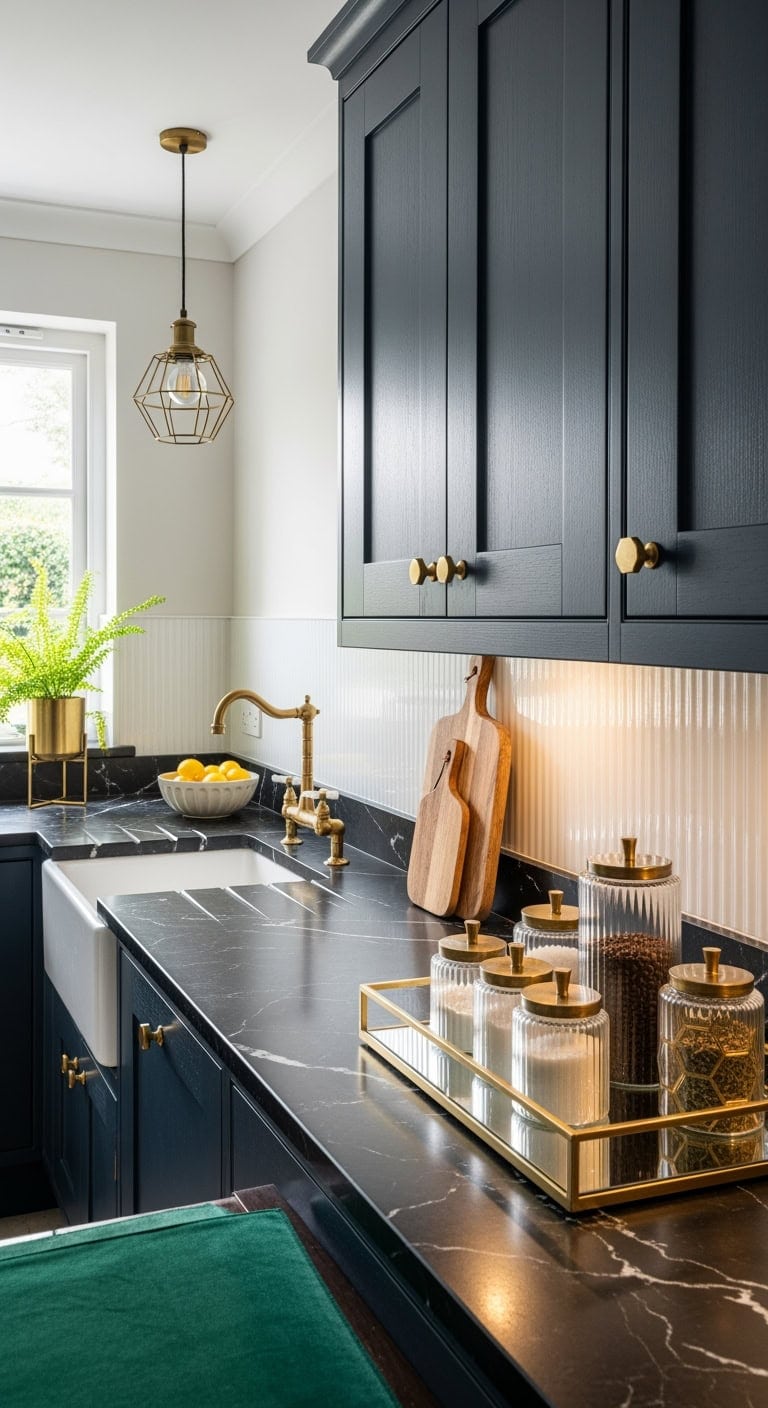
12. Sleek Urban Elegance: Maximizing Compact Dark Kitchens with Polished Onyx Surfaces and Streamlined Furnishings
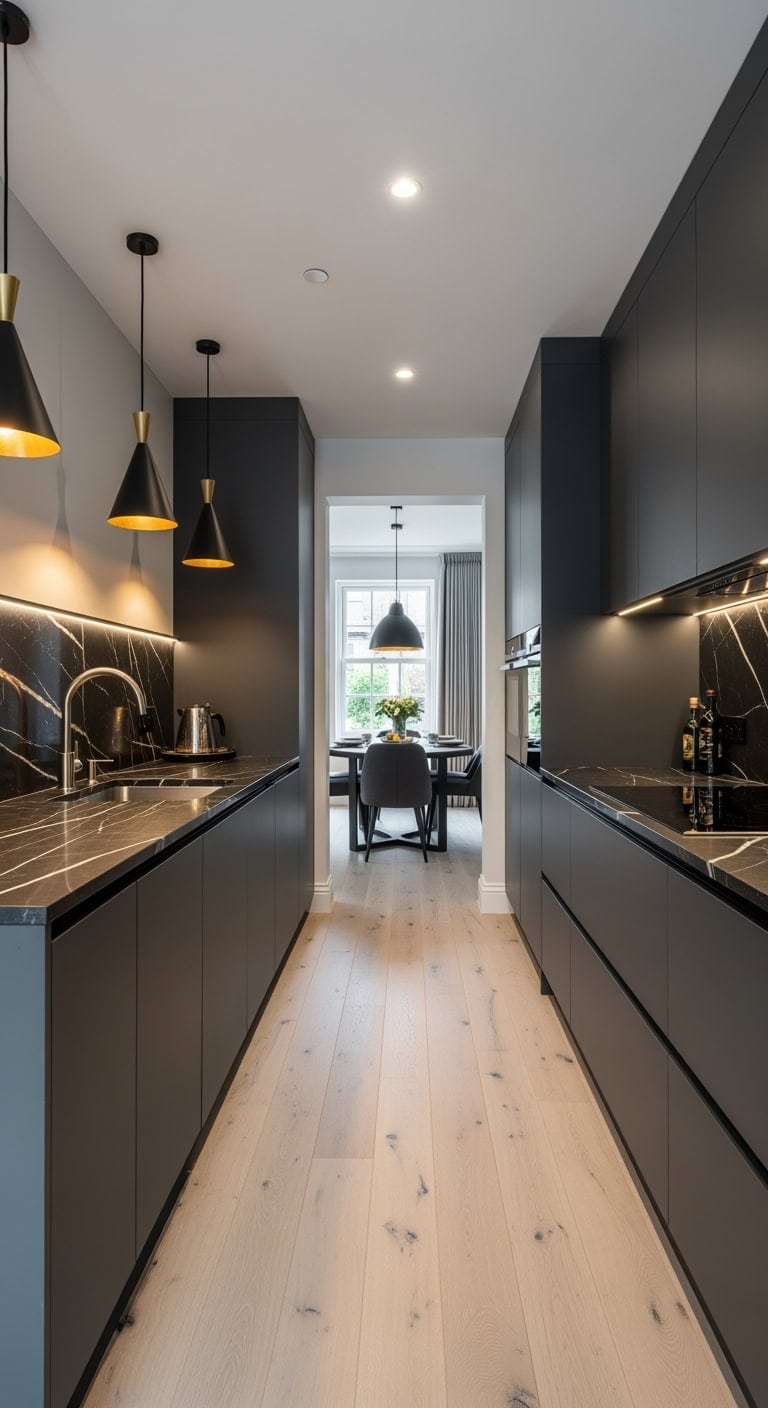
Embrace the allure of polished black countertops combined with minimalist cabinetry to transform small kitchens into sophisticated, boutique-style spaces. This approach exudes refined luxury while maintaining practicality in narrow layouts.
Key Design Elements
- Glossy deep slate cabinetry featuring hidden finger pulls
- Space-saving circular bistro table with matte black and natural wood accents
- Set of 2-3 contemporary leather swivel stools with brushed steel frames
- Slim black stainless steel range hood equipped with subtle LED lighting
- Dark gray patterned runner rug measuring approximately 2’x6′
- Modern black pendant fixtures with warm brass interiors
- Charcoal blackout roller shades for optimal light control
- Matte black stoneware jars and canisters for countertop organization
- Monochrome abstract art prints to enhance wall aesthetics
Pro Tip: Use Benjamin Moore’s ‘Black Beauty’ on cabinets, Sherwin Williams’ ‘Iron Ore’ to create a dramatic feature wall, and balance with Benjamin Moore’s ‘Cloud White’ on the ceiling for crisp contrast.
13. Elegant Coastal Retreat: Transforming Compact Dim Kitchens with Stormy Blue Hues and Rustic Accents
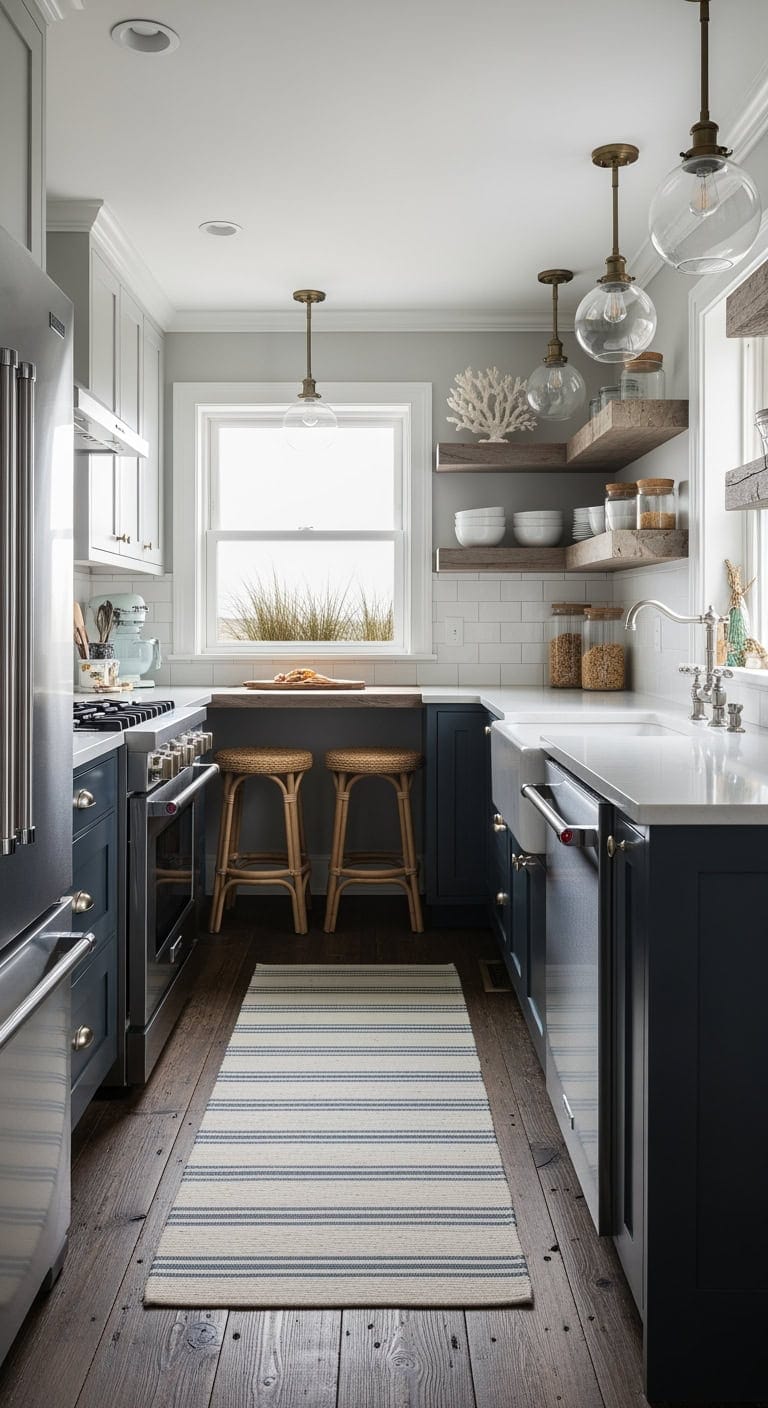
Capture the essence of a serene seaside escape within your small kitchen by combining deep, moody blues with charmingly worn textures. This look balances the tranquility of ocean-inspired colors with the warmth of vintage weathered elements, perfect for narrow galley spaces with minimal daylight.
Key Design Elements
- Distressed shaker-style cabinets painted in muted blue-gray tones, paired with matte silver pulls
- Curved-edge dining table crafted from reclaimed driftwood
- Navy upholstered rattan stools with woven cane backs
- Brushed brass pendant lighting featuring maritime or dome-shaped designs
- Striped natural fiber runner rug in soft cream and muted indigo (approx. 2.5’x7′)
- Pendant lights with glass globes and rope-wrapped fixtures
- Linen or sailcloth Roman shades in crisp white for filtered light
- Clear glass canisters topped with cork lids for stylish storage
- Floating shelves finished in weather-beaten wood displaying ceramics and dried sea flora
Pro Tip: For a layered coastal palette, paint lower cabinetry with Benjamin Moore’s ‘Nimbus Gray’ (2131-50), upper cabinets with Sherwin Williams’ ‘Sea Salt’ (SW 6204), and highlight an accent wall using Benjamin Moore’s ‘Hale Navy’ (HC-154) to add depth and contrast.
14. Refined Contrast: Elevating Cozy Dark Kitchens with Midnight Blue Islands and Rustic Wood Accents
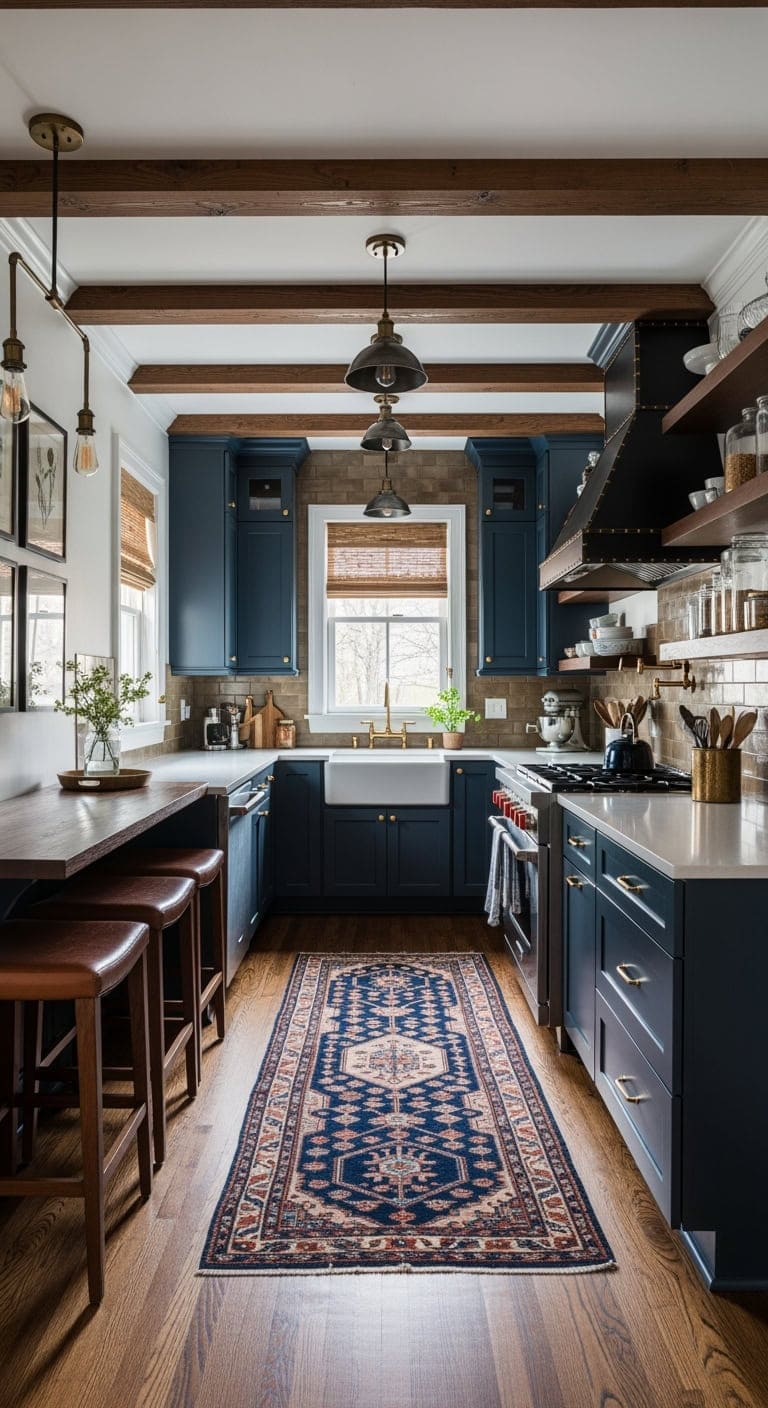
This kitchen design balances rich, moody hues with natural textures, creating a sophisticated yet inviting space. The striking midnight blue island anchors the room, complemented by rugged wooden beams that evoke urban charm without overwhelming the senses.
Key Design Elements
- Midnight blue shaker-style kitchen island featuring matte brass knobs
- Deep walnut communal dining table with integrated bench seating
- Counter-height stools crafted from leather and reclaimed wood (set of 3)
- Matte black range hood framed by exposed rustic wood beam
- Handwoven Persian-style runner rug blending navy and burnt orange hues (2.5’x10′)
- Edison bulb pendant lighting with mixed metal finishes
- Natural bamboo Roman shades or plush navy velvet café curtains
- Clear glass canisters with brass fittings and wooden lids for countertop storage
- Copper-framed botanical prints or minimalist open shelves with copper accents
Pro Tip: Use Benjamin Moore’s ‘Hale Navy’ for islands paired with ‘Kendall Charcoal’ on cabinets and a crisp ‘Chantilly Lace’ ceiling to create a layered yet fresh color palette.
15. Timeless Espresso Elegance: Maximizing Charm and Function in Compact Kitchens
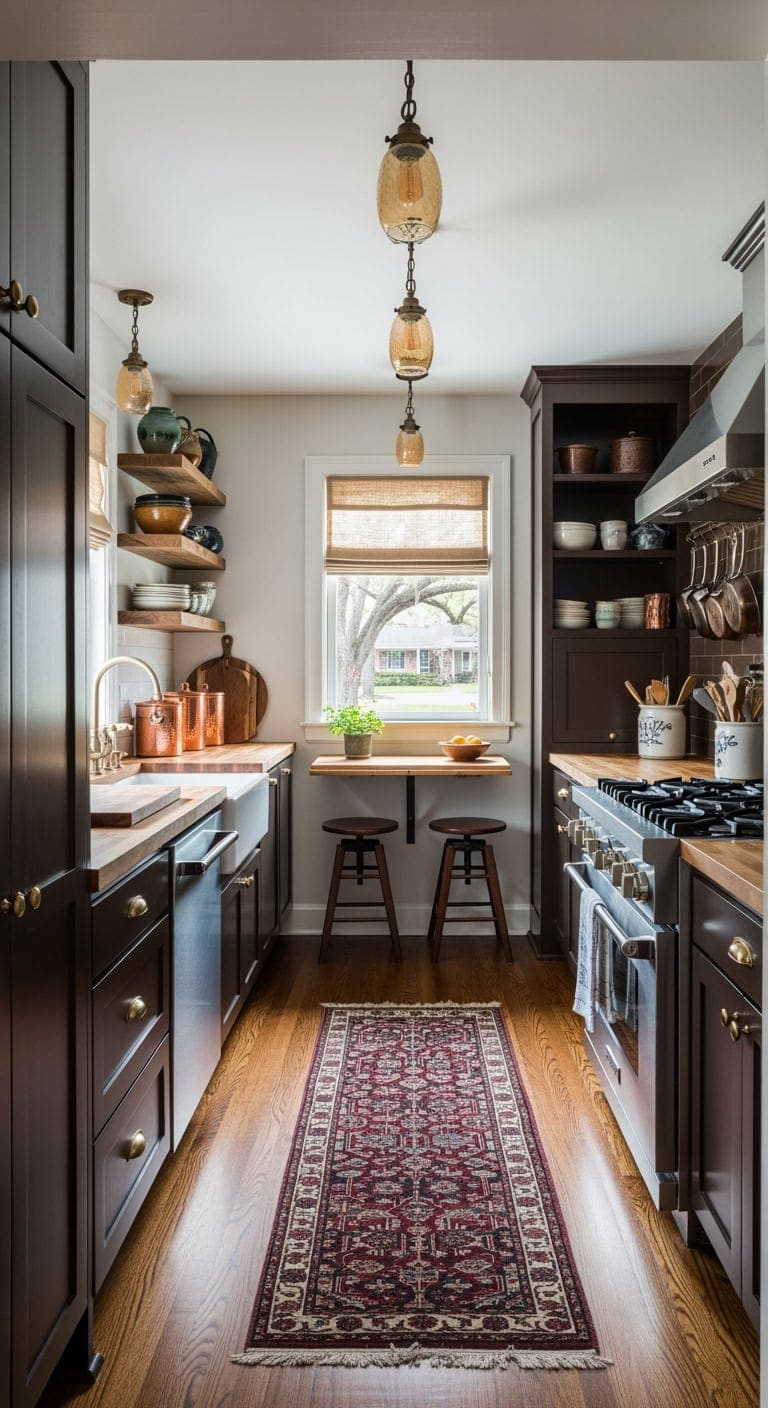
This design blends the warmth of deep coffee hues with smart, space-saving features to evoke a refined yet inviting ambiance reminiscent of an upscale café. Rich wood tones paired with classic accents bring a touch of vintage sophistication to small kitchen spaces, making every inch count without sacrificing style.
Key Design Elements
- Espresso-finished shaker-style cabinetry with aged brass pulls
- Space-efficient butcher block breakfast bar
- Windsor-inspired counter stools in rich walnut stain
- Oil-rubbed bronze pendant lamps featuring vintage filament bulbs
- Burgundy and cream Persian-style runner rug
- Amber-hued glass schoolhouse pendant lighting
- Textured burlap Roman blinds
- Hammered copper storage jars topped with wooden lids
- Floating reclaimed wood shelves adorned with antique ceramics
Pro Tip: For a cohesive look, paint all cabinetry with Benjamin Moore’s ‘Bittersweet Chocolate’ (2114-10) and highlight an accent wall using Sherwin Williams’ ‘Urbane Bronze’ (SW 7048), while keeping the ceiling bright with Benjamin Moore’s ‘Cloud White’ (OC-130).
16. Chic Rustic Charm: Maximizing Compact Dark Kitchens with Slate Cabinets and Matte Black Accents
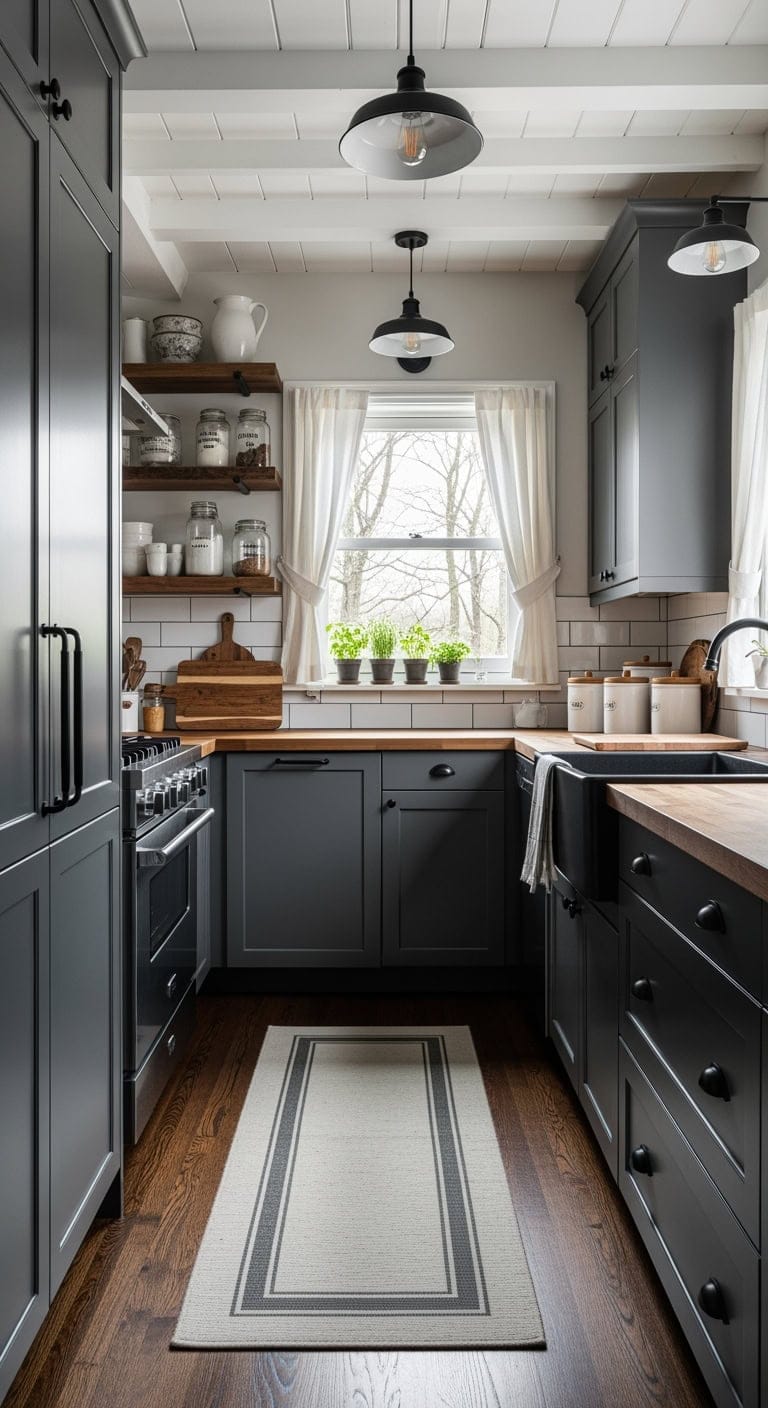
This kitchen style blends inviting rustic elements with sleek modern touches, using slate-toned cabinets to add rich character to smaller spaces. Matte black hardware and thoughtfully chosen decor infuse warmth and sophistication, transforming a compact galley into a stylish culinary haven.
Key Design Elements
- Slate-colored shaker cabinets paired with matte black hardware
- Distressed wood dining nook table featuring sturdy metal legs
- Black steel bar stools topped with natural wood seats (set of 3)
- Industrial matte black range hood or exposed cage pendant lighting
- Cream and slate patterned vintage-inspired kitchen runner (2.5’x7′)
- Matte black hanging light fixtures with vintage filament bulbs
- Natural linen Roman shades or crisp white cotton café curtains
- White ceramic storage jars with wooden lids (set of 4)
- Floating reclaimed wood shelves showcasing artisanal white pottery
Pro Tip: For a layered look, paint cabinets in a deep slate hue like Benjamin Moore’s ‘Wrought Iron’ (2124-10) and brighten the space with a soft white accent wall using Sherwin Williams’ ‘Alabaster’ (SW 7008).
17. Luxurious Art Deco Chic: Transforming Compact Dark Kitchens with Reflective Ebony Finishes and Jewel-Toned Accents
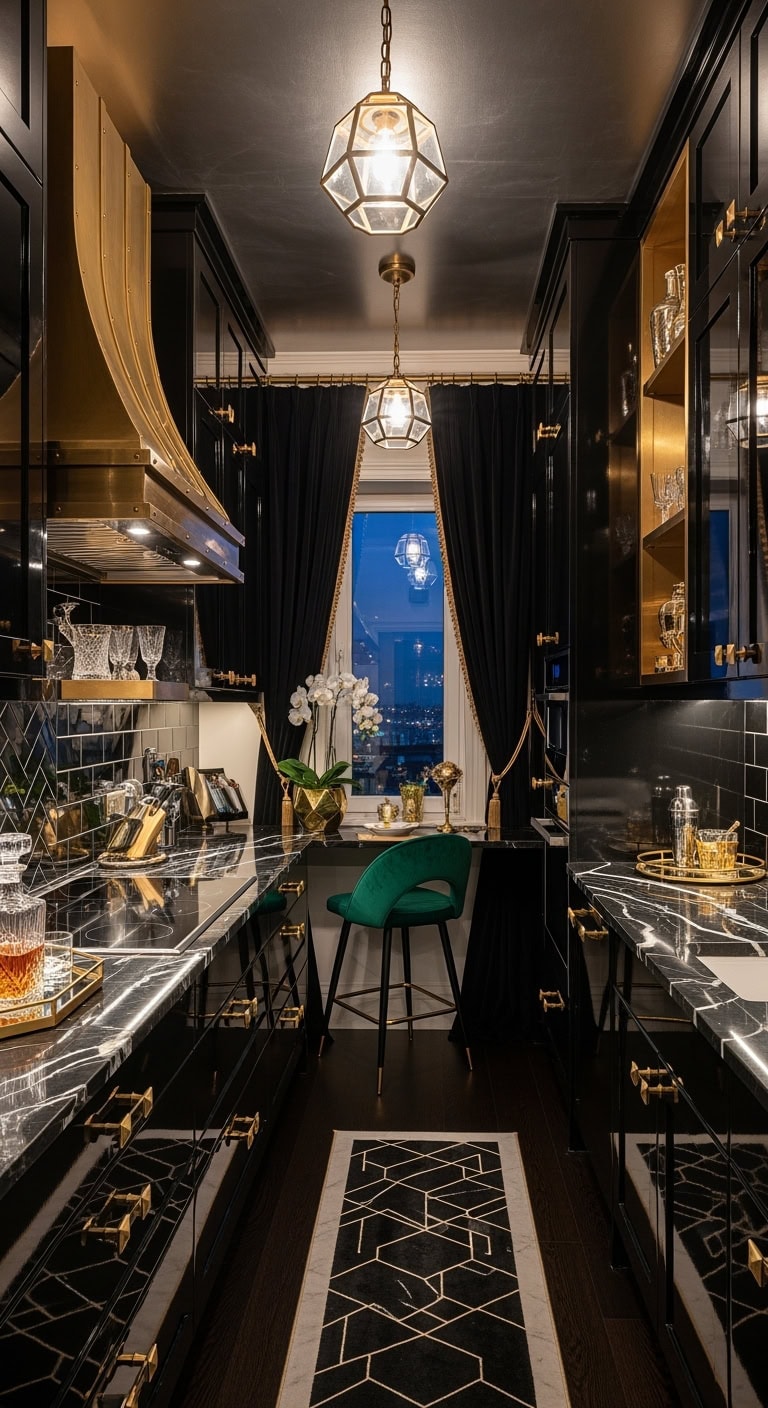
Capture the essence of vintage cocktail lounge elegance with a rich, moody palette that maximizes every inch of your petite kitchen. This style embraces a jewel-box concept where glossy surfaces and carefully curated light-catching details create a lavish and intimate ambiance.
Key Design Elements
- Sleek black lacquer cabinetry accented with matte gold or antique brass pulls
- Black quartz or stained glass dining surface paired with a polished metal frame
- Plush velvet counter stools in deep emerald or royal blue hues
- Brass or gold-finished angular range hood or a sparkling crystal pendant centerpiece
- Narrow geometric runner rug in black and metallic gold tones (approximately 2’x6′)
- Vintage-inspired brass pendant lighting with intricate Art Deco patterns
- Heavy black velvet drapes featuring subtle gold fringe or piping
- Reflective black glass storage jars with gilded lids and trims
Pro Tip: Use a high-gloss ‘Onyx Black’ paint on cabinets combined with a soft metallic bronze accent wall to enhance light reflection and add depth in small kitchens.
18. Elevated Minimalism: Maximizing Compact Dark Kitchens with Slate-Toned Shaker Cabinets
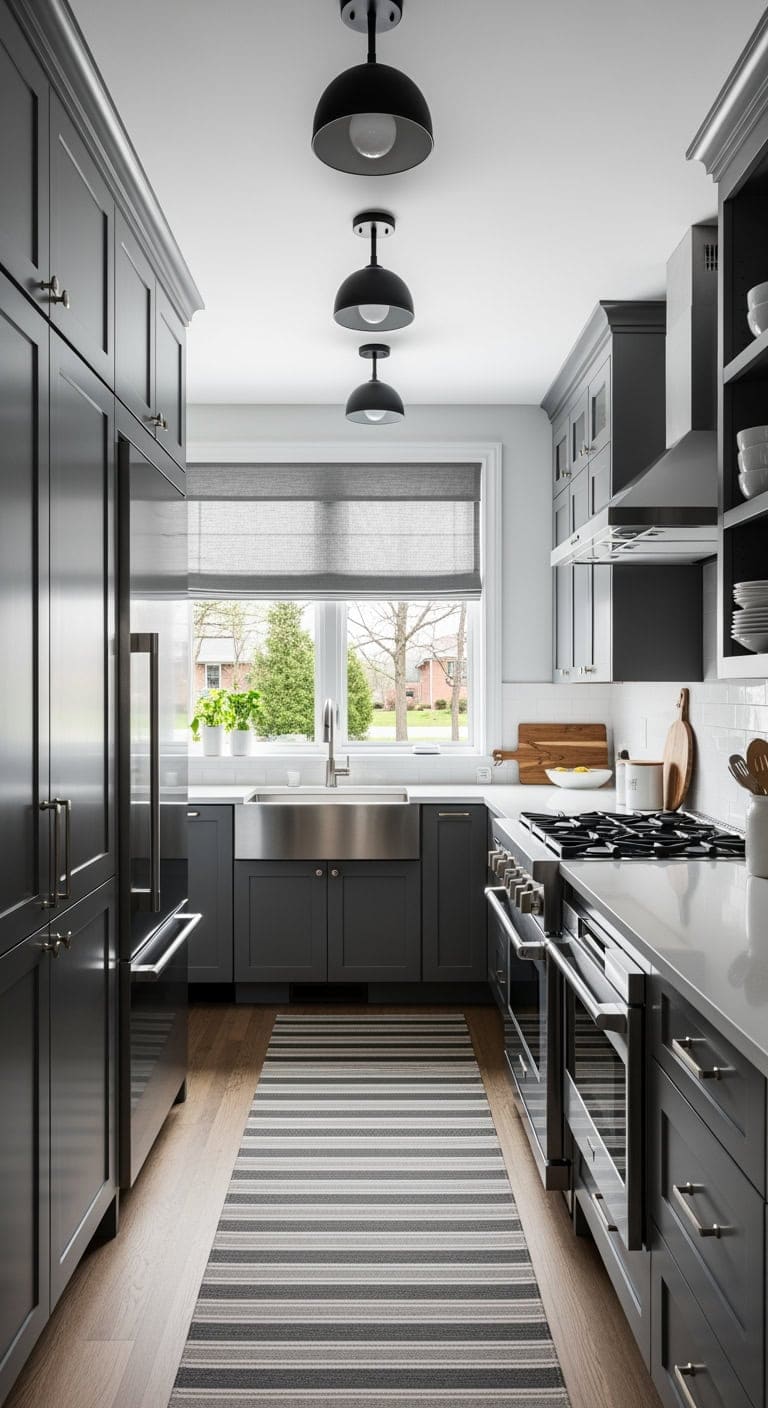
Embodying the sleek sophistication of boutique cafe interiors, slate-hued shaker cabinetry offers a timeless, fingerprint-resistant solution for small kitchens. This refined palette enhances functionality while maintaining an inviting, streamlined atmosphere perfect for narrow galley spaces.
Key Design Elements
- Slate gray shaker-style cabinets featuring soft-close hinges
- Cozy walnut-finished round breakfast table optimized for tight spaces
- Set of two to three low-profile charcoal upholstered counter stools
- Brushed nickel under-cabinet vent hood with minimalist design
- Neutral-toned striped kitchen runner in shades of charcoal and ivory (2’x6′)
- Matte black mini dome pendant lighting fixtures
- Gray linen Roman window shades for subtle texture and light control
- Matte-finished gray ceramic storage jars for countertop organization
- Black steel floating shelves showcasing crisp white dishware
Pro Tip: Refresh cabinetry easily by applying Benjamin Moore’s ‘Kendall Charcoal’ HC-166 to all woodwork, pairing it with Sherwin Williams’ ‘Iron Ore’ SW-7069 on a single accent wall and finishing with a crisp Benjamin Moore ‘Cloud White’ OC-130 ceiling for added brightness.
19. Warm Minimalist Kitchens: Elevate Compact Spaces with Rich Earthy Browns and Sleek Design
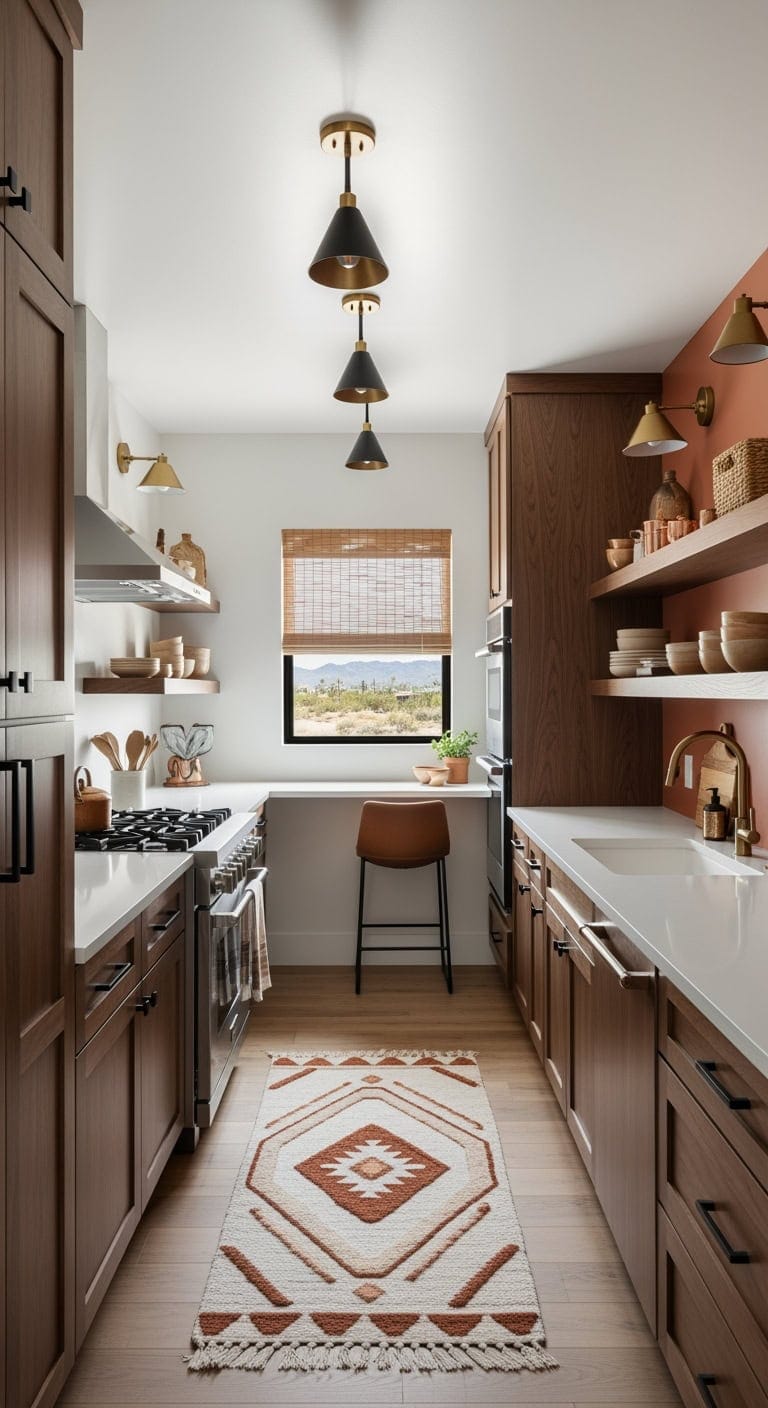
Embrace the inviting warmth of deep brown hues paired with minimalist accents to transform small kitchens into stylish, intimate retreats. This design harmonizes natural desert-inspired tones with contemporary urban chic for a timeless, cozy atmosphere.
Key Design Elements
- Shaker-style cabinets finished in rich walnut with matte black hardware
- Natural oak pedestal breakfast table featuring a smooth round top
- Cognac-toned leather stools with slender black metal legs
- Matte black dome-shaped range hood or industrial-style cage pendant lighting
- Terracotta and cream geometric pattern runner rug measuring approximately 2 by 6 feet
- Cluster of brass and black mini pendant lights (three-piece set)
- Natural bamboo Roman blinds or light, airy linen curtains
- Stoneware storage jars in warm chocolate and sandy beige shades
- Decorative woven wall baskets or copper-toned open shelving accents
Pro Tip: Refresh your lower cabinets with Benjamin Moore’s ‘Urbane Bronze’, highlight an accent wall using Sherwin Williams’ ‘Cavern Clay’, and brighten the ceiling with Benjamin Moore’s ‘Cloud White’ for a layered, natural color palette.
20. Elevating Compact Dark Kitchens with Walnut Elegance and Dynamic Geometry
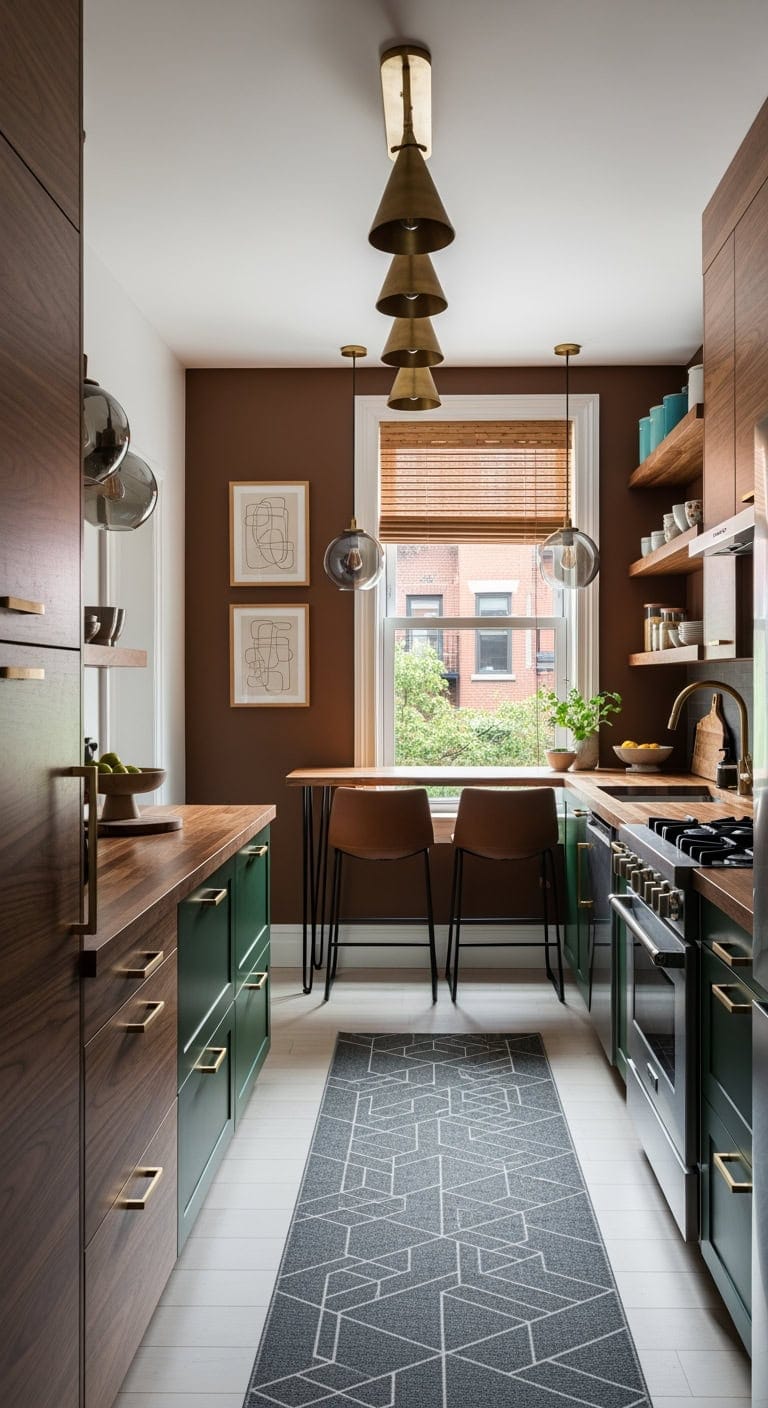
Inspired by timeless mid-century flair, this kitchen style transforms small, dim spaces into inviting, sleek environments reminiscent of boutique hotel lounges. Rich walnut hues combined with geometric patterns create an illusion of spaciousness while adding a warm, refined character.
Key Design Elements
- Walnut-finished cabinetry featuring a horizontal grain pattern and matte brass hardware
- Rustic live-edge walnut dining table with minimalist metal hairpin legs
- Caramel-toned leather counter stools framed in walnut
- Linear arrangement of brass cone-shaped pendant lighting fixtures
- Dark charcoal runner rug with bold geometric motifs (approximately 2.5’x7′)
- Smoked glass globe pendant lights accented with walnut details
- Natural bamboo roll-up shades for window treatments
- Teak storage canisters topped with cork lids
- Minimalist abstract line drawing prints showcased on walnut floating shelves
Pro Tip: Try painting lower cabinets in Benjamin Moore’s ‘Black Forest Green’ paired with a Sherwin Williams ‘Urbane Bronze’ accent wall and a crisp Benjamin Moore ‘Cloud White’ ceiling to add depth and brightness.
Conclusion
Embracing a small, dark kitchen is about celebrating intentional design and bold elegance rather than settling for less. These intimate spaces invite creativity, allowing every detail—from rich textures to thoughtfully chosen accents—to shine with purpose and personality. Rather than feeling confined, your compact kitchen becomes a sanctuary of style, warmth, and refined sophistication.
Let your kitchen defy expectations by turning darkness into an asset, where depth and contrast create a cozy yet captivating atmosphere. By weaving in natural materials and subtle metallic touches, you transform limited space into a powerful statement of taste and comfort. Small doesn’t mean simple; it means smart, stylish, and uniquely yours.