Industrial dining rooms are carving out a distinctive niche in contemporary interior design, marrying rugged textures with refined elegance. By showcasing raw materials such as exposed brick, steel frameworks, and concrete finishes, this style transforms structural elements into compelling visual statements. The result is a space that feels both authentic and thoughtfully curated, where practicality meets modern sophistication.
What makes industrial dining areas truly captivating is their ability to balance utilitarian charm with inviting warmth. The style highlights unfinished surfaces and repurposed details, turning what might be overlooked into eye-catching features that tell a story. Whether you’re outfitting a trendy urban loft or infusing a traditional setting with industrial flair, these design concepts offer inspiration for creating a dining environment that’s effortlessly edgy yet comfortably welcoming.
1. Eco-Friendly Industrial Dining Spaces Embracing Sustainable Materials
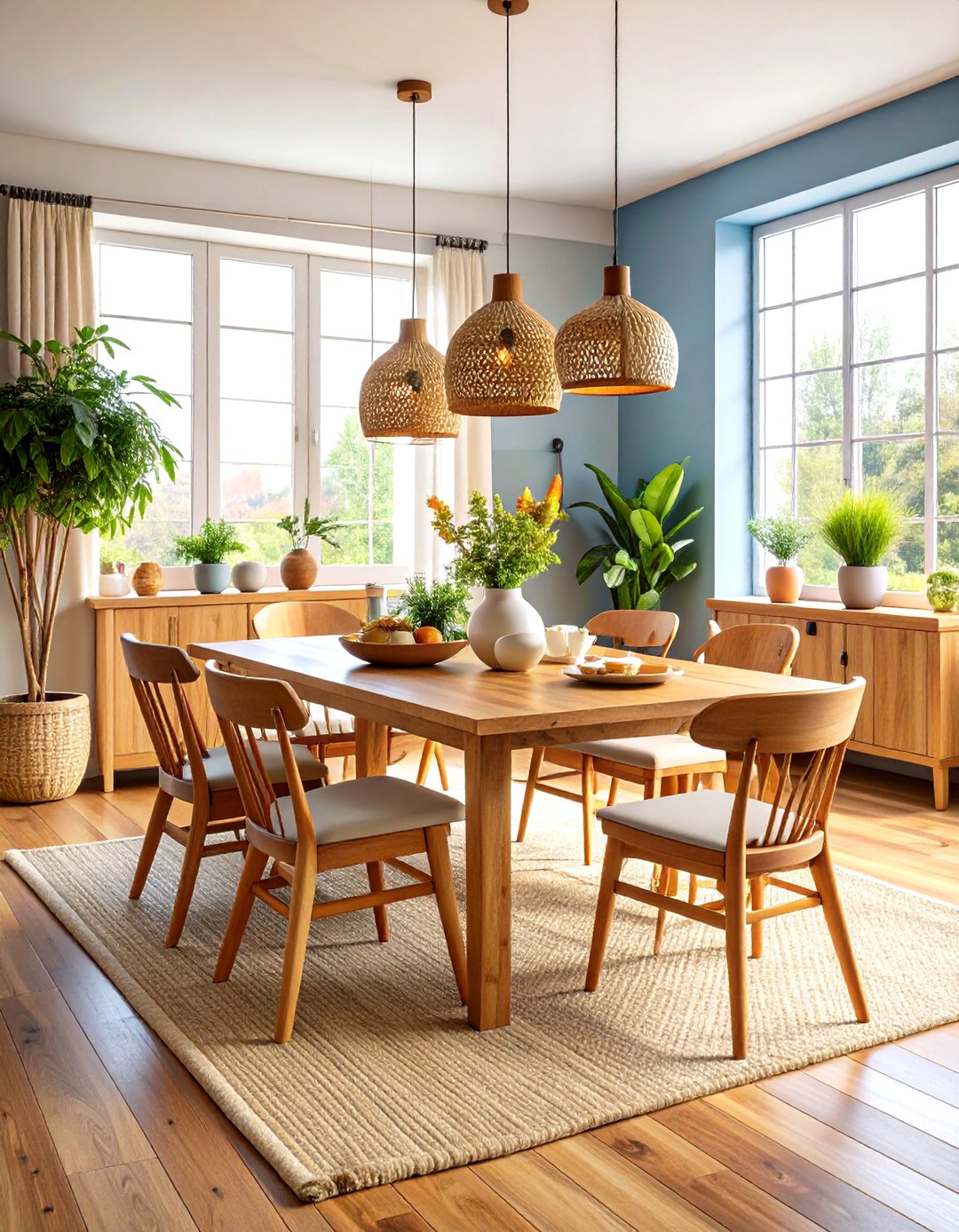
Highlight your commitment to sustainability by selecting materials that complement industrial design while being environmentally responsible. Incorporate reclaimed wood, recycled steel, and timber harvested with care to blend eco-friendliness and style seamlessly. Bringing in vintage or antique furnishings not only lessens environmental strain but also introduces genuine charm and history. Opting for locally sourced elements further reduces carbon footprint and supports local artisans. This mindful strategy results in dining spaces that are both ethically sound and true to the rugged, unrefined spirit of industrial decor.
Key Design Elements
- Incorporate reclaimed wood dining tables and benches that showcase natural grain while reducing waste.
- Use exposed metal fixtures made from recycled steel or iron to maintain an industrial aesthetic with sustainable sourcing.
- Opt for energy-efficient LED pendant lighting with vintage-style bulbs to enhance ambiance while minimizing energy consumption.
Pro Tip: Pro Tip: Incorporate reclaimed wood and recycled metal accents in your industrial dining space to achieve a rugged, sustainable aesthetic that reduces environmental impact while maintaining durability and style.
2. Dining Space Featuring Rustic Exposed Ceiling Beams
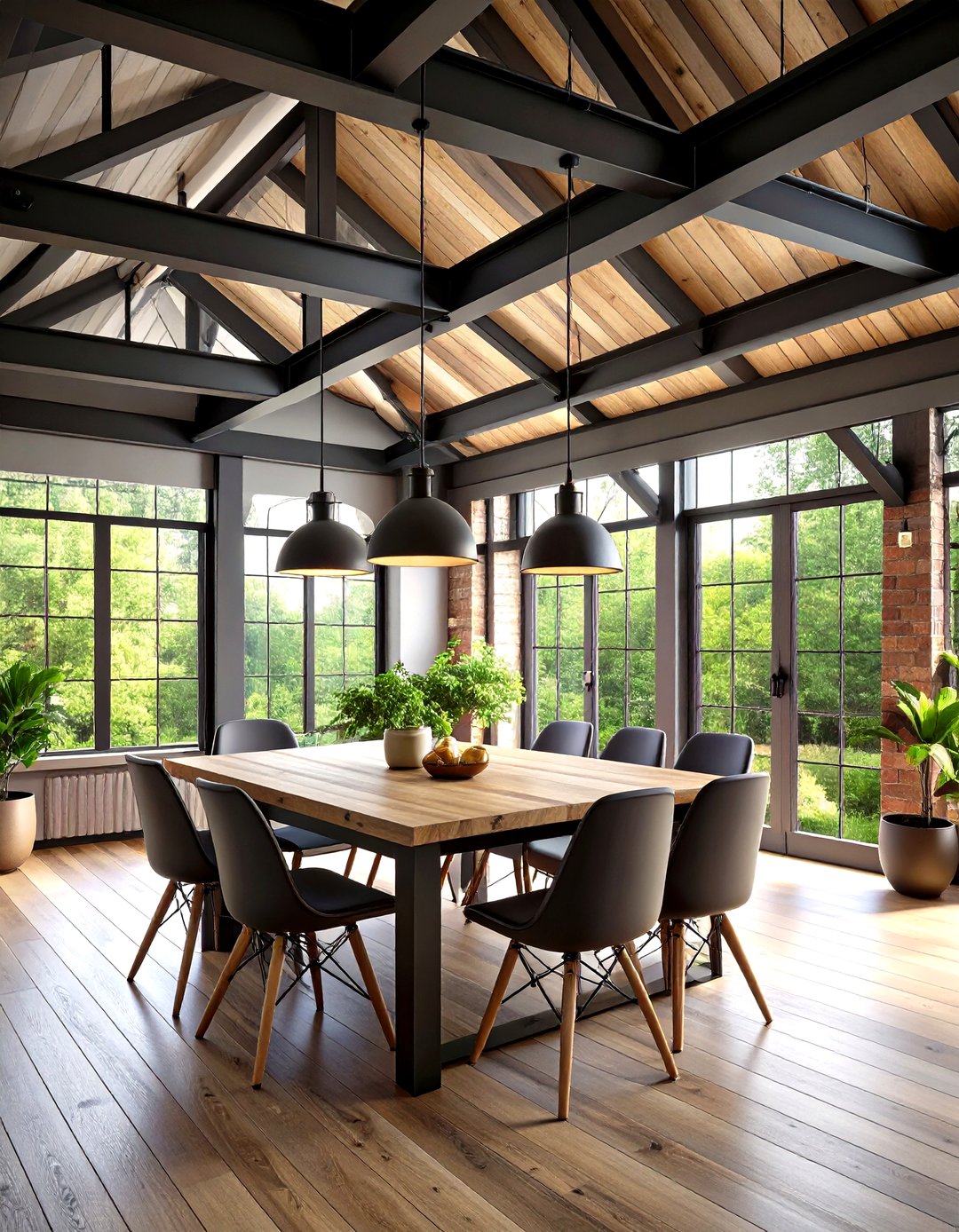
Revealing ceiling beams introduces a striking architectural feature that highlights the industrial style by celebrating the building’s framework. Choosing bold hues such as deep black or charcoal to paint these beams helps anchor the dining space and adds depth. While steel beams contribute a genuine industrial edge, wooden ones bring a cozy texture and warmth to the room. Hanging pendant lights from the beams can craft focused, inviting illumination above the dining area. This vertical emphasis naturally lifts the eye, enhancing the sense of spaciousness while preserving the authentic, rugged industrial vibe.
Key Design Elements
- Use warm, natural wood tones and textures in furniture and decor to complement the rustic exposed ceiling beams.
- Incorporate ambient lighting such as pendant lights or wrought iron chandeliers that highlight the beams without overpowering them.
- Choose earthy, neutral color palettes for walls and flooring to create a cozy, cohesive dining space that emphasizes the rustic charm.
Pro Tip: Pro Tip: Highlight rustic exposed ceiling beams by pairing them with warm, natural materials like reclaimed wood furniture and soft, ambient lighting to create a cozy, inviting dining atmosphere.
3. Bright and Airy Industrial Dining Spaces Embracing Natural Light
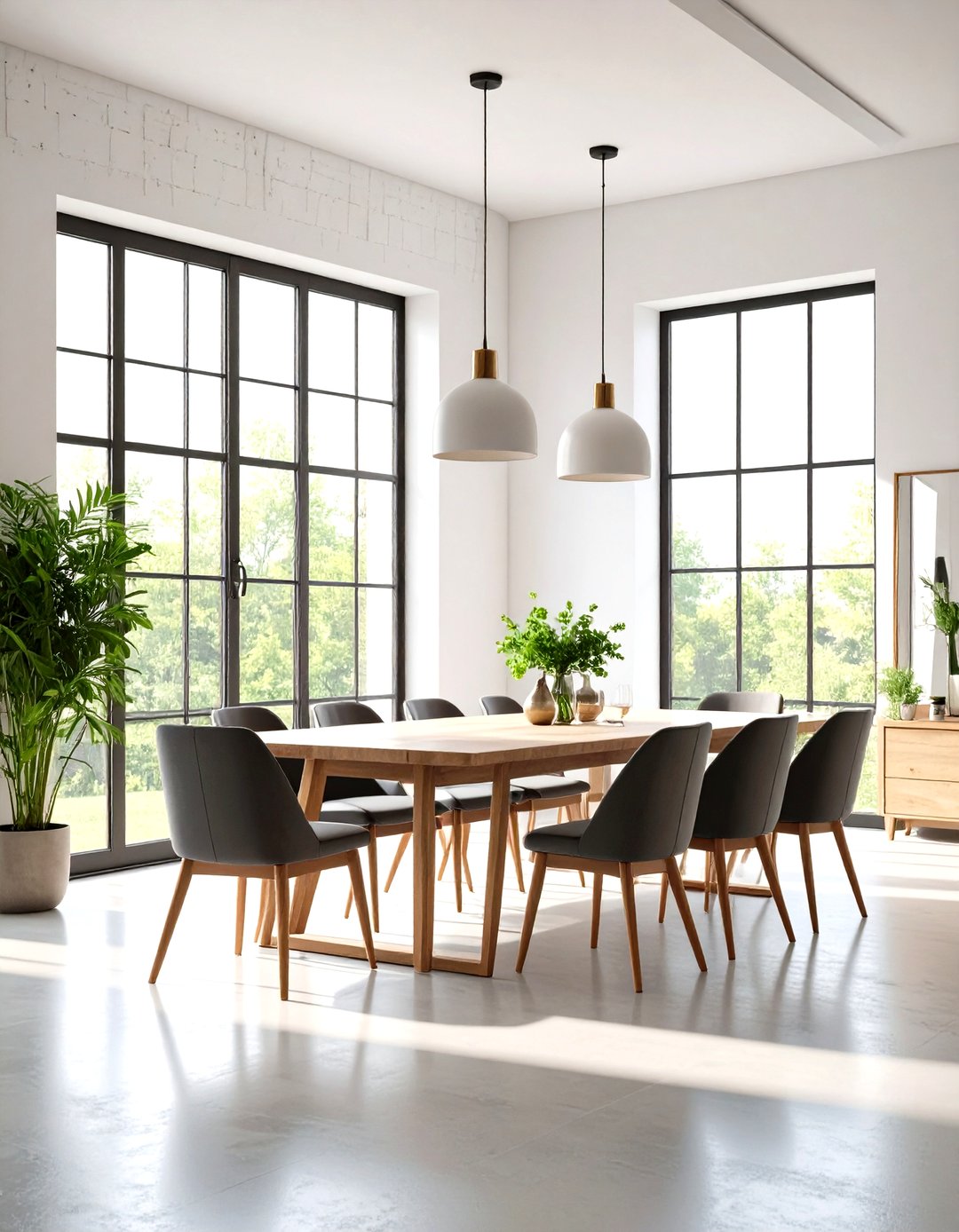
Expansive windows and thoughtful layout choices bring abundant natural light into the space, gently balancing the raw edges of an industrial design. Soaring ceilings paired with vast skylights deliver a striking, open atmosphere that captivates at first glance. Opt for simple blinds or leave windows uncovered to highlight the building’s structural details rather than hide them. Placing dining areas close to these light sources ensures meals are bathed in warm daylight, while well-placed mirrors can enhance and multiply the light, adding depth and vibrancy. This harmonious blend of sunlight and rugged materials crafts a living environment that evolves beautifully as the day progresses.
Key Design Elements
- Incorporate large windows or glass doors to maximize natural light, enhancing the openness of the industrial dining space.
- Use light-colored, raw materials like reclaimed wood tables and whitewashed brick walls to balance the industrial elements and maintain brightness.
- Add minimalistic, open shelving and metal-framed furniture with clean lines to keep the space uncluttered and airy while emphasizing industrial style.
Pro Tip: Pro Tip: Maximize natural light in industrial dining spaces by incorporating large, unobstructed windows paired with light, neutral-toned furnishings that soften the raw textures of metal and exposed brick, creating a balanced, bright, and inviting atmosphere.
4. Dining Space Featuring a Blend of Industrial Style and Mixed Metal Chairs
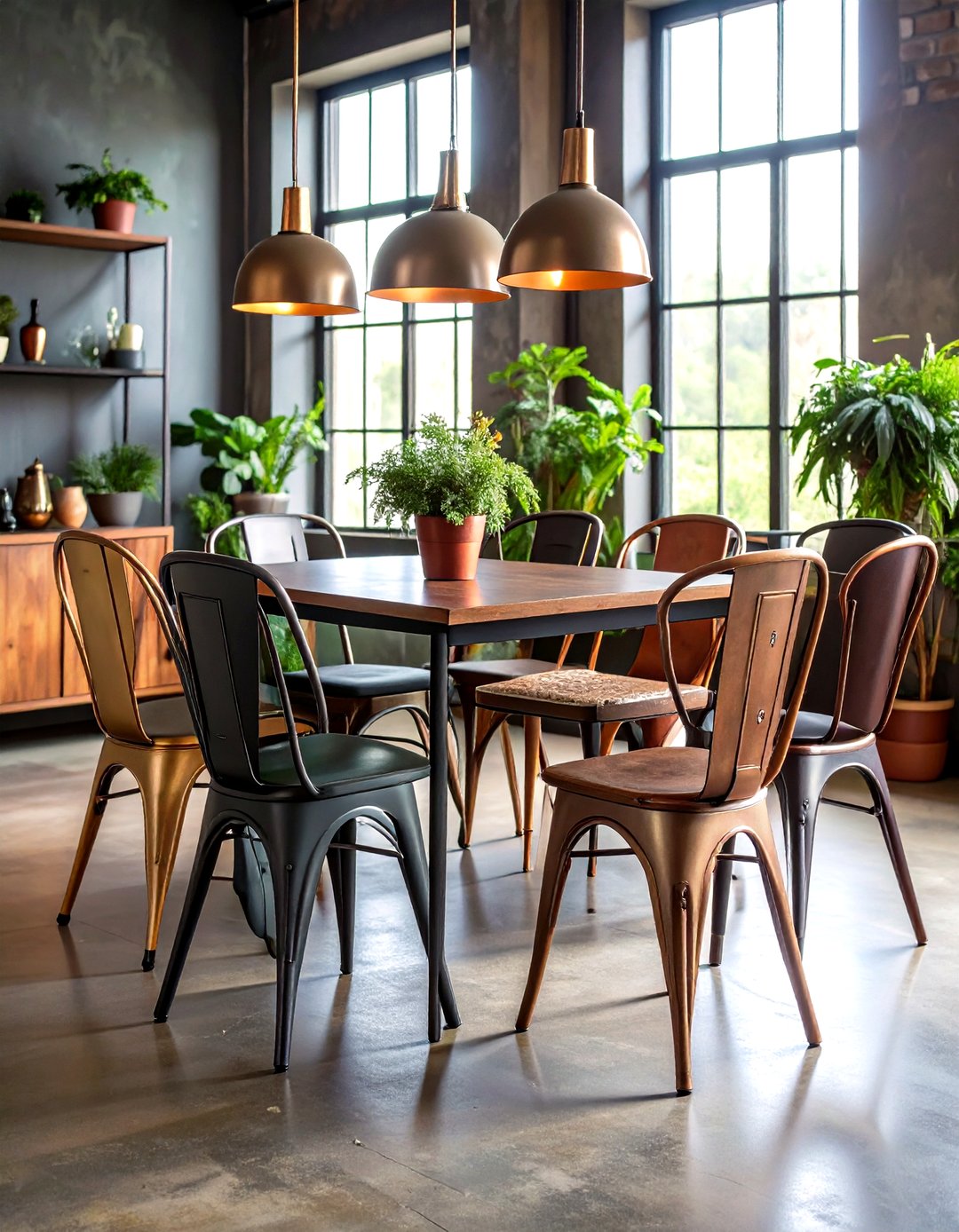
Incorporating a range of metal seating options infuses your industrial dining room with unique character and depth. Blending diverse metal tones and chair designs introduces individuality without straying from the industrial vibe. Pairing steel chairs with warm copper highlights or contrasting black metal frames against brass accents creates a refined yet dynamic look. This strategy not only offers versatility in choosing pieces but also evokes a thoughtfully assembled, lived-in feel. By keeping consistent proportions and heights while experimenting with different textures and finishes, you achieve a dining area that exudes both purpose and casual sophistication.
Key Design Elements
- Incorporate a reclaimed wood dining table with metal legs to establish an industrial foundation while adding warmth and texture.
- Select a variety of mixed metal chairs—such as copper, brass, and matte black finishes—to create visual interest and a curated, eclectic look.
- Use exposed Edison bulb pendant lighting or metal cage fixtures above the dining table to enhance the industrial aesthetic and provide focused illumination.
Pro Tip: Pro Tip: Balance the raw, edgy feel of industrial elements by choosing mixed metal chairs in varying finishes and textures, creating visual interest while maintaining cohesion through a consistent color palette.
5. Seamlessly Blending Industrial Dining Spaces into Open Floor Layouts
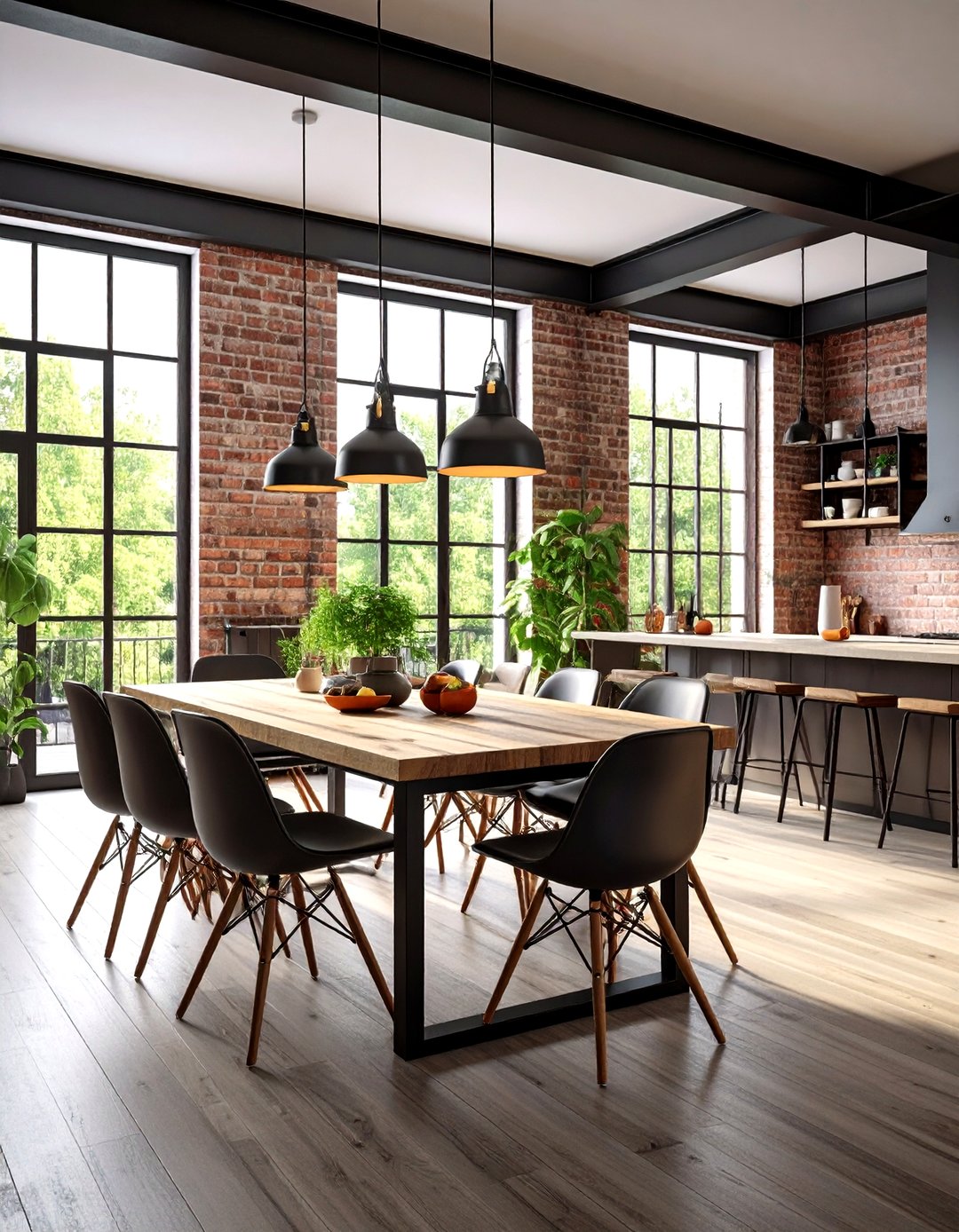
Blending dining areas effortlessly with living rooms and kitchens fosters a harmonious, connected atmosphere in your home. Embracing an open-plan industrial style not only expands the sense of space but also promotes engaging conversations during meals and gatherings. Incorporate recurring elements such as exposed brick walls, steel accents, and polished concrete floors to tie these zones together visually. Anchor the dining space with a standout chandelier or a distinctive rug, all while keeping clear views to neighboring rooms. This approach enhances natural light distribution and ensures versatile, inviting spaces that stay true to the industrial aesthetic.
Key Design Elements
- Incorporate raw materials like exposed brick, metal fixtures, and reclaimed wood furniture to maintain the industrial aesthetic while complementing the openness of the floor plan.
- Use area rugs and strategically placed lighting to define the dining area within the open layout, creating a distinct yet cohesive space.
- Opt for minimalist, multifunctional furniture pieces that blend industrial style with comfort and functionality, ensuring the dining space flows naturally with adjacent living areas.
Pro Tip: Pro Tip: Use cohesive materials like metal and reclaimed wood across furniture and fixtures, and anchor the space with a bold, industrial-style rug to create visual continuity that effortlessly integrates your dining area into an open floor plan.
6. Modern Industrial Dining Space Featuring Versatile Furniture Solutions
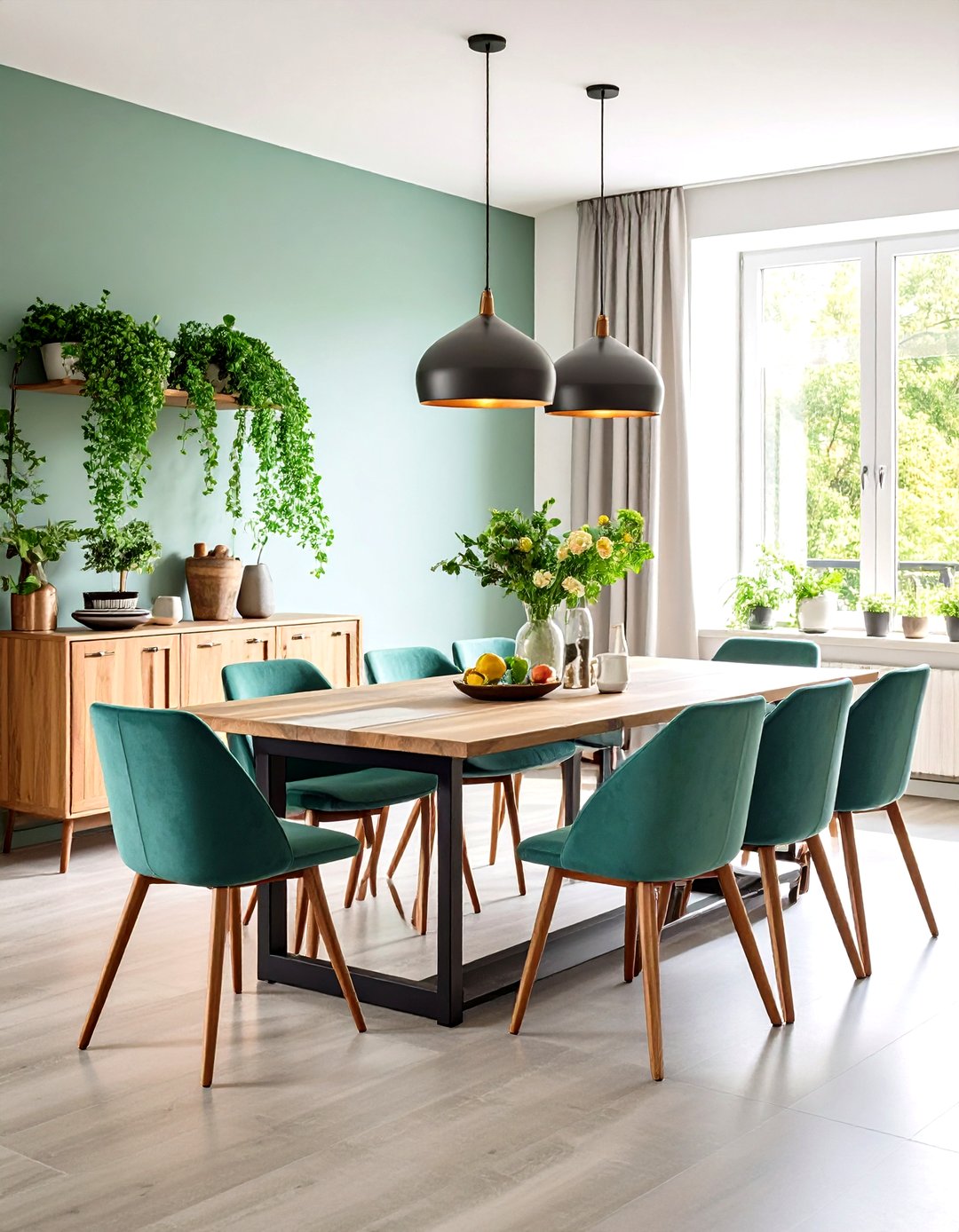
Incorporating versatile furniture is key to optimizing space in an industrial dining area. Opt for dining tables that offer expandable surfaces or integrated storage to seamlessly adjust to varying occasions. Industrial-inspired benches with concealed compartments not only provide extra seating but also help keep dining essentials neatly tucked away. Mobile carts can double as stylish bar stations or extra serving areas, enhancing functionality without sacrificing the room’s sleek, minimalist vibe. This strategy ensures your compact dining space remains both practical and visually balanced.
Key Design Elements
- Incorporate modular dining tables with adjustable heights and extendable surfaces to accommodate varying group sizes and activities.
- Use multipurpose seating like stools with storage compartments or benches that can double as shelving units to maximize space efficiency.
- Select materials such as reclaimed wood, metal, and concrete finishes to maintain the authentic industrial aesthetic while ensuring durability and easy maintenance.
Pro Tip: Pro Tip: Incorporate modular furniture with clean lines and mixed materials like metal and reclaimed wood to seamlessly blend functionality and the raw aesthetic of modern industrial dining spaces.
7. Dining Spaces Elevated by Bold, Textured Industrial Walls
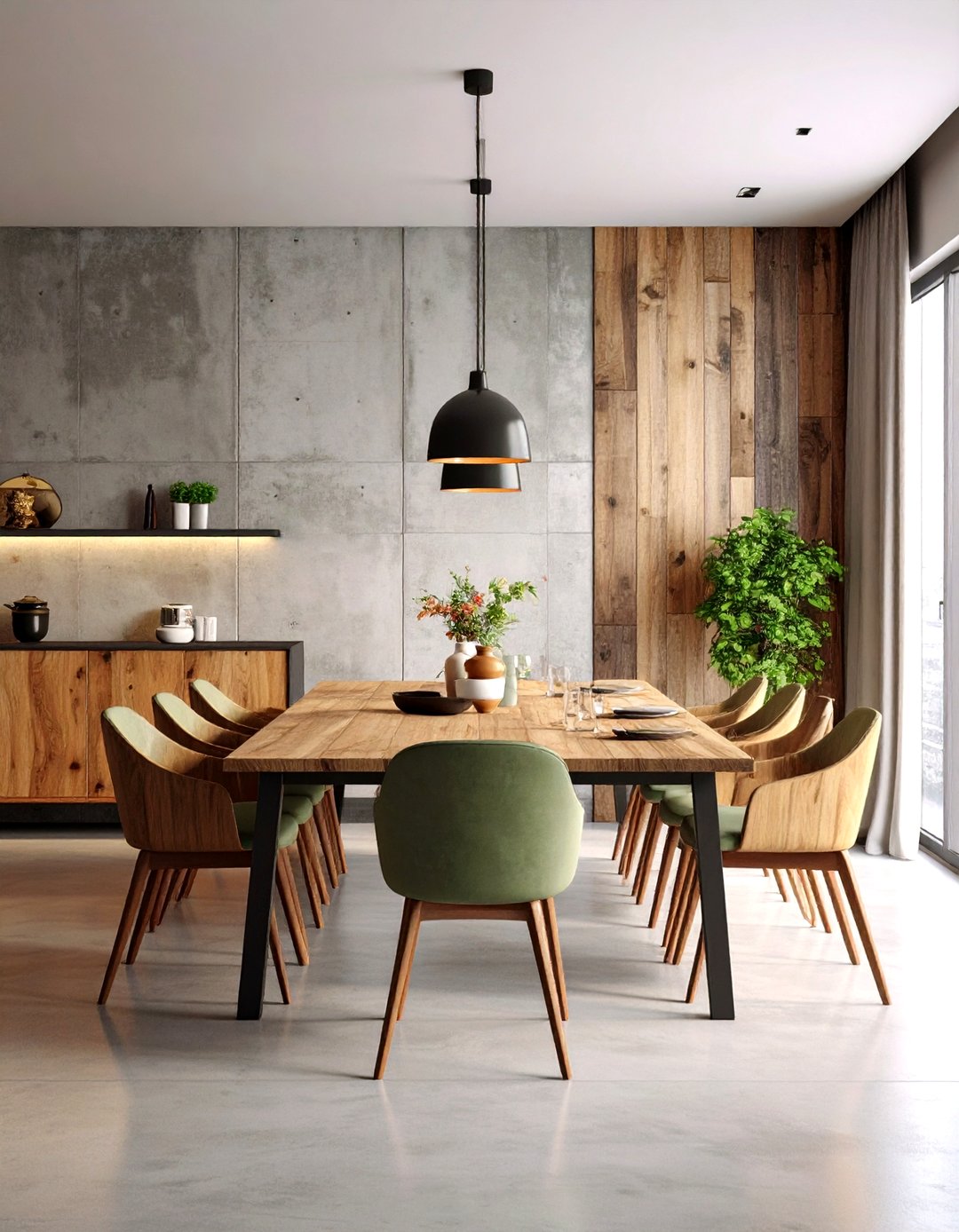
Step beyond the classic exposed brick and experiment with diverse textured wall finishes to amplify an industrial vibe while enriching your space visually. Incorporating materials like concrete slabs, reclaimed wood, or metal panels can introduce striking accent walls that ground your dining area with personality. For a blend of industrial and farmhouse styles, shiplap offers a warm, rustic touch that feels both inviting and stylish. These textured surfaces serve as compelling focal points, whether placed behind dining tables or extending across entire rooms to make a bold statement. Select finishes that harmonize with your palette, adding a tactile dimension that encourages a closer look and enhances the overall ambiance.
Key Design Elements
- Incorporate reclaimed wood or metal shelving against industrial brick or concrete walls to add functional storage while enhancing the textured aesthetic.
- Use statement lighting fixtures with raw finishes like aged brass or blackened steel to complement and highlight the industrial wall textures.
- Balance the bold, rugged walls with soft textiles such as upholstered chairs or area rugs in muted tones to create a comfortable and inviting dining atmosphere.
Pro Tip: Pro Tip: Balance the ruggedness of bold, textured industrial walls with warm, tactile elements like wooden furniture and soft textiles to create a dining space that feels both edgy and inviting.
8. Elevating Industrial Dining Spaces with Thoughtful Color Accents
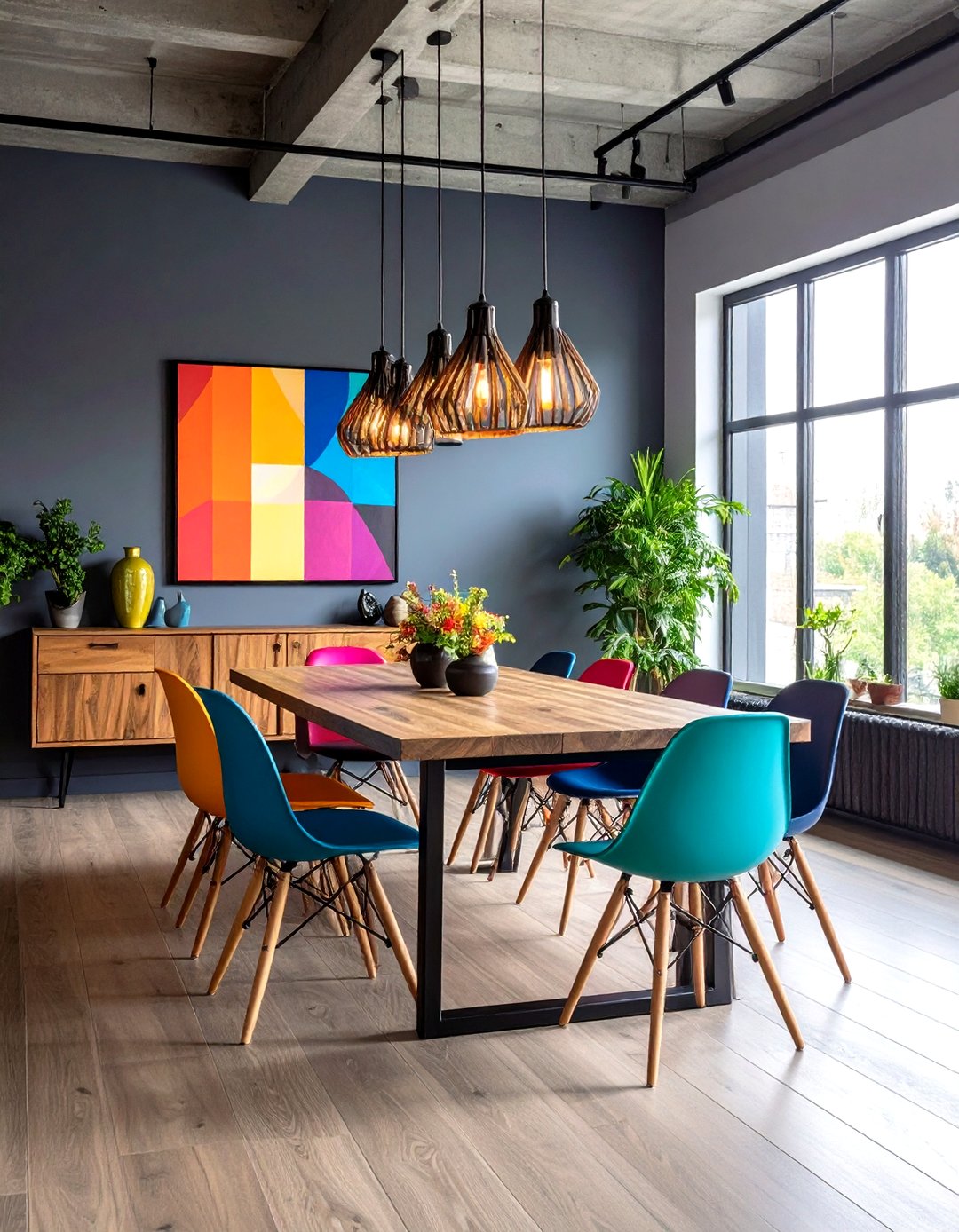
Though industrial design often relies on muted tones, introducing carefully chosen pops of color can infuse dining areas with character and warmth. A solitary vibrant element—such as a striking chair, vivid piece of art, or eye-catching light fixture—can create a captivating focal point amidst the subdued backdrop. Shades like deep navy, lush green, or inviting burnt orange harmonize wonderfully with metal and wood textures. This method offers a flexible way to refresh the space seasonally or showcase individual style, all while preserving the sleek, understated elegance that defines industrial interiors.
Key Design Elements
- Incorporate bold color accents through dining chairs or cushions in rich hues like deep navy, burnt orange, or forest green to soften the raw industrial elements.
- Use vibrant artwork or wall murals with contrasting colors to create focal points that enliven the space without overwhelming the industrial aesthetic.
- Add textured textiles such as patterned rugs or colorful curtains to introduce warmth and balance the coolness of metal and concrete surfaces.
Pro Tip: Pro Tip: Introduce warm, rich color accents like deep rusts or mustard yellows through textiles and artwork to soften industrial elements and create a balanced, inviting dining space.
9. Contemporary Dining Space Featuring Sleek Glass and Metal Pendant Lights
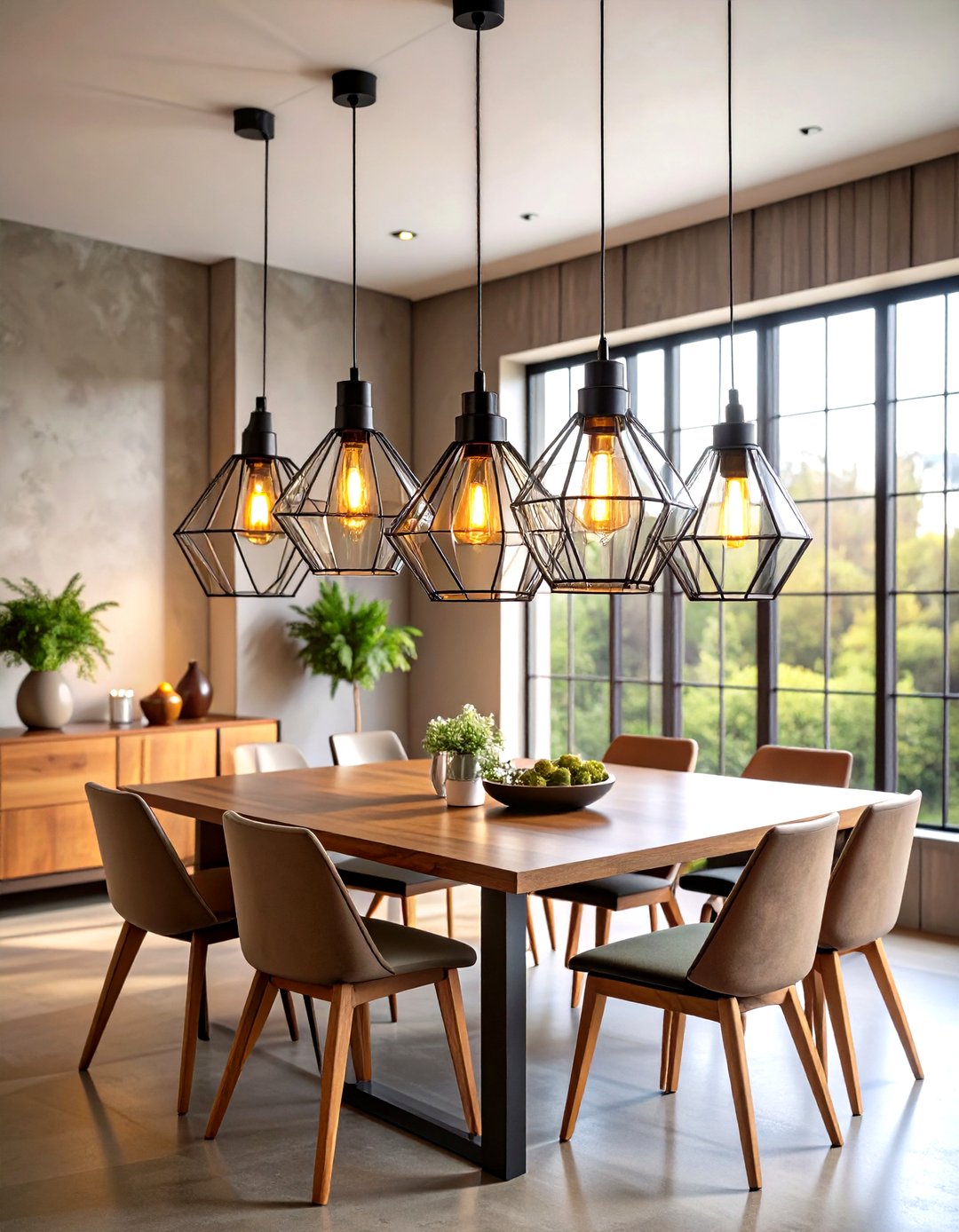
Glass pendant lights with transparent shades enhance the airy feel of your industrial dining space while delivering targeted illumination. Opt for glass jars or geometric clear glass designs to capture that authentic industrial character without overwhelming the room’s openness. Pair these with metal accents in black, brass, or weathered bronze to add both durability and visual depth. Arranging pendants at different levels introduces an engaging rhythm to the lighting, whereas uniform fixtures create a polished, balanced look. This combination ensures daylight passes through effortlessly, and when lit at night, the space glows with inviting warmth.
Key Design Elements
- Choose pendant lights with clean lines and minimalist designs in glass and metal to enhance the contemporary aesthetic without overwhelming the space.
- Position the pendant lights at varying heights above the dining table to create visual interest and provide balanced illumination.
- Pair the glass and metal fixtures with neutral or monochromatic color schemes and streamlined furniture to maintain a cohesive, modern dining environment.
Pro Tip: Pro Tip: To enhance the modern appeal of your dining space, choose glass and metal pendant lights with clean lines and adjustable heights, allowing you to create both focused task lighting and ambient glow that complements sleek furniture and minimalist decor.
10. Modern Industrial Dining Spaces Featuring Concrete Flooring
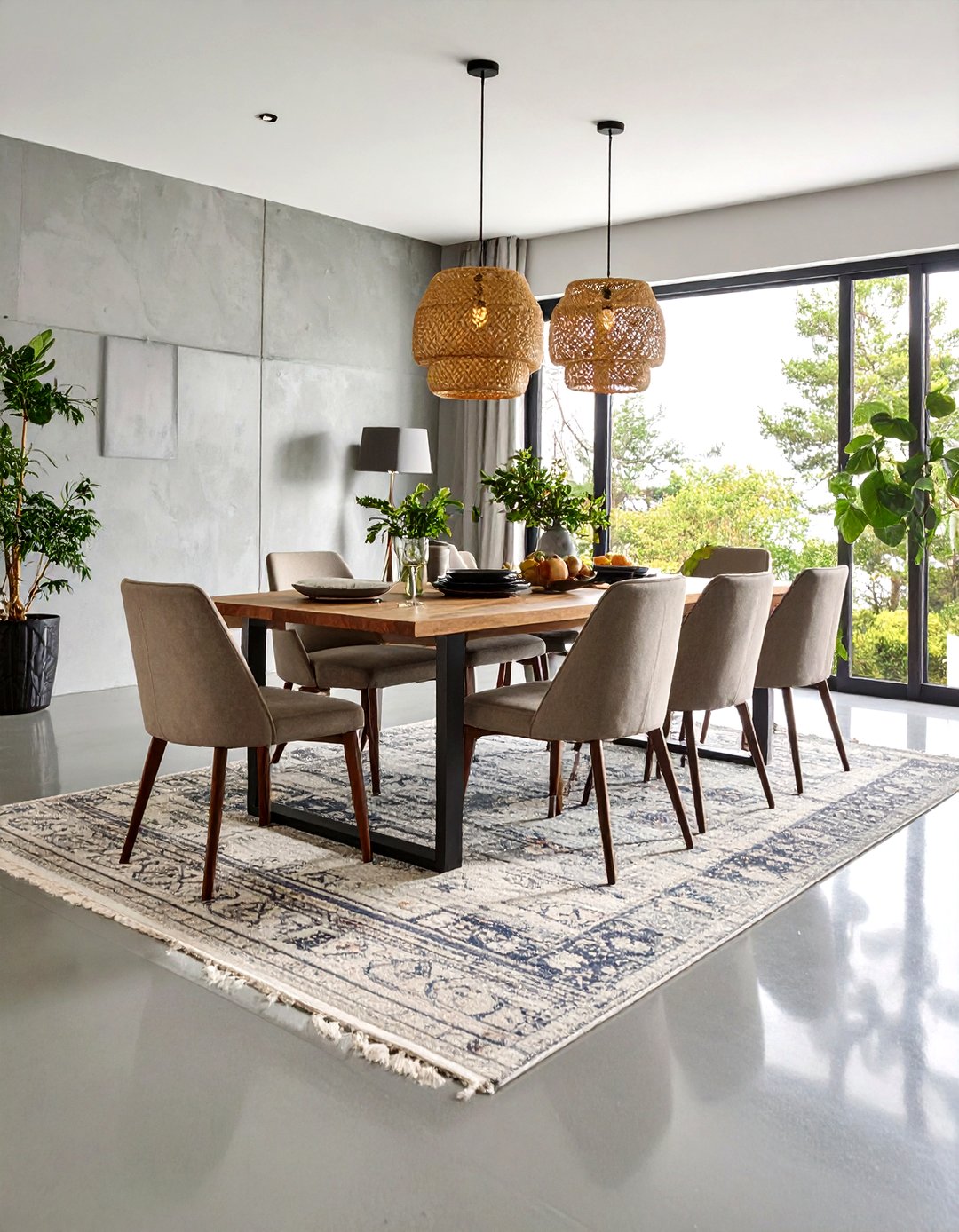
Polished concrete flooring offers a resilient and easy-to-care-for foundation that seamlessly enhances the industrial dining room vibe. Its sleek, glossy finish not only boosts natural light but also serves as a subtle canvas for showcasing your furniture and decor. Often seen in combined kitchen and dining areas, concrete floors can be elevated with decorative etching or built-in color variations to introduce subtle character while maintaining their minimalist appeal. Complementing these floors with area rugs adds warmth and texture, helping to delineate the dining zone. Additionally, concrete’s natural thermal properties contribute to a balanced indoor climate.
Key Design Elements
- Incorporate sleek metal and wood furniture to complement the raw texture of concrete flooring, enhancing the modern industrial vibe.
- Use area rugs strategically to add warmth and define the dining area without covering the concrete’s natural aesthetic.
- Integrate exposed lighting fixtures, such as Edison bulbs or black metal pendants, to highlight the industrial theme and create a cozy atmosphere.
Pro Tip: Pro Tip: Balance the raw, edgy feel of concrete flooring with warm textures like reclaimed wood furniture and soft textiles to create a modern industrial dining space that feels inviting rather than cold.
11. Contemporary Industrial Dining Space Enhanced with Smart Technology
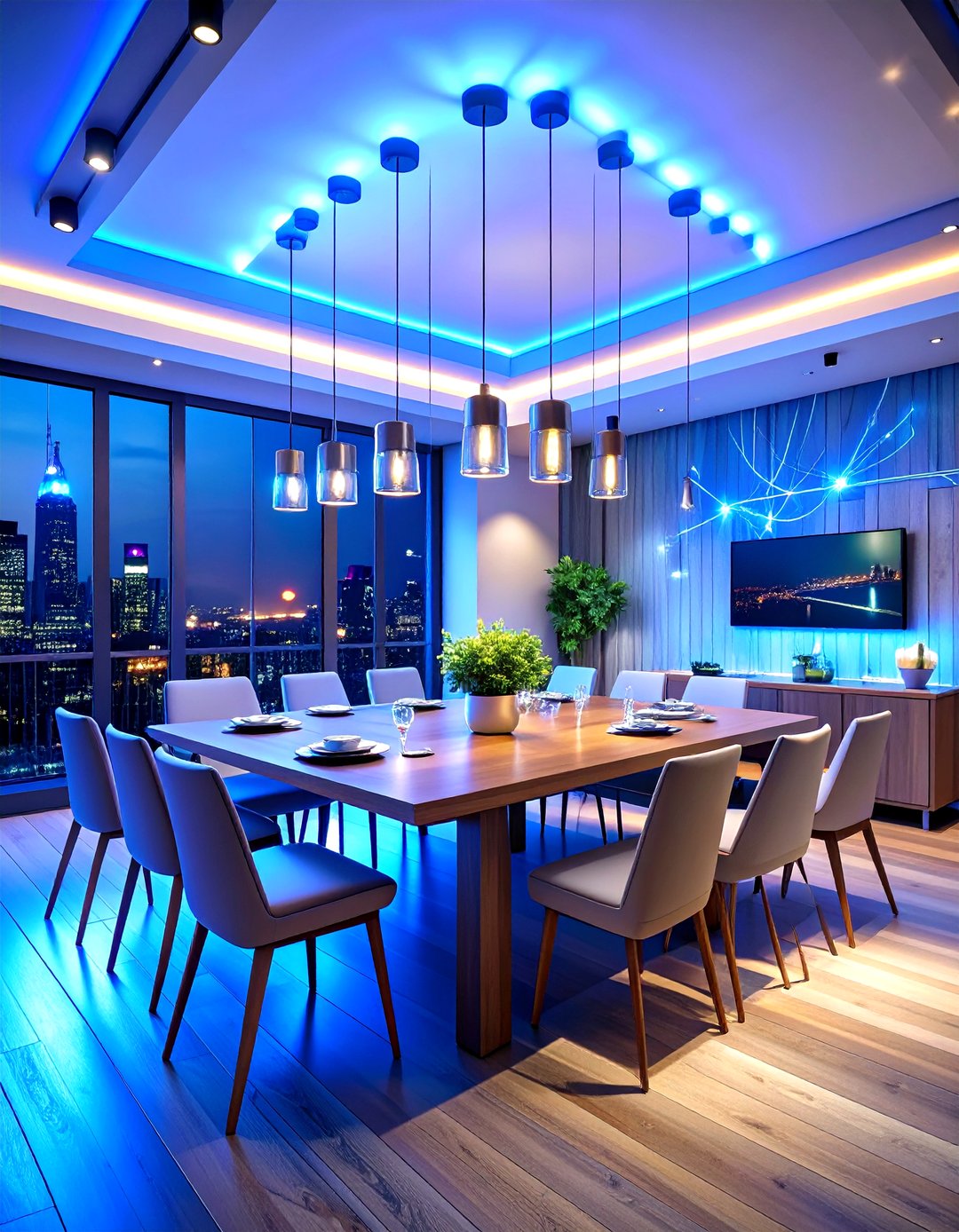
Incorporating smart technology into dining areas elevates both functionality and atmosphere. Opt for adjustable dimmable lighting that transitions smoothly from vibrant, energizing brightness during breakfast to a cozy, subdued glow for evening gatherings. Seamlessly blend convenience with style by selecting sleek, minimalistic devices like smart plugs and voice-activated controls that complement the industrial vibe. Concealing wires and favoring wireless options preserves the clean, rugged aesthetic while delivering modern ease. This thoughtful fusion results in dining spaces that are effortlessly contemporary yet true to their industrial roots.
Key Design Elements
- Incorporate exposed metal fixtures and reclaimed wood furniture to reinforce the industrial aesthetic while maintaining a warm and inviting dining atmosphere.
- Integrate smart lighting systems with adjustable color temperatures and dimming options to create customizable moods that complement different dining occasions.
- Install voice-controlled smart appliances and automated window treatments to enhance convenience and streamline the dining experience.
Pro Tip: Pro Tip: Integrate sleek, minimalist smart lighting and voice-controlled appliances to maintain the raw, industrial aesthetic while enhancing functionality and convenience in your contemporary dining space.
12. Dining Spaces That Blend Industrial Charm with Vintage and Contemporary Flair
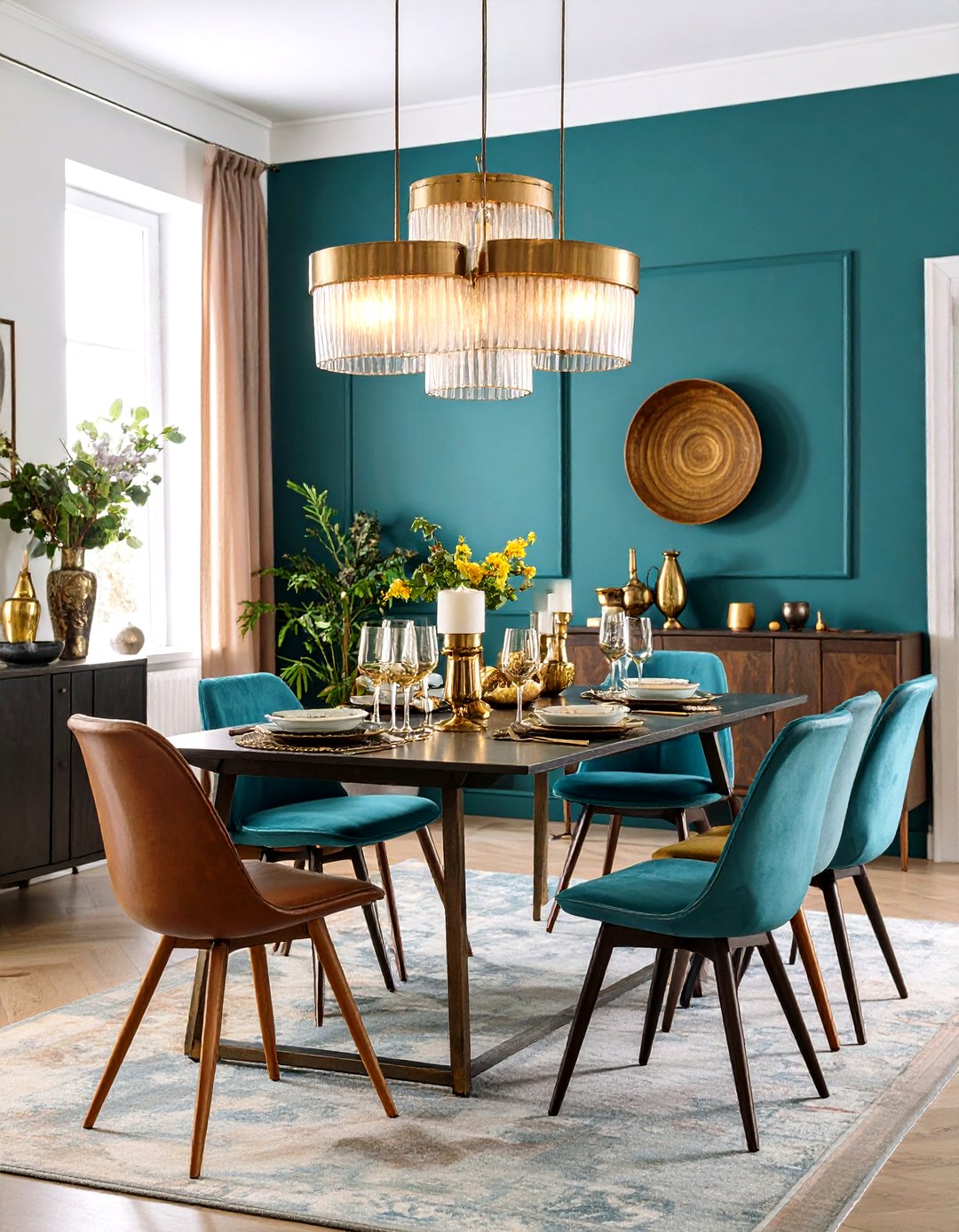
Blending contemporary and vintage styles breathes life into interiors, crafting environments rich with narrative and charm. Combine streamlined modern dining tables with timeless vintage chairs to achieve a compelling visual balance. Introduce antique industrial accents such as pulleys, gears, or factory lamps alongside up-to-date conveniences to infuse warmth and individuality into otherwise minimalistic spaces. Sourcing genuine vintage finds from antique shops or creatively reimagining industrial materials can elevate your design with distinctive character. This fusion creates an elegant eclectic vibe that seamlessly bridges past and present.
Key Design Elements
- Incorporate raw materials like exposed brick walls and metal light fixtures alongside vintage wooden dining tables to create an industrial yet warm atmosphere.
- Mix contemporary seating, such as sleek metal or acrylic chairs, with antique décor elements like distressed mirrors or retro artwork for a balanced look.
- Use layered lighting, combining Edison bulbs with modern pendant lamps, to highlight both the rustic textures and clean lines within the dining space.
Pro Tip: Pro Tip: Mix raw materials like exposed brick and metal with vintage furniture pieces and sleek contemporary lighting to create a balanced dining space that feels both timeless and edgy.
13. Dining Room Elegance: Reclaimed Wood Meets Steel in Industrial Style
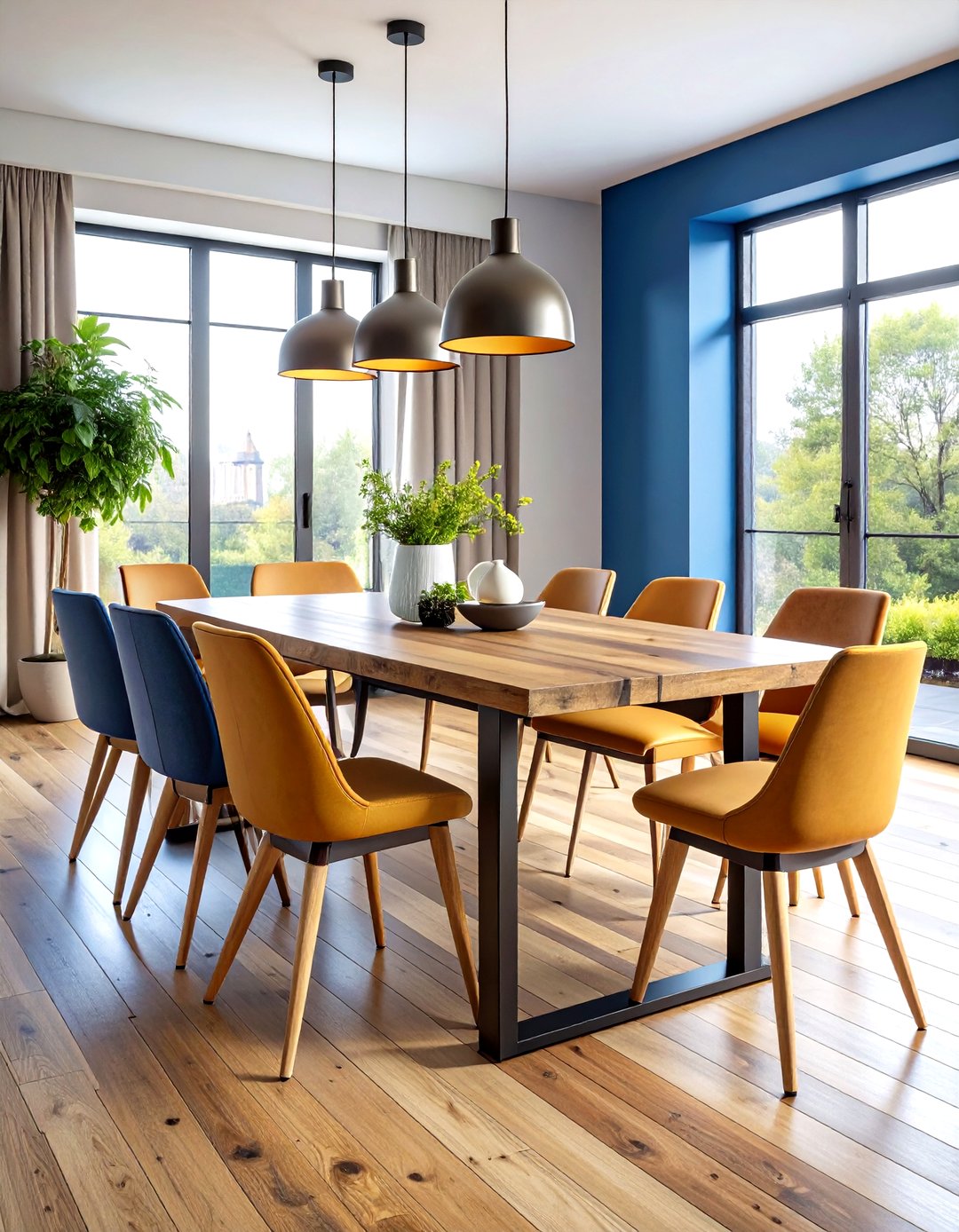
A dining table crafted from reclaimed wood paired with steel legs captures the essence of industrial design by blending eco-friendly materials with sturdy, bold style. The aged texture of the salvaged wood adds unique character and resilience, ideal for everyday dining. Opt for either H-shaped or U-shaped steel supports to tailor the table’s visual appeal, while finishes like blackened or untreated steel enhance the natural warmth of the wood. This fusion creates a captivating contrast that remains true to industrial aesthetics, transforming the table into a centerpiece that celebrates both skilled craftsmanship and sustainable living.
Key Design Elements
- Incorporate a reclaimed wood dining table with visible grain and imperfections to create a warm, authentic focal point that contrasts beautifully with sleek steel accents.
- Use steel-framed chairs or benches with leather or fabric cushions to balance industrial toughness with comfort and style.
- Add pendant lighting featuring exposed bulbs and steel fixtures above the dining area to enhance the industrial vibe while providing focused, ambient illumination.
Pro Tip: Pro Tip: Balance the rugged texture of reclaimed wood with sleek steel accents to create a harmonious industrial dining room that feels both warm and contemporary; layering soft textiles and ambient lighting will enhance the elegance without sacrificing edge.
14. Modern Industrial Dining Space Featuring Bold Artwork
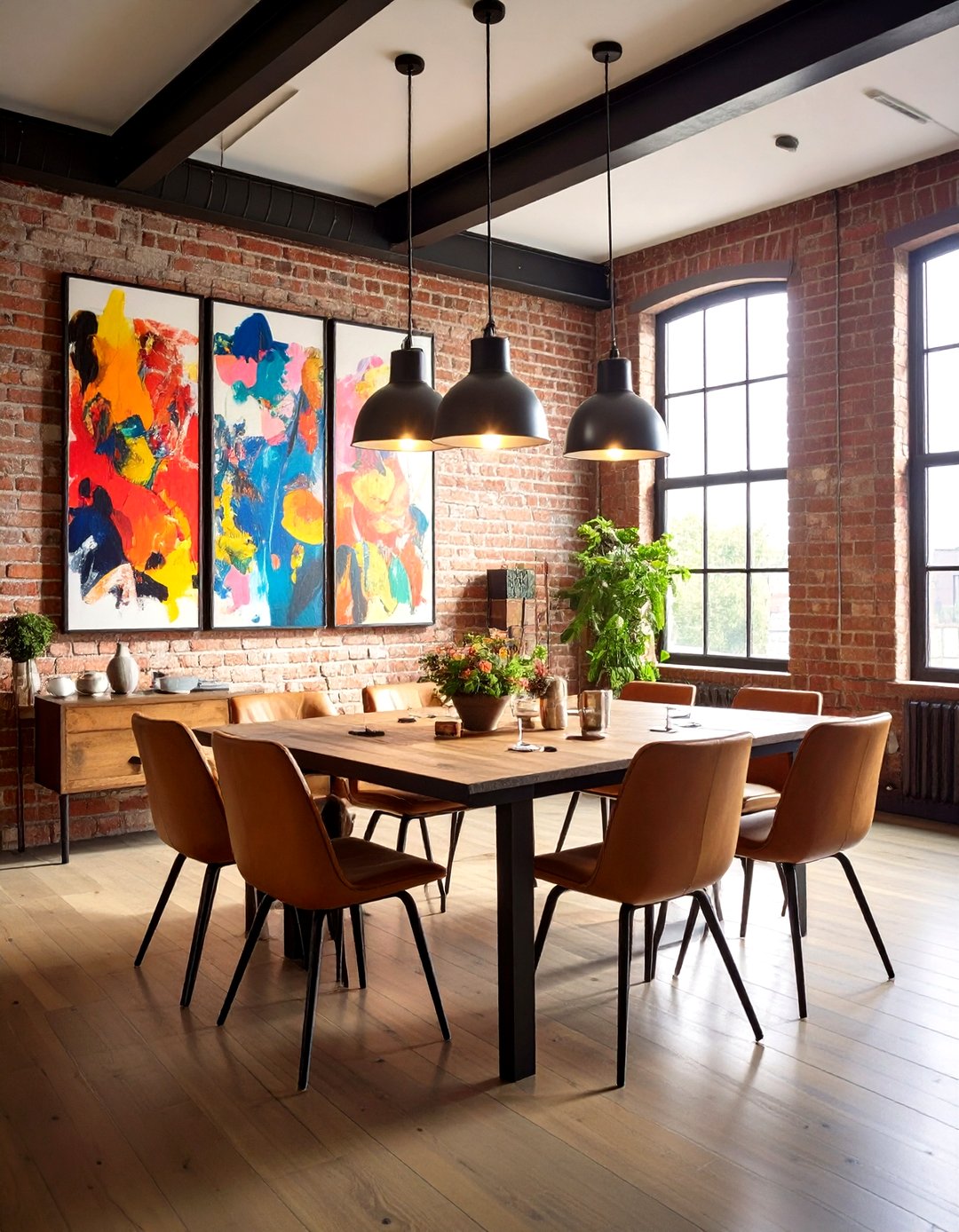
Elevate stark industrial walls by turning them into striking gallery displays that enhance the space’s rugged charm. Bold, eye-catching artwork not only sparks conversation at the table but also reflects your unique taste. Opt for oversized abstract paintings, evocative photography, or industrial-inspired designs that blend seamlessly with your palette. Using metal frames or visible mounting hardware reinforces the industrial vibe while giving your pieces a polished presentation. To add depth, mix materials such as metal, wood, and glass in a curated gallery wall, and be sure to install lighting that highlights the art and sets a warm, inviting mood for evening gatherings.
Key Design Elements
- Incorporate raw materials like exposed brick, metal fixtures, and reclaimed wood furniture to establish an authentic industrial foundation.
- Select bold, oversized artwork with vibrant colors or striking graphic elements to serve as a focal point and add personality to the dining area.
- Use minimalist lighting with pendant fixtures or Edison bulbs to complement the industrial aesthetic while highlighting the artwork and dining space.
Pro Tip: Pro Tip: Anchor your modern industrial dining space with bold artwork in vibrant colors to create a striking focal point that contrasts with raw materials like exposed brick and metal accents, adding warmth and personality without overwhelming the minimalist aesthetic.
15. Modern Industrial Dining Space Featuring an Edison Bulb Chandelier
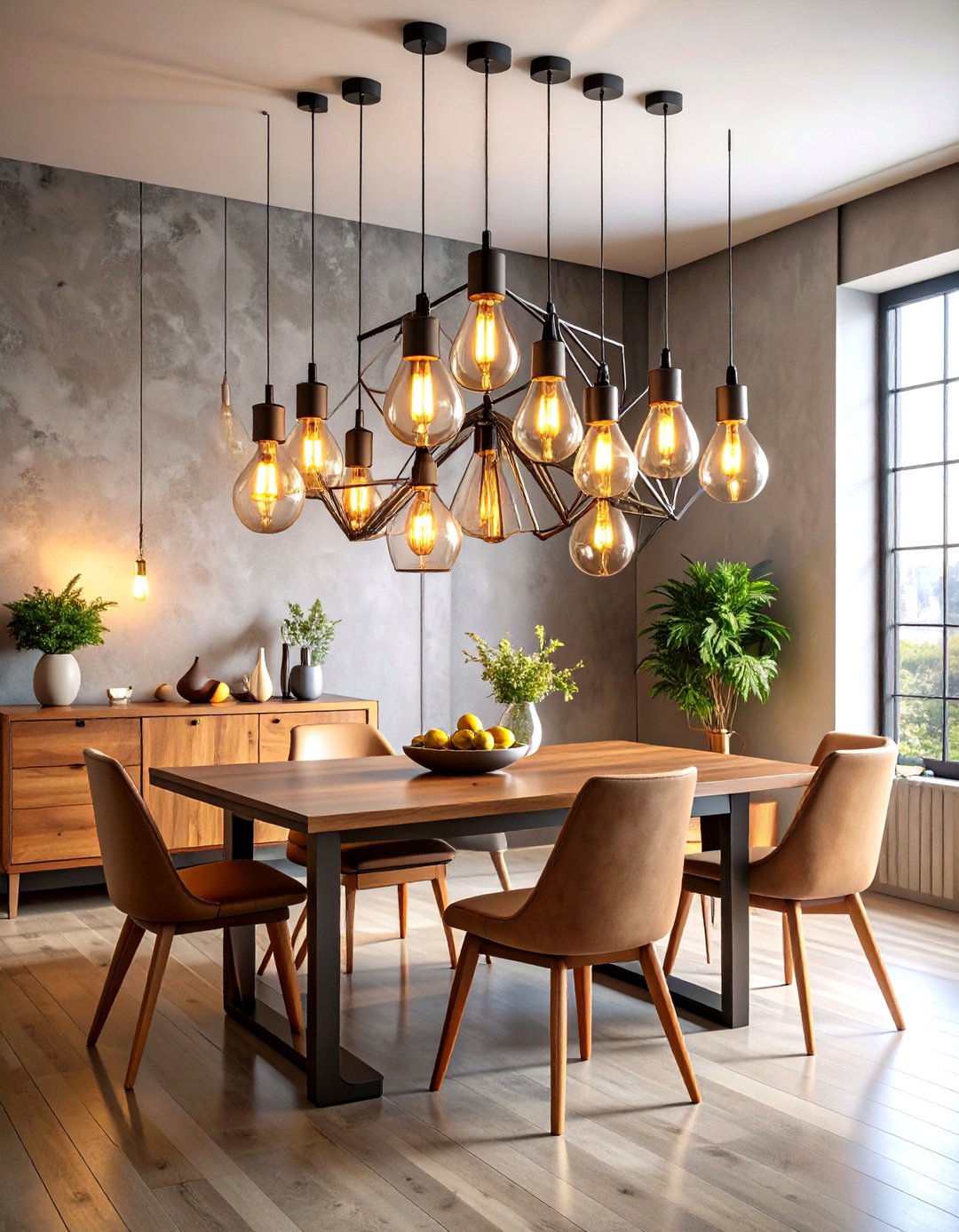
Elevate your dining area with a chandelier showcasing Edison bulbs, where the glowing filaments bring a nostalgic charm and cozy warmth to the room. Inspired by vintage lighting from the early 1900s, these fixtures often feature sleek metal frameworks that enhance industrial style. Experiment with clusters of bulbs arranged in geometric shapes or staggered at different levels to add depth and intrigue. The soft, inviting light sets the perfect mood for gatherings while preserving the authentic, rugged essence of industrial design. For the best effect, hang the chandelier about 30 to 36 inches above your dining table to ensure both functional illumination and aesthetic harmony.
Key Design Elements
- Incorporate raw materials such as exposed brick walls, metal accents, and reclaimed wood furniture to enhance the industrial aesthetic.
- Install an Edison bulb chandelier with adjustable dimming to create warm, inviting lighting that highlights the dining area.
- Use minimalist, functional dining chairs and a sturdy wooden table to balance comfort with the modern industrial vibe.
Pro Tip: Pro Tip: Balance the raw, edgy vibe of an Edison bulb chandelier with warm wood tones and soft textiles to create a modern industrial dining space that feels inviting rather than stark.
16. Modern Industrial Dining Spaces Featuring Mixed Metal and Wood Seating
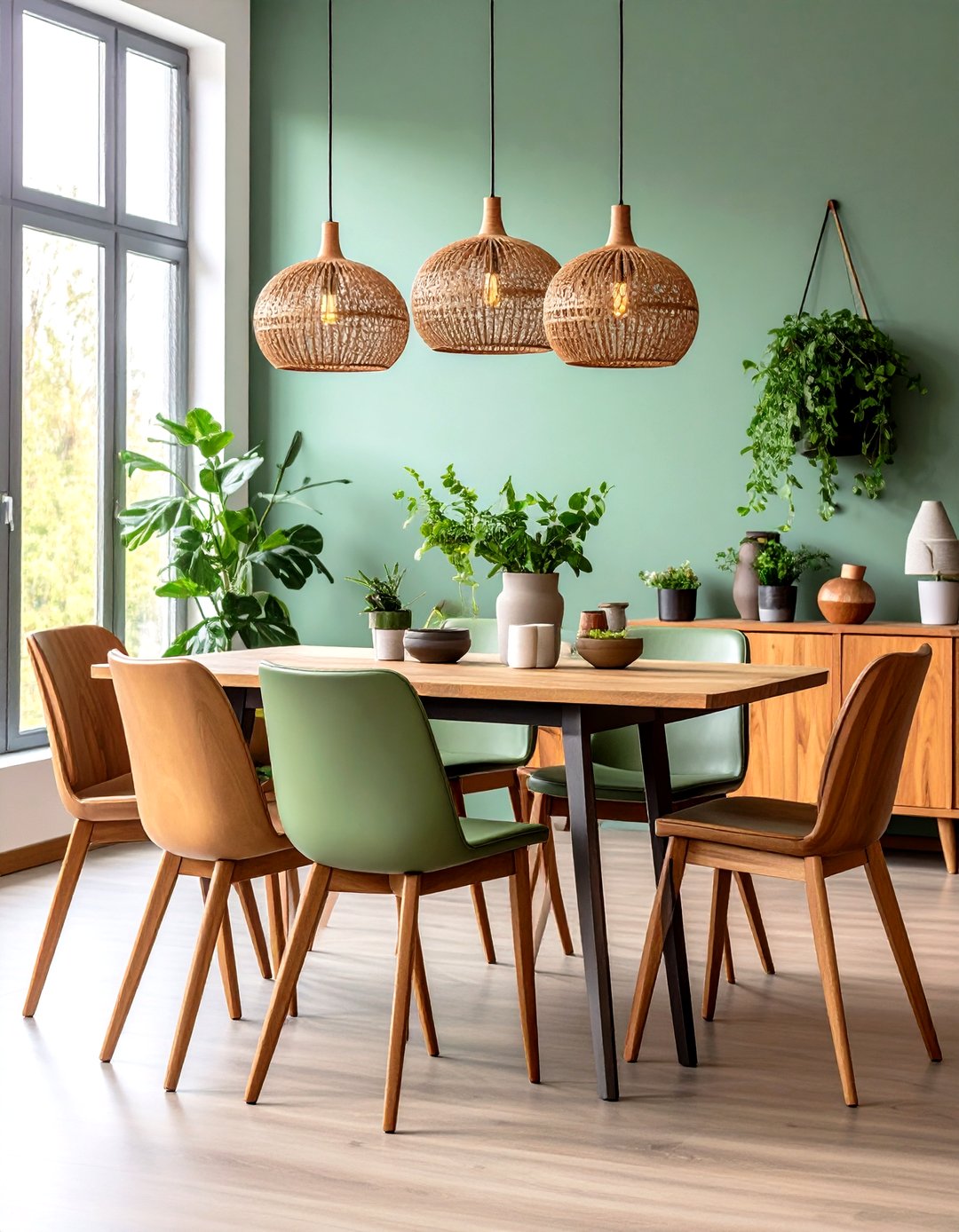
Achieve a lively and cohesive seating area by blending various chair designs rooted in industrial style. Incorporate dining chairs featuring metal and wood to infuse farmhouse-inspired rooms with a modern industrial edge. Experiment with pairing steel frames with wooden seats or rotating between diverse metal finishes to add visual interest. This strategy not only offers sourcing flexibility but also cultivates a curated, layered look. To keep the dining experience comfortable and harmonious, choose chairs with comparable heights and proportions, allowing different textures and designs to bring warmth and individuality without compromising the industrial essence.
Key Design Elements
- Combine metal-framed chairs with wooden seats and backs to create a balanced contrast that enhances the industrial aesthetic while maintaining comfort.
- Use a reclaimed wood dining table paired with mixed metal stools in varying finishes (e.g., matte black, brushed brass) to add depth and visual interest to the space.
- Incorporate metal lighting fixtures with exposed bulbs above the dining area to complement the mixed metal seating and accentuate the industrial vibe.
Pro Tip: Pro Tip: Balance the raw textures of mixed metal and wood seating by incorporating warm lighting and soft textiles like cushions or rugs to create an inviting modern industrial dining space.
17. Dining Room Inspired by Industrial Pipe Accents
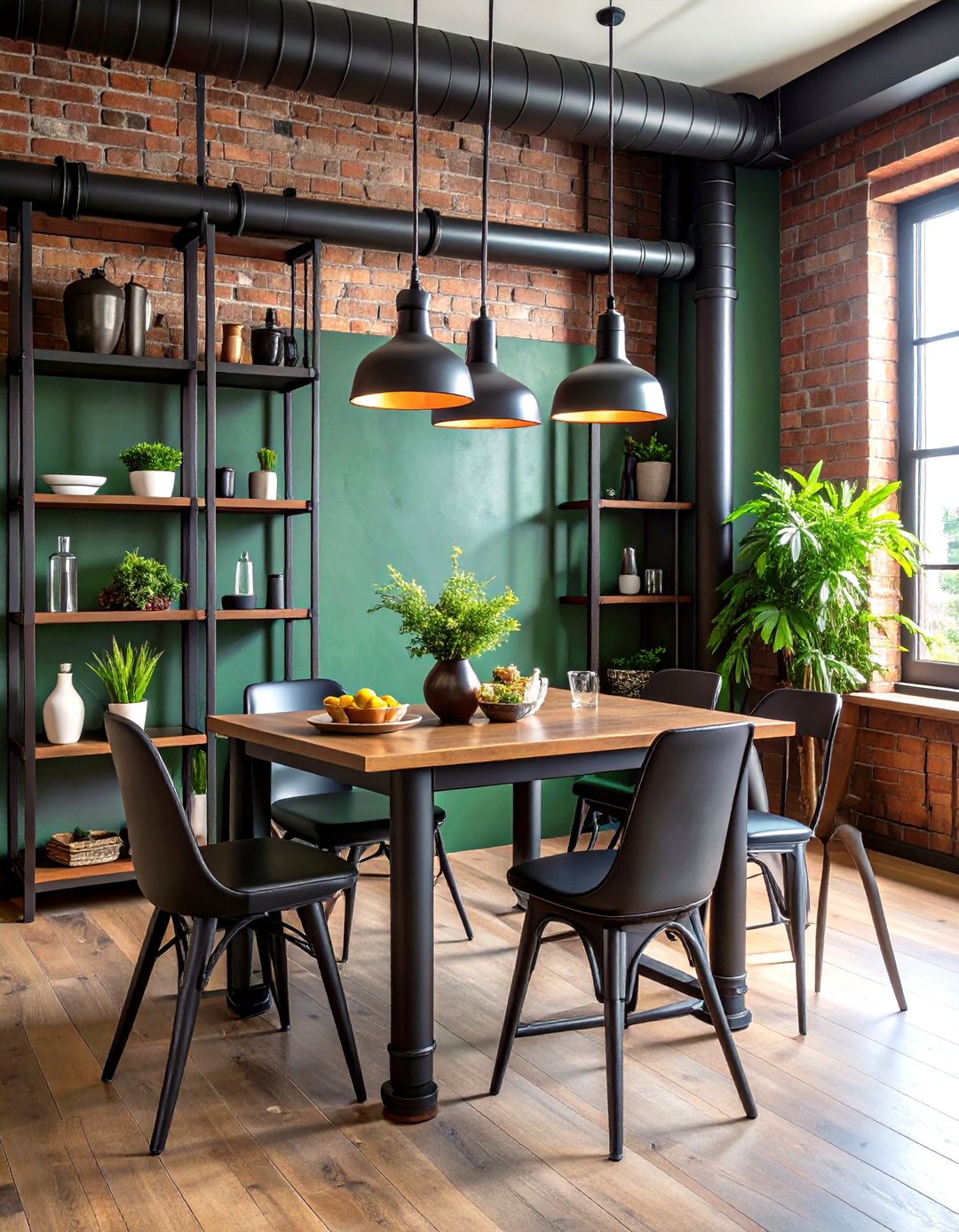
Embracing exposed pipes as part of your décor pays homage to industrial style while infusing your dining area with practical charm. Black iron pipes can serve as sturdy table legs, support shelves, or act as eye-catching wall accents that reinforce a utilitarian vibe. Extending pipe details throughout your home helps establish a cohesive industrial theme. Think about incorporating pipe-framed mirrors, hanging racks for pots, or bespoke shelving to display your kitchenware, all of which highlight the beauty of raw metal finishes. These thoughtful touches offer an affordable way to bring genuine industrial flair into your space.
Key Design Elements
- Incorporate industrial pipe shelving or open storage units to display dishes and glassware, adding functional decor with a raw, urban aesthetic.
- Use pipe-inspired lighting fixtures, such as pendant lamps with exposed bulbs and metal pipe fittings, to create a warm, industrial ambiance over the dining table.
- Choose furniture with metal pipe legs or frames paired with reclaimed wood tabletops to blend sturdy industrial materials with natural textures for a balanced dining space.
Pro Tip: Pro Tip: Incorporate reclaimed wood tabletops paired with matte black industrial pipe legs to create an authentic, rugged dining room centerpiece that balances warmth with edgy urban style.
18. Sleek Industrial Dining Spaces Embracing Minimalist Style
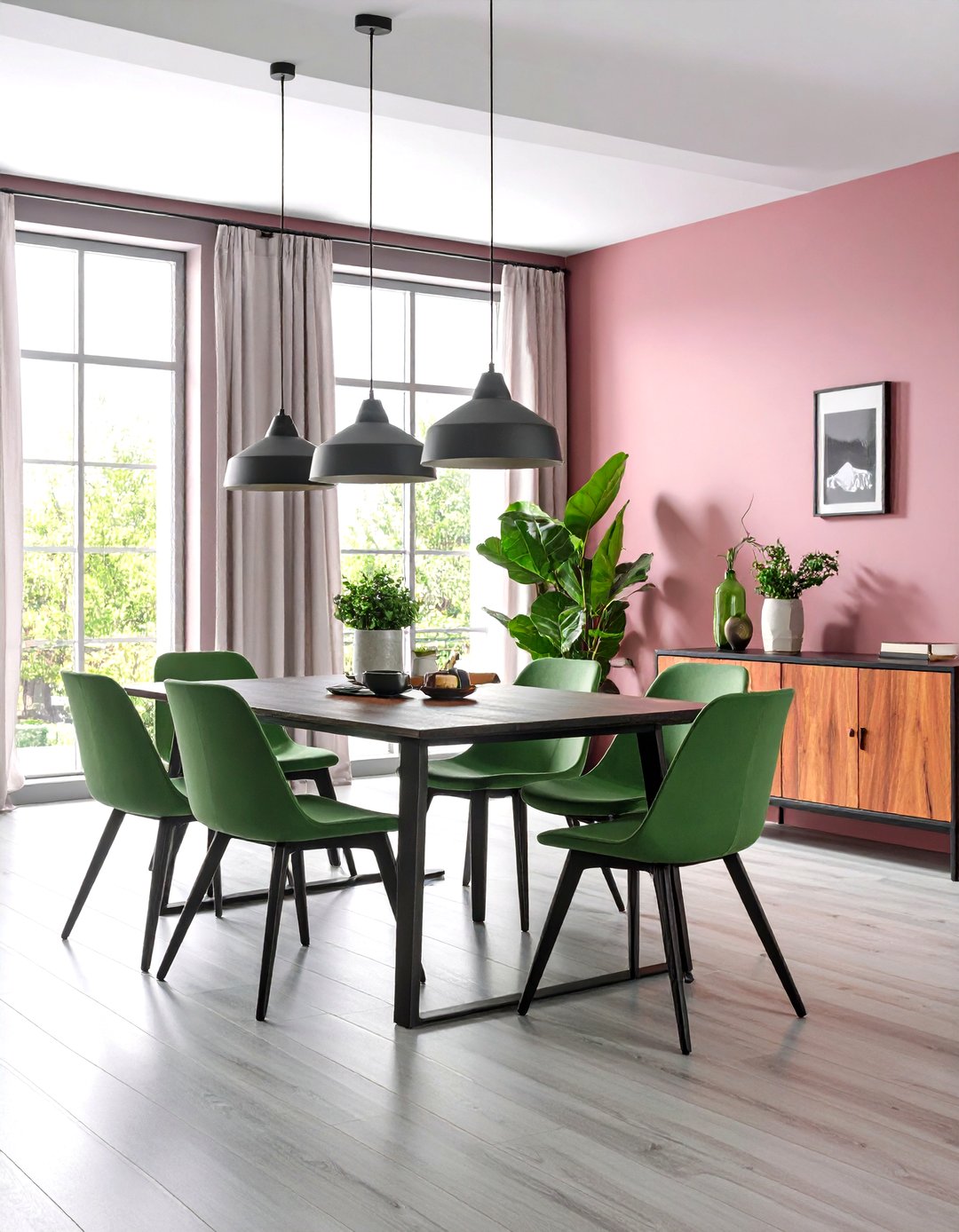
Opt for a minimalist industrial dining room that champions simplicity and purposeful design, where every element serves a function without excess. Prioritize sleek, geometric furniture crafted from materials such as steel, concrete, and natural wood to anchor the space with texture and strength. Stick to a neutral color scheme—think blacks, whites, grays, and warm wood hues—for a harmonious and refined atmosphere. Highlight the room with a single standout feature, like a striking pendant light or bold artwork, while ensuring the rest of the decor remains subtle. This careful balance cultivates a serene and inviting setting, ideal for both cozy family meals and intimate gatherings.
Key Design Elements
- Incorporate raw materials like metal, concrete, and reclaimed wood for tables and chairs to achieve an authentic industrial feel while maintaining clean lines.
- Opt for minimalist lighting fixtures such as exposed Edison bulbs or simple black metal pendants to enhance the sleek, utilitarian aesthetic.
- Keep décor and accessories minimal by selecting functional pieces with geometric shapes and neutral colors to maintain an uncluttered, streamlined dining space.
Pro Tip: Pro Tip: Opt for raw materials like exposed metal and reclaimed wood with clean lines to create a sleek industrial dining space that feels minimalist yet inviting, keeping decor simple to let textures and finishes stand out.
19. Dining Room Inspired by Industrial Style with a Striking Exposed Brick Accent Wall
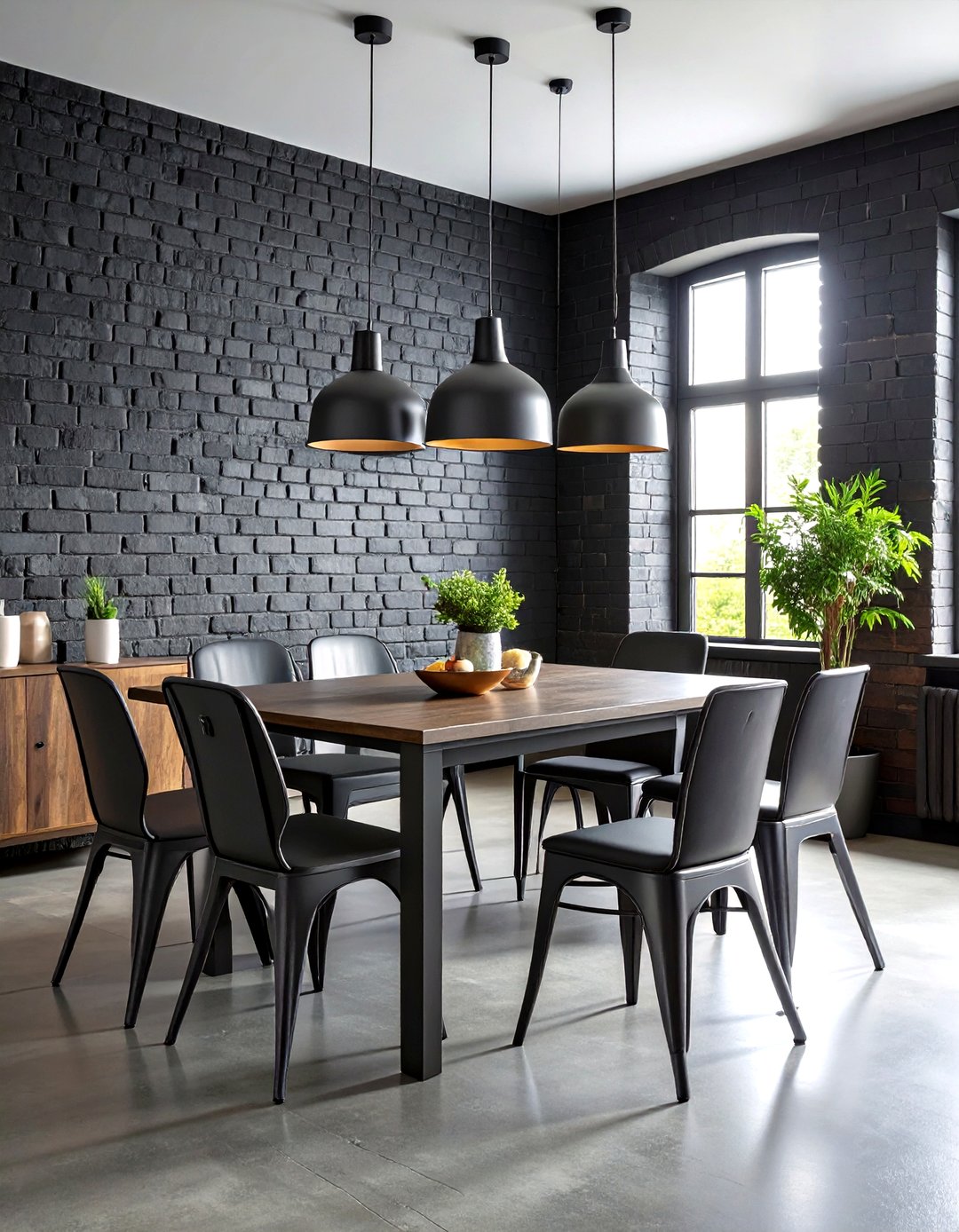
Incorporating exposed brick into your industrial dining space instantly adds a rich sense of history and warmth, becoming a captivating focal point. The rugged texture of brick walls introduces depth and character, making them an ideal canvas for contemporary dining pieces. To harmonize with your palette while retaining the brick’s unique surface, consider painting it in shades like charcoal or crisp white. The subtle irregularities in the brickwork enhance visual interest and blend seamlessly with metal and wood accents. For maximum impact, place your dining table alongside the brick wall and use thoughtfully placed lighting to showcase its texture during dinner gatherings.
Key Design Elements
- Incorporate raw materials like reclaimed wood and metal furniture to complement the exposed brick accent wall and enhance the industrial vibe.
- Use pendant lighting with Edison bulbs or metal shades to add warmth and highlight the texture of the brick.
- Keep the color palette neutral with shades of gray, black, and earthy tones to maintain an authentic industrial atmosphere while allowing the brick wall to stand out.
Pro Tip: Pro Tip: Balance the raw texture of an exposed brick accent wall with sleek metal and wood furnishings to create a cohesive industrial dining space that feels both rugged and inviting.
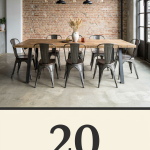
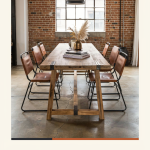
20. Modern Industrial Dining Space Featuring a Concrete Table
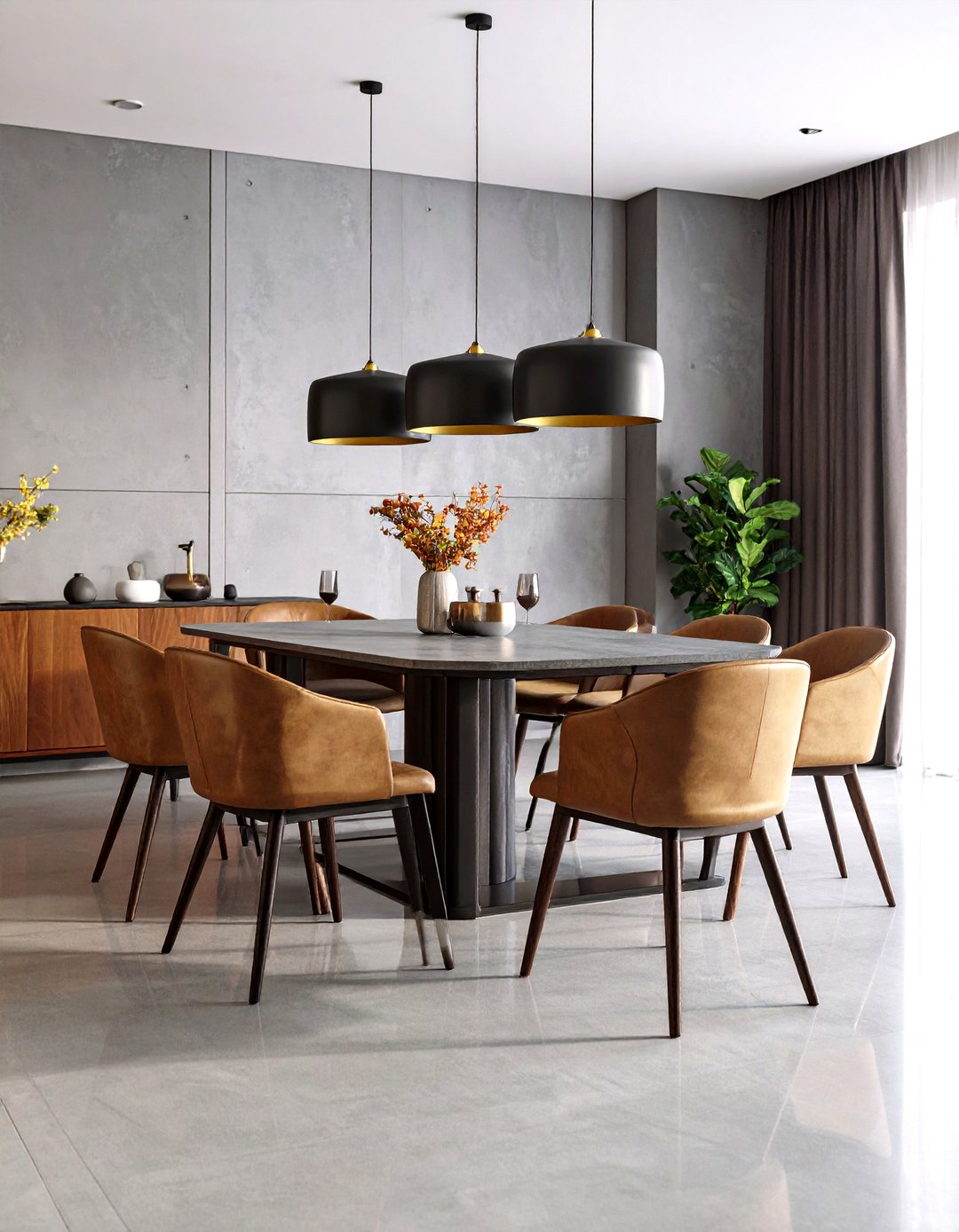
A dining table crafted from concrete delivers a striking architectural presence combined with exceptional strength and contemporary style. Its sleek, minimalist silhouette is ideal for industrial-inspired interiors, where the soft gray hues harmonize effortlessly with raw brick and metal accents. To balance the coolness of concrete, introduce warm wooden chairs or rich leather upholstery for added comfort and visual warmth. The polished surface not only enhances light reflection but also offers easy upkeep, blending function with elegance. For a modern touch, think about incorporating built-in bench seating to elevate the overall design.
Key Design Elements
- Incorporate raw materials like exposed brick walls and metal light fixtures to complement the concrete table’s industrial aesthetic.
- Use minimalist, sturdy dining chairs made from metal or reclaimed wood to enhance the modern industrial vibe while ensuring comfort.
- Add warm textiles such as neutral-toned rugs or cushions to balance the coldness of concrete and create an inviting dining atmosphere.
Pro Tip: Pro Tip: Balance the raw, edgy look of a concrete dining table with warm textures like leather chairs and wooden accents to create a modern industrial space that feels inviting rather than cold.
Conclusion
Industrial dining rooms masterfully unite rugged textures with refined aesthetics, crafting environments that are as inviting as they are visually captivating. By embracing features such as exposed brick, weathered wood, iconic Edison bulbs, and a blend of metal accents, you can cultivate a space that honors genuine materials while offering warmth and comfort. Whether your style leans toward sleek minimalism or a curated vintage mix, the true essence of this design lies in highlighting authentic structural details, transforming every meal into a memorable gathering steeped in character and charm.
Leave a Reply