Side tables are small surfaces with big potential. Whether nestled beside your favorite chair or acting as a functional accent in your living space, styling your side or end table thoughtfully can elevate the entire room’s vibe. From cozy touches to sleek minimalism, the right decor choices make these little tables both practical and beautiful.
In this guide, we explore 30 fresh approaches to side table styling that blend aesthetics with everyday use. You’ll find tips for balancing textures, adding greenery, layering accessories, and creating inviting corners — all tailored to help your side table feel purposeful and styled without fuss.
1. Cozy Candlelight Paired with Natural Stems
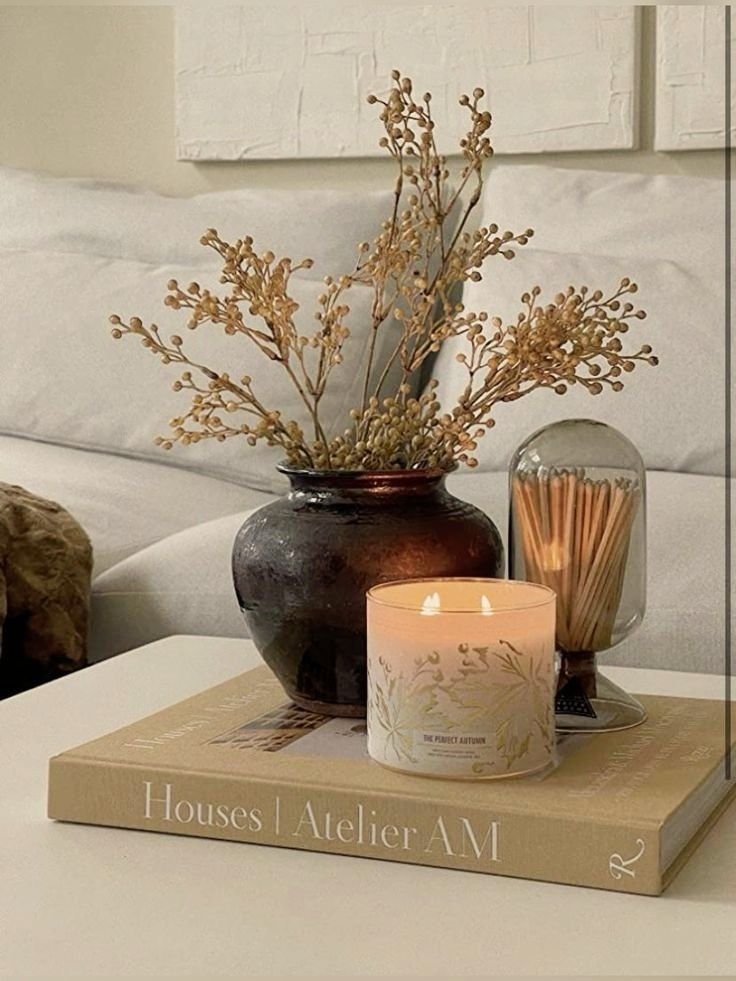
Combining a glowing candle with simple dried stems in a vase creates an inviting atmosphere that’s both cozy and subtly styled. This look works any time of year, especially when you choose neutral tones that blend seamlessly with your existing decor.
Key Design Elements
- Use neutral-hued dried florals to keep the look versatile.
- Choose unscented candles to avoid overpowering the space.
- Swap out stems seasonally to refresh the arrangement.
Pro Tip: Opt for flameless candles if you want to keep the ambiance without worrying about fire hazards.
2. Timeless Warmth from Dark Wood Pieces
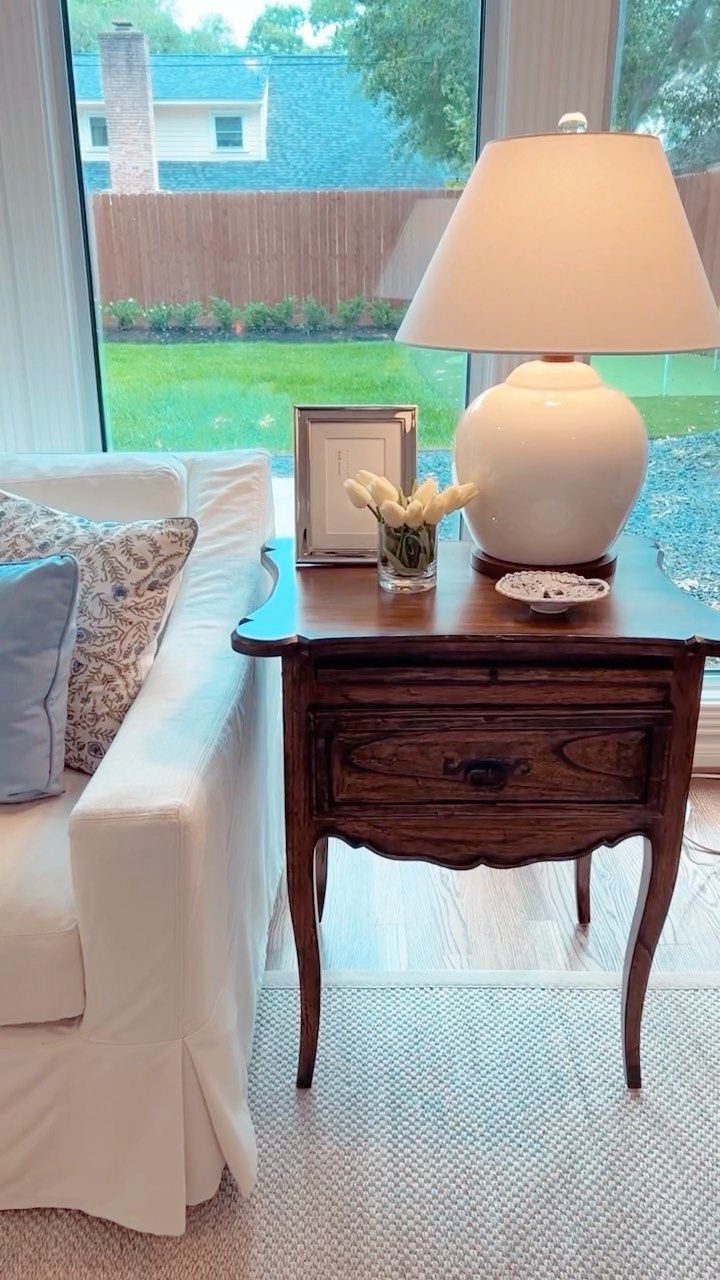
A side table crafted from rich, dark wood instantly adds warmth and a sense of tradition to any room. When paired with a soft-toned lamp and a cherished personal item such as a framed photo, it creates a cozy, lived-in feel that never goes out of style.
Key Design Elements
- Select lamps with warm light bulbs to enhance cozy vibes.
- Incorporate personal mementos to add character.
- Keep accessories minimal to highlight the wood’s natural beauty.
Pro Tip: Use furniture polish regularly to maintain the wood’s rich tone and prolong the table’s lifespan.
3. Intentional Shapes and Subtle Styling
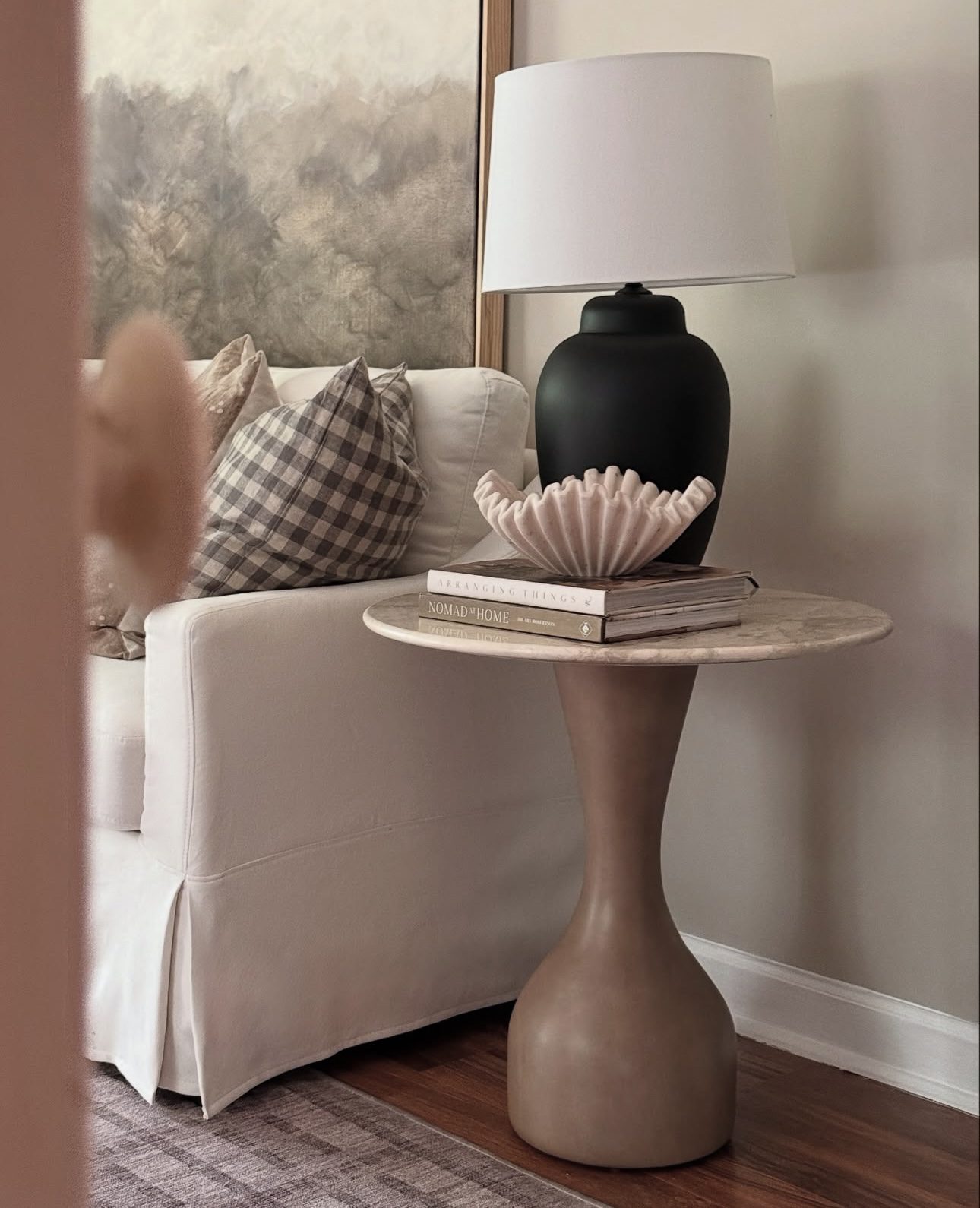
Choosing a side table with an interesting shape can turn it into a focal point with minimal decor. Adding a small number of carefully selected pieces enhances the design without overwhelming the surface, perfect for those who appreciate style with a functional edge.
Key Design Elements
- Pick furniture with unique silhouettes to set the tone.
- Limit decor to two or three statement pieces for balance.
- Mix shapes and heights to keep visual interest.
Pro Tip: Use items with contrasting textures on sculptural tables to amplify their visual appeal.
4. Layering Books and Lamps for Cozy Depth
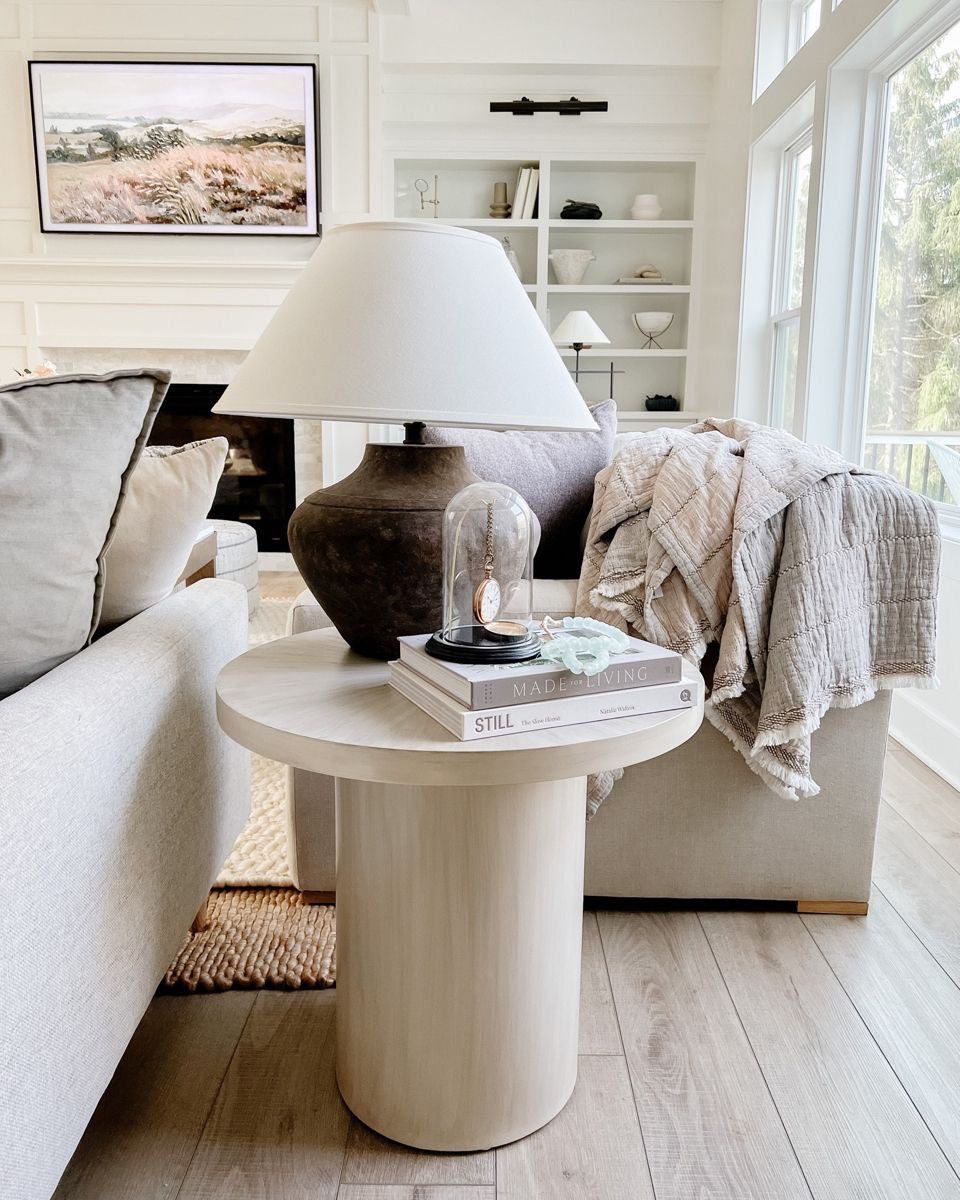
Stacking a couple of your favorite books beneath a bedside or side table lamp is a simple styling trick that adds dimension and personality. It not only lifts the lamp for better illumination but also creates a heartfelt, welcoming vibe.
Key Design Elements
- Choose books with covers that complement your decor colors.
- Use hardback books for a more polished look.
- Keep the stack manageable to avoid clutter.
Pro Tip: Rotate your book choices seasonally to keep the look fresh and personal.
5. Open Shelving with Concealed Storage Solutions
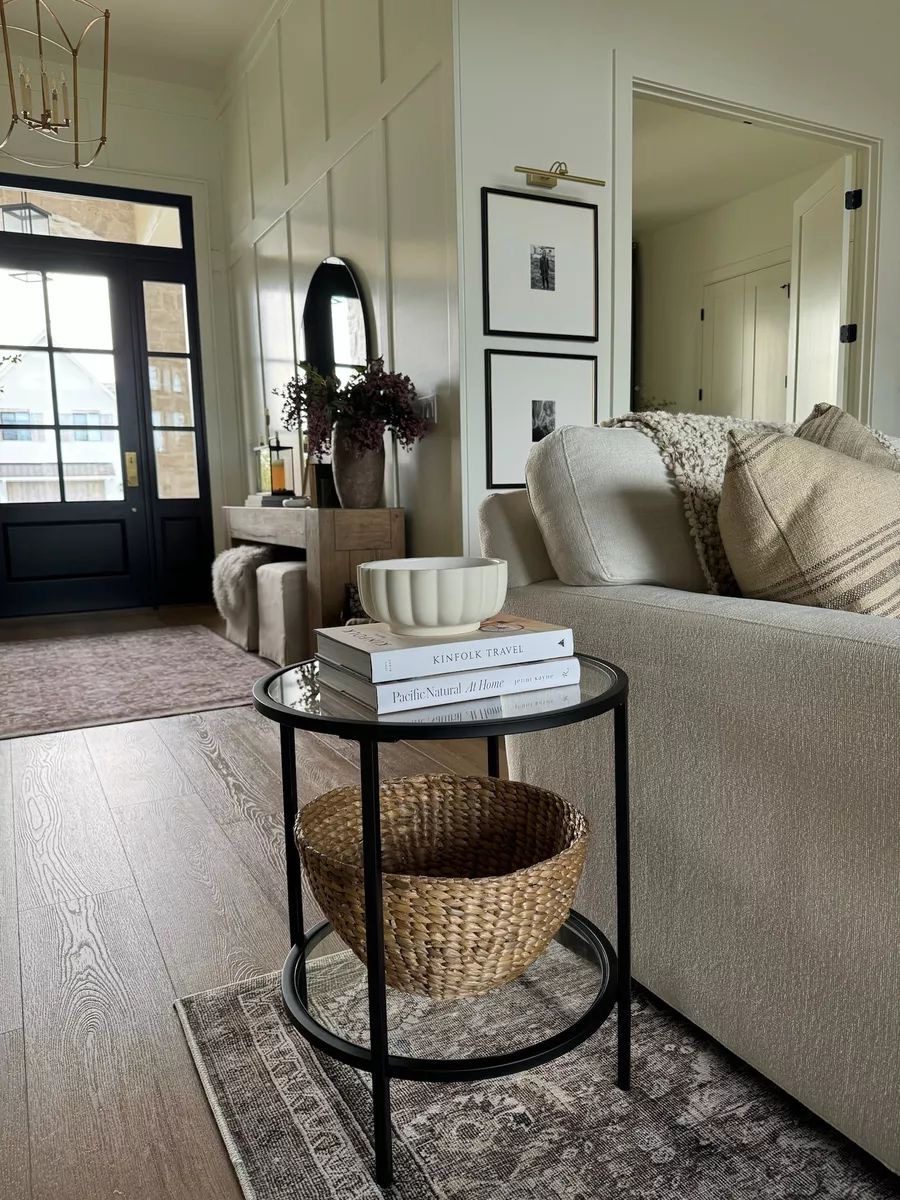
Incorporating an open lower shelf or using a basket beneath your side table offers a smart way to hide everyday essentials while keeping the tabletop visually tidy. This approach balances style with practicality, preventing clutter while allowing for creative top-layer styling.
Key Design Elements
- Use woven or fabric baskets to soften the look.
- Keep frequently used items hidden but easily accessible.
- Style the shelf with minimal decor to maintain openness.
Pro Tip: Label baskets or boxes on the lower shelf for easy organization and quick access.
6. Maximized Function with Bottom Shelf Styling
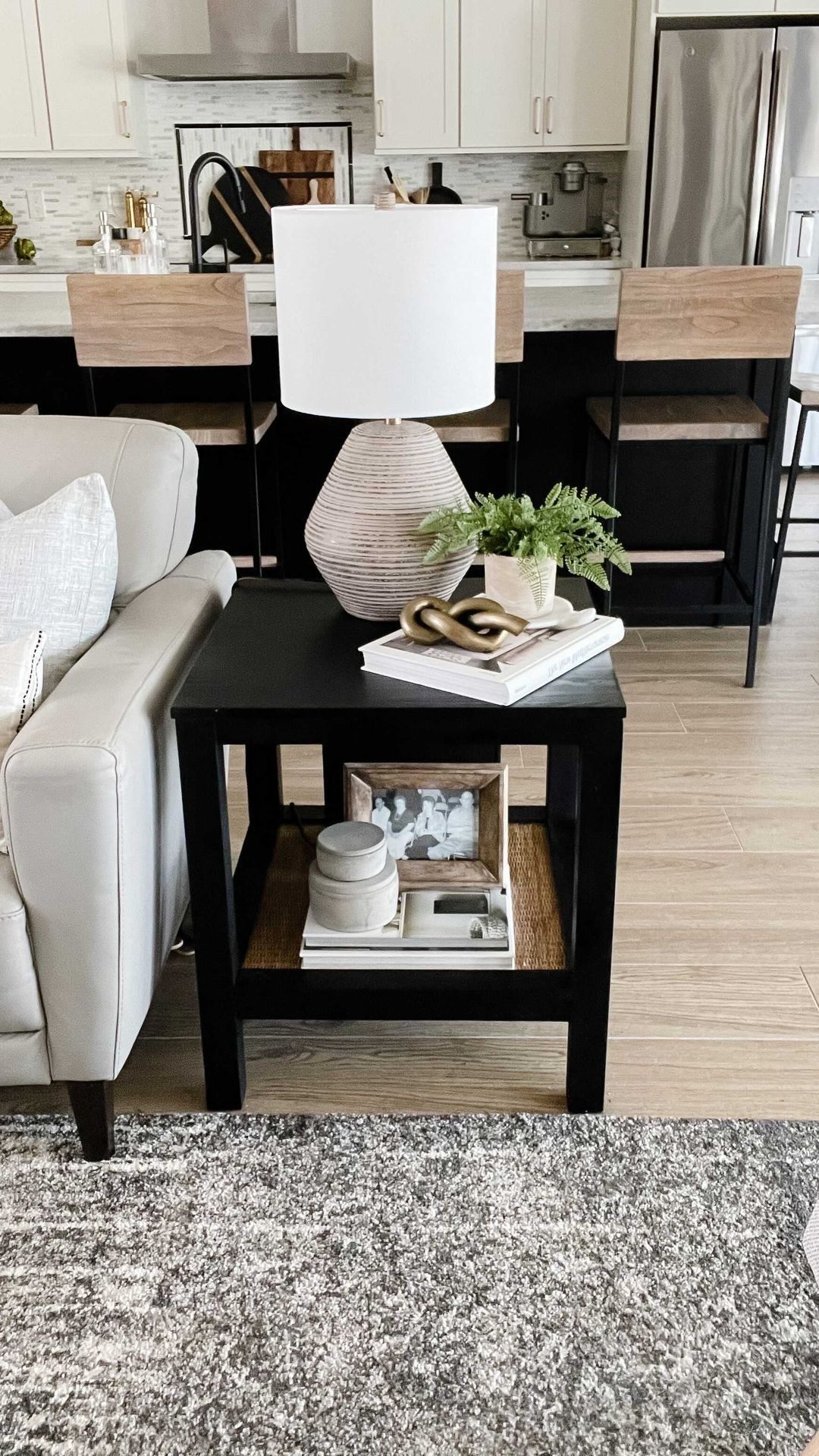
A bottom shelf on your side table adds valuable storage space without compromising style. Store books, decorative objects, or trays below to keep the top surface uncluttered and visually pleasing, making everyday upkeep easier.
Key Design Elements
- Stack books horizontally for a clean, layered effect.
- Add decorative bowls or small boxes for variety.
- Use the shelf for seasonal or rotating decor pieces.
Pro Tip: Keep the bottom shelf’s contents consistent in color or theme to maintain harmony.
7. Let Plants Take Center Stage
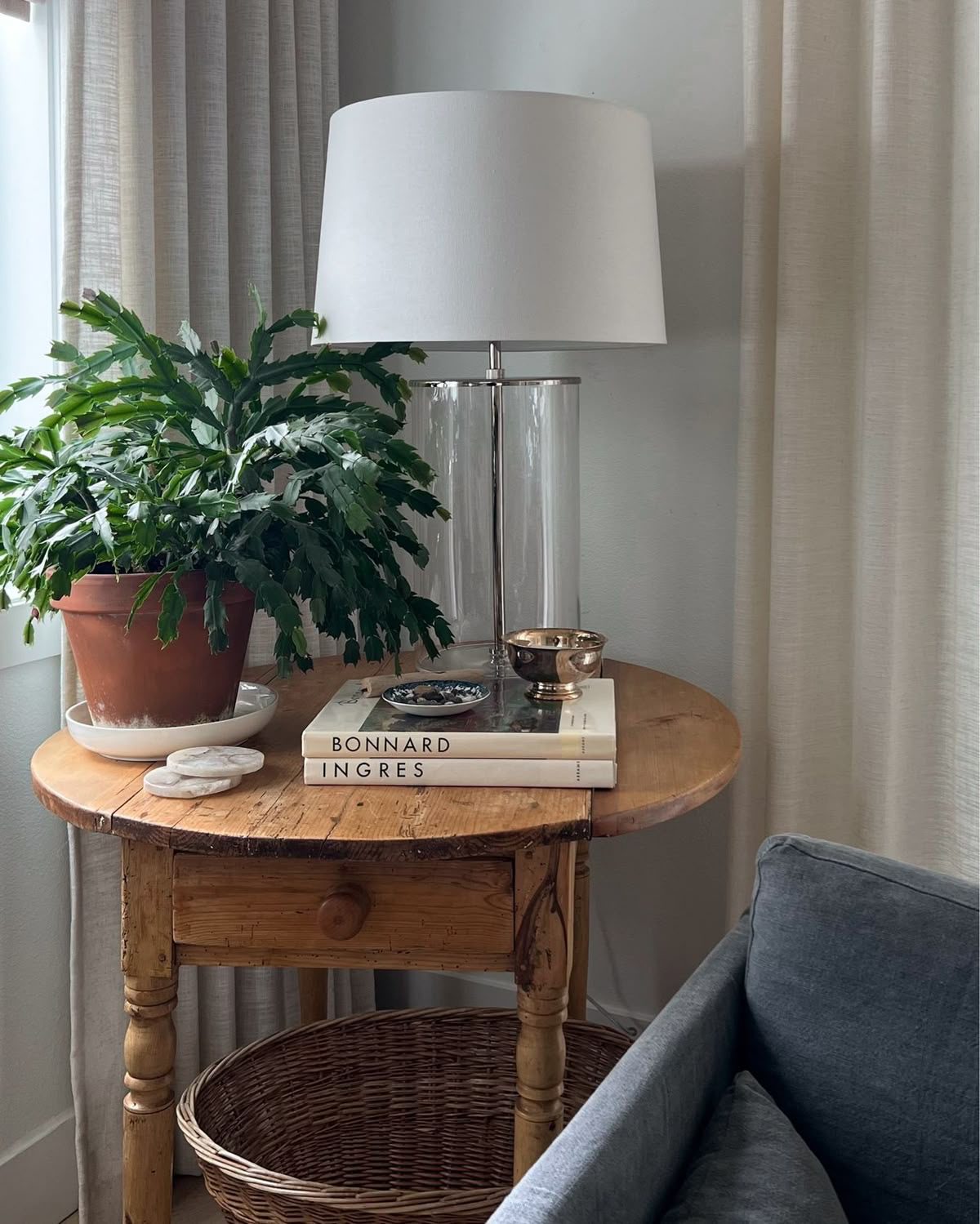
Showcasing a single, healthy plant as the main feature on your side table is one of the simplest ways to bring freshness to the space. Complementing it with a few books or minimal accessories keeps the look relaxed and effortlessly chic.
Key Design Elements
- Choose low-maintenance plants like succulents or pothos.
- Pair plants with neutral pots for a modern look.
- Limit surrounding decor to avoid visual clutter.
Pro Tip: Rotate plants occasionally to ensure even growth and maintain vibrancy.
8. Clean Minimalism with Personal Touches
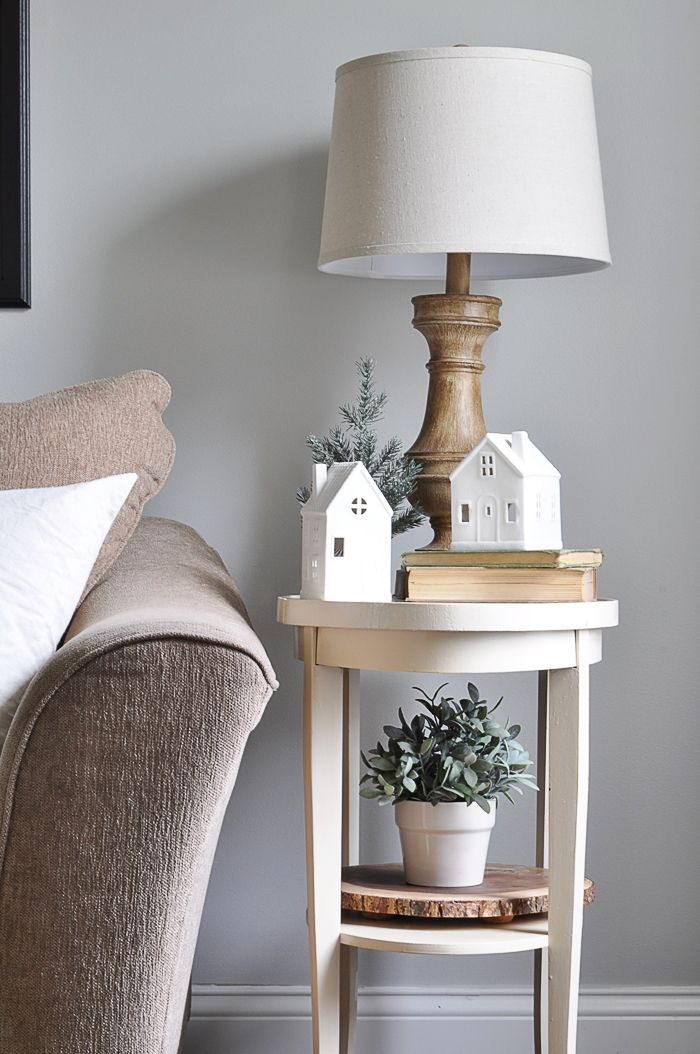
Keeping a side table minimal doesn’t mean sacrificing personality. Adding one or two meaningful decorative items—like small ceramics or unique trinkets—ensures the space feels curated and inviting without appearing sparse or impersonal.
Key Design Elements
- Select pieces that reflect your style or memories.
- Avoid overcrowding by sticking to a few standout items.
- Use neutral tones to maintain a calm aesthetic.
Pro Tip: Rotate personal items periodically to keep the decor feeling fresh and intentional.
9. Fresh Minimalism with Subtle Natural Accents
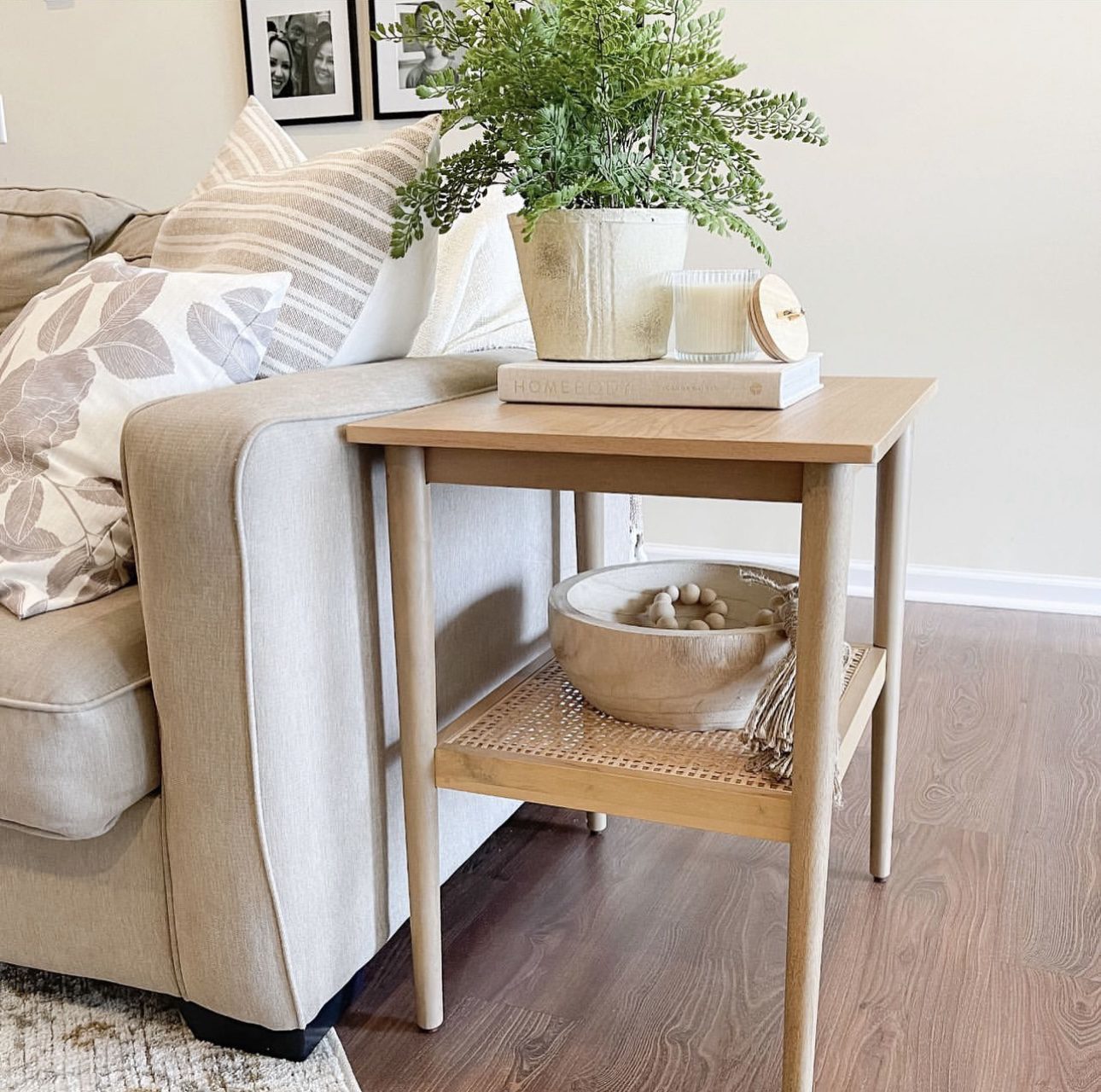
A simple side table adorned with just a small plant and a couple of understated accents can feel airy and inviting. The greenery softens the minimalism, making sure the table complements a lively room without competing for attention.
Key Design Elements
- Opt for compact plants to keep proportions balanced.
- Use soft-toned accessories to add warmth.
- Maintain clear surfaces to enhance the minimalist feel.
Pro Tip: Place the table near a light source to help plants thrive and enhance the fresh atmosphere.
10. Effortless Greenery for a Relaxed Vibe
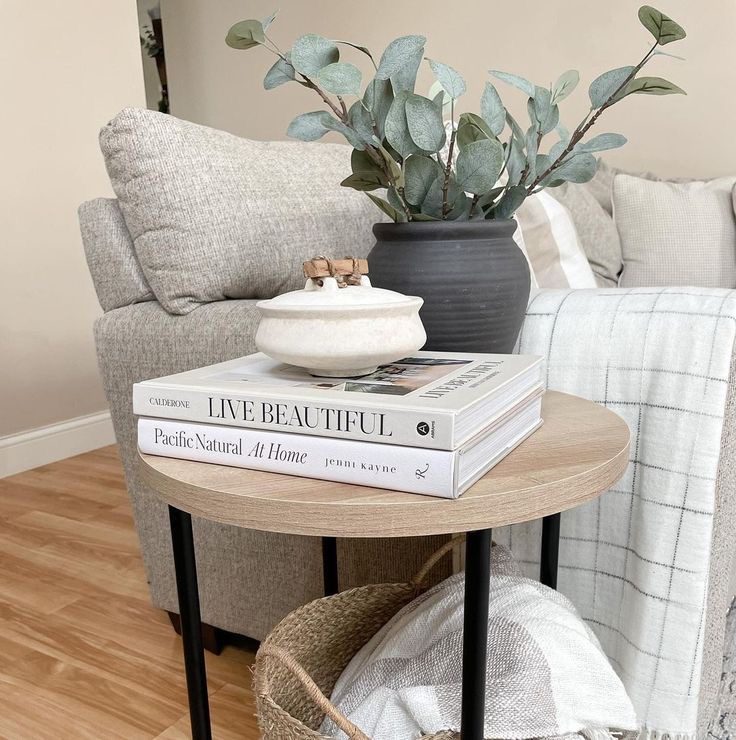
Adding a simple sprig of greenery or a small leafy plant instantly breathes life into a side table. Pairing it with a couple of books or a small decorative item creates a natural, unpretentious look that feels both styled and easygoing.
Key Design Elements
- Choose greenery with interesting shapes or textures.
- Combine organic elements with neutral decor pieces.
- Keep the arrangement loosely placed for a natural feel.
Pro Tip: Use plant cuttings from your garden or local florist to keep costs low and style fresh.
11. Statement Vase in Soft Neutral Palette
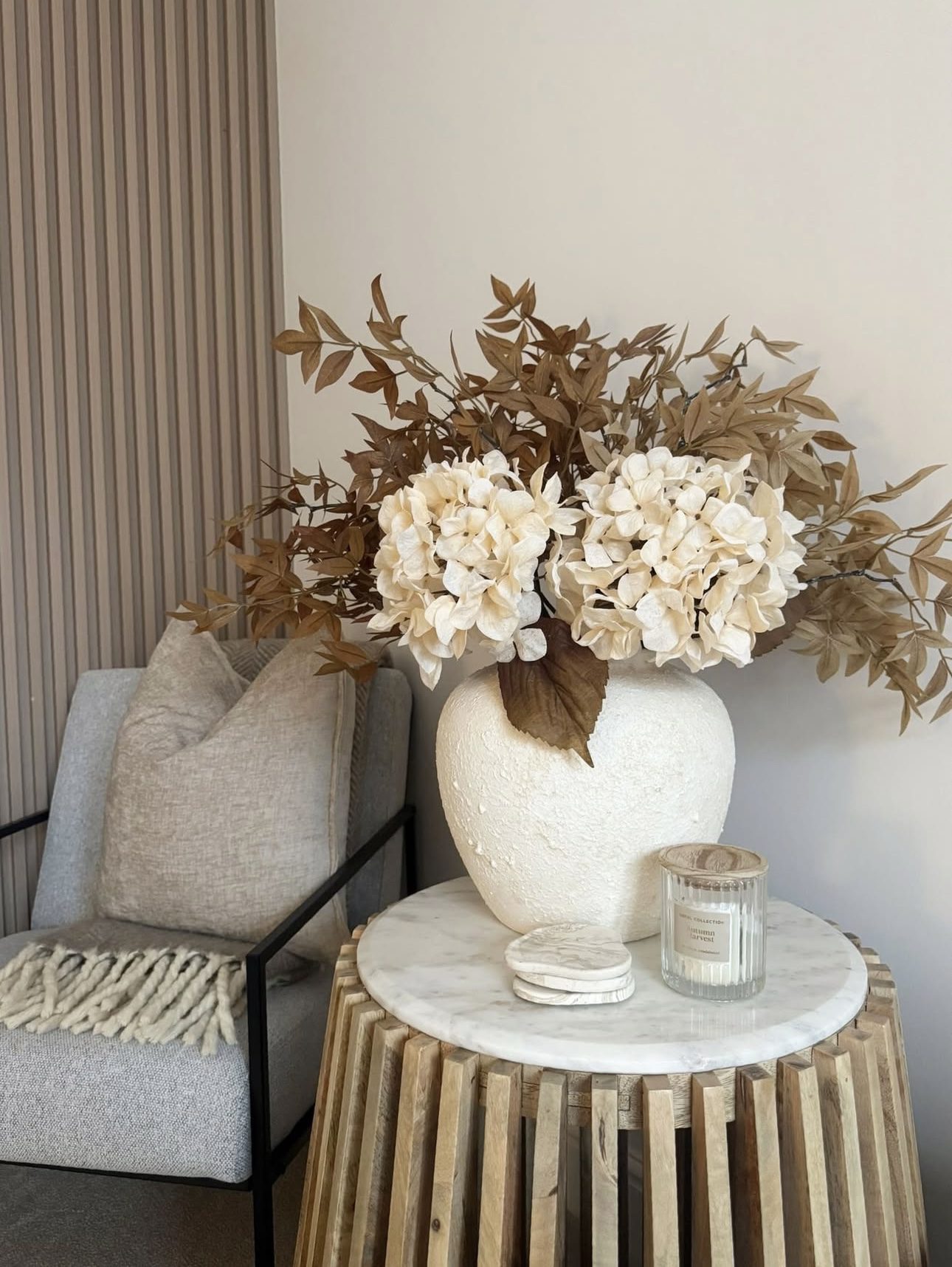
A large, eye-catching vase in calming neutral tones can serve as the sole focal point of your side table. Pair it with a candle or a single accessory, and you’ve got a stylish arrangement that feels intentional without being overdone.
Key Design Elements
- Select a vase with unique texture or shape for added interest.
- Keep surrounding decor minimal to emphasize the statement piece.
- Choose a candle with a subtle scent to enhance ambiance.
Pro Tip: Use dried or faux flowers in the vase to maintain a year-round display without extra upkeep.
12. Simple Tray Arrangement for Seamless Style
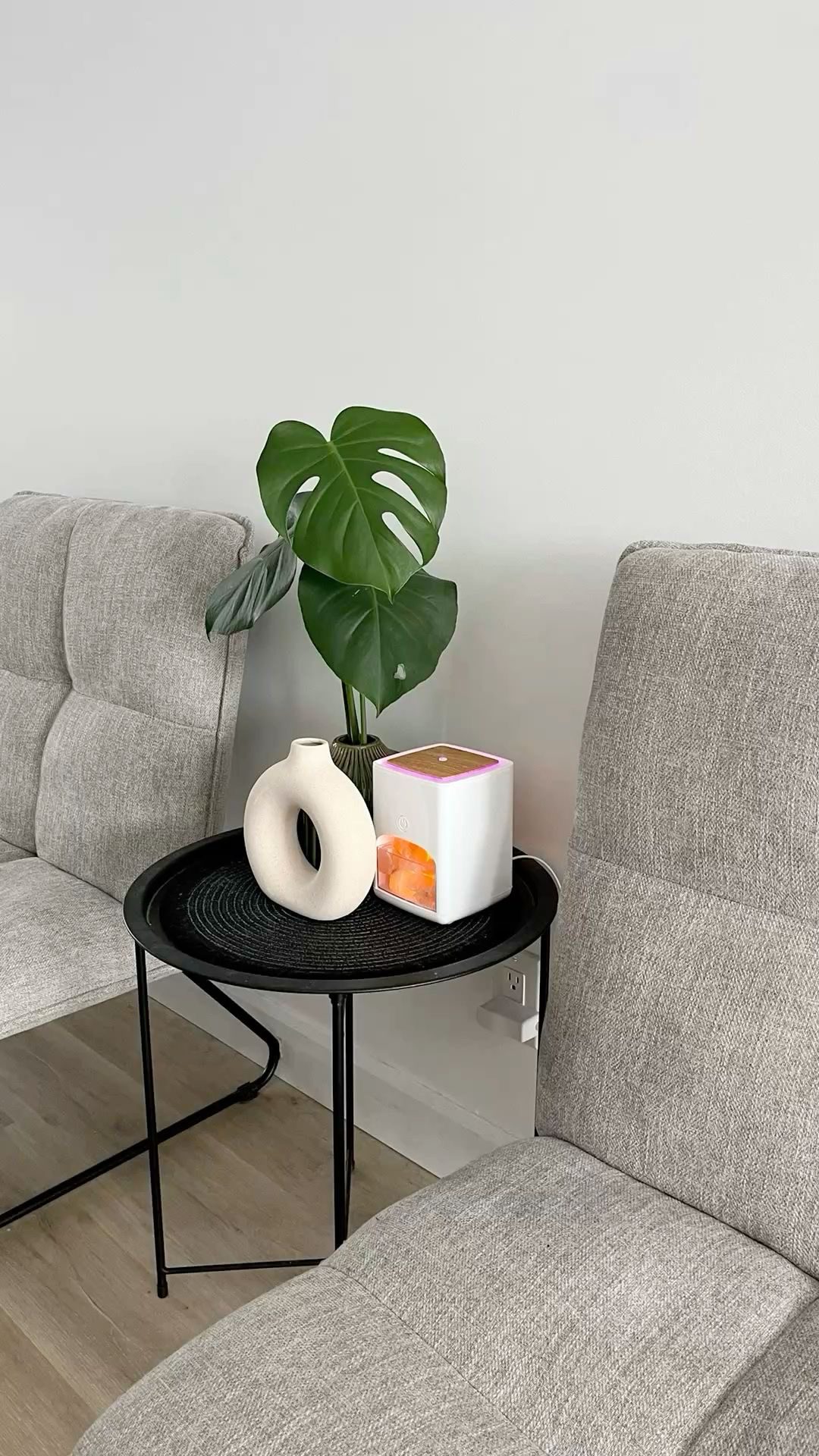
Placing a small tray on your side table instantly organizes your decor and makes the entire setup look cohesive. Combining one sculptural object with softer items like a candle or plant brings harmony without demanding too much effort.
Key Design Elements
- Choose trays in materials that compliment your table’s finish.
- Mix varying textures for visual appeal.
- Limit small items to avoid overcrowding the tray.
Pro Tip: Switch tray contents seasonally for a quick and easy style refresh.
13. Symmetrical Arrangement Between Seating
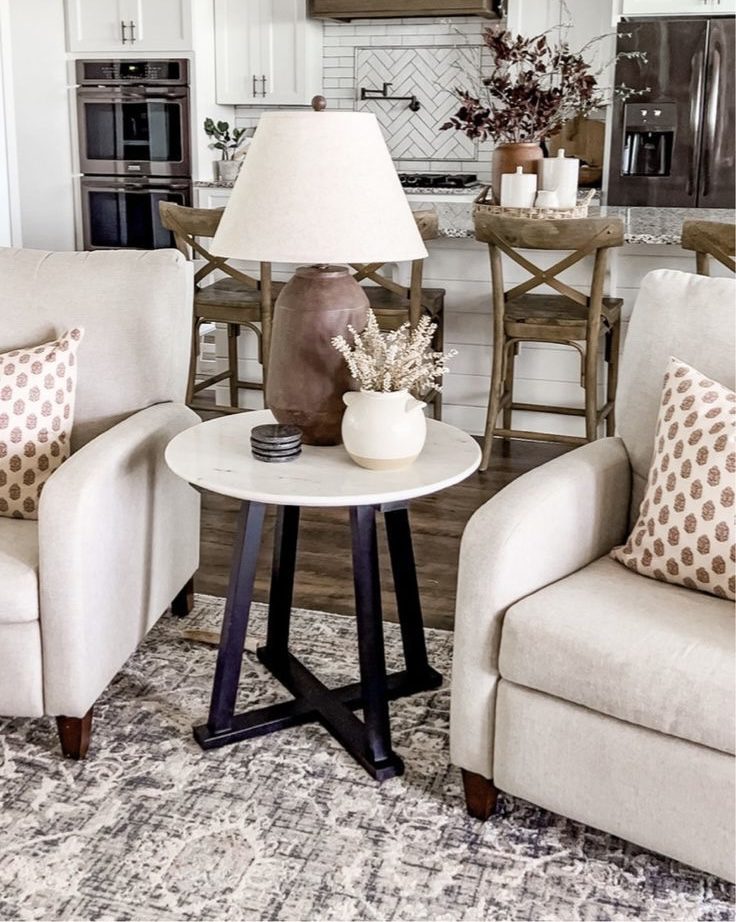
Positioning a side table between two chairs calls for balanced styling. A centrally placed lamp flanked by a candle or small decorative piece creates symmetry that anchors the seating area without appearing too staged.
Key Design Elements
- Choose lamps with adjustable brightness for functional lighting.
- Keep decorative elements simple and proportionate.
- Use decor that complements the seating’s color scheme.
Pro Tip: Incorporate soft textiles nearby to enhance the inviting atmosphere.
14. Comfort-Driven Everyday Setup
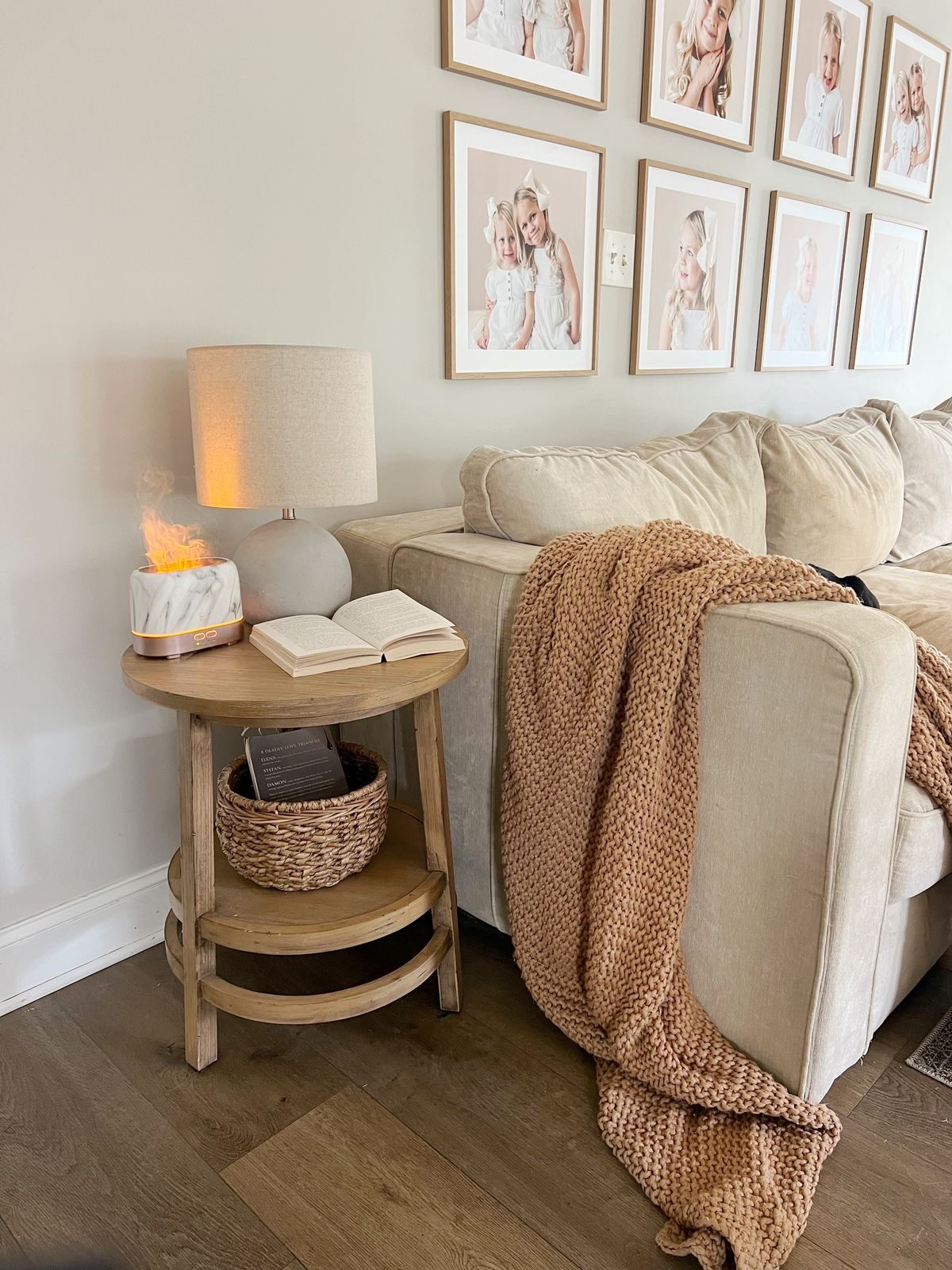
For a side table that feels genuinely lived-in, include items like a softly glowing lamp, a casually open book, and a nearby throw blanket. This style invites use and relaxation, blurring the line between decor and daily comfort.
Key Design Elements
- Use warm lighting to create a cozy ambiance.
- Keep favorite books or magazines within easy reach.
- Add soft textures nearby to encourage lounging.
Pro Tip: Rotate reading materials regularly to keep the space feeling fresh and welcoming.
15. Bright and Breezy with Fresh Greenery
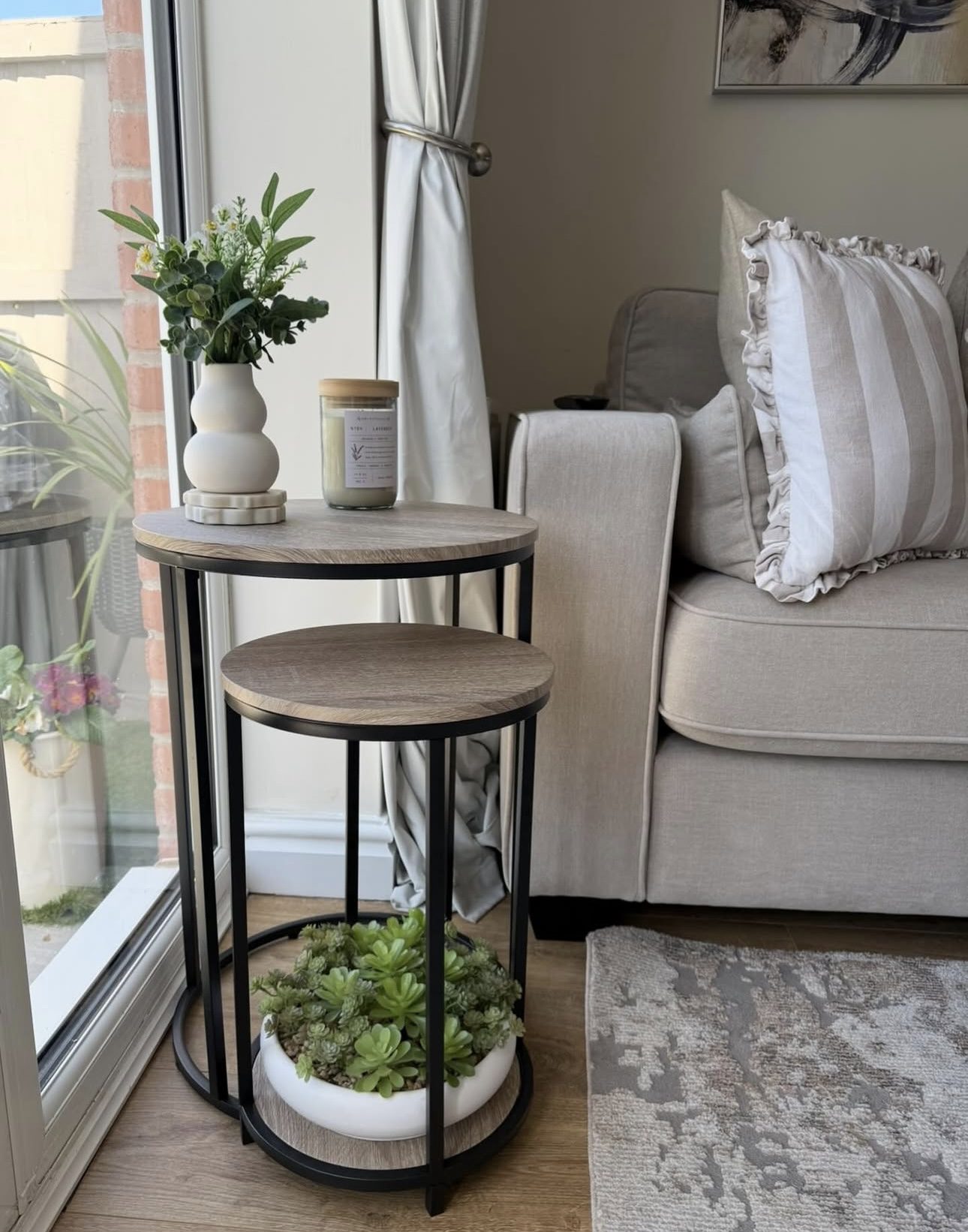
Placing a side table near a window enhances its light and airy feel. A small plant on top with an additional one tucked underneath brings subtle life to the space without overwhelming it, keeping the overall look calm and natural.
Key Design Elements
- Use plants that thrive in indirect sunlight.
- Keep decor minimal to maximize natural brightness.
- Select light-colored furniture to enhance the airy vibe.
Pro Tip: Position side tables where they can catch morning light to energize the space.
16. Dual Tables for Stylish Flexibility
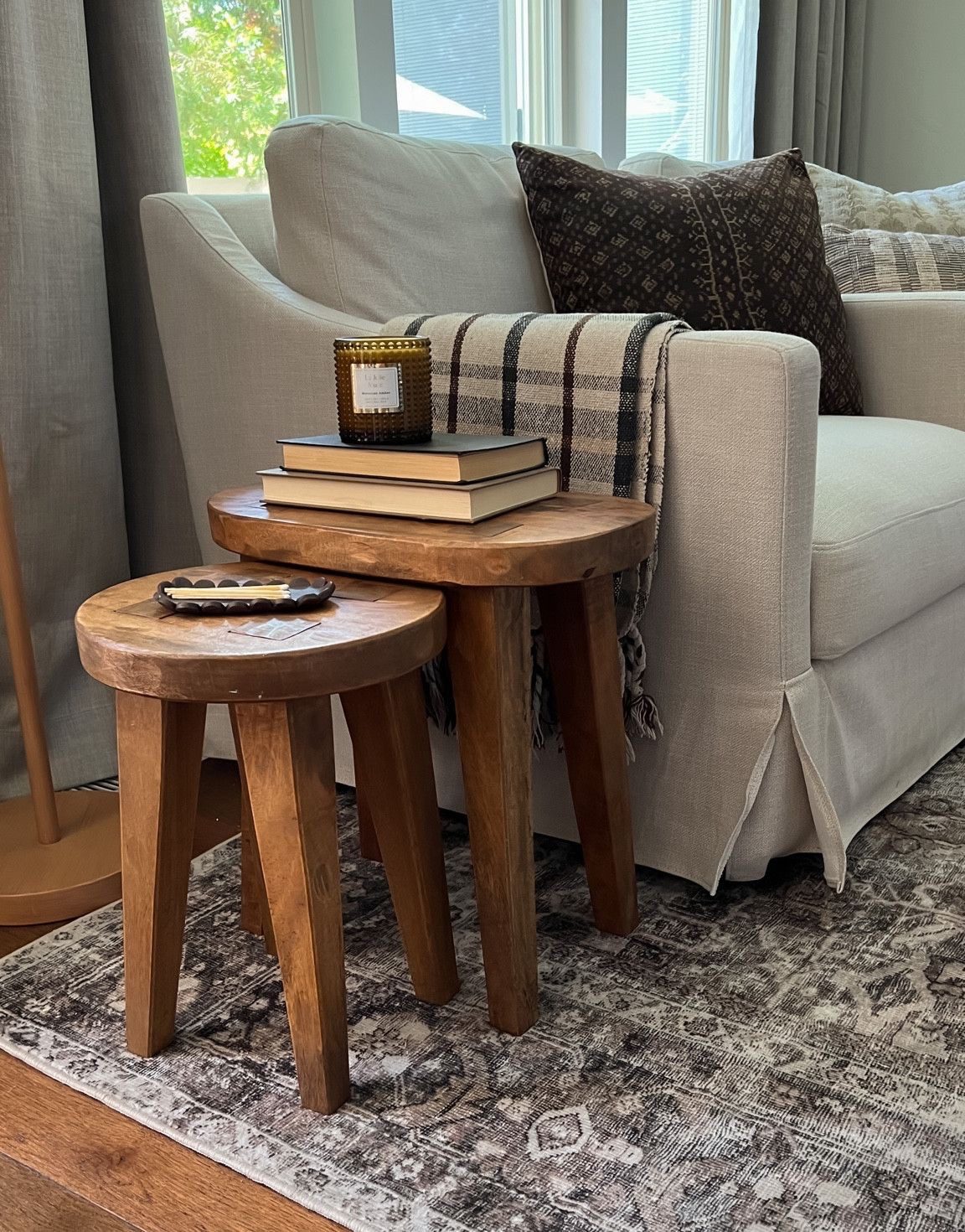
Pairing or stacking two smaller tables offers expanded surface area without feeling bulky. This strategy helps separate decorative items from everyday essentials, creating a layered, purposeful look that’s perfect for multi-use spaces.
Key Design Elements
- Mix and match table shapes or heights for visual interest.
- Use one table to showcase decor, the other for functional items.
- Keep color palettes consistent for cohesion.
Pro Tip: Use nesting tables to save space when not in use and pull them out as needed.
17. Light Wood and Soft Layering
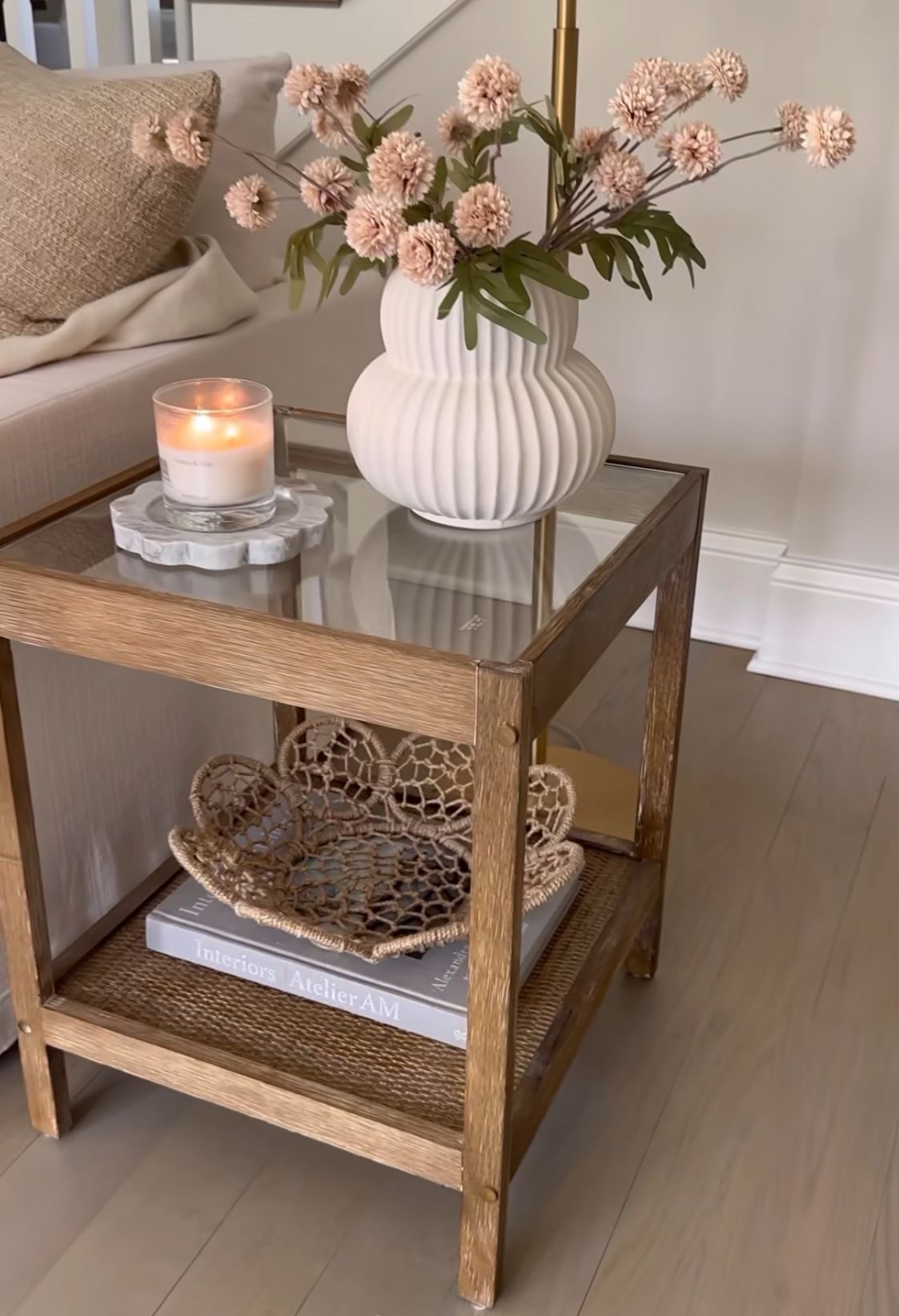
A side table in light wood tones paired with a few soft layers underneath achieves a balanced, airy aesthetic. The additional shelf provides extra styling space, making it easier to keep the top uncluttered while still adding interest.
Key Design Elements
- Choose pale woods for a fresh, natural look.
- Stack books or textiles on the lower shelf for texture.
- Limit top decor to one or two statements for balance.
Pro Tip: Incorporate neutral-colored accessories to keep the light and airy theme consistent.
18. Texture-Rich Neutrals for Depth
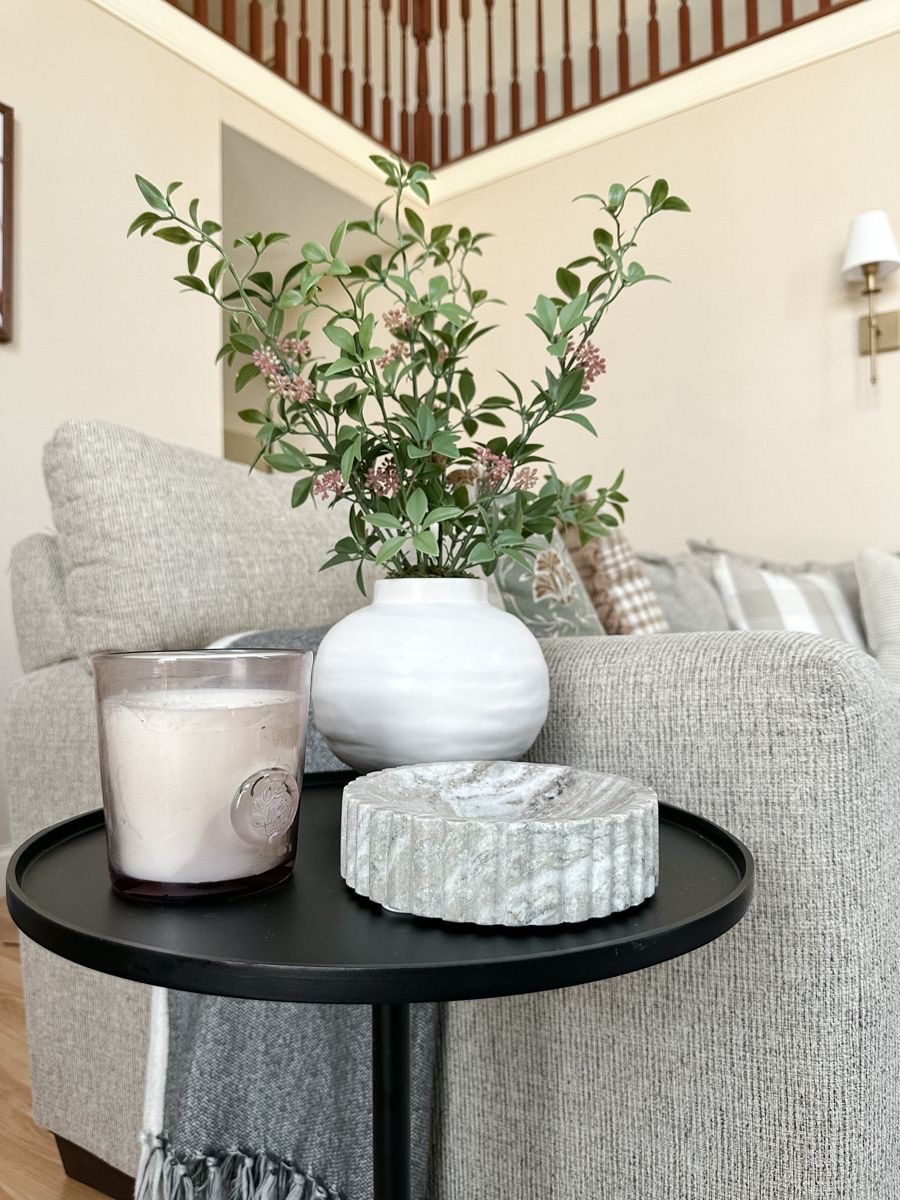
Styling with a variety of natural materials—ceramic, linen, wood, and glass—in the same neutral color family infuses your side table with tactile interest. This approach creates a sophisticated yet understated look that feels layered without clutter.
Key Design Elements
- Mix matte and glossy finishes for contrast.
- Choose soft fabrics to add warmth.
- Incorporate handcrafted or artisan pieces for uniqueness.
Pro Tip: Use a textured runner or small fabric piece under decor to add dimension.
19. Organic Textures Enhanced by Simple Greenery
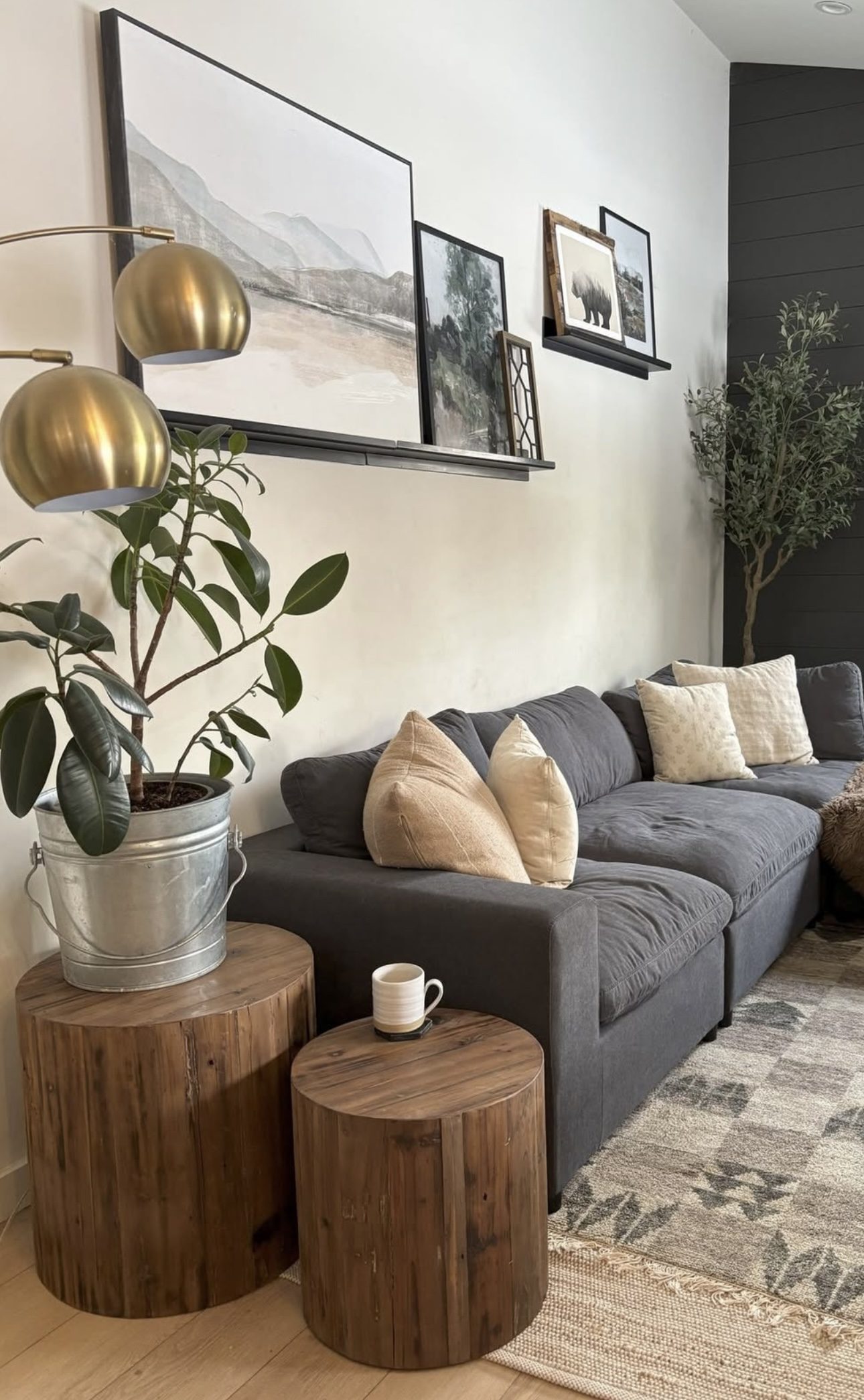
A relaxed, natural style emerges by pairing wooden elements with soft cushions and simple plants. The side table itself remains understated, allowing greenery to bring freshness and an organic feel to the corner.
Key Design Elements
- Opt for natural woods with visible grain for authenticity.
- Use cushions or throws that match the table’s aesthetic.
- Choose plants with soft, flowing foliage to complement textures.
Pro Tip: Mix and match natural materials to create a cozy, grounded space.
20. Effortless Candle Glow for Warmth
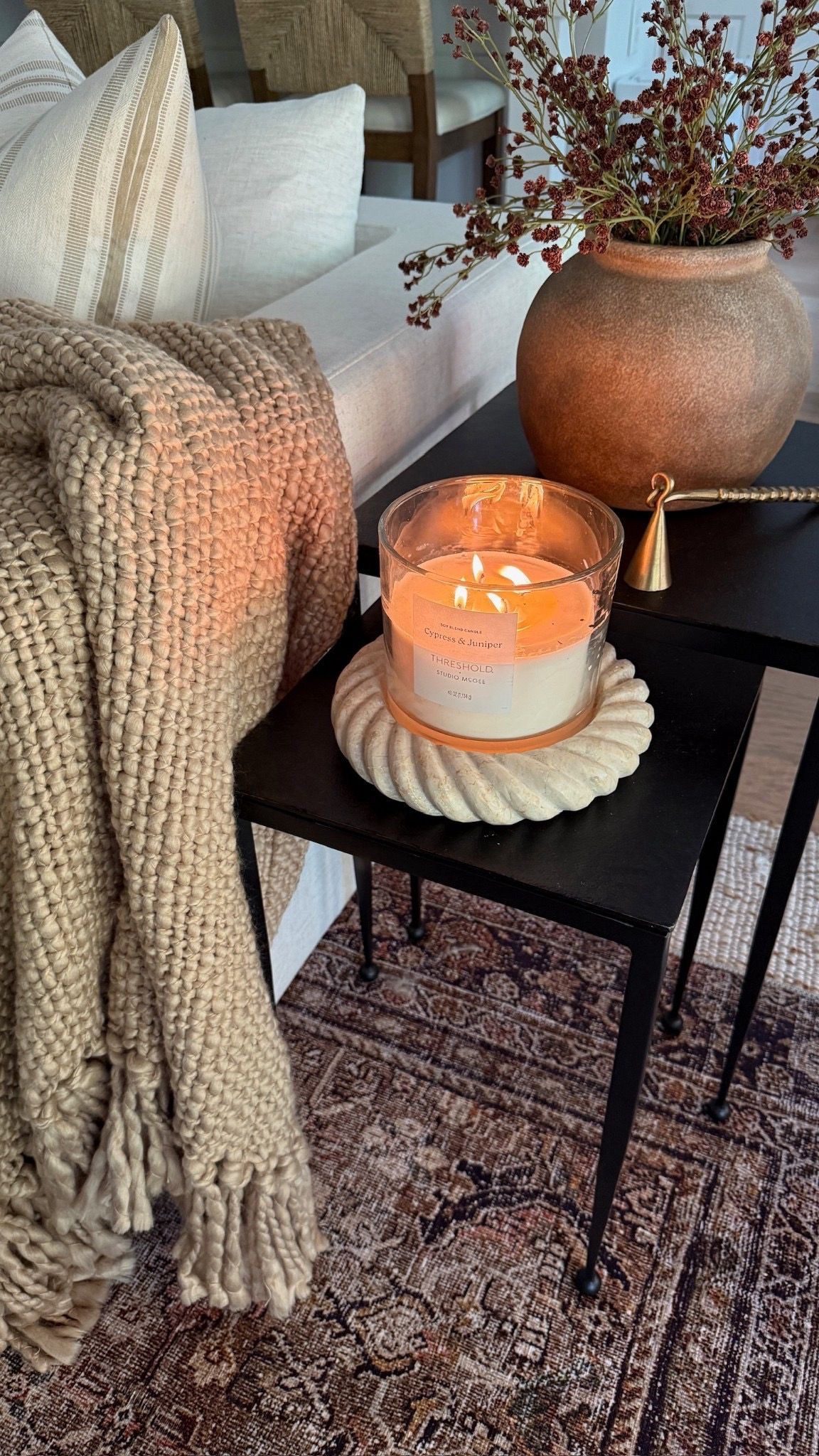
Sometimes all a side table needs is a single candle to uplift the room’s ambience. Placing a candle next to a cozy sofa or chair instantly adds warmth, especially when paired with a nearby soft throw, creating a quietly inviting nook.
Key Design Elements
- Choose candles in neutral holders for versatility.
- Use flameless LED options for safety.
- Keep matches or a lighter handy but out of sight.
Pro Tip: Layer scents subtly by pairing candles with fresh flowers for added sensory depth.
21. Warm Layers of Texture and Tone
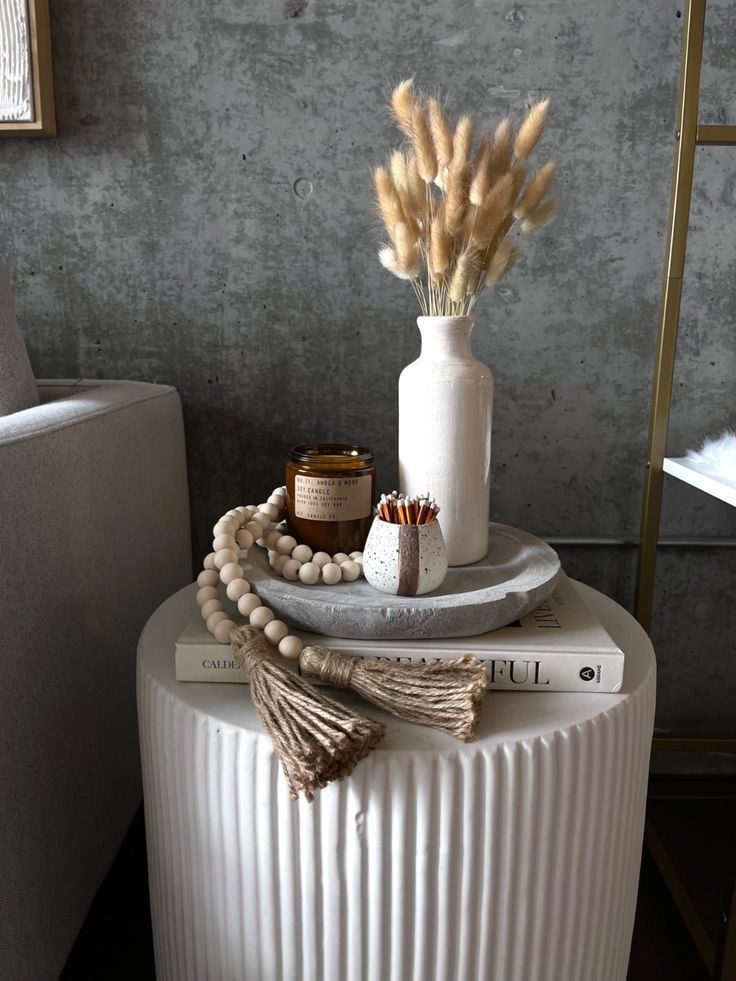
Combining textured accessories like beads, ceramics, and trays in warm, neutral tones adds depth without clutter. This layering technique keeps your side table feeling cozy and inviting, even when sticking to a calm color palette.
Key Design Elements
- Mix rough and smooth textures for tactile interest.
- Choose earthy hues to promote warmth.
- Limit the number of pieces to maintain balance.
Pro Tip: Incorporate natural elements like wood or stone to ground the layered look.
22. Neutral Dried Flowers with Soft Candlelight
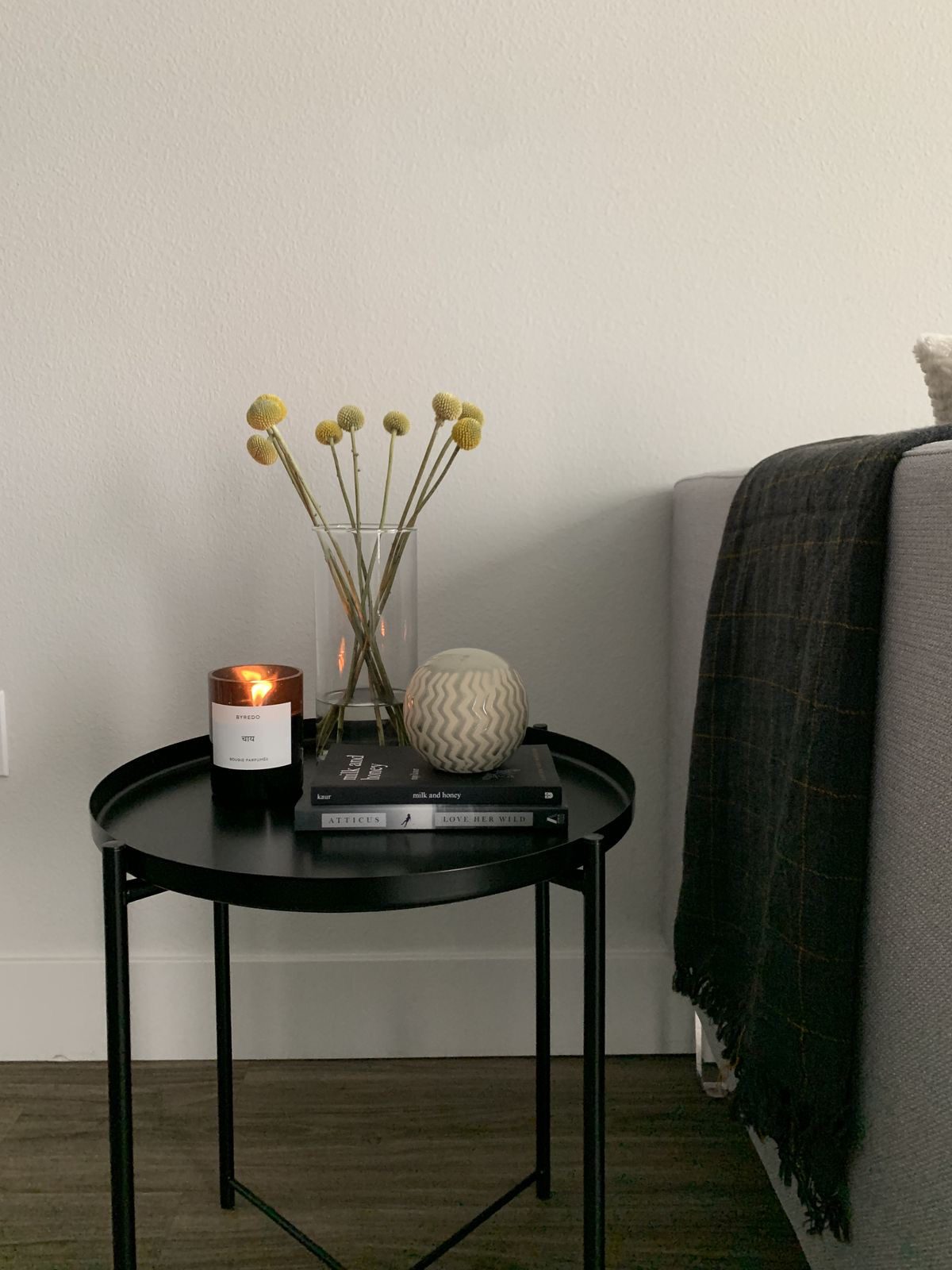
Pairing dried floral stems with the gentle flicker of a candle creates a timeless, cozy atmosphere. Sticking with neutral shades lets this setup transition beautifully through seasons while maintaining a subtle autumnal warmth.
Key Design Elements
- Select dried flowers in beige, cream, or soft browns for versatility.
- Use unscented candles to keep the mood soothing.
- Place the arrangement where it can be appreciated up close.
Pro Tip: Refresh your dried stems annually to prevent dust build-up and keep the display looking fresh.
23. Compact Yet Complete Styling
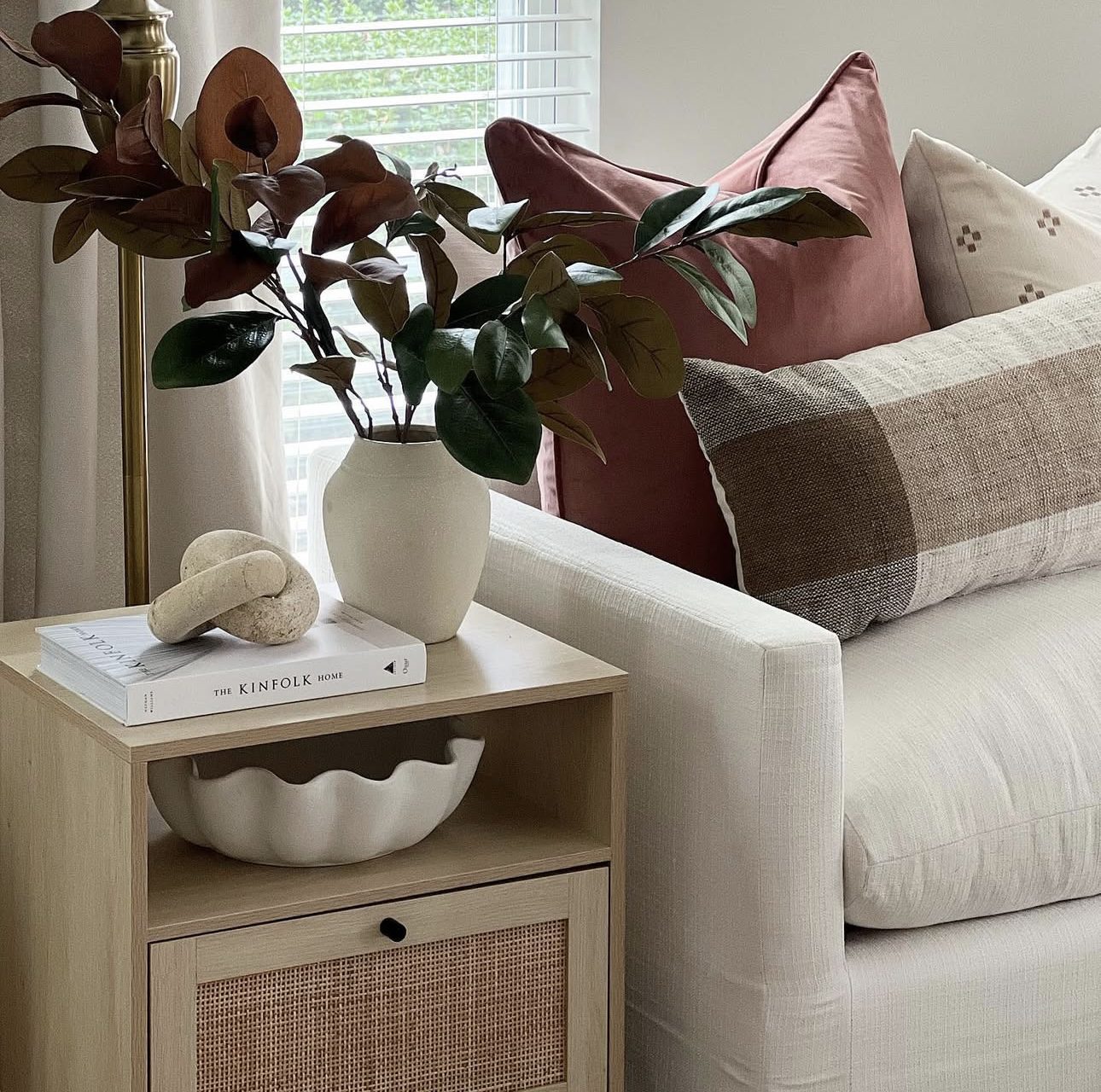
Even the smallest side tables can look intentional with the right elements. A simple vase, a favorite book, and a small decorative bowl below create a polished and realistic setup that fits seamlessly into everyday living.
Key Design Elements
- Select decor that fits the scale of the table.
- Use multifunctional items to maximize space.
- Embrace simplicity for clutter-free style.
Pro Tip: Rotate items seasonally to keep the compact setup feeling fresh and relevant.
24. Curated Tray Displays for Organized Charm
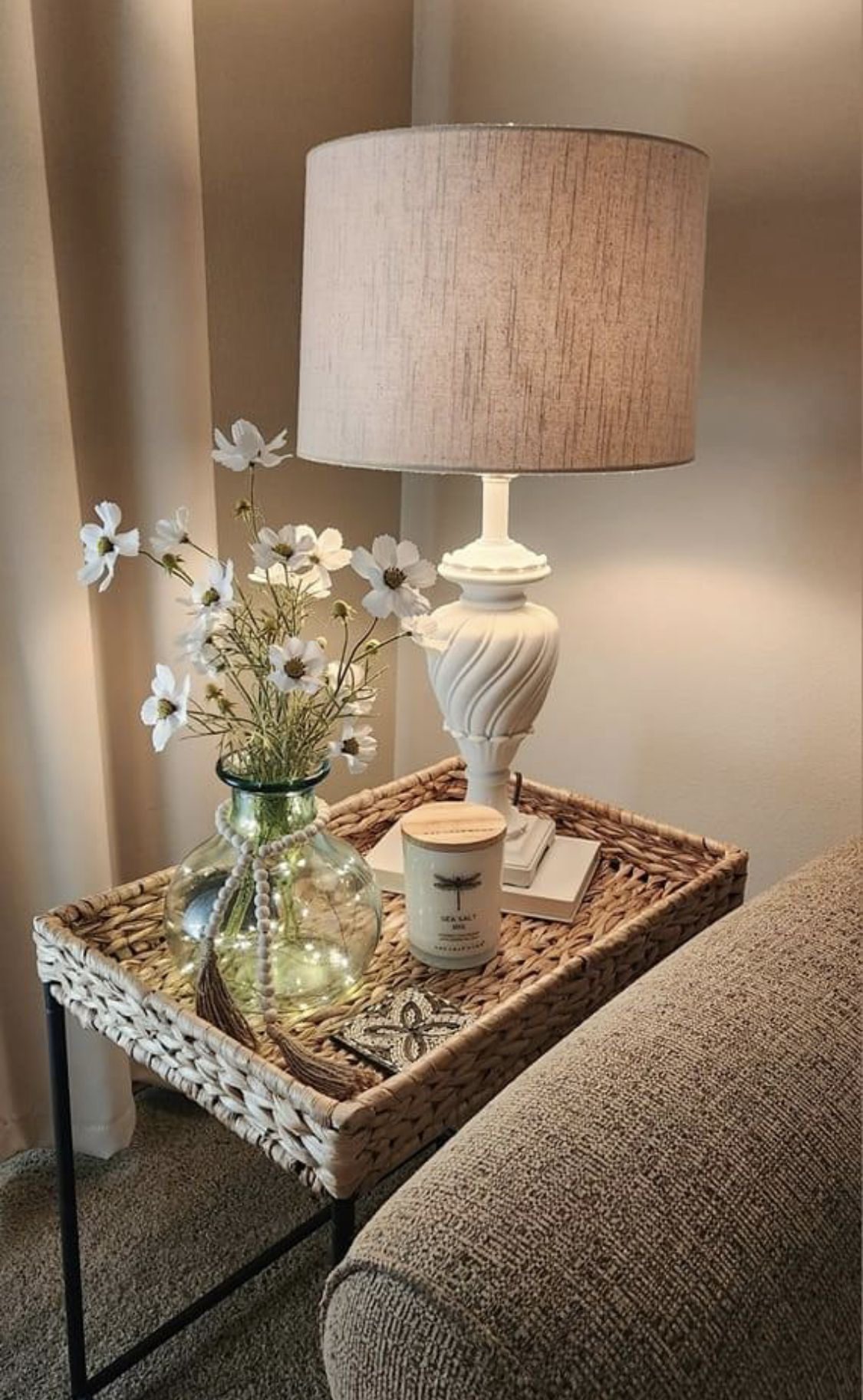
Using a tray to group small decor pieces creates a curated, intentional vibe even if the items are varied. Including glassware, candles, and fresh flowers prevents the display from feeling flat and keeps your side table looking serene and collected.
Key Design Elements
- Choose trays with raised edges to keep items contained.
- Mix transparent and opaque pieces for depth.
- Limit the number of objects to avoid visual overload.
Pro Tip: Use trays in contrasting materials like metal or wood to add subtle texture variety.
25. Creating an Inviting Corner Vibe
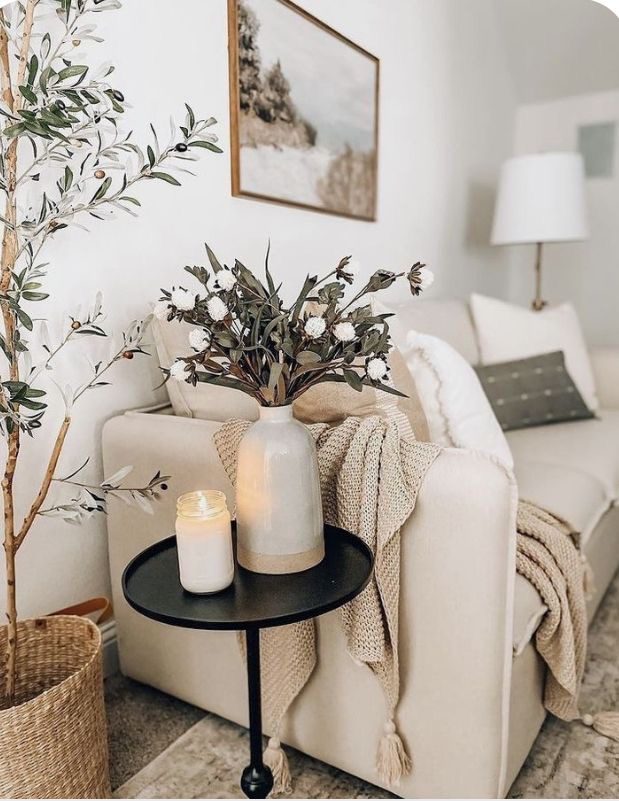
Beyond just the side table, styling the entire corner with a candle, a decorative vase, and a soft throw encourages a welcoming spot to unwind. This layered approach makes the area feel cozy and encourages lingering with a cup of tea or a good book.
Key Design Elements
- Use warm lighting to set a relaxing mood.
- Add tactile elements like soft throws for comfort.
- Keep decor cohesive for a harmonious corner.
Pro Tip: Include a small footstool or pouf nearby to enhance relaxation and usability.
26. Real-Life Charm with Slightly Imperfect Details
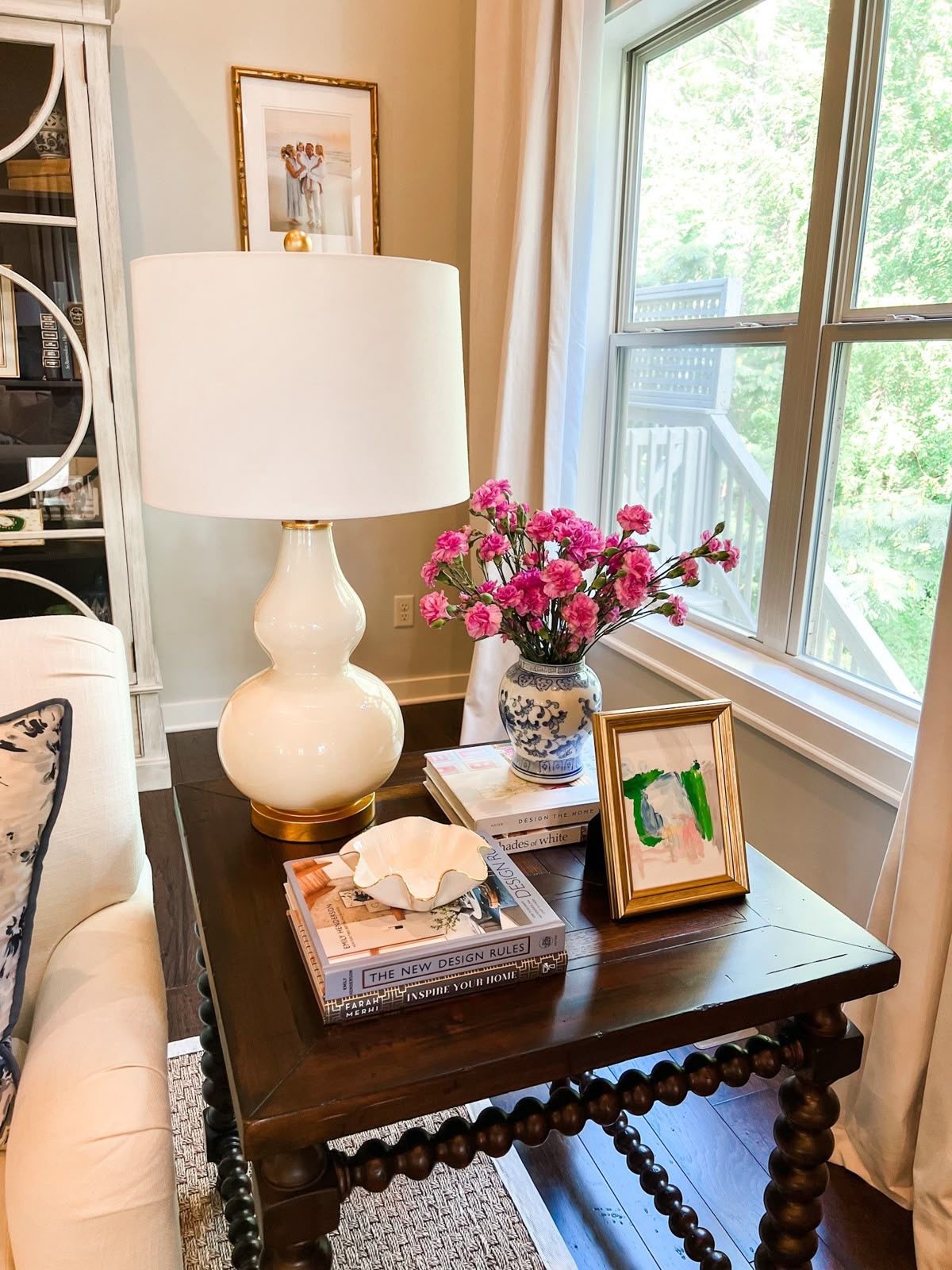
This approachable styling embraces a lived-in look with a lamp, a casually placed photo frame, and loosely arranged flowers. The relaxed imperfection adds personality and makes your side table feel authentically part of your home.
Key Design Elements
- Allow flowers to look natural rather than overly arranged.
- Place personal photos for warmth and nostalgia.
- Keep lighting soft and approachable.
Pro Tip: Regularly swap out flowers or photos to keep the display feeling fresh yet familiar.
27. Polished Elegance with Height and Structure
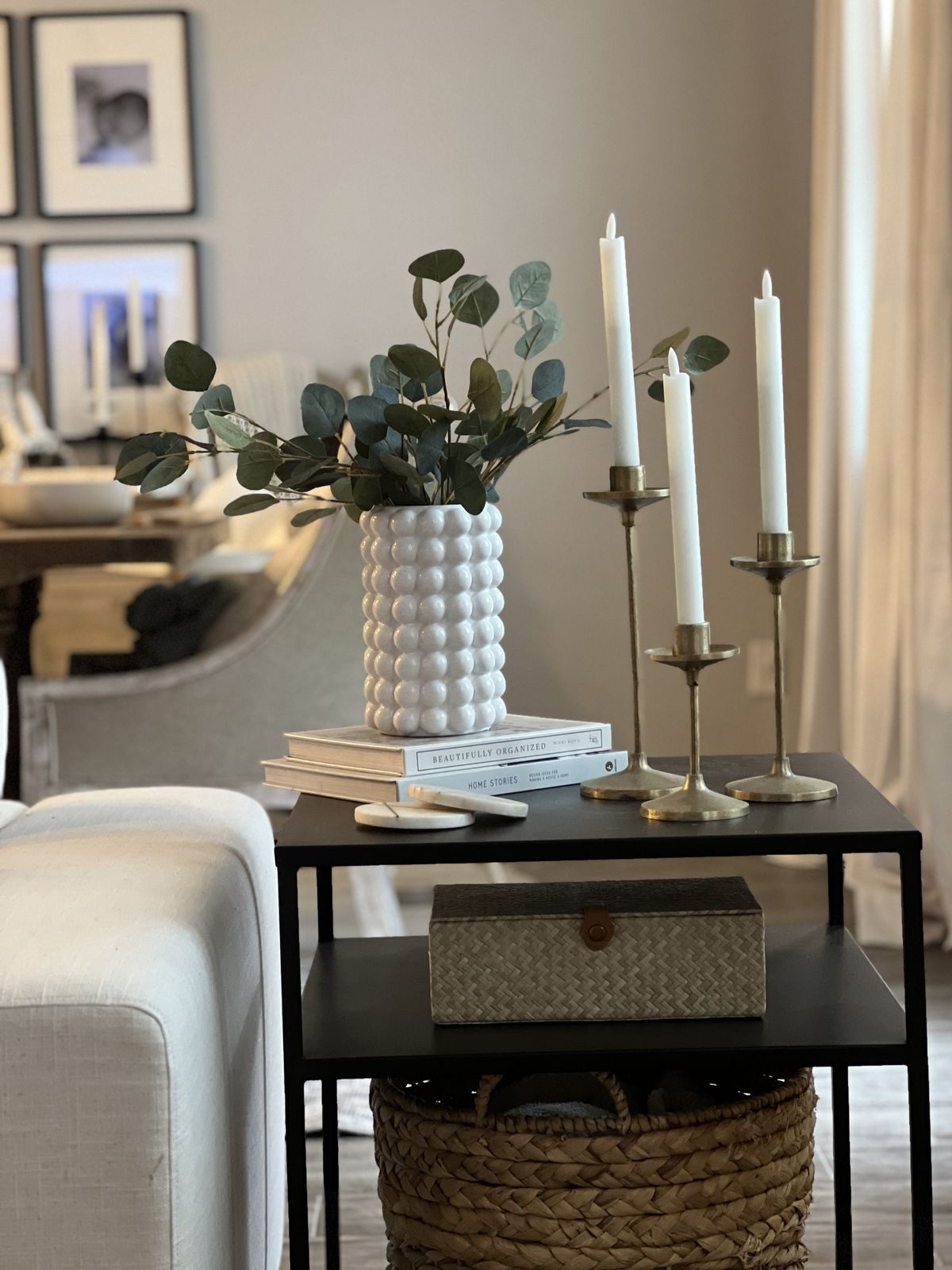
For a more refined side table look, taller candles and a structured vase add vertical interest and sophistication. This setup feels orderly and purposeful, ideal for spaces where a touch of formality is desired without feeling rigid.
Key Design Elements
- Use candle holders of varying heights for balance.
- Opt for sleek vases with clean lines.
- Keep color palettes simple and coordinated.
Pro Tip: Incorporate metallic accents in accessories to elevate the polished vibe.
28. Rustic Layers for Cozy Warmth
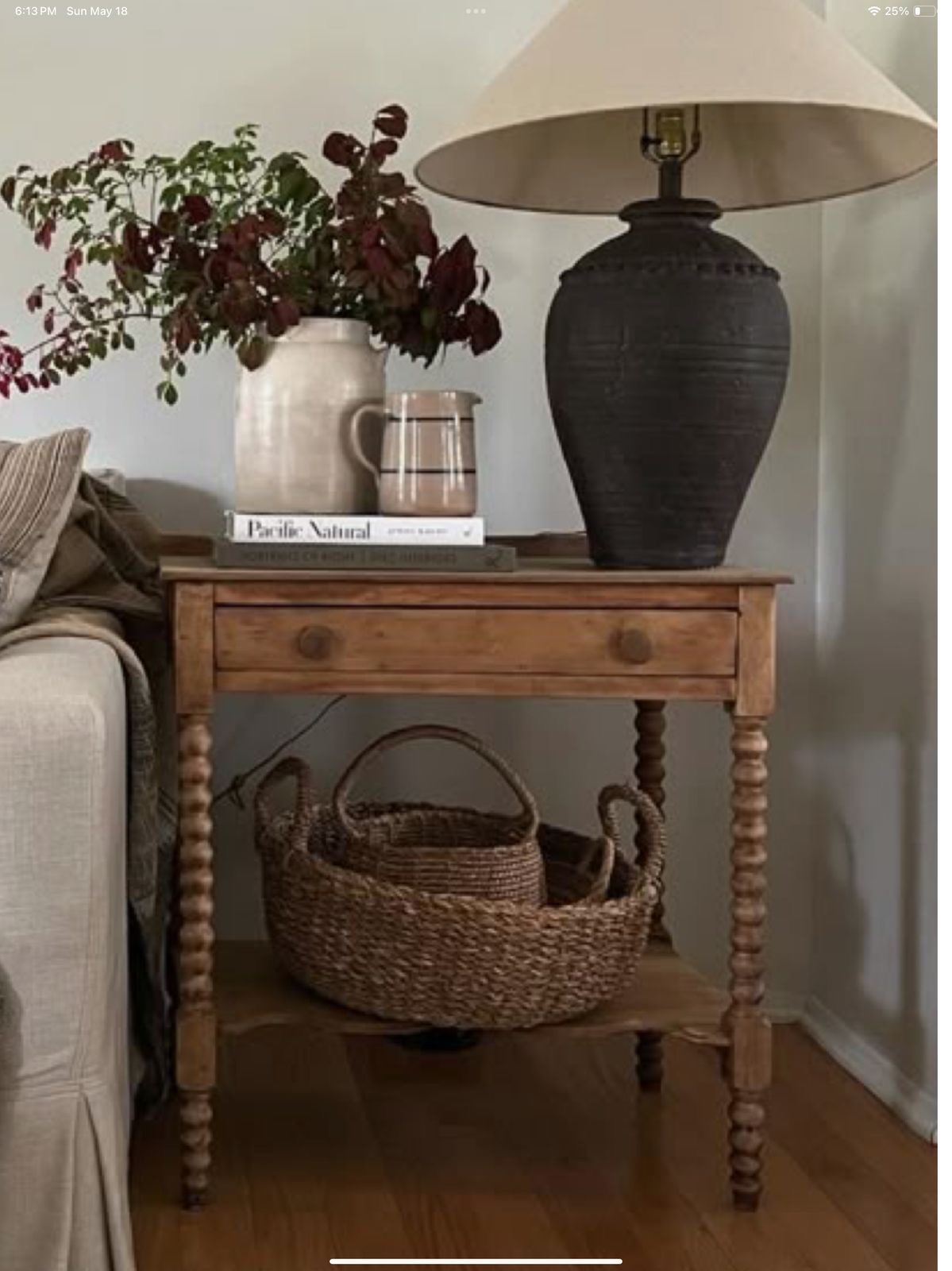
Embracing rustic wood tones combined with textured baskets beneath creates a warm, layered effect. This slightly rugged styling feels natural and inviting, perfect for homes that favor comfort over perfection.
Key Design Elements
- Use natural fiber baskets for added texture.
- Keep wood finishes matte or lightly distressed.
- Layer soft textiles nearby to enhance coziness.
Pro Tip: Mix and match rustic pieces with more refined elements to avoid a heavy or overly casual look.
29. Dark Furniture Balanced with Soft Accents
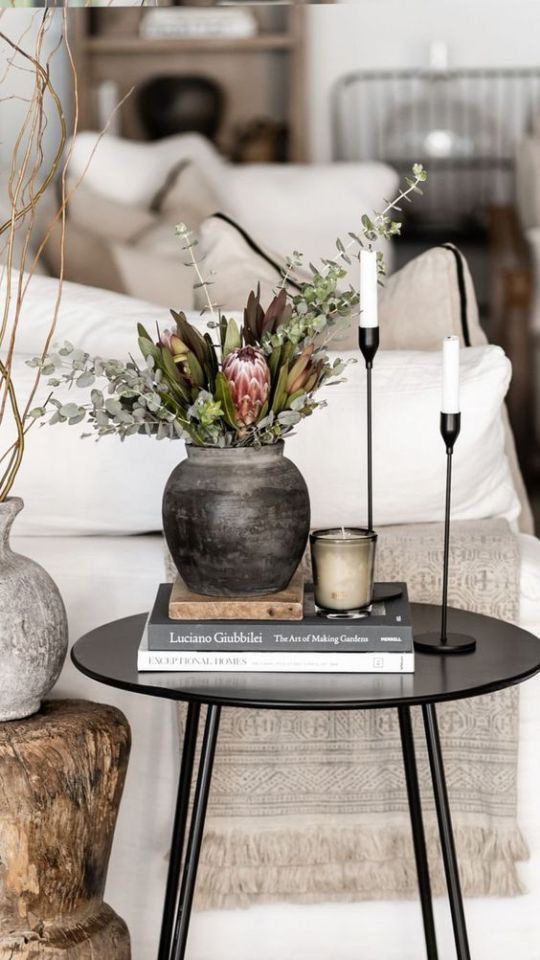
A dark-hued side table can feel imposing if left bare, but adding lighter accents such as flowers and candles creates a pleasing contrast. This balance keeps the space feeling dynamic and prevents the furniture from appearing too heavy.
Key Design Elements
- Pair dark tables with light-colored or metallic decor items.
- Use soft, organic shapes to counterbalance the table’s weight.
- Add candles for warmth and visual softness.
Pro Tip: Incorporate reflective surfaces like glass or polished ceramics to brighten darker tables.
30. Simple Symmetry for Easy Balance
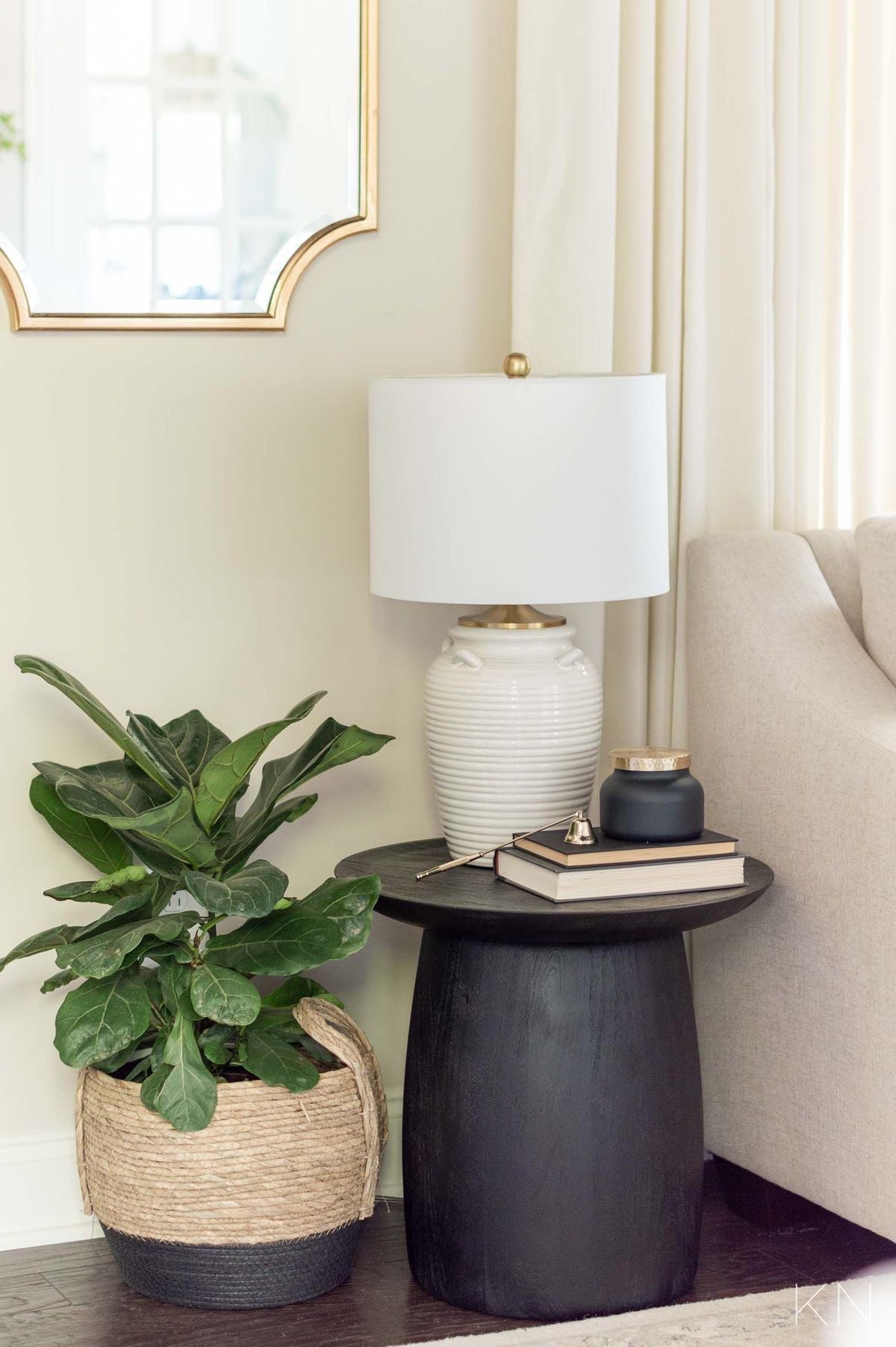
When in doubt, keep your side table styling straightforward: a lamp on one side paired with a small plant or candle on the other creates a clean, balanced look. This timeless setup works well in nearly any room and never feels overthought.
Key Design Elements
- Choose decor pieces with complementary heights.
- Keep color schemes neutral for versatility.
- Maintain clear space to avoid clutter.
Pro Tip: Use symmetry as a base but feel free to add one unexpected element to keep things interesting.
Final Thoughts
Styling your side table is an opportunity to bring personality, warmth, and function to a small yet impactful part of your home. Whether you prefer a cozy candlelit nook, a fresh green centerpiece, or a minimalist arrangement with a personal touch, these ideas prove that thoughtful decor can make any side table shine.
Remember, the best styled tables are those that reflect your lifestyle and preferences while enhancing your space’s comfort and beauty. Use these tips as inspiration to create an end table setup that feels uniquely yours and effortlessly inviting.
Leave a Reply