Small spaces don’t have to look cramped. In fact, with the right space-saving decor ideas we can make tiny rooms feel calm, functional, and intentionally styled, not like a storage unit. This 2026 guide focuses on practical, stylish tricks that reduce visual clutter while keeping living areas usable and inviting. We’ll explain why visual clutter makes small rooms feel worse, outline core design principles, and give hands-on solutions: multifunctional furniture, vertical storage strategies, decorative containers, and smart use of color and lighting. Read on and you’ll come away with actionable ideas you can apply today, whether you’re in a studio, a narrow hallway, or a family home with tight corners.
Why Visual Clutter Hurts Small Spaces — And How Better Design Helps
Visual clutter is more than an aesthetic gripe: it changes how we perceive space and how we feel inside it. When surfaces are piled, walls are busy, and items are uncontained, our brains register chaos. That adds stress and makes rooms feel smaller than they are. In small apartments and modest rooms, every object competes for attention: a mismatched stack of books, cords, random décor, and overflowing furniture can fragment sightlines and make circulation feel awkward.
Better design reduces competing elements and creates intentional focal points. Instead of trying to cram storage solutions everywhere, we prioritize a few tidy zones: a clear pathway, one accent wall, and designated storage that hides what we don’t need every day. This is where space-saving decor ideas earn their keep, they combine function with restraint. For example, selecting furniture with hidden storage or choosing consistent containers means fewer visual interruptions. The result is a space that reads as larger, calmer, and more thoughtfully curated. We’ll show practical tactics that accomplish that balance without turning your home into a minimalist showroom you can’t actually live in.
Core Principles Of Clutter-Minimizing Decor
Before choosing pieces, we follow a set of core principles that guide every decision and keep clutter at bay.
- Edit ruthlessly: The single most effective move is removing what we don’t use. Less stuff equals fewer visual interruptions. We recommend a seasonal edit, quarterly quick passes to purge and rehome extras.
- Group and contain: Objects that belong together should live together. Grouping reduces the visual rhythm of small items and creates tidy islands of purpose: a reading nook, a coffee station, a kid’s play corner.
- Prioritize multifunction: When furniture doubles as storage or a surface becomes a sculptural container, we reduce the number of standalone items that crowd a room.
- Consistent visual language: Choose a limited palette of materials and finishes. When baskets, trays, and furniture share tones or textures, the eye reads them as a cohesive system rather than competing pieces.
- Maintain sightlines and negative space: Leave breathing room around furniture and artwork. Negative space helps the eye rest and makes key pieces feel intentional instead of crowded.
These principles inform the tactical ideas we cover next, each recommendation is meant to be combined rather than applied in isolation.
Choose Multifunctional Furniture That Hides And Serves
Multifunctional furniture is the backbone of most space-saving decor ideas. The right piece gives us storage without adding visual weight.
Start with beds: lift-up platform storage or beds with built-in drawers reclaim under-bed volume that often becomes wasted. Daybeds and sleeper sofas provide seating by day and guests’ beds by night. For living rooms, ottomans with internal storage or coffee tables with drawers keep remotes, throws, and magazines out of sight but within reach.
Dining spaces benefit from extendable tables and benches with hidden compartments. In small kitchens, a cart on casters can store prep gear and tuck against a wall when not in use. Floating desks and wall-mounted fold-down tables create work zones that disappear visually when closed.
When selecting multifunctional pieces, watch for two pitfalls: oversized silhouettes that overwhelm the room and visible clutter inside open storage. Choose streamlined profiles in lighter finishes for small spaces, and pair hidden storage with a disciplined approach to what we store. Functionality is vital, but the goal is to reduce the number of visible objects, not replace them with bulky furniture.
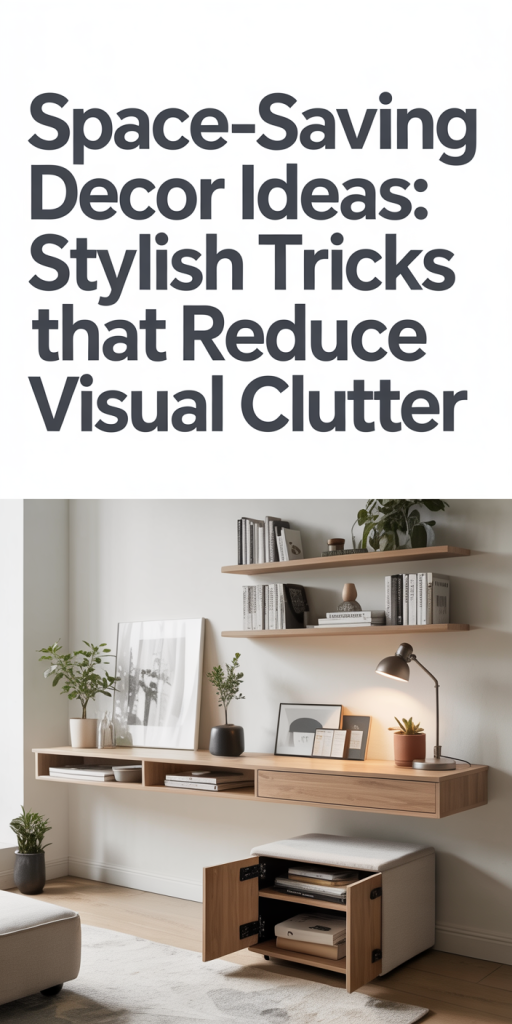
Maximize Vertical Real Estate With Smart Wall Storage
In tight rooms, the floor is precious, we reclaim it by building up. Vertical storage shifts storage load to walls, freeing circulation and expanding perceived space.
The trick is layering: a mix of open shelves for display, closed cabinets for hidden items, and hooks or rails for everyday essentials. Done well, vertical systems become architectural features rather than afterthoughts.
We recommend planning height zones: lower storage for heavier, frequently used items: mid-level for reachable display: and higher shelves for seasonal or infrequent belongings. Use a step stool that tucks away to maintain access without cluttering the floor. Paint higher shelving the same color as the wall to visually push it back: contrast for lower shelves to create intentional focal points.
Vertical storage also helps define zones in open-plan spaces. A tall bookcase with backboard can act as a divider that contains items on both sides while keeping the floor largely open. Next we’ll get specific about shelf types and overhead options that work best.
Decorative Storage That Doubles As Art
Storage doesn’t have to be hidden to reduce visual clutter, it can be beautiful and purposeful. Decorative storage items act like functional art, giving us contained utility while contributing to a curated aesthetic.
Baskets woven in natural tones add warmth and texture, and grouped in sets they look intentional. Trunks serve as coffee tables and hold blankets: choose one with a low profile so it reads as furniture rather than a pile. Stylish bins and lidded boxes in matching colors unify odd-sized items and keep surfaces visually calm.
We can also display select items in deliberate ways: a row of matching glass jars for pantry staples, or a neatly arranged stack of suitcases at the foot of a bed for a travel-inspired vignette. When we display storage, the rule is consistency, common material, color, or scale ties the composition together and prevents it from appearing chaotic.
Decorative storage becomes especially powerful in entryways and open shelving, where it transforms necessary containment into part of the room’s design language.
Use Color, Pattern, And Lighting To Minimize Visual Noise
Color, pattern, and lighting are powerful tools for reducing visual clutter without removing items. A limited color palette ties a room together and reduces the number of competing focal points. We suggest choosing two dominant neutrals and one accent color: repeat them across textiles, containers, and furniture.
Patterns should be scaled and used sparingly. In a small room, large-scale patterns can make surfaces feel busy: instead, opt for subtle textures or one patterned element like a rug or throw. Patterns that echo the room’s color palette feel cohesive rather than chaotic.
Lighting changes perception: well-placed lights create depth and highlight key zones. Layer ambient light with task and accent lighting, a narrow floor lamp near a reading chair, under-cabinet LEDs in the kitchen, or picture lights to draw attention to a single art piece. Good lighting reduces reliance on multiple small lamps or decorative items that contribute to clutter.
Finally, paint storage interiors the same color as their doors to disguise them when closed. When we control color and light carefully, the room feels intentionally edited instead of overwhelmed.
Right-Size Furniture Placement, Scale, And Negative Space
Proper placement and scale turn good pieces into great layouts. A too-large sofa or an awkwardly placed side table can break circulation and create visual crowding. We prioritize appropriately scaled furniture and deliberate spacing to preserve negative space, the unoccupied areas that let the room breathe.
Start by measuring. Know the dimensions of your room and furniture before buying or rearranging. Leave at least 24–30 inches of clear pathway in high-traffic routes: in very tight zones, aim for a minimum of 18 inches but compensate by simplifying surrounding elements.
Orientation matters: floating a sofa away from the wall can create an open, conversational layout, while anchoring a rug under key pieces helps define zones without extra furnishings. Use low-profile furniture to maintain sightlines: legs that expose floor beneath pieces give the impression of more space than solid bases.
We also recommend single-purpose focal points: a statement mirror can reflect light and amplify perceived size, while a single oversized artwork creates drama without visual clutter. Resist the urge to fill every wall, negative space is an intentional design choice. In practice, right-sizing is about restraint and clarity: choose fewer, better things and position them to honor movement, light, and sightlines.
Conclusion, Quick Takeaways and Next Steps
We’ve covered a toolkit of space-saving decor ideas that reduce visual clutter while keeping spaces warm and functional. To start: edit belongings, invest in multifunctional pieces, build upward with vertical storage, and use decorative containers that unify rather than scatter. Pay attention to color, scale, and lighting, those subtle moves deliver big perceptual gains. Try one change this weekend: swap a messy coffee table for a storage ottoman or add a row of hooks in your entry. Small, consistent edits compound quickly, and before long, your place will feel calmer, larger, and more intentionally yours.
Leave a Reply