We’ve all been there: an apartment that feels cozy until the clutter makes it claustrophobic. The good news is you don’t need a renovation or a storage unit to reclaim space. With a few smart apartment storage hacks, the right mindset, a handful of multipurpose pieces, and creative use of overlooked vertical and under-furniture space, we can dramatically increase usable room. In this guide we’ll walk through how to assess what matters, squeeze storage out of walls, doors, ceilings, and underbeds, and choose hidden-storage furniture that actually works. These are practical, renter-friendly strategies you can carry out in a weekend with basic tools and a modest budget. Read on to learn 25 clever ways to create more room without remodeling, including tips that save time, keep things visible yet tidy, and preserve your security deposit.
Take Stock: How To Assess Space, Priorities, And Storage Needs
Before we buy baskets or hang shelves, we take stock. A quick, honest assessment saves money and prevents trial-and-error. Start with three simple steps:
- Map the space. Walk through your apartment with a notebook or phone and note every underused zone, tops of closets, the space above the fridge, corners, the area under the bed, blank wall runs. Take photos so you can compare “before” and “after.”
- Audit your belongings. Sort items into four piles: keep (daily use), seasonal, sentimental, donate/sell. Be ruthless. If something hasn’t been used in 12–18 months and doesn’t carry real sentimental value, it’s a candidate for donation. We often overestimate what we need: an audit reveals the real demand for storage.
- Prioritize by frequency and visibility. Store daily-use items within easy reach: tuck seldom-used or seasonal items into harder-to-access spots. Make a running list of problem areas (e.g., shoes by the front door, cookware crowding cabinet shelves) and assign a priority score: high (fix now), medium (fix soon), low (defer).
Measure before you buy. We always measure heights, widths, and depths of potential storage zones, door frames, closet interiors, alcoves, then shop with those dimensions. That avoids returns and ensures solutions like under-bed boxes, tall shelving units, or over-the-door organizers really fit.
Finally, set simple rules to keep clutter from returning: a one-in-one-out policy for duplicates, a monthly 10-minute tidy, and labeled bins so everyone in the household knows where things go. These governance steps make physical hacks effective over time.
Go Vertical: Shelving, Hooks, And Tall Storage Strategies
Vertical real estate is the low-hanging fruit in small apartments. When floor space is scarce, look up.
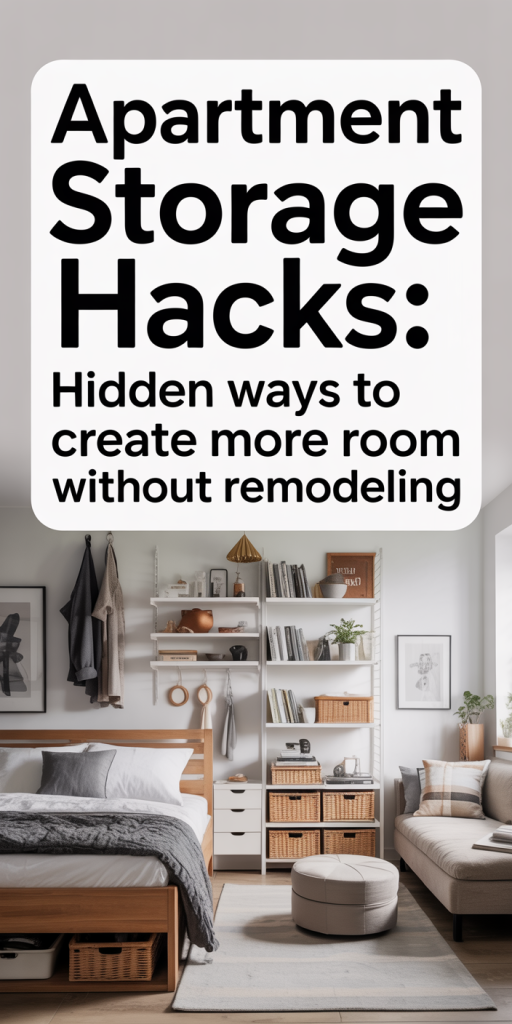
Install tall shelving. A 7–8 foot tall open shelving unit uses the same footprint as a small bookcase but multiplies storage. Place heavier items on lower shelves and lightweight or decorative boxes up top. Use matching bins or woven baskets to keep the visual clutter down, uniform containers make tall shelves appear intentional rather than chaotic.
Create a wall ladder. Leaning ladder shelves or wall-mounted ladder racks bring storage and style. They’re perfect for bathrooms (towels, baskets), living rooms (plants, books), and entryways (hats, mail trays). Choose thin profiles to keep the aisle clear.
Use hooks strategically. Install heavy-duty hooks behind doors, on entryway walls, and inside closets for bags, jackets, hats, and belts. A row of staggered hooks on a narrow wall can hold multiple items without taking up depth. For renters, use removable adhesive hooks rated for the load to avoid drilling.
Think modular. Modular wall systems or floating shelving panels let us customize spacing for books, plants, and decor. Systems with adjustable brackets let us adapt as storage needs change.
Stack vertically inside cabinets. Add a stackable shelf or riser in kitchen cabinets to double shelf capacity for mugs and plates. Similarly, tiered organizers in the pantry make cans visible and accessible without wasted vertical space.
Small touches: use door-top shelves (for light items), magnetic knife strips in kitchens, and vertical file holders on desks to keep counters clear. By consistently thinking upward, we multiply storage without eating valuable floor space.
Hidden-Storage Furniture: Dual-Purpose Pieces That Save Space
Hidden-storage furniture is the backbone of efficient apartment living. We want pieces that serve at least two functions, sitting plus storing, sleeping plus stashing, so every square foot works harder.
Ottomans with storage. A large upholstered ottoman with a lift-top stores blankets, books, or board games while doubling as seating or a coffee table. Look for models with hinges and a gas-lift mechanism for easy access.
Beds with drawers or platforms. Platform beds with integrated drawers or a slatted base that accommodates rolling bins reclaim under-bed volume while offering a solid sleep surface. For renters who can’t switch beds, under-bed rolling containers with low profiles and wheels are a great alternative.
Sofa beds and daybeds. Choose sofas with built-in storage beneath the seat cushions or convertible daybeds that tuck extra bedding into their frames. These pieces are essential in studios where the living room doubles as a bedroom.
Nesting and folding furniture. Nesting tables and drop-leaf tables expand for guests and tuck away when not in use. Folding desks or wall-mounted desks that fold into a cabinet keep work setups contained. We opt for pieces that look good folded and functional when open.
Entryway benches with cubbies. A slim bench with open cubbies or covered storage beneath gives us a place to sit while putting shoes on and holds bins for scarves, mittens, and shoe care.
Look for hidden compartments. Some modern furniture incorporates secret drawers or shallow compartments ideal for documents, chargers, or jewelry. These are especially useful in small rentals because they keep valuables out of sight without additional space.
When choosing hidden-storage furniture, we balance aesthetics with accessibility. Deep chests store more but are harder to retrieve from: shallow compartments are easier to use daily. Wherever possible, test functionality in-store or check measurements and hinge quality before ordering online.
Door, Wall, And Ceiling Hacks To Reclaim Wasted Space
Doors, walls, and even ceilings are often ignored storage opportunities. With a few renter-friendly solutions, they become powerful space multipliers.
We’ll break this into two focused tactics: over-the-door and behind-the-door organizers, and magnetic, pegboard, and floating panel solutions for walls and ceilings.
Under-Bed, Sofa, And Nook Storage Techniques
Under-utilized zones, underbeds, under sofas, and awkward nooks, are reservoirs of hidden capacity. We can reclaim them with a few targeted hacks.
Under-bed solutions. Low-profile rolling bins are the classic answer: choose clear or labeled fabric bins for easy retrieval. Vacuum-seal bags reduce the volume of bulky bedding and seasonal clothes for long-term storage. If we have a bit more budget, a bed riser (2–4 inches) increases clearance for larger wheeled bins or a small trunk.
Sofa storage hacks. Look for sofas with removable skirts or bottom panels that hide storage beneath. If our sofa doesn’t have built-in storage, shallow rolling crates or decorative boxes can slide under while still allowing airflow. Another trick: use slim, flat boxes to store remotes, board games, or extra cushions.
Make use of alcoves and nooks. Narrow alcoves beside radiators or between windows are perfect for custom slim shelving or a vertical shoe rack. Even a tall, skinny dresser can turn a useless niche into organized storage.
Corner storage units. Triangular corner shelves or rotating corner carousels maximize dead corners in kitchens and bathrooms. These units hold glassware, spices, or toiletries without requiring additional wall space.
Multi-level risers. In living rooms, stack low-profile trays or nesting crates for a layered look that adds storage without bulk. We like to use matching baskets for a cohesive aesthetic that hides visual clutter while keeping items accessible.
Remember airflow and pest prevention. Keep fabrics in breathable containers when possible and avoid storing food in nooks without airtight protection. Regularly inspect hidden spaces and rotate items seasonally to avoid mildew or pests.
Kitchen, Bathroom, And Closet Micro-Storage Tricks
Micro-storage is about small interventions with outsized impact. Kitchens, bathrooms, and closets react well to focused organization because small items often cause the most visible clutter.
Kitchen: use vertical dividers. Cutlery trays and vertical dividers for baking sheets and cutting boards transform drawer and cabinet depth into order. Magnetic spice jars on the wall or the inside of a cabinet door free counter and shelf space. Under-shelf baskets clip onto existing shelves to add a hidden tier for mugs or snacks.
Bathroom: tiered shower caddies and suction solutions. A tension rod across the shower with hanging baskets keeps bottles off the tub rim. Suction caddies and adhesive hooks provide storage for razors and loofahs, choose rustproof materials. Over-the-toilet shelving units use the vertical real estate above the tank for towels and bins.
Closet: slim hangers and shelf dividers. Swap bulky plastic hangers for slim, non-slip velvet ones to increase hanger count by up to 30%. Use shelf dividers to keep sweaters in neat stacks and prevent front-to-back collapse. Hanging organizers with compartments handle shoes, hats, and accessories without stealing floor space.
Add small labels. A label on a pantry bin or bathroom basket speeds retrieval and reduces re-cluttering. Clear containers make contents visible, but we often prefer washable fabric bins with tags for a cleaner look.
Portable caddies. Keep a small rolling caddy for cleaning supplies or cosmetics. We move it to wherever we’re working and return it to a slim closet or under-sink cabinet when finished, convenience encourages upkeep.
These micro-steps are cheap and often renter-safe, but they compound. A dozen micro-upgrades across kitchen, bath, and closet free more visual and usable space than one major purchase.
Conclusion
We don’t need a remodel to make our apartments feel larger, just better organized. By taking stock, going vertical, choosing hidden-storage furniture, and exploiting doors, walls, ceilings, and nooks, we can create room for the life we actually live. Start with one or two hacks that solve your highest-priority pain points: a tall shelf, an under-bed system, or an over-the-door organizer. Those small changes compound quickly. Over time, maintaining simple rules, labeling, seasonal audits, and one-in-one-out, keeps the gains. Try three of these apartment storage hacks this weekend: you’ll be surprised how much space you reclaim without a single hammer stroke.
Leave a Reply