Moroccan kitchens have a way of feeling both luxurious and deeply lived-in at the same time. Rich earth tones, handcrafted details, glowing brass, and textured surfaces all work together to create spaces that feel warm, layered, and unforgettable. Whether you want a full Marrakech-inspired transformation or simply a few bold accents, these Moroccan kitchen ideas will help you bring artisan beauty into your home.
Here are 25 stunning ways to recreate the look — completely reorganized and refreshed for even more inspiration.
1. Getting the Moroccan Kitchen Look on a Realistic Budget
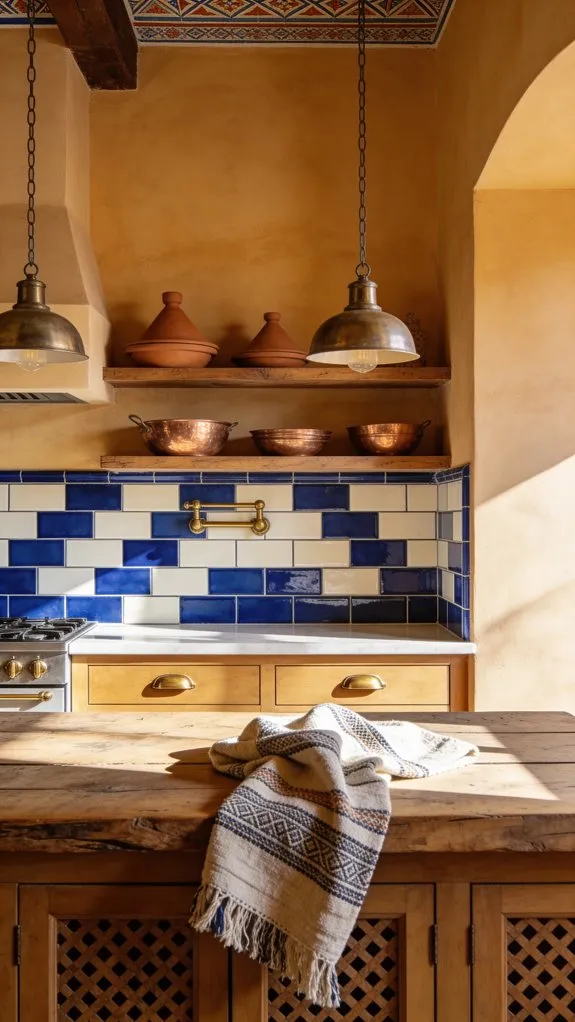
You don’t need an unlimited renovation budget to capture Moroccan style beautifully. In fact, some of the most charming Moroccan-inspired kitchens rely on clever layering rather than expensive remodels.
Start with affordable upgrades like peel-and-stick patterned tiles, painted cabinets in terracotta or teal, and thrifted brass trays or pottery. Vintage markets and online handmade shops are perfect for finding decorative accents that instantly add warmth and authenticity.
Instead of changing everything at once, focus on one standout element — like a bold backsplash or pendant lighting — then build around it gradually. Moroccan interiors always feel collected over time, which actually makes budget decorating work even better.
2. Add Warmth With Terracotta and Sandy Earth Tones
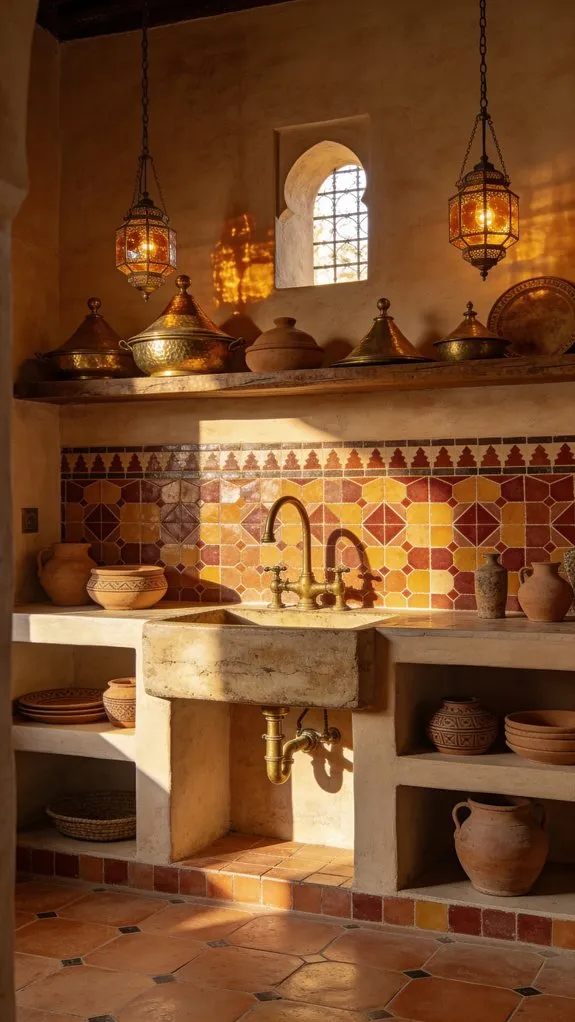
Moroccan interiors are grounded in the colors of desert landscapes and sun-soaked architecture. Terracotta, sand, clay, camel, and warm ivory instantly make a kitchen feel welcoming and organic.
Use these tones through painted walls, clay pots, tile flooring, or natural stone countertops. Terracotta works especially well when paired with creamy plaster walls and natural wood finishes because it creates depth without overwhelming the room.
Even small touches — like woven baskets, rustic ceramics, or earthy linens — can completely shift the atmosphere toward that relaxed Moroccan warmth.
3. Layer Textiles and Wood for a Lived-In Feel
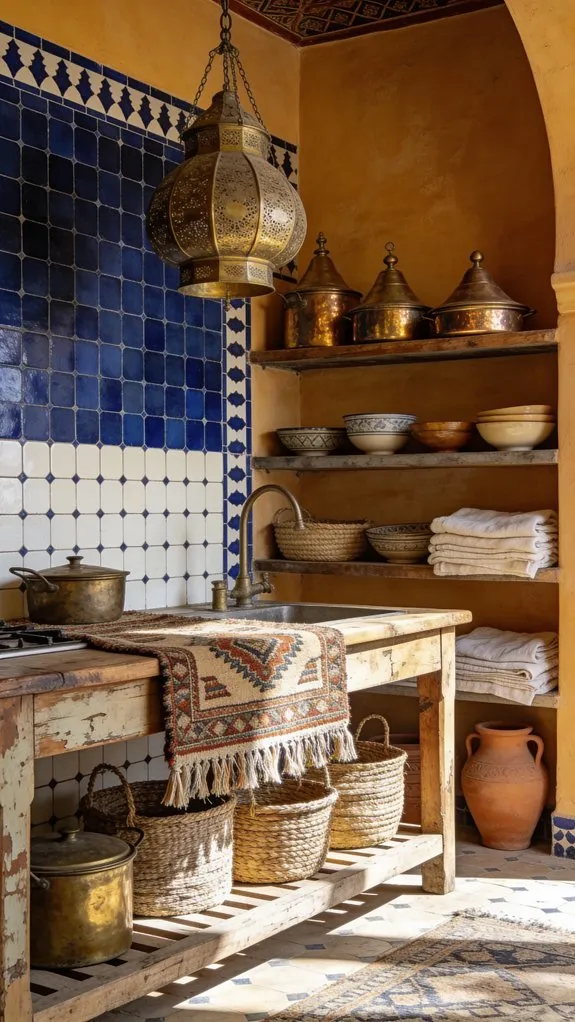
One thing Moroccan kitchens do exceptionally well is texture. The spaces never feel flat or sterile because they combine soft textiles with rich natural materials.
Add woven runners, linen curtains, rustic stools, reclaimed wood shelving, and textured table linens to soften hard kitchen surfaces. A single kilim rug near the sink or island can instantly make the room feel warmer and more personal.
Natural wood tones help balance colorful tiles and dramatic brass accents while adding the cozy, collected feeling Moroccan spaces are known for.
4. Use Open Shelving to Display Handmade Decor
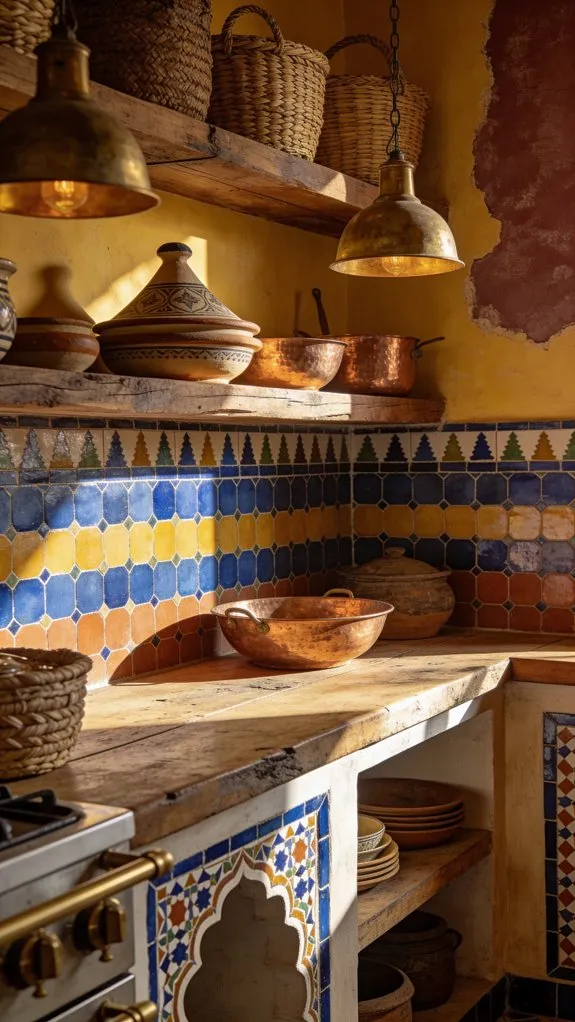
Open shelving works beautifully in Moroccan kitchens because it doubles as storage and decoration. Instead of hiding everything behind cabinets, display pieces that contribute to the room’s overall story.
Style shelves with:
- Handmade pottery
- Copper bowls
- Woven baskets
- Ceramic plates
- Clay tagines
- Amber glassware
The goal is curated imperfection. Vary heights and textures while leaving enough empty space so the shelves don’t feel cluttered.
5. Introduce Stone, Linen, and Raw Wood Materials
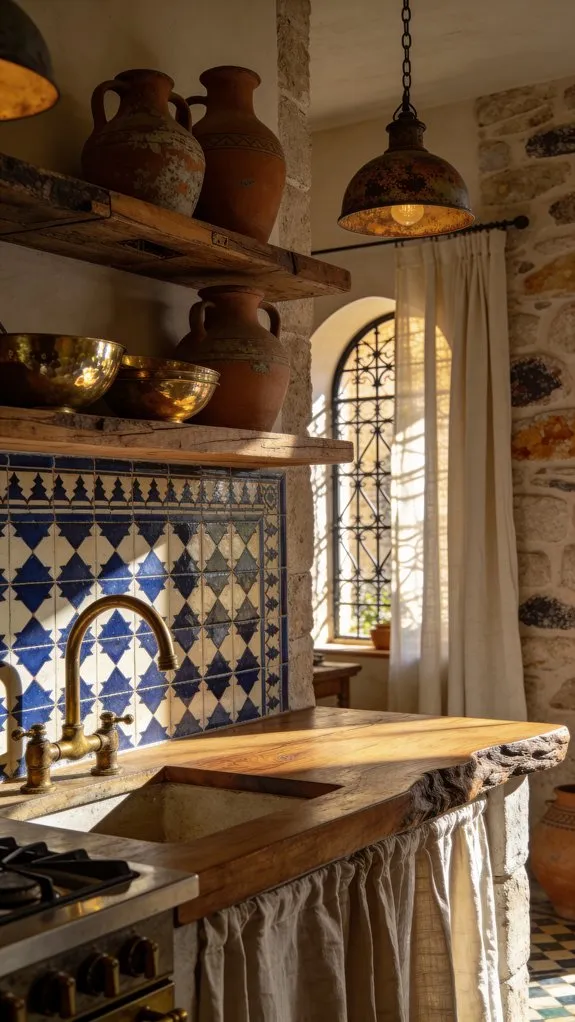
Before decorative details even enter the picture, Moroccan kitchens establish warmth through foundational materials. Natural stone countertops, raw wood shelving, and linen fabrics create the earthy base that allows colorful accents to shine.
Honed limestone, travertine, reclaimed wood beams, and relaxed linen curtains all contribute to the tactile richness Moroccan design is famous for. These materials age beautifully too, which makes the kitchen feel even more authentic over time.
6. Make a Statement With Zellige Tile Backsplashes
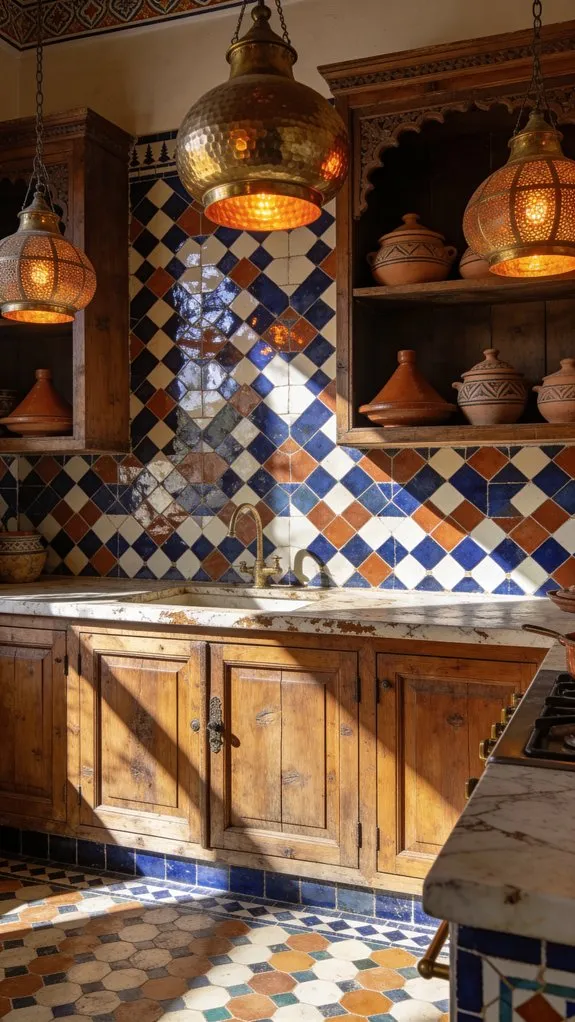
Nothing says “Moroccan kitchen” quite like zellige tile. These handmade clay tiles are famous for their uneven surfaces, glossy texture, and beautifully imperfect finish.
Unlike factory-made tiles, each zellige piece reflects light differently, creating movement and depth across your backsplash. Rich jewel tones like emerald green, cobalt blue, and saffron yellow work especially well for an authentic Moroccan-inspired look.
You can keep things subtle with a neutral ivory backsplash or go dramatic with a full wall of saturated color. Either way, zellige instantly transforms the entire kitchen.
7. Create a Full Zellige Feature Wall Behind the Range
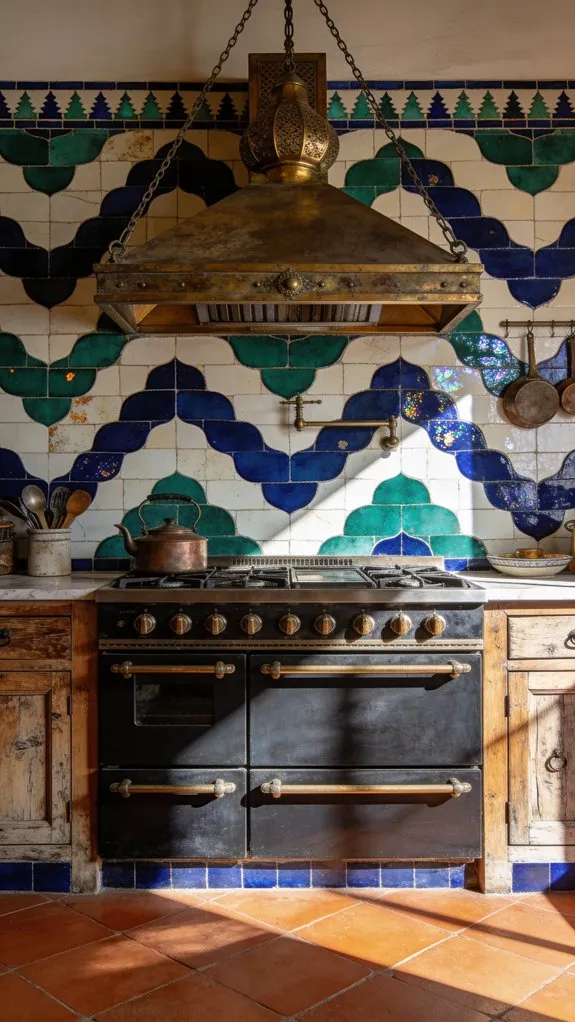
If a backsplash isn’t bold enough, extend the tile all the way to the ceiling behind your range. A full zellige feature wall creates a dramatic focal point that feels luxurious and artistic.
Deep navy, emerald, terracotta, or creamy white tiles all work beautifully depending on your overall palette. Contrasting grout colors can further emphasize the handmade texture and geometric layout of the tiles.
This approach works especially well in kitchens with simple cabinetry because the tile becomes the star of the entire room.
8. Go Bold With Cobalt Blue Cabinetry
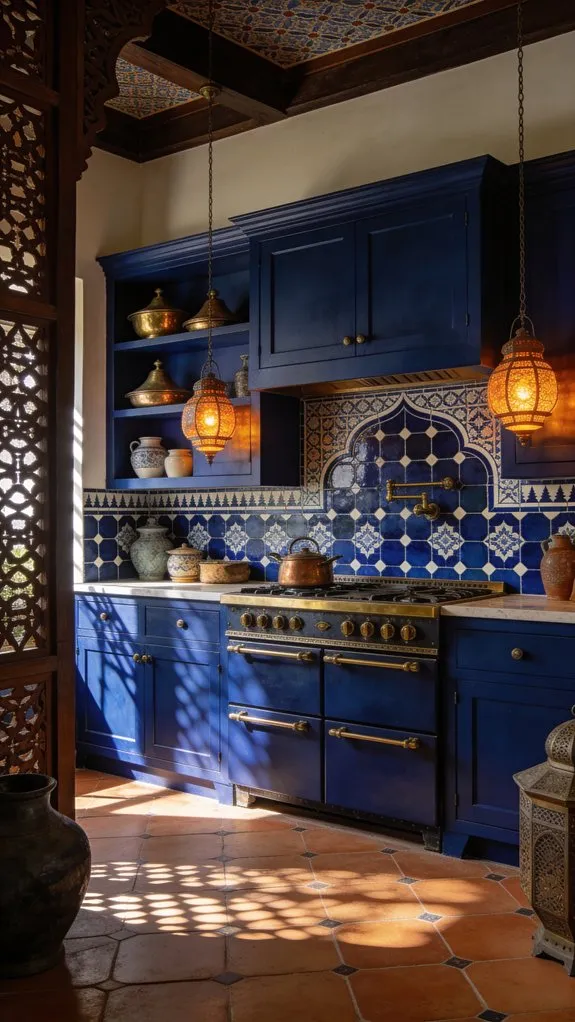
Cobalt blue cabinets instantly create a rich Moroccan atmosphere. The color feels dramatic, elegant, and surprisingly timeless when paired with warm metals and natural textures.
Balance the intensity of cobalt with:
- Brushed brass hardware
- Terracotta flooring
- White plaster walls
- Natural wood accents
- Woven textures
Because the shade is already visually powerful, you don’t need excessive decor. The cabinetry alone can define the entire room beautifully.
9. Upgrade Cabinets With Moroccan Brass Hardware
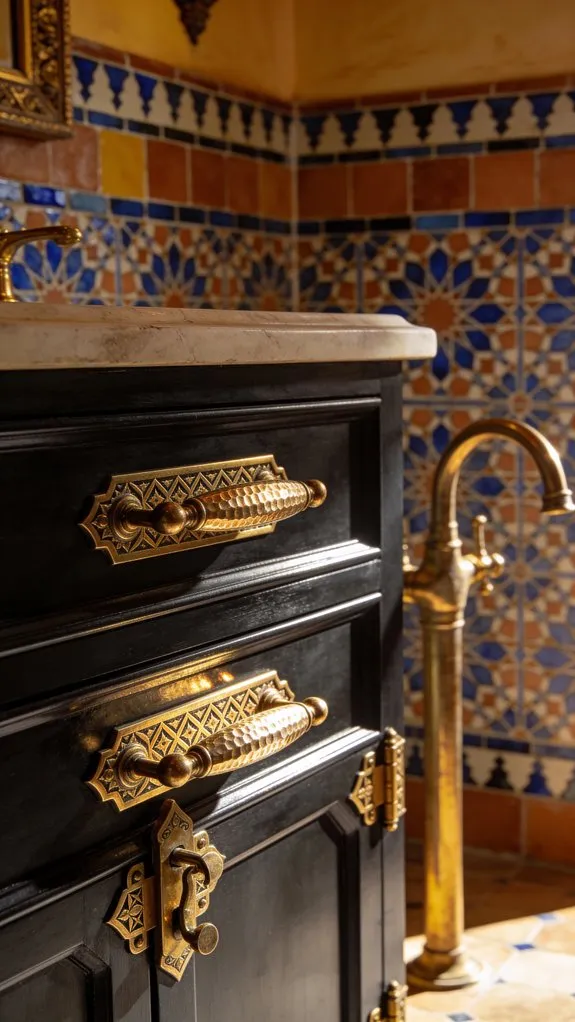
Sometimes the smallest details create the biggest transformation. Swapping ordinary hardware for Moroccan-style brass pulls and knobs instantly elevates cabinetry.
Look for:
- Hand-hammered finishes
- Geometric patterns
- Star-inspired motifs
- Aged brass patinas
- Intricate carved detailing
These artisan-inspired touches make even simple cabinets feel custom and high-end.
10. Splurge on Hammered Brass Faucets and Artisan Sinks
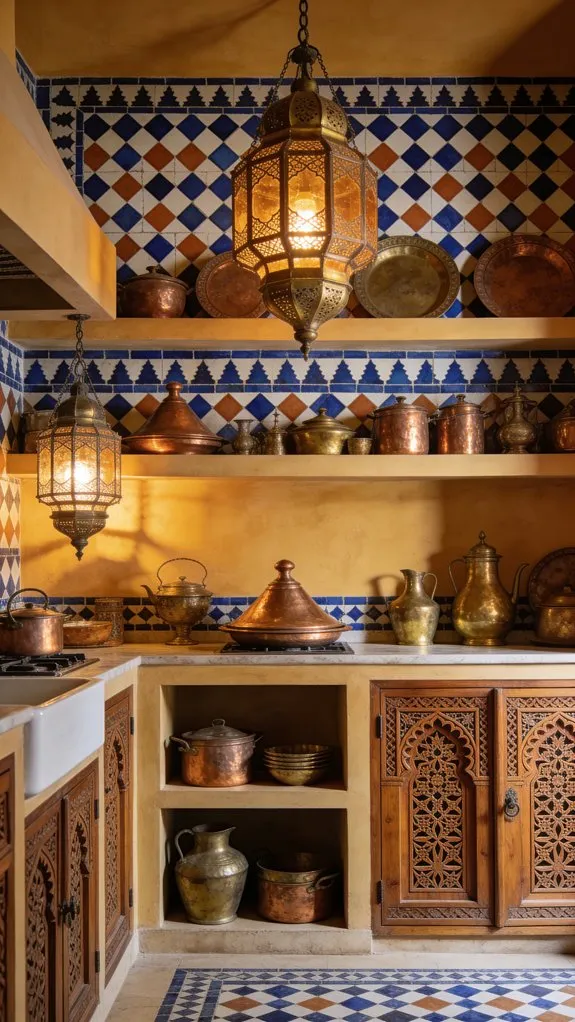
A hammered brass faucet paired with a handcrafted sink can completely change the personality of a kitchen.
These fixtures feel rich, old-world, and beautifully handcrafted. Copper or brass basins with geometric detailing become instant conversation pieces while adding warmth that stainless steel simply can’t replicate.
Because these pieces naturally develop patina over time, they actually become more beautiful with age.
11. Install a Sculptural Carved Plaster Hood
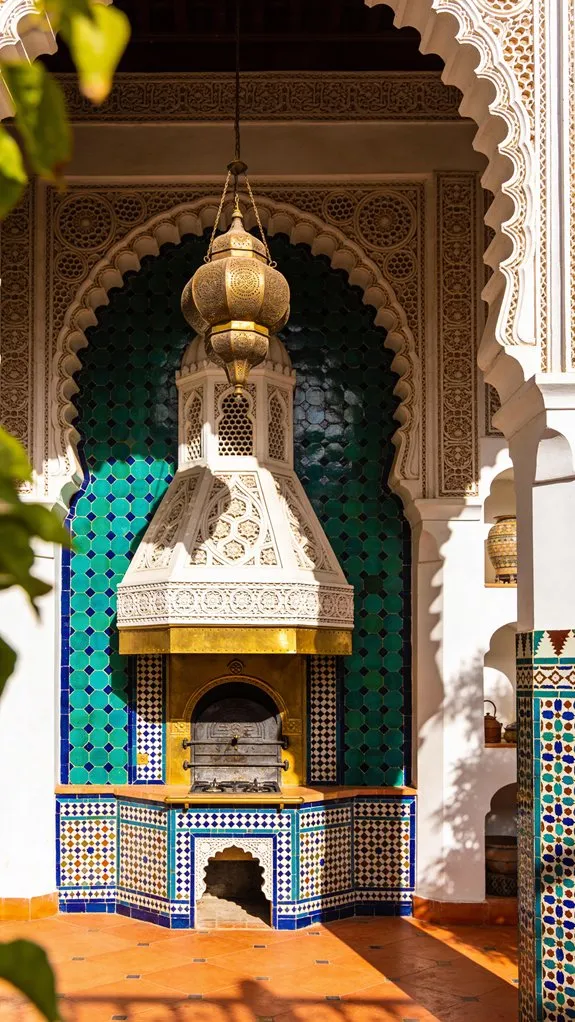
A carved plaster range hood instantly gives a kitchen dramatic architectural character. Instead of blending into the background, the hood becomes a true focal point.
Inspired by traditional Moroccan riads, these hoods often feature:
- Curved silhouettes
- Geometric carvings
- Arched detailing
- Layered plaster textures
- Hand-painted trim accents
Even in modern kitchens, a plaster hood introduces softness and artistry that balances sleek surfaces beautifully.
12. Use Moroccan Lanterns for Atmospheric Lighting
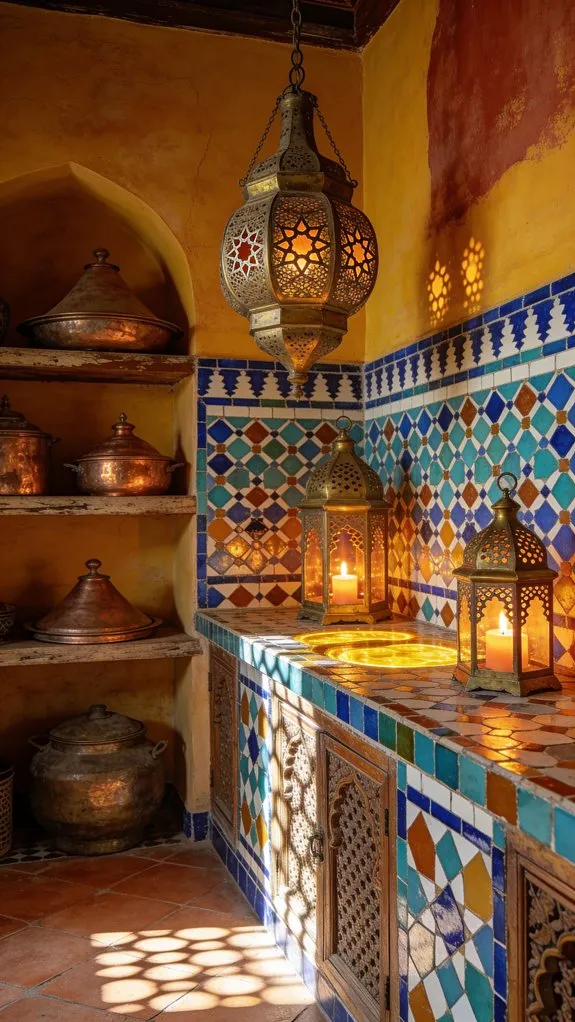
Moroccan lanterns create a glow that feels warm, intimate, and magical. Their pierced metal designs cast intricate shadows across walls and ceilings, instantly changing the mood of the room.
Hang lantern pendants above:
- Kitchen islands
- Dining tables
- Breakfast nooks
- Entryways
Mixing multiple lanterns at different heights creates even more visual drama and layered ambiance.
13. Layer Lighting for a Richer Kitchen Atmosphere
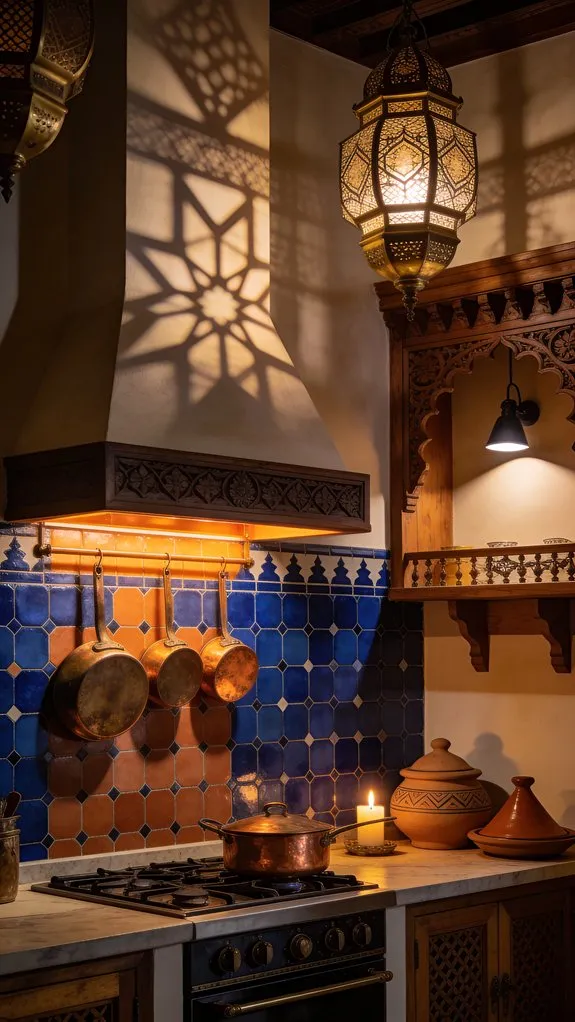
Moroccan kitchens rarely rely on a single overhead fixture. Instead, they use layered lighting to create warmth and depth throughout the space.
Combine:
- Pendant lighting
- Under-cabinet lighting
- Lanterns
- Wall sconces
- Accent spotlights
This layered approach prevents harsh shadows while highlighting textures like tile, plaster, and brass.
14. Add Arched Doorways and Built-In Niches
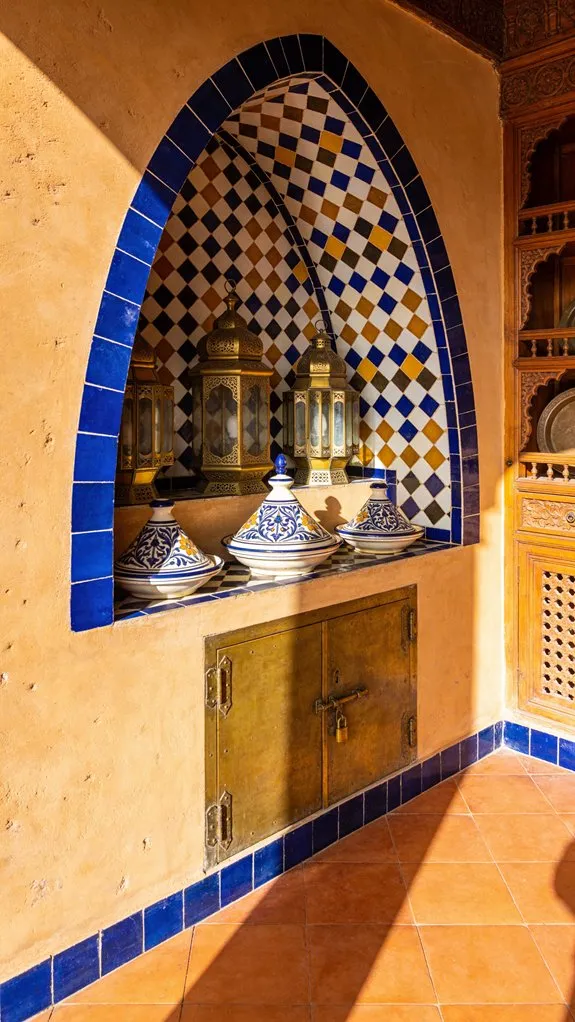
Arches are one of the most recognizable features of Moroccan architecture. Even adding a single arched niche can dramatically change the feel of your kitchen.
Use arches to frame:
- Doorways
- Open shelving
- Stove alcoves
- Pantry entrances
- Decorative niches
These soft curves bring elegance and old-world charm while making the space feel more architectural and intentional.
15. Install Handmade Ceramic Tile Flooring
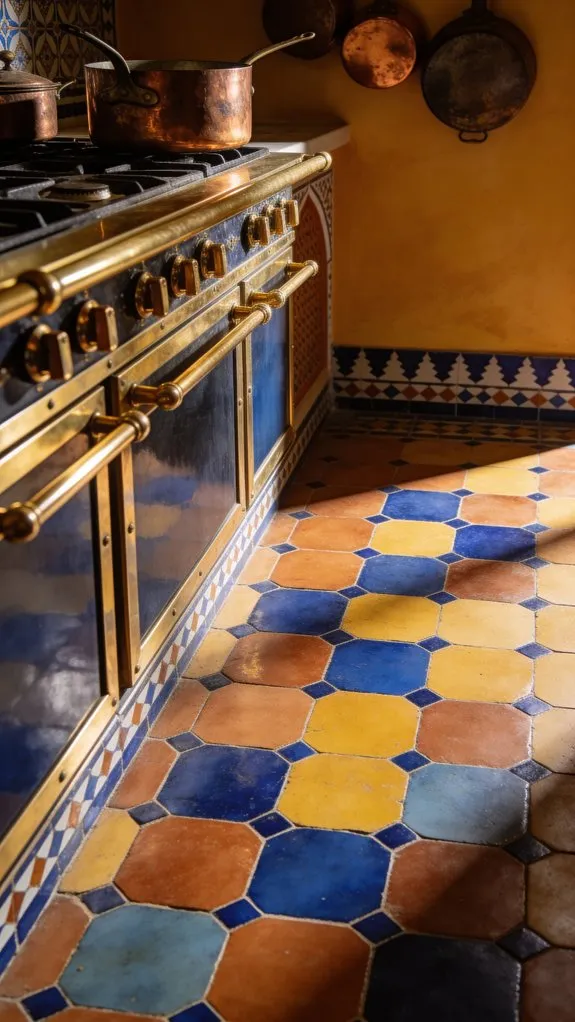
Handmade ceramic floor tiles instantly ground a Moroccan kitchen with texture and authenticity.
Unlike machine-made alternatives, artisan tiles contain slight imperfections that create movement and character. Geometric patterns, mosaic layouts, and earthy glazes help make the floor feel like a true design feature instead of just a practical surface.
These tiles work especially well alongside simple cabinetry because they bring visual richness into the room naturally.
16. Experiment With Bold Grout Colors
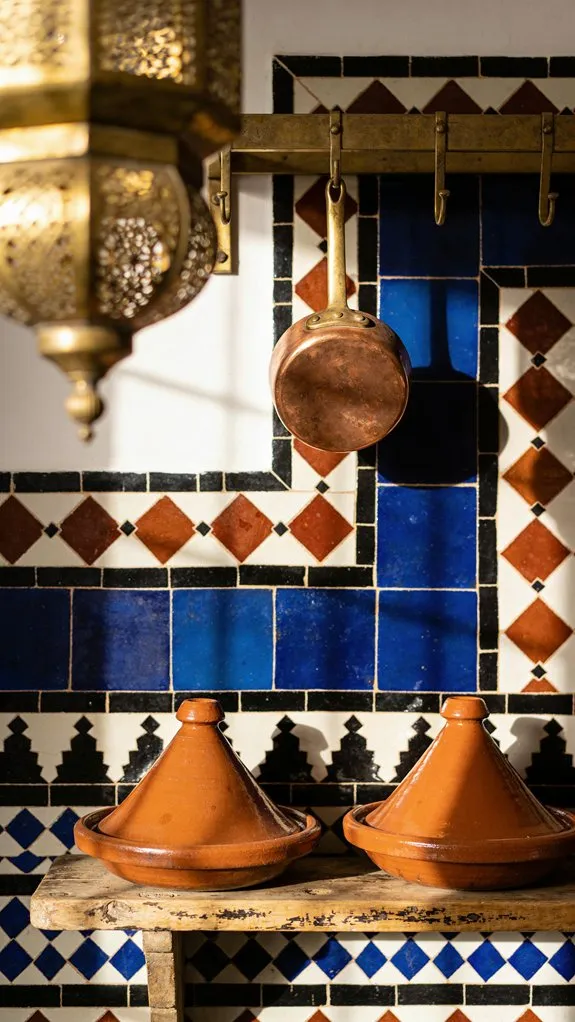
Most people overlook grout, but in Moroccan kitchens it becomes part of the design itself.
Dark charcoal grout can make bright tiles feel dramatic and sculptural, while warm terracotta grout creates softness and cohesion. Crisp white grout highlights geometric patterns beautifully.
Treat grout as framing for your tiles rather than something that should disappear.
17. Embrace Dark and Moody Moroccan Style
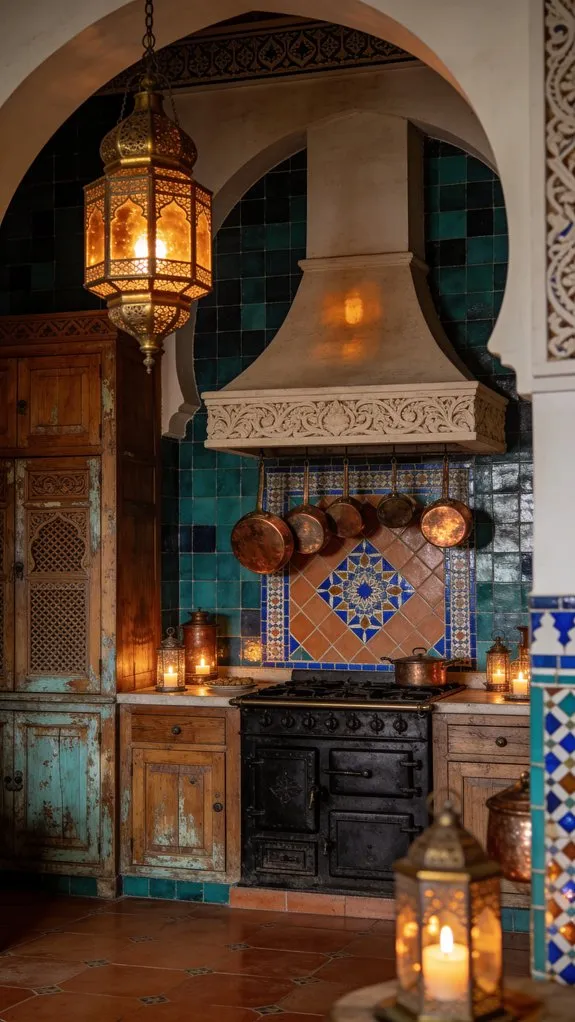
Not every Moroccan kitchen needs to feel bright and airy. Dark, dramatic versions can feel incredibly luxurious and intimate.
Think:
- Charcoal plaster walls
- Inky navy cabinets
- Black zellige tile
- Aged brass lighting
- Copper accents
- Deep terracotta flooring
The result feels cozy, layered, and incredibly atmospheric — especially at night.
18. Make a Small Moroccan Kitchen Feel Dramatic
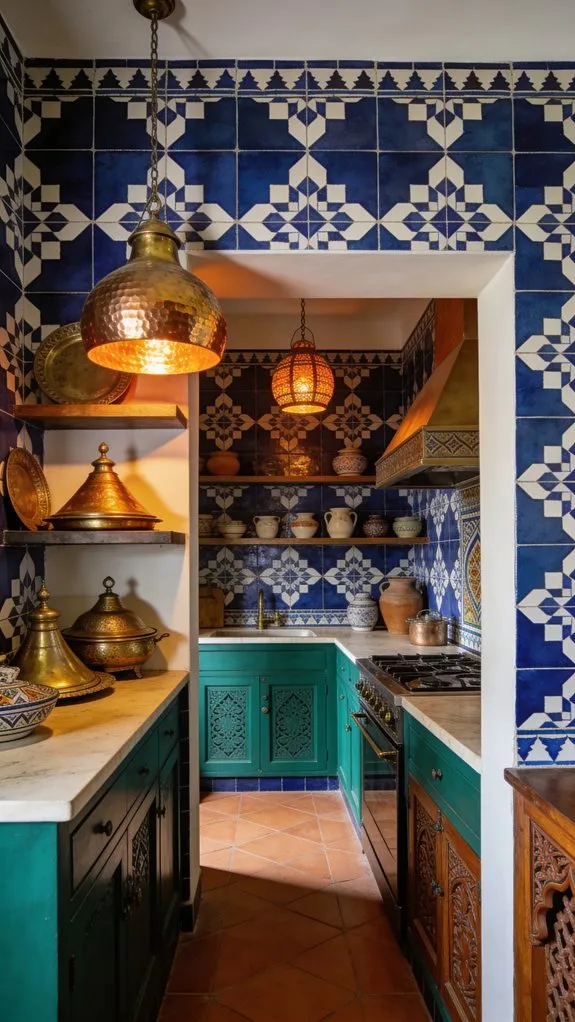
Even compact kitchens can embrace Moroccan style successfully. In fact, smaller spaces often feel even more immersive because the textures and colors surround you more completely.
To maximize impact:
- Use vertical storage
- Install bold backsplashes
- Hang statement lighting
- Add mirrors to reflect light
- Use open shelving thoughtfully
A tiny kitchen with strong design choices can feel far more memorable than a large but generic one.
19. Design a Moroccan-Inspired Tiled Kitchen Island
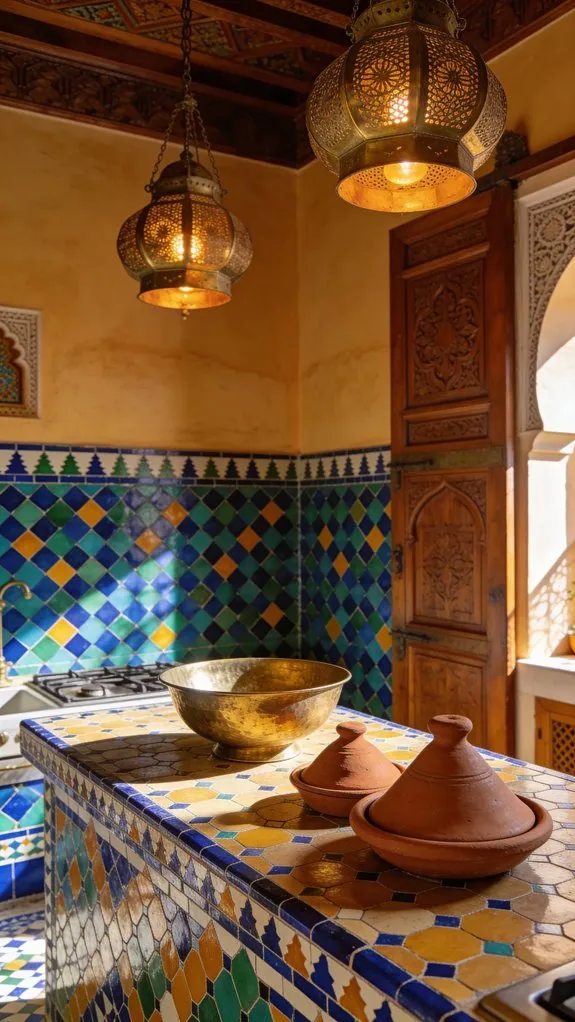
A tiled island base instantly becomes the centerpiece of the room.
Use:
- Zellige tile
- Encaustic cement tile
- Mosaic patterns
- Geometric designs
- Rich terracotta or cobalt tones
Pair the colorful tile base with a simple stone countertop so the island feels balanced rather than overwhelming.
20. Mix Patterns Without Overwhelming the Space
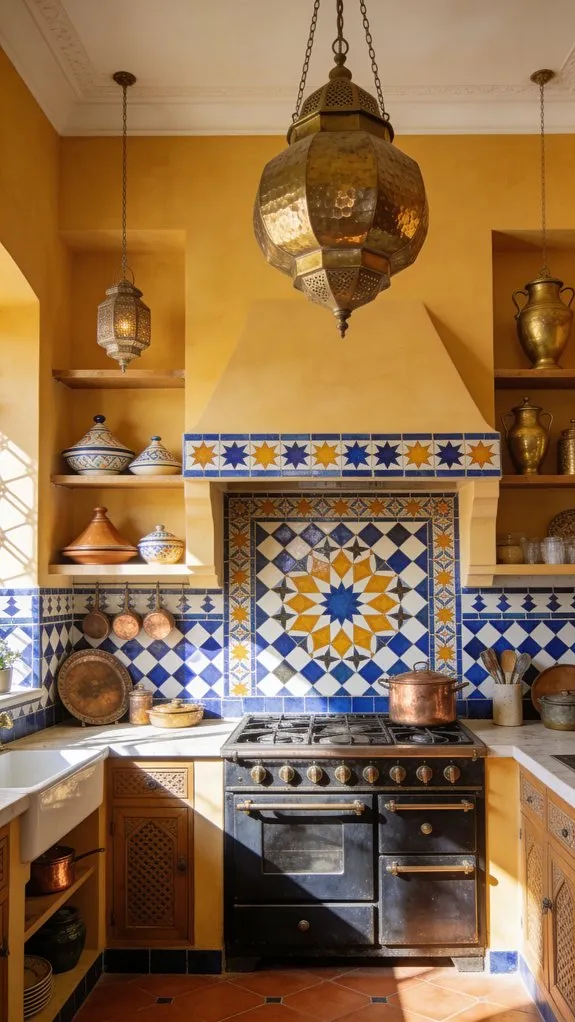
Moroccan interiors love pattern, but balance is essential.
The key is varying scale and allowing neutral surfaces to create breathing room. Pair large geometric floor tiles with smaller mosaic backsplashes, then soften everything with plaster walls or natural wood.
Stick to a cohesive color palette so even bold patterns feel intentional rather than chaotic.
21. Blend Moroccan Style Into a Minimalist Kitchen
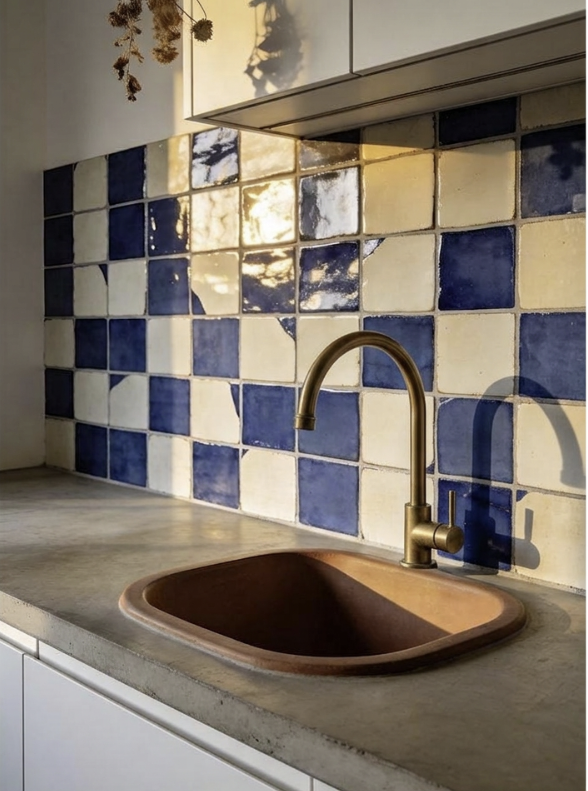
Moroccan design can absolutely work in minimalist spaces. The trick is restraint.
Instead of filling the room with ornamentation, choose one or two standout features like:
- A zellige backsplash
- An arched doorway
- A brass pendant
- A carved wood shelf
When the rest of the kitchen remains simple, these details become even more impactful.
22. Add Just a Touch of Moroccan Drama to Modern Kitchens
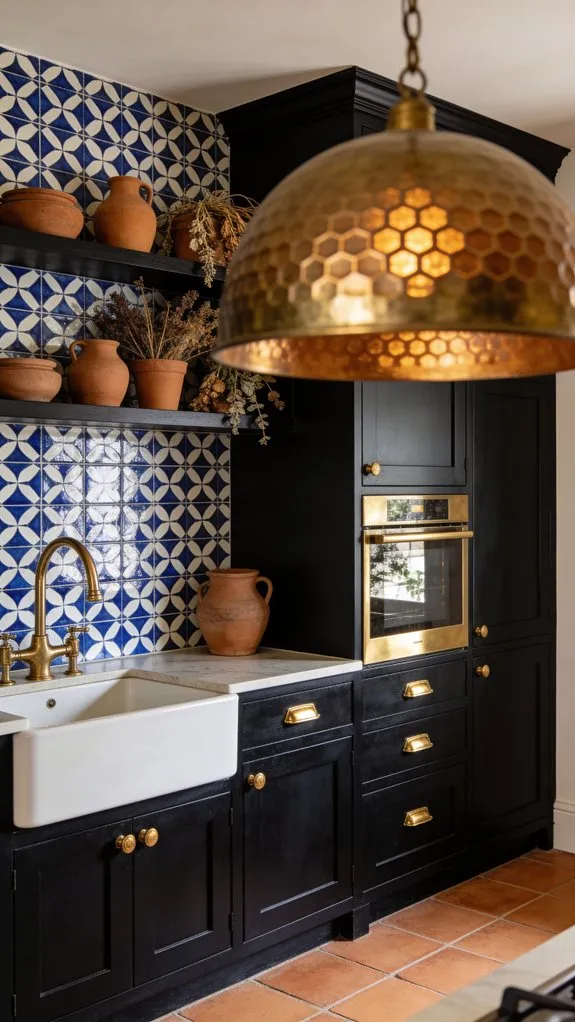
You don’t need a fully themed kitchen to embrace Moroccan influence. A few carefully chosen accents can completely elevate a modern space.
Try incorporating:
- Hammered brass lighting
- Patterned tile
- Sculptural lanterns
- Warm earthy paint colors
- Handmade pottery
This lighter approach feels sophisticated and easy to integrate into contemporary homes.
23. Highlight Authentic Moroccan Craftsmanship
True Moroccan design is rooted in artisan tradition. Materials like zellige tile, tadelakt plaster, and carved cedar wood all carry generations of craftsmanship behind them.
These handmade details create a richness and soul that mass-produced finishes simply cannot replicate. Even adding one authentic artisan element can instantly make a kitchen feel more meaningful and layered.
24. Source Genuine Moroccan Tiles and Fixtures Carefully
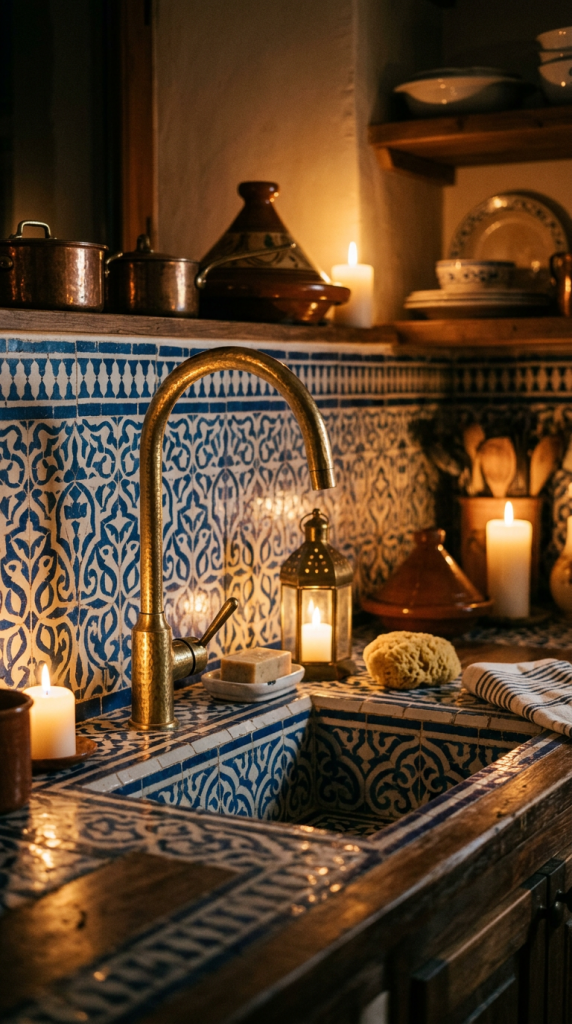
Authenticity matters when recreating Moroccan style. Many mass-market imitations lack the depth and character of real handmade materials.
Look for:
- Handmade zellige
- Fair-trade artisan products
- Hand-hammered brass
- Traditional plaster finishes
- Verified Moroccan makers
Investing in a few genuine pieces often creates a more convincing result than buying many inexpensive imitations.
25. Build a Moroccan Color Palette That Feels Timeless
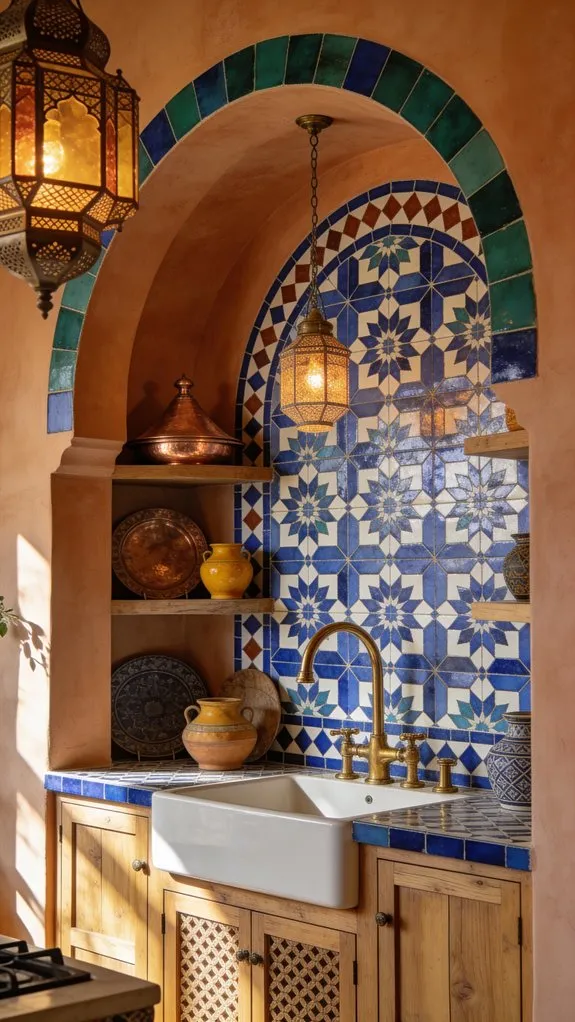
Moroccan kitchens are known for fearless yet grounded color palettes inspired by landscapes, spices, and historic architecture.
Popular combinations include:
- Terracotta + ivory
- Cobalt + brass
- Saffron + charcoal
- Dusty rose + sand
- Emerald + warm wood
The secret is layering warm, earthy foundations with rich jewel-tone accents. Done right, the space feels timeless instead of trendy.
Conclusion
Moroccan kitchens celebrate texture, craftsmanship, warmth, and personality in a way few other styles can. Whether you introduce a single lantern pendant or fully commit to zellige walls and carved plaster details, these spaces invite you to slow down and enjoy the beauty of everyday living.
The best part is that Moroccan style doesn’t require perfection. Handmade materials, natural patina, and collected details are exactly what make the look feel authentic, welcoming, and unforgettable.
Leave a Reply