Built-ins read as custom, high-end, and effortlessly tailored to a space, but they often come with a price tag that puts them out of reach for many projects. The good news: we don’t need full custom millwork to get that seamless, integrated aesthetic. In 2026 there are smarter materials, modular systems, and finishing tricks that let us emulate the built-in look at a fraction of the cost. In this guide we’ll walk through why built-ins cost so much, how to define the exact style you want, cost-effective material choices, planning strategies, practical DIY techniques, and when it still makes sense to hire a pro. By the end, we’ll have a clear, actionable plan so you can get the built-in look without paying for bespoke cabinetry.
Why The Built-In Look Costs So Much
Custom built-ins command premiums for several predictable reasons, and understanding those reasons helps us decide where to spend and where to save. First, custom millwork is labor-intensive. Skilled carpenters measure, cut, fit, and finish pieces on site to match walls, trim, and odd angles. That labor often represents 40–60% of a custom built-in’s final cost.
Second, custom materials and joinery add expense. Solid wood, dovetail drawers, and integrated shelving systems aren’t cheap. When you specify hardwoods, specialty hardware, or inset doors, material costs climb quickly. Add in finishing, staining, multiple layers of topcoat, and professional paintwork, and the invoices add up.
Third, site-specific work creates complexity. Built-ins often require structural considerations, electrical for integrated lighting and outlets, and precise fitting around windows, baseboards, or HVAC. That complexity increases both time and the chance of unexpected costs.
Finally, design and customization carry value. A bespoke built-in is framed as a long-term investment and a reflection of professional design time. That premium is fair in many cases, but if our goal is the appearance rather than custom construction, we can selectively mimic the look. Knowing where the real costs live, labor, high-end materials, and complex site work, lets us target savings without sacrificing the seamless aesthetic we want.
How To Define Your Desired Built-In Style Before You Start
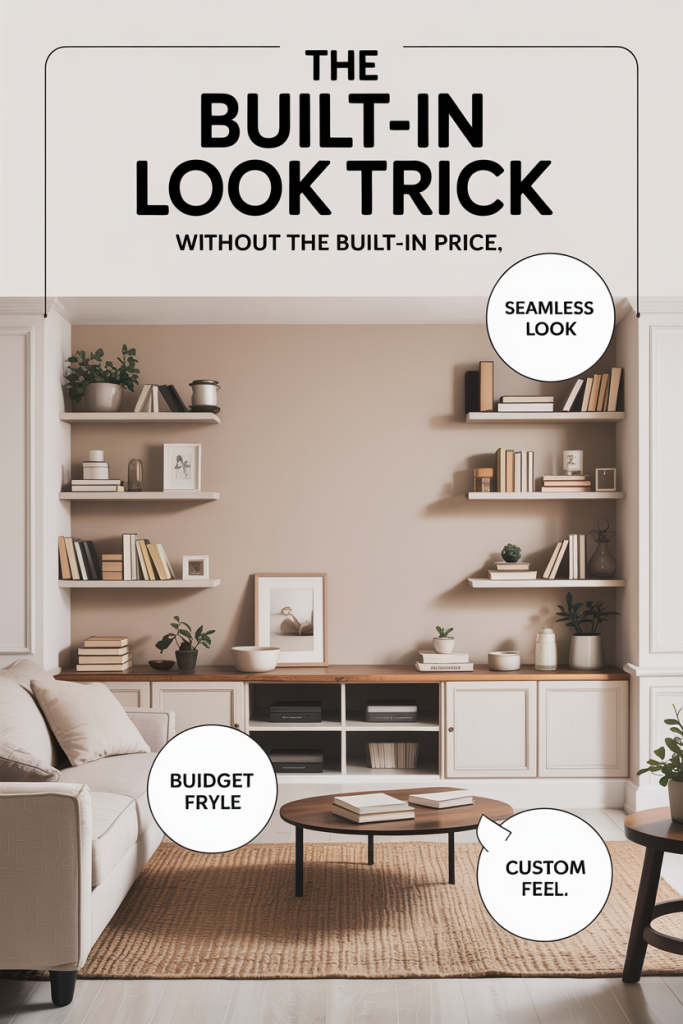
Before buying materials or scheduling labor, we need a clear, specific vision. Built-ins run a wide spectrum: library-style shelving with crown and fluted pilasters, minimalist floating units with concealed hardware, or media centers with recessed cabinets and wiring channels. Each direction changes material and labor choices.
Start with three focused decisions: function, form, and finish. Function: what will this built-in do? Store books, hide media equipment, act as a window seat with storage, or frame a fireplace? Knowing function pins down shelving depth, drawer needs, and whether ventilation or cable access is necessary. Form: choose a style reference. Gather three to five photos (we recommend using a private board or folder) that show the exact proportions and details you like. Are you after floor-to-ceiling units, or a base cabinet with open shelves above? Finish: decide on paint vs. stain, type of door (shaker, slab, glass-front), and trim level (simple reveal or integrated crown and base molding).
Dimensionally, sketch a scaled plan of the wall with rough measurements. Note obstacles, switches, outlets, vents, and consider sightlines from the main room. We’ll use this plan to compare modular options and to determine if we need filler pieces or site trimming. Finally, set a realistic budget range and a priority list: if we must choose, do we prefer perfect integration (seamless reveals) or lower cost? This clarity prevents scope creep and helps us evaluate cheaper alternatives that still deliver the look we want.
Cost-Effective Materials That Mimic Custom Built-Ins
The materials we pick make the biggest visual difference, and there are excellent cost-effective options that convincingly mimic custom millwork. Engineered wood products have improved dramatically and are our first stop. High-quality plywood ( cabinet-grade, Baltic birch where possible) gives solid edges for paint and holds screws better than particleboard. For painted built-ins, painted MDF carcasses with plywood faces combine stability and cost savings.
Melamine and laminate-faced panels are inexpensive and durable for interiors where paint won’t be used. Newer thermofoil finishes can emulate painted doors while resisting chips. For visible faces, consider veneer plywood: a thin hardwood veneer over an MDF or plywood substrate delivers real wood grain appearance at a lower cost than solid hardwood.
For trim, pre-primed MDF profiles are affordable and paintable: they install quicker than custom-milled hardwood trim. For countertops or seat tops, quartz slabs with minimal seams are usually less expensive than custom-cut solid stone when we limit the number of seams and edge profiles. Another budget-friendly option is a painted solid wood top (clear-coated) or a butcher-block insert.
Hardware and lighting also shape perception. Choose concealed hinges and full-extension soft-close drawer slides to mimic custom cabinetry functionality without custom joinery. Integrated LED strips or puck lights with diffusers create that architectural look: they’re inexpensive and easy to hide in a valance or under a top shelf. In short, combining plywood/MDF carcasses, veneer or painted faces, and savvy hardware lets us get the tactile feel of built-ins without the premium materials.
Smart Planning: Measurements, Layout, And Modular Alternatives
Planning is where we save the most. Tight measurements, clear layouts, and intelligent use of modular systems can deliver near-custom results with predictable cost. Start with an accurate measured drawing and a template for obstacles. We recommend measuring each wall dimension three times and noting floor and ceiling irregularities, many old homes have out-of-plumb walls that need shimming.
Layout decisions that affect price: whether units are continuous (floor-to-ceiling), or separated by furniture and trim: if base cabinets align with existing baseboard height: and whether appliances or the fireplace require nonstandard openings. When tolerances matter, plan for filler strips, narrow, painted slats that cover small gaps, rather than custom milling. Fillers are inexpensive and look intentional when finished properly.
Modular cabinetry manufacturers now offer near-custom sizing and options for in-field trimming. Companies that produce semi-custom wall systems and box cabinetry allow us to combine standard widths into continuous runs with consistent face-frame styles. Using standard modular widths (12, 15, 18, 24, 30 inches) reduces cost because parts are pre-made and quicker to install. We can create the illusion of a single built-in by butting modules closely, aligning reveal gaps, and adding continuous trim across the face.
For media or library walls, plan cable chases and ventilation in advance. Use open-back modules or add routed channels in the wall behind the cabinet, planning this during layout avoids costly retrofits. Finally, make a cut list and purchase a little extra material for on-site mistakes. The combination of precise measurement, modular units, and small finishing tweaks is the most reliable way to hit the built-in look on budget.
DIY Techniques To Achieve Seamless Integration
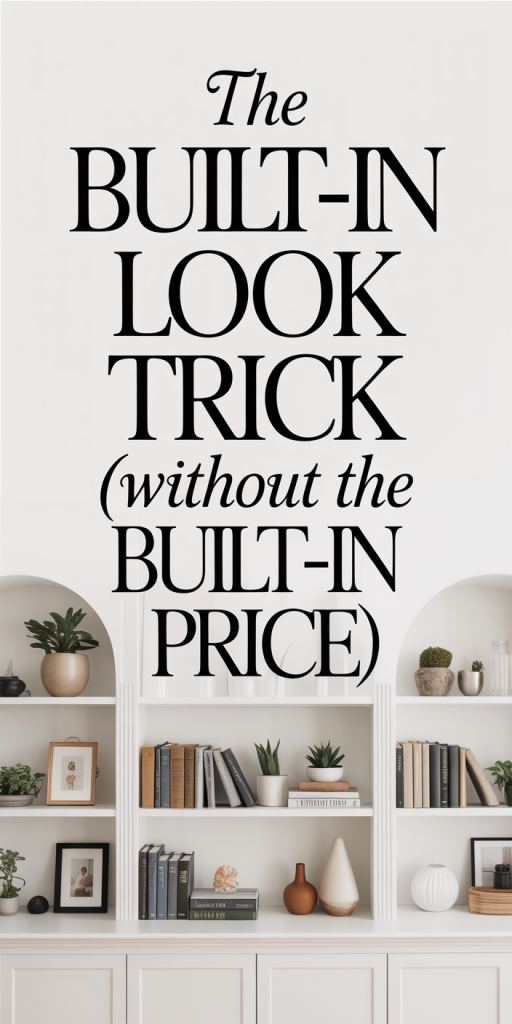
If we’re comfortable with basic carpentry, many finishing techniques make modular or pre-made units read as built-ins. A few hours of careful trimming, painting, and filler work can transform store-bought cabinets into an integrated wall of custom-looking millwork. The key is focusing on seams, consistent reveal widths, and transitions to existing trim so the installation reads as intentional and permanent.
Before diving in, we recommend mock-fitting units on site and labeling every piece. Dry-fit gives us a chance to identify gaps, decide where to add shims, and plan trim placements. Prioritize creating a continuous cornice or top rail to visually tie modules together, even a simple 1×4 with a decorative profile makes a huge difference. Below we outline the highest-impact DIY finishing tricks and a straightforward approach to using ready-made cabinets as believable built-ins.
Trim, Paint, And Caulking Tricks That Hide Joints
Small finishing details are the illusionists of the built-in look. When we hide joints, control reveal widths, and finish consistently, the brain reads the assembly as custom. Start with trim: use continuous runs of crown moldings and baseboards to hide seams between modular units. We like using pre-primed MDF or finger-jointed pine for long runs because they’re straight and consistent. If the wall is out of plumb, scribe the trim to match: a tight scribe line filled and caulked will look intentional.
Paint does heavy lifting. Sand edges, apply high-build primer, and use a good-quality satin or eggshell latex for durability. For the smoothest finish on painted millwork, consider a spray or an HVLP system: if that’s not available, a high-density foam roller cut down and an angled brush for corners works well. Multiple thin coats beat one thick one.
Caulking rules: use a paintable acrylic-latex caulk for small gaps and a flexible polyurethane caulk for larger transitions that may move. Keep bead lines thin and tool them with a wet finger or caulking tool for a seamless look. We also feather caulk onto the adjoining drywall slightly, this removes shadow lines after paint.
Create intentional reveals: uniform gaps (usually 1/16–1/8 inch) between doors and trim mimic factory tolerances found in custom cabinetry. Measure and shim cabinet boxes so doors sit flush: then use thin reveal strips where necessary to maintain consistency. These small efforts, continuous trim, careful priming and painting, and meticulous caulking, turn separate pieces into a cohesive built-in.
When To Hire A Pro And How To Save On Labor Costs
There are times when hiring a professional is the smartest move. We recommend a pro when structural modifications, electrical integration, or complex built-in features (like curved cabinetry or integrated refrigeration) are part of the plan. Also, if our desired finish is flawless painted millwork with tight reveals and complex molding, a finish carpenter or cabinet installer will deliver results that DIYers struggle to match.
To save on labor without sacrificing quality, break the project into phases and keep the pro’s scope focused. For example, we can buy and partially assemble modular units ourselves, then hire a pro for precise in-field trimming, electrical rough-ins, and final installation. That approach lowers billable hours while guaranteeing the critical high-skill steps are done right.
Get at least three bids and ask installers to break out costs: cabinet boxes, door/face costs, trim carpentry, paint, and electrical/lighting. Negotiating a flat price for a defined scope is usually better than an hourly rate for carpentry. Also, provide the installer with a clear plan, a material list, and pre-drilled pilot holes when possible, anything that reduces on-site problem-solving reduces labor time and cost.
Consider hybrid labor solutions like hiring handymen for rough installation and a specialty finisher for painting and trim. We should also time work to avoid peak seasons: contractors often offer better rates in slower months. Finally, source materials and cabinet boxes ahead of time: installers mark up materials, so buying direct and supplying them can trim the budget significantly.
Conclusion
The built-in look is largely about proportion, finish, and details, not just bespoke construction. By defining our vision, choosing cost-effective materials, planning intelligently, and using a mix of DIY finishing techniques and selective professional help, we can achieve seamless, high-end results without the built-in price. Small investments in trim, paint, and consistent reveals produce outsized returns in perceived value. If we focus our budget where it matters (accurate installation, good faces, and refined finishing), we’ll end up with built-ins that look like custom millwork, and didn’t cost like it.
Leave a Reply