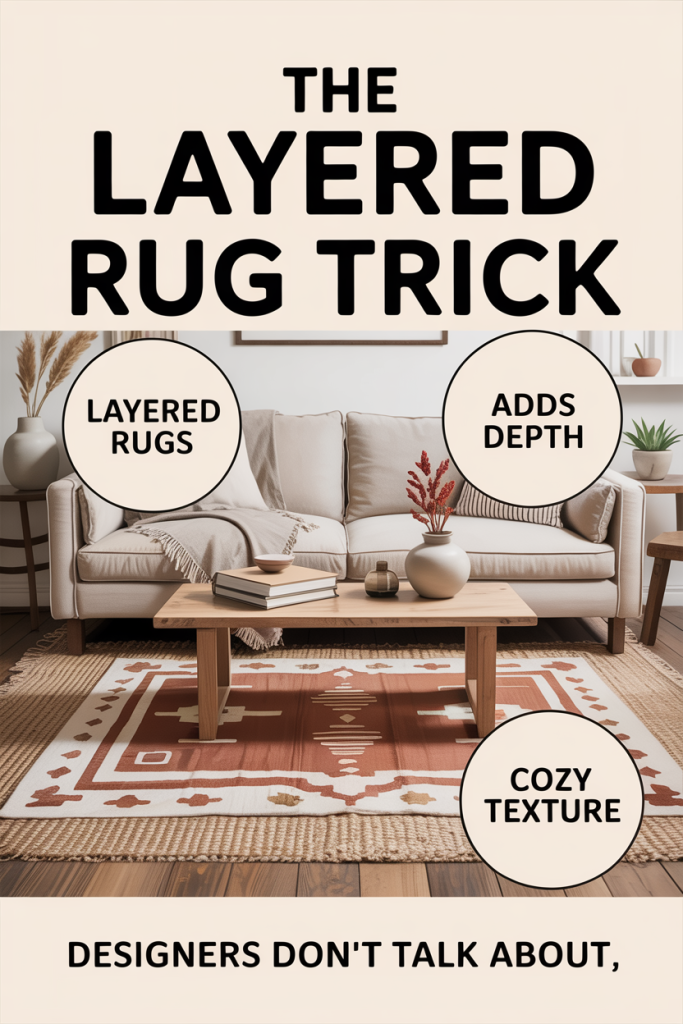
Layering rugs used to be a fringe decorator move reserved for high-end showrooms and daring stylists. In 2026 it’s mainstream, and for good reason. When done right, layered rugs add depth, temperature, sound control, and a tactile complexity that a single rug rarely achieves. We’ll walk through why the trend works, where it genuinely improves a space, how to execute it step-by-step, and the practical rules that keep layered rugs looking intentional rather than chaotic. This guide is for people who want bold, lived-in rooms that feel curated but comfortable, no mystifying jargon, just clear rules and creative options you can try this weekend.
Why Layered Rugs Work: The Design Principles Behind The Trend
Layering rugs isn’t just a visual trick, it’s grounded in basic design principles that affect proportion, texture, color, and the way we move through space. First, layering creates depth. Much like a vignette of furniture or a gallery wall, overlapping surfaces signal intentionality: our eyes read multiple planes as richness rather than clutter.
Second, layered rugs enhance scale and proportion. A small rug on a large floor can feel lost: placing a smaller, patterned rug over a larger neutral one anchors seating areas without forcing a single oversized piece. This solves a common problem in rooms with unconventional dimensions.
Third, texture contrast is powerful. Combining a low-pile jute with a plush wool or a flatweave with a knotted rug builds tactile interest. Texture cues tell our brain what area is for lounging, what’s transitional, and what’s decorative.
Fourth, acoustic and thermal benefits are real. Layered rugs add insulation in cold climates and reduce echo in open-plan homes, practical reasons beyond aesthetics. And finally, layering lets us mix price points: an affordable washable rug can take the daily wear while a more expensive antique or artisanal piece provides pattern and character.
Taken together, these principles explain why designers have quietly adopted rug layering: it’s a flexible, cost-effective way to solve multiple problems at once, visual, functional, and lived-in comfort.
Rooms And Layouts Where Layering Actually Makes Sense
Layered rugs aren’t for every room or every homeowner. We recommend they when they solve clear spatial or functional needs.
Living rooms: This is the most obvious candidate. In open-plan living, a base rug can define the zone while a secondary rug creates a focal area around the coffee table or seating cluster. In sectional layouts, layering allows the front legs of furniture to sit on a larger neutral layer while a smaller patterned rug marks the conversation area.
Dining rooms: Layering under a dining table can work if there’s a larger flatweave underneath to protect floors and a smaller, patterned rug centered under the table to add character. But ensure chair movement won’t catch on fringe or thick piles, the top layer should be low-profile or tacked down.
Bedrooms: Layering works beautifully here. Place a large neutral rug under the bed with a cozy, textured runner or small rug at the foot or bedside. It creates a hotel-like feel and soft landing spots for bare feet.
Entryways and hallways: Layering in transitional spaces helps with wear management. A robust base rug handles traffic: a decorative runner on top provides style. This approach also helps visually guide circulation paths.
Home offices and reading nooks: Layering can delineate a work zone inside a larger room. Use a neutral base to anchor furniture with a smaller patterned piece beneath a desk or chair to add personality without overwhelming the workspace.
Where to avoid layering: Small rooms with limited floor area, very high-traffic spots where rug edges will be a trip hazard, and rooms with delicate furniture that can’t accommodate mixed pile heights. If the floor itself is an architectural highlight (polished concrete, vintage hardwood), layering can obscure that character, so proceed only if the rug enhances, not hides, the room.
How To Layer Rugs: A Step-By-Step Practical Guide
We prefer a pragmatic, rule-based approach. Follow these steps to layer rugs confidently.
Step 1, Define the purpose. Are you creating a seating anchor, adding warmth, protecting floors, or introducing pattern? Your purpose shapes size and material choices.
Step 2, Start with a base rug. Choose something larger than the intended focal zone. Neutral colors and simple weaves work well as foundational layers because they recede visually and allow the top rug to pop.
Step 3, Pick the top rug for character. This is where pattern, color, and texture come in. Smaller, patterned, or higher-pile rugs tend to read as the decorative layer. Make sure the edges of the top rug sit comfortably within the base, typically leaving a 6–18 inch border of the base visible depending on room size.
Step 4, Test placement physically. We like to use painter’s tape to outline rug dimensions before committing. Move furniture pieces and see how legs interact with the layered rugs, front legs on the top rug often feel most anchored.
Step 5, Secure and stabilize. Use rug pads that add grip between layers to prevent slipping. For top rugs, consider double-sided rug tape in high-traffic areas. If the top rug has fringe, trim or tuck it to avoid catching on chairs.
Step 6, Adjust scale and balance. If the arrangement feels top-heavy, switch to a wider base border or a lower-contrast top rug. Conversely, if it reads flat, introduce a textured or brighter top layer.
Step 7, Live with it for a week. Rugs settle and rooms feel different with daily use. We recommend living with the configuration and making minor tweaks (rotation, repositioning) after a few days.
Following these steps gives a repeatable pathway from concept to confident execution, so layering feels intentional, not accidental.
Choosing Rug Sizes, Shapes, And Placement Rules
Size and shape matter more than most people realize, these choices determine how the eye reads a room.
Rule 1, Anchor first, accent second. The base rug should anchor the major furniture group (sofa, chairs, coffee table). For living rooms, that commonly means a rug size that allows at least the front legs of major seating pieces to sit on it, 8×10 or 9×12 for larger rooms, 5×8 or 6×9 for smaller spaces. The top rug should be noticeably smaller to create a visible border.
Rule 2, Keep proportional borders. In small rooms, leave a 6–8 inch border of base visible. In medium rooms aim for 10–12 inches. Large rooms can show 12–18 inches. The visible border creates breathing space and keeps the composition balanced.
Rule 3, Play with shapes. Don’t be afraid to mix shapes, an oval or round top rug over a rectangular base introduces movement. We love circular rugs under round dining tables layered onto rectangular bases for visual tension.
Rule 4, Consider furniture relationship. Dining chairs should remain on the base rug when pulled out: if layering would cause chairs to catch the top layer, either skip the top layer or use a low-profile flatweave.
Rule 5, Use symmetry and intentional offset. Centering the top rug works for formal layouts: offset placement feels more relaxed and contemporary. Try shifting the top rug toward the seating cluster or doorway to emphasize flow.
Rule 6, Scale patterns to room size. Large-scale patterns require larger rug areas to “read.” If your top rug has a bold motif, ensure it’s big enough to show the repeat: otherwise, a busy pattern will feel cramped.
These rules keep layering purposeful, each dimension and shape choice should support how the room functions and feels.
Materials, Texture Pairings, And Practical Durability Tips
Material selection is where design meets lifecycle. We want rugs that look good and stand up to real life.
Base rug materials: For the base layer prioritize durability and flat profile. Jute, sisal, wool flatweaves, and durable synthetic blends are excellent. They resist crushing, perform well under furniture, and provide a tactile grounding without competing with the top layer.
Top rug materials: This is the playground for pattern and plush. Hand-knotted wool, hand-tufted shag, vintage Persian or Anatolian rugs, and even indoor/outdoor synthetics can work depending on use. For high-traffic zones choose low to medium pile with tighter knots: for bedrooms or sitting nooks, we’ll often go for plusher textures.
Texture pairings that work:
- Flatweave base + plush wool top: soft on the feet, visually layered.
- Natural fiber base (jute) + patterned vintage runner: organic meets ornate.
- Low-pile base + high-pile top: creates a luxurious island effect.
Durability tips:
- Always use a rug pad between layers. It prevents slippage, reduces wear, and protects hardwood. Choose rubber or felt depending on the rug materials and floor type.
- Rotate rugs periodically to even out wear, especially the top layer.
- For spills, know your material’s cleaning needs. Wool tolerates spot-cleaning well: natural fibers like jute can stain and may be harder to clean.
- In dining areas prefer washables or synthetics for ease of maintenance, or keep the decorative layer small and easily removable.
By matching materials to function, and using simple maintenance habits, we keep layered rugs both beautiful and practical.
Color, Pattern, And Scale: Creating Visual Harmony
Layering rugs gives us a rare chance to mix patterns and colors without overwhelming a room. The trick is control.
Start with a dominant palette: Pull two or three colors from the room (wall color, sofa, or artwork). Let the base rug be a neutral or a muted tone from that palette. Reserve brighter or more complex patterns for the top rug so it reads as an accent.
Pattern hierarchy: Treat patterns like voices. The base rug sings a low note, subtle geometric weaves, tonal stripes, or faded vintage fields. The top rug can be louder: a saturated kilim, a floral Persian medallion, or a bold modern abstract. If both rugs are highly patterned, scale them differently, large-scale motif on the base, small repeat motif up top, to prevent pattern fighting.
Contrast and cohesion: Contrasting textures or colors create interest, but cohesion keeps the look intentional. Use a shared color across both layers, a navy line in the base that appears in the top rug’s accent color ties them together. Metallic accents and small accessories that echo rug colors reinforce the tie.
Light and value: Consider value (lightness/darkness) before hue. A very dark top rug on a dark base will disappear: a very light top rug on a light base will float. We aim for mid-value differences so shapes read clearly. For example, a mid-gray sisal base with a faded rust patterned top rug offers readable contrast without jarring the eye.
Finally, use scale to your advantage. In big rooms, large pattern repeats feel appropriate: in small rooms, tight repeats and finer detail read better. When in doubt, photograph the layered setup to check how patterns read from different angles and distances.
Common Mistakes, Quick Fixes, And When To Avoid Layering
There are predictable pitfalls, let’s call them out and give straight fixes.
Mistake 1, Too-similar patterns. When both rugs fight for attention the result feels chaotic. Fix: swap one for a solid or tonal weave, or choose a top rug with a single accent color that ties to the base.
Mistake 2, Wrong scale. Small rugs on tiny bases or tiny patterns on huge areas look awkward. Fix: Ensure the top rug is proportionate to the furniture cluster, follow the border width rules we outlined earlier.
Mistake 3, Slippage and safety hazards. Rugs that slide are both annoying and dangerous. Fix: use layered rug pads and double-sided tape in high-traffic spots.
Mistake 4, Fringe and chair movement. Fringe can catch. Fix: remove fringe, tuck it, or avoid fringed rugs in dining areas.
Mistake 5, Hiding beautiful floors. If your floors are a feature, layering can be counterproductive. Fix: limit layers to small areas or use transparent rug materials sparingly.
When to avoid layering altogether:
- Extremely small rooms where layers will make the space feel crowded.
- Rooms with too many competing patterns or textures already, layering can tip the balance toward chaos.
- Spaces with heavy machinery or furniture that needs stable, even flooring (e.g., certain workshop-like home gyms).
With quick fixes and awareness, most layering problems are reversible. The goal is to enhance, not complicate, the room.
Maintenance, Care, And Long-Term Planning For Layered Rugs
Layering requires a maintenance plan to protect both rugs and floors. Here’s what we recommend for practical long-term care.
Routine care:
- Vacuum both layers weekly. Use a suction-only setting on delicate top layers: rotate rugs periodically to reduce uneven wear.
- Spot clean immediately. Blot spills with a clean cloth: avoid rubbing which pushes stains deeper.
Deep cleaning and professional care:
- For wool and vintage rugs, schedule professional cleaning every 2–3 years depending on traffic. Natural fiber bases like jute may not tolerate heavy professional wet-cleaning: instead, use dry methods and spot care.
- If the top rug is washable, remove it seasonally and launder according to label directions. This reduces grit transfer to the base and floor.
Protecting floors and prolonging life:
- Use a quality rug pad sized to the base layer. The pad should prevent migration, allow ventilation, and protect hardwood finishes from trapped moisture.
- Avoid prolonged sun exposure, rotate rugs seasonally to minimize fading.
- Inspect edges and fringe annually. Repair minor frays before they worsen: small repairs extend lifespan.
Storage tips:
- Clean rugs before storage to prevent moths and staining.
- Roll (don’t fold) with acid-free paper and store in a climate-controlled space. Avoid attics and basements prone to humidity.
Budgeting for longevity:
- Plan for replacement cycles: high-traffic top rugs may need replacement every 3–7 years: durable bases last longer. Factor this into your décor budget so the layered look remains fresh without surprise costs.
A small maintenance routine makes layered rugs not only beautiful but sustainable over time.
Conclusion
Layered rugs are a quietly transformative design tool, practical, expressive, and surprisingly forgiving when we apply a few core rules. We’ve covered why layering works, where it’s most effective, and how to choose sizes, materials, and patterns so the outcome feels intentional rather than accidental. Start with purpose, anchor with a durable base, pick a characterful top rug, and secure everything with the right padding. With minimal upkeep and a little experimentation, layered rugs will give any room dimension, warmth, and personality we can live with for years.

Leave a Reply