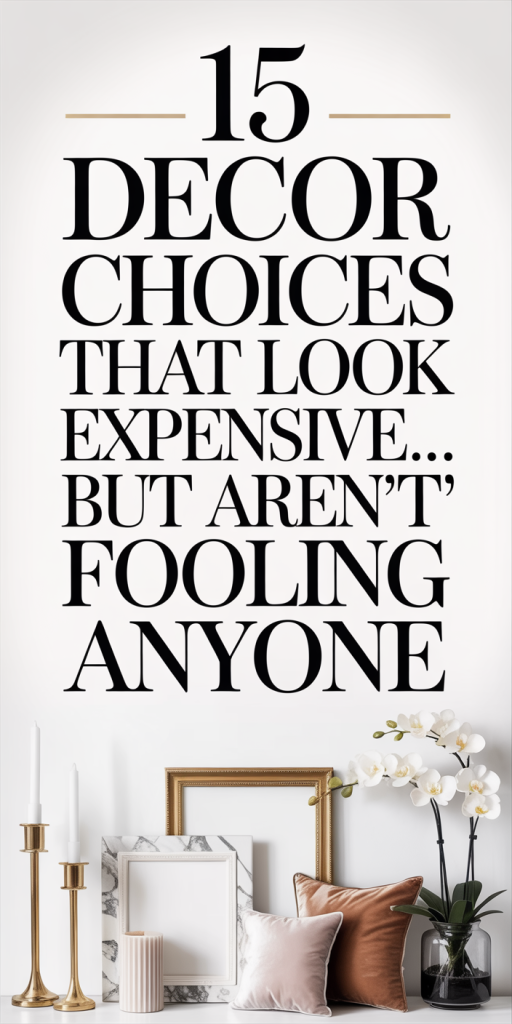
We all want a home that reads polished and intentional without emptying our wallets. The problem: a lot of decor tries to look expensive but ends up shouting “budget buy” instead, sometimes loud enough to ruin an otherwise well-designed room. In this guide we’ll identify 15 common decor choices that aim for luxury but miss the mark, explain exactly why they fail, and give practical swaps and tweaks that actually elevate a space. Whether you’re staging, decorating on a tight budget, or simply tired of feeling like your pieces are pretending to be high-end, we’ll show how small changes in material choices, scale, placement, and finish transform the same items from tacky to tasteful. Read on for clear, confident guidance: spot the giveaways, fix them fast, and make your decor finally look the way you want it to, effortlessly refined, not contrived.
Overly Shiny Metals, Gold-Plating, And Polished Chrome Overuse
High-shine metals are seductive: they catch the eye and can imply polish. But relentless gloss or obvious gold-plating often reads cheap because the finish is masking subpar construction. Bright, mirror-like chrome or gold that peels or chips reveals its budget origins quickly. Also, mixing too many shiny metals, polished chrome faucets, bright brass knobs, and glossy light fixtures, creates a disjointed look that feels mass-produced.
We prefer finishes that show a bit of subtlety. Brushed or satin metals conceal fingerprints and minor imperfections and feel more tailored. Warm, low-luster brass or oxidized metals have depth and age gracefully, which gives them a perceived value beyond the sticker price. When picking finishes, aim for consistency within sightlines: keep hardware and major fixtures in the same family, and reserve high-gloss pieces for small accents rather than whole rooms. Finally, think texture, pairing a satin brass lamp with a matte ceramic base and linen shade creates a layered, intentional look rather than a plastic-y shine.
Velvet, Chenille, And Overstuffed Fabrics That Look Dated Or Cheap
Soft, plush fabrics feel luxurious in principle, but certain treatments and silhouettes age poorly. Oversized tufted sofas with shiny velvet, or cheap chenille throws with visible pill, can instantly date a space. Overstuffing furniture to the point it loses shape is another common misstep, it reads like trend-driven fast furniture rather than enduring design. Fabric quality, scale, and context determine whether plush textiles upgrade a room or sink it.
To keep soft fabrics looking high-end, we recommend several strategies. First, choose looser, matte velvets rather than glossy crushed velvet: the nap should be fine and consistent. Opt for tailored silhouettes with clean lines and modest tufting rather than exaggerated, low-quality padding. For throws and pillows, invest in natural fills (down or high-quality down alternatives) and covers in linen, wool, or brushed cotton. Finally, balance plush materials with firmer textures, think a linen bench, raw-wood coffee table, or metal-framed side table, so the room feels layered and intentional, not over-padded.
Statement Pieces That Date Fast: Neon, Oversized Abstracts, And Trendy Sculptures
Trend-forward statement pieces are tempting. They promise personality and immediacy. But their shelf life is often short. Neon signs, oversized abstract works in trendy palettes, and sculptural pieces tied to a micro-trend can anchor a room to a specific moment, and that moment may pass quickly. When a bold centerpiece feels temporally bound, the rest of the room can start to feel like it’s wearing last season’s outfit.
We don’t mean to avoid boldness altogether: we just suggest strategic placement and flexibility. Treat highly trendy statement items as replaceable accents rather than permanent fixtures. Put them on a wall where they can be swapped easily, or stage them on a movable surface like a console or shelf. If you love neon or vivid abstracts, balance them with timeless elements, high-quality rugs, classic furniture silhouettes, and muted wall tones. That way, when the trend fades, the room still stands on solid, enduring bones.
Cheap-Looking Lighting, Mirrors, And Decorative Accessories (Blown Glass, Plastic-Look Lamps)
Lighting and mirrors are deceptively powerful, they can elevate or flatline an entire space. Lamps with clearly visible seams, blown glass that looks thin and overly glossy, or mirrors with fake antiquing patterns are all quick indicators of cheap production. Plastic-look components, obvious glued trims, and lightweight hardware that wobbles under touch are also giveaways. These items sit in sightlines and touch zones, so their perceived quality matters.
When shopping, we focus on weight, joinery, and finish. A heavier lamp base often signals denser materials and better balance. Look for well-fitted seams, secure sockets, and high-quality fabric shades rather than flimsy paper. Mirrors should have flat, well-mounted glass and authentic backing or subtle, genuine patina if antique-looking. For decorative glass, prefer pieces with slight imperfections and depth, those qualities hint at handcrafting. Where budget limits us, prioritize good lighting and a single quality mirror: smaller accessories can be rotated or upgraded later.
Conclusion
Luxury in decor isn’t about price, it’s about choices. We’ve walked through common traps: faux materials, over-ornamentation, shiny finishes, dated textiles, fleeting statement pieces, and flimsy fixtures. The antidote is simple: prioritize authenticity of finish, control scale and balance, and choose pieces that layer well and age gracefully. Small upgrades, a satin metal finish, a matte stone look, a well-proportioned frame, or a weighted lamp, cost little compared with full replacements but punch well above their price.
As we decorate, let’s think like curators. Keep the majority of elements calm and timeless, let the occasional trend be a replaceable accent, and invest where touch and sightlines matter most. Do that, and your decor will reliably read refined, not because it tries to look expensive, but because it’s thoughtfully composed.
Leave a Reply