Homes change, family size, work habits, and design tastes shift faster than ever. When we decide between built-ins and freestanding furniture, we’re not just picking a look: we’re making a bet on how our space will serve us in five, ten, or twenty years. This guide cuts through the jargon and emotion to give practical, long-term thinking about flexibility. We’ll compare built-ins and freestanding pieces side-by-side, examine real-world trade-offs for mobility, adaptability, and longevity, and give a checklist to help you choose the right approach for each room. Whether you’re renovating, buying a new home, or simply planning for life’s inevitable changes, we’ll help you make choices that stay smart longer, without sacrificing style today.
Built-Ins Vs Freestanding: A Quick Side-By-Side Comparison
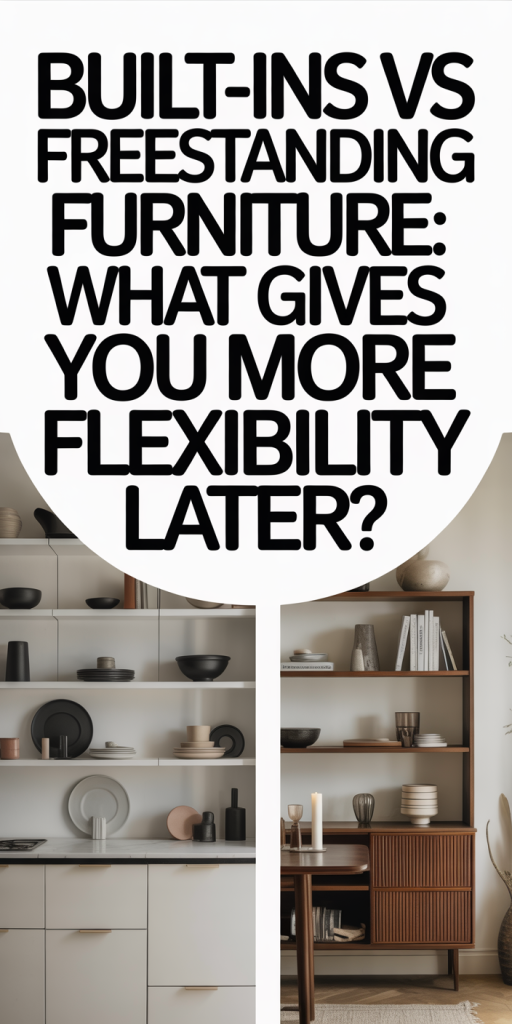
Built-ins
- Permanence: Attached to walls or floors: often custom-sized for a specific wall or window.
- Strengths: Seamless look, optimized use of awkward spaces, and often increased storage capacity per square foot.
- Weaknesses: Difficult and costly to move or repurpose: can date a room’s style.
Freestanding Furniture
- Permanence: Portable and relatively easy to replace or rearrange.
- Strengths: Versatility across rooms, lower upfront commitment, and easier style updates.
- Weaknesses: Usually less tailored to tight spaces and may underutilize irregular corners.
At a glance, built-ins buy space efficiency and cohesion: freestanding furniture buys adaptability. But this headline comparison misses nuance. For example, a modular freestanding system can approach the utility of a built-in, and some built-ins can be designed to be partially demountable. The rest of this guide unpacks those nuances so we can match decisions to real homeowner needs rather than design dogma.
What Flexibility Really Means For Homeowners (Mobility, Adaptability, And Longevity)
When we talk about “flexibility,” we mean three distinct, measurable things: mobility, adaptability, and longevity.
- Mobility: The physical ability to move or remove a piece. Freestanding pieces score high, think recliners, dressers, and bookcases. Built-ins score low unless they’re specifically designed for disassembly.
- Adaptability: How easily a piece supports new functions. A freestanding dining table can become a desk: a built-in banquette is harder to repurpose. But adaptability also includes reconfigurability, modular systems, adjustable shelving, and movable partitions increase adaptability whether they’re built-in or freestanding.
- Longevity: How long the piece remains useful and desirable. Built-ins can last decades structurally, but tastes and household needs can outpace them. Freestanding pieces are easier to replace as needs evolve, but they may wear out sooner physically.
We should assess flexibility through the lens of life changes: kids, aging in place, remote work, shifting storage needs, and resale. For example, if we expect to downsize in five years, freestanding furniture that’s easy to move and sell becomes more valuable. If we’re planning to age in place, built-ins that minimize bending and provide integrated storage might be wiser. Flexibility also has an emotional component, do we prefer a consistent, curated look or the freedom to experiment?
Finally, flexibility is co-created with floorplan and budget. A small urban apartment emphasizes mobility and space optimization: a suburban home with extra square footage can afford more permanence. That context will guide whether we lean into built-ins, freestanding pieces, or a hybrid approach.
Advantages Of Built-Ins: Space, Function, And Cohesive Design
Built-ins excel when we want to extract every inch of usable space and create a unified aesthetic. Here are the principal advantages we can expect.
Optimized Use of Space
Custom shelving, window seats with hidden storage, and wall-to-wall cabinetry can reclaim awkward nooks and sloped ceilings. For small homes, built-ins can increase usable storage by 10–20% compared with off-the-shelf pieces, simply because they’re made to the wall and floor dimensions.
Integrated Functionality
Built-ins allow us to integrate wiring, lighting, and appliances in ways freestanding pieces can’t. Think recessed media cabinets with ventilated panels for electronics, built-in desks with cable management, or concealed drawers beneath stair treads. Those solutions reduce clutter and improve ergonomics.
Cohesive, High-End Finish
Because built-ins are usually custom- or semi-custom, they offer a finish continuity that’s hard to achieve with freestanding items. We can match millwork, paint, and hardware across a room for a designer-caliber result that reads as intentional and permanent.
Perceived Value
Thoughtfully executed built-ins often feel like a home’s bones rather than merely furniture. That perception can translate to stronger emotional appeal for homeowners and buyers who appreciate craftsmanship and integrated design.
Durability and Structure
When installed correctly, built-ins can be more robust than typical freestanding furniture. Anchored shelving and fixed cabinetry are less likely to tip, shift, or sag over time, an advantage for heavy-object storage or long-term installations.
Design Control
Custom built-ins let us address specific functional requirements, like a hidden laundry chute, a pet nook, or a built-in bar, without compromise. That precision can dramatically improve daily convenience and spatial efficiency.
The Drawbacks And Long-Term Risks Of Built-Ins
Even though the upsides, built-ins carry real long-term risks we can’t ignore.
High Upfront Cost and Installation Disruption
Custom cabinetry and millwork typically cost more than comparable freestanding pieces. Installation can also be invasive, cutting, painting, electrical updates, so renovation timelines and budgets expand.
Reduced Flexibility
Once installed, built-ins constrain future layout changes. If we later decide to enlarge a room, remove a wall, or repurpose a space, the built-in can become an obstacle rather than an asset. Removing or relocating built-ins is often costly and can damage surrounding finishes.
Style Aging and Buyer Preferences
Built-ins reflect a stylistic moment. While some classic millwork ages gracefully, trendy built-ins, think ornate shelving with specific niche sizes, can date a home. For resale, a buyer may view a custom solution as limiting if it doesn’t match their needs.
Potential for Over-Commitment
Homeowners sometimes overbuild, filling a space with permanent solutions for short-term needs (e.g., a niche entertainment center designed around current TV sizes). That over-commitment reduces future adaptability.
Maintenance and Repair Complexity
Integrated systems can hide mechanical or electrical components. When something fails, ventilation, wiring, or a mechanical drawer slide, repairs can be more complicated than swapping out a freestanding unit. We should plan for access panels or removable modules to mitigate this risk.
Environmental and Lifecycle Considerations
Because built-ins are harder to repurpose, they can contribute to waste if removed. But, high-quality built-ins can outlast several generations of furniture if maintained, so impact varies with material choices and craftsmanship.
In short, built-ins reward us with optimized function and aesthetics but penalize with reduced adaptability and higher initial investment. We have to ask whether the immediate gains justify the future constraints.
Advantages Of Freestanding Furniture: Versatility, Portability, And Style Updates
Freestanding furniture is the default option for good reason: it offers flexibility we can leverage across changing life stages.
Mobility and Ease of Reconfiguration
We can move sofas, beds, and cabinets between rooms, into storage, or to a new house. That mobility simplifies remodeling, seasonal rearrangements, and the logistics of life events, like moving for work or accommodating a growing family.
Lower Upfront Cost and Reduced Installation Time
Off-the-shelf and custom freestanding pieces often cost less than built-ins for comparable storage or finish quality. There’s no major installation, so we can own a functional room the same day a piece arrives.
Style Agility
If we like to refresh decor with trends or evolving tastes, freestanding furniture lets us swap finishes, fabrics, and silhouettes without a contractor. This is a major value for homeowners who enjoy frequent updates or want to experiment before committing.
Resale Liquidity
Because freestanding items are movable, they’re simpler to sell, donate, or trade-in. That liquidity reduces the cost of style changes over time: a well-maintained sofa can fetch resale value, offsetting replacement costs.
Compatibility With Small-Batch or Modular Systems
Modern modular furniture blurs the line: modular sofas, shelving cubes, and stackable storage offer near-built-in performance while remaining portable. These solutions combine the benefits of both approaches and often at a lower total investment.
Fewer Structural Requirements
Freestanding pieces don’t rely on wall studs or specialized mounting, useful in rental units or older homes with uncertain wall conditions. For renters, this is often the only practical option.
Taken together, freestanding furniture gives us the freedom to experiment, adapt, and move, making it the safer bet when our future plans are uncertain.
How Each Option Affects Resale Value, Remodeling, And Future Buyers
Real estate value responds not just to features but to perceived flexibility. Here’s how built-ins and freestanding furniture influence resale, remodeling choices, and buyer reactions.
Resale Value
- Built-ins: Tasteful, high-quality built-ins, especially those that improve storage or flow, can boost a home’s appeal and sometimes its market value. But, extremely customized solutions that tightly match one owner’s needs can limit buyer interest. Buyers often prefer neutral, adaptable features.
- Freestanding: Because it’s removable, freestanding furniture rarely impacts home value directly. But the presence of thoughtful, well-proportioned furniture in listing photos can improve perceived space and lifestyle, indirectly supporting value.
Remodeling Flexibility
- Built-ins: They complicate major remodels. Removing or altering built-ins adds cost and time. If we foresee structural changes (knocking down walls, reconfiguring layouts), freestanding solutions reduce friction.
- Freestanding: Remodeling is easier when furniture can be moved out of the way or stored. We can experiment with layout changes without demolition.
Buyer Preferences and Marketability
Buyer demographics matter. In urban markets with smaller units, built-ins that maximize storage and function can be a selling point. In suburban or luxury markets, buyers may expect high-end built-ins in kitchens and master closets, and they judge quality closely.
Neutrality and Emotional Appeal
The best built-ins are neutral in style and flexible in function, think adjustable shelving, integrated lighting that’s not overly decorative, and universal-sized cabinetry. These features allow buyers to project their own preferences onto the space.
Staging and Visual Impact
For resale, we can use freestanding furniture strategically to demonstrate a room’s possible layouts. Well-staged homes sell faster. If we choose built-ins, maintain flexible staging options (e.g., removable shelves, replaceable hardware) to appeal broadly.
In practice, our strategy should reflect market realities. If we plan to sell within a few years, we should favor solutions that most buyers in our market find useful. If we expect to stay long-term, personal preference and functionality can take precedence.
Cost, Installation, And Maintenance Trade-Offs Over Time
Understanding lifecycle costs, not just upfront price, helps us avoid surprises.
Upfront Costs
- Built-ins: Higher material and labor costs. Custom cabinetry, integrated lighting, and built-in appliances raise the initial spend. Expect to pay a premium for on-site labor and finishing.
- Freestanding: Generally lower immediate cost. Even high-quality freestanding pieces usually cost less than equivalent custom built-in solutions.
Installation and Time Costs
- Built-ins: Installation can take days to weeks, with potential for dust and disruption. We should budget time for finishing work (paint touch-ups, trim adjustments).
- Freestanding: Quick delivery and placement: minimal disruption.
Maintenance and Repair
- Built-ins: Lower tendency to move reduces wear from handling, but integrated systems can be costly to repair if electrical or mechanical systems are enclosed. Plan for accessible panels and service points.
- Freestanding: Easier and cheaper to repair or replace individual pieces. But, lower-quality items may require replacement sooner.
Depreciation and Replacement Costs
- Built-ins: Depreciation varies. High-quality millwork can last decades and may not need replacement, reducing cost over time. But if tastes change, cosmetic alterations (refacing, repainting) are more involved.
- Freestanding: Easier to refresh incrementally. Reupholstery, refinishing, or part replacements are common and cost-effective.
Hidden Costs
- Built-ins: Potential for unseen expenses, structural reinforcement, electrical rewiring, or mold/insulation work exposed during installation.
- Freestanding: Shipping, assembly fees, and fastening hardware (for safety anchoring) are small but real costs.
Tax and Insurance Considerations
In some jurisdictions, permanent built-ins can be classified as real property improvements and treated differently for tax or insurance purposes. We should check local rules, especially for major renovations.
Balancing these factors, we find that built-ins are an investment in permanence and efficiency: freestanding is an investment in flexibility and lower short-term cost. Our decision should reflect projected time in the home, tolerance for disruption, and willingness to absorb potential future alteration costs.
Hybrid Strategies And A Practical Decision Checklist For Choosing What’s Right
We rarely need to choose exclusively between built-ins and freestanding pieces. A hybrid approach often delivers the best long-term value. Below are practical strategies and a checklist to guide decisions.
Hybrid Strategies
- Anchor + Modular: Install a modest built-in ‘anchor’, a fireplace surround, window seat, or low cabinetry, then complement with modular freestanding storage. This gives permanence where it counts and flexibility elsewhere.
- Demountable Built-Ins: Work with a millworker to design built-ins that can be disassembled into modular panels for future removal. Use knock-down fasteners and standardized dimensions so pieces can be repurposed.
- Standardized Openings: If you want custom cabinetry but worry about changing tech (TV sizes, speaker systems), design openings with adjustable shelves and ventilation. Avoid overspecific niches.
- Mix High and Low: Invest in built-ins in high-use, hard-to-outsource areas (kitchen, mudroom), and choose freestanding furniture for living rooms and bedrooms where tastes shift more.
Decision Checklist (use before major purchases)
- How long do we plan to stay? If under five years, favor freestanding or demountable built-ins.
- Do we need to maximize every inch? For tiny spaces, built-ins often win.
- Will the space need multiple future uses? Prioritize modular and freestanding solutions.
- What’s our renovation budget? Built-ins cost more upfront and can create hidden expenses.
- Are there safety or stability concerns (kids, pets)? Built-ins or properly anchored furniture preferred.
- Is resale a near-term priority? Choose neutral, flexible built-ins or primarily freestanding pieces.
- Can we design for serviceability? Ensure access panels and removable components for built-ins.
- Do we value frequent style changes? Favor freestanding or easily upgradable modular systems.
- Are there structural or mechanical constraints? Older walls or rental rules may force freestanding choices.
- Can we combine both? Identify one or two anchor built-ins where they’ll deliver the most value and leave the rest flexible.
Applying the checklist lets us make room-by-room decisions rather than an all-or-nothing commitment. For example, in a small condo we might invest in a built-in media wall with ventilated panels and keep the rest freestanding. In a family home, we might opt for built-in kitchen cabinetry and freestanding living room furniture to stay nimble.
Conclusion
Built-ins and freestanding furniture each have clear roles in a flexible, future-ready home. Built-ins give us optimized space, cohesion, and permanence, but they require higher upfront cost and limit later changes. Freestanding furniture offers mobility, lower initial investment, and easier style updates, though it can use space less efficiently.
Our best strategy is pragmatic: evaluate each room on its own merits, favor hybrid solutions where possible, and design built-ins to be as demountable and serviceable as practical. Using the checklist above, we can make decisions that protect our options, so our home adapts to life’s changes rather than locking us into a single moment in time.
Leave a Reply