We’re going to be blunt: choosing between quartz vs granite countertops isn’t just a design call, it’s a long-term lifestyle decision. Both materials dominate kitchens and bathrooms because they look great and promise durability, but the trade-offs are real and subtle. Designers often focus on appearance and ease of installation, then gloss over practical headaches like thermal tolerance, surface integrity over time, or how warranties actually work.
In this piece we’ll explain the science, the myths, and the practical outcomes you’ll live with for a decade or more. We’ll cover how each material is made, what daily use really does to them, maintenance realities, true cost versus perceived value, and, most important, how to choose the right surface for your household habits and design goals. Read on if you want to pick a countertop that earns its place rather than becoming an expensive regret.
The Hard Truth Designers Rarely Tell Clients
Designers earn trust by showing beautiful photos and curated samples, but there are a few truths they often downplay, not out of malice, but because clients want to imagine perfection.
First: no countertop is maintenance-free. We’re frequently told quartz is “maintenance-free” and granite is “high-maintenance,” which simplifies reality into a myth. Quartz does reduce the need for sealing, but it can show heat damage, seam visibility, and chip patterns that are harder to repair invisibly. Granite is natural and can be resealed, but it’s still porous to varying degrees depending on the slab, and some exotic granites are almost as low-maintenance as quartz.
Second: warranties are marketing, not prophecy. Manufacturers and fabricators offer warranties that look robust on paper, but they rarely cover everyday issues like thermal cracking, discoloration from incidental chemical exposure, or labor costs for seam adjustments. We recommend reading warranty fine print and asking what’s excluded, thermal shock, improper care, and DIY modifications are common carve-outs.
Third: installation and fabrication quality matter more than material choice in many cases. A perfectly installed granite countertop by a skilled fabricator will perform better than poorly templated quartz. Seams, edge profiles, and substrate flatness influence how the surface ages and how comfortable you’ll be using it.
Finally: resale value is nuanced. Buyers like stone, but they care about style, cohesion, and condition more than whether a countertop is quartz or granite. We’ve seen homes with well-chosen, well-maintained quartz sell faster than those with damaged natural stone.
Knowing these realities upfront changes how you approach the selection process: think performance, not prestige.
What Quartz And Granite Really Are — Materials, Origins, And Myths
Understanding origin stories helps us predict long-term behavior.
Quartz is an engineered product: ground natural quartz (a very hard mineral), resins, pigments, and sometimes recycled glass or mirror are combined under heat and pressure to create slabs. Because the mix is manufactured, color consistency and pattern control are excellent. But that resin matrix is what changes the performance profile: quartz is not as heat-resistant as stone, and prolonged UV exposure can cause subtle discoloration. The engineered nature is a benefit in terms of uniformity and an issue if you want a truly natural, unique surface.
Granite is a natural igneous rock formed from cooled magma. Its visual character, flecks, veins, and color variations, is the result of mineral composition and cooling conditions over millions of years. That variability is what people love, but it adds unpredictability: different slabs from the same quarry can have different porosity, fracture lines, and mineral hardness. Granite can resist scratches and heat much better than resin-heavy materials, but it can also contain veins or fissures that need stabilization during fabrication.
Myths we hear constantly:
- Myth: “Granite is maintenance-heavy.” Reality: some granites take sealant well and need little more than annual resealing, while others require more attention. – Myth: “Quartz is indestructible.” Reality: quartz is strong but can chip, scorch, or stain if exposed to concentrated heat or harsh chemicals. – Myth: “Granite is always more valuable.” Reality: resale value depends on style, color trends, and condition, not simply “naturalness.”
With that baseline, we’ll jump into how engineered quartz is made and how natural granite forms, because those processes directly influence lifetime performance.
How Engineered Quartz Is Made (And Why That Matters)
Engineered quartz starts as about 90–95% ground quartz crystals mixed with polymers (usually polyester resins) and pigments, then compacted using a process called vibro-compression under vacuum and cured with heat. Manufacturers may add recycled content or glass chips for visual effects.
Why the manufacture matters:
- Consistency: Because it’s mixed, color and pattern repeatability across slabs and batches is high. If you need matching countertops in different rooms, quartz simplifies that. – Resin binder: That gives quartz strength and non-porous qualities, great for stain resistance, but it also lowers the surface’s tolerance to direct, concentrated heat. A hot pan can scorch the resin or cause thermal stress. – Repairability: Chips typically reveal resin and aggregate beneath, making invisible repairs difficult. Polishing can help, but matching color and reflectivity is never guaranteed. – Environmental note: some brands use recycled content and low-VOC resins: others don’t. If sustainability matters, ask for product transparency and certifications.
Knowing the manufacturing trade-offs helps us predict behaviors: excellent stain resistance and color uniformity versus a vulnerability to heat and harder-to-hide repairs.
How Natural Granite Forms (And The Implications For Buyers)
Granite is a coarse-grained igneous rock composed principally of quartz, feldspar, and mica. It forms deep underground as magma cools slowly, allowing crystals to grow. Because the growth environment changes, slabs have natural variations, veins, and sometimes micro-fractures.
Why that formation matters for buyers:
- Unique character: no two slabs are identical. That’s a selling point but also a procurement challenge, you must choose your slab, not just a sample. – Porosity varies: although granite is generally less porous than many surfaces, porosity ranges by quarry and even within a single slab. Some granites take sealer well and become nearly impervious to stains: others accept liquids more readily and demand more care. – Natural fissures: some granites contain veins or hairline fractures that fabricators reinforce with resin or stainless-steel pins during fabrication. Reinforcement is normal: a good installer will explain what was done. – Heat resistance: generally excellent. Granite tolerates hot pans better than resin-based products, but extreme thermal shock (like a red-hot pan on a cold, wet slab) can still cause cracks.
For buyers, the main takeaways are: insist on slab selection, ask about porosity and recommended sealants, and expect visual uniqueness.
Durability, Heat Resistance, And Everyday Wear
Durability is where pros and homeowners often disagree. We’ll break this into scratch resistance, heat tolerance, chips and cracks, and impact resilience.
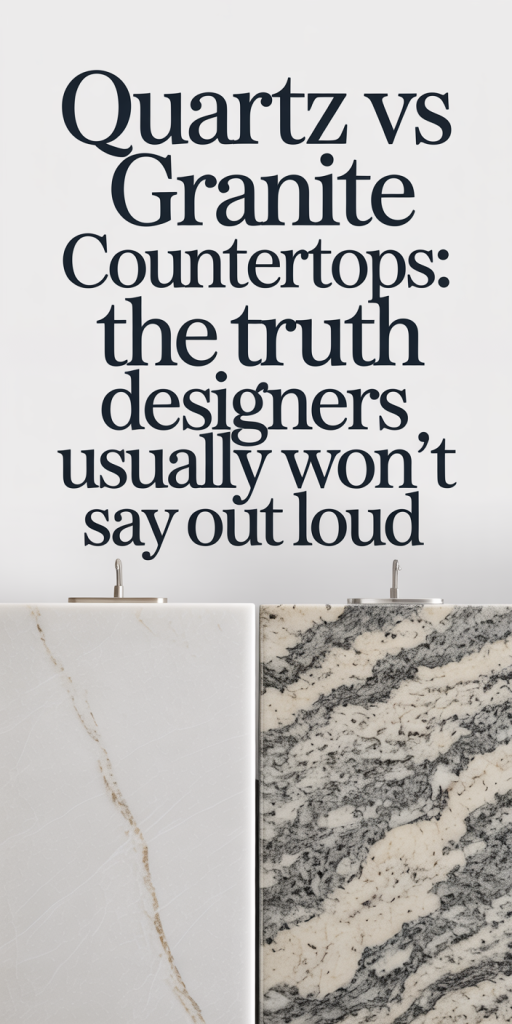
Scratch resistance: Quartz and granite both score high. Quartz is harder than many household items because of its high quartz content, but the resin matrix reduces pure mineral hardness. Granite’s mineral mix (quartz + feldspar) is naturally hard: while granite can scratch, visible scratches are uncommon with normal kitchen use. Cutting on the surface will damage either, always use a board.
Heat resistance: Granite wins. Natural stone handles localized heat better: a hot pan is unlikely to scorch granite. Quartz resins are sensitive to sudden, concentrated heat. An exposed bottom of a cast-iron skillet can discolor or fracture quartz, and heat marks can be permanent.
Chips and cracks: Quartz chips often reveal a different texture and color in the repair, making them more visible. Granite chips can be filled and polished with less obvious results if the color and pattern allow. Cracks from thermal shock are rarer in granite but do occur if underlying substrates trap moisture or if there’s severe temperature differential.
Impact resilience: Both materials can suffer chips from heavy falls (think a cast-iron pot dropped on an overhang). Edge profile choice affects vulnerability: thinner overhangs chip more easily. Installation: a level, well-supported substrate reduces stress concentrations that cause cracking.
In short: quartz offers predictable performance with some heat and repair liabilities: granite provides superior heat resistance and natural variability that can hide minor wear if chosen carefully.
Maintenance, Stains, Sealing, And Warranty Reality
Maintenance requirements are a major deciding factor for busy households. Here’s the practical guide we give clients.
Quartz maintenance: Cleaning is simple, mild soap and water or pH-balanced cleaners. Avoid bleach-based or abrasive cleaners and never use strong solvents like paint stripper. No routine sealing is required because the resin matrix is non-porous. For stubborn spots, manufacturers recommend specific cleaners: follow their guidance to keep warranties valid.
Granite maintenance: Most granites benefit from periodic sealing. High-quality impregnating sealers penetrate pores and improve stain resistance: we usually recommend annual checks rather than a hard timeline. If water beads, the sealer is likely still effective: if it darkens or stains, reseal. For oil-based stains the right poultice or professional treatment is often necessary.
Stains and chemical resistance: Quartz resists wine, coffee, and most household stains well. It does, but, react badly to prolonged exposure to strong acids, alkalis, or solvents, leaving dull patches or discoloration. Granite resists many chemicals better, but some acidic substances (like lemon juice) can etch sealant or certain mineral compositions over long exposure.
Warranty reality: Warranties are typically limited to manufacturing defects: delamination, resin bonding issues, or color defects beyond tolerance. They rarely cover install-related problems, thermal damage, or improper maintenance. We advise keeping the purchase invoice, installation notes, and a photo record. If you intend to keep countertops long-term, a robust care plan and documented professional installation are your true insurance.
Practical tip: always request manufacturer care instructions and the fabricator’s workmanship warranty in writing. The two may differ: know both.
Cost, Value Perception, And Resale Impact
Upfront cost and perceived value diverge markedly between quartz and granite.
Initial cost: Quartz generally sits in a predictable price band because production controls color and pattern. Mid-range quartz competes with mid-range granite: high-end quartz with unique patterns can match or exceed premium natural stones. Granite pricing varies widely by rarity, quarry, and slab size: exotic granites can be pricier than entry-level quartz.
Long-term value: Granite’s “natural” cachet appeals to many buyers, but trends shift. We’ve watched some colors (very busy, highly veined patterns) fall out of favor, while subtle, consistent quarts remain hot because they match many design languages. The critical driver of resale is condition and cohesion: a well-chosen quartz that complements cabinetry and lighting often adds more perceived value than a mis-matched, damaged granite.
Replacement and repair costs: Repairs on quartz (color-matching resin fills) can be more complicated and costly, and fabrication to replace a section may be pricey because of color matching. Granite repairs are often less visible if the pattern hides fillers: but, sourcing a matching slab for a replacement panel can be nearly impossible if the slab was unique.
Return on investment (ROI): If your local market favors natural stone, granite may edge quartz. In markets where clean, contemporary kitchens sell faster, quartz may deliver better ROI. We recommend checking comparable listings in your neighborhood and asking local realtors which look buyers are searching for now.
Eventually, cost decisions should factor in maintenance willingness, cooking habits, and how long you intend to keep the counters.
How To Choose Based On Your Household, Cooking Habits, And Design Goals
Choosing the right surface depends less on marketing and more on observable behavior and goals. We use a few quick diagnostics with clients to steer them.
Household profile:
- Heavy cooks and bakers: Choose granite if you regularly put hot pans on the counter or create large thermal shifts. The stone’s heat tolerance and toughness make it forgiving. – Busy family with kids: Quartz’s stain resistance and consistent look make it attractive. If you want low fuss and predictable color that hides sticky fingers, quartz is a good pick. – Entertainers and hosts: Consider edge profiles, seam placement, and continuity between kitchen and bar. Quartz offers repeatable slabs for islands and bars: granite’s uniqueness can be a focal point if you plan to center design around it.
Cooking habits and cleaning tolerance:
- If you routinely use strong cleaners, degreasers, or acidic marinades, understand the manufacturer’s guidance, quartz can be sensitive to certain chemicals. Granite sealed well tolerates many household substances but needs reseal attention. – If cutting directly on counters is common (we hope you won’t.), both materials will suffer. Factor in repair budgets.
Design goals and aesthetic:
- Desired look: For consistent color and modern minimalism, quartz shines. For rustic, organic, or dramatic natural statements, granite provides depth and uniqueness. – Lighting and cabinet pairings: Busy granite patterns can compete with patterned cabinetry: quartz can act as a calm counterpoint. We advise laying multiple full-size slabs or mockups next to your cabinets and lighting at different times of day.
Practical selection steps we recommend:
- Define lifestyle priorities, stain resistance, heat tolerance, or visual uniqueness. 2. Visit slab yards, not just showrooms. Select the actual slab if you choose granite. 3. Ask fabricators about reinforcement, seam placement, and substrate requirements. 4. Get written care instructions and both material and workmanship warranties. 5. Consider a small, inconspicuous test: leave a hot pan on a scrap piece (with permission) or test with lemon juice for a few hours to see reaction.
Following this process reduces surprises and helps you choose a countertop that actually works for the way you live.
Conclusion
Our bottom line: there’s no universal “better” between quartz vs granite countertops, only the better choice for your home. Quartz offers predictable appearance, low routine maintenance, and consistency across installations. Granite delivers natural beauty, superior heat tolerance, and a one-of-a-kind surface that can hide character and minor wear.
We encourage you to prioritize how you use the space, insist on slab selection or consistent batch numbers, and demand clear written guidance from your fabricator and manufacturer. When we approach countertop selection this way, the decision becomes less emotional and more practical, and you end up with a surface that earns its place for years, not one that becomes a costly regret.

Leave a Reply