Choosing between a sectional and a sofa feels like an interior-design fork in the road, and in 2026 the stakes are higher. Our living rooms are multifunctional hubs: remote work, streaming marathons, hosting friends, and quiet reading time. One seating choice affects traffic flow, acoustics, ergonomics, and even how we entertain. In this guide we’ll walk through the practical differences between sectionals and sofas so you can choose the piece that truly changes how your living room functions and feels. We’ll cover layout, comfort, materials, longevity, and budget, then give a hands-on checklist and buying tips. By the end you’ll know not just which looks better, but which one saves time, money, and headaches in daily life.
Why Your Seating Choice Matters More Than You Think
A couch is more than furniture: it’s a behavioral engine. The difference between a sectional and a sofa ripples through how we live at home. A sectional encourages lounging together, creates natural conversation zones, and often becomes the default hangout for kids and pets. A sofa tends to shape more formal sitting, clearer pathways, and defined seating places, which can be useful if you want to preserve structure in a room.
Beyond behavior, seating affects acoustics, sightlines to the TV, and how air and light move through the space. An L-shaped sectional can block a path or create a cozy nook that muffles sound: a sleek sofa makes the room feel more open but may leave awkward empty corners. There are also psychological effects: large, enveloping seating cues relaxation and togetherness: minimal sofas cue intentionality and tidier habits.
We should also consider adaptability. With remote work and hybrid lifestyles, our living rooms are now offices, classrooms, and entertainment centers. Picking the wrong footprint can lock us into compromises, poor ergonomics for long laptop sessions, or insufficient seating for hosting. So when we choose seating, we’re making a small architectural decision with big day-to-day consequences.
Layout, Flow, And Room Size: Which Works Best Where
Layout and circulation are the first practical constraints we check. Sectionals occupy more linear and corner space and can dominate a floorplan. In open-plan living rooms they’re great for zoning: an L-shape creates a visual boundary between living and dining areas without adding walls. But, in narrow or highly trafficked rooms a sectional can create bottlenecks.
Sofas are far more flexible in tight spaces. A two- or three-seater leaves room for side tables, accent chairs, and clear paths. When we want to preserve multiple furniture arrangements, say, switching between conversation cluster and media-focused layout, a standalone sofa with movable chairs lets us reconfigure easily.
Room size guidelines: in rooms under 12×14 feet, a compact sofa often reads better and keeps sightlines open. For rooms 14×18 feet or larger, a sectional can anchor the space and fill voids that would otherwise look awkward. Corner positioning, window placement, and door swings matter. If you’re unsure, we recommend mapping to scale on graph paper or using an AR room planner. Visualizing the footprint before buying prevents surprise fit issues and costly returns.
Comfort, Seating Capacity, And How People Actually Use Them
Comfort isn’t just cushion density, it’s how seating supports the real ways people sit and interact. Sectionals typically offer more varied lounging positions: corners for knees-up reading, chaise ends for naps, and contiguous surfaces for kids to sprawl. That makes them winners for families and households who prioritize casual comfort and communal lounging.
Sofas usually define individual seats, which helps when people want personal space or when guests expect a more formal arrangement. If your typical use involves a mix of watching TV, working on a laptop, and hosting a small group, we find that pairing a sofa with one or two flexible chairs offers versatility: guests can migrate during conversation: someone can turn a chair toward the window for light.
Seating capacity is another reality check. A sectional may advertise seating for five, but comfortable seating depends on cushion depth and arm placement. Measure “functional seating”, how many adults can sit without invading personal space. Test patterns: will someone watch TV from the chaise comfortably? Can three adults sit on the sofa with laptops? These practical tests reveal the real-world capacity more reliably than spec sheets.
Style, Materials, And Aesthetic Flexibility
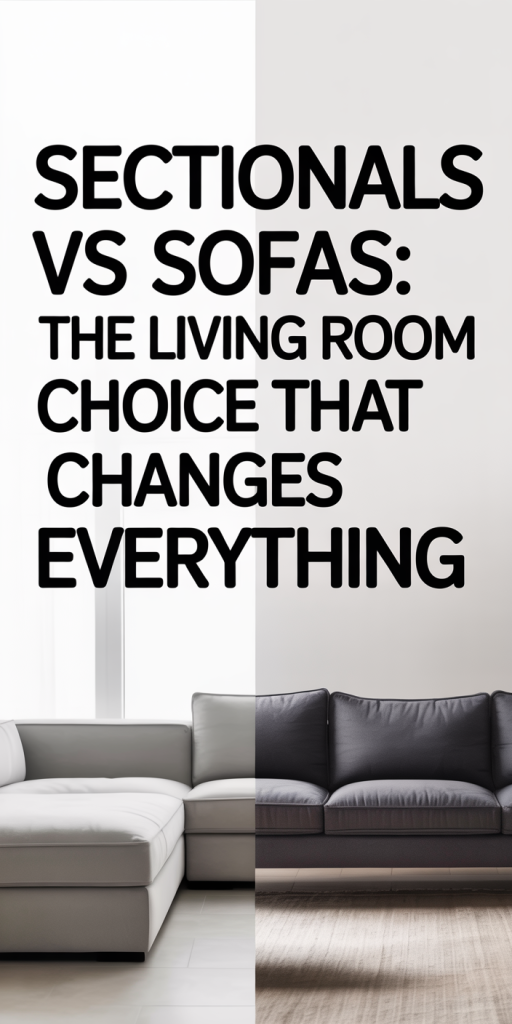
Style choices are where personal taste meets practical durability. Sectionals today come in modular designs, mid-century silhouettes, and plush contemporary versions. They’re bold statements, so their fabric and color choices set the tone for the whole room. A velvet sectional creates a luxe, intimate feeling: a light linen modular evokes breezy minimalism.
Sofas offer a neutral canvas for layered styling. You can swap accent chairs, coffee tables, and rugs more easily around a sofa. If you enjoy changing decor seasonally, a sofa’s smaller visual footprint makes refreshes cheaper and faster.
Material matters. Performance fabrics with stain-resistant weaves are a smart default, especially microfiber, Crypton, or specially treated poly-linen blends. Leather ages uniquely: full-grain leather develops patina, while faux leather is easier to clean but may crack sooner under heavy use. For sectionals, also check seam quality at joints: modular pieces often see stress where sections connect. Finally, consider color and pattern strategically: a sectional in a mid-tone neutral offers longevity, while patterned sofas can hide wear but limit future styling choices.
Durability, Maintenance, And Long-Term Ownership Costs
A couch is an investment that earns returns in years of comfortable use, but costs add up when maintenance and repairs are factored in. Sectionals, especially large or modular models, often have multiple cushions, seams, and mechanisms. Those extra parts mean more potential points of wear: cushion flattening, zipper failures, or connector hardware loosening.
Sofas typically have fewer components and are easier to service. Replacing cushions or reupholstering a sofa is usually less expensive than doing the same for a multi-piece sectional. That said, modular sectionals with replaceable covers and standardized connectors can be surprisingly economical long-term if they’re designed for disassembly.
Maintenance routines influence longevity. Vacuuming, rotating cushions, and prompt stain treatment extend life significantly. For leather, scheduled conditioning prevents cracking: for fabric, following manufacturer cleaning codes (W/S/X) keeps warranties valid. We recommend buying extended warranties only after evaluating the build: solid hardwood frames and eight-way hand-tied springs often justify higher warranty coverage due to repairability and durability.
Budget Considerations: Upfront Price Versus Lifetime Value
Budget decisions aren’t just about the sticker price, they’re about total cost of ownership. Upfront, a sectional generally costs more than a comparable sofa because it uses more material and construction. But if you frequently host and the sectional eliminates the need for extra chairs, its value-per-seat might be better over time.
Consider resale and modular upgradeability. A high-quality sofa from a reputable maker may retain resale value better than a trendy sectional that falls out of fashion. Conversely, modular sectionals that allow adding pieces later can be cost-effective if your household expands or you move to a larger space.
We recommend this mental math: estimate expected lifespan (5, 10, 15 years), add maintenance and probable reupholstery costs, then divide upfront cost by years of functional use to get an annualized price. Also factor in soft costs: will the purchase improve daily comfort, reduce clutter, or obviate future purchases? Those benefits aren’t always monetary but should inform a rational buying decision.
Measure, Visualize, And Test: A Practical Decision Checklist
Before buying, follow a short checklist we use to avoid regrets:
- Measure twice: Room dimensions, doorways, elevator and stair clearances, and the seating footprint. Don’t forget baseboard heaters, radiator protrusions, and fireplace hearths.
- Visualize at scale: Use graph paper or an AR app to place footprints. Sketch multiple layouts (TV-focused, conversation, traffic flow) and note sightlines.
- Test ergonomics: Sit for 10–15 minutes in-store or borrow a similar piece to see how lumbar support, seat depth, and arm height feel. Bring a laptop to test lap comfort if you’ll work on it.
- Check accessibility: Can you move sections through your entry path? Are connectors and legs removable? If not, delivery teams may refuse to install.
- Inspect construction: Ask for frame material (kiln-dried hardwood is preferred), suspension type (webbing vs springs), and cushion fill (foam density with feather wrap vs blown fiber).
This checklist keeps us from being seduced by looks alone and ensures the furniture integrates practically into our daily routines.
Match To Lifestyle: Families, Entertainers, And Small-Space Dwellers
Lifestyle is the decisive variable. For families with kids or pets, durability and cleanability trump trendiness. We recommend performance fabric sectionals with washable covers or leather sofas treated with a protective finish. Sectionals give the extra surface area kids need for projects or afternoon movie marathons, but pick one with removable, washable cushion covers to handle spills.
For entertainers who host often, flexibility matters. A sectional creates one large conversation area that’s great for group viewing, but if you often want separate conversation clusters, choose a sofa plus moveable chairs or a modular sectional you can reconfigure. Consider additional seating like ottomans and benches that tuck under coffee tables when not in use.
Small-space dwellers should prioritize scale and multifunctionality. A compact sofa that doubles as a daybed or a sectional with a slim chaise can stretch usable seating without overwhelming the room. Also think vertically: use wall-mounted storage and slim-profile side tables to keep floor space open.
Customization, Modular Options, And Smart Buying Tips
Customization and modularity have transformed the seating market. Many retailers now offer configurable sectionals where we can choose arm style, leg finish, cushion fill, and fabric performance. That’s useful for getting a tailored fit in awkward rooms.
Smart buying tips we use:
- Prioritize frame and suspension over fabric: these are harder to change later.
- Opt for removable cushion covers when possible, they’re a lifesaver for spills.
- When buying online, request fabric swatches and ask about returns: color shifts under different lighting are common.
- Consider modular purchases over time: start with a two- or three-seater and add chaise or corner pieces later as budget allows.
- Negotiate delivery and setup fees, and confirm whether installation includes connector clips for sectionals.
Finally, check warranty details carefully. Some brands cover frame and springs for longer periods but exclude upholstery. Knowing what’s covered helps us avoid surprise expenses.
Maintenance Routines And Repair/Replacement Guidance
A little maintenance goes a long way. Our go-to routine: vacuum weekly, rotate cushions monthly, and address spills immediately with manufacturer-recommended cleaners. For pet owners, we recommend a lint-roller plus a pet-hair brush weekly and protective throws over high-wear zones.
Repair guidance: for sagging cushions, check whether the cushions are reversible or have replaceable inserts, many high-quality manufacturers allow you to buy new foam inserts rather than reupholster. For wobbly frames, tighten exposed bolts first: if the problem is internal, contact a certified repair service. For seams and small tears, a professional upholstery shop can often patch without full reupholstery.
Replacement planning: expect mid-range pieces to show significant wear after 7–10 years under heavy use: premium builds often last 12–15 years. When deciding whether to repair or replace, weigh the cost of repair, the extent of wear, and whether the piece still fits your aesthetic. Sometimes a new slipcover or fresh cushions gives the old sofa a second life at a fraction of replacement cost.
Conclusion
Choosing between a sectional and a sofa isn’t just about taste, it’s a decision that shapes daily life. When we align layout, comfort needs, materials, and budget, the right choice becomes obvious: a sectional when communal lounging and zoning are priorities: a sofa when flexibility, formality, or small spaces demand it. Use our checklist, test ergonomics, and plan for maintenance to make a purchase that pays dividends in comfort and longevity. The best seating is the one that fits how we live, not just how it looks.
Leave a Reply