We’ve all seen those photos: soft, layered walls that look like they were lifted from a high-end hotel or a centuries-old Mediterranean villa. The secret behind that lived-in, luxurious depth isn’t always pricey paint or custom plaster, it’s limewash. The limewash wall trick that makes any room look expensive is as much about texture and subtlety as it is about color. In this guide we’ll explain why limewash elevates a room, how it differs from paint, the exact tools and safety steps you need, and step-by-step application techniques to get a layered, bespoke finish. We’ll also cover color blending, maintenance, and troubleshooting so you can avoid common pitfalls. Whether you’re a DIYer tackling a weekend project or a pro refining a signature look, we’ll walk through how to achieve a high-end finish that’s both durable and unmistakably elegant.
Why Limewash Instantly Elevates A Room
Limewash elevates a room because it creates depth and nuance in a way flat paint rarely can. Instead of a uniform single tone, limewash absorbs light differently across tiny surface variations, producing a soft glow and gentle tonal shifts that read as intentional ageing or artisan texture. That subtle, non-reflective finish reads as expensive for a few reasons we should understand.
First, limewash is translucent. It doesn’t sit on the surface like latex paint: it penetrates and bonds chemically with mineral substrates (lime + masonry). That bond makes the finish part of the wall, not an applied layer, and produces variations in tone as the material soaks up pigment differently across the surface.
Second, limewash pairs texture with tonality. Small irregularities, trowel marks, micro-roughness, joins, aren’t flaws here: they create visual interest. High-end interior design often uses this kind of subtle imperfection to avoid the plastic look of modern finishes.
Third, limewash has historical and material associations. It’s been used for centuries across Europe and the Mediterranean. That connection to craft and time-worn surfaces conveys authenticity and permanence that instantly uplifts a space.
Finally, limewash’s matte, breathable finish complements natural materials, wood, stone, brass, allowing those elements to take center stage. Instead of competing with glossy paint, limewashed walls provide a calm, sophisticated backdrop that reads as curated and expensive.
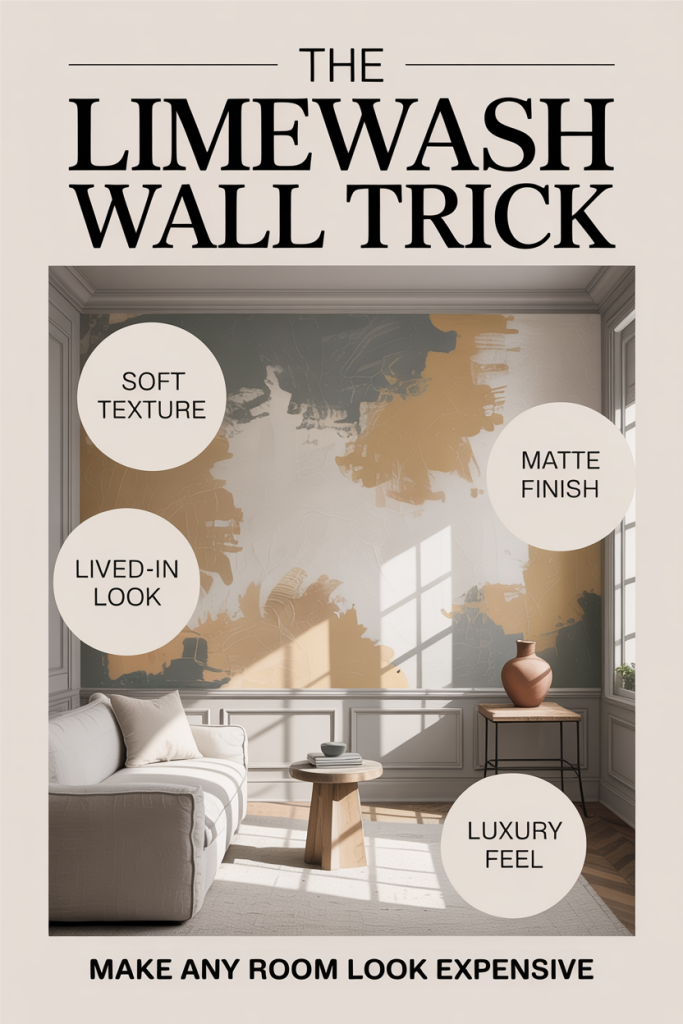
What Limewash Actually Is And How It Differs From Paint
Limewash is a traditional wall finish made from slaked lime (calcium hydroxide) often mixed with water and natural pigments. When applied, the lime reacts with carbon dioxide in the air to form calcium carbonate, essentially a mineralized, breathable layer that becomes part of the substrate. That chemical reaction is key: limewash doesn’t just sit on the surface: it transforms into a durable, mineral finish.
How it differs from paint:
- Composition: Conventional paint uses acrylic or alkyd binders to form a film. Limewash is binder-free (or uses minimal natural binders) and relies on a carbonation process to set.
- Breathability: Limewash is vapor-permeable, allowing moisture to pass through. This quality reduces issues in older masonry and is preferable in humid or historic settings. Most modern paints form impermeable films that can trap moisture.
- Appearance: Paint typically gives uniform color and either a glossy or matte film. Limewash provides a matte, soft, stone-like patina with natural variations and layering effects.
- Longevity and upkeep: Limewash, when used on suitable substrates, can last for many years and weathers gracefully, often becoming more attractive over time. Painted films may peel, chalk, or require sanding and stripping when failing.
Important caveats: limewash works best on porous, mineral-based surfaces, lime plaster, cement render, brick, and some unglazed surfaces. It’s not ideal for glossy primed drywall or previously painted walls unless those coatings are removed or properly prepared. Modern limewash products sometimes include acrylic additives for adhesion on more surfaces, so read labels and choose the appropriate formulation for interiors.
Tools, Materials, And Safety You’ll Need
Before we start, gather everything so the job flows. Working with lime requires attention to safety and the right materials for a consistent finish.
Essential materials:
- Hydrated lime putty or powdered hydrated lime (Type S or same grade recommended for interior finishes)
- Distilled or clean water
- Mineral pigments (iron oxides, umbers) or pre-tinted limewash base
- Optional: small percentage of natural binder (casein or light acrylic modifier) if applying to less-porous surfaces
Tools:
- Large mixing bucket and paddle mixer (or a drill with mixing attachment)
- Masonry brush (stiff, natural bristle) for traditional brushing techniques
- Trowel and hawk for application on plastered surfaces
- Soft bristle brushes and foam brushes for blending and softening
- Rags, sea sponges, and natural fiber cloths for ragging and patina
- Sandpaper (fine grit) and a sanding block for light smoothing between layers
- Drop cloths, painter’s tape, and masking items to protect trim and floors
Safety gear:
- NIOSH-approved respirator with P100 filters (lime dust can be an irritant)
- Goggles or full-face protection
- Chemical-resistant gloves (nitrile or neoprene)
- Long sleeves and pants (lime is caustic in concentrated form)
Why safety matters: wet lime is alkaline and can irritate skin and eyes: dry powdered lime creates fine dust that can aggravate lungs. We always mix and apply in a well-ventilated area, and keep a spray bottle of water and eye wash nearby. If you’re unsure about working with lime, consult a professional or test a small wall area first.
Prep Work: How To Get Your Walls Ready For Limewash
Preparation determines the finish. We can’t overstate that a beautiful limewash look begins with proper substrate prep. Here’s how we prepare different wall conditions.
- New lime or cement plaster: These are ideal. Make sure the plaster has cured for at least 28 days. The surface should be free of dust: we lightly mist and wipe before starting.
- Bare masonry (brick, stone): Clean off efflorescence, grease, and loose mortar. A stiff brush and water usually suffice. For heavy soiling, use a mild detergent solution, rinse thoroughly, and allow to dry.
- Previously painted walls: Remove loose paint and any glossy coatings. Full stripping to a porous base is ideal. If that’s impossible, use a bonding primer specifically rated for limewash adhesion, or consider a limewash product formulated for painted surfaces.
- Drywall: Standard limewash does not bond well to finished drywall or joint compound. If we must work on drywall, we either apply a specialized lime primer/undercoat formulated for gypsum or create a thin lime or cement render skim coat to provide a mineral surface.
- Repairing cracks and holes: Patch with compatible lime-based filler or a fine cementitious patch. Avoid using vinyl spackle: it won’t bond well with lime.
- Masking and protection: Cover floors, furniture, and trim with drop cloths. Tape edges carefully. Limewash can be difficult to remove from fabric and porous trims.
- Test patch: Always do a small 1–2 sq ft test patch using your chosen mix and application technique. Let it cure and live with it for a few days to see how color and texture develop under your room’s light.
A clean, appropriately porous surface helps limewash penetrate and carbonate properly, giving the layered, expensive look we’re after.
Application Techniques For A Luxe, Layered Look
Getting a luxe, layered limewash look is about building depth through multiple thin layers and varied application techniques. We’ll outline the core approach: start thin, work fast, and embrace irregularity.
General rules:
- Thin coats: Limewash should usually be applied in several thin coats rather than one thick pass. Thin coats carbonate more evenly and allow underlying tones to show.
- Work wet-on-wet or allow partial drying: Some techniques look better when layers are applied before full drying, which blends pigments: others rely on drying between coats for contrast.
- Vary tools: Use brushes, rags, sponges, and trowels in sequence to create natural variations.
- Keep edges soft: Hard, crisp lines read as artificial. We soften edges with a dry brush or rag while the lime is still damp.
Sequence example for a simple layered finish:
- Base coat: Apply a diluted base limewash (lighter tone) with a masonry brush, working in sweeping, overlapping strokes. Let it set until slightly tacky.
- Mid layer: While the base is tacky, apply a darker, more pigmented limewash in selective areas, using a rag or sea sponge to dab and blend.
- Highlight glaze: Thin a small amount of pigment and brush lightly across high areas or around architectural features to create subtle highlights.
- Burnish: After the final coat has set but not fully cured, lightly burnish with a soft brush or cloth to compress the surface and reveal sheen variations.
We’ll walk through specific brush and rag methods in the next subsections so you can replicate classic looks step by step.
Brushing, Layering, And Burnishing: Step‑By‑Step Method
This method delivers that effortless, polished patina often seen in boutique interiors.
Step 1, Mix your base: We mix hydrated lime with water to a creamy, milk-like consistency for the first coat. For the base tone choose a light color, off-white, warm taupe, or soft gray.
Step 2, Apply the base: Using a large masonry brush, apply the base in long, slightly arched strokes. Overlap each stroke by about 30–40% to avoid banding. Keep the coat thin and even: you should still see subtle texture from the substrate.
Step 3, Mid-tone layering: After the base becomes tacky (not bone-dry), we mix a mid-tone with a little more pigment and a slightly thicker body. With a smaller brush or rag, selectively apply this tone in vertical or horizontal passes, focusing on corners, around trim, and in areas where natural shadow would fall.
Step 4, Soft blending: Immediately after laying down the mid-tone, use a dry, soft-bristled brush or a clean rag to drag and soften edges. Work quickly, lime sets as it carbonates.
Step 5, Highlight and depth: For final depth, thin a stronger pigment with more water and splatter or stipple lightly with a sponge in small areas. This isn’t full coverage: it’s accentuation.
Step 6, Burnishing: Once the final coat is set enough to resist sticking, but not fully cured (usually within hours, depending on humidity), rub a tightly woven cotton cloth over sections to compress the surface and bring out subtle sheen in peaks. Burnishing refines the finish and creates that luxe, tactile quality.
Step 7, Curing: Allow the surface to carbonate slowly: avoid rapid drying by controlling air movement and humidity. A slow cure improves durability and color depth.
Ragging, Sponging, Distressing, And Creating Patina Effects
If we want a more weathered, patinated look, ragging, sponging, and controlled distressing are our go-to techniques. These mimic decades of wear and are especially effective in layered color schemes.
Ragging: We dip a loosely twisted cotton rag into a mid-toned limewash and blot excess. Press and lift in random, overlapping motions to build translucent patches of color. Ragging is forgiving: you can remove or soften areas immediately with a damp sponge.
Sponging: Using a natural sea sponge, we dab a diluted pigment onto the wall. The irregular cell structure of the sponge creates soft-edged spots that look organic. Vary pressure and pigment concentration to avoid repetitive marks.
Distressing: To create worn edges, we apply a slightly darker wash near corners and then, after partial drying, sand very lightly with fine-grit paper to reveal the base coat. Another method is to use a barely damp cloth to remove small amounts of wet limewash for a peeled, exposed effect.
Layered patina: For depth, alternate warm and cool undertones across three or four thin layers. For example, start with a warm beige base, rag on a cool gray mid-layer, then spatter a warm umber in select areas. The human eye reads these subtle temperature shifts as age and richness.
Tips for authenticity:
- Work in small sections so blends look intentional.
- Step back frequently under the room’s natural light to judge effect.
- Less is more: subtlety sells the expensive look, if it reads too fussy, scale back.
These techniques let us sculpt visual history into a wall, an instant way to make a room look curated and costly without a high budget.
Color, Tone Blending, And Finishes To Match Your Style
Color selection and tone blending are where design intent meets material logic. We approach color with the goal of creating a backdrop that complements furnishings while providing subtle shifts that reward close inspection.
Choosing base tones:
- Neutral, warm bases (soft beiges, warm whites) suit rustic, Scandinavian, and classic interiors. They pair beautifully with wood and leather.
- Cool bases (muted grays, soft blues) work for modern, minimalist, or coastal looks and harmonize with metal and glass.
- Earthy, saturated bases (terracotta, olive, deep umber) create dramatic, enveloping rooms that feel curated and intimate.
Blending strategies:
- Two-tone approach: Start with a light base and add a single mid-tone for shadows and interest. This is safe and versatile.
- Triadic layering: Use three related tones, base, mid, and accent, to create complex depth. We often use a neutral base, one warm mid, and a cool accent for visual tension.
- Undertones: Be mindful of undertones (yellow, blue, red). Two neutrals can clash if their undertones differ. Test swatches next to furniture and fabrics.
Finish considerations:
- Matte, low-sheen limewash reads most luxurious. It avoids glare and looks more tactile.
- Slightly burnished areas can introduce localized satin-like reflections that add richness without gloss.
- For high-traffic areas, consider a limewash with a mild acrylic modifier for extra durability, but keep the percentage low to preserve breathability and appearance.
Lighting: Observe how color reads at different times of day. Limewash can appear warmer in morning light and cooler under LED fixtures. We always test large swatches on multiple walls before committing.
Pairing with decor: Use limewash to set a tone, muted walls for bold furniture, or deep limewashed hues to make lighter art and moldings pop. The goal is a cohesive, intentional palette that reads like a thoughtfully styled interior.
Maintenance, Longevity, And When To Re‑Limewash
One advantage of limewash is its graceful aging. With the right care, a limewashed wall can last for years and actually improve in appearance as patina develops. Here’s how to look after it.
Cleaning: Avoid harsh cleaners. For routine cleaning, dust or vacuum with a soft brush. For spots, use a damp (not wet) sponge and mild soap: dab gently rather than scrub. Harsh abrasives will remove the lime binder and disturb the finish.
Durability: True limewash becomes mineralized and durable after full carbonation, which can take weeks. Surfaces with an acrylic modifier will be more forgiving in high-traffic zones. For kitchens and bathrooms, consider sealing the limewash with a breathable, water-repellent treatment if moisture is a concern, test first.
Touch-ups: Because limewash is layered and mineral in nature, touch-ups are usually invisible if we replicate the original mix and technique. Keep leftover mixed batches (stored tightly and refrigerated for short periods) and record pigment ratios. For larger repairs, feather new work into surrounding areas to avoid hard edges.
When to re-limewash: Over time, limewash can naturally thin or wear in high-contact areas. We typically reapply a fresh thin coat every 5–10 years depending on exposure and wear. In historic or exposed settings, more frequent maintenance may be necessary.
Environmental benefits: Limewash is low-VOC and breathable, which is kinder to indoor air quality compared with many modern paints. Its ability to regulate moisture in masonry also contributes to healthier wall systems in older homes.
In short, with gentle care and occasional refreshes, limewashed walls remain beautiful and functional for a long time.
Common Mistakes To Avoid And Troubleshooting Tips
We’ve learned from projects where things didn’t go to plan. Here are the common mistakes and how to fix or avoid them so your limewash project reads high-end, not amateur.
Mistake 1, Applying too thickly: Heavy coats crack and look patchy. Fix: scrape or sand off peaks and reapply thin, more diluted coats.
Mistake 2, Working on non-porous surfaces without a proper primer: Lime won’t bond to glossy paint or sealed drywall. Fix: remove the coating or scuff, and apply a mineral primer or a thin lime/render skim coat.
Mistake 3, Inconsistent mixing or unknown pigment ratios: Colors shift between batches. Fix: measure pigments by weight and record ratios. Mix enough for the wall or make test batches and compare.
Mistake 4, Rushing drying/cure time: Rapid drying causes powdery, weak surfaces. Fix: control ventilation and humidity, slower drying yields better carbonation. In a hurry, mist lightly and avoid direct fans.
Mistake 5, Overworking the surface: Excessive sanding, scrubbing, or aggressive wiping removes layers and creates shiny spots. Fix: be gentle: if the finish shows shine in places, lightly scuff and apply another thin coat to balance.
Mistake 6, Ignoring test patches: Skipping tests leads to surprises in color and texture. Fix: always test across different walls and lighting conditions: live with the sample for a few days.
Troubleshooting quick reference:
- Powdery surface: Indicates incomplete carbonation or poor adhesion. Improve ventilation and consider a recoat after cleaning.
- Flaking: Usually caused by moisture trapped under a non-breathable layer. Remove incompatible coatings and reapply to a breathable substrate.
- Uneven sheen: Burnish selectively to even out, or add a thin matching wash to high or low spots.
If a problem persists, don’t be afraid to consult a lime plaster or conservation professional, especially on historic substrates. We’ve found that small, patient fixes outperform aggressive corrections every time.
Leave a Reply