Choosing finishes is one of those remodel decisions that feels small until it haunts every photo, every guest comment, and every resale listing. Today we’re looking squarely at one of the most debated pairs in kitchens and bathrooms: matte black fixtures vs brushed nickel. Both finishes have legions of fans and strong resale arguments, yet they wear, coordinate, and age very differently.
We’ll walk through not just how each finish looks, but how it performs over time, maintenance, durability, installation traps, cost, and the effect on resale. Our goal is practical: help you decide before paint goes on the walls and your plumber bolts anything down. By the end you’ll have a checklist and a simple flow to pick the finish you won’t regret when the honeymoon phase is over.
Why Your Fixture Finish Choice Actually Matters
Deciding between matte black fixtures vs brushed nickel isn’t just about current trends or what looks good on an inspiration board. Your finish choice influences four tangible things we live with every day:
- Visual cohesion: Fixtures are among the few permanent accents in a room. They anchor the design and set the tone for other finishes, from cabinet hardware to light fixtures and faucets.
- Wear and aging: Finishes differ in how they show fingerprints, water spots, and scratches. That affects how long the room feels fresh before needing frequent cleaning or touch-ups.
- Maintenance and lifecycle cost: Some finishes demand specific cleaning routines or replacement parts that aren’t interchangeable. That can translate to time and money over a decade of ownership.
- Resale perception: Real estate photos and listing descriptions call out finishes. A finish that dates quickly or clashes with popular staging styles can subtly lower buyer enthusiasm.
When we evaluate finishes, we think in lifespan rather than style alone. Trends matter, but longevity, ease of care, and how a finish plays with light and texture are the things you’ll thank yourself for six months, and six years, later. With that framework, let’s examine each finish on look, benefits, and the trade-offs that are easy to miss.
Matte Black Fixtures: The Look, Benefits, And Hidden Drawbacks
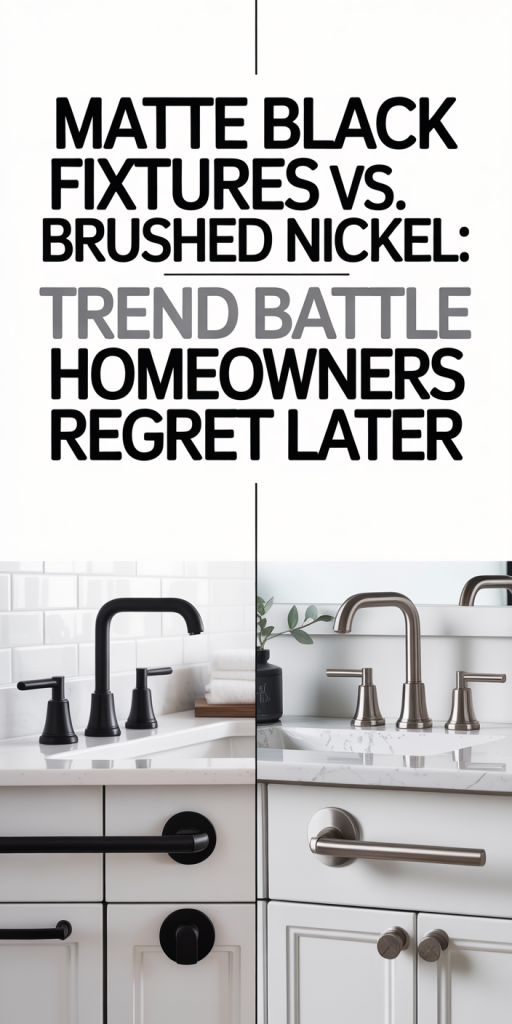
Matte black is the poster child of contemporary kitchens and baths over the last decade. Its flat, non-reflective surface reads modern, dramatic, and intentionally curated. When done well, matte black creates crisp silhouettes, provides contrast in light rooms, and feels unexpectedly timeless in a moody scheme.
Benefits we appreciate:
- High-contrast drama: Matte black reads bold against white or light stone and can ground a pale palette without adding warmth.
- Versatility across styles: From industrial lofts to minimalist moderns to some transitional schemes, black can bridge disparate elements if paired thoughtfully.
- Accessory coordination: It often pairs well with matte cabinet hardware, black-framed shower doors, and dark lighting fixtures for a cohesive, editorial look.
But the drawbacks are real and frequently glossed over in glossy magazine spreads. Matte black can show dust and soap residue more obviously than warmer metals. Scratches that remove the coating reveal lighter underlayers. And unless a fixture uses a high-quality PVD (physical vapor deposition) coating or baked enamel, the finish can fade at points of high contact.
Aesthetic risks: Because matte black is bold, it reduces visual nuance, it’s less forgiving when other finishes or materials in the room clash. If your cabinets, lighting, or plumbing trim don’t coordinate perfectly, matte black tends to amplify those mistakes instead of masking them. We’ve seen beautiful remodels compromised by a single mismatched black tone between faucet and cabinet pulls: black isn’t a universal neutral the way some warm metals are.
Durability, Maintenance, And Real-World Wear Of Matte Black
Durability for matte black depends on the underlying process. Lower-cost fixtures often use powder coat or painted finishes that are prone to chipping if subject to daily scrubbing or impacts. Higher-end options use PVD or electroplated finishes that resist corrosion and abrasion much better. We recommend checking the finish specification and warranty, a 5–10 year finish warranty is a solid indicator of quality.
Maintenance habits:
- Daily: Matte black resists fingerprints better than chrome, but mineral spots from hard water are more visible. We wipe down with a soft microfiber after heavy use.
- Weekly: Mild soap and water, followed by drying, keeps the finish consistent. Avoid acidic cleaners or bleach, they can dull or etch some matte coatings.
- Long term: If your fixture chips, refinishing is possible but often costly. Replacing a single mismatched black fixture later can be surprisingly hard if the manufacturer discontinues that exact tone.
Real-world wear we’ve noted: Sink areas with heavy handwashing or toddler use show early signs of wear. Shower fixtures exposed to continual wet/dry cycles need PVD or stainless-base construction to avoid flaking. In short: choose matte black for daily-use fixtures only if you’re buying quality or willing to accept higher maintenance.
Installation, Coordination, And Design Pitfalls With Matte Black
Matte black often requires tighter coordination during the selection and installation phases. Small oversights create visual friction quickly:
- Tone mismatch: “Matte black” varies between manufacturers, some skew charcoal, some near-flat true black. We always recommend ordering finish samples or visiting showrooms to compare across all proposed fixtures and hardware.
- Accessory inconsistency: If you pair matte black faucets with brushed nickel cabinet knobs, the kitchen will look disjointed. Keep finish families consistent, or intentionally layer metals with a clear plan (for example, matte black primary fixtures with brass accents in lighting only).
- Visibility of installation flaws: Matte finishes accentuate tool marks, uneven caulk lines, and scratches during installation. Installers need to handle parts carefully: otherwise, the finish can be compromised before the room is used.
Practical tip: Lock down all fixture selections early. That includes cabinet hardware, towel bars, faucets, and lighting finishes. Once the project starts, swapping a single item is often more trouble than it’s worth because of the visual prominence of black.
Brushed Nickel: Timeless Appeal, Benefits, And Common Limitations
Brushed nickel has been the safe, go-to finish for two decades, and for good reason. Its soft luster and warm-gray tone sit comfortably between chrome and brass, making it an easy match for many styles. In practice, brushed nickel is the ‘invisible’ finish: it blends rather than commands attention, which is exactly what many homeowners want when they prefer cabinetry, countertops, or tile to take center stage.
Benefits we value:
- Forgiving appearance: Brushed nickel hides fingerprints, water spots, and minor scratches better than polished metals and most matte finishes.
- Timelessness: It rarely dates a space: buyers often expect to see it in staged homes because it photographs neutrally under varied lighting.
- Broader compatibility: It pairs well with both warm and cool palettes, think white quartz, warm wood tones, or gray cabinetry.
Common limitations:
- Perceived blandness: For homeowners aiming for a standout, editorial look, brushed nickel can feel safe to the point of boring.
- Variation in tone: Like matte black, brushed nickel ranges from warm champagne to cool steel. Without verifying samples, mixing tones can produce subtle disharmony.
- Less dramatic contrast: In a very light or very dark scheme, brushed nickel won’t provide the graphic punch matte black does. If contrast is central to your design, nickel might underdeliver.
Overall, brushed nickel is a practical, lower-risk choice that ages gracefully. It’s particularly smart when your priority is resale or creating a neutral backdrop for poppable accents.
Durability, Maintenance, And Longevity Of Brushed Nickel
Brushed nickel is typically built on solid brass or stainless hardware with a brushed surface treatment. That construction delivers excellent longevity when manufactured to quality standards. Even mid-range fixtures tend to hold up well for years.
Maintenance is straightforward:
- Daily: Wipe with a damp cloth. Drying prevents mineral rings when you have hard water.
- Weekly: Mild dish soap or a specialty metal cleaner for more stubborn grime. Avoid bleach or chloride-based cleaners that can damage the protective layer.
- Long term: Brushed nickel won’t generally chip like painted finishes. Scratches blend into the brushed texture rather than standing out. If a finish does wear, replacing individual pieces is usually seamless because nickel finishes are widely available.
Longevity note: Well-made brushed nickel fixtures can remain functional and attractive for 15–20 years. That durability makes them a strong value choice when factoring purchase price, maintenance, and expected replacement cycles.
Cost, Availability, And Resale Impact For Brushed Nickel
Cost-wise, brushed nickel sits in the broad middle. You can find very inexpensive options that perform decently and premium lines with superior valves and ceramic cartridges. Because the finish is common, availability of replacement parts is high, an advantage at resale or when fixtures need servicing.
Resale implications:
- Neutral appeal: Stagers and agents often prefer nickel because it photographs well and blends with most buyer tastes, reducing the chance of a polarized reaction.
- Market-specific preferences: In some urban markets where bold design is prized, matte black or brass might attract more attention. But in the majority of suburban resale markets, brushed nickel remains safe.
Budget planning tip: If you expect to sell in the next 3–7 years, brushed nickel reduces perceived risk for buyers. If you plan to stay long-term and want a signature aesthetic, the value equation changes, matte black might reward your personal enjoyment even if it’s slightly riskier on resale.
Side-By-Side Comparison: Performance, Cost, Maintenance, And Style
We’ll compare matte black and brushed nickel across key homeowner concerns so you can weigh trade-offs quickly.
Performance
- Scratch resistance: Brushed nickel tends to hide scratches better due to texture. Matte black can show chips and reveal lighter substrate unless it’s high-quality PVD.
- Corrosion resistance: High-grade brushed nickel and PVD matte black both resist corrosion well. Cheaper painted black finishes do not.
Cost
- Initial price: Comparable across finish tiers. Matte black at lower price points may use inferior coatings: high-end matte black often costs more than mainstream brushed nickel.
- Long-term cost: Matte black may incur refinishing or earlier replacement if finish fails. Brushed nickel’s widespread availability keeps replacement costs lower.
Maintenance
- Daily care: Brushed nickel is lower-effort. Matte black demands more frequent gentle wiping to prevent mineral buildup and maintain consistent appearance.
- Cleaning products: Both prefer mild cleaners: avoid harsh abrasives. Matte black is more sensitive to chemicals that alter sheen.
Style and design
- Visual impact: Matte black delivers bold contrast and contemporary drama. Brushed nickel offers subtlety and broad compatibility.
- Coordination: Matte black forces coordinated planning: brushed nickel is more forgiving when mixing metals or layered textures.
Which wins? It depends on priorities. If we want a dramatic, modern statement and commit to higher-quality fixtures and coordination, matte black can be worth the investment. If we prioritize low maintenance, longevity, and neutral resale appeal, brushed nickel is the safer bet.
How To Decide: A Practical Checklist And Decision Flow For Homeowners
To make a decision we can live with, run through this checklist and flow. It’s practical, not aesthetic theater.
Step 1, Define your timeline
- Staying 0–7 years? Prioritize resale-friendly choices like brushed nickel.
- Staying 8+ years? Personal preference can dominate: lean into matte black if you love the look.
Step 2, Evaluate household use
- High-traffic homes with kids or heavy cooking: Favor brushed nickel for its forgiveness.
- Homes with careful use or owners who enjoy maintenance: Matte black is viable if you buy quality.
Step 3, Budget and quality
- Low budget: Brushed nickel gives the best durability-to-cost ratio.
- Mid-to-high budget: Invest in PVD matte black or premium brushed nickel to avoid early wear.
Step 4, Coordination map
- Make a one-sheet with all finish choices (faucet, cabinet pulls, lighting, shower hardware). If all agree on either black or nickel, proceed. If mixed, create an intentional layering plan: choose a dominant metal and one accent.
Step 5, Sample and test
- Order finish samples and photograph them in your lighting at different times of day. Bring a sample to the showroom and compare with the actual fixtures when possible.
Step 6, Installer and warranty check
- Confirm the manufacturer’s finish warranty and ask your installer about handling protocols for delicate finishes. For matte black, insist on protective packaging and careful mounting to avoid scuffs.
Decision flow (short):
- Want drama + will maintain = consider high-quality matte black.
- Want low maintenance + resale safety = pick brushed nickel.
- Mixed desires = choose brushed nickel as primary, introduce black as controlled accents (lighting or statement hardware) with careful coordination.
We’ve used this checklist on dozens of remodels: it prevents the regret that comes from choosing strictly by what looks good on a Pinterest board.
Conclusion
Matte black fixtures vs brushed nickel isn’t a battle with a universal winner, it’s a question of priorities. Matte black rewards commitment, coordination, and investment in quality: when done right it’s striking. Brushed nickel rewards practicality, longevity, and broad appeal: it’s the low-regret option for most families and resale-focused sellers.
Our recommendation: be intentional. If you choose matte black, buy premium finishes, lock down all related hardware early, and plan for a little extra upkeep. If you choose brushed nickel, enjoy the flexibility and peace of mind it provides. Either way, run the quick checklist above before you sign off, it’s the single best way to avoid making a finish choice you’ll regret.
Leave a Reply