Trendy decor vs timeless design is a debate we encounter every time a new color, material, or furniture silhouette dominates Instagram feeds and showrooms. We love the excitement of fresh ideas, but we also hate wasting money on something that will look dated in a few seasons. In this text we’ll cut through the noise and give practical guidance so your rooms feel current now and confident a decade from today. We’ll explain why trends spread, outline the core principles that make design endure, and offer a reliable method for deciding which trends are worth adopting. Along the way we’ll show how to mix a few spirited, trendy accents with a durable, classic foundation, where to invest your budget, and how to source more sustainably. If you want interiors that age gracefully without being boring, you’re in the right place.
Why Trends Catch On—and Why They Fade
Trends move fast because they answer short-term cultural or technological needs, new materials, celebrity or influencer endorsement, and a collective desire for novelty. Think about the explosion of terrazzo after influencers started showing it in kitchens and bathrooms: it felt fresh, photogenic, and accessible. That combination, visual appeal plus easy adoption, fuels rapid spread.
But trends also fade for predictable reasons. First, overexposure breeds fatigue. When everyone has the same vase, it stops signaling individuality. Second, many trends are stylistic reactions: they’re born from a reaction to what came before and will swing back when preferences shift. Third, practical shortcomings surface, cheap materials yellow, finishes scratch, or a trendy silhouette proves uncomfortable. Those failures accelerate decline.
We should also consider the role of media cycles. Fast fashion and fast interiors amplify ephemeral ideas: when retailers and influencers push a look, demand spikes, inventory floods the market, and the trend collapses as the novelty disappears. That’s not inherently bad, trends can inject energy into design, but recognizing this lifecycle helps us decide whether to commit our time and money. If the appeal is purely visual and tied to a moment, it’s probably a short-lived trend. If it responds to deeper cultural shifts, like sustainability, wellbeing, or new ways of living, it has a better chance of lasting.
Core Principles Of Timeless Design
Timeless design isn’t about avoiding style: it’s about building a resilient foundation that supports style changes without feeling wrong. Here are the principles we return to again and again:
- Proportion and Scale: Furniture and architectural elements need to fit the room’s size and sightlines. Well-proportioned pieces look intentional across eras. A too-small sofa in a large living room screams trend-driven mistake.
- Quality of Materials: Natural materials, wood, stone, wool, linen, metal, age with dignity. We prefer materials that develop patina instead of those that show rapid wear or cheap coatings that peel.
- Neutral Frameworks: Walls, floors, and major built-ins in neutral or restrained palettes create a backdrop for changing accents. Neutrals don’t mean bland: they’re simply more adaptable.
- Simplicity of Form: Clean silhouettes and restrained detailing are less likely to date. A simple round dining table can carry an accent-heavy era or a minimal one.
- Functional Comfort: Timeless pieces meet human needs, supportive seating, sensible lighting, storage that actually works. Comfort isn’t negotiable if something is supposed to last.
- Subtle Ornamentation: Small, well-crafted details, moulding, a thoughtful joinery, quality hardware, add character without shouting a trendy motif.
These principles give us permission to layer bolder choices (art, textiles, lighting) and change them without overhauling the whole space.
How To Tell If A Trend Will Last
Not every trend is fleeting. We can evaluate a trend’s longevity by looking at several indicators: cultural relevance, production infrastructure, and design adaptability. Apply this checklist before investing.
- Cultural Relevance: Does the trend connect to broad, long-term shifts, demographics, work patterns, sustainability, or technology? Trends aligned with these deeper shifts often persist. For instance, the need for home offices has durable roots after widespread remote work adoption.
- Production and Craftsmanship: Is the trend supported by quality makers or only fast, disposable producers? When skilled artisans or established manufacturers embrace a look, it gains staying power because the pieces are made to last.
- Versatility: Can the trend be expressed in both subtle and bold ways? A motif that reads as both accent and core element is more adaptable and hence likelier to endure.
- Price and Perceived Value: Higher price doesn’t automatically equal longevity, but when a trend translates into investments that hold value, well-made furniture, timeless rugs, it’s less likely to be written off quickly.
- Cross-Cultural Appeal: Trends with appeal across regions and generations tend to survive. Fads tied to a narrow niche or platform often fade as that niche moves on.
- Historical Precedence: Look back. Some trends resurface cyclically: if a current idea resembles a previous era but with meaningful updates, it may return as a longer-term revival rather than a one-season craze.
By scanning these signals, we can assign a practical probability of longevity and then decide whether to scale our commitment up (buy an investment piece) or keep it small (try a pillow or lamp).
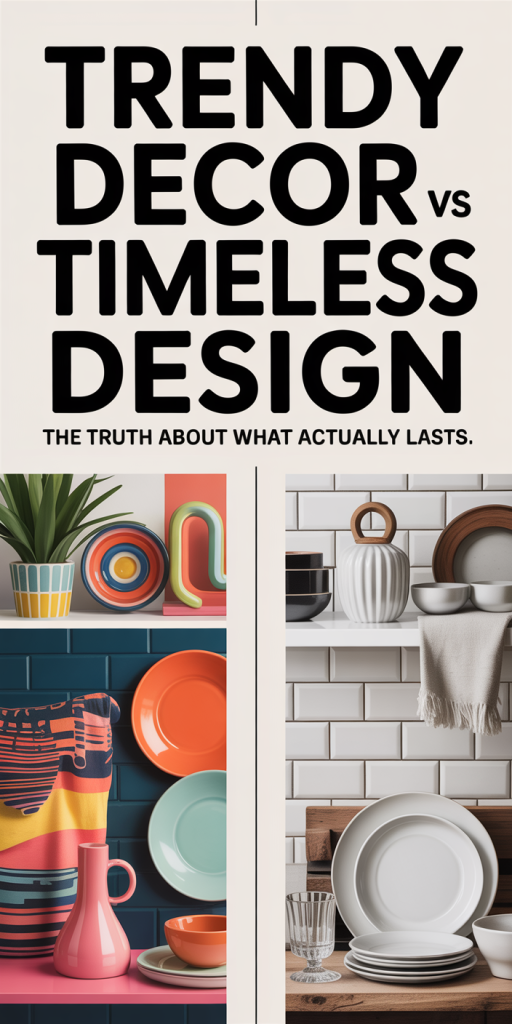
Smart Ways To Mix Trendy Accents With Timeless Pieces
Blending trendy accents with timeless bases is the easiest path to interiors that feel alive without being transient. Our approach is to treat the room like a wardrobe: invest in classics, and rotate accessories as seasons and tastes change. Here are rules we follow:
- Start with the Big Three: floors, fixed millwork, and main upholstery. Keep these durable and neutral. Trends should play out in rugs, cushions, artwork, and lighting.
- Limit Trend Volume: Use the 80/20 rule, about 80% classic elements, 20% trendy accents. That’s flexible, but it prevents trends from overwhelming the room’s identity.
- Choose Exchangeable Trends: Opt for items that are easy and affordable to swap: slipcovers, throw pillows, area rugs, lamps, and small side tables.
- Cohesive Color Story: Even when introducing bold, trendy colors, we anchor them with neutrals or recurring accent tones across the room so swaps feel intentional.
- Use Statement Pieces Sparingly: A single striking lamp or sculptural chair can read as both modern and timeless if its form is strong. Avoid an entire room built around one trendy material.
- Layer Textures: Mixing classic textures (wool, linen, leather) with trend-forward materials (lucite, terrazzo, neon finishes) keeps interest while balancing risk.
- Test Before Commit: Borrow, rent, or buy secondhand to trial a trendy item. If it still feels right after a season, consider upgrading to a higher-quality version.
Following these tactics lets us refresh a space frequently without major expense or waste. Trends become playful accents, not expensive obligations.
Room-By-Room Practical Examples For Balancing Trend And Classic
Living Room:
- Classic foundation: neutral sofa in a durable fabric, hardwood floors, simple built-ins.
- Trendy accents: a bold geometric rug, a sculptural accent chair in a daring color, seasonal pillows. If the chair ages poorly, it’s replaceable without touching the sofa.
Kitchen:
- Classic foundation: quality cabinetry, timeless hardware finishes (matte black, brass, or chrome), stone countertops.
- Trendy accents: patterned wallpaper on a single wall, open shelving with curated ceramics, colored small appliances. Keep countertops and cabinets durable so the kitchen’s core integrity stays intact.
Bedroom:
- Classic foundation: a well-made bed frame, neutral bedding base, blackout curtains for function.
- Trendy accents: throw blankets, luminescent bedside lamps, graphic headboard panels that can be swapped.
Bathroom:
- Classic foundation: reliable plumbing fixtures, neutral tile field, good ventilation.
- Trendy accents: statement mirrors, colored grout, decorative lighting. Because bathrooms face moisture, prioritize durable finishes for the core and use trend pieces where moisture exposure is minimal.
Home Office:
- Classic foundation: ergonomic chair, adjustable desk, smart storage.
- Trendy accents: colorful task lighting, patterned rug, inspirational prints. This balance keeps the workspace functional while letting personality show.
We aim for one to three trend-led objects per room. That number keeps the conversation lively without dominating the space’s DNA.
Where To Invest, How To Maintain, And Sustainable Sourcing For Longevity
When planning a room that should last, we focus investment on items that are used daily and hard to replace. Here’s our prioritized list and maintenance advice:
Where to Invest:
- Seating: Sofas, lounge chairs, and dining chairs should be well-made. Good frames, quality suspension, and replaceable cushions extend usable life.
- Beds and Mattresses: These affect health and wear constantly: investing here pays off.
- Durable Flooring: Real wood, high-quality stone, or well-specified engineered floors age better and can be refinished.
- Custom or Built-In Storage: Well-designed storage prevents clutter and reduces the need for frequent replacements.
How to Maintain:
- Follow Manufacturer Care: Use recommended cleaners and maintenance intervals: it prolongs warranties and material life.
- Rotate and Refinish: Rotate rugs and cushions to even out wear: refinish wood surfaces periodically instead of replacing.
- Repair Before Replace: We prioritize repairs, reupholstering a beloved sofa or replacing hardware is usually cheaper and more sustainable than buying new.
Sustainable Sourcing:
- Buy Secondhand or Vintage: High-quality older pieces often outperform new mass-market furniture. We search consignment stores, auction sites, and local marketplaces.
- Choose Reputable Makers: Support brands with transparent supply chains and ethical manufacturing. Certifications and clear material disclosures matter.
- Prefer Natural, Recyclable Materials: Solid wood, metal, natural fibre rugs, and stone have clearer end-of-life options. Avoid composite materials with unknown recycling pathways.
Making conscious sourcing decisions reduces waste and often lands us with better-made items that continue to look great. That’s both economically and environmentally smarter in the long run.
Conclusion
We don’t need to treat trends as threats, when handled thoughtfully they enliven our homes without turning them into short-lived stages. By building a neutral, well-crafted foundation and allocating a small, playful portion of each room to trends, we get the best of both worlds: rooms that feel alive today and still look intentional in ten years. Prioritize proportion, material quality, and repairability: test trends cheaply before upgrading: and favor sustainable sourcing whenever possible. Do that, and the next time a flashy new look appears on feeds, we’ll be ready to try it without panic, or buyer’s remorse.

Leave a Reply