We’ve all stood in a kitchen or living room and felt a subtle judgment from the room: is this tidy or chaotic? The debate between floating shelves and upper cabinets isn’t just about aesthetics or storage capacity, it’s about perceived messiness, daily maintenance, and how our habits interact with the built environment. In 2026, design trends emphasize minimalism and multifunctional spaces, but the question remains: which solution tends to look messy faster, and what practical steps can we take to prevent that? In this text we’ll break down the visual dynamics of open shelving and closed cabinetry, inspect common failure modes, compare real‑world scenarios, and give actionable recommendations so you can pick the option that stays looking intentional, not cluttered.
How Floating Shelves Affect Perceived Messiness
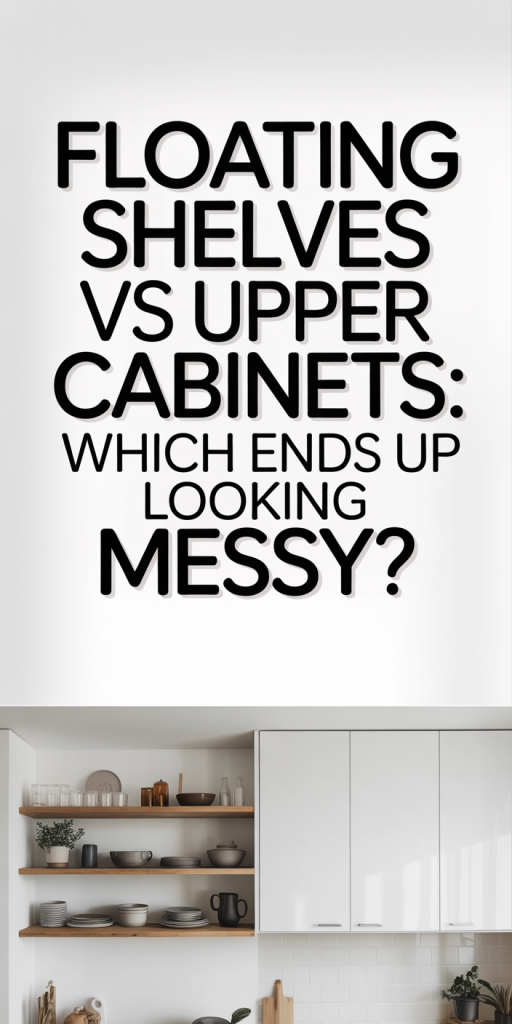
Open systems like floating shelves change the rules of visual organization. Because they put objects on display, everything stored becomes part of the room’s composition. That can be a strength, well‑styled shelves create personality, but it’s also a liability: any misaligned mug, unsorted stack of mail, or tall jar will immediately register as visual noise. We want to make clear that perceived messiness is not just about the number of items: it’s about contrast, rhythm, and hierarchy. Floating shelves demand curation. Without it, they show every lapse in habit.
Floating shelves also expose maintenance issues that closed storage hides. Dust collects on top of items, oils from cooking cling to ceramic, and fingerprints mar glassware. In small apartments or open‑plan homes, the shelf becomes an accidental display of our daily life, and our lapses in tidiness. Because the shelves sit at eye level, irregularities are amplified: a crooked frame or mismatched bowl pulls more attention than it would inside a cabinet.
That said, shelves can be deliberately designed to minimize that “messy” look. Choosing a consistent material palette, limiting the number of objects per linear foot, and creating deliberate negative space all reduce visual clutter. We’ll dig into practical styling methods in the next sub‑section, but the key takeaway here is simple: floating shelves make messiness visible: they don’t necessarily cause it. Our habits and the styling framework we apply determine how quickly they look unkempt.
How Upper Cabinets Affect Perceived Messiness
Upper cabinets operate on a different psychological principle: concealment. Because doors hide contents, they act as a buffer between our habits and the room’s visual impression. From across the room, a wall of cabinets reads as neat if the faces are clean, regardless of what’s inside. That’s a major advantage for anyone who values a tidy aesthetic with minimal daily upkeep.
But, cabinets introduce other messiness risks. Closed storage can encourage a “out of sight, out of mind” mentality. If we shove things in without systems, interiors become chaotic over time: mismatched containers, expired food, and tangled kitchen tools accumulate. The result is a different kind of messiness, functional messiness, that may not show immediately but increases time and friction when we search for things.
There’s also the issue of cabinet facades. Scuffed doors, sticky handles, and misaligned hinges are visible cues of neglect. Where floating shelves broadcast item-level disorder, cabinets broadcast surface‑level wear. Choosing durable finishes, easy‑to‑clean hardware, and consistent door styles reduces the chance that cabinets look messy from a distance.
In short, upper cabinets trade visible clutter for hidden chaos risks. If we’re disciplined about interior organization and regular purging, cabinets can preserve a calm room aesthetic. But without systems, they quietly accumulate inefficiency and frustration.
Head-To-Head Scenarios: Which Option Looks Messy Faster In Real Life
Let’s walk through three realistic scenarios to see which option tends to look messy faster.
Scenario 1, Daily routine kitchen in a busy family home: With kids and fast mornings, items are frequently handled. Floating shelves here show disorder quickly: cereal boxes, lunchboxes, and school art appear on display. Upper cabinets, by contrast, maintain a tidy look because doors hide the detritus. Winner for appearance: upper cabinets, but only if interiors are organized to prevent functional chaos.
Scenario 2, Small urban apartment with one tidy occupant: Someone who values design and practices daily tidying can make floating shelves look intentionally curated. Because the occupant is disciplined, shelves rarely get overloaded and become a deliberate stylistic feature. Upper cabinets would also appear tidy, but they sacrifice the personality that shelves provide. Winner for appearance: floating shelves, when habits are strong.
Scenario 3, Open‑plan kitchen living space used for entertaining: Floating shelves create a dynamic focal point but also amplify any lapse during hosting. Guests notice mismatched glasses or a stack of plates. Upper cabinets keep the social space visually calm, although host stress might lead to hidden mess inside. Winner for appearance: upper cabinets generally, unless the host commits to styling rules for shelves.
Across these scenarios, floating shelves generally look messy faster when daily habits are inconsistent or when many people use the space. Upper cabinets look tidy faster from a distance but can hide compounding internal disorder. So the real determinant is behavior: how we use the space and the routines we create.
Design, Use, And Maintenance Factors That Tip The Balance
Several design, use, and maintenance factors nudge the messy‑faster scale toward one option or the other. Recognizing which of these apply to our home helps us make a better choice.
Design factors:
- Material and finish: Dark glossy shelves show dust and fingerprints more than light matte cabinets. Easy‑clean finishes (laminate, sealed wood) reduce surface maintenance.
- Shelf depth and height: Deep, high shelves invite item stacking and forgotten objects. Shallow, eye‑level shelves encourage curated displays.
- Integration of storage: Built‑in drawers, pull‑outs, and concealed bins reduce clutter in either system.
Use factors:
- Household habits: Multi‑user households with different standards of tidiness favor closed cabinets. Single, organized occupants can leverage shelves for expression.
- Frequency of access: Items used daily benefit from open storage for convenience: infrequently used items belong behind doors.
- Entertaining style: If we entertain often, a visually calm backdrop matters: cabinets win unless shelves are consistently styled.
Maintenance factors:
- Cleaning cadence: Shelves demand more frequent surface cleaning: cabinets require periodic interior audits.
- Systems in place: Labeling, standardized containers, and containment baskets tip the scale toward cabinetry success: simple styling rules and a quick daily tidy favor shelves.
When we evaluate these factors honestly, the best choice becomes clearer: it’s not universal. Instead, it’s a function of design choices, how we live, and how often we’re willing to maintain the chosen system.
Practical Recommendations: Choose Based On Lifestyle, Space, And Habits
We recommend making a decision matrix based on three questions: Who uses the space, how is it used, and how much time will we commit to upkeep? Below are practical, actionable recommendations matched to common lifestyles.
- For busy families: Prioritize upper cabinets. They preserve a tidy visual field with minimal daily effort. Invest in interior organizers (pull‑out shelves, clear bins) and schedule quarterly purges. Use lower open shelving for a limited set of kid‑friendly items in labeled baskets.
- For design‑minded singles or couples: Choose floating shelves if you’re willing to commit to styling rules. Keep 2–3 curated vignettes, limit color variety, and adopt a 5‑minute nightly tidy. Use one closed cabinet for overflow and less attractive items.
- For small kitchens / studio apartments: Mix both. Use upper cabinets for pantry and utility storage and floating shelves for a curated selection of dishes or cookbooks. This hybrid approach maximizes both aesthetic and function in tight spaces.
- For avid entertainers: Lean toward cabinets for the bulk of storage to maintain calm during gatherings: dedicate a single open shelf with high‑quality glassware or decorative objects for personality.
- For rental properties or resale considerations: Cabinets are safer for broad appeal because potential buyers or renters often prefer low‑maintenance aesthetics. Floating shelves can be a selling point for the right market but require buyer appreciation for styling.
Implementation tips regardless of choice:
- Create 1–2 household rules: e.g., “no mail or keys on shelves” or “shelf items must be in groups of three.”
- Use shallow baskets and clear labeling inside cabinets.
- Keep a donation bin handy to remove seldom‑used items.
- Schedule brief weekly maintenance windows rather than occasional deep cleans.
These recommendations are about aligning design with behavior. When we pick storage that matches our habits and commit to small recurring actions, neither shelves nor cabinets need to devolve into mess.
Conclusion: Choosing The Right Solution To Minimize Mess Over Time
Both floating shelves and upper cabinets have predictable strengths and weaknesses. Shelves make every object part of the room’s visual story and hence show mess quickly without consistent curation. Upper cabinets protect the room’s appearance but can hide functional disorder unless we carry out organizational systems. Our recommendation: don’t pick purely on aesthetics, pick based on how you live. If you want the personality of open shelving, build simple containment and micro‑maintenance habits. If you crave a calm visual field, choose cabinets but invest in interior organization and periodic audits. Either way, a small set of rules and regular, bite‑sized maintenance will keep your space looking intentional rather than messy well into 2026 and beyond.
Leave a Reply