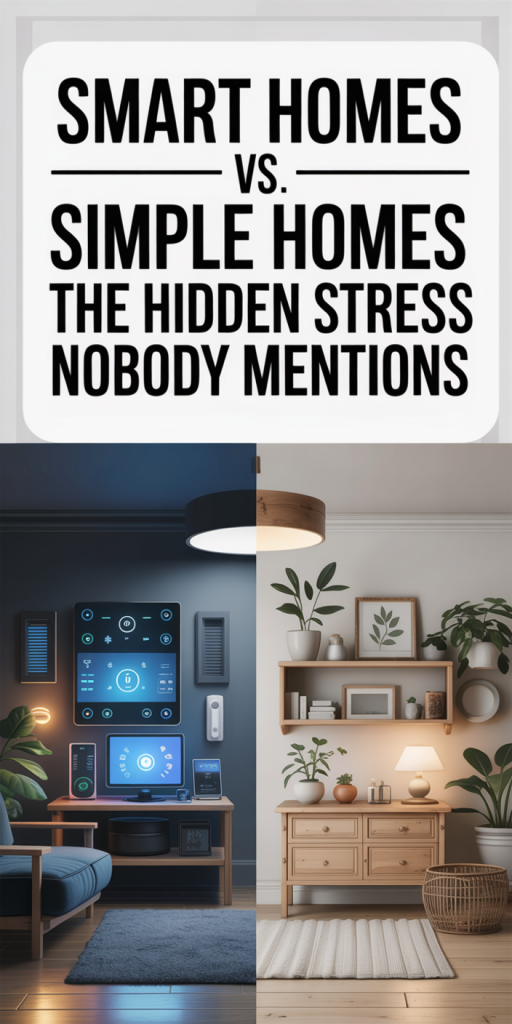
The phrase “smart homes vs simple homes” has become shorthand for a deeper lifestyle choice, and in 2026 the line between convenience and constant connection is sharper than ever. We want homes that save time, keep us comfortable, and feel like a refuge. Yet many of us rush toward gadgets and automation without pausing to consider the emotional, financial, and privacy costs that come bundled with them. This article unpacks the hidden stress nobody mentions when comparing smart homes and simple homes, and gives us a practical framework to decide based on our values, budgets, and tolerance for complexity. By the end, we should have a clearer sense of where peace lives: behind seamless automation or in uncluttered simplicity.
The Emotional Cost: Why This Debate Really Matters
We often frame the smart homes vs simple homes debate as a list of features, voice assistants, automated lights, or artisan ceramic mugs, but underneath those features sit real emotions: anxiety, relief, pride, and regret. Choosing a home style is a values decision dressed up as a tech decision. For some of us, the idea of a thermostat that learns our schedule feels like freedom: for others, it feels like surrendering a small domain of control.
Emotional cost shows up in ways we rarely quantify. There’s the “on-call” feeling when a device alerts at 2 a.m., the guilt when we can’t fix a connectivity issue, and the subtle erosion of boundaries when devices collect data about our daily habits. Conversely, simple homes carry their own emotional burdens, feeling behind on trends, missing the perceived status that comes with an automated kitchen, or the nagging thought that we could be optimizing our lives with technology.
We must also account for cognitive load. Modern life already fragments attention: adding dozens of device apps, firmware updates, and routines amplifies mental overhead. Even small interruptions, an app notification about a firmware update or a smart lock asking for a code, accumulate into stress. On the flip side, well-implemented automation can reduce decision fatigue: imagine lights that just know when to dim for sleep or thermostats that adjust without thinking.
Eventually, this debate matters because our homes are where we recharge. A mismatch between our chosen home style and our temperament creates low-level, persistent stress. When we choose, we’re choosing the emotional climate we’ll inhabit every day. That makes the decision worth a careful, honest assessment rather than a headline-driven impulse buy.
What Makes A Home “Smart”: Benefits, Everyday Wins, And Hidden Stressors
A “smart” home blends connected devices, automation, and data to make everyday tasks easier. The wins are obvious and often immediate: energy savings from optimized heating, convenience from voice-controlled lighting, or safety gains from remote monitoring. For many of us, the promise of a smart home is that it buys back time, minutes reclaimed from adjusting temperature, finding keys, or remembering to turn off appliances.
Benefits and everyday wins
- Convenience: Automations reduce repetitive tasks, morning routines can boot up coffee, heat, and lights without a thought.
- Efficiency: Smart thermostats, lighting, and appliances often reduce energy use, lowering bills and environmental impact.
- Accessibility & safety: For older adults or people with mobility challenges, voice control and remote monitoring add independence.
- Integration: When devices talk to each other, small frustrations vanish, your door unlocks when your car arrives and the lights adjust to your arrival scene.
Hidden stressors
But smart homes introduce stressors that aren’t always visible at purchase:
- Fragmentation: Different brands, competing standards, and multiple apps create a patchwork system. We spend hours integrating rather than enjoying.
- Dependency: When cloud services fail, essential functions can stop working. That dependency can make us anxious and helpless.
- Complexity creep: Routines that seem nifty at first need tweaking. Over time, we collect “tech debt”, legacy devices that need updates or replacements.
- Cost unpredictability: Initial purchase is just the start. Subscription fees, replacement devices, and professional setup add ongoing costs.
We can balance these stressors by designing for graceful degradation, ensuring essential functions still work without the cloud or relying on simple manual overrides, but many of us only learn this the hard way. Recognizing both the wins and hidden costs up front helps us plan for resilience rather than regret.
Privacy, Data, And Surveillance Concerns In Smart Homes
Privacy is the most talked-about downside of smart tech for a reason. Devices collect a surprising amount of personal data: motion patterns, sleep habits, voice snippets, and even who visits our home. That data often flows to cloud servers owned by corporations, which may analyze, store, or monetize it.
Key concerns include:
- Scope creep: A device purchased for convenience can become a sensor network. A smart speaker that listens for commands may also capture ambient conversations.
- Third-party access: Data can be shared with advertisers, analytics firms, or law enforcement under certain conditions. Our data footprint grows beyond what we expect.
- Security vs convenience tradeoffs: Auto-update features may patch security holes but also change privacy settings or behavior without our explicit consent.
Mitigation strategies we recommend:
- Prefer local-first devices or hubs that store data on-premise when possible.
- Read privacy policies selectively: focus on data retention, sharing, and opt-out options.
- Segment networks, use a guest or IoT VLAN for devices to limit lateral movement if a device is compromised.
If privacy weighs heavily for us, the smart route requires intentional choices and some technical literacy. Otherwise, we risk living in a home that’s quietly surveilling our habits in exchange for convenience.
Maintenance, Updates, And Tech Debt That Creeps Up Over Time
Tech debt is a term made popular in software development, but it applies perfectly to smart homes. We accumulate devices that require firmware updates, companion apps, and occasional troubleshooting. What begins as a pleasant novelty can turn into a maintenance chore.
Typical maintenance burdens:
- Firmware and app updates: These can introduce bugs or change features. We must decide whether to update immediately or wait, both choices carry risk.
- Replacements and compatibility: Manufacturers discontinue products. An obsolete hub can strand dozens of devices.
- Troubleshooting sprawl: Problems often cross cutting areas, Wi-Fi, power, cloud services, making diagnosis time-consuming.
Budgeting for maintenance is as important as budgeting for purchase. Think of ongoing costs: replacement bulbs, batteries, subscriptions, and possibly professional support. To minimize tech debt, we suggest:
- Choosing devices with strong update histories and reputable support.
- Favoring open standards (Matter, Thread) to reduce vendor lock-in.
- Designing fallback manual controls for core functions like lighting and locks.
Accepting a level of maintenance is fine if the gains outweigh the effort. But we should be honest: if we’re not willing to log into apps, manage firmware, or occasionally reset a hub, the smart route may cost more in stress than it saves in convenience.
What Makes A Home “Simple”: Benefits, Comforts, And Overlooked Stressors
A simple home emphasizes low-tech solutions, tactile comfort, and systems that don’t demand constant attention. Simplicity is often synonymous with intentionality: fewer devices, clearer rituals, and boundaries between home and work. For many of us, simple homes restore a sense of control and reduce cognitive friction.
Benefits and comforts
- Predictability: Manual switches, analog thermostats, and straightforward appliances rarely surprise us with updates or outages.
- Lower ongoing costs: We avoid subscription fees and frequent hardware turnover.
- Emotional clarity: Less noise from notifications means more mental space for relationships and creativity.
- Easier maintenance: When something stops working, fixes are typically local and inexpensive.
Overlooked stressors
Simplicity isn’t stress-free. It brings its own set of trade-offs that we should recognize:
- Reduced automation: We may spend more time on repetitive tasks, adjusting lights, preheating ovens, or remembering to lock doors.
- Perceived social pressure: In a culture that celebrates the latest gadgets, others may view simple homes as out-of-date or less secure.
- Accessibility limits: For households with mobility challenges, simple homes without assistive tech can be less accommodating.
Sometimes the stress from simple living is situational: during a long trip, we may miss remote monitoring: in a busy week, manual routines feel like extra work. The key is distinguishing between stress that’s meaningful (we prefer to do things ourselves) and stress that’s avoidable (we’re forced into inefficiency because of habit). By being intentional, choosing which tasks to keep manual and which to simplify with low-tech supports, we can preserve the calm of a simple home while minimizing friction.
How To Decide: A Practical Lifestyle, Budget, And Resilience Framework
We propose a three-part framework to choose between smart and simple, Lifestyle fit, Budget math, and Resilience planning. Working through these steps helps us make a decision aligned with our values instead of marketing.
- Lifestyle fit
- Ask: How do we spend our time at home? If most of our days are irregular, late-night work, caregiving, or variable schedules, automation may reduce friction.
- Consider accessibility needs: Do any household members benefit from voice control, remote monitoring, or automated lighting?
- Emotional preference: Do we enjoy tinkering and optimizing, or do we prefer fewer systems to manage?
- Budget math
- Total cost of ownership: Add purchase price, expected replacements, and subscriptions over 3–5 years. Smart devices often have lower upfront friction but higher lifecycle costs.
- Opportunity cost: Could the money go to experiences, better insulation, or a professional organizer that provides comparable stress relief?
- Prioritize ROI: Invest in devices that solve high-frequency problems, e.g., a smart thermostat for a drafty home, rather than novelty gadgets.
- Resilience planning
- Failure modes: Identify what must keep working during outages (locks, heating, lighting) and ensure those functions have manual or local fallbacks.
- Security posture: If we opt for smart devices, plan for network segmentation, backups, and a basic incident response (how we’ll restore control if a vendor sunset occurs).
- Scalability: Choose platforms and standards that allow growth without vendor lock-in. Favor open ecosystems and documented APIs.
Decision checklist (quick)
- We list our top 5 daily pain points at home.
- For each pain point, we ask whether tech reduces it materially or introduces more maintenance.
- We estimate 3-yr TCO for solutions that seem promising and compare to non-tech alternatives.
Using this framework, our decision becomes a map rather than a guess. We balance convenience with long-term peace and choose options that match both our temperament and our tolerance for maintenance.
Practical Ways To Reduce Stress Whether You Choose Smart Or Simple
No matter which path we pick, there are practical steps to keep stress low and enjoyment high. These tactics are about control, reducing surprises and ensuring our home supports rather than sabotages our peace.
For smart homes
- Start small: Automate one high-frequency task (lighting, thermostat) and live with it for three months before adding more.
- Centralize control: Use a single hub or app where possible to reduce context switching.
- Set boundaries for notifications: Silence noncritical alerts during sleep and focus hours.
- Build manual overrides: Ensure physical switches or backup keys exist for core systems.
- Schedule maintenance: Block a recurring time each quarter to check firmware, review subscriptions, and test backups.
For simple homes
- Systematize rituals: Create simple routines (morning checklist, evening lock procedure) to reduce cognitive load.
- Low-tech upgrades: Invest in reliable, energy-efficient appliances or analog timers for lights to get some automation without complexity.
- Outsource selectively: Use a cleaning or lawn service to remove recurring friction points that sap our energy.
- Accessibility boosts: Add non-tech aids, grab bars, lever handles, better lighting, to get benefits often attributed to smart tech.
Universal practices
- Clarify priorities: We should be able to name the three things we want our home to do for us, comfort, safety, creativity, and test decisions against them.
- Budget for contingencies: Keep a small fund for replacements or professional help: unexpected expenses are a major source of stress.
- Educate household members: Agree on who manages devices, passwords, and who to call if something breaks, shared responsibility reduces single-person burnout.
These measures keep our homes resilient. Whether we lean into automation or embrace minimalism, reducing surprises and planning for failure preserves peace.
Conclusion
Choosing between smart homes vs simple homes isn’t a tech decision alone, it’s an emotional and practical pact with how we want to live. We’ve seen that both paths offer real benefits and hidden stressors. The smart route offers convenience and accessibility but demands maintenance, privacy vigilance, and ongoing costs. The simple route gives predictability and lower overhead but can require more manual effort and might miss accessibility gains.
If we proceed with intention, using the lifestyle, budget, and resilience framework, we’re more likely to land in a home that supports our peace rather than eroding it. Start small, prioritize the problems that matter most, and plan for graceful failure. That way, whether our home is humming with automation or whisper-quiet in its simplicity, it will be a place where we can rest, not fret.
Leave a Reply