Choosing a kitchen finish is one of those decisions that feels immediate but echoes for decades. We often find clients, and ourselves, torn between the crisp minimalism of white kitchens and the tactile warmth of wood tones. Each option carries aesthetic and practical trade-offs that reveal themselves over time: how surfaces take scuffs, how finishes yellow or mellow, how trends shift, and how resale value is affected. In this guide we compare white kitchens and wood tones through the lens of aging: not just how they look now, but how they wear, how easy they are to maintain, and which choice better preserves value and satisfaction over the long run. By the end you’ll have a practical framework to pick the right palette for your home, lifestyle, and budget, plus concrete upkeep and renovation strategies to ensure whichever direction we choose grows more graceful with age.
Why Kitchen Aging Matters: Function, Value, And Visual Longevity
When we talk about how a kitchen “ages,” we’re considering three overlapping dimensions: function (how well it performs everyday tasks), value (resale appeal and cost-to-benefit over time), and visual longevity (how pleasant it remains to look at). These aren’t separate concerns. A countertop that stains easily lowers function and visual appeal: a finish that looks dated can nudge buyers away, reducing value.
Function: Kitchens are high-use spaces. Cabinets are opened hundreds of times a week, countertops endure heat and knives, and flooring gets foot traffic, spills, and dropped pans. Materials that handle repeated stress with minimal visible signs will feel fresher longer.
Value: Realtors will tell us that kitchens sell houses. Neutral, well-maintained kitchens usually fetch higher offers. But “neutral” changed over the last decade, white kitchens once epitomized neutrality, while warmed wood tones now read as timeless to many buyers. What matters is perceived quality and upkeep: a well-cared-for wood island can trump a neglected white one.
Visual longevity: Trends move, but patina and craftsmanship age differently than trend-driven finishes. A finish that acquires a pleasing patina (we’ll talk about this for wood) can gain character. Conversely, white surfaces may yellow or reveal grime in ways that shout their age. Understanding these aging trajectories helps us make a choice that still makes us smile in five, ten, or twenty years.
The Case For White Kitchens: Strengths, Vulnerabilities, And Long-Term Appeal
White kitchens have dominated design imaginations for years, and for good reasons. Their strengths make them a safe, flexible choice for many homes.
Strengths
- Perceived cleanliness: White signals sanitary surfaces and reflects light, making spaces feel brighter and larger. That psychological clarity often translates into stronger resale appeal.
- Versatility: White pairs with virtually any countertop, hardware, or accent color. If we like to refresh paint, tile backsplashes, or accessories frequently, white is a forgiving backdrop.
- Contemporary neutrality: In 2026, modern minimalist and Scandinavian influences still favor white as a core canvas, especially in smaller kitchens where light matters.
Vulnerabilities
- Shows wear: Scratches, grease specks, and stains are easier to spot on white, especially in gloss finishes. Grout lines, food splatters, and soap residues can accumulate visually.
- Yellowing and discoloration: Older acrylics, poorly formulated paints, and low-quality laminates can yellow with UV exposure, heat, or nicotine. Even high-quality whites can shift slightly over many years.
- Trend cycling: While white is versatile, very stark, clinical whites can feel dated if the market shifts towards warmer, textured finishes, something we’ve seen as wood tones regained popularity.
Long-Term Appeal and Mitigation
To keep white kitchens aging well, we recommend high-quality materials and finishes: durable urethane or catalyzed conversion varnishes for painted cabinetry, quartz or high-grade porcelain for counters (they resist staining better than many natural stones), and matte or satin sheens where scratches show less. Thoughtful hardware and layered lighting minimize the clinical feel and help the kitchen remain welcoming as we age.
In short: white ages cleanly if we maintain it and choose robust finishes: it ages poorly if we skimp on material quality or neglect regular upkeep.
The Case For Wood Tones: Warmth, Patina, And How Natural Materials Mature
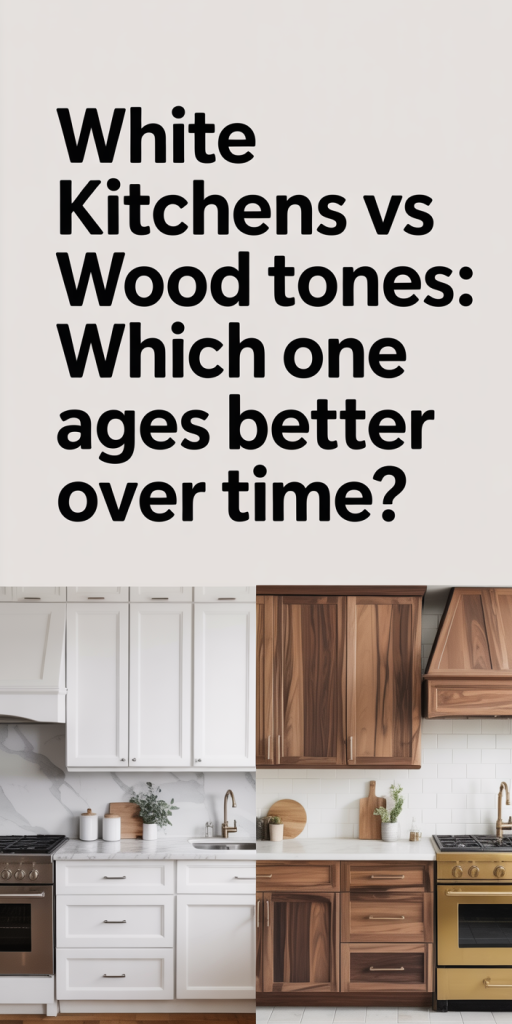
Wood tones, whether painted, stained, or left raw, bring an immediate sense of warmth and texture that often improves with time.
Why wood ages attractively
- Patina development: Wood acquires a surface character over time, tiny dents, softened edges, subtle color shifts, that many people find appealing. This patina reads as authenticity and lived-in comfort rather than damage.
- Visual depth: Grain and variation conceal minor scratches and smudges more easily than a flat white plane. In practice, simple abrasions blend into wood’s natural variation.
- Timeless association: Natural materials have cultural staying power. Oak, walnut, and maple have been used for centuries: in 2026, the renewed focus on biophilic design gives wood an enduring advantage.
Potential downsides
- Vulnerability to moisture and warping: If not sealed or installed correctly, wood can swell, warp, or delaminate, especially in humid kitchens. This is a functional concern as much as an aesthetic one.
- Surface damage visibility: Deep gouges or burns can be more noticeable and harder to repair invisibly on certain species and finishes.
- Color trends: Very dark or very light wood stains can fall in and out of favor: but, moderate, natural-looking tones tend to remain more neutral.
How to make wood age well
Choose stable species and engineered products where appropriate (engineered veneers, kiln-dried solid wood). Use durable finishes like hard-wax oils, conversion varnishes, or waterborne catalyzed finishes that protect against moisture while allowing wood’s beauty to show. Plan for regular care: re-oiling open-pored surfaces every 6–18 months, avoiding excessive sponge-abrasion on sealed finishes, and using cutting boards and trivets to limit direct damage.
When done right, wood tones don’t just resist aging, they gain character. For homeowners who appreciate tactile warmth and evolving beauty, wood often wins the subjective age test.
Durability And Maintenance: How Wear Actually Shows Over Time
Durability is not just a material property: it’s a lived experience. Below we look at how wear patterns unfold daily and over the long term, and what that means for our choice between white and wood.
Daily Wear Patterns: Stains, Scratches, And Surface Recovery
Daily wear defines our immediate impression of age. White surfaces reveal spills and grease, while wood masks them to a degree. Here are typical daily patterns:
- Stains: Acidic foods, red wine, tomato sauce, these make a white laminate or painted door look tired if not wiped promptly. Quartz and high-quality porcelain resist staining better, which helps white kitchens retain freshness. Wood, if sealed, resists surface staining: if unsealed or oil-finished, stains can penetrate and darken grain.
- Scratches: Utensils and dishes leave micro-scratches on white lacquer or gloss paint that reflect light differently and become visible. Wood’s grain distraction makes minor scratches less apparent, but gouges can be deeper.
- Fingerprints and smudges: High-gloss white finishes show prints. Matte whites hide them, but matte surfaces can be harder to clean without leaving streaks. Wood shows fingerprints less, especially textured or oiled finishes.
Recovery: The capacity to quickly restore a surface matters. Painted cabinetry may be touch-up-friendly with matching paint. Solid wood can be sanded and refinished locally, but that’s more labor-intensive and may alter profiles or veneers.
Long-Term Changes: Fading, Warping, Patina, And Repairability
Over years, cumulative environmental factors create more permanent changes:
- Fading and yellowing: Sunnier rooms can cause yellowing in whites, especially older paints or certain plastics. Wood tones can fade too, some species darken with UV exposure, while others bleach. Expect differential fading where an island sits under a skylight.
- Warping and dimensional changes: Humidity cycles can make solid wood expand and contract. Proper acclimation, engineered cores, and adequate sealing mitigate this risk. Painted MDF resists movement but can delaminate if moisture penetrates.
- Patina vs. degradation: Wood often develops patina, which we value. But if finishes break down, flaking, cracking, or uneven wear, the surface can look neglected. White finishes that crack or peel read as poor maintenance and age the kitchen quickly.
- Repairability: Small chips in painted surfaces are usually patched with paint. Scratches in wood can be filled, sanded, or re-stained, sometimes invisibly. For both, matching the original finish decades later is the common challenge. We recommend keeping spare finish materials and documenting original colors/brands to ease future repairs.
Understanding these patterns lets us choose materials and finishes that align with how we actually live, so the kitchen ages as gracefully as possible rather than merely surviving.
A Practical Decision Framework: Choose Based On Home, Lifestyle, And Budget
We find decision-making becomes easier when framed by three concrete axes: the home (architecture and light), lifestyle (how we use the kitchen), and budget (initial cost vs lifecycle cost). Use the following framework to evaluate which direction, white or wood, fits best.
- Evaluate the home
- Light and scale: Small, low-light kitchens benefit from white for brightness. Large, open-plan homes with lots of natural light can support richer wood tones that show off grain and texture.
- Architectural style: Contemporary glass-and-steel homes pair naturally with white. Traditional or farmhouse homes align better with wood tones. That said, mixing, white upper cabinets with a wood island, often yields the best of both worlds.
- Assess lifestyle
- Heavy cooks and families with kids: If we cook daily or have messy eaters, materials that hide wear (mid-tone wood or textured laminate) and stain-resistant counters (quartz, porcelain) are practical. White can work if we’re disciplined about wiping and choose durable finishes.
- Entertaining or resale priorities: If we plan to sell in the near term, white kitchens often broaden buyer appeal. For long-term ownership, choosing what we’ll enjoy in ten years matters more, wood tones may feel cozier over time.
- Consider budget and lifecycle cost
- Upfront vs maintenance: A cheap white laminate may look good initially but yellows and chips, leading to earlier replacement. Mid-range or high-end wood (or engineered wood) has a higher upfront cost but can be refreshed multiple times, extending lifecycle value.
- Repair and refresh strategy: Painted cabinets can be repainted for a refresh: solid wood can be sanded and refinished. Factor in the cost and disruption of potential future refreshes into the initial budget.
Decision shortcuts we use with clients
- If you want low-effort brightness and plan to sell in 1–5 years: favor white with high-quality, low-maintenance surfaces.
- If you value a lived-in, warm aesthetic and will live in the home 5+ years: favor wood tones with stable construction and durable finishes.
- If you want both: combine, white uppers for lightness, wood lower cabinets or an island for warmth and resilience. This hybrid approach often future-proofs stylistic shifts while balancing maintenance.
Styling, Upkeep, And Renovation Strategies To Make Either Choice Age Gracefully
Aging gracefully is as much about styling and upkeep as it is about initial material choice. Here are practical strategies to keep either white or wood kitchens looking intentional and cared-for over time.
Styling for longevity
- Layer textures: Whether white or wood, introduce texture, textured tiles, matte metal hardware, woven rugs. Texture distracts from minor wear and creates visual depth.
- Limit trend-specific elements: Avoid overly trendy backsplash patterns or cabinet detailing that will lock the kitchen into a short-lived look. Instead, use changeable accents, pendant lights, stools, or tile rugs, that are easy to update.
- Thoughtful contrast: For white kitchens, warm wood or brass accents prevent a clinical look. For wood kitchens, select light counters and backsplashes to keep the space bright and balanced.
Upkeep routines that matter
- Daily: Wipe spills promptly: use mild, non-abrasive cleaners on painted or wood surfaces. For wood, wipe with damp cloths and dry immediately, never leave standing water.
- Monthly: Deep-clean cabinet faces and hardware: inspect grout and seals. Address small chips or loose hardware immediately before they worsen.
- Annual: Re-oil open-pore wood surfaces where applicable: reseal grout lines: inspect under-sink areas for leaks.
Renovation and refresh options
- Paint refresh: Painted white cabinetry is one of the easiest to refresh, repaint every 7–12 years depending on wear. Using the original paint can simplify color matching.
- Partial updates: Replace countertops or hardware rather than full cabinets to change the kitchen’s character with less cost and waste. Swapping cabinet doors is another cost-effective way to change from white to wood-look or vice versa.
- Professional refinishing: For real wood, a professional sand-and-refinish can restore surfaces and even change stain tone, giving the kitchen a new life without full replacement.
Accessory strategies
- Use practical zoning: Place a washable rug or runner in high-traffic prep areas to protect flooring and collect crumbs.
- Adopt protective habits: Trivets, cutting boards, and pan rests minimize direct contact damage. Over time these small habits preserve both white and wood finishes.
With thoughtful styling and routine care, both white and wood kitchens can look intentionally aged, meaning attractive rather than neglected. Our job is to pick details and habits that reduce the visible signs of everyday use.
Conclusion: Which Option Ages Better For You—and How To Future-Proof Your Kitchen
There’s no universal winner: white and wood age differently, and the “better” choice depends on how we live and what we value. If we prioritize brightness, resale flexibility, and easy refreshes, white with durable surfaces will usually serve us best. If we value warmth, character, and a finish that gains personality over time, well-specified wood tones are the smarter long-term bet.
Practical takeaway: match material performance to daily habits, invest in quality finishes, and plan for routine upkeep. When in doubt, blend, the hybrid approach (white uppers, wood lowers or an island) often gives us the immediate freshness of white and the forgiving patina of wood. That way, whether we’re staying or selling, the kitchen will age in a way that keeps the space feeling intentional, usable, and undeniably ours.
Leave a Reply