We love natural light. In 2026, architects, homeowners, and builders are still pushing ever-larger panes of glass into houses, apartments, and offices, and with good reason: daylight improves mood, reduces energy use, and makes spaces feel expansive. But when we talk about big windows vs privacy, there’s a quieter conversation we rarely hear. Oversized glazing changes how our homes behave at night, how neighbors and passersby relate to our lives, and how data flows around our property. In this text we’ll walk through why large windows appeal to us, the privacy downsides most people miss, real-world scenarios where those downsides become problems, and practical solutions, from design tweaks to tech, that let us enjoy daylight without giving away our lives.
Why Big Windows Are So Appealing
Big windows have dominated residential design for a reason: they deliver immediate, visceral benefits that small openings can’t match. First, there’s the psychological impact. A floor-to-ceiling window or a large clerestory floods a room with daylight, making spaces look larger and improving our mood and circadian regulation. Studies over the last decade continue to link daylight exposure to better sleep, higher productivity, and even faster recovery in healthcare settings, benefits we feel without thinking.
Second, aesthetics and resale value. Contemporary buyers equate glass expanses with modernity and luxury. From an architectural perspective, glazing dissolves visual boundaries between interior and exterior, creating the coveted indoor-outdoor connection. That connection sells: homes with thoughtful daylighting often command higher prices and shorter market times.
Third, energy considerations. When placed and shaded correctly, big windows can reduce daytime lighting loads and provide passive solar gains during cooler months. Advances in low-E coatings, triple glazing, and thermally broken frames make large windows more energy-efficient than they used to be, allowing us to justify larger apertures without paying the historical thermal penalty.
Finally, lifestyle shifts drive demand. We’re spending more time at home and want spaces that feel open, connected to nature, and amenity-rich. Big windows are shorthand for that lifestyle. But these advantages come with trade-offs, especially around privacy and control, that we need to acknowledge before committing to a wall of glass.
The Hidden Privacy Downsides Most Homeowners Miss
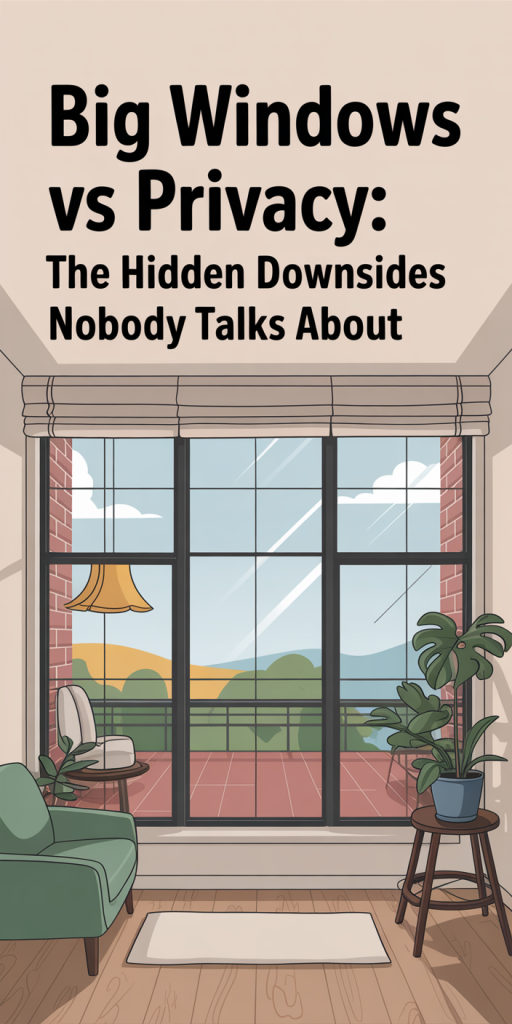
When we choose large windows, we usually picture bright mornings and panoramic views. We often forget that glazing is also a two-way lens: it lets us see out, but it also lets others see in. That symmetrical transparency creates privacy risks that are subtle, cumulative, and rarely factored into design decisions.
First, the day-to-night inversion. During daylight the brighter exterior tends to obscure interior details: at night, interior lighting makes the opposite true. This simple physics flips our privacy assumptions and can expose activities we assumed were private. Second, the proximity problem: large windows change the home’s relationship to the public realm. A dining room window that faces a sidewalk or a neighbor’s yard turns private conversations, routines, and even clothing choices into semi-public performances. Third, pattern recognition and surveillance: repeated, high-quality visual access makes it trivial for neighbors, delivery drivers, or opportunists to learn our habits, who’s home, when we leave, where we sit most often.
We also ignore non-visual privacy risks associated with big windows. Exterior cameras or doorbell cams with wide fields of view may inadvertently record interior activity reflected in glass. Smart-home devices that rely on line-of-sight sensors can leak presence data. And aesthetic decisions that prioritize transparency may conflict with safety, consider a sleeping child visible from the street, or valuables displayed on an entryway table.
Finally, social friction is underappreciated. We assume good neighbors will avert their gaze, but curiosity is human. What starts as casual observation can spiral into awkwardness or, worse, nuisance behavior. When we choose large glazing, we’re altering social boundaries, and we should do so consciously.
Real-World Privacy Risks
Big windows multiply realistic, traceable privacy risks in ways that planning pages and glossy brochures don’t show. Below we break down the most common and consequential scenarios we encounter in real homes and urban projects.
Practical Design, Tech, And Behavioral Solutions
The good news is we don’t have to choose between daylight and discretion. A layered approach combining design decisions, technology, and daily habits gives us control without sacrificing the benefits of big windows. Below are practical, tested strategies we can apply at different scales and budgets.
Conclusion
When we weigh big windows vs privacy, the right choice isn’t binary. Large glazing can transform a home, but it also alters boundaries, visual, social, and digital. The smart approach is intentionality: map sightlines, prioritize which spaces must remain private, and use layered defenses, landscaping, layout, treatments, and measured technology, to keep light without relinquishing control. If we plan for the night as deliberately as we do for the day, we can enjoy the airy, sunlit spaces we crave without inviting unwanted observation into our lives.


Leave a Reply