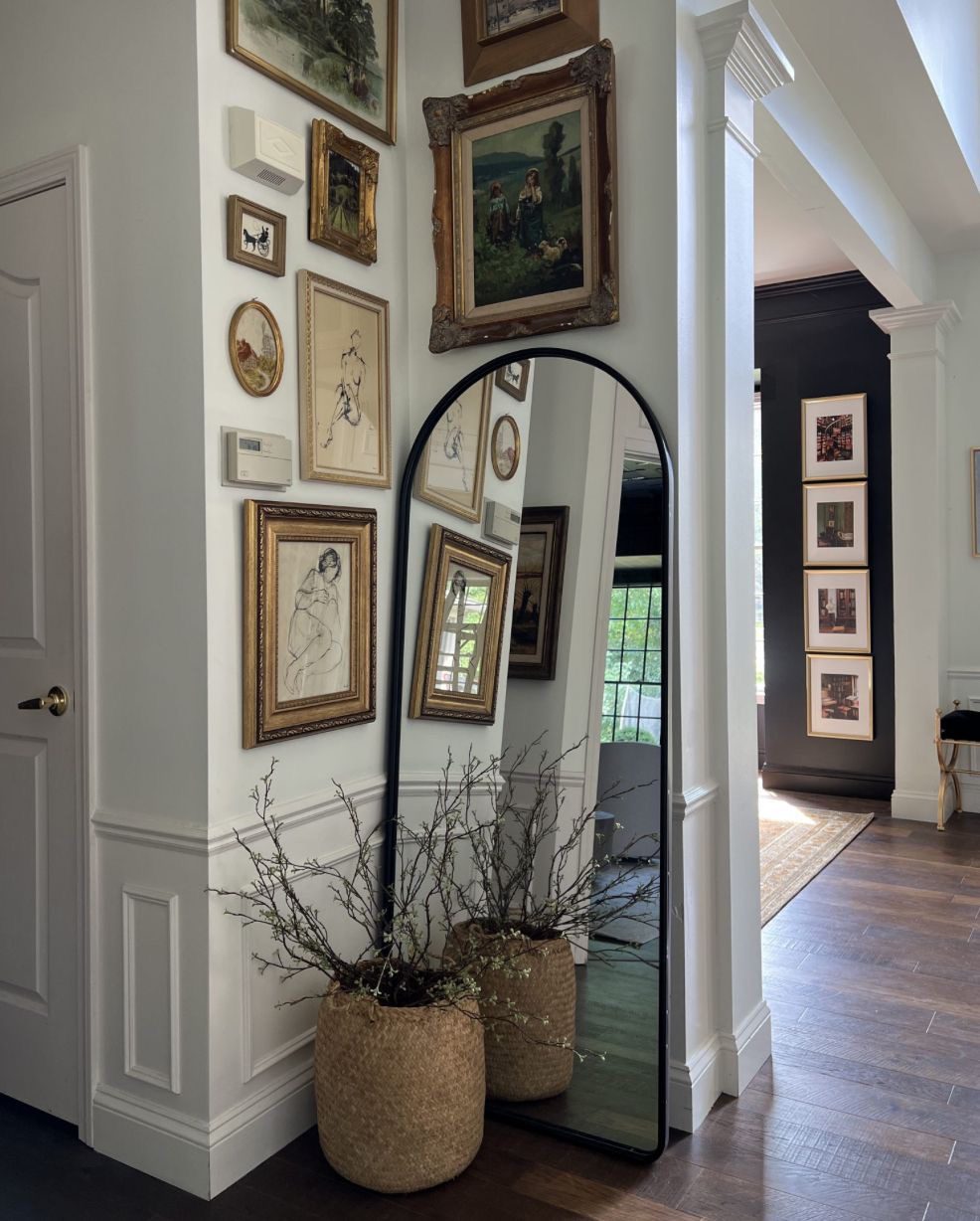
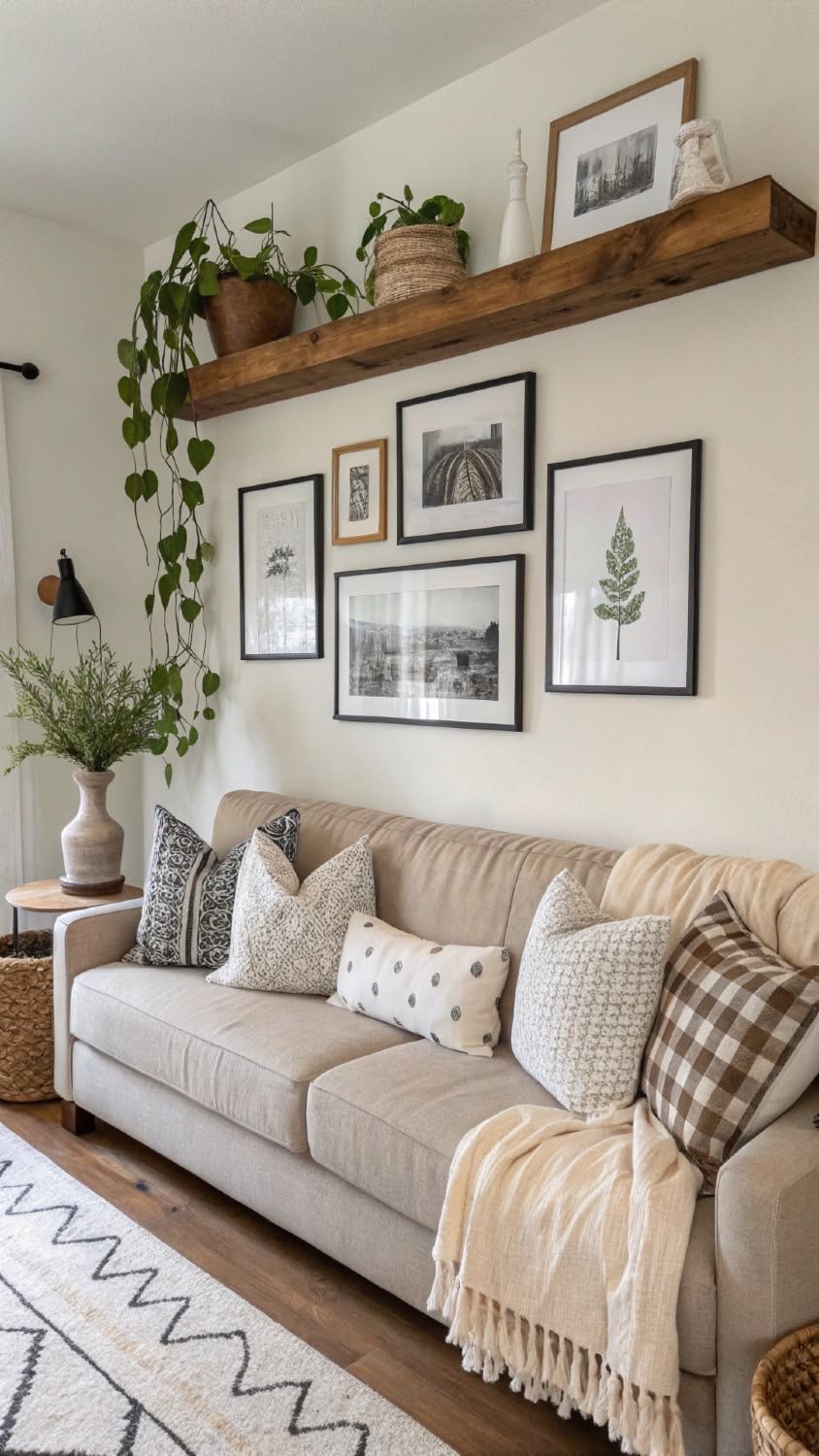
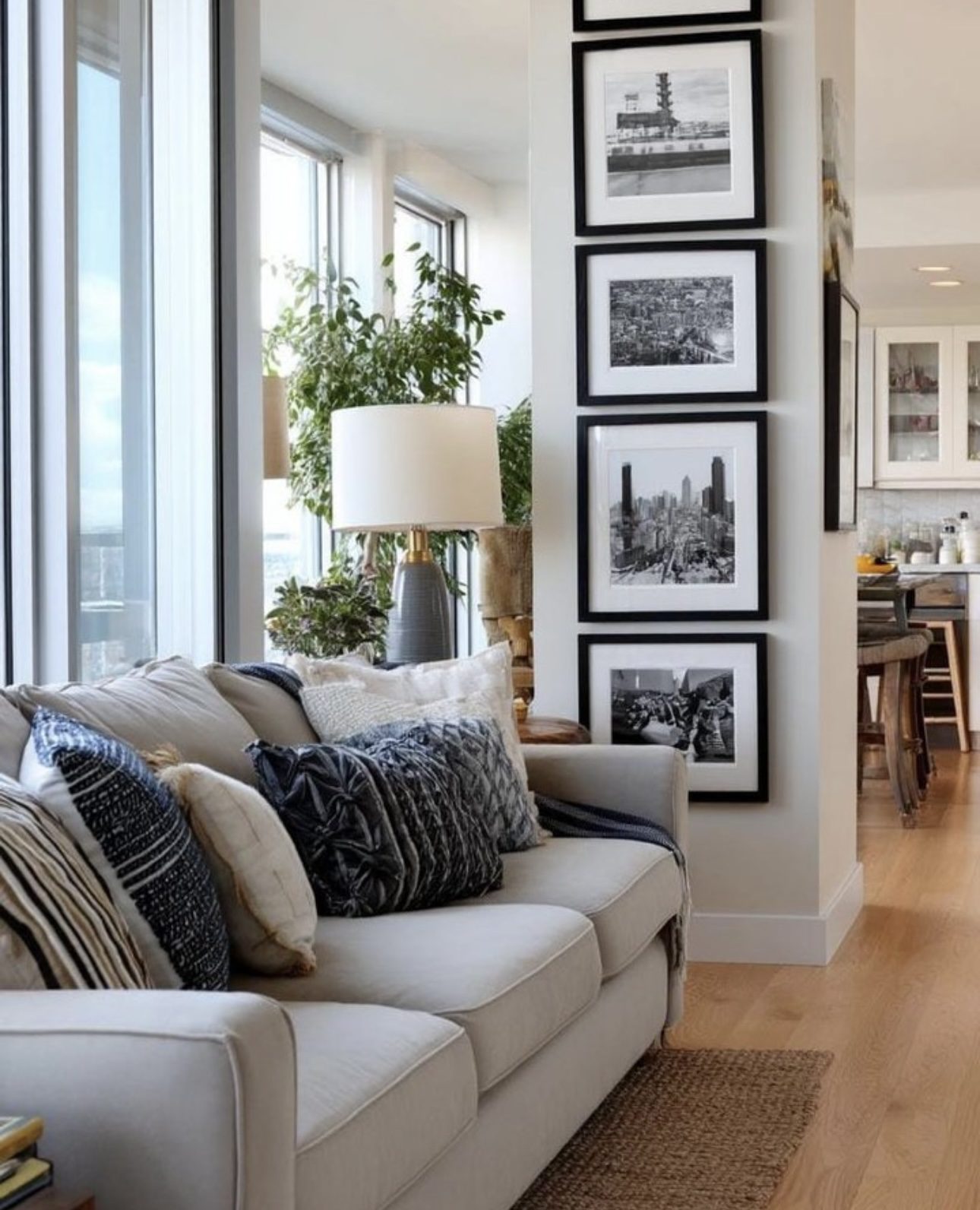
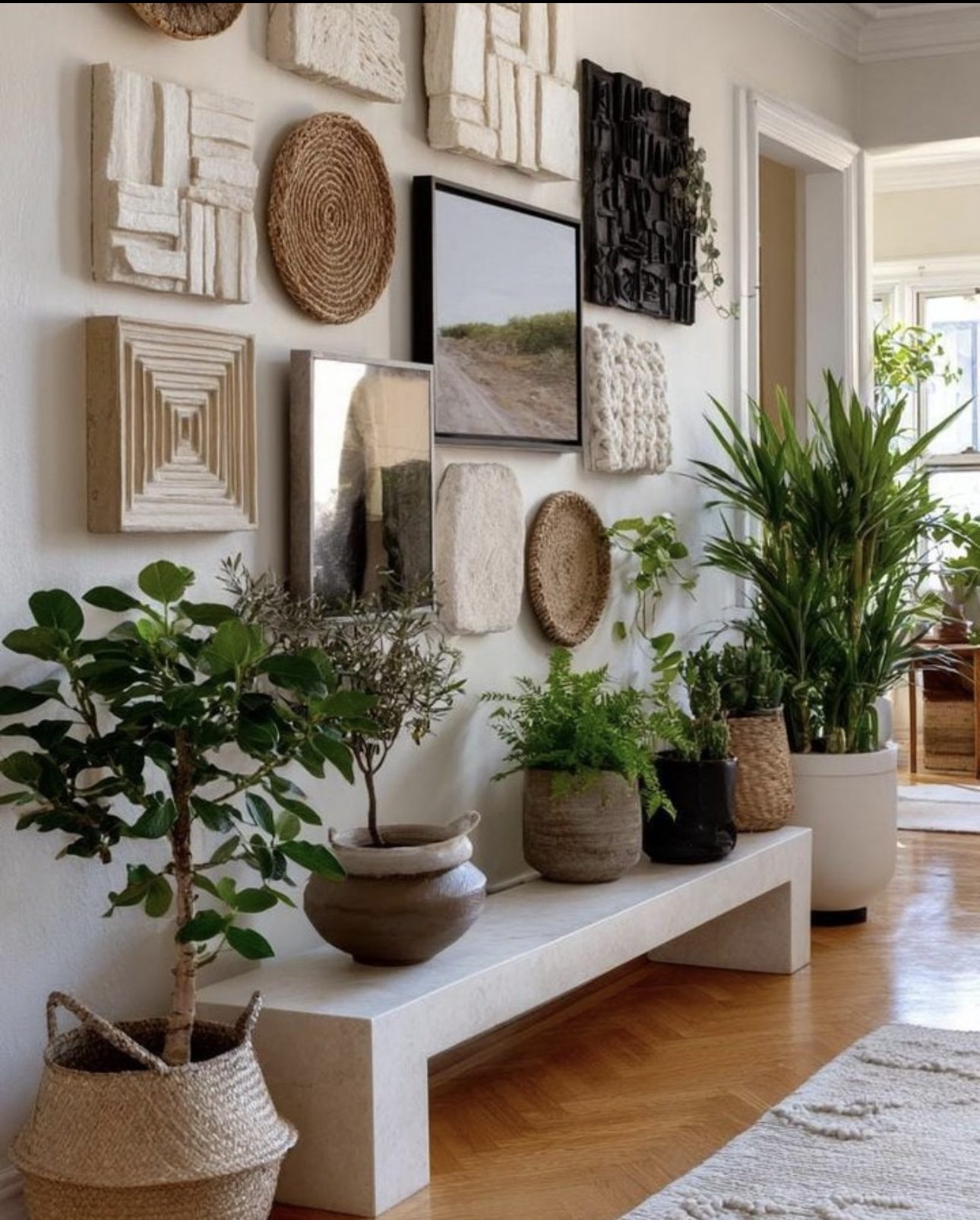
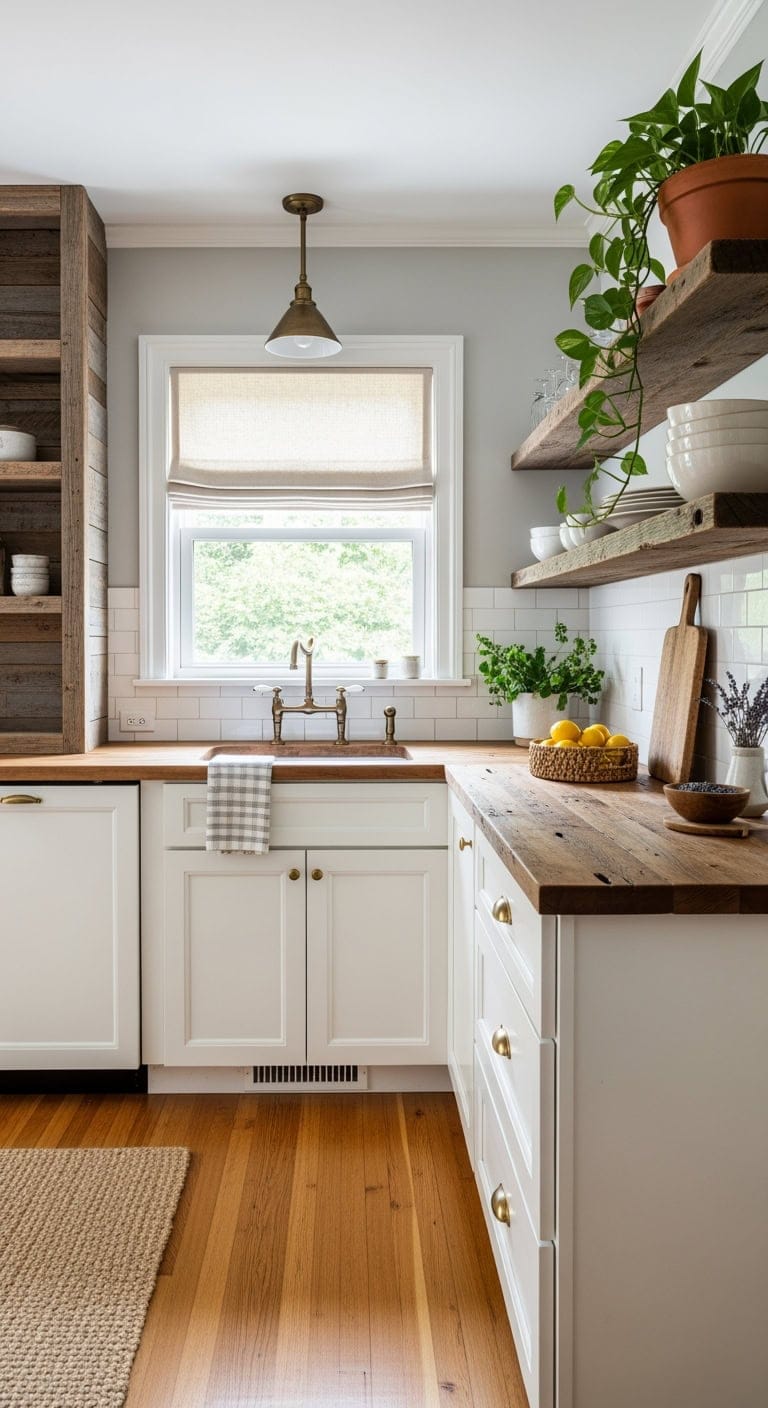
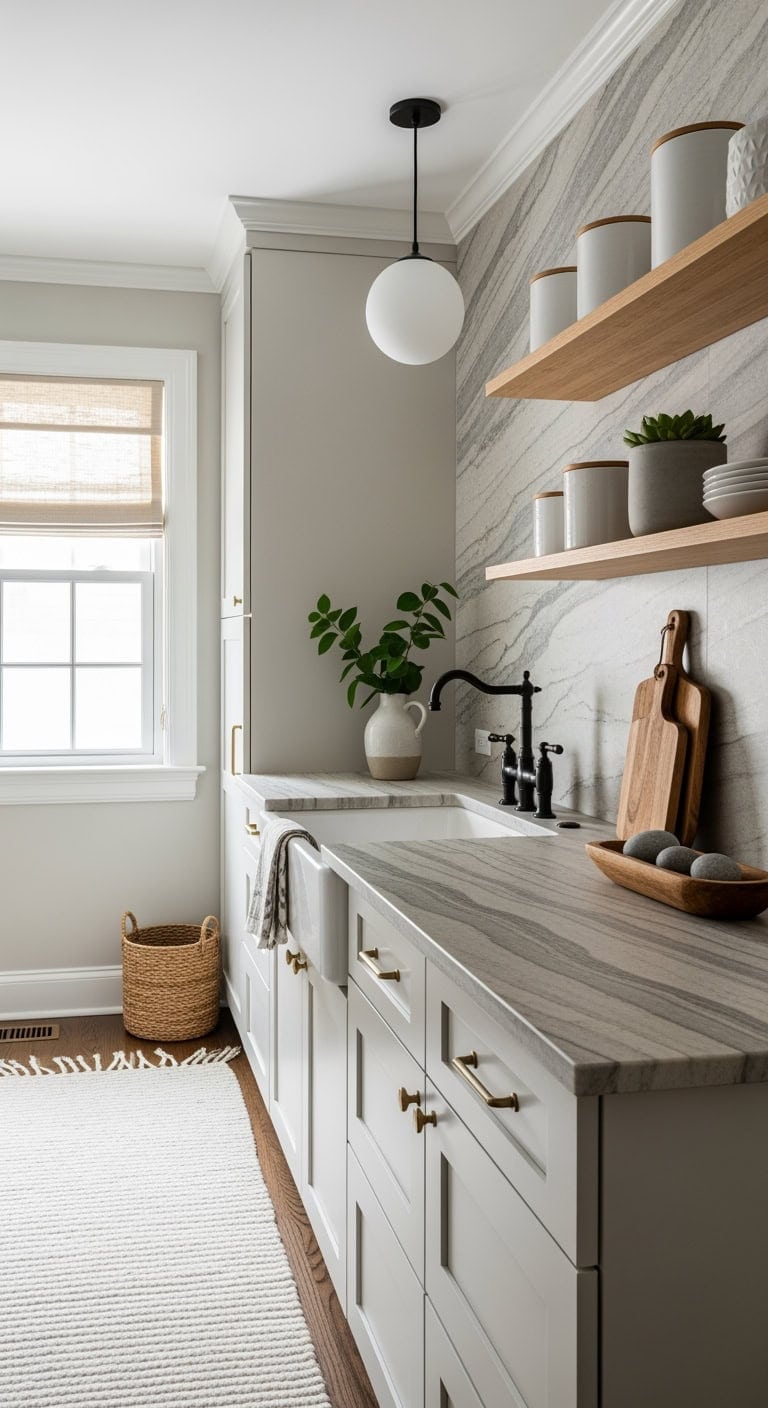
If you’re envisioning a kitchen that exudes warmth, timeless charm, and an inviting atmosphere, Joanna Gaines’s designs offer a wealth of inspiration. Renowned for transforming ordinary spaces into stunning, livable homes through the hit show *Fixer Upper*, Joanna and Chip Gaines have redefined farmhouse style with a modern twist. The kitchens featured in their projects often serve as the heart of the home, seamlessly blending comfort with understated elegance. Fans of the show and design enthusiasts alike have long admired the way these kitchens balance functionality with aesthetic appeal, creating spaces that feel both lived-in and meticulously styled.
What sets Joanna’s kitchens apart is their effortless blend of natural materials, soft color schemes, and practical yet stylish elements. Warm wood textures paired with neutral tones, apron-front sinks, open shelving, and carefully curated lighting come together to create spaces that feel inviting without being overly fussy. The designs avoid fleeting trends, instead embracing a classic, approachable look that stands the test of time. Whether bathed in natural light or layered with cozy, tactile accents, each kitchen showcases the versatility of her signature style—proving that beautiful, comfortable spaces are well within reach for any homeowner looking to refresh their culinary hub.
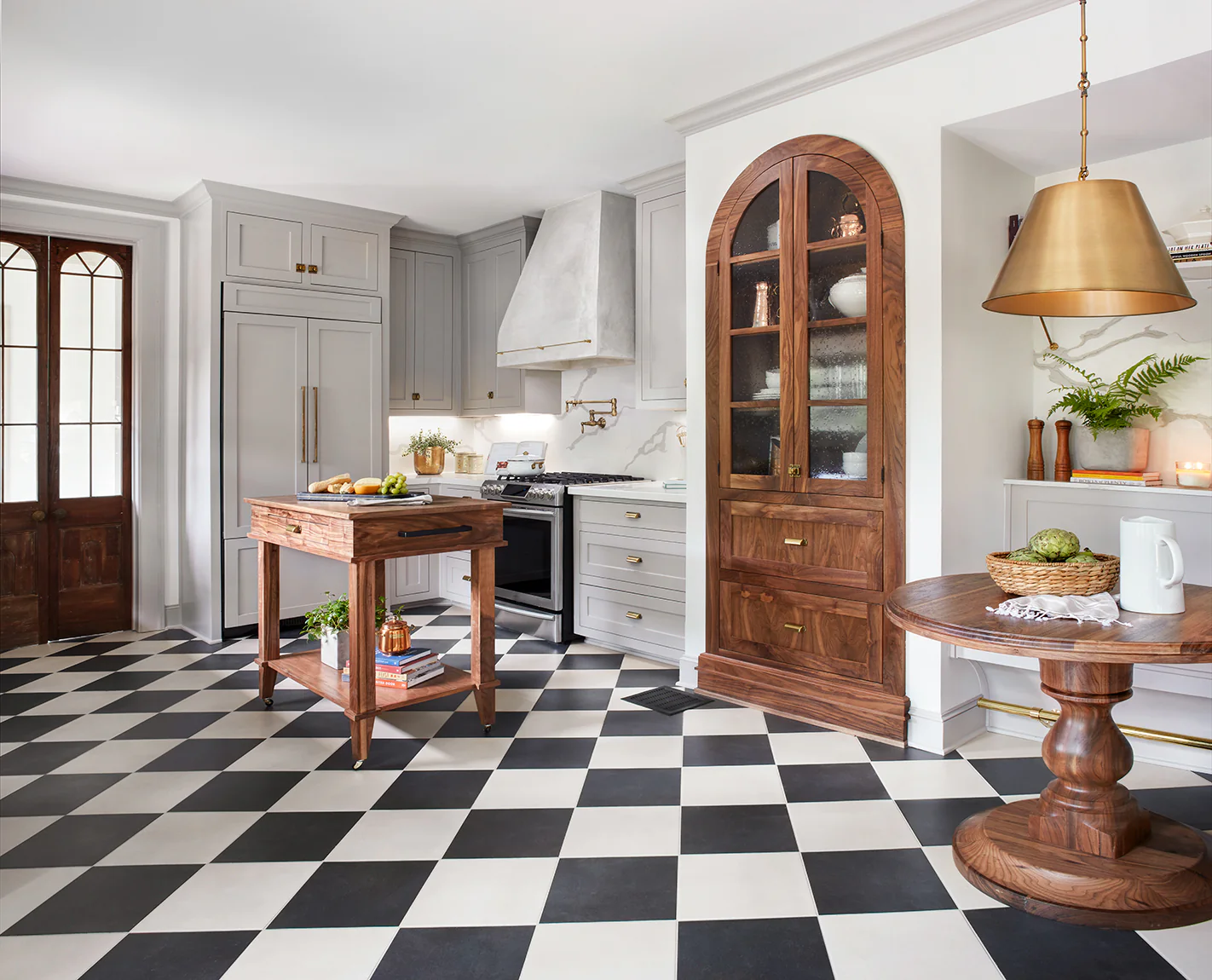
1. Retro-Inspired Culinary Space Featuring Classic Checkered Flooring
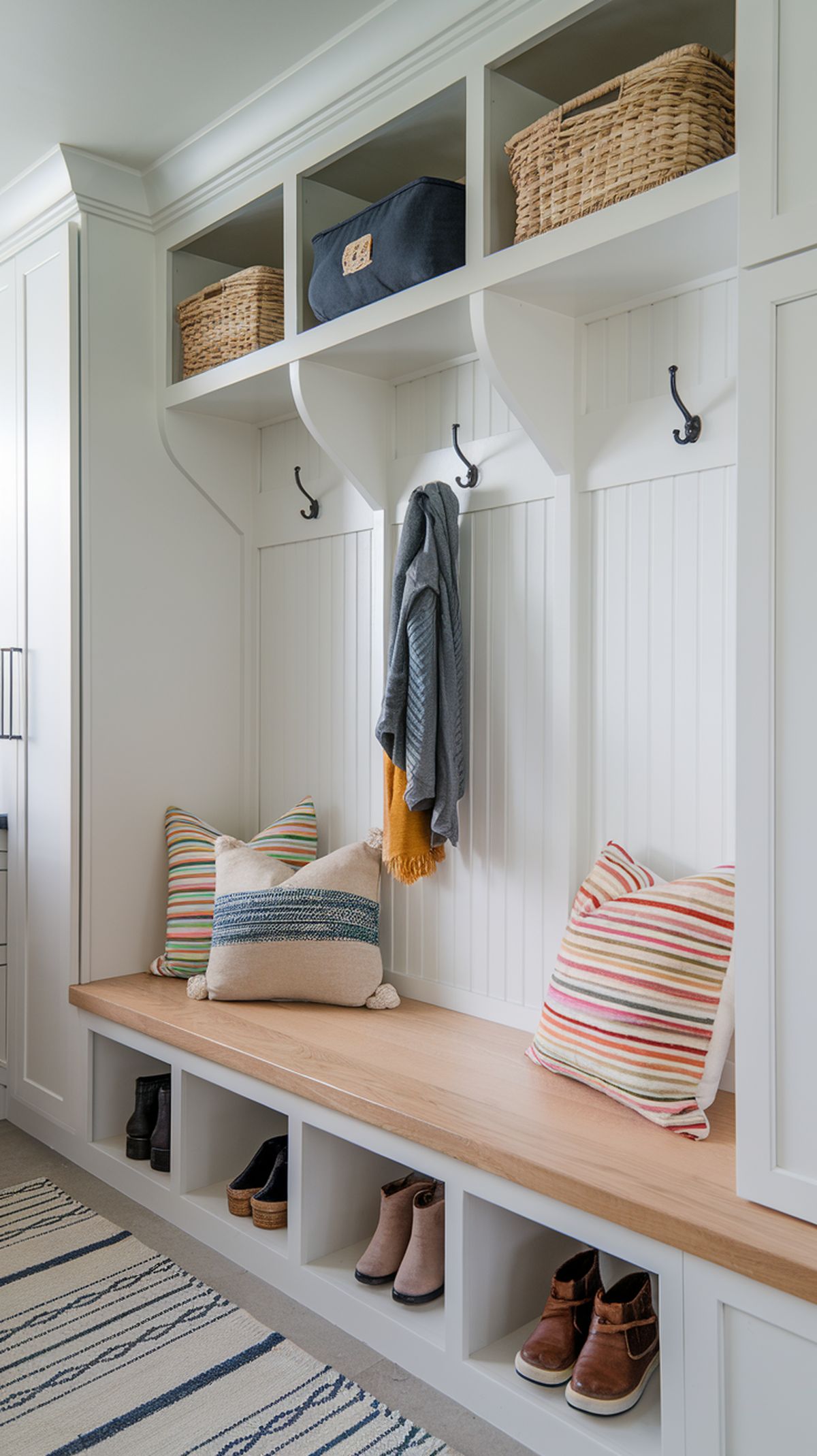
A classic checkered floor injects a lively, nostalgic touch into this kitchen, bringing pattern and character to an otherwise straightforward room. Crisp white cabinets and open shelving maintain a clean, contemporary vibe, balancing vintage charm with modern freshness. The result is an inviting space that feels both timeless and delightfully unique.
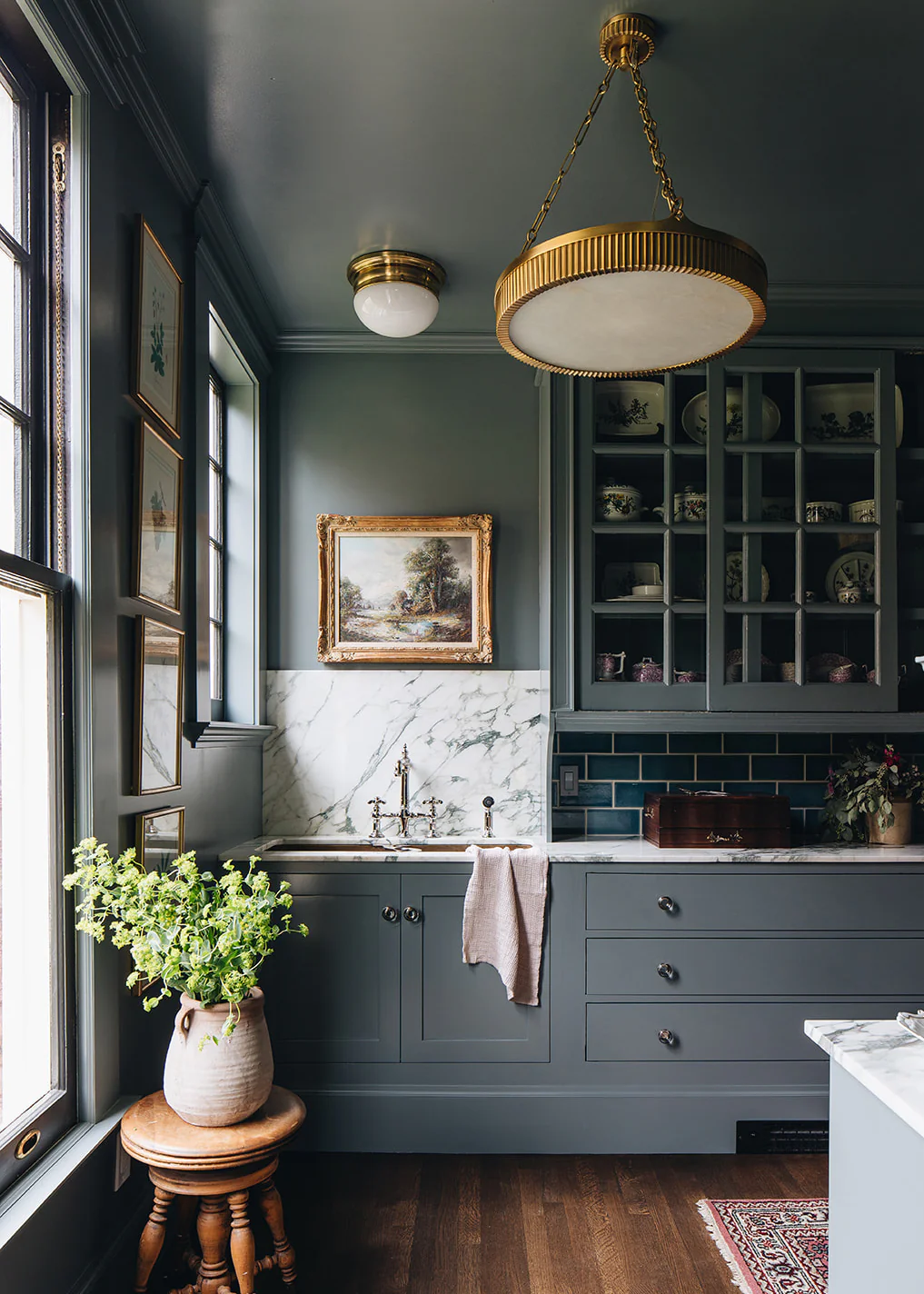
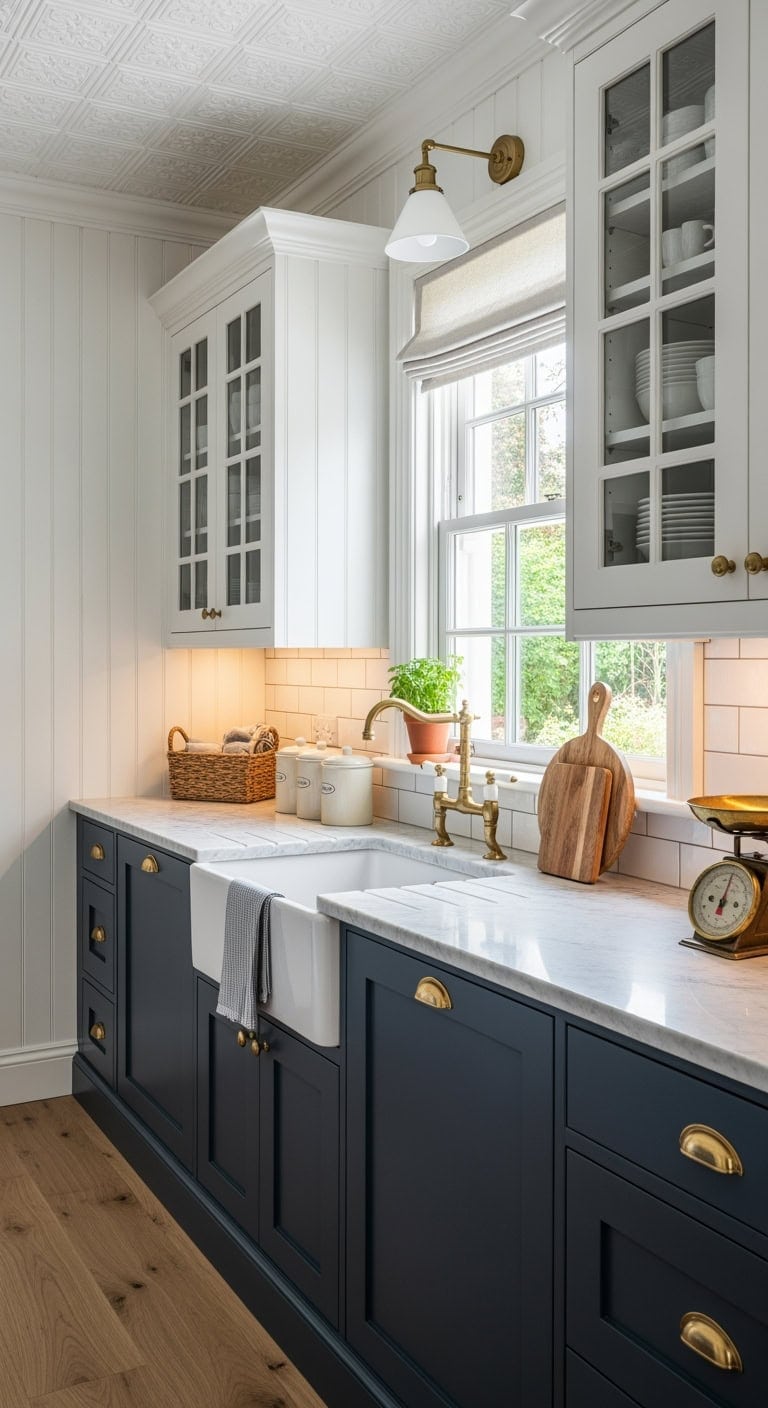
2. Atmospheric Blue-Toned Pantry Kitchen Design
This nook exudes a warm and inviting atmosphere, thanks to the striking deep blue cabinets complemented by elegant marble countertops. Nestled somewhat discreetly, it serves as a serene little workstation within the kitchen. It’s the perfect place to prepare meals while enjoying a gentle breeze from an open window.
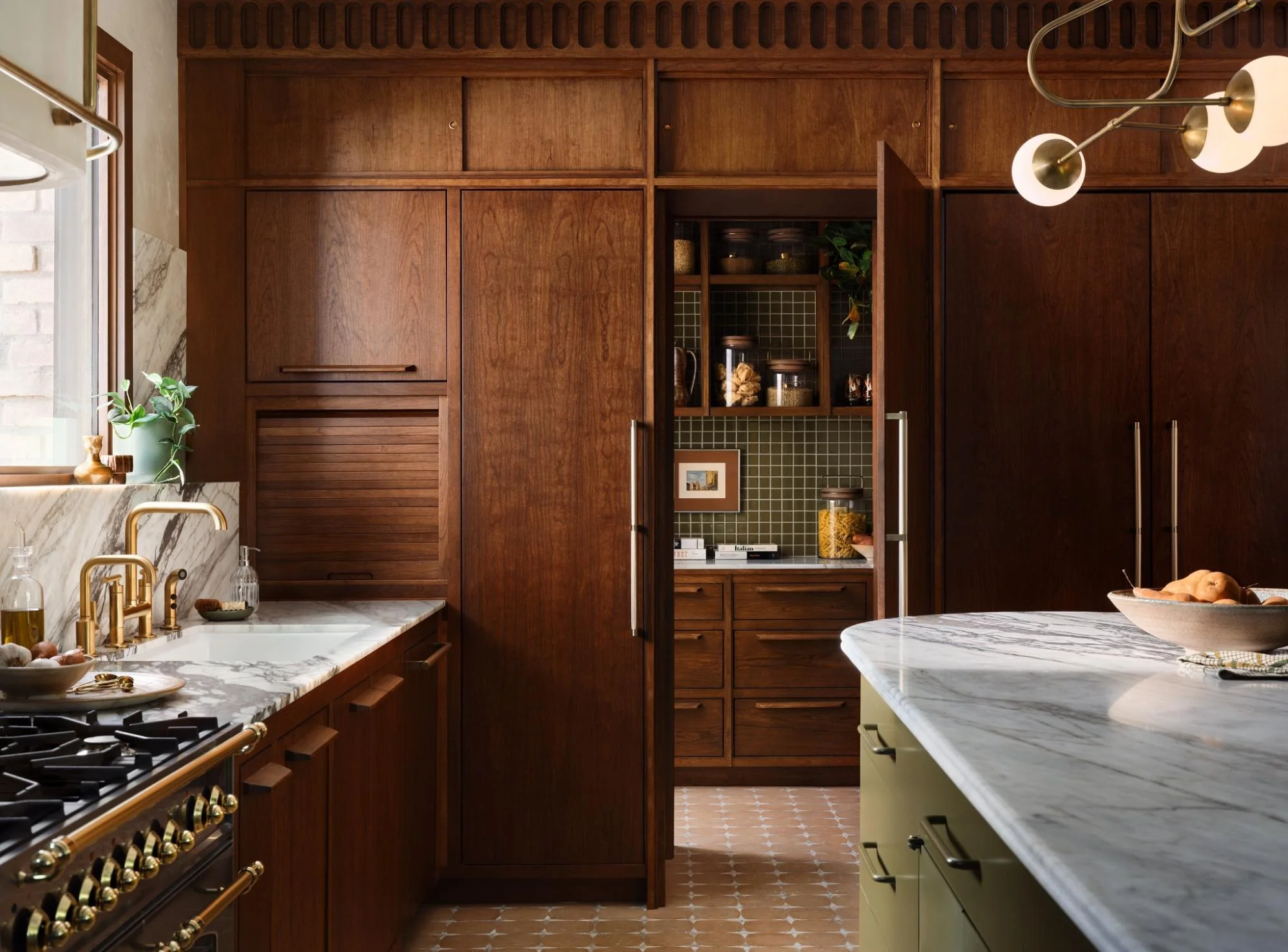
3. Concealed Storage Nestled Within Elegant Wood Cabinetry
This wall appears to be nothing more than elegant wood cabinetry, but a hidden door reveals a spacious pantry tucked away inside. This smart design maintains a sleek, uncluttered kitchen aesthetic while offering ample storage. Seamlessly integrated storage solutions like this are a game-changer for keeping spaces both functional and visually appealing.
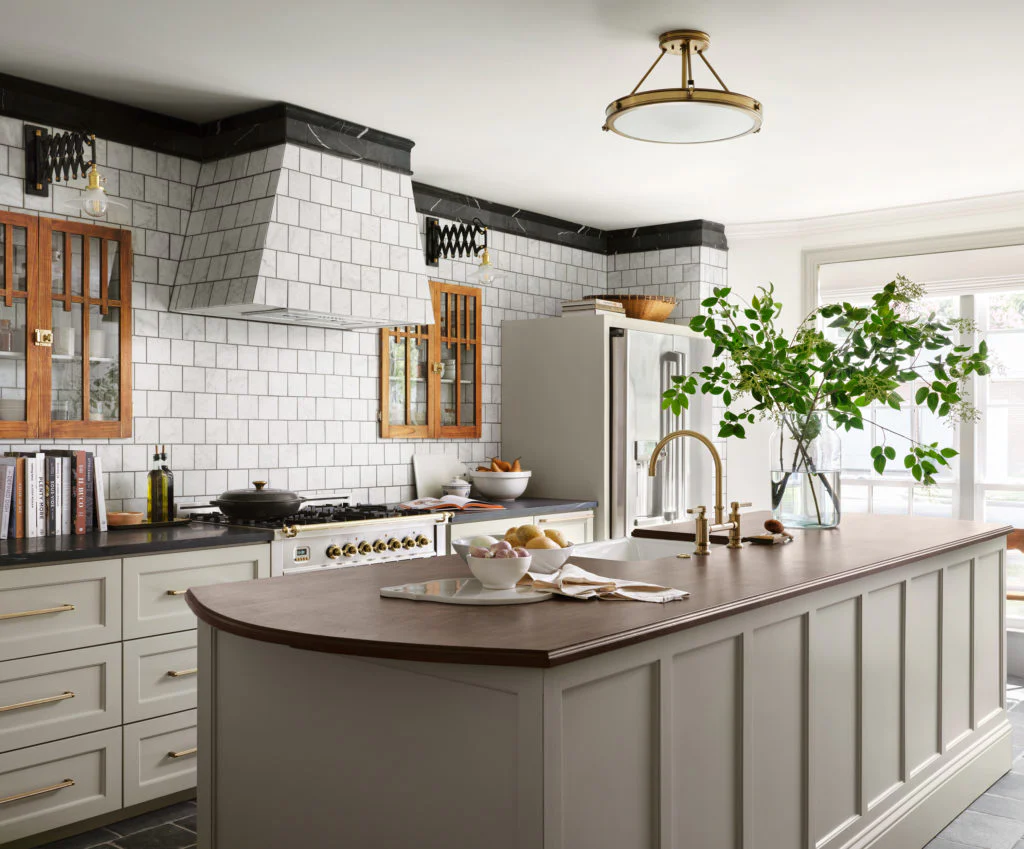
4. Timeless White Kitchen Featuring Iconic Subway Tile
A pristine white kitchen exudes a sense of warmth and timeless elegance when executed with care. The clean lines of the subway tile backsplash paired with a brass faucet create a polished, classic vibe, while the darker countertop on the island provides a striking contrast that prevents the space from feeling monotonous. This design strikes a perfect balance between simplicity and intentionality.
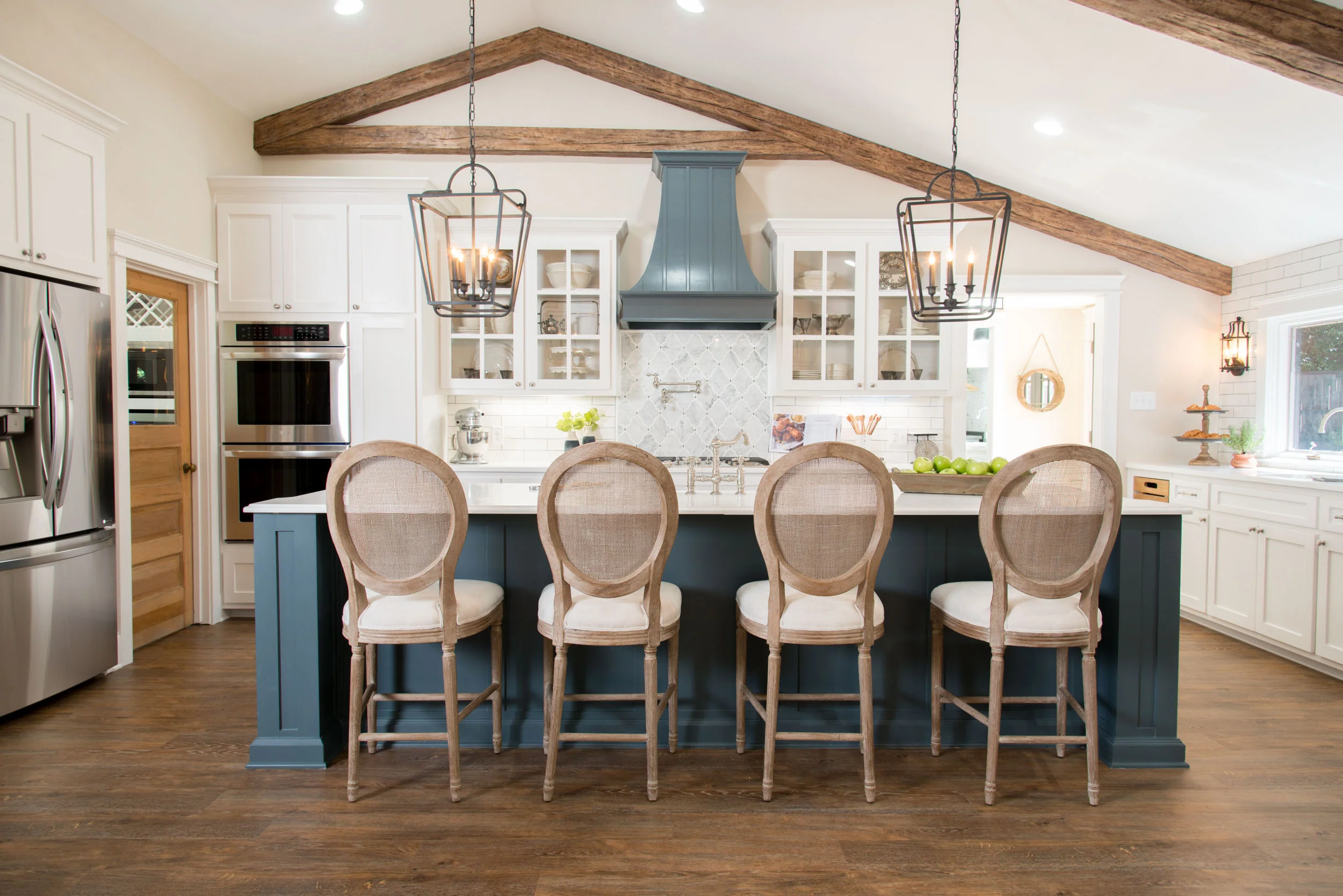
5. Rustic Culinary Space Featuring Open Ceiling Beams and a Vibrant Blue Stove Hood
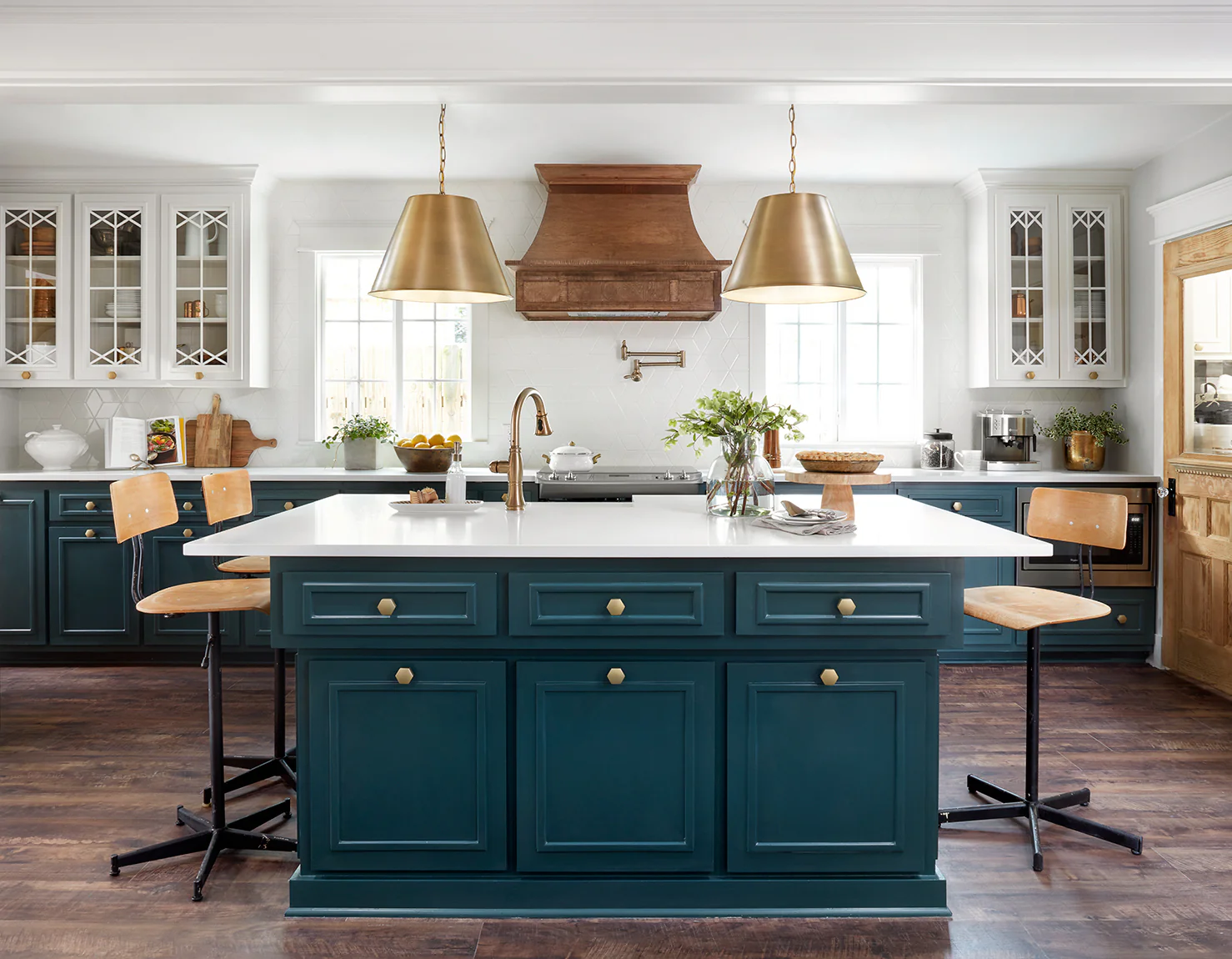
Choosing a blue range hood makes a striking statement, serving as the kitchen’s centerpiece without dominating the room. The exposed beam overhead introduces a touch of rustic warmth, perfectly complementing the vibrant hue. This design choice exudes a confident, effortlessly stylish vibe reminiscent of Joanna Gaines.
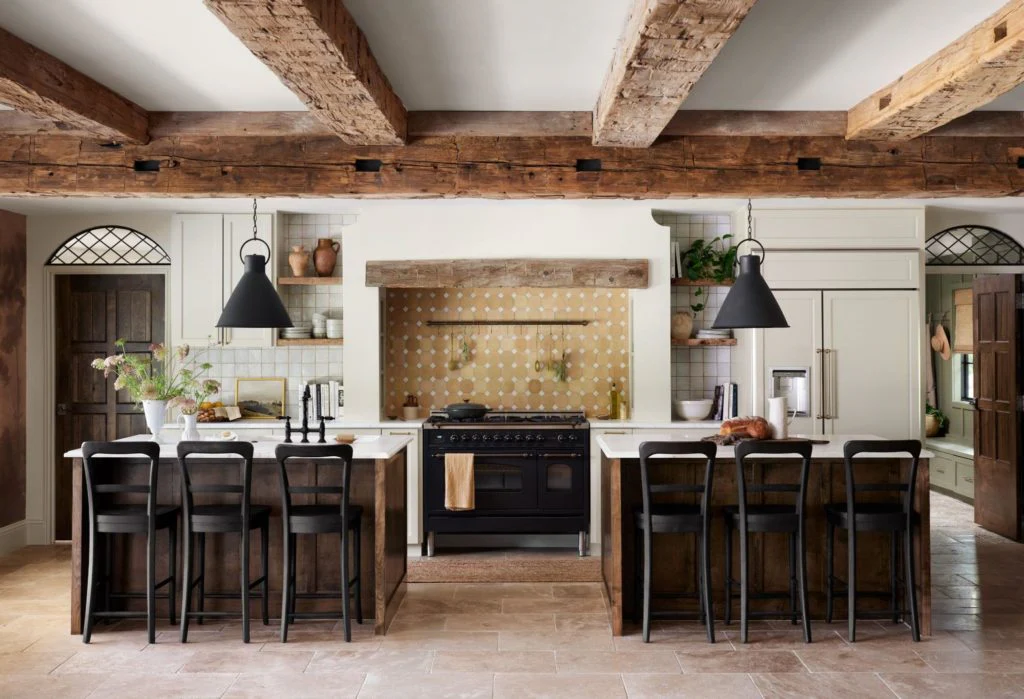
6. Charming Kitchen Featuring Exposed Wooden Beams and Bold Range
The exposed beams add striking architectural interest, drawing the eye upward and enhancing the room’s charm. Centered by a spacious range and a tile backsplash, the kitchen naturally invites attention, amplified by the cozy, warm hues surrounding it. With seating at the island, the layout encourages gathering and conversation, creating a space that feels both daring and inviting.
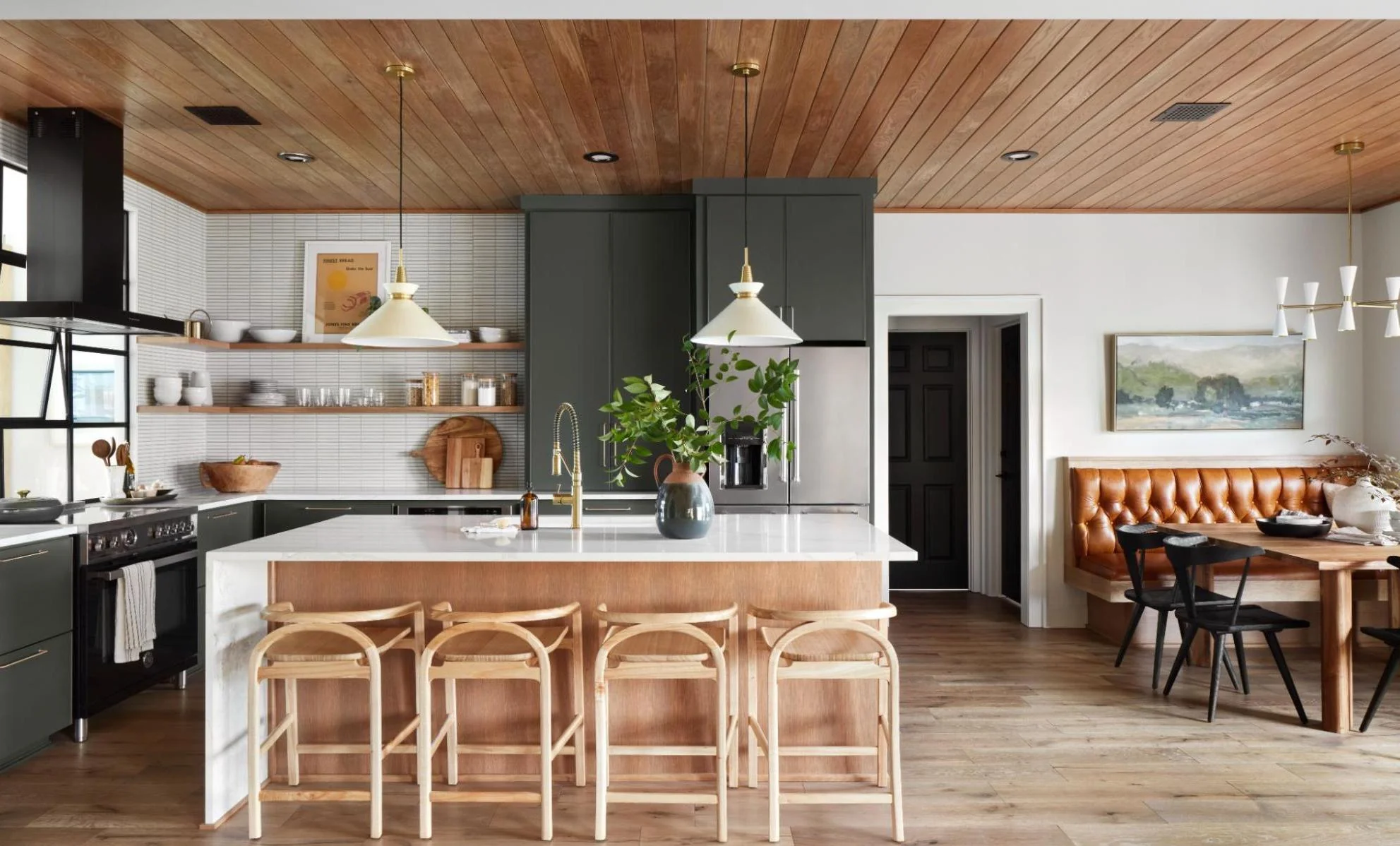
The kitchen’s wood-paneled ceiling brings a rich warmth and tactile dimension that naturally leads the eye upward, enhancing the room’s sense of height and character. Paired with crisp white cabinets and sleek lines, the space strikes a perfect balance between cozy and modern. This design brilliantly showcases how a single striking material can elevate the entire atmosphere.
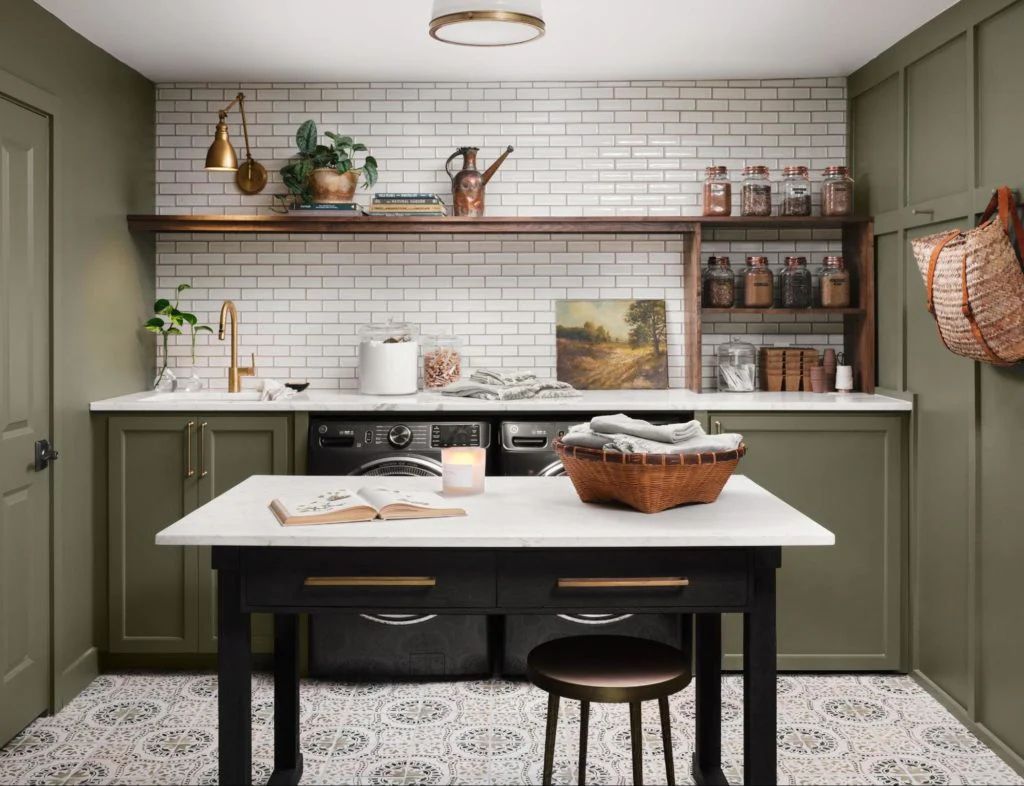
8. Charming Country-Style Kitchen Featuring a Functional Work Table
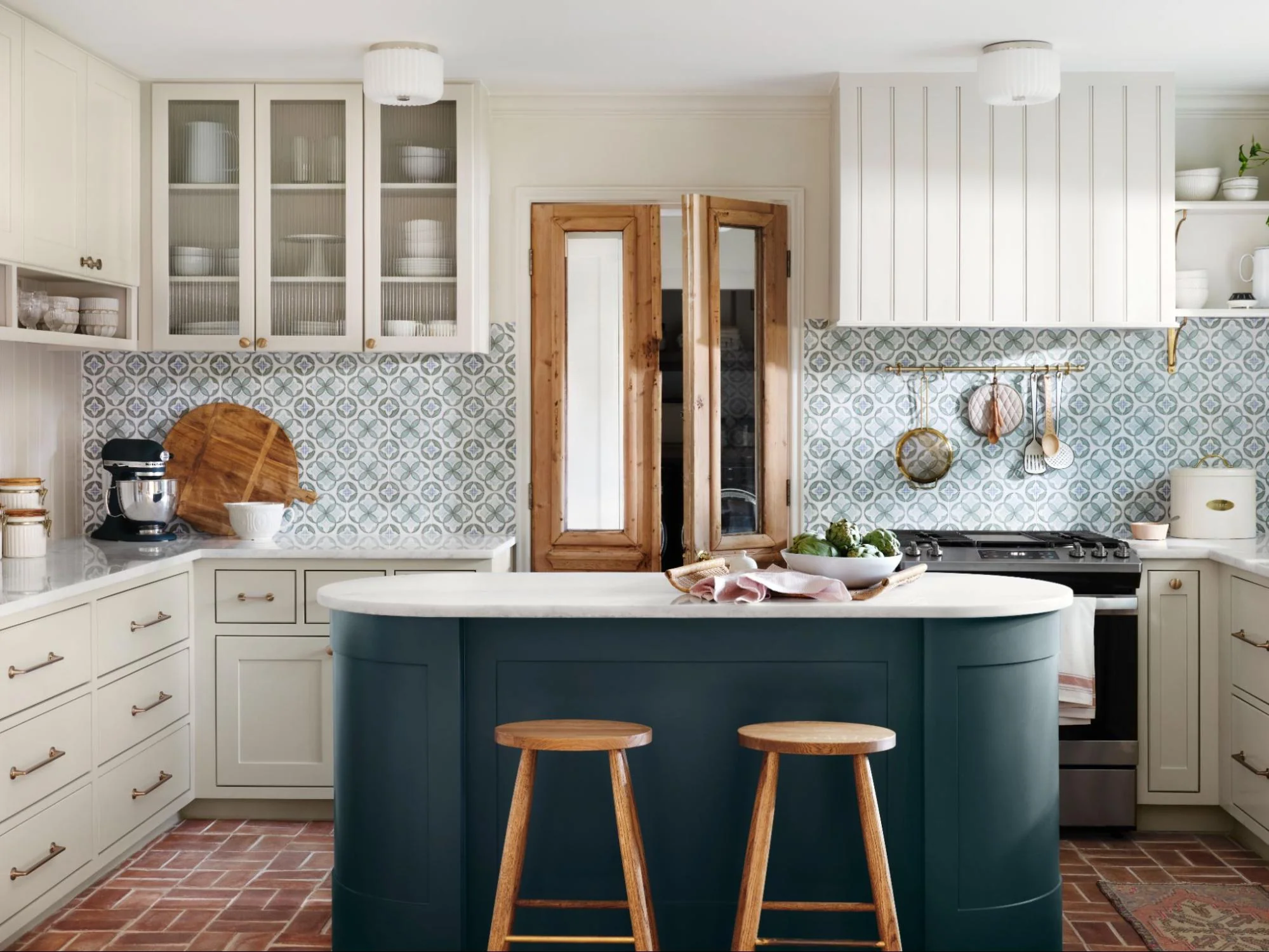
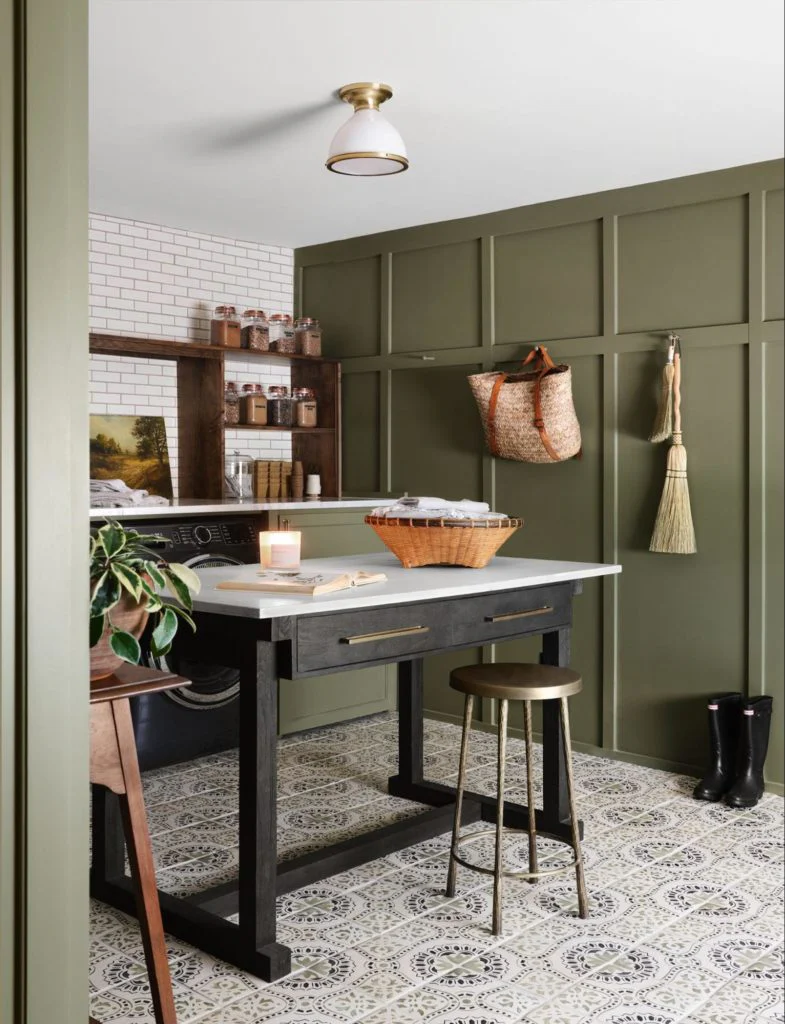
Departing from the classic island design, this kitchen features a work table that brings a cozy, farmhouse charm to the space. The olive green wall paneling introduces subtle richness without dominating the room, while open shelving and hanging hooks ensure frequently used items are always accessible. The overall effect is both functional and inviting, embodying a comfortably lived-in atmosphere.
9. Cozy Country Kitchen Featuring a Rounded Center Island
The gracefully curved island introduces a warm, inviting atmosphere that balances the cabinetry’s clean, linear design, encouraging a more social and engaging layout. Subtle yet stylish, the patterned backsplash provides just the right touch of interest without overwhelming the space. Bright and cheerful, this kitchen feels effortlessly welcoming—a perfect spot to gather and enjoy.
10. Organic-Inspired Culinary Space Featuring a Stunning Marble Centerpiece
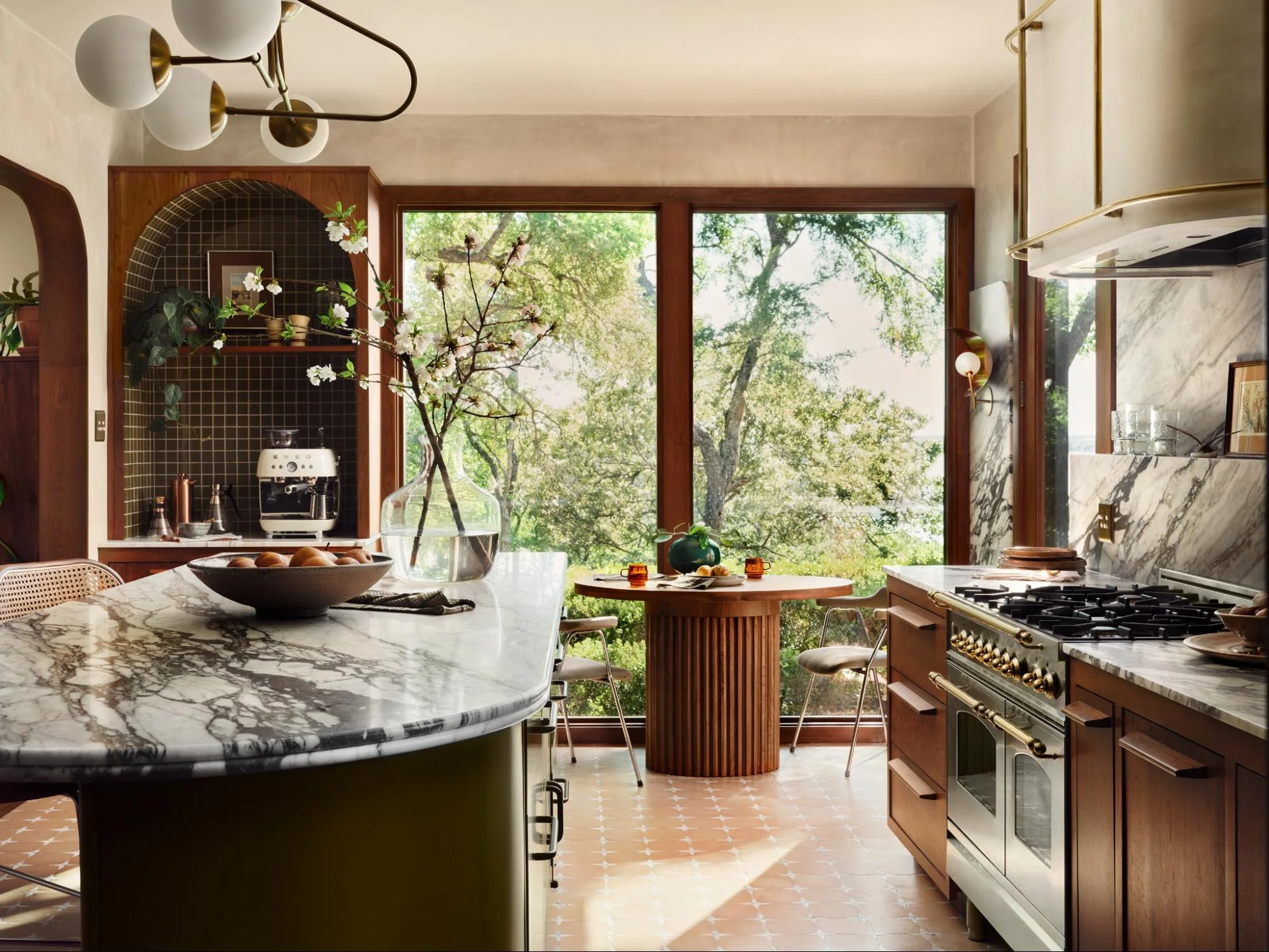
With expansive windows flooding the space with natural light and views of lush greenery, this kitchen seamlessly blends indoor comfort with an outdoor ambiance. The marble island adds a touch of sophistication, while the warm wood accents maintain a cozy, inviting atmosphere perfect for daily cooking. The overall effect is a serene and stylish culinary haven.
11. Sunlit Country Kitchen Featuring Rustic Wood Beam Accent
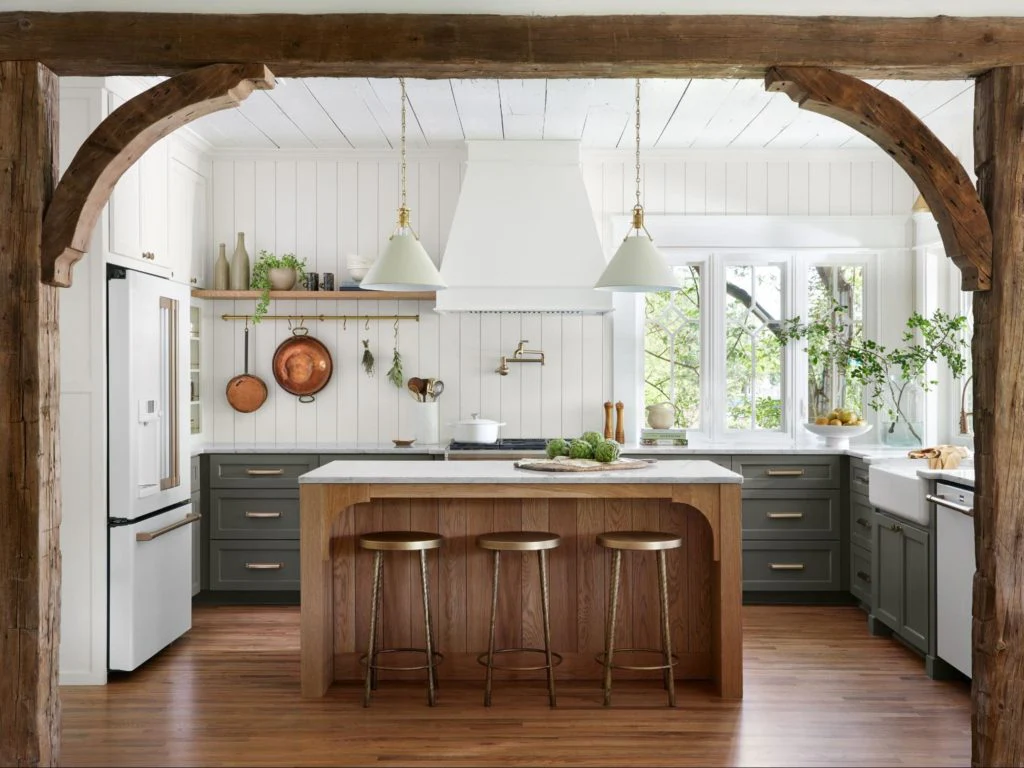
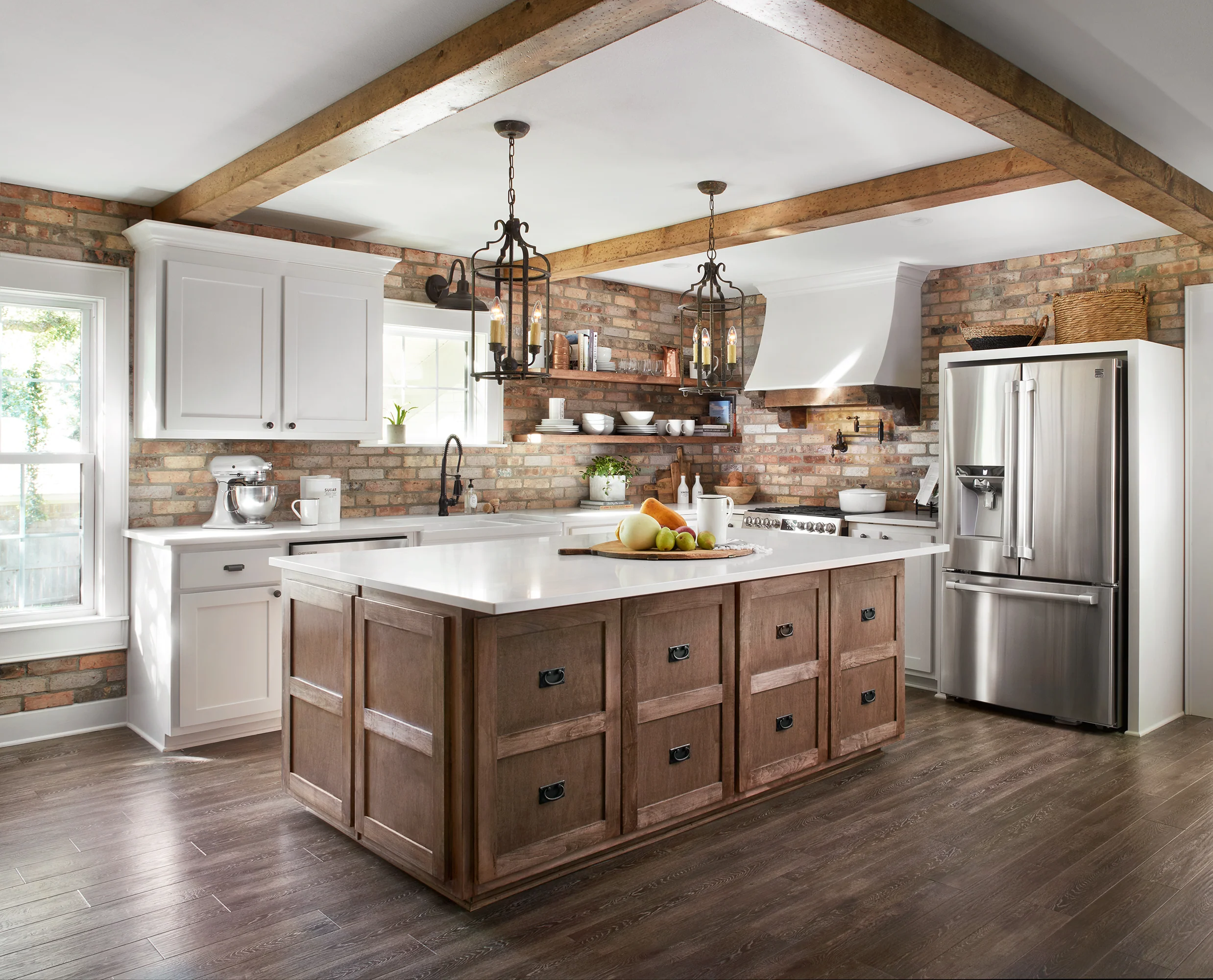
A striking exposed beam defines the kitchen, bringing a touch of architectural charm that remains effortlessly inviting—an aesthetic hallmark of Joanna Gaines. Crisp white walls and cabinetry create a luminous atmosphere, while the wooden island anchors the room with warmth. Adding a layer of authenticity, copper cookware displayed on the wall offers a subtle yet impactful design accent.
12. Contemporary Country Kitchen Featuring Open Shelves
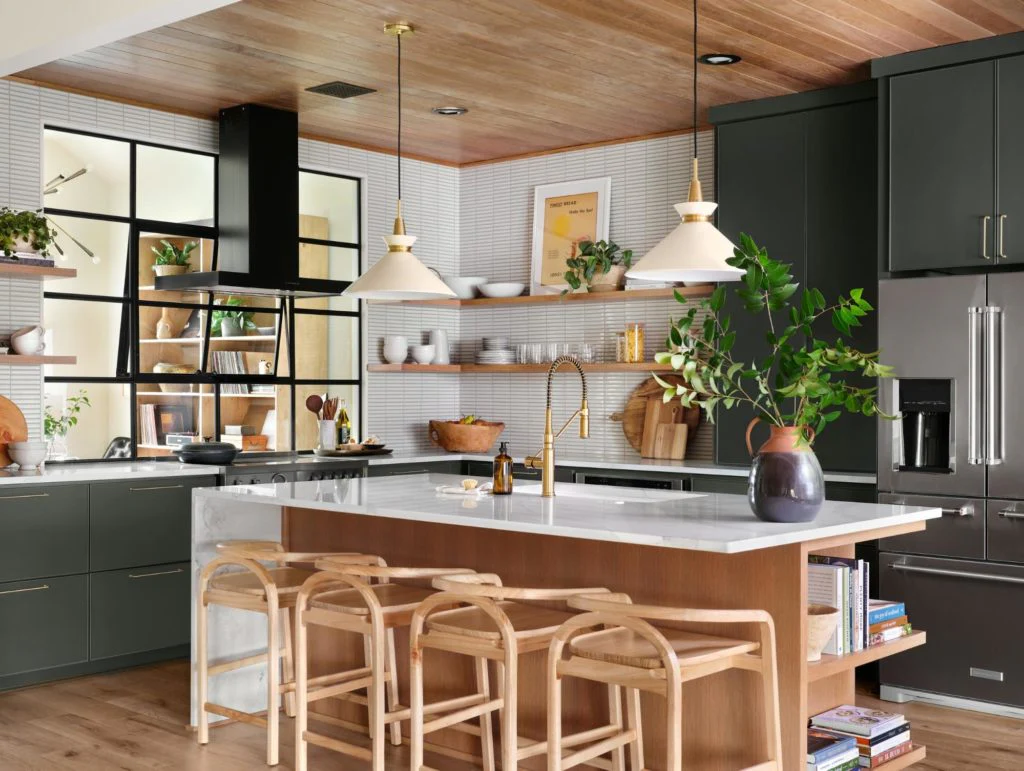
Blending contemporary style with rustic charm, this kitchen features dark cabinetry that anchors the space, while a wooden island and woven stools introduce inviting warmth. The open shelving contributes to a casual, curated atmosphere, avoiding an overly polished look. In the evening, pendant lighting enhances the cozy and welcoming ambiance of the room.
13. Charming Country Kitchen Featuring a Wooden Center Island
Every perspective of this kitchen radiates warmth and hospitality. Anchored by a wooden island that serves as both a workspace and a spot for relaxed dining, the room effortlessly blends wood, stone, and metal textures to create visual richness without overwhelming the senses.
14. Retro Charm Enhanced by Decorative Tile Backsplash
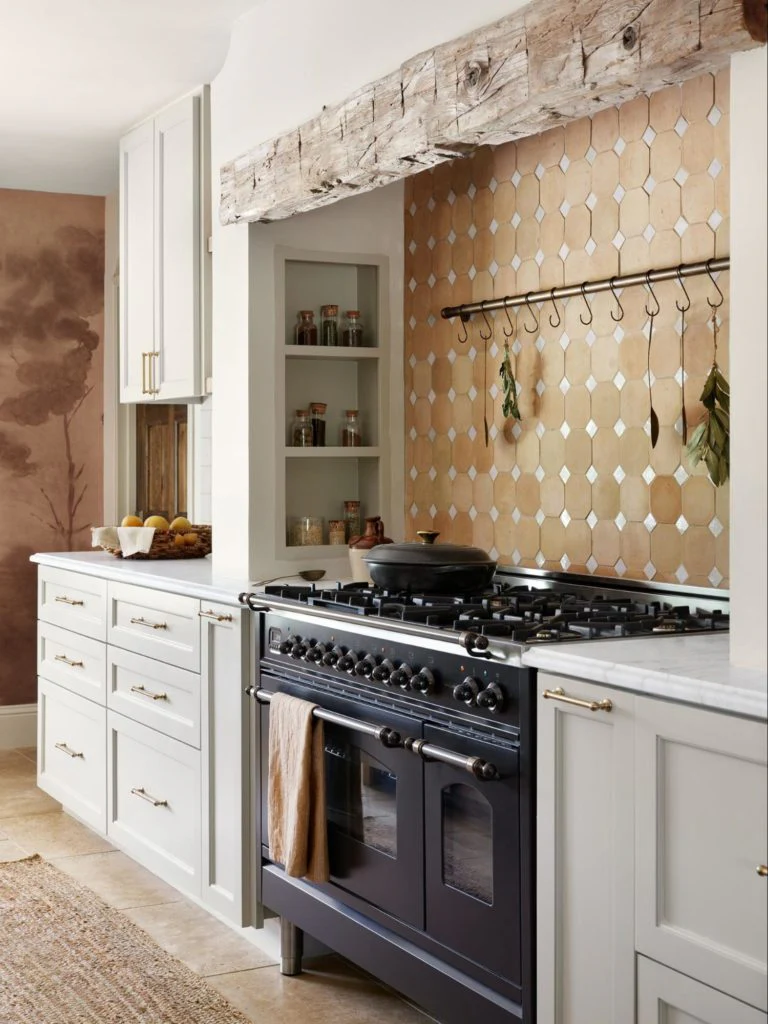
The kitchen’s patterned backsplash brings a subtle touch of character, introducing texture and visual depth without relying on vibrant hues. The black range provides a strong focal point, enhancing the brightness of the white cabinets. This space beautifully demonstrates how a single design element can define the entire room.
15. Cooking Space Featuring a Curved Pantry Entryway
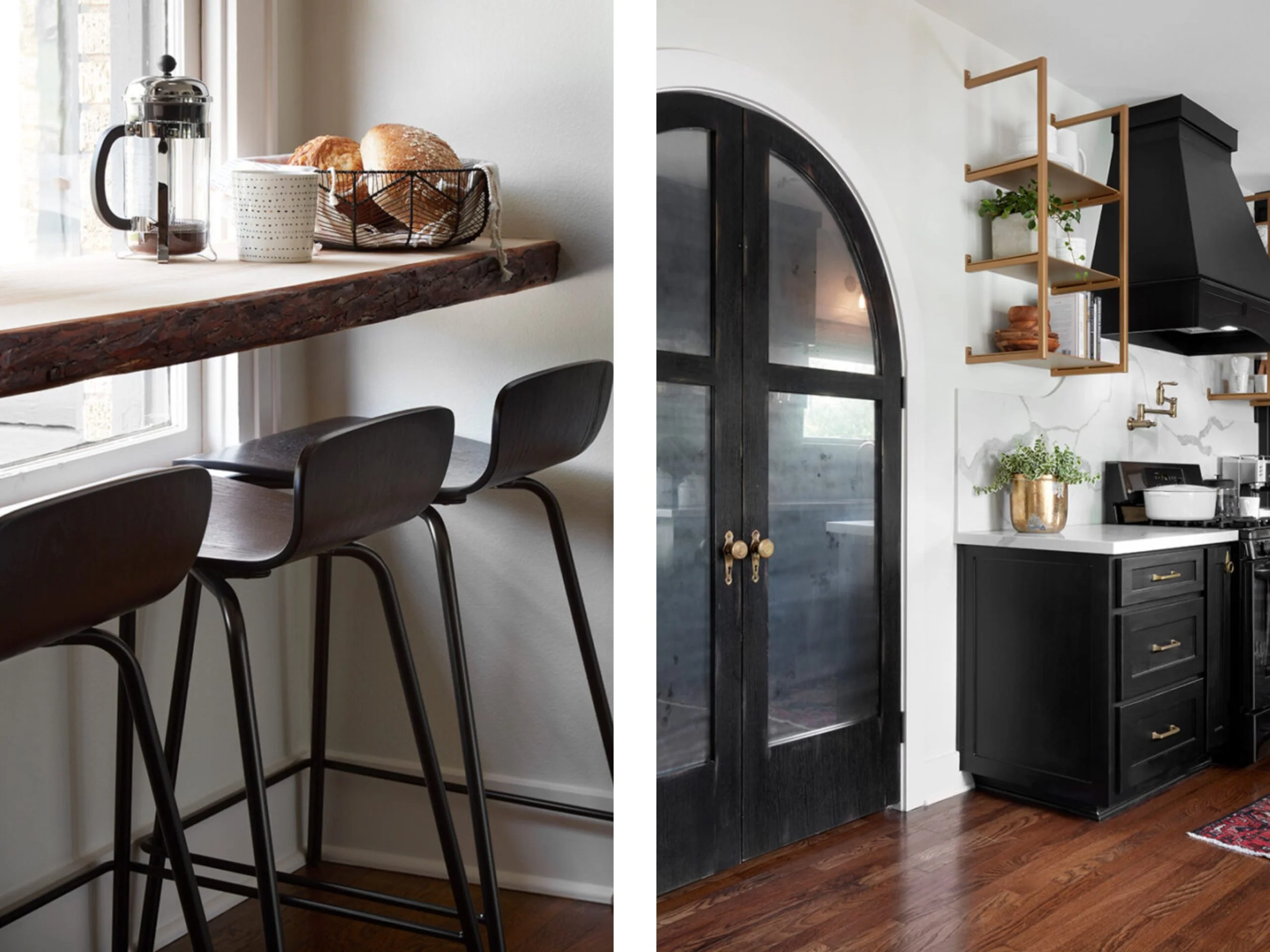
The arched pantry door stands out as a stunning architectural feature, infusing the kitchen with a timeless sense of craftsmanship and character. By maintaining a minimalist design throughout the rest of the space, this elegant curve becomes the true focal point. It’s a subtle touch that brings remarkable charm to the room.
16. Sunlit Contemporary Farmhouse Kitchen Featuring a Sleek Waterfall Island
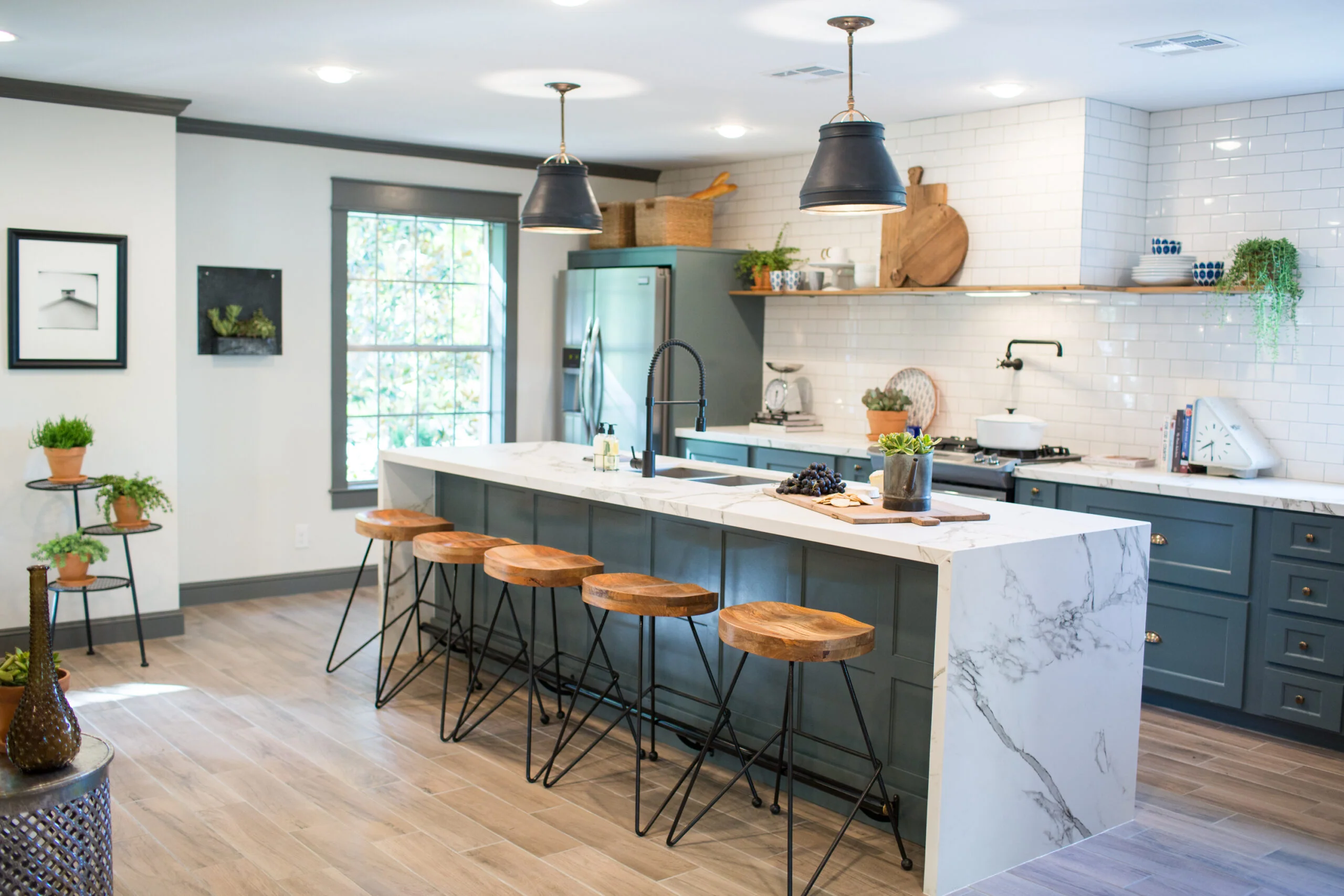
The kitchen immediately welcomes with its bright and airy atmosphere. A waterfall marble island introduces a contemporary touch, balanced perfectly by rich blue cabinets that soften the modern vibe. Paired with understated wooden stools, the space exudes warmth and a relaxed charm—ideal for quiet mornings or midnight bites.
17. Vibrant Indigo Coastal Culinary Space
A vibrant blue island takes center stage in this kitchen, creating a captivating focal point that grounds the entire space. Complemented by crisp white cabinets and natural wood touches, the combination delivers a bold yet welcoming atmosphere. This design perfectly showcases the transformative power of color in a kitchen.
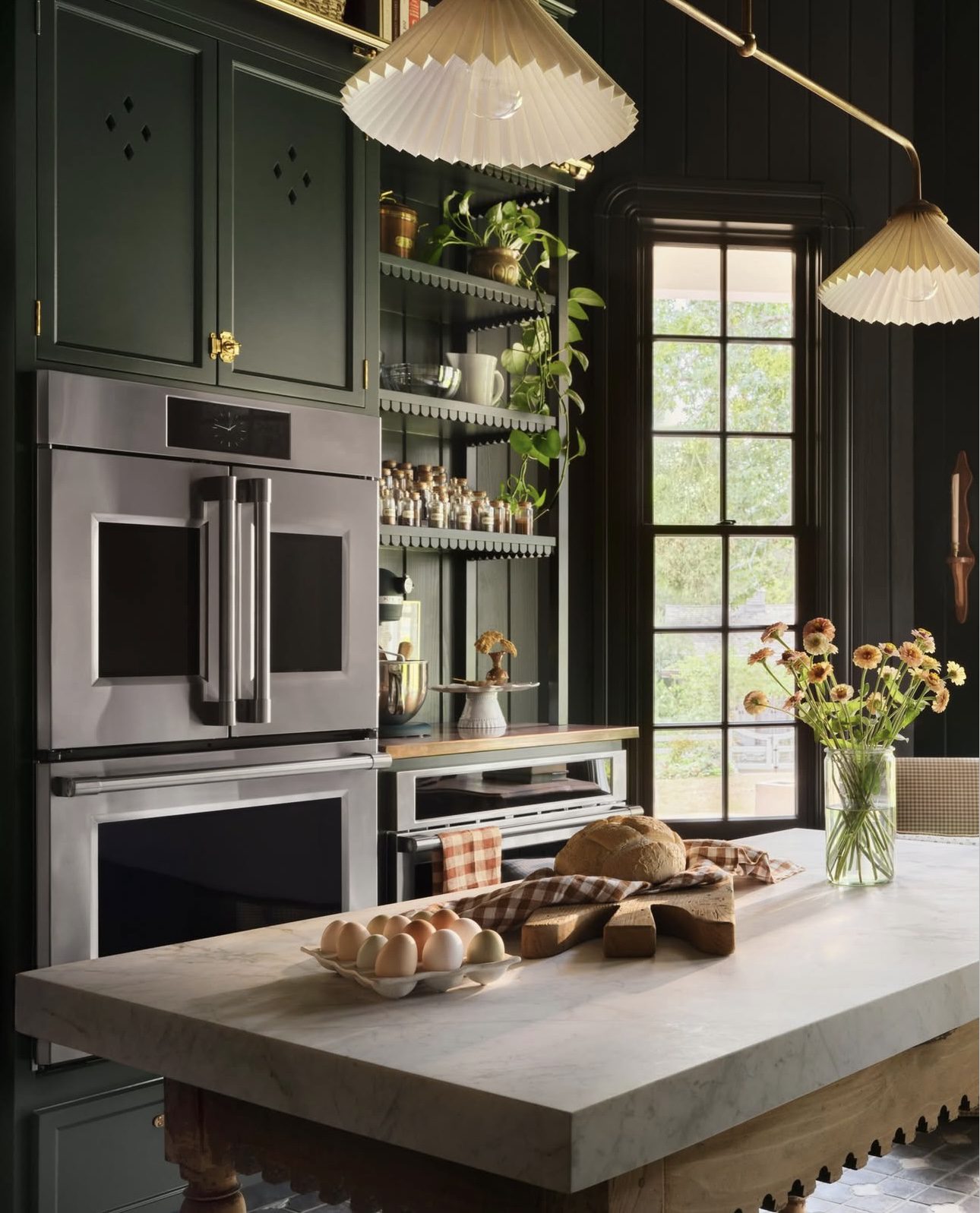
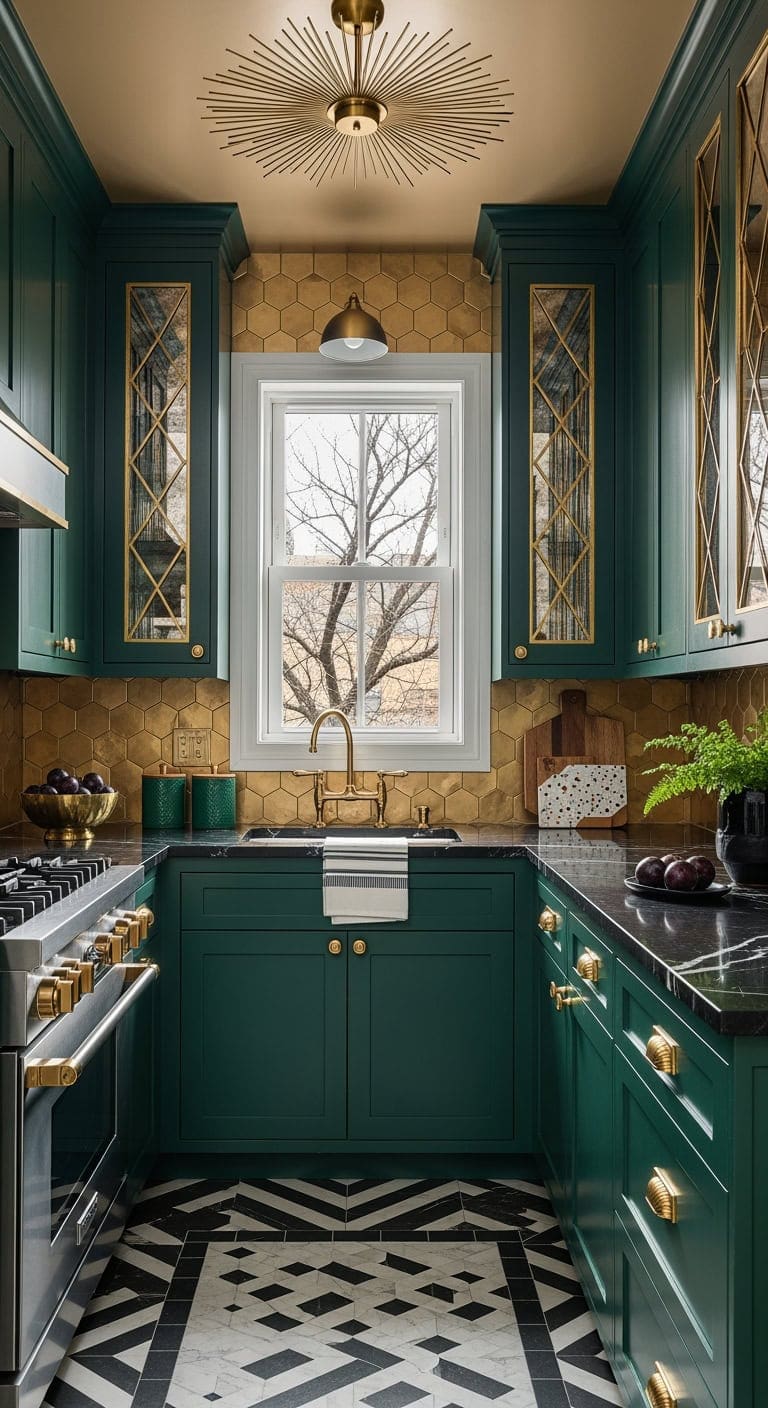
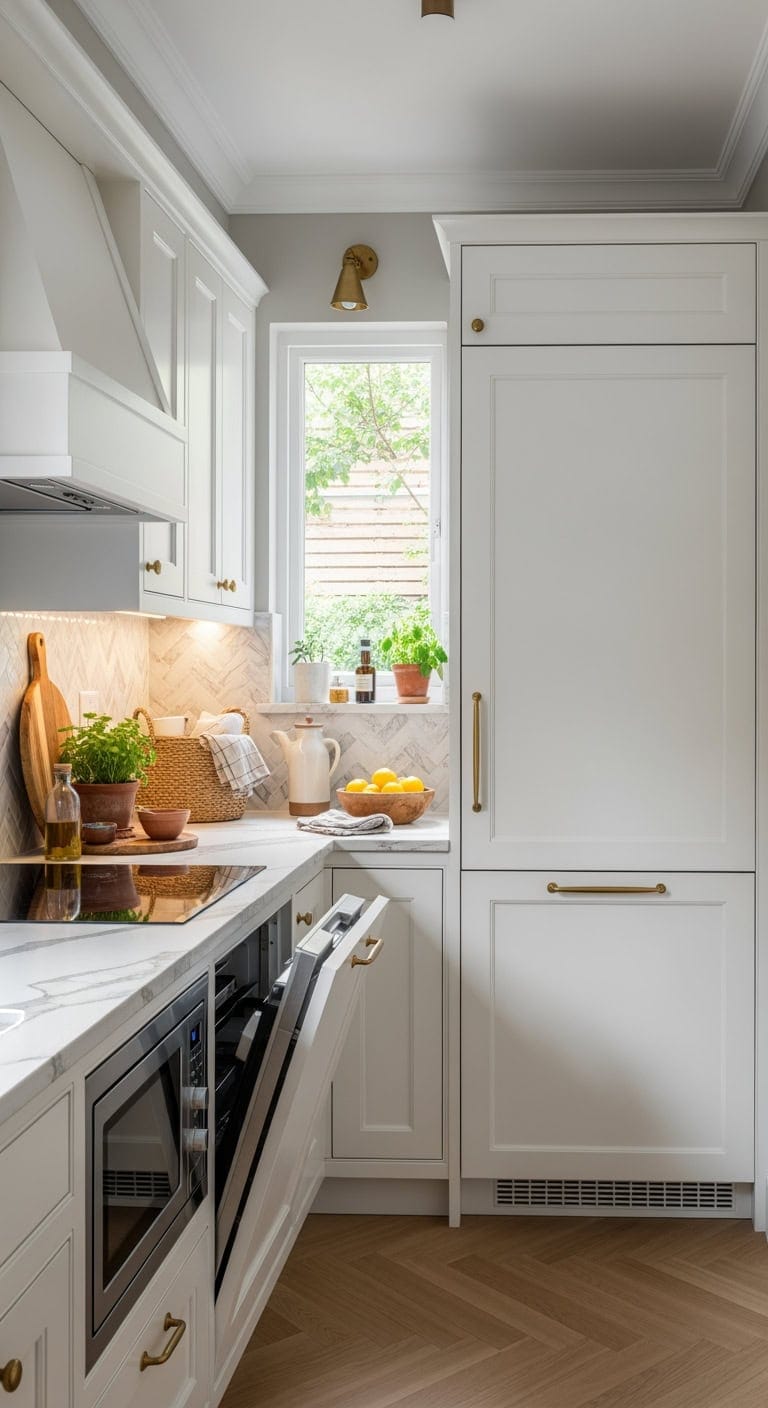
The deep green cabinetry adds a sense of warmth and sophistication to the kitchen, grounding the space without overwhelming it. Bright natural light paired with sleek marble countertops maintains an airy balance, while built-in appliances contribute to the streamlined, uncluttered look. This kitchen effortlessly combines contemporary style with a welcoming, cozy atmosphere.
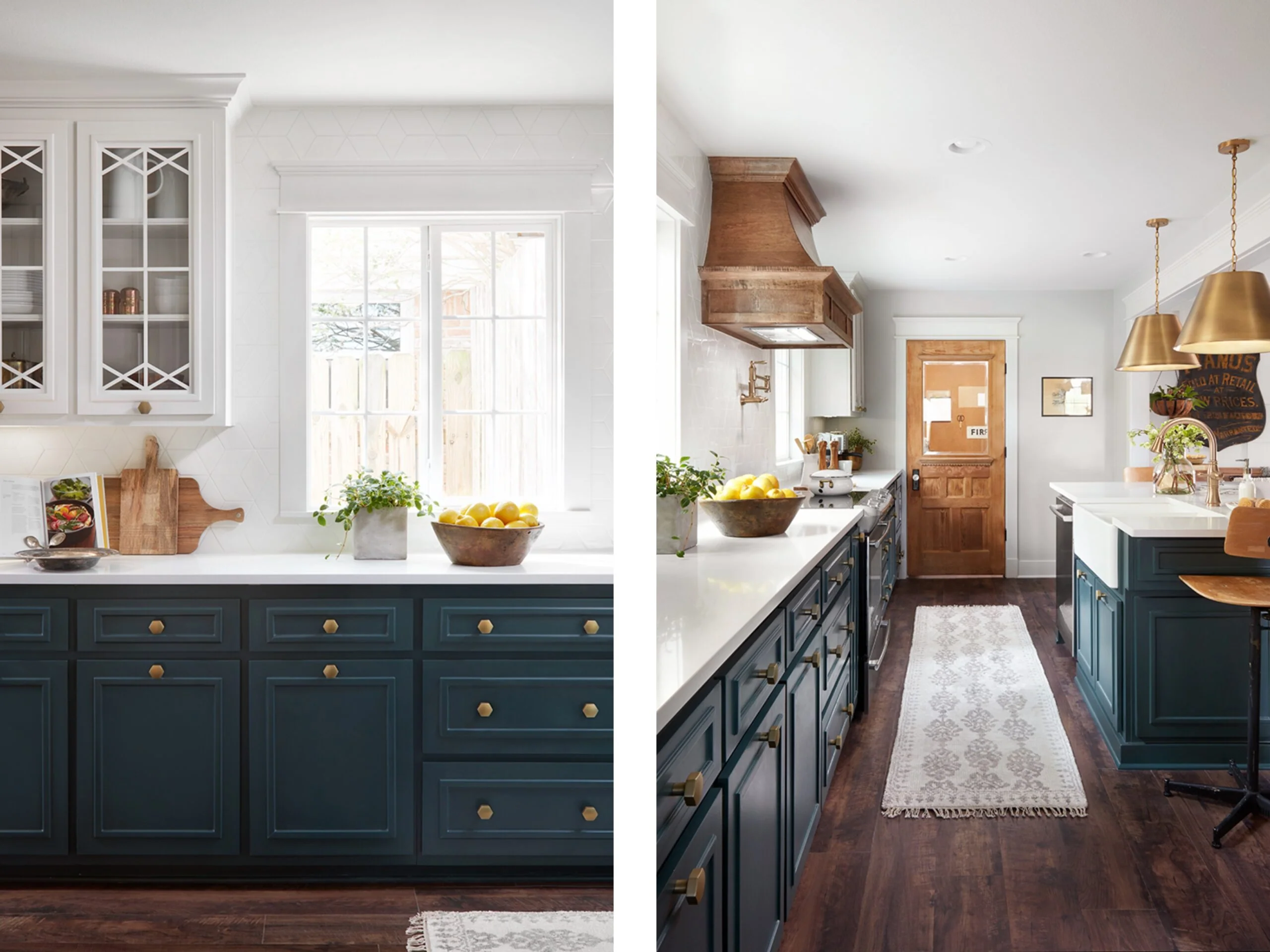
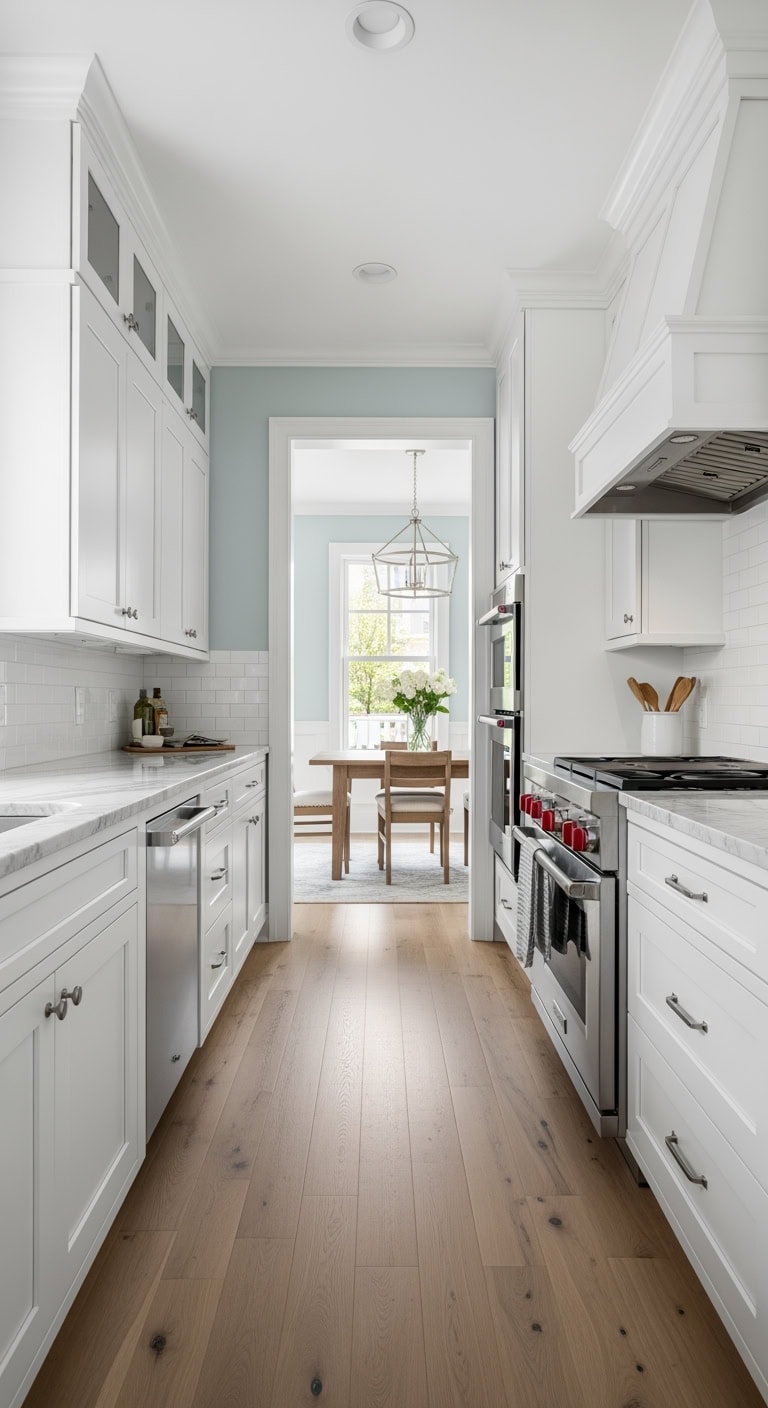
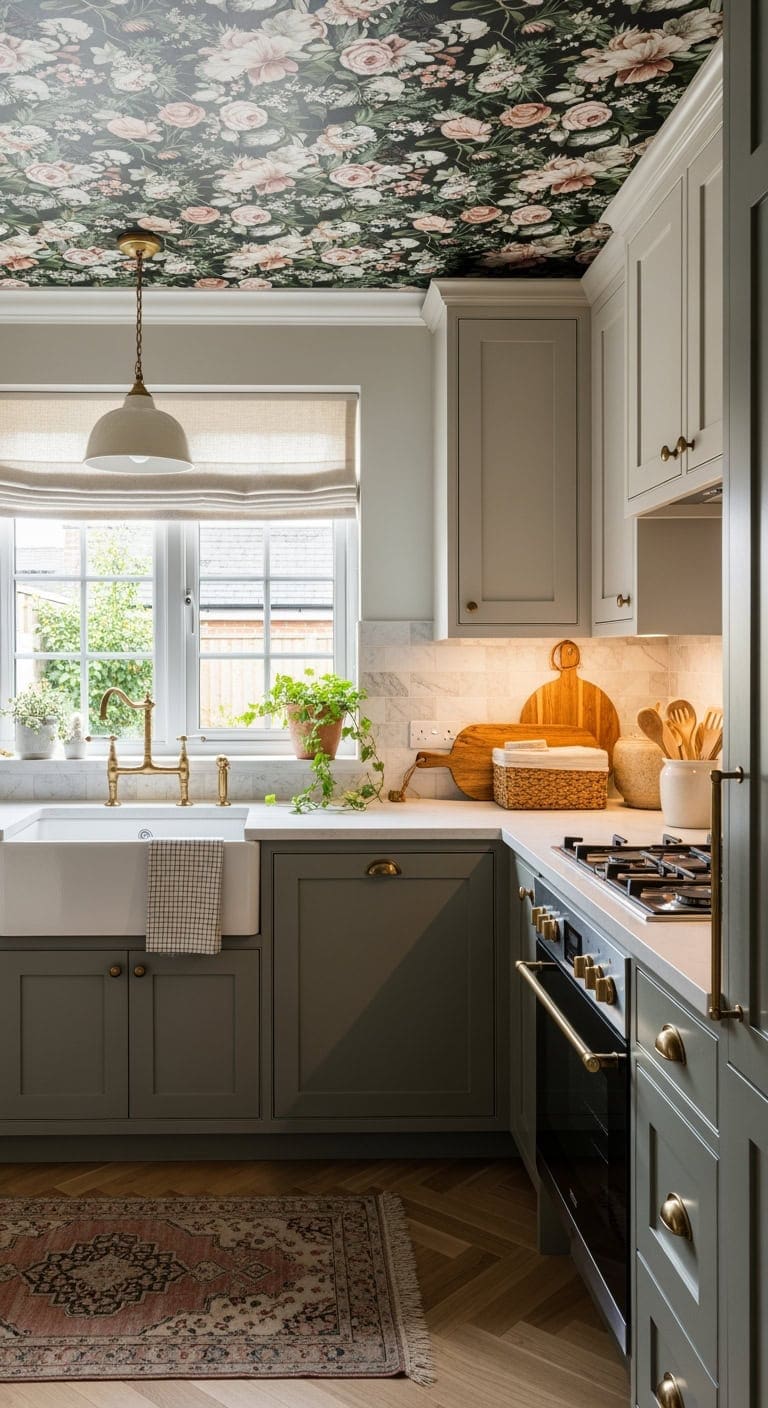
This kitchen demonstrates that even a modest area can be transformed into an elegant retreat. Deep-hued cabinets add richness and dimension, while the extended runner rug introduces cozy texture and character beneathfoot. The unobstructed pathway seamlessly guides your gaze toward the adjacent dining area, blending functionality with intentional design.
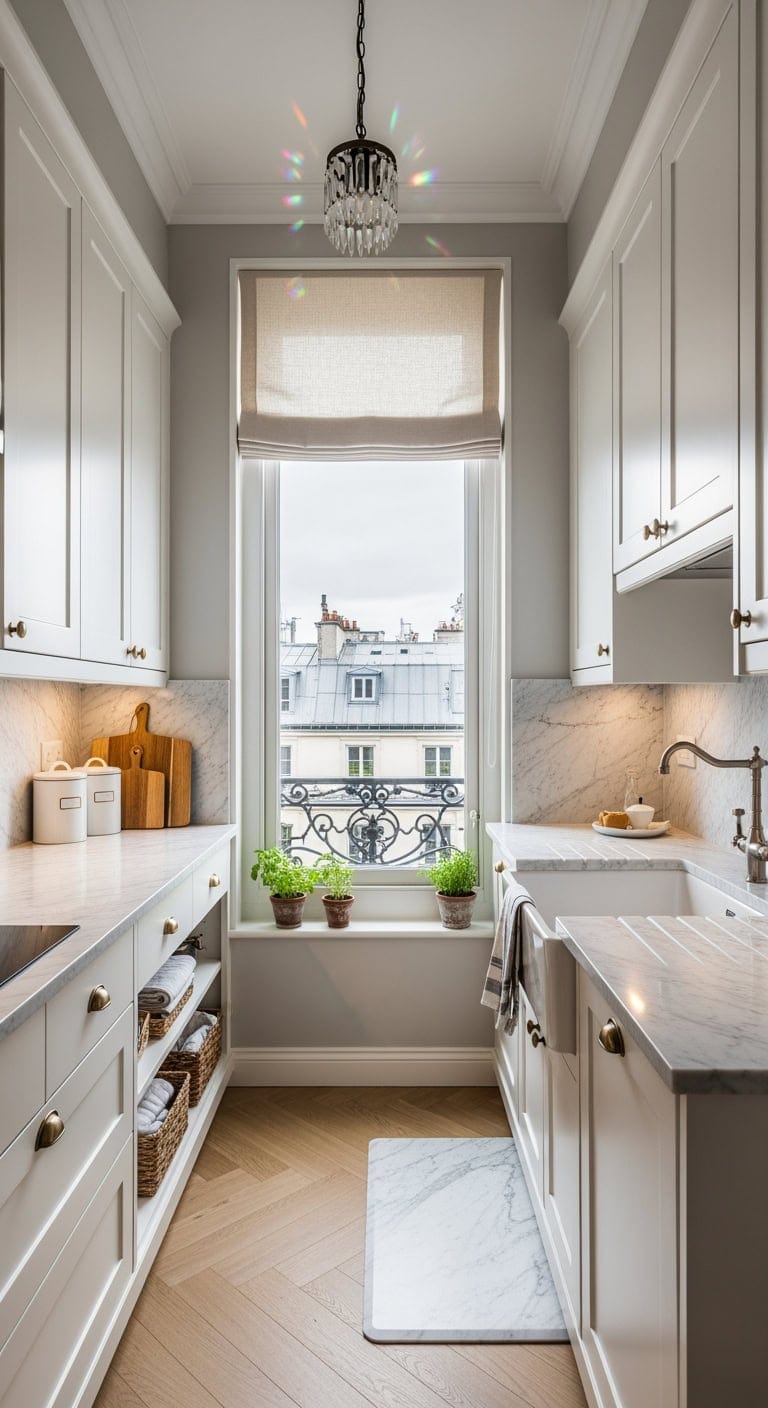
20. Muted Tones and Warm Brass Accents in a Contemporary Kitchen
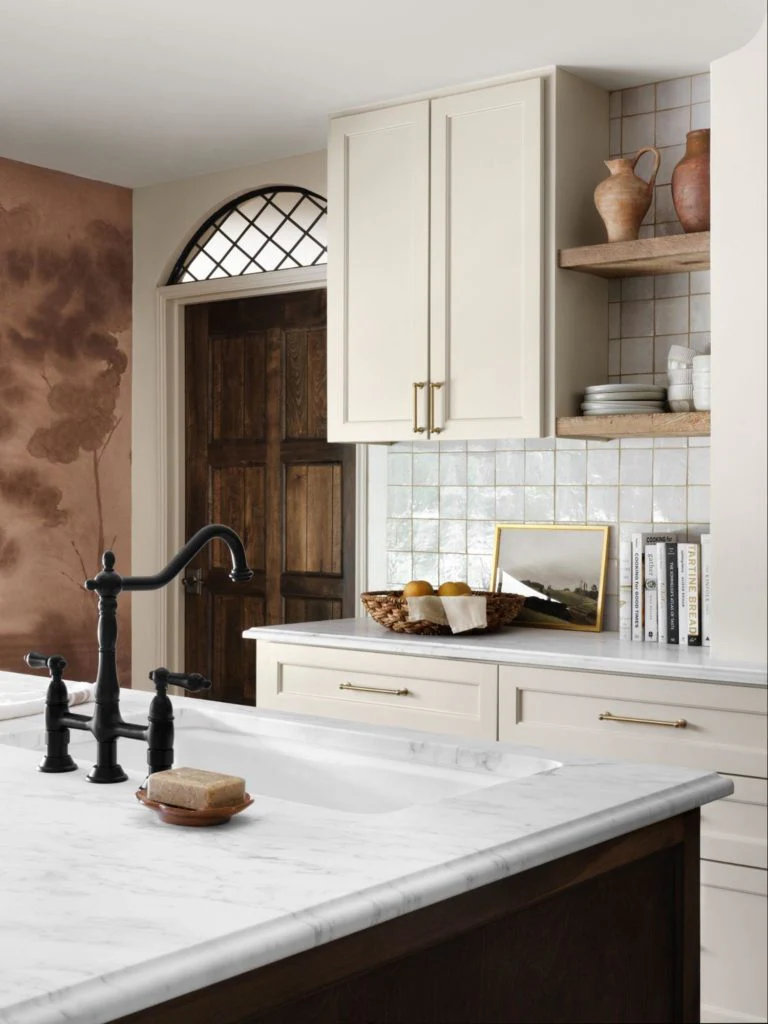
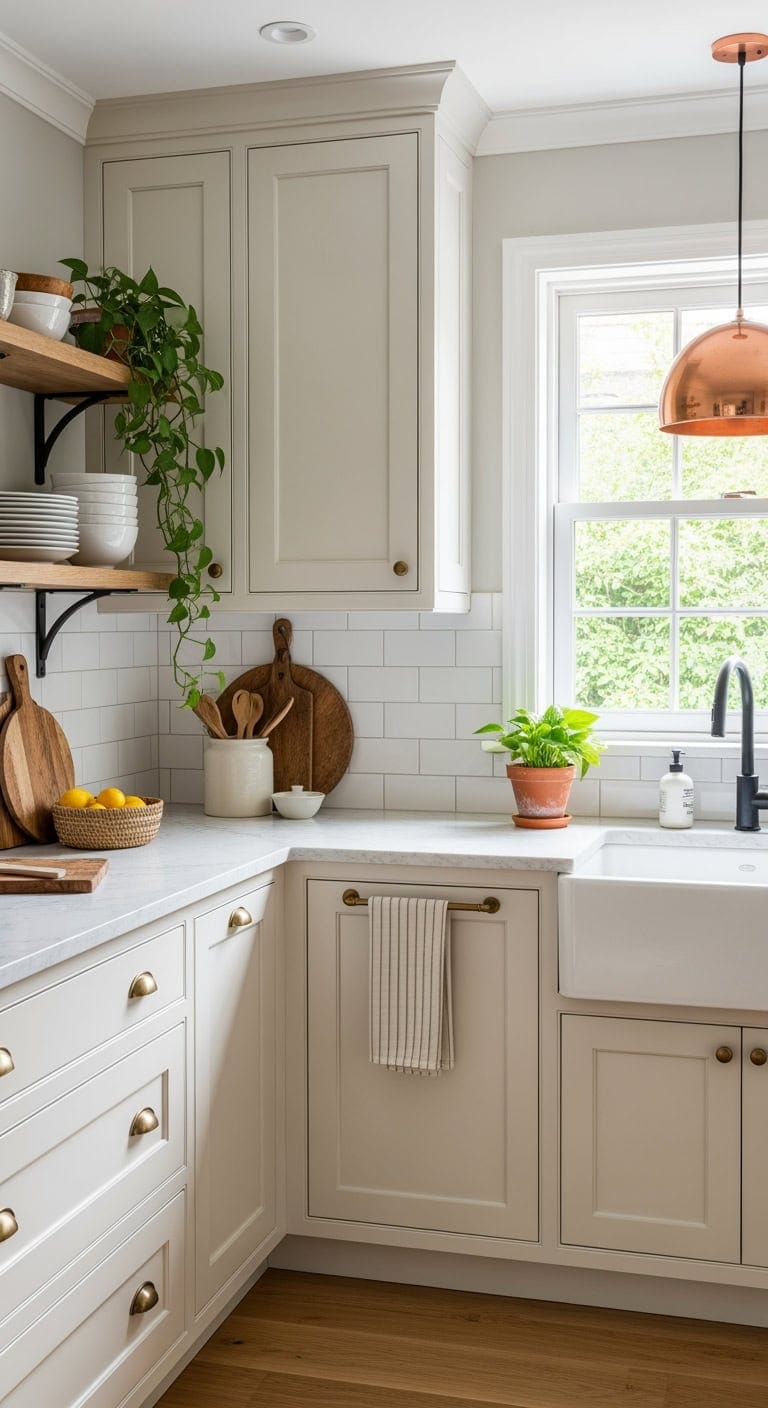
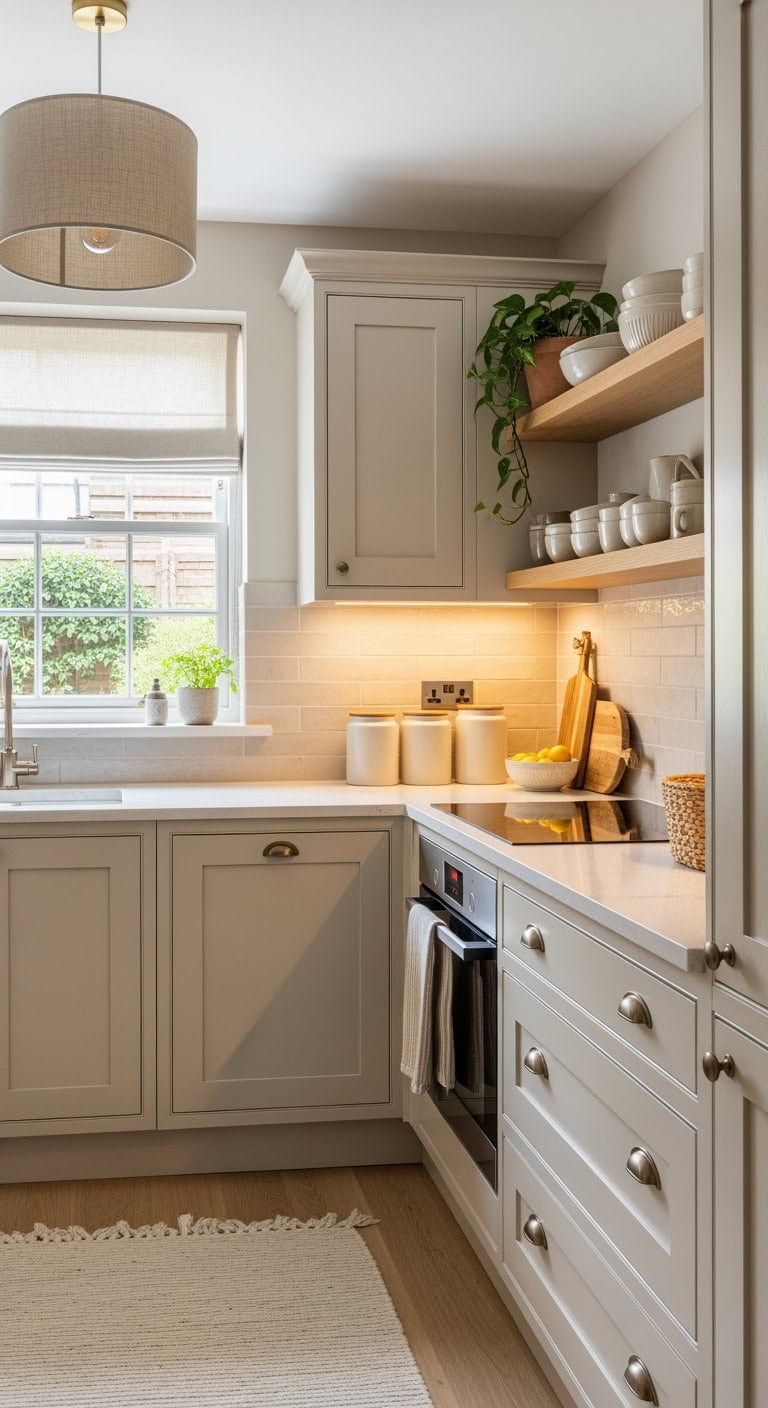
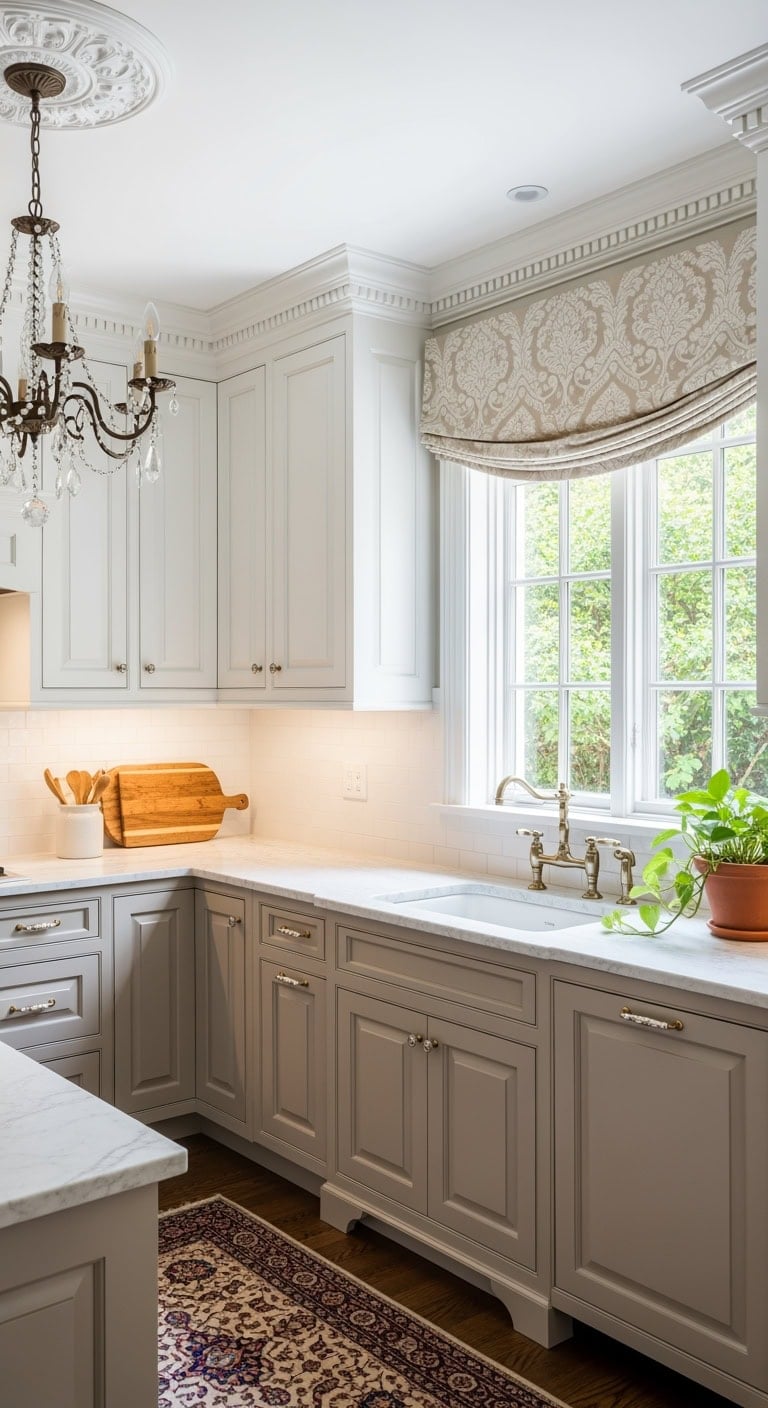
The kitchen’s understated design exudes elegance, featuring creamy cabinetry complemented by smooth marble countertops that create a gentle, timeless ambiance. A dark faucet provides a bold contrast against the light finishes, while the warm-hued wall in the background subtly enriches the space without overwhelming it.
21. Cozy Culinary Space Featuring Elegant Marble and Gleaming Brass Details
Marble countertops and backsplash introduce a touch of sophistication to this kitchen, balanced perfectly by warm wood accents and textured woven bar stools that invite a relaxed atmosphere. Sunlight streams through the windows, infusing the space with vibrant energy. The result is a kitchen that effortlessly blends elegance with comfort.
22. Bright Culinary Space Featuring Rich Emerald Cabinetry
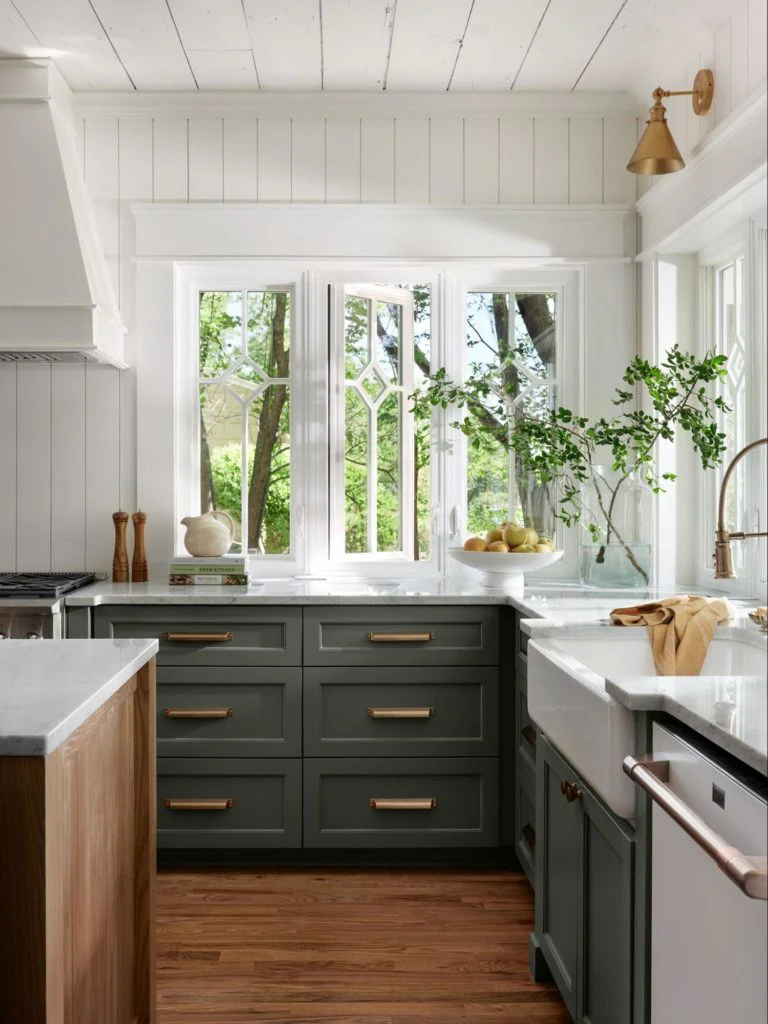
In this kitchen, abundant natural light perfectly balances the richness of the dark green base cabinets, creating a serene and grounded atmosphere rather than an intense one. Expansive windows and crisp white countertops ensure the space remains bright and airy, making it an inviting and tranquil spot for cooking.
23. Timeless Country Kitchen Featuring a Spacious Central Island
This kitchen is designed as a welcoming hub where family and friends effortlessly come together. Its generous island, surrounded by cozy stools, invites casual breakfasts, lively coffee conversations, and collaborative cooking. Rich wood flooring and gentle-toned cabinetry create a warm, inviting atmosphere that envelops the room.
24. Kitchen Featuring Exposed Shelving and a Sliding Library Ladder
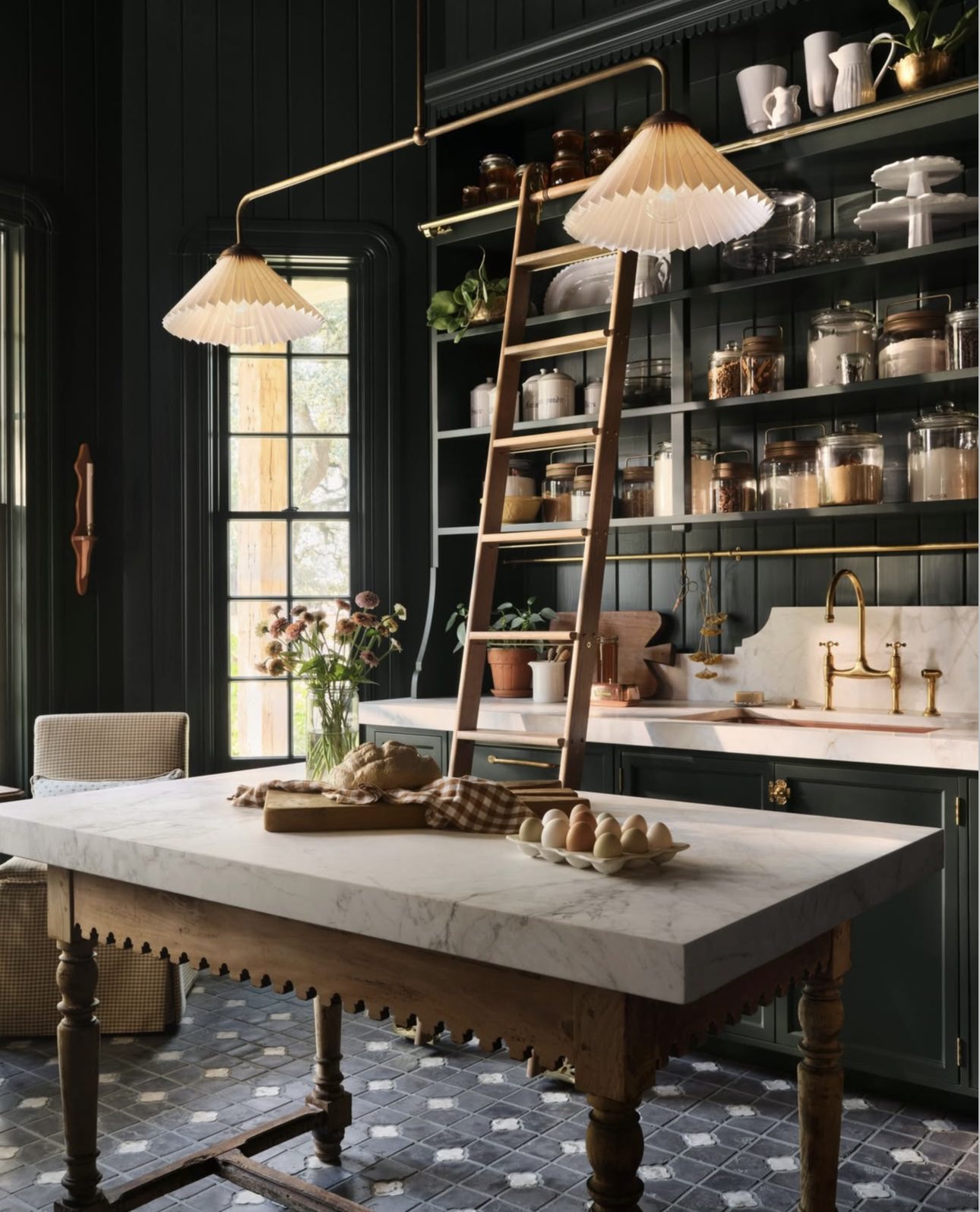
With its towering open shelves and a charming sliding ladder, this kitchen exudes the warmth of a well-loved library. Instead of concealing items, the shelves proudly showcase jars, dishes, and greenery, creating a space that feels thoughtfully curated over time rather than meticulously staged.
25. Effortless Rustic Shelving Decor Ideas
The shelving here exemplifies the art of subtlety, featuring just a handful of carefully selected pieces—a leafy plant, neatly stacked dishes, and a couple of jars—that create a thoughtfully curated yet uncluttered look. This styling exudes an effortless charm that, in reality, reflects a keen and deliberate design sensibility.
26. Charming Country Kitchen Featuring a Wooden Workstation
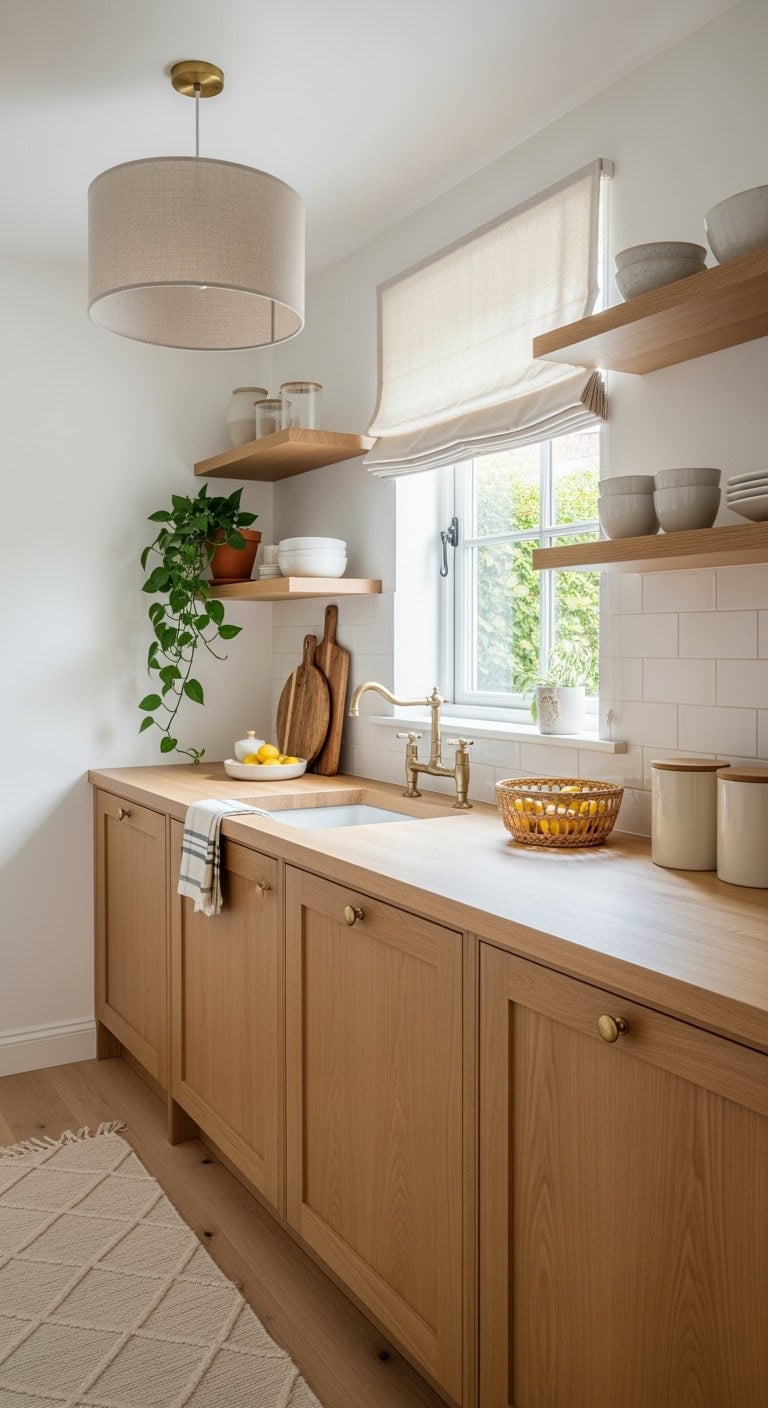
Opting for a wooden prep table over a conventional island brings a cozy, inviting vibe to the kitchen, making it feel effortlessly lived-in. The combination of warm wood cabinetry paired with gentle, neutral countertops creates a harmonious and balanced atmosphere. Accents like hanging pots and understated greenery add both functionality and a touch of natural style to the space.
27. Spacious Country Kitchen Featuring a Vibrant Blue Island
A vibrant blue island brings a refreshing pop of color to this extended kitchen, creating a striking centerpiece amidst the neutral palette. The farmhouse sink paired with understated hardware maintains a timeless and balanced aesthetic throughout the space.
28. Classic Culinary Space Featuring Luxurious Wood Accents
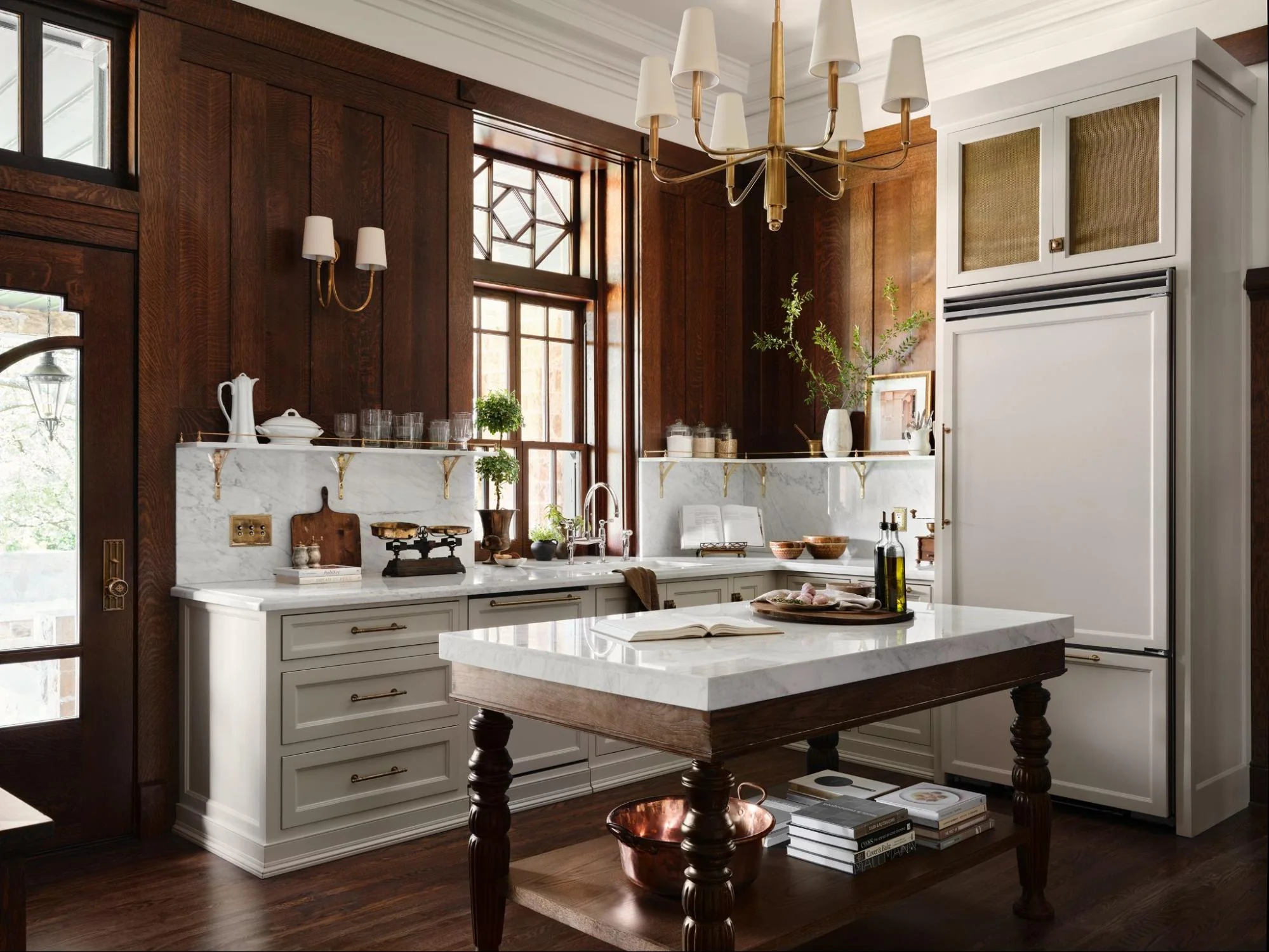
This kitchen exudes warmth and tradition through its luxurious wood paneling, which brings texture and dimension to the walls without the need for extra adornment. Paired with crisp white cabinets and sleek countertops, the space maintains a harmonious and timeless appeal that will remain stylish for years to come.
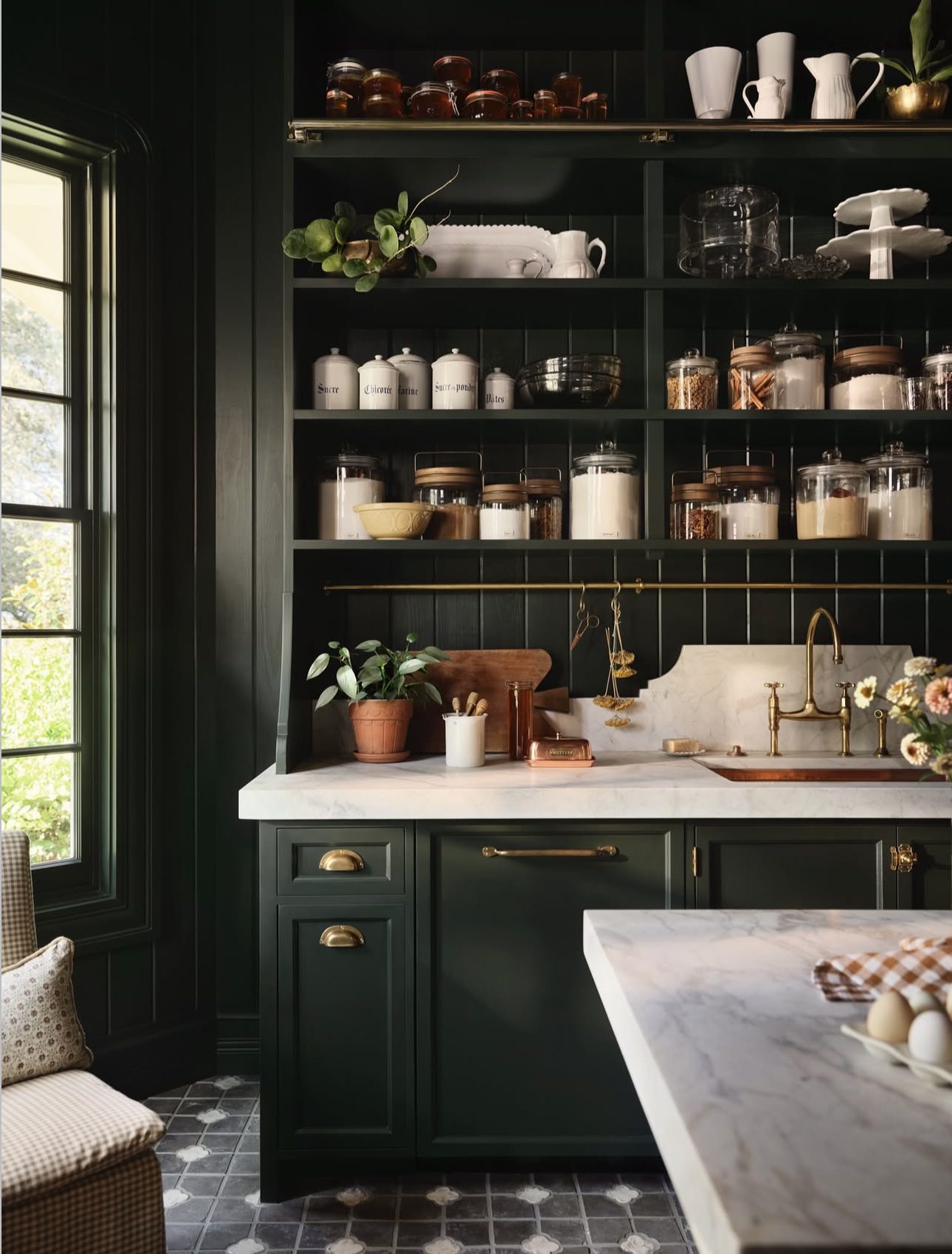
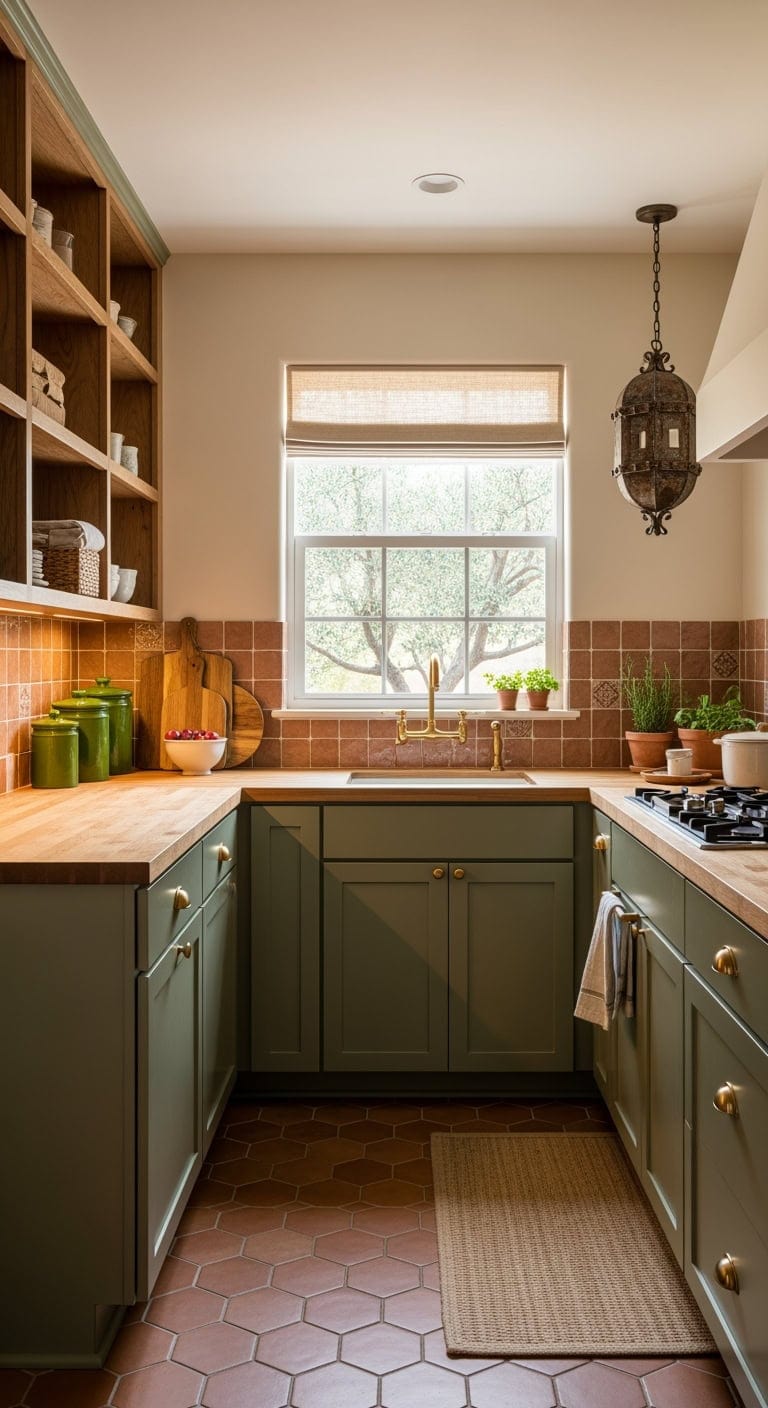
This pantry impresses with its open shelving, showcasing jars, dishes, and everyday essentials in plain sight for effortless access. The rich deep green cabinetry adds a striking contrast that injects character, transforming the area from a mere storage space into a welcoming kitchen extension. The overall effect is both organized and inviting, blending practicality with warmth.
30. Charming Country-Style Kitchen Featuring a Functional Work Island
The kitchen exudes a cozy, natural ambiance that immediately welcomes you in. Rich green cabinets paired with a wooden work table create a charming space full of personality without overwhelming the senses. Open shelving enhances the easygoing, lived-in atmosphere while keeping essentials within reach.
31. Cozy Marble Kitchen Featuring a Sleek Arched Vent Hood
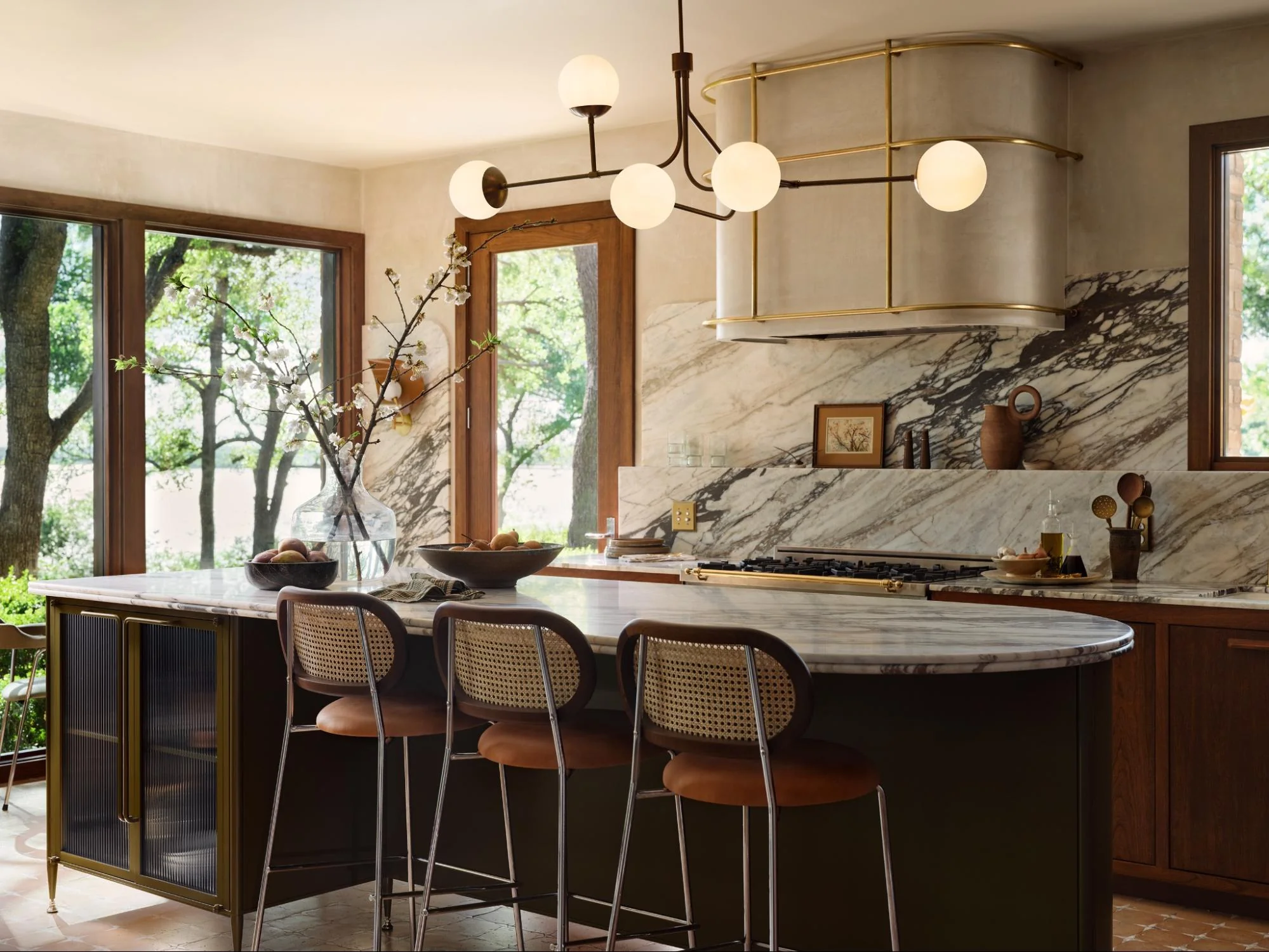
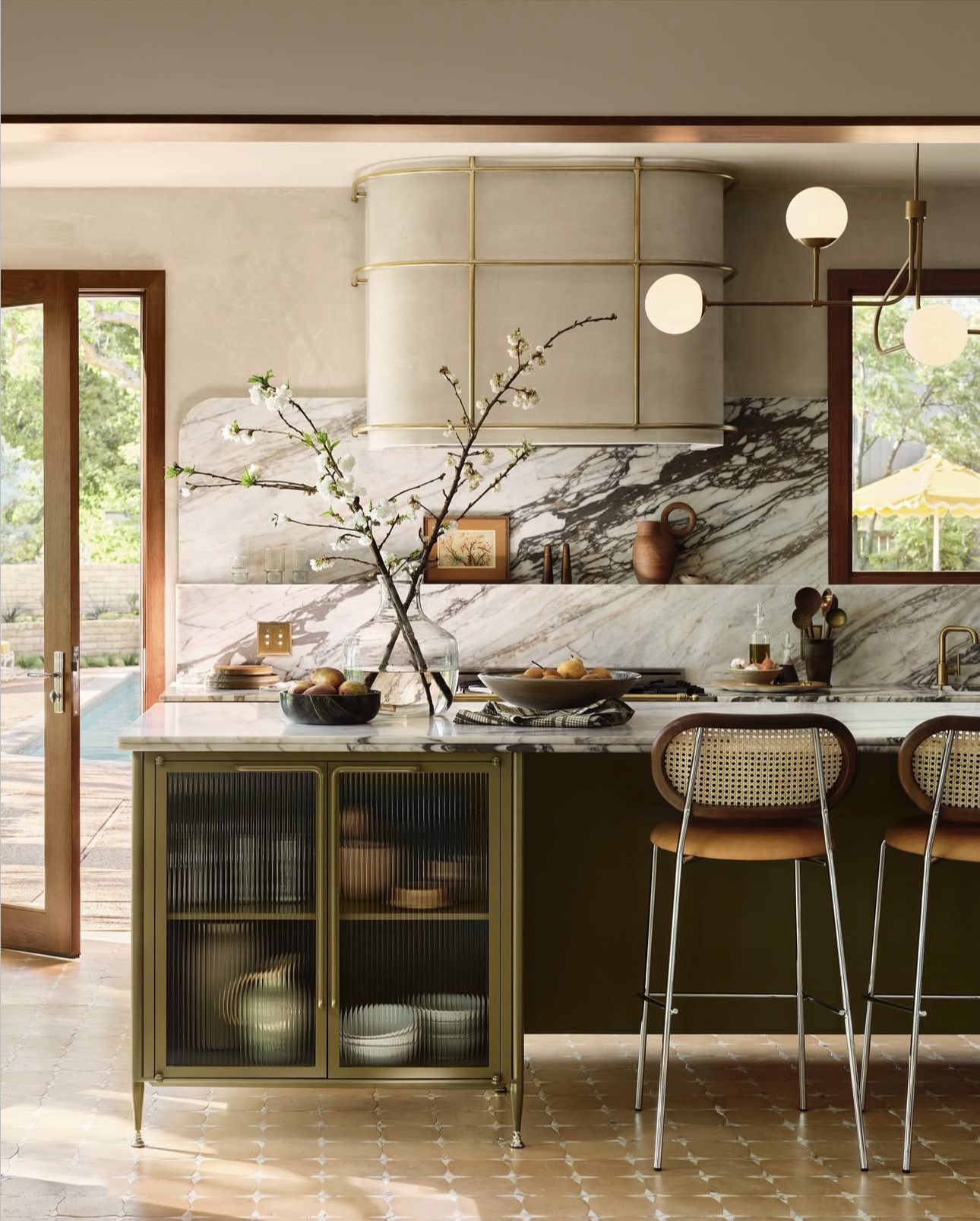
A gracefully curved range hood paired with a sleek marble backsplash forms a stunning centerpiece, harmonizing perfectly with the rich, warm wood tones of the island. The addition of bar stools adds a relaxed vibe, preventing the space from feeling overly formal. This kitchen effortlessly balances elegance with a cozy, inviting atmosphere.
32. Timeless Kitchen Featuring Expansive Wooden-Framed Windows
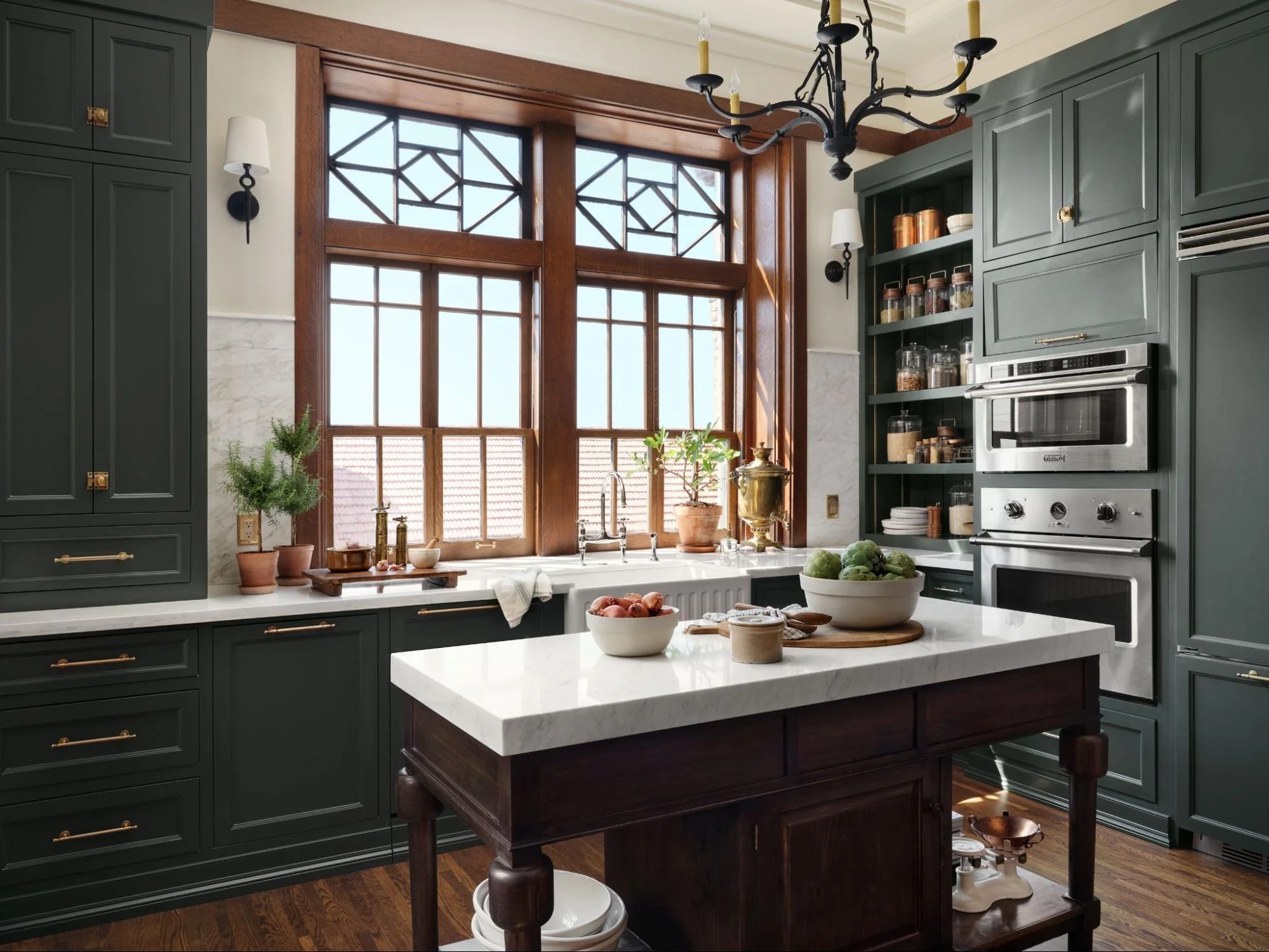
Expansive wood-framed windows flood the kitchen with natural light, balancing the richness of the darker cabinetry to create an open and inviting atmosphere. A modest prep island occupies the center, enhancing functionality without overwhelming the space. This design strikes a perfect harmony between classic elegance and practical living.
Conclusion
Joanna Gaines’ kitchen designs beautifully blend warmth and timelessness, creating spaces that feel both inviting and enduring. Her ability to combine rustic elements with modern touches encourages homeowners to embrace natural materials, thoughtful layouts, and personalized details that transform a kitchen into the heart of the home. By drawing inspiration from her signature style, you can craft a space that not only stands the test of time but also reflects your unique personality and lifestyle.
As you consider your own kitchen renovation or refresh, remember that the most impactful designs are those infused with personal meaning and comfort. Whether it’s through cozy textures, classic cabinetry, or meaningful accents, letting your style shine will ensure your kitchen becomes a warm, welcoming haven for years to come. Take these ideas as a starting point, and allow your creativity to shape a kitchen that feels truly yours.
Step into any well-loved home, and you’ll often find a mudroom quietly working its magic—a transitional space where function meets style, chaos finds order, and everyday life feels a little more manageable. Though sometimes overlooked, the mudroom is truly the unsung hero of home design. It’s where shoes, coats, backpacks, and life’s little essentials come together in harmony, preventing clutter from invading your living spaces. More than just a practical entryway, a thoughtfully designed mudroom can welcome you with warmth and organization, setting a positive tone as you come and go throughout your day.
Why do mudrooms matter so much? Because they bridge the indoors and outdoors, making the hustle of daily routines smoother and more enjoyable. When designed with care, this space doesn’t just hold your belongings—it reflects your home’s personality and offers a stylish first impression. Whether your mudroom is a grand room or a small nook, there’s incredible potential to transform it into a beautifully functional haven. In the following ideas, you’ll discover inspiring ways to elevate your mudroom, from clever storage solutions and durable materials to charming décor touches that invite both order and personality. Let’s explore how to make your mudroom a space you’ll love to step into every day.
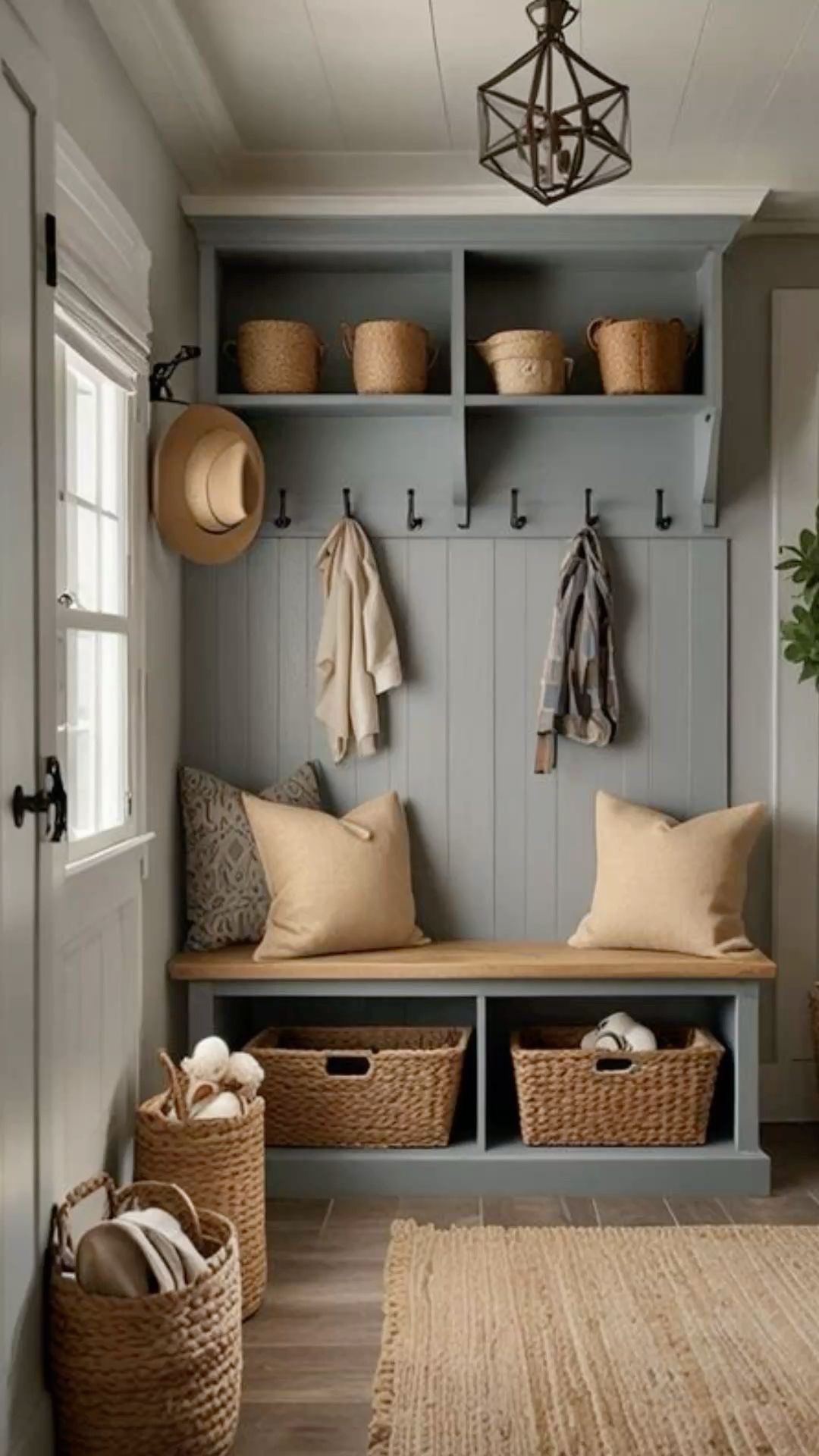
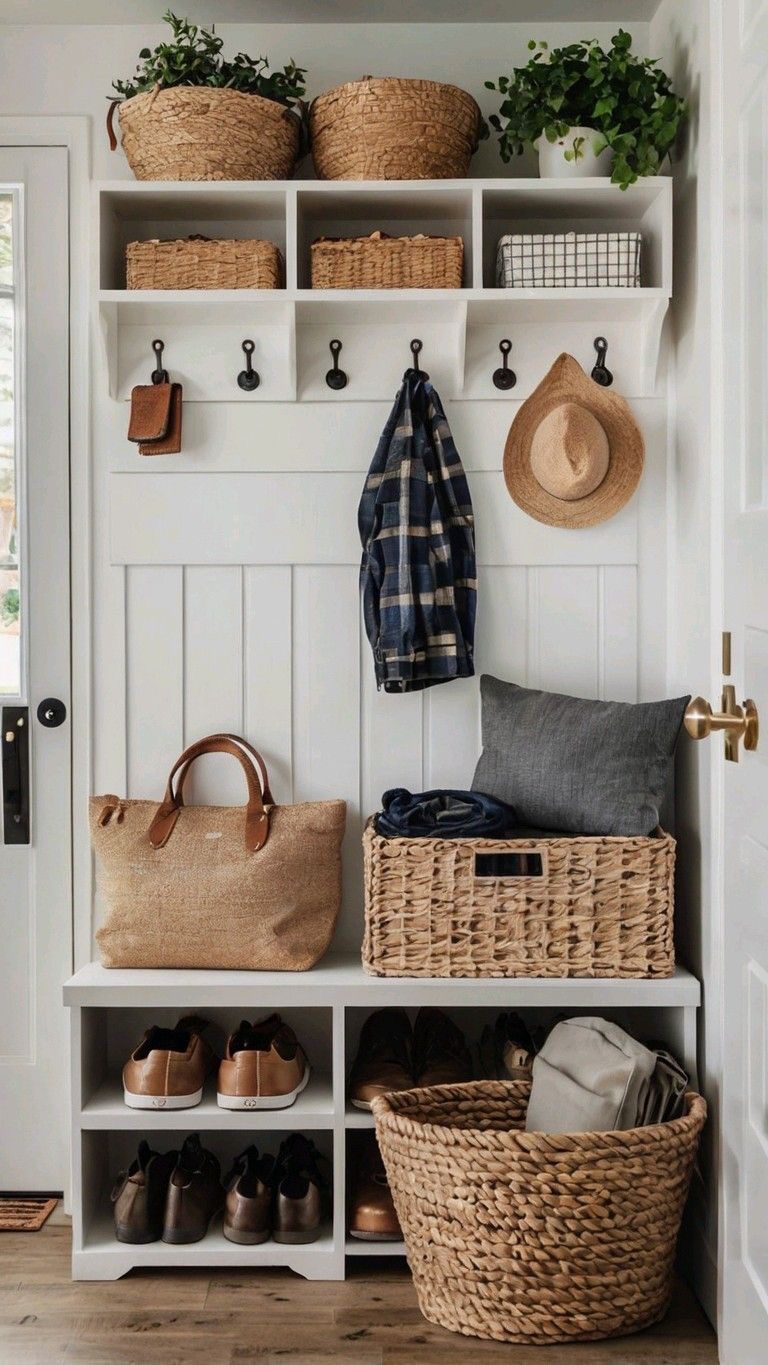
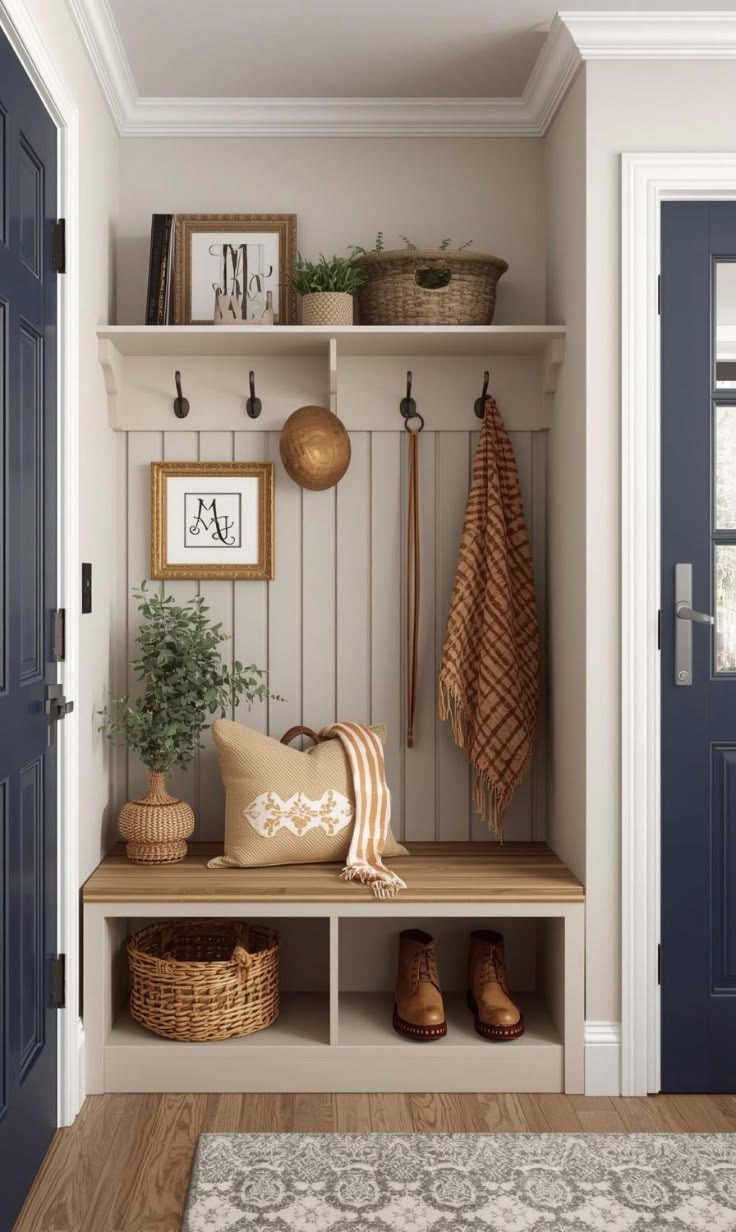
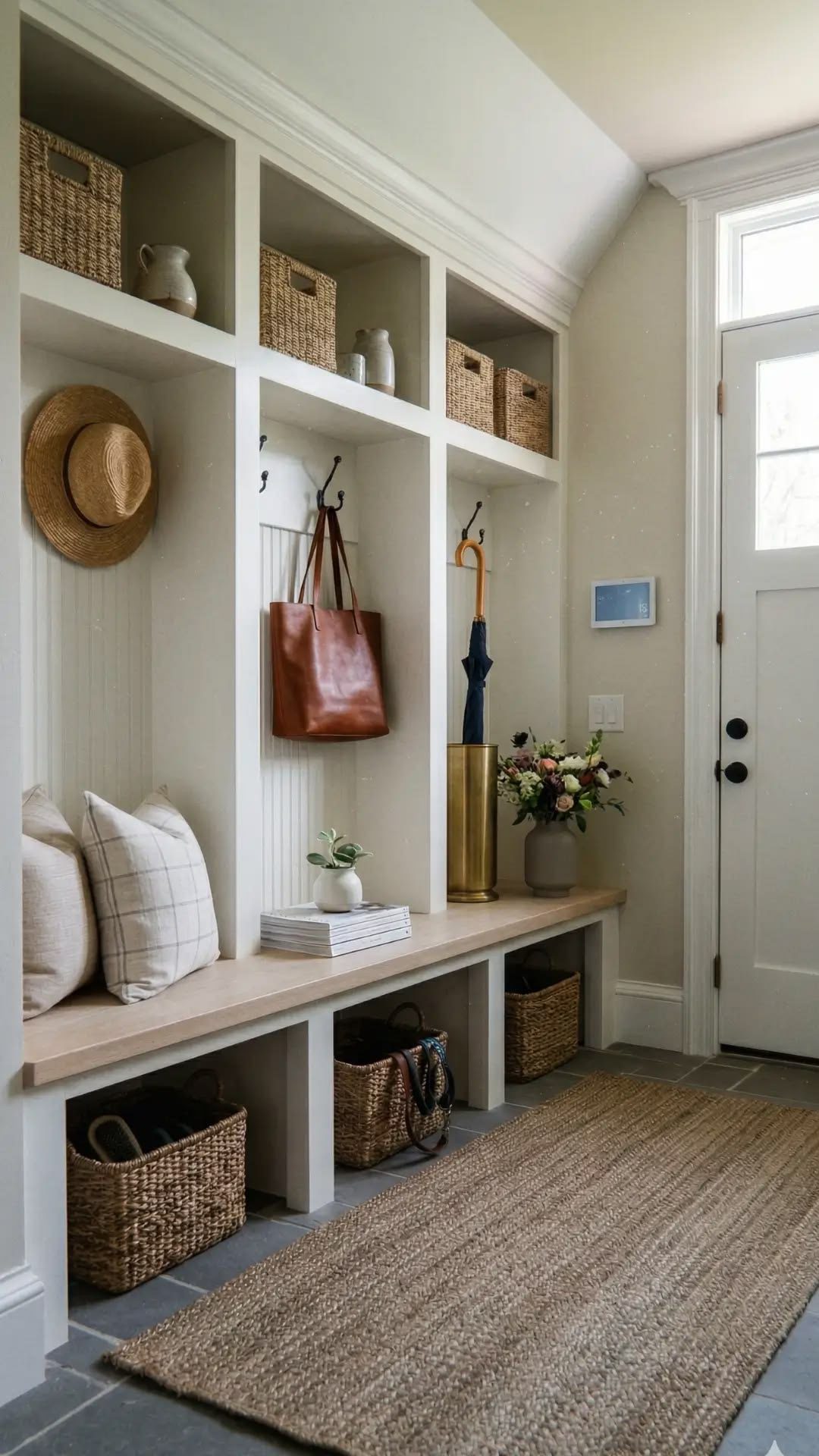
1. Cozy Calm Corner with Natural Accents
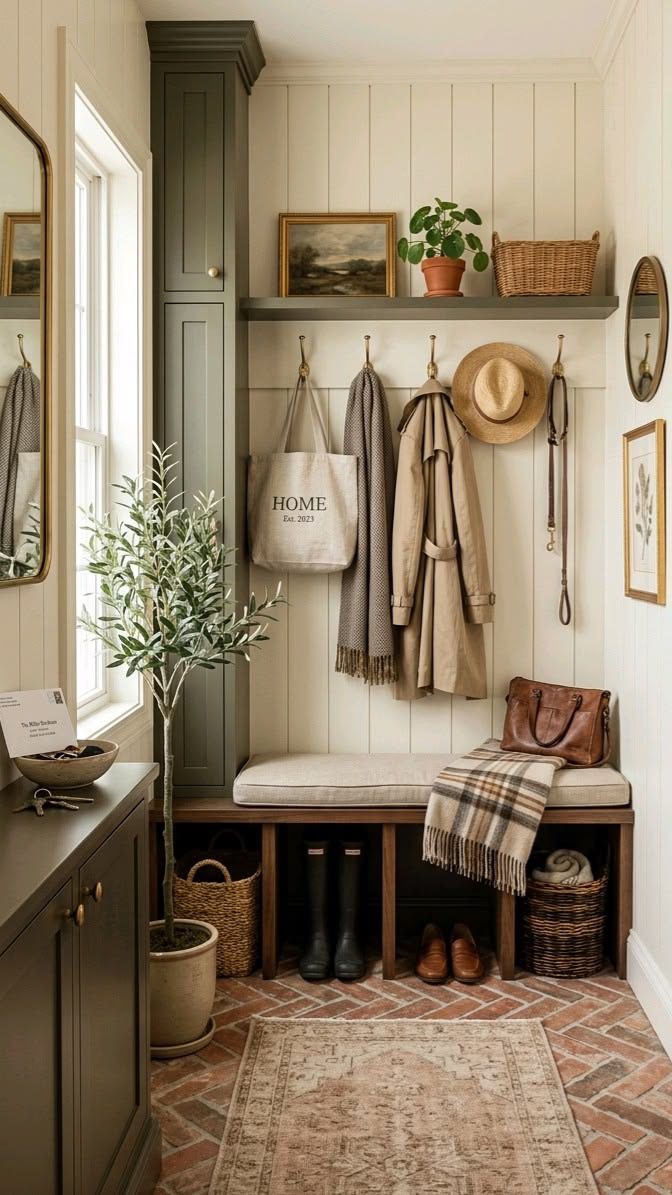
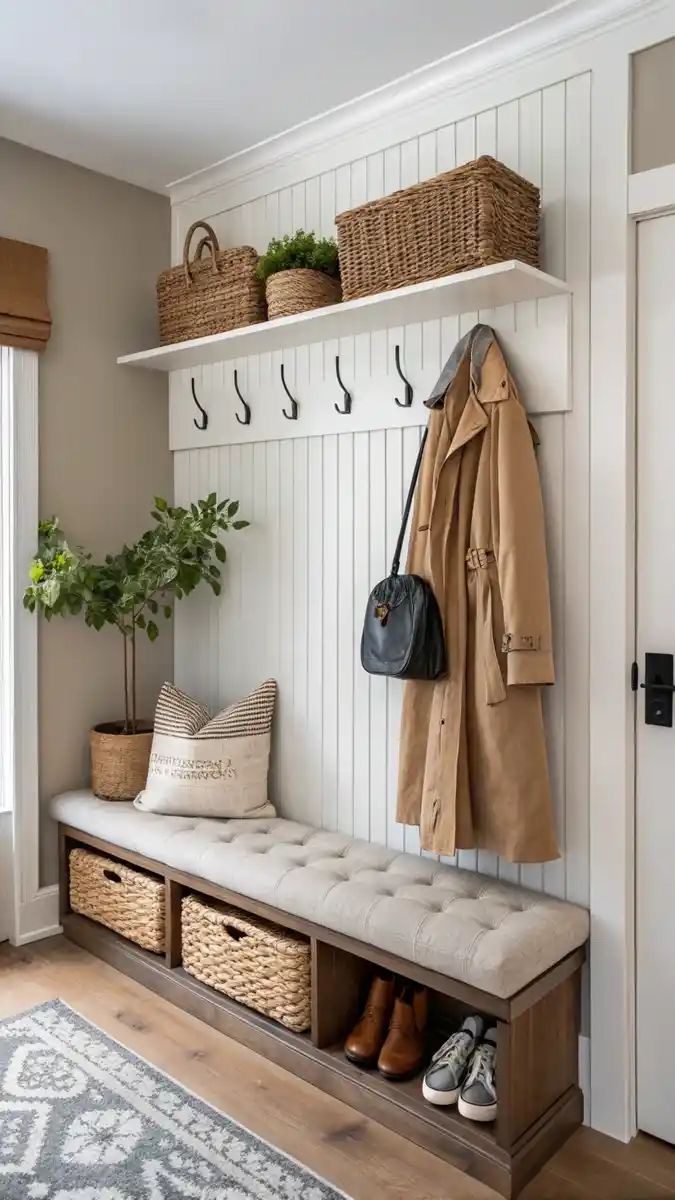
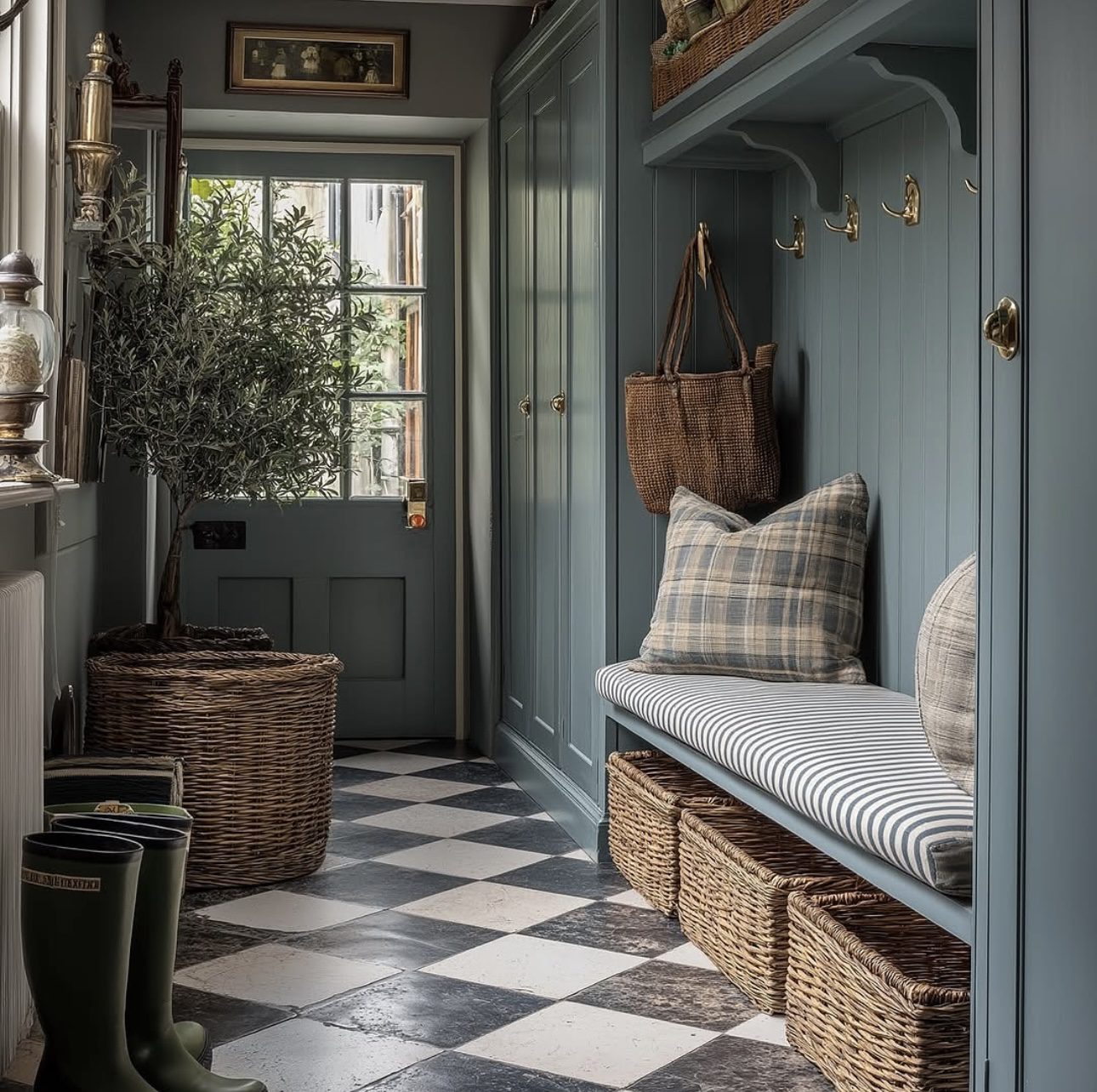
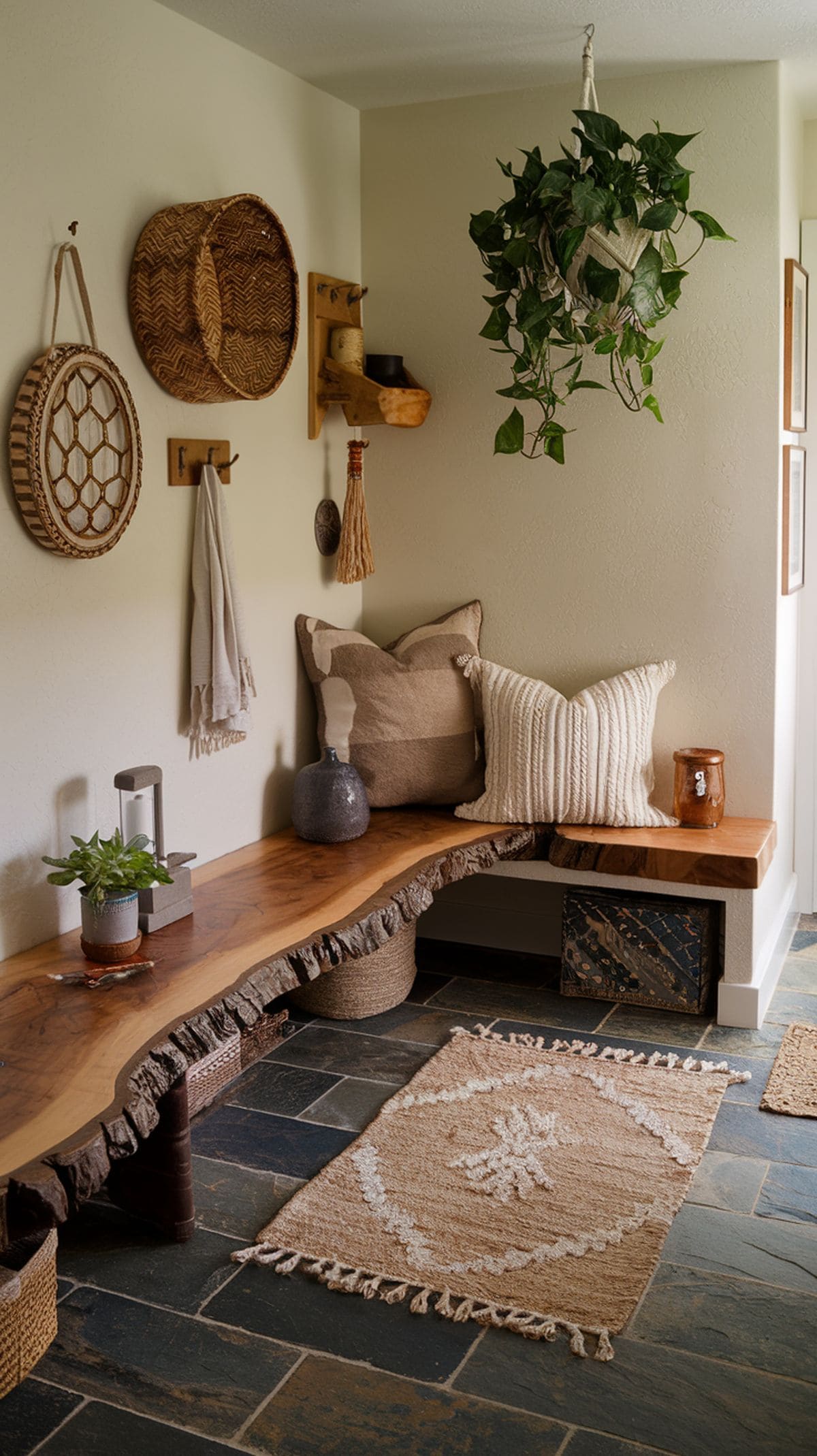
This mudroom nook invites you in with gentle hues and soft textures that instantly soothe the senses. Thoughtfully placed cushions and woven storage keep the space feeling effortless and inviting — a perfect retreat after a busy day.
Key Design Elements
Soothing color palette that promotes relaxation
Textured cushions add comfort without clutter
Woven baskets provide stylish and practical storage
Pro Tip: Incorporate natural fibers and muted shades to create a peaceful mudroom that feels like a gentle welcome home.
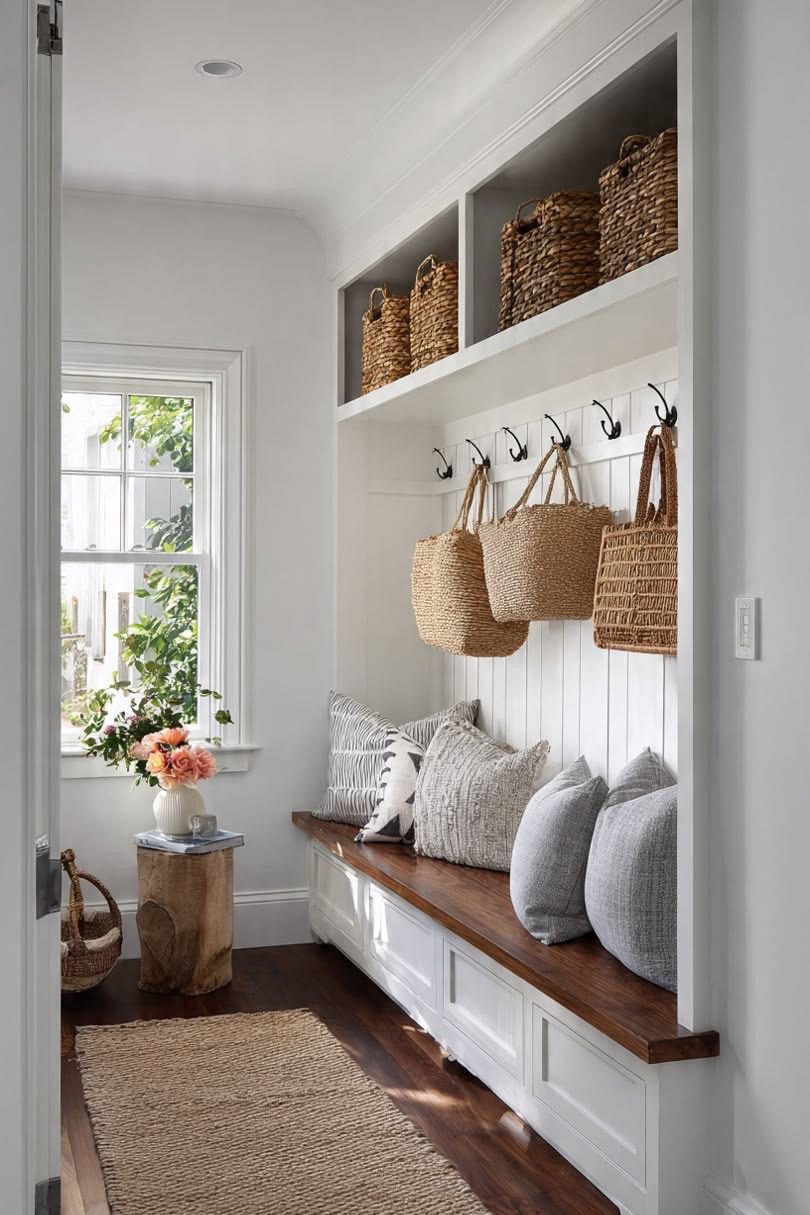
2. Airy Mudroom with Cozy Wood Details
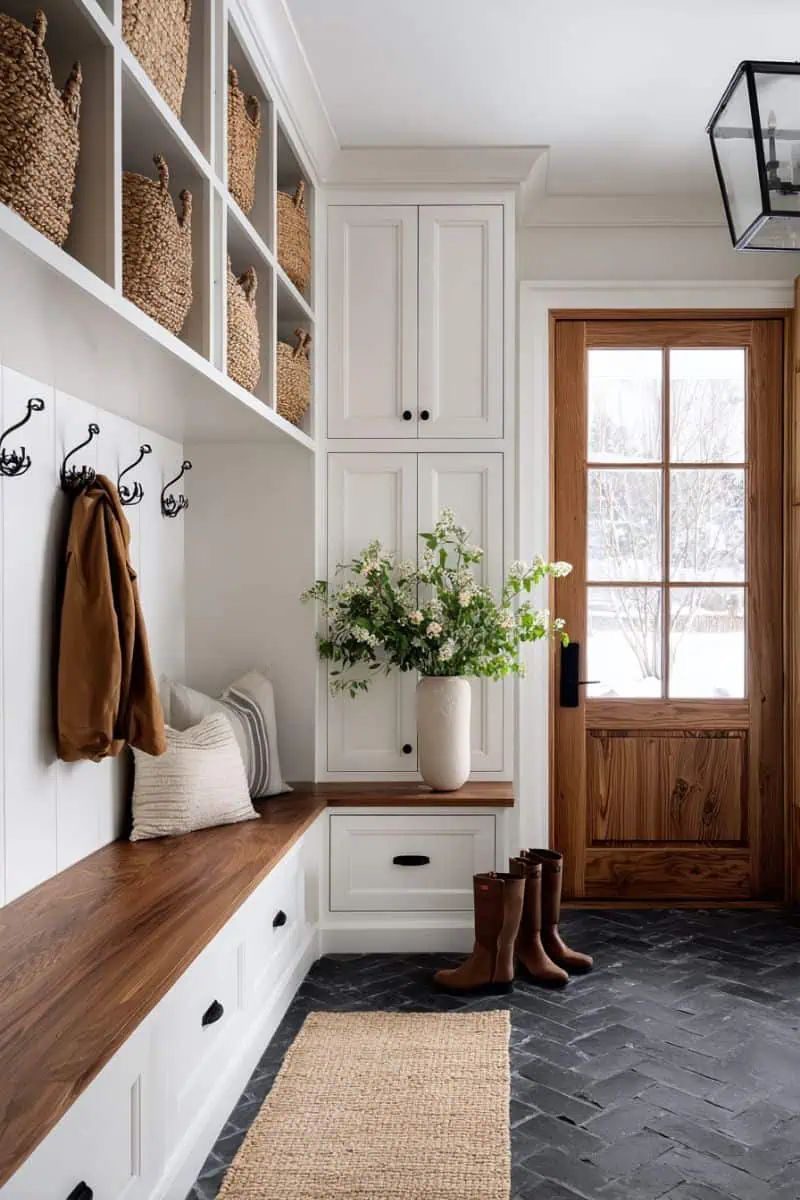
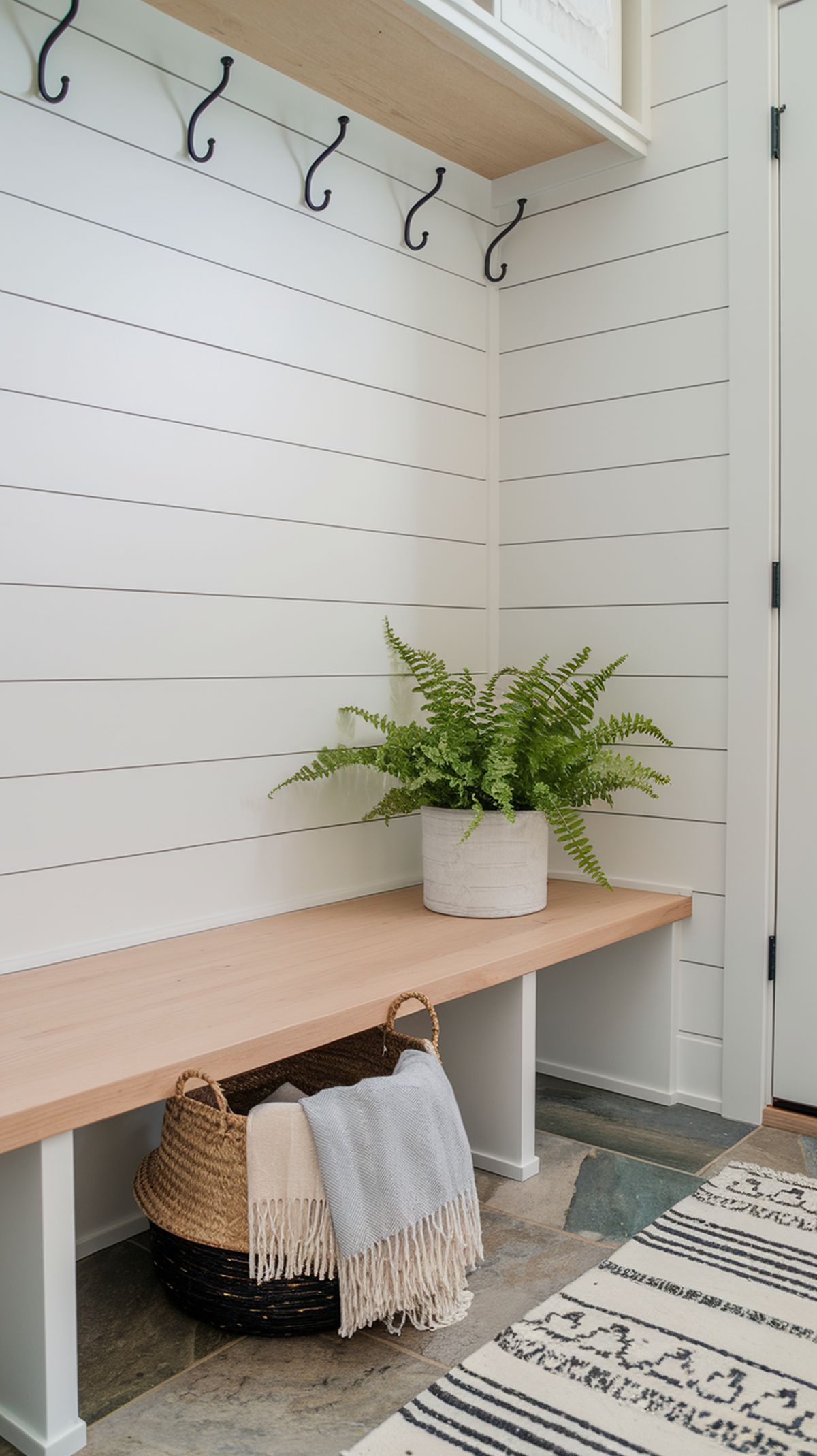
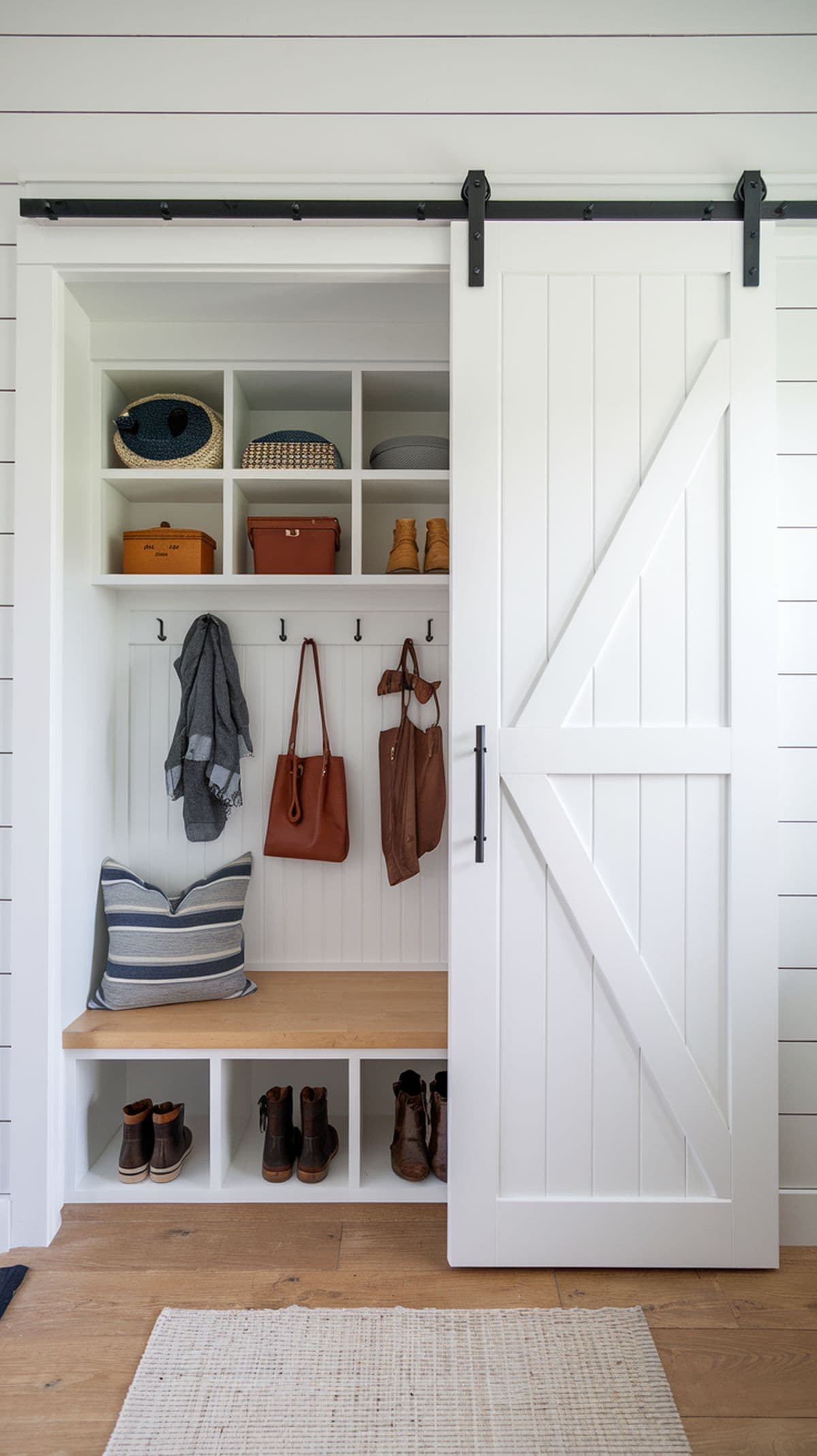
Step into a mudroom that instantly feels welcoming thanks to its bright white backdrop paired with rich, natural wood elements. The space strikes the perfect balance between crisp and cozy, making it both inviting and effortless to keep tidy.
Key Design Elements
Light walls amplify natural light for an open, spacious vibe
Warm wood accents add texture and a grounded, earthy touch
Minimalist design promotes easy cleaning and clutter control
Pro Tip: Choose wood finishes with a protective seal to keep your mudroom looking fresh despite daily wear.
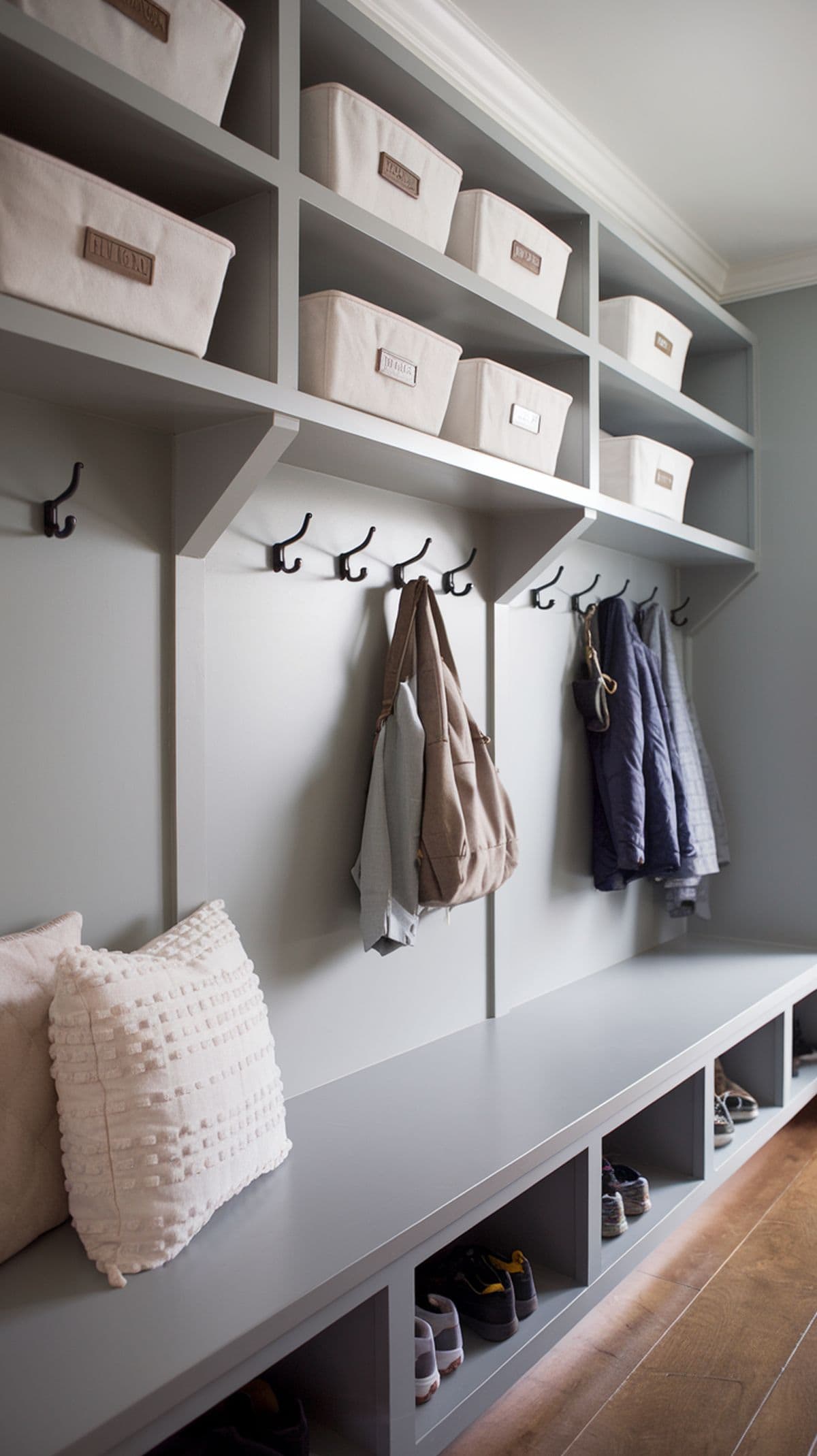
3. Tall Built-In Storage with Seating and Overhead Cubbies
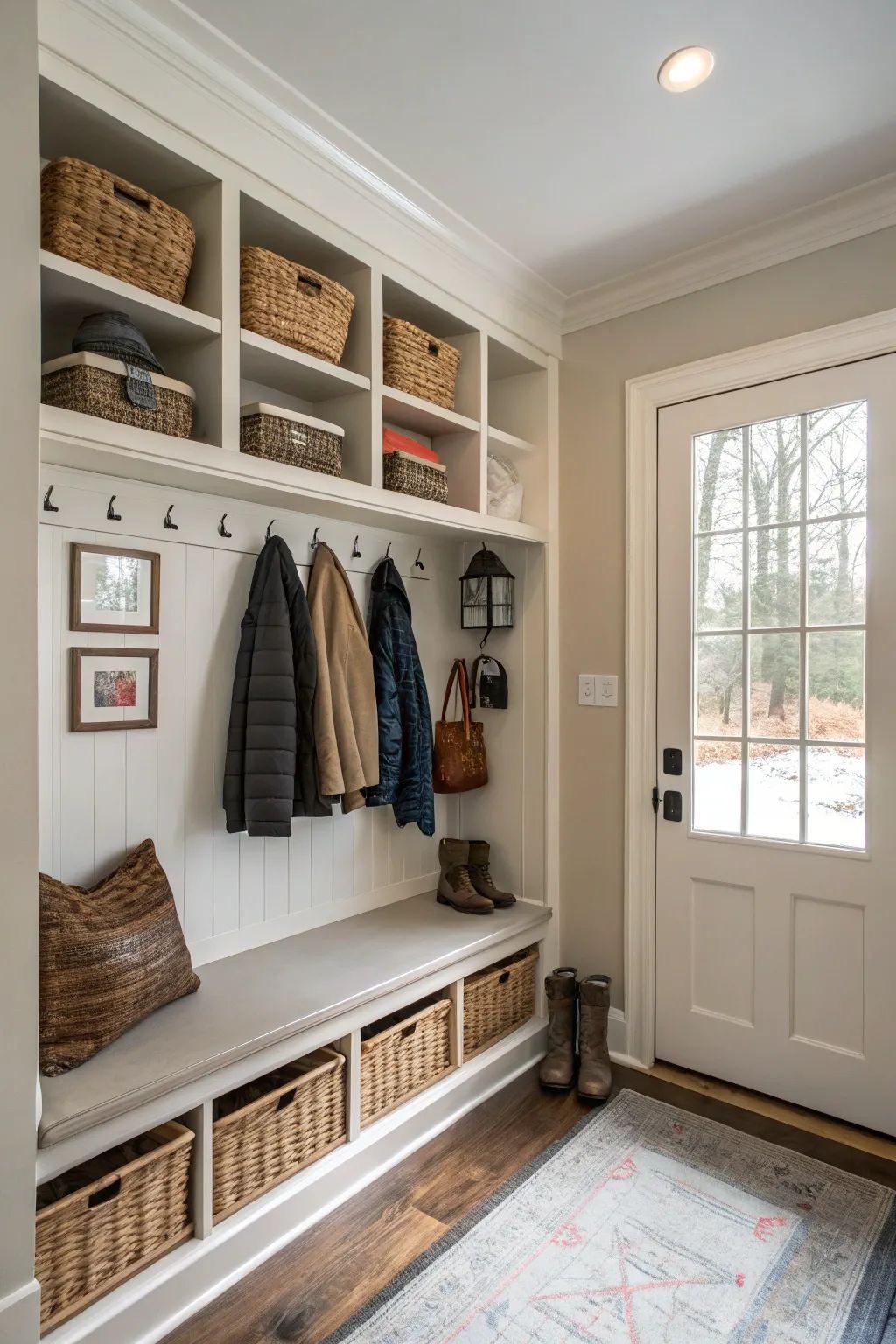
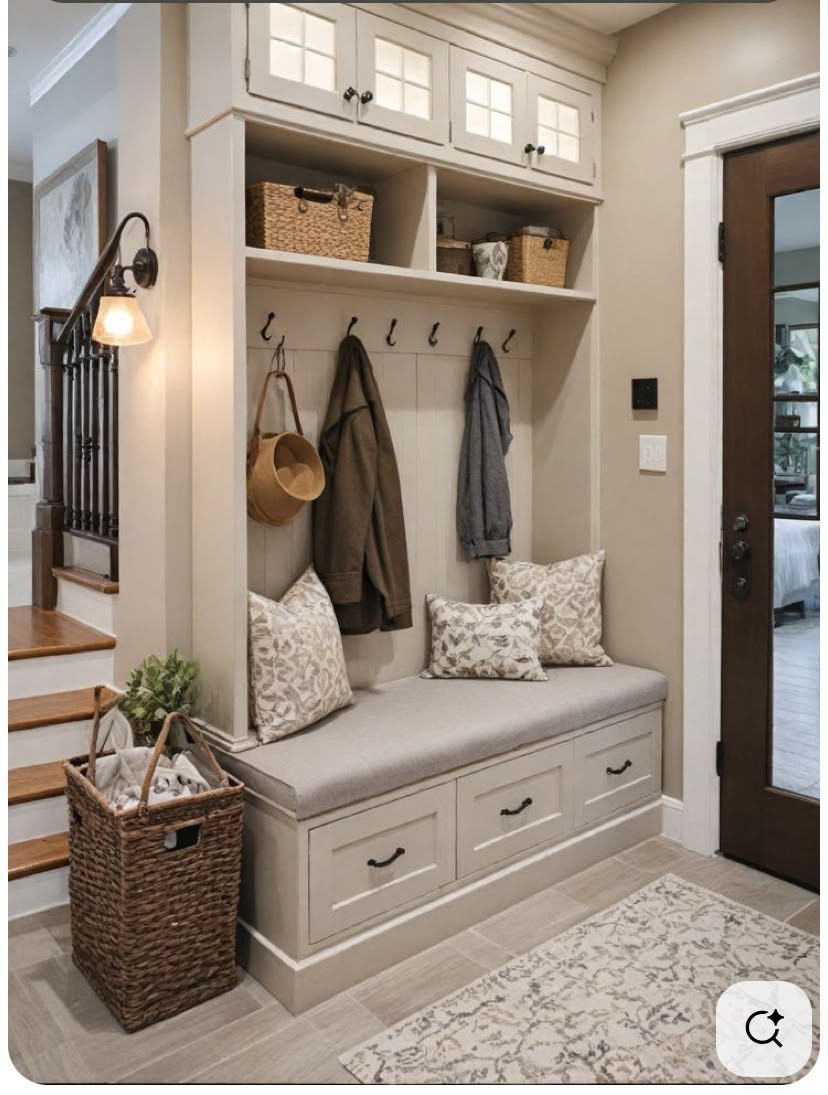
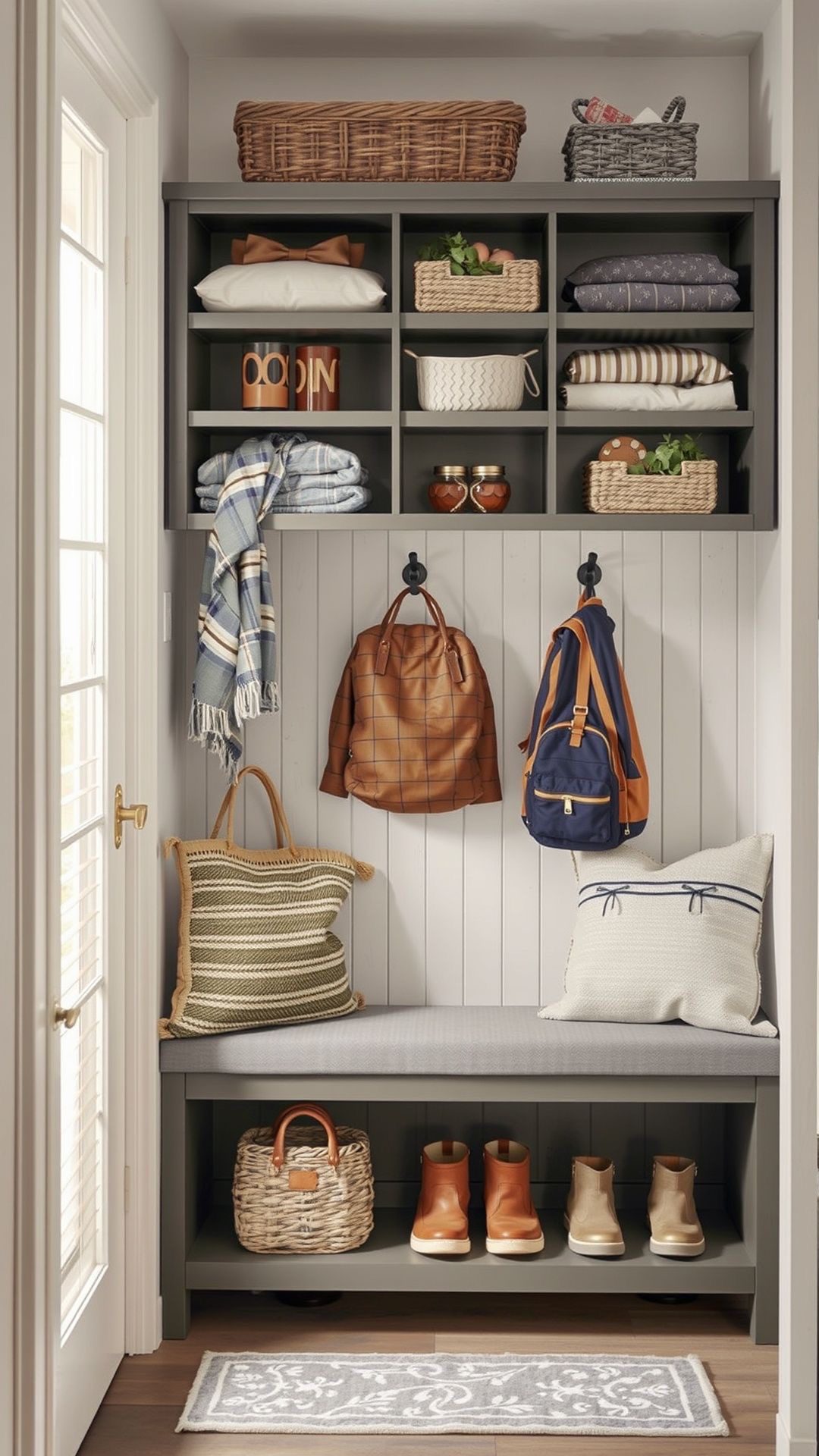
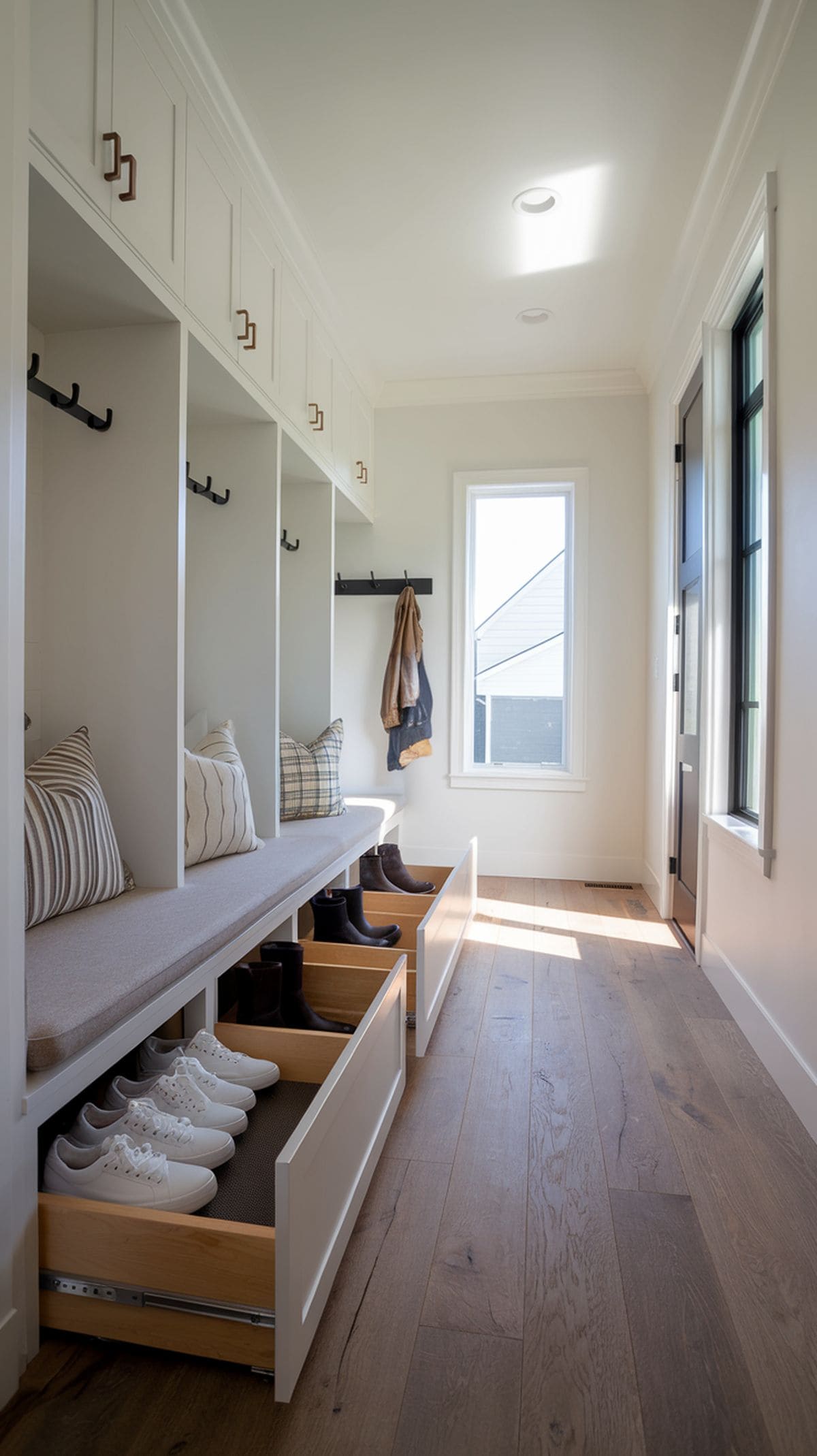
Maximize every inch of your mudroom by stacking functional storage from floor to ceiling. The upper cubbies are ideal for neatly tucking away baskets filled with scarves, gloves, and everyday essentials, keeping the space tidy and clutter-free. Below, a spacious bench offers a cozy spot to sit while putting on shoes, complemented by handy hooks for easy access to coats.
Key Design Elements
Utilizes vertical space to keep items organized and out of sight
Bench provides comfortable seating for quick morning routines
Hooks ensure jackets and bags are effortlessly within reach
Pro Tip: Choose woven baskets for the cubbies to add texture while keeping smaller items contained.
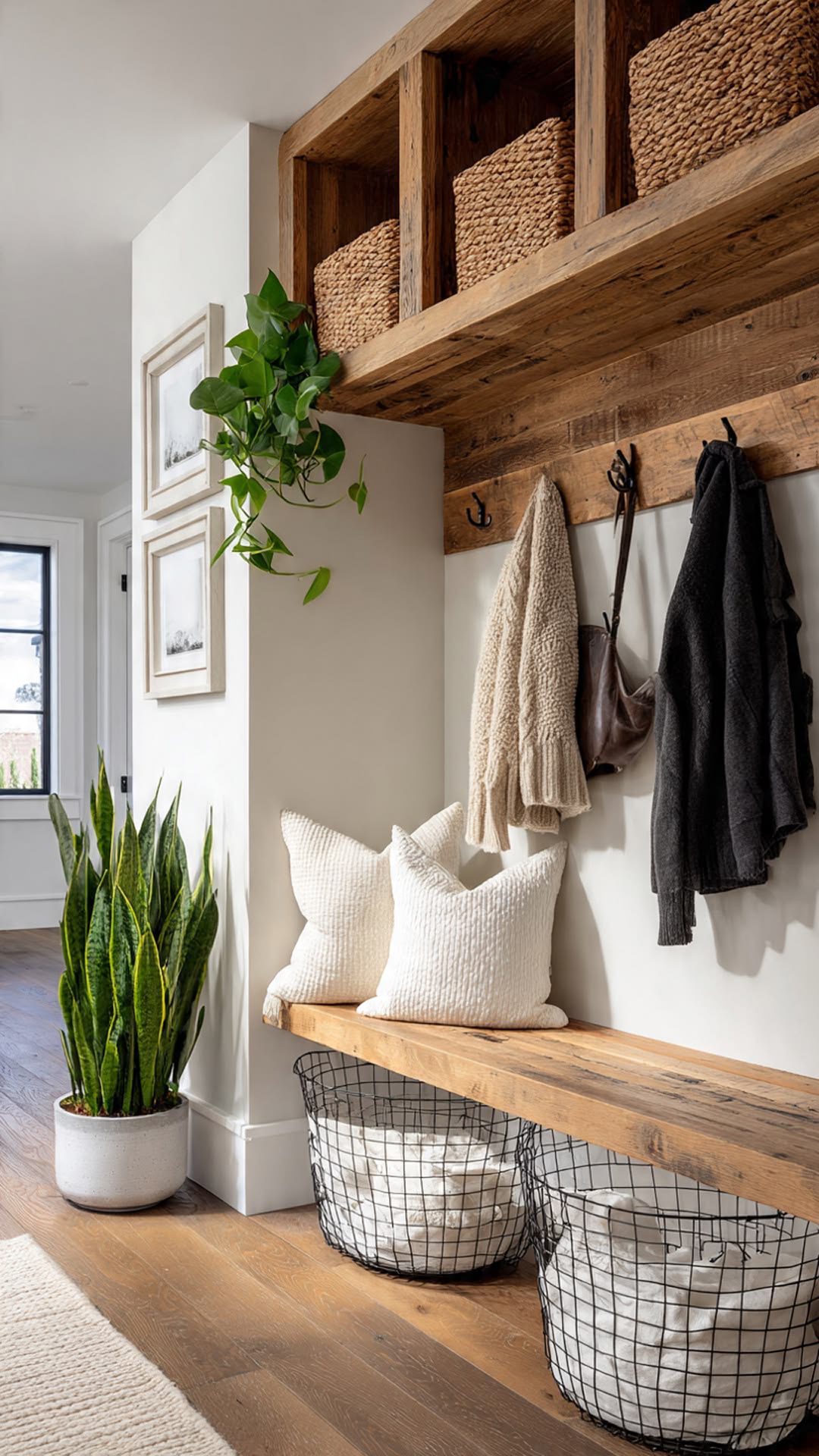
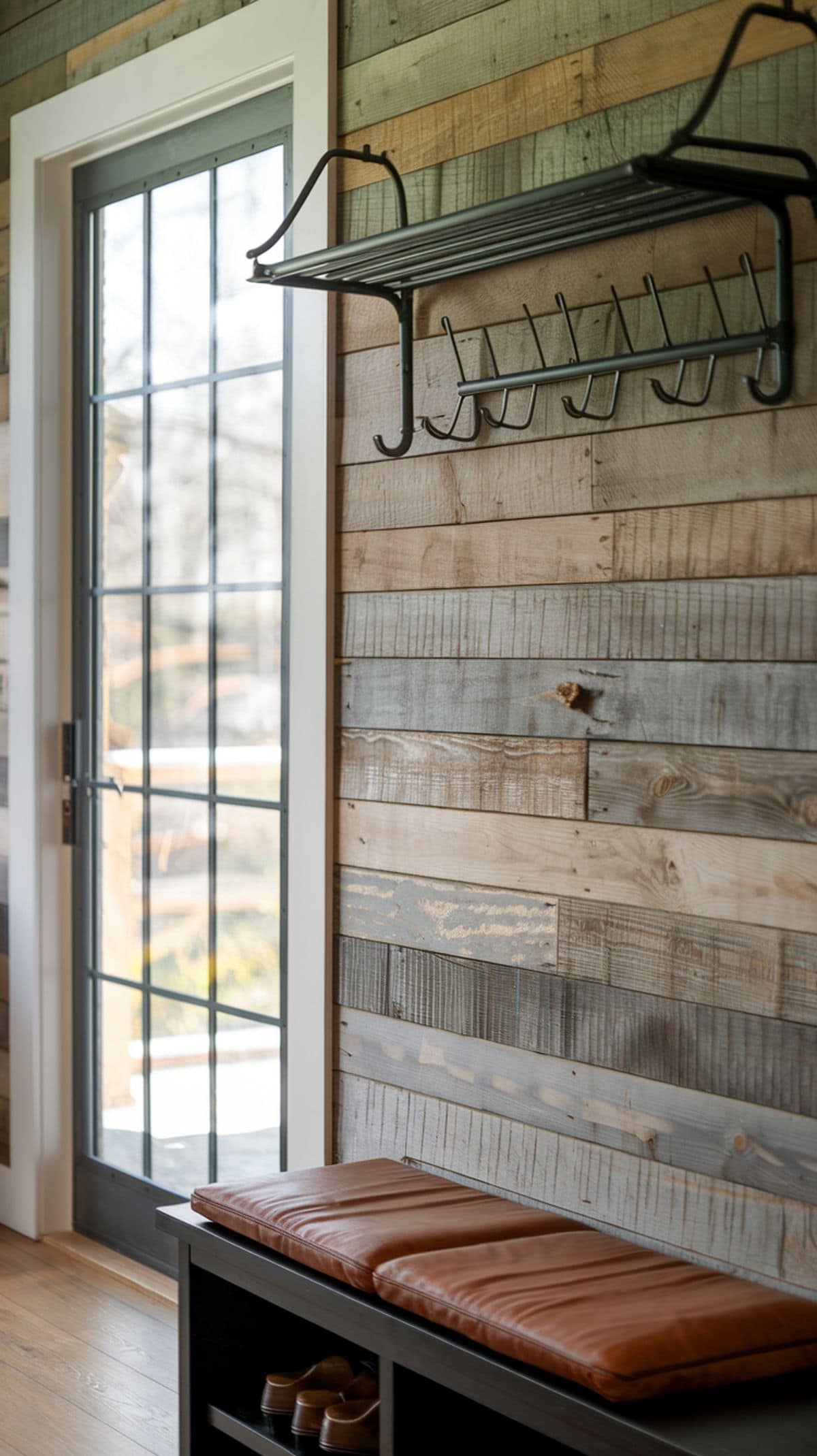
4. Cozy Wood Accents with Practical Hooks
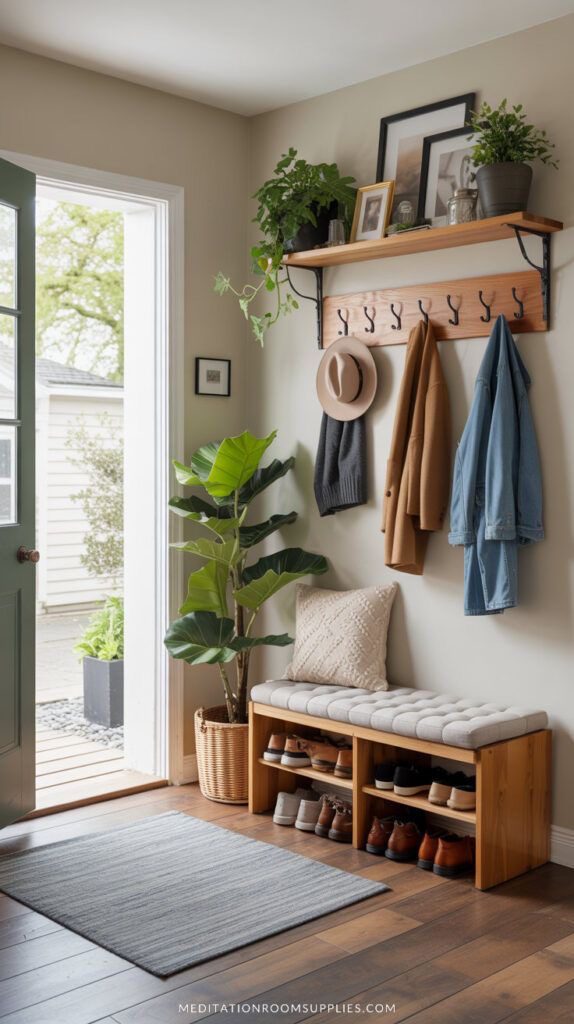
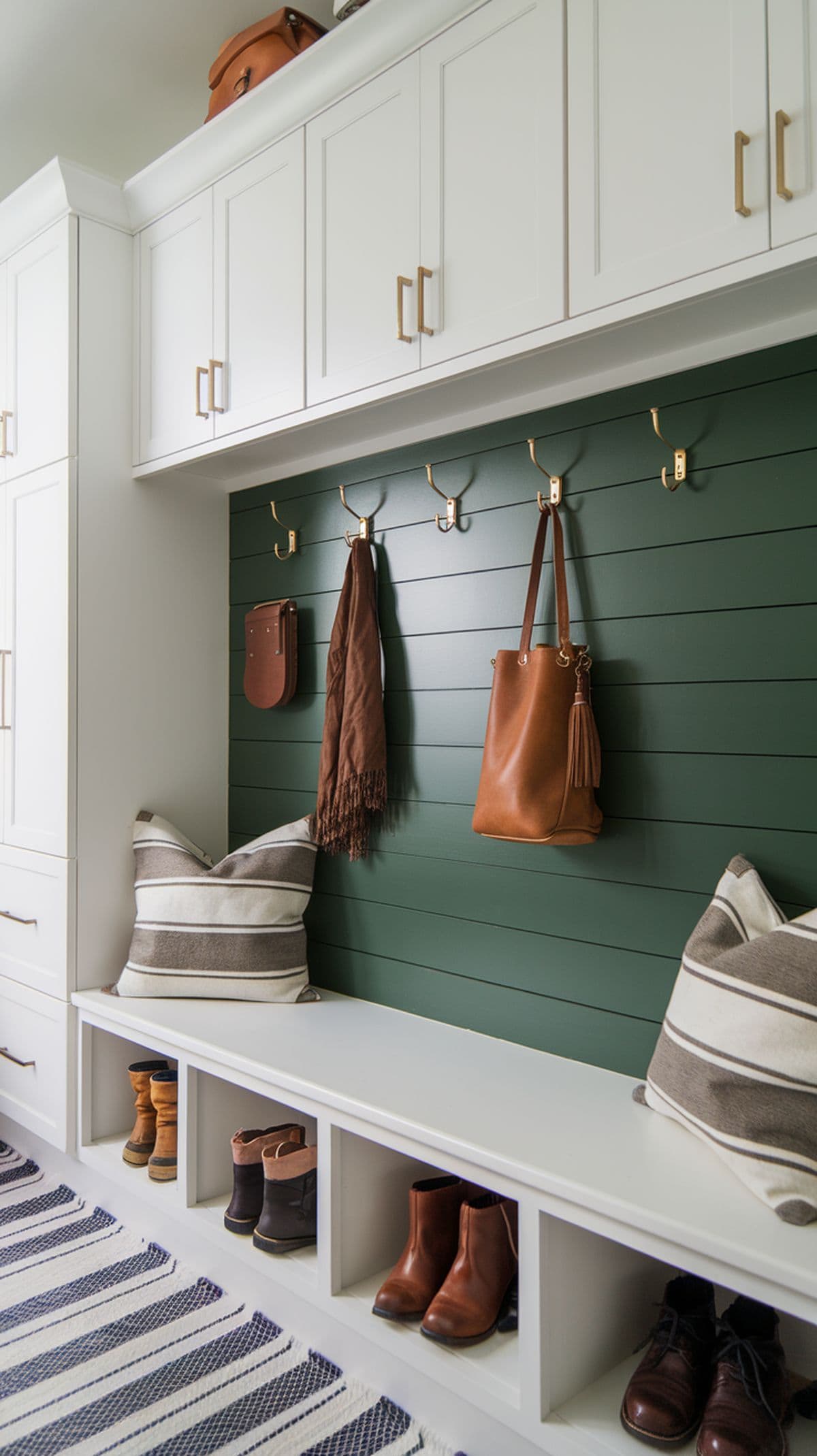
Combining the natural charm of warm wood with simple hooks creates a welcoming and effortless vibe. It’s an inviting space where you can neatly hang jackets, bags, or hats without it feeling chaotic or overdone.
Key Design Elements
Adds a rustic, inviting touch to your entryway
Keeps everyday essentials organized and easily accessible
Balances function and style for a laid-back yet intentional look
Pro Tip: Choose hooks with a matte finish to enhance the natural warmth of the wood while preventing scratches.
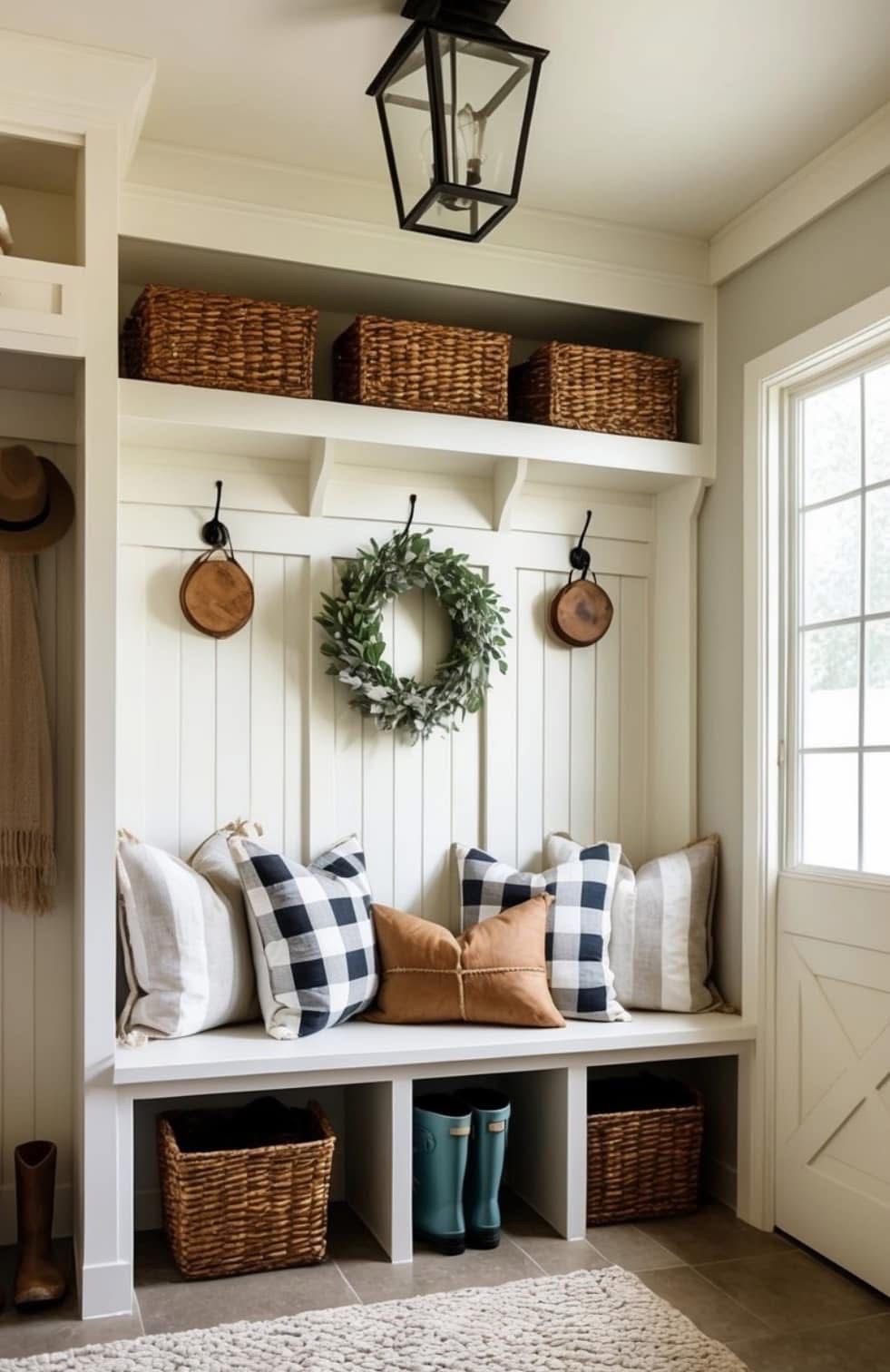
5. Charming Small Mudroom with Decorative Wall Detailing
This cozy mudroom cleverly uses paneled walls to add character without overwhelming the space. The built-in bench paired with woven baskets keeps things tidy, while plush cushions invite you to pause and relax. It’s proof that even compact areas can be both stylish and purposeful.
Key Design Elements
Paneled backing creates visual interest and a sense of depth.
Bench seating doubles as storage with neatly tucked baskets underneath.
Soft cushions add comfort and a welcoming touch.
Pro Tip: Choose neutral tones for cushions and baskets to keep the area feeling light and open.
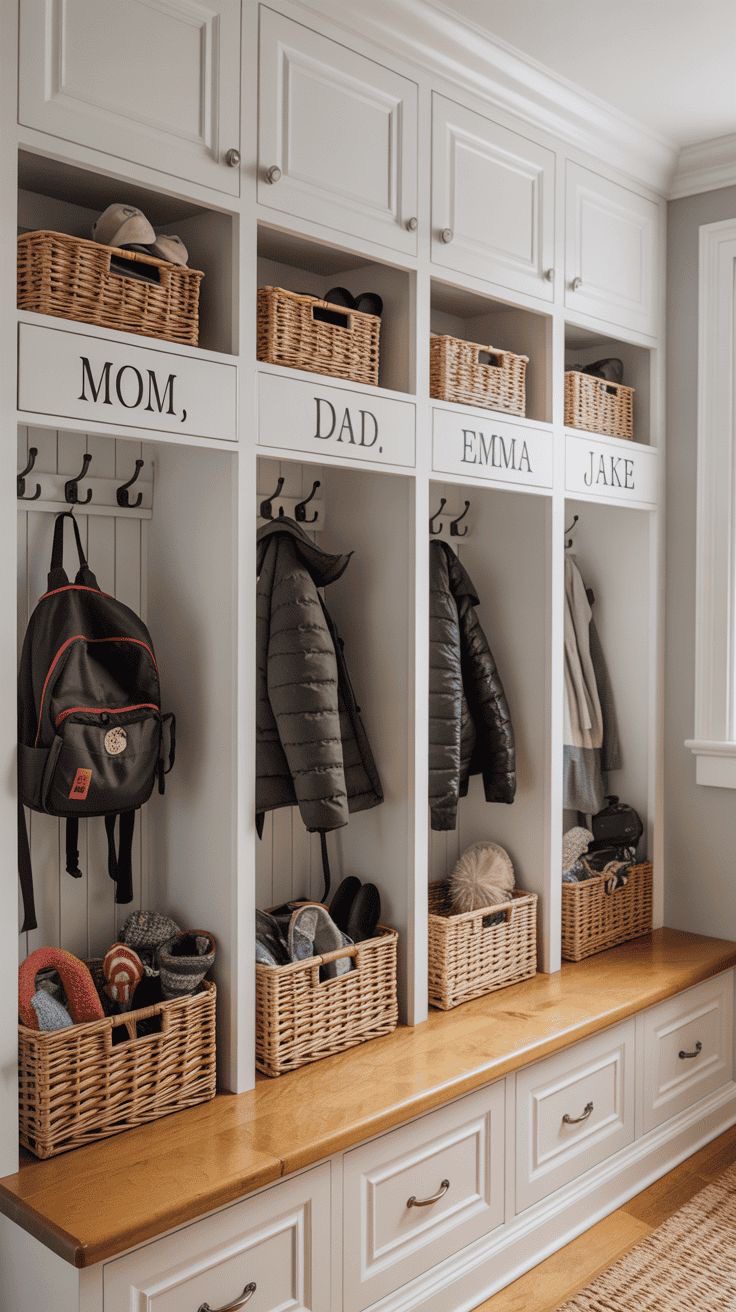
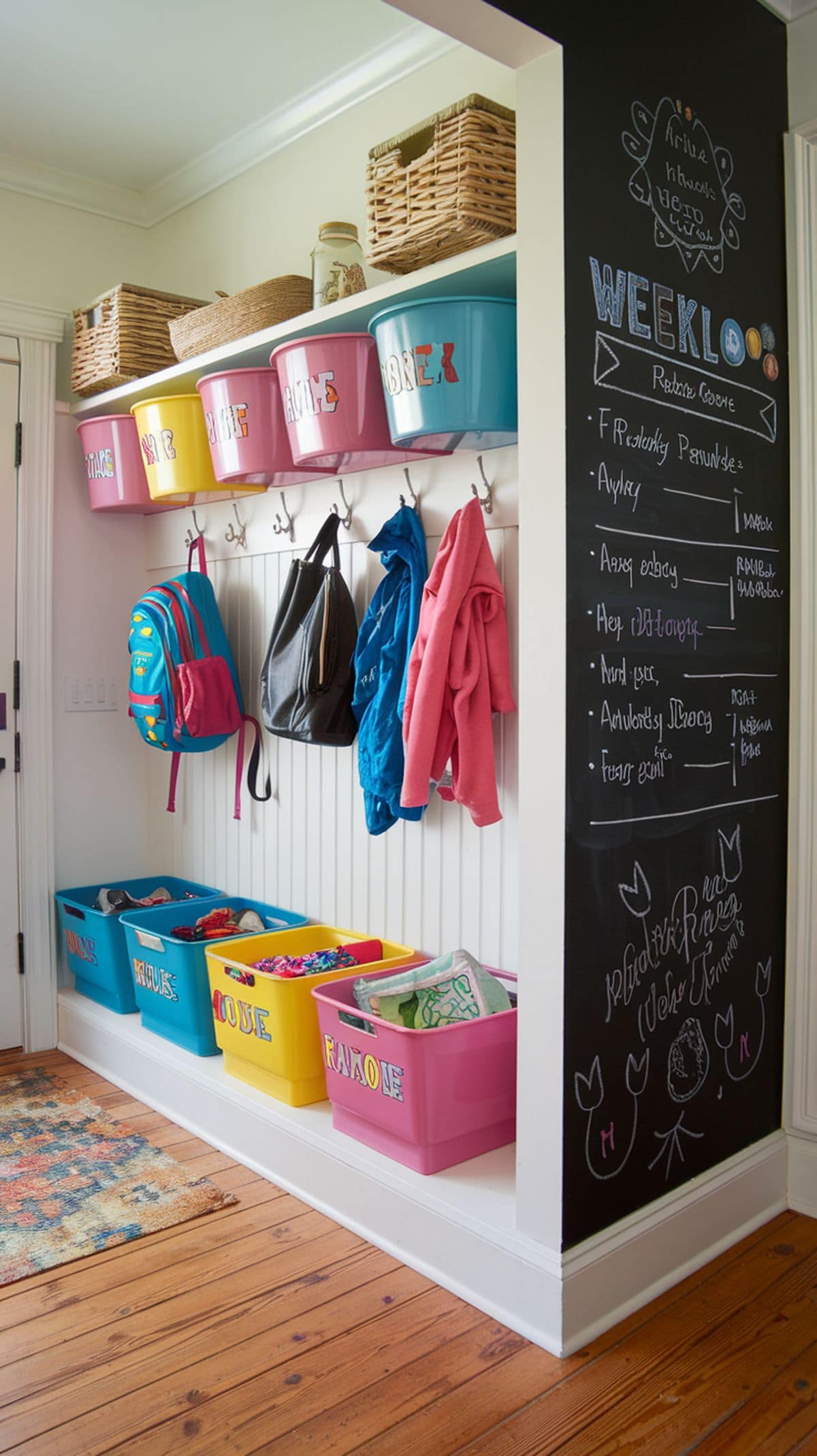
6. Personalized Family Mudroom Compartments
Assigning each family member their own personalized space in the mudroom helps keep belongings organized and easy to find. With dedicated spots for coats, bags, and shoes, the chaos of daily comings and goings is instantly reduced. Plus, built-in baskets keep smaller essentials neatly tucked away, making tidying up a breeze.
Key Design Elements
Clearly marked sections prevent mix-ups and lost items.
Lower baskets provide convenient storage for shoes and accessories.
Encourages everyone to maintain a clutter-free entryway.
Pro Tip: Use color-coded labels or photos for younger kids to make identifying their space even easier.
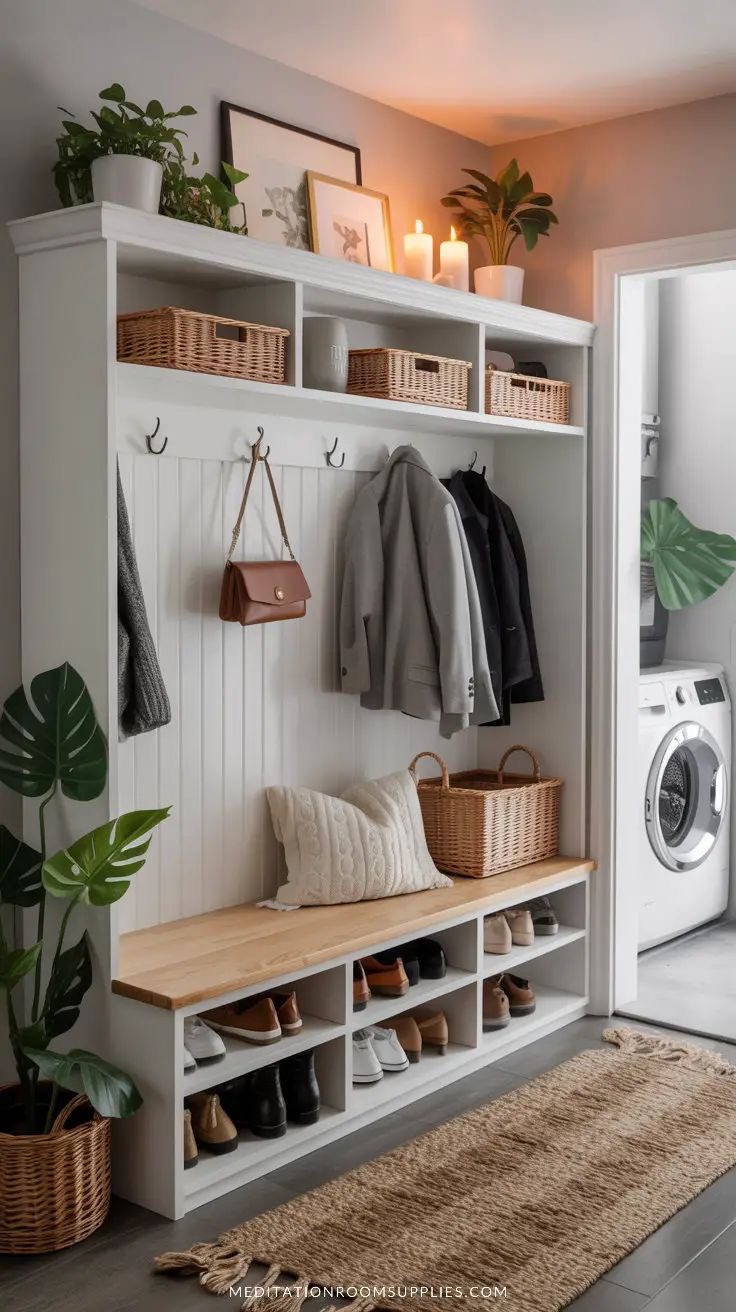
7. Integrated Mudroom and Laundry Space
Blending your mudroom with the laundry area creates a convenient hub where all the mess can be managed effortlessly. It’s the perfect spot to drop off damp clothes, muddy boots, and backpacks without worrying about dirt spreading throughout your home.
Key Design Elements
Keeps wet and dirty items confined to one easy-to-clean area
Streamlines daily routines by combining laundry chores with cleanup
Maximizes functionality in a compact footprint for busy households
Pro Tip: Add durable, water-resistant flooring to handle spills and make cleanup a breeze.
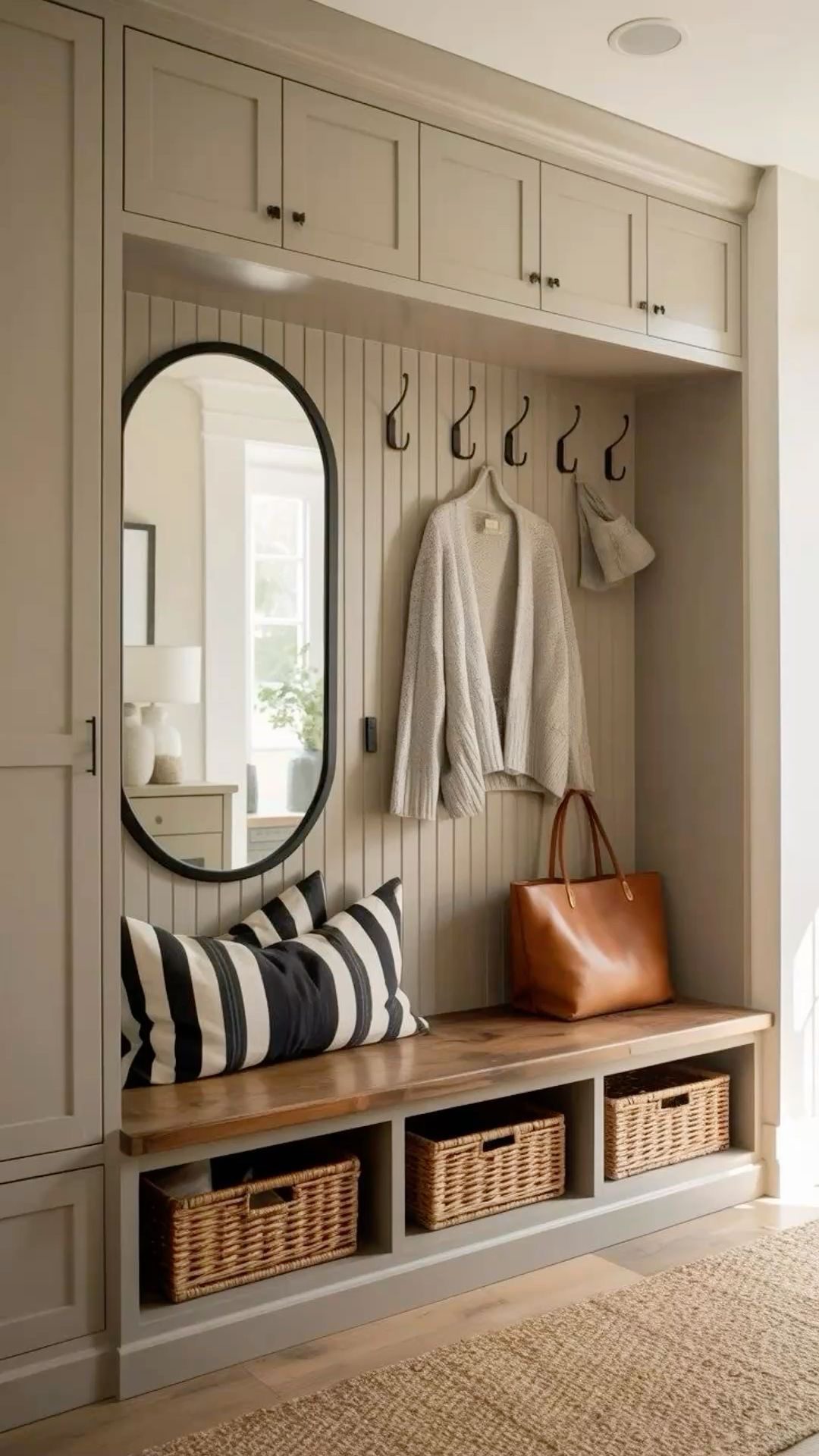
8. Elegant Arched Mirror for a Welcoming Mudroom
Incorporating an arched mirror into your mudroom instantly elevates the space, creating a brighter and more open atmosphere. It’s not only a stylish touch but also a practical feature for those last-minute appearance checks before stepping outside.
Key Design Elements
Reflects light to make the mudroom feel more spacious and inviting.
Adds a graceful, architectural element that enhances overall decor.
Offers a convenient spot for quick outfit and hair checks on the go.
Pro Tip: Choose an arched mirror with a slim frame to maximize light reflection without overwhelming the space.
9. Serene White Paneled Entryway
Step into a mudroom that instantly soothes with its crisp white panels and gentle, neutral hues. The simplicity of clean lines and understated hooks creates a peaceful, airy space that stays organized no matter how busy your day gets.
Key Design Elements
Bright white paneling enhances natural light and openness
Simple, functional hooks keep essentials within easy reach
Neutral palette promotes a calm, clutter-free atmosphere
Pro Tip: Choose soft textiles and natural materials to add warmth without disrupting the serene vibe.
10. Under-Bench Drawer Solutions
Tucking away clutter is a breeze with drawers built right beneath the bench. They keep everyday essentials neatly out of sight, helping your mudroom stay peaceful and inviting, even on the busiest days.
Key Design Elements
Maximizes storage without taking up extra floor space
Keeps small items like gloves, hats, and pet accessories organized
Creates a clean, streamlined look that reduces visual clutter
Pro Tip: Label each drawer to make it quick and easy for everyone to find what they need.
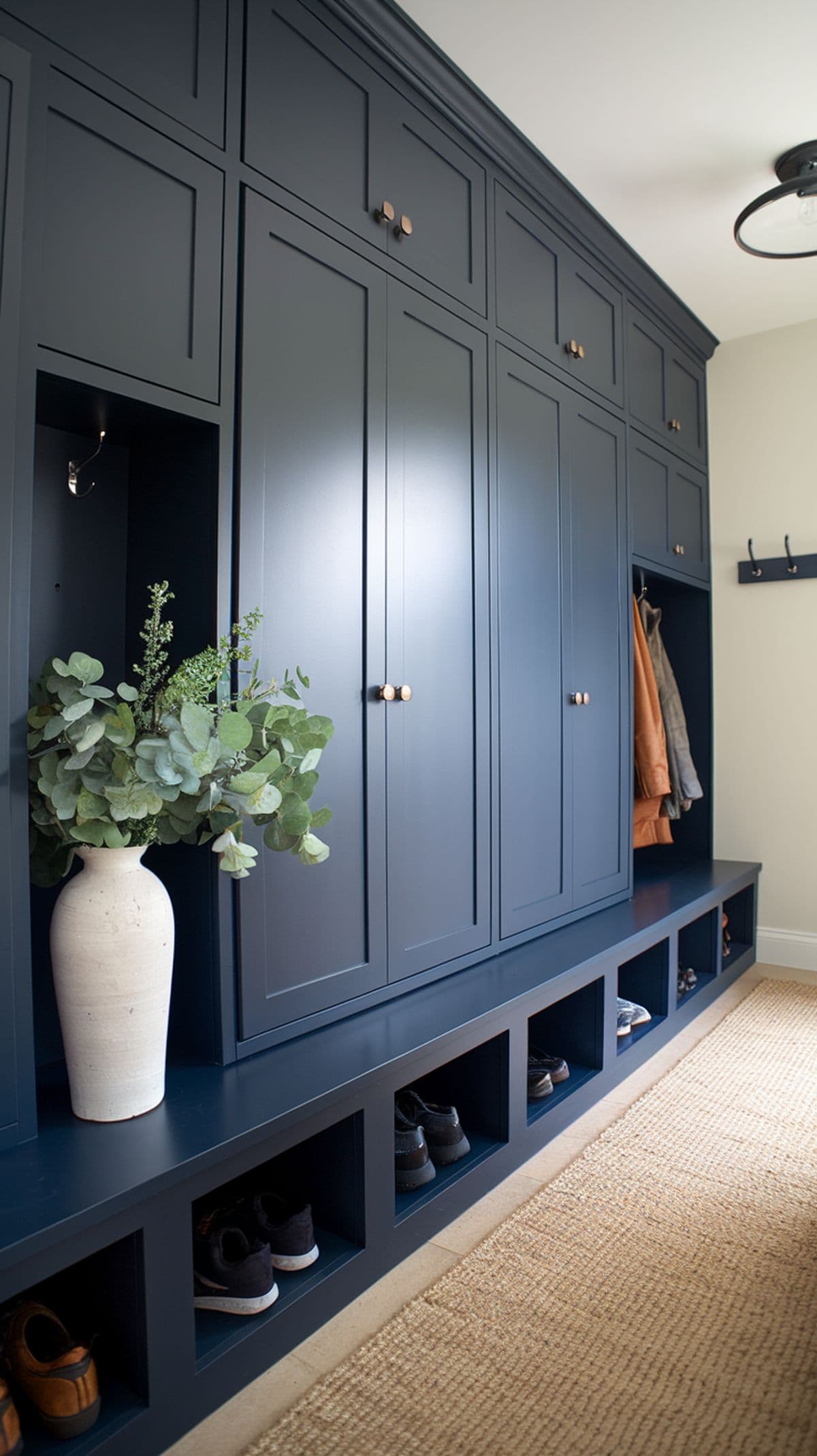
11. Sophisticated Shadowed Storage
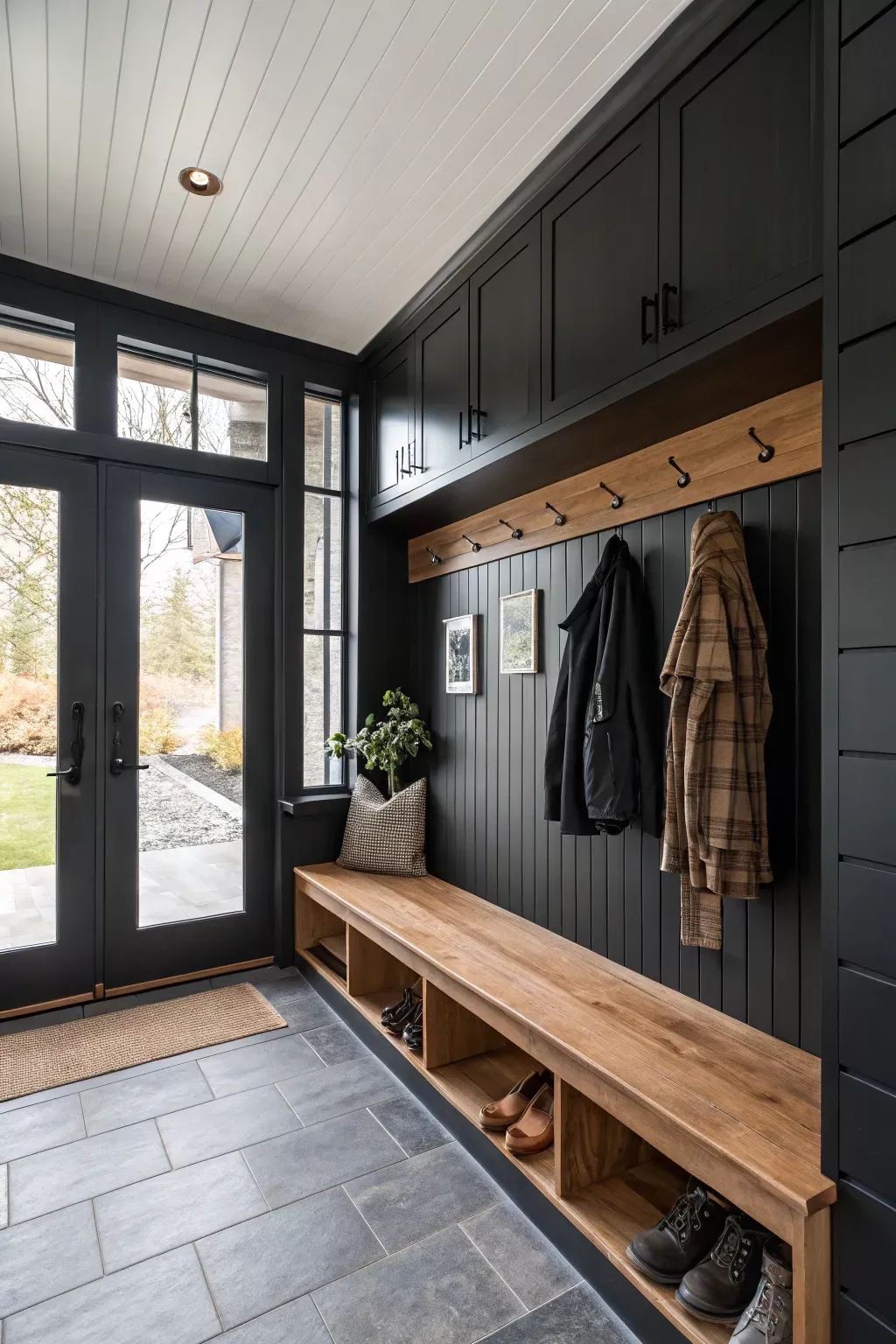
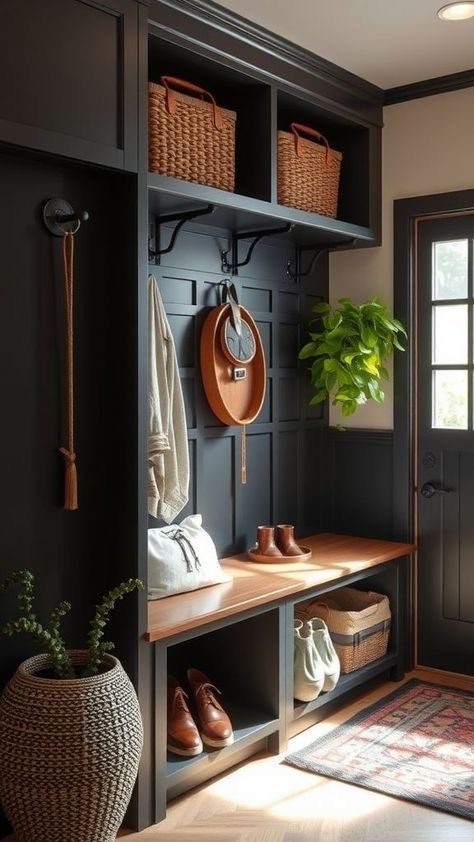
Embrace a richer, more refined vibe in your mudroom with deep-toned cabinetry that instantly elevates the space beyond just function. The natural wood bench introduces a cozy contrast, balancing the boldness with warmth and inviting charm. This style is perfect for homes with modern or industrial flair looking for a stylish entryway solution.
Key Design Elements
Dark cabinetry creates a strong visual impact and adds architectural interest.
Warm wood elements prevent the space from feeling too stark or heavy.
Ideal for complementing contemporary and industrial design themes.
Pro Tip: Pair dark finishes with warm lighting to keep the mudroom welcoming and bright.
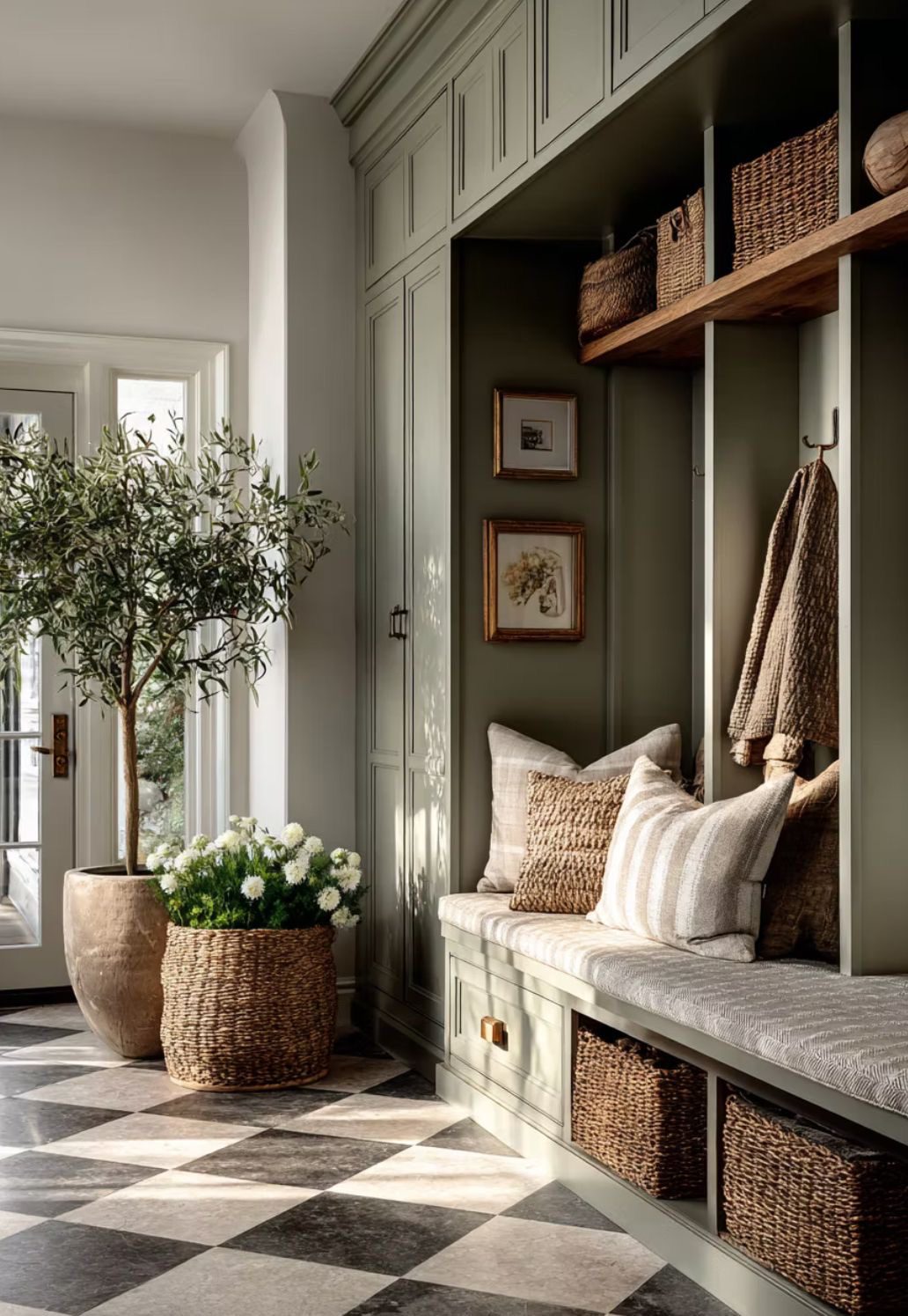
12. Subtle Sage Mudroom Haven
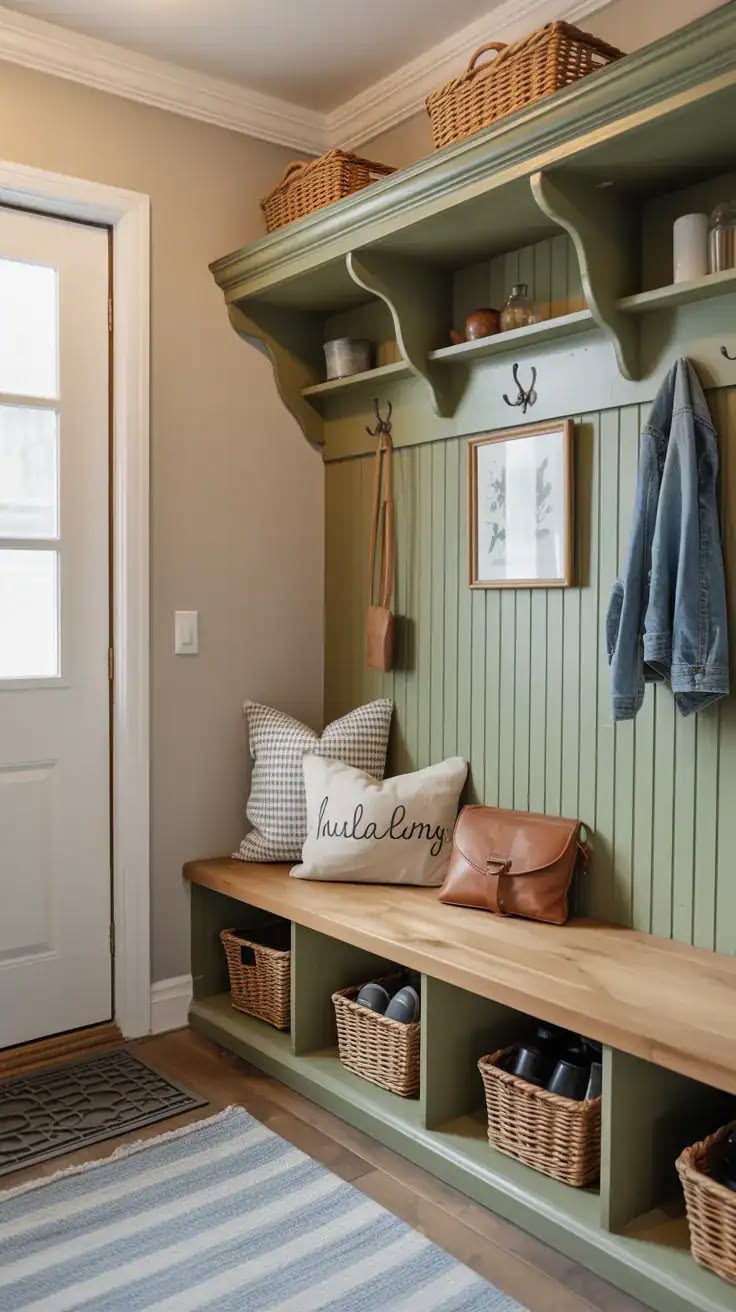
Embracing a gentle splash of color, this mudroom features soft green paneling that brings a natural, calming vibe to your entryway. It’s inviting and laid-back, making it a practical space where you can leave your worries about keeping everything pristine at the door.
Key Design Elements
Earthy green tones create a soothing and grounded atmosphere.
Paneling adds texture and visual interest without overwhelming the space.
Relaxed design encourages everyday use without stress over mess.
Pro Tip: Choose durable, easy-to-clean finishes to keep the mudroom looking fresh with minimal effort.
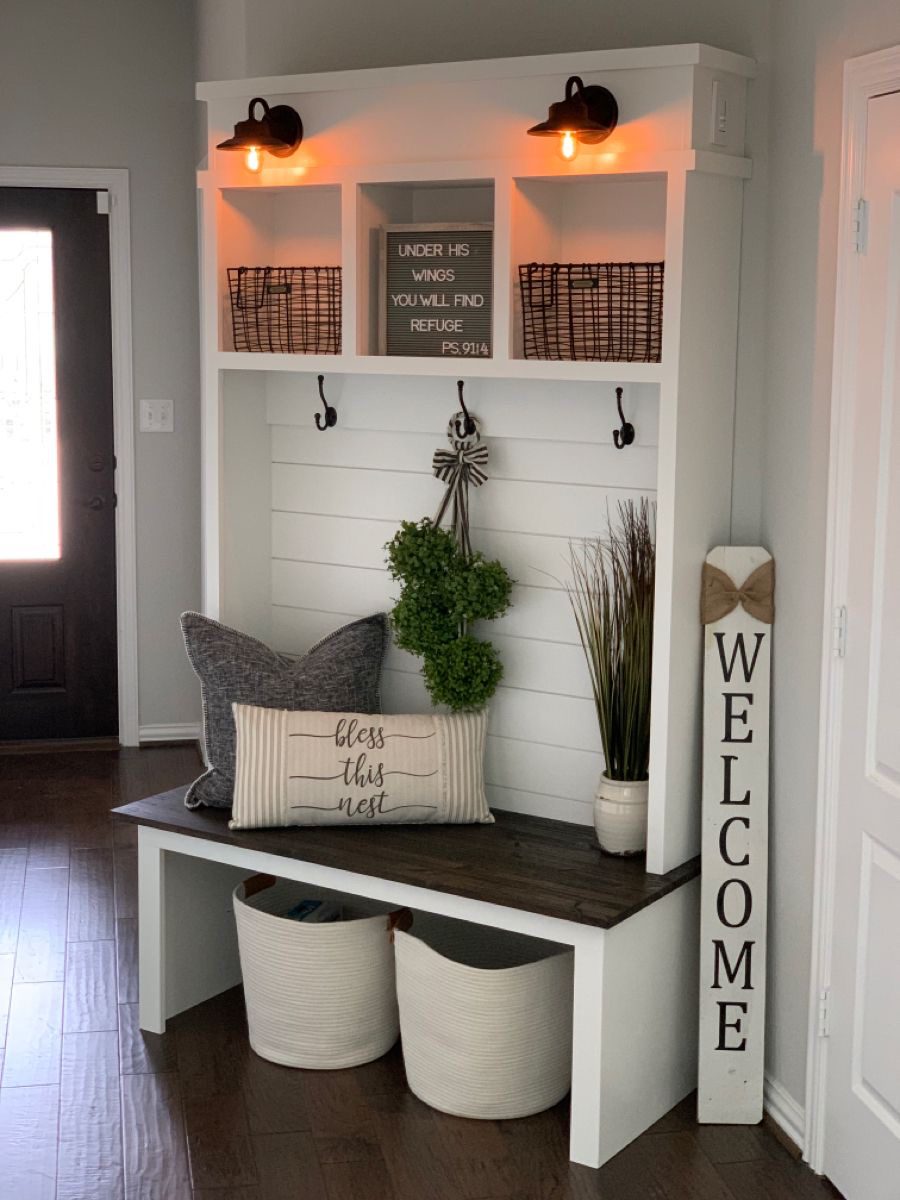
13. Timeless White Seating with Convenient Hooks
This charming setup combines simplicity and function effortlessly. The crisp white paneling brightens the space, while the sturdy bench and handy hooks keep your daily essentials organized without overwhelming the room. Toss in a few baskets, and you’ve got a tidy spot where everything has its rightful place, even on hectic days.
Key Design Elements
Bright white paneling enhances natural light and creates an airy feel.
Bench provides comfortable seating and a catch-all surface for shoes or bags.
Hooks offer easy access to coats and accessories, reducing clutter.
Pro Tip: Use woven baskets under the bench to keep smaller items neatly tucked away and easy to grab.
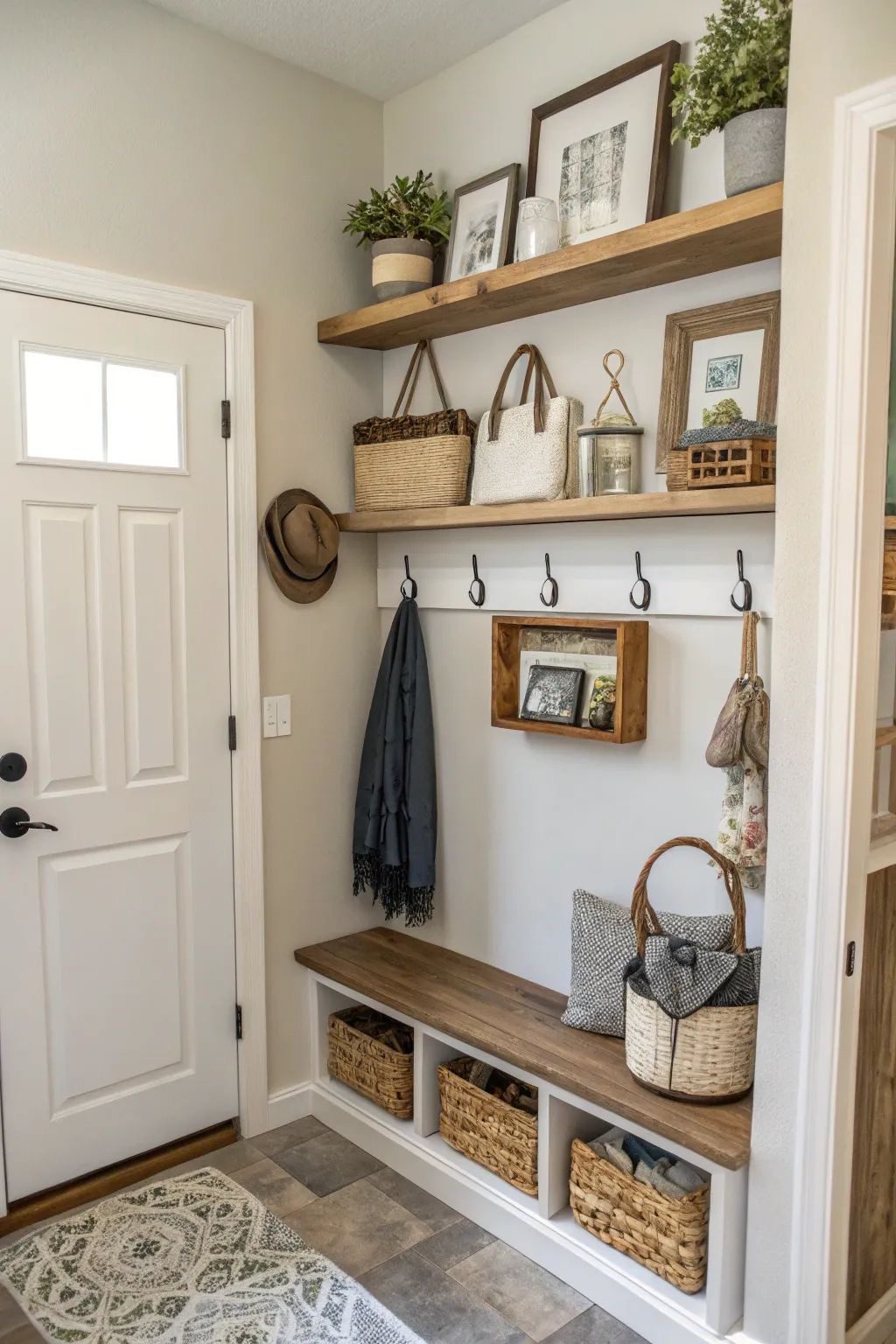
14. Wall-Mounted Shelves with Hanging Hooks
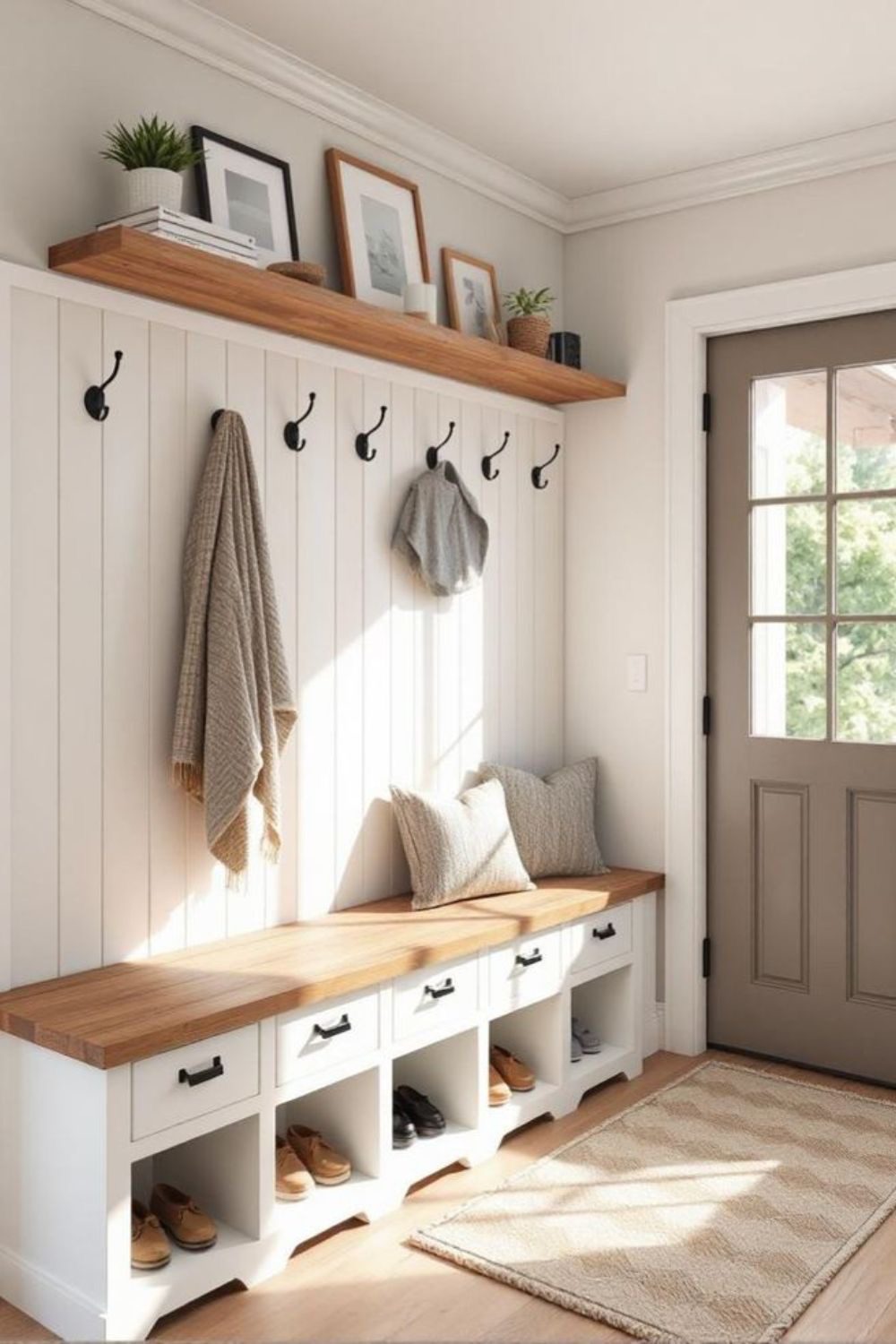
This design keeps things cozy and organized without overwhelming smaller spaces. The upper shelf offers a perfect spot for your favorite accents or everyday essentials, while the hooks below make grabbing coats and bags a breeze. It’s a smart way to blend style and practicality effortlessly.
Key Design Elements
Maximizes vertical storage in tight areas
Allows for decorative touches to personalize your space
Keeps frequently used items within easy reach
Pro Tip: Choose sturdy hooks and a thick shelf to handle heavier items while maintaining a polished look.
15. Compact Vertical Mudroom Solution
Perfect for cozy spaces, this vertical mudroom design maximizes storage by stacking hooks and shelves in a neat column. It creates a convenient landing spot without intruding on your hallway, keeping everything organized and within easy reach.
Key Design Elements
Utilizes limited space efficiently by combining hanging and shelf storage in one area
Keeps entryways clutter-free and walkways open
Provides a designated spot for everyday essentials like coats, bags, and shoes
Pro Tip: Use slim, multi-level storage bins below the hooks to keep smaller items tidy and accessible.
16. Spacious Bench with Concealed Basket Storage
Ideal for bustling families, this spacious bench offers ample seating while cleverly hiding clutter with baskets tucked underneath. It’s the perfect way to keep shoes, bags, and little odds and ends out of sight, making your mudroom feel tidy and welcoming.
Key Design Elements
Generous seating area for multiple family members
Baskets provide discreet storage for everyday clutter
Maintains a neat and inviting atmosphere with minimal effort
Pro Tip: Choose baskets with sturdy handles for easy pull-out access and quick clean-ups.
17. Effortlessly Functional and Inviting Space
This mudroom strikes the perfect balance between everyday practicality and cozy style. With hooks ready for your daily essentials, baskets neatly organizing clutter, and just the right touch of decor, it feels genuinely lived-in rather than overly designed. It’s a spot that invites use without any pressure to keep it perfectly pristine.
Key Design Elements
Convenient hooks for easy access to jackets, bags, and keys
Ample basket storage to keep shoes and accessories tidy
Subtle decorative touches that create warmth without fuss
Pro Tip: Choose natural materials like woven baskets and wooden hooks to add warmth and durability to your mudroom.
18. Bright and Airy Entryway with Wall-Mounted Baskets
This mudroom strikes the perfect balance between airy simplicity and everyday functionality. Hanging baskets keep your essentials within easy reach while freeing up floor space, making the whole area feel neat and inviting. It’s a clever touch that brings order without overwhelming the room.
Key Design Elements
Elevates organization by using vertical space effectively
Maintains a clean and spacious look with minimal clutter
Allows quick access to frequently used items for busy mornings
Pro Tip: Choose baskets in natural materials to add warmth and texture to your light-filled mudroom.
19. Inviting Bench Corner with Seasonal Touches
Step into a mudroom that feels more like a cozy retreat than just a transition space. Soft cushions and a charming wreath add warmth and personality, while clever storage keeps everything neat and welcoming. Even the smallest mudrooms can be both functional and full of character.
Key Design Elements
Comfortable bench seating accented with plush cushions for a cozy vibe
Seasonal wreath adds a festive and personalized touch above the bench
Baskets on upper shelves provide stylish storage that hides clutter effortlessly
Pro Tip: Use interchangeable decor like wreaths and cushion covers to refresh the space with each season.
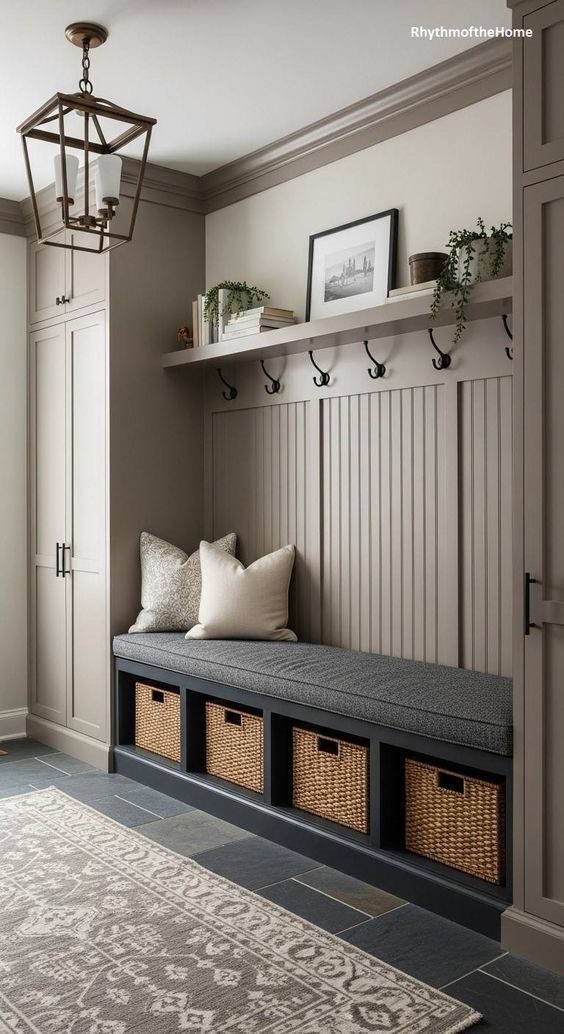
20. Tranquil Taupe Mudroom Nook
This cozy corner brings a soothing vibe with its gentle hues and inviting textures. The combination of soft cushions and natural woven baskets creates an effortless, lived-in charm that instantly puts you at ease after a busy day.
Key Design Elements
Neutral color palette promotes a peaceful and welcoming atmosphere
Textured cushions add comfort and visual interest without overwhelming the space
Woven baskets offer practical storage while enhancing the warm, organic feel
Pro Tip: Choose baskets and cushions in varying shades of beige and cream to add depth while keeping the look unified.
21. Effortless Entry: Hooks, Bench, and a Touch of Shelf
Sometimes the best mudroom is the one that keeps things straightforward and functional. Just a cozy bench, a handful of hooks, and a small shelf come together to create a welcoming space that’s easy to keep tidy and use every day.
Key Design Elements
Minimal setup simplifies daily routines and reduces clutter.
A bench provides a comfortable spot for putting on or taking off shoes.
Hooks keep coats and bags organized while the shelf offers extra storage for keys or mail.
Pro Tip: Choose sturdy, easy-to-clean materials to keep your simple setup looking fresh with minimal effort.
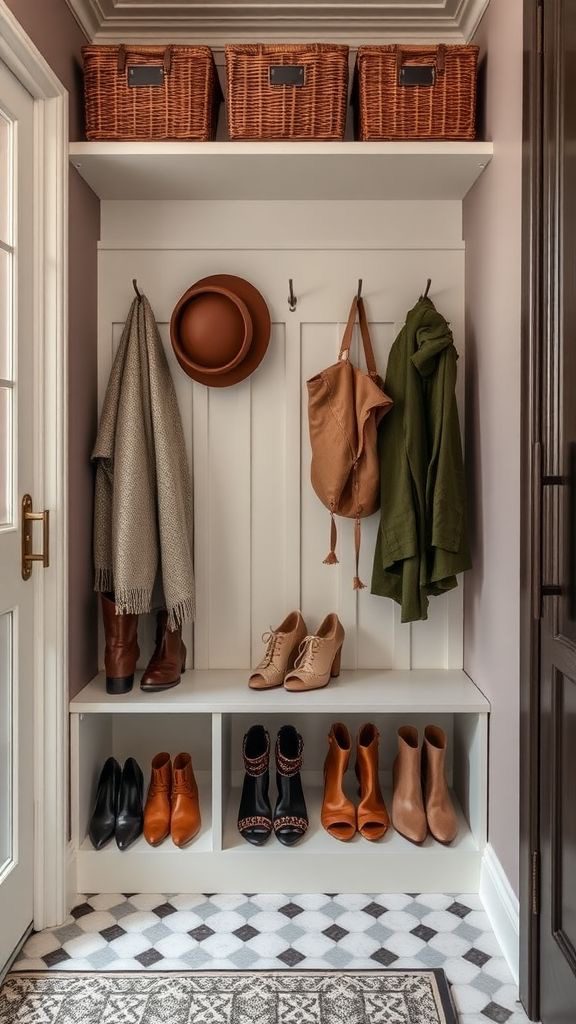
22. Charming Blush Built-In Mudroom
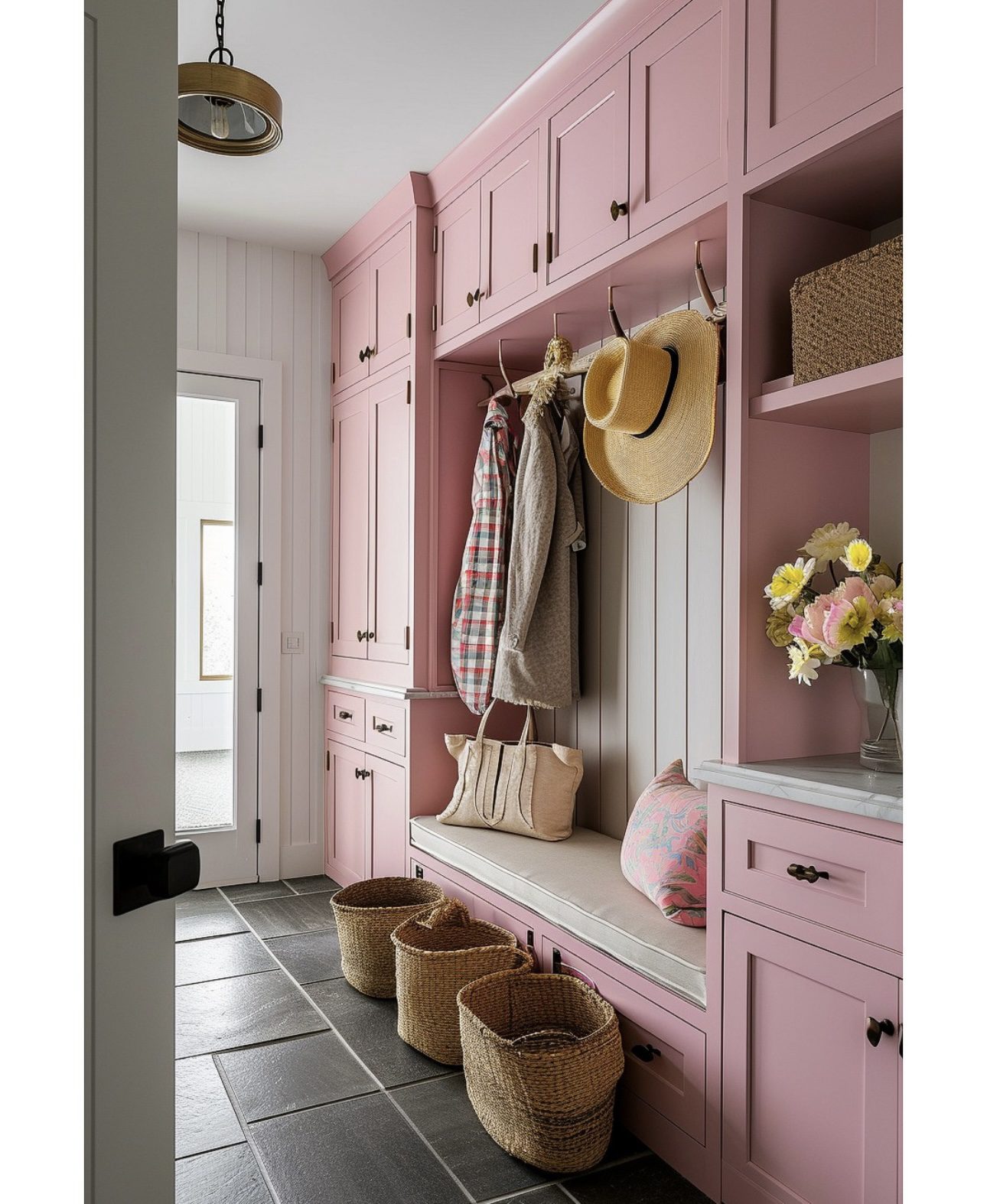
Who says mudrooms have to be dull? This delightful blush-toned built-in brings a cozy, inviting vibe that instantly makes the space feel like a natural extension of your home. It combines smart storage solutions with a touch of personality, turning everyday organization into something special.
Key Design Elements
Soft pink cabinetry adds warmth and a welcoming atmosphere
Practical hooks, cubbies, and shelves keep clutter neatly contained
Creates a seamless, stylish transition between outdoors and indoors
Pro Tip: Choose muted pastel tones for cabinetry to add subtle color without overwhelming the space.
23. Cozy Seating with Handy Storage
Imagine a welcoming spot where you can sit down to tie your shoes and effortlessly stash your essentials. With open shelves both above and below, everything stays within easy reach, making busy mornings a breeze. It’s a simple, stylish way to keep your mudroom neat and inviting.
Key Design Elements
Provides a comfortable place to sit while putting on or taking off shoes
Open shelving offers quick access to bags, shoes, and everyday items
Maximizes storage without feeling cluttered or closed off
Pro Tip: Use baskets or bins on the open shelves to keep smaller items organized and visually tidy.
24. Serene White Paneled Mudroom
Step into a space that instantly feels peaceful and inviting with crisp white panels and subtle, soothing hues. The simplicity of clean lines and understated hooks ensures your entry remains clutter-free without sacrificing style. It’s perfect for those who love a fresh, airy vibe in a busy home.
Key Design Elements
White paneling creates a bright and open atmosphere
Minimalist hooks offer practical storage without visual clutter
Soft, neutral colors enhance the sense of calm and cleanliness
Pro Tip: Choose matte finishes for paneling and hooks to maintain a soft, welcoming look that hides fingerprints and smudges.
25. Cozy Bench with Handy Open Shelves
This easygoing setup blends comfort and function effortlessly. A neat bench paired with simple hooks and spacious open shelves keeps your entryway clutter-free without any fuss. It’s a smart choice for those who want practical style without the commitment of custom installations.
Key Design Elements
Provides a comfortable spot to sit while putting on shoes
Open shelving offers quick access to everyday items
Minimalist design fits seamlessly into various decor styles
Pro Tip: Add a few woven baskets to the shelves for an extra layer of organized storage.
26. Serene Mudroom Retreat with Soft Neutral Hues
This mudroom exudes a peaceful vibe thanks to its soft, neutral color scheme and streamlined design. The understated bench paired with woven baskets offers practical storage without overwhelming the space, creating a welcoming area that feels effortlessly organized.
Key Design Elements
Calming neutral tones promote a sense of tranquility right at the entryway.
Simple bench cushion adds comfort without clutter or distraction.
Woven baskets provide hidden storage that seamlessly blends into the décor.
Pro Tip: Choose storage solutions that harmonize with your color palette to keep the space feeling light and airy.
27. Organized Entryway with Shoe Storage
Tired of shoes scattered by the door? Incorporating individual cubbies beneath a bench creates a neat spot for every pair, making your entryway feel calm and tidy. It’s a smart setup that helps busy households stay clutter-free with minimal effort.
Key Design Elements
Keeps shoes off the floor and out of the way
Provides designated spaces for each family member’s footwear
Simplifies tidying up, turning cleanup into a quick habit
Pro Tip: Label each cubby to make it easy for everyone, especially kids, to find their own spot.
28. Cozy Nook Mudroom Solution
Even the smallest spaces can shine with a thoughtfully arranged mudroom nook. By adding a petite bench, a few well-placed hooks, and baskets tucked below, an overlooked corner becomes a charming and functional entry spot. It’s all about keeping things purposeful without overcrowding the area.
Key Design Elements
Maximizes use of limited space without feeling cluttered
Combines seating and storage in one compact design
Creates an inviting, organized spot that encourages tidiness
Pro Tip: Choose baskets that fit perfectly under the bench to keep shoes and supplies neatly out of sight.
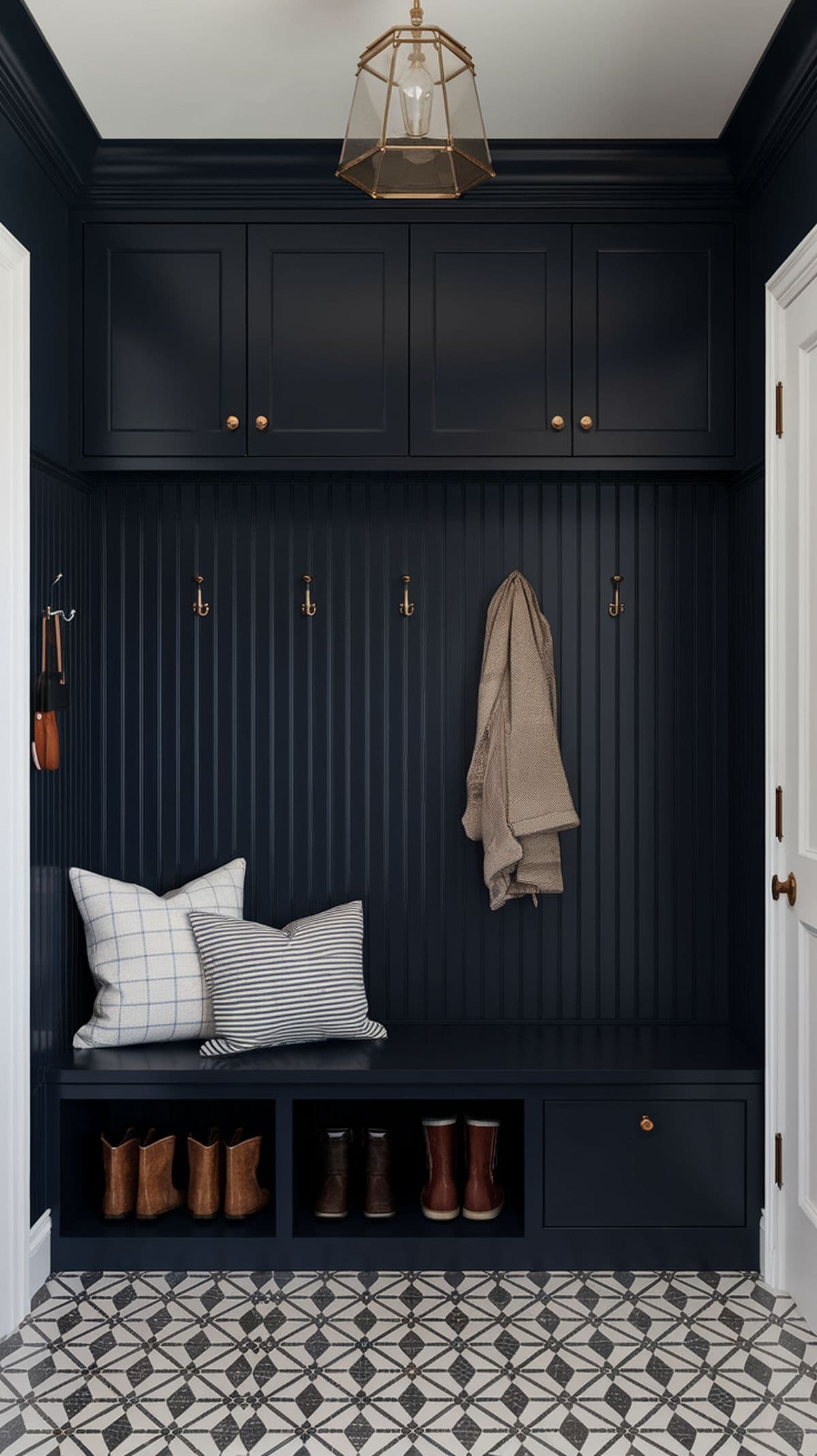
29. Serene Navy Entryway Retreat
Step into a space that feels both cozy and sophisticated, where deep navy hues blend seamlessly with eye-catching patterned flooring. This mudroom strikes the perfect balance between bold and inviting, transforming your entryway into a welcoming pause in your day.
Key Design Elements
Rich navy walls create a soothing yet dramatic backdrop.
Patterned tile adds personality without overwhelming the space.
Thoughtful design elements make organizing shoes and gear effortless.
Pro Tip: Pair dark walls with bright lighting to keep the space feeling open and airy.
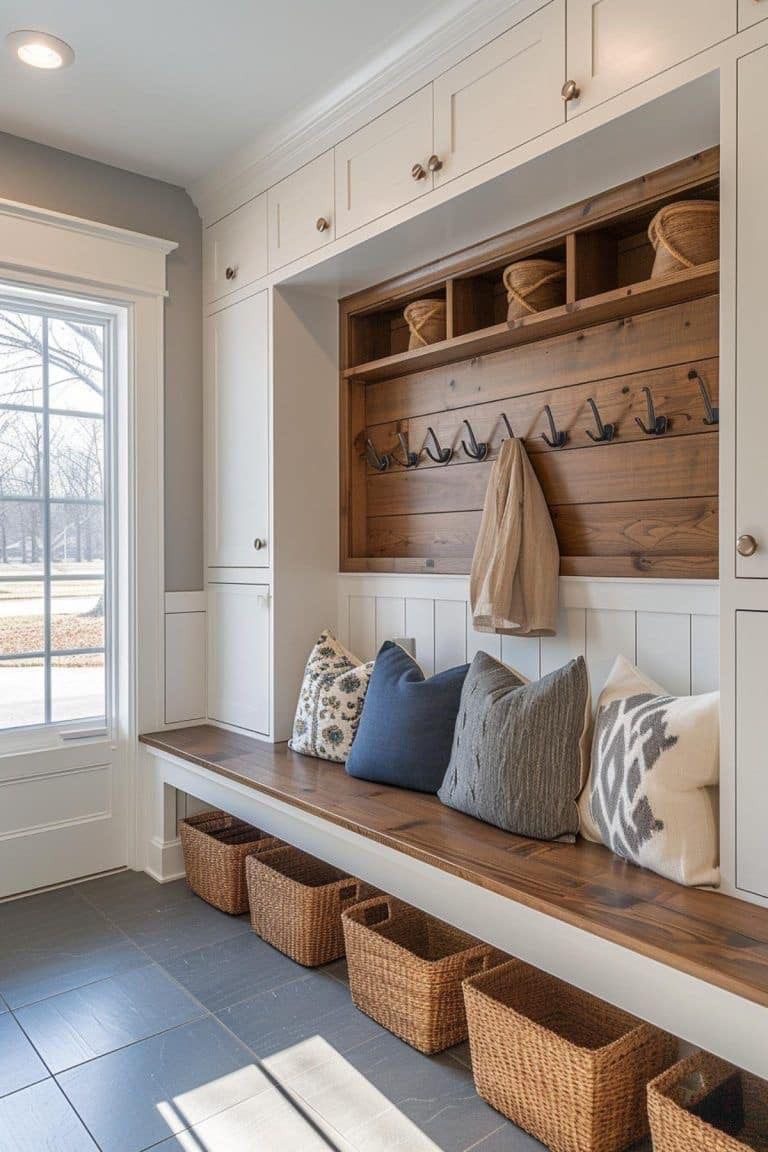
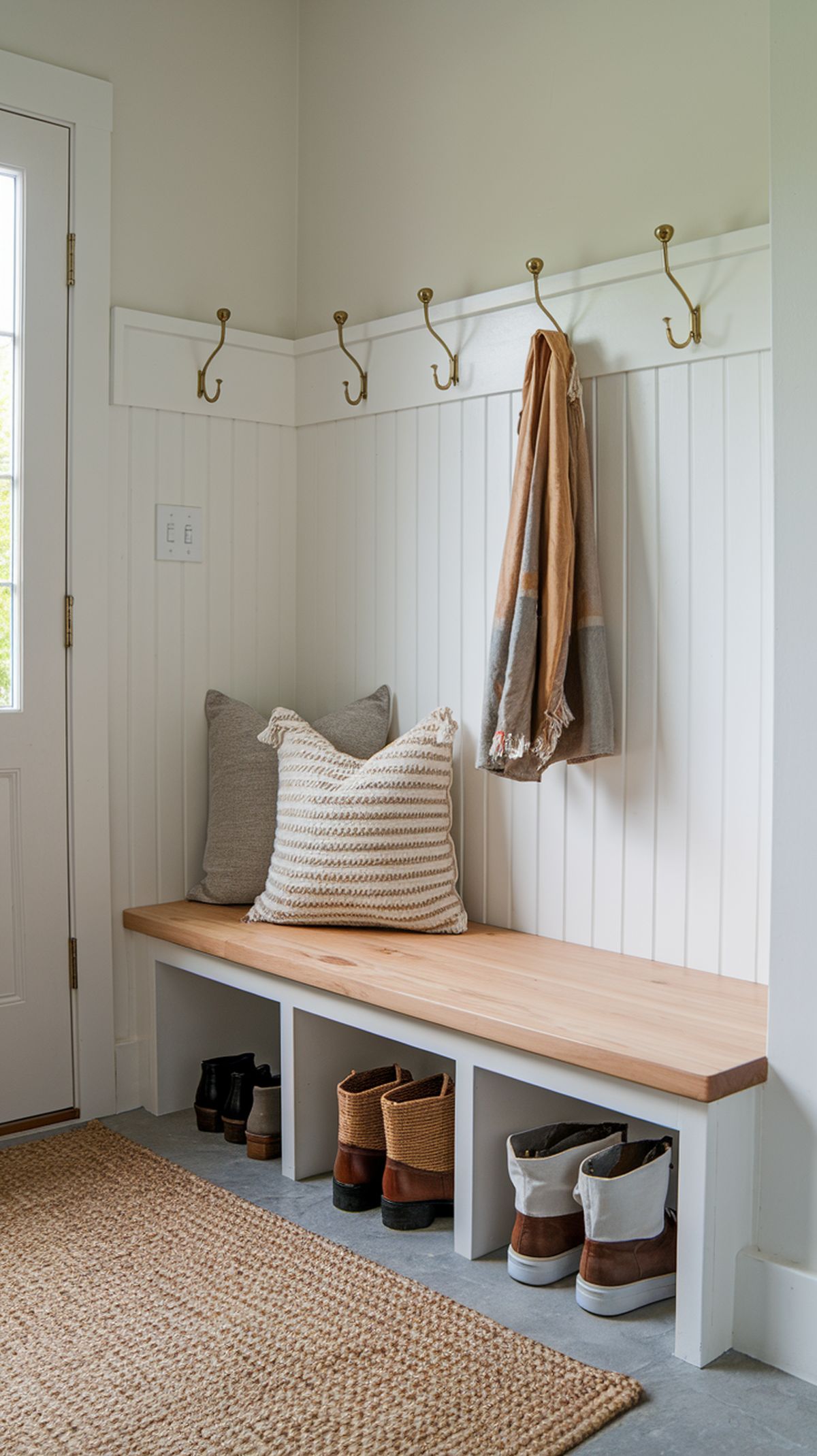
30. Bright and Cozy Mudroom with Natural Wood Touches
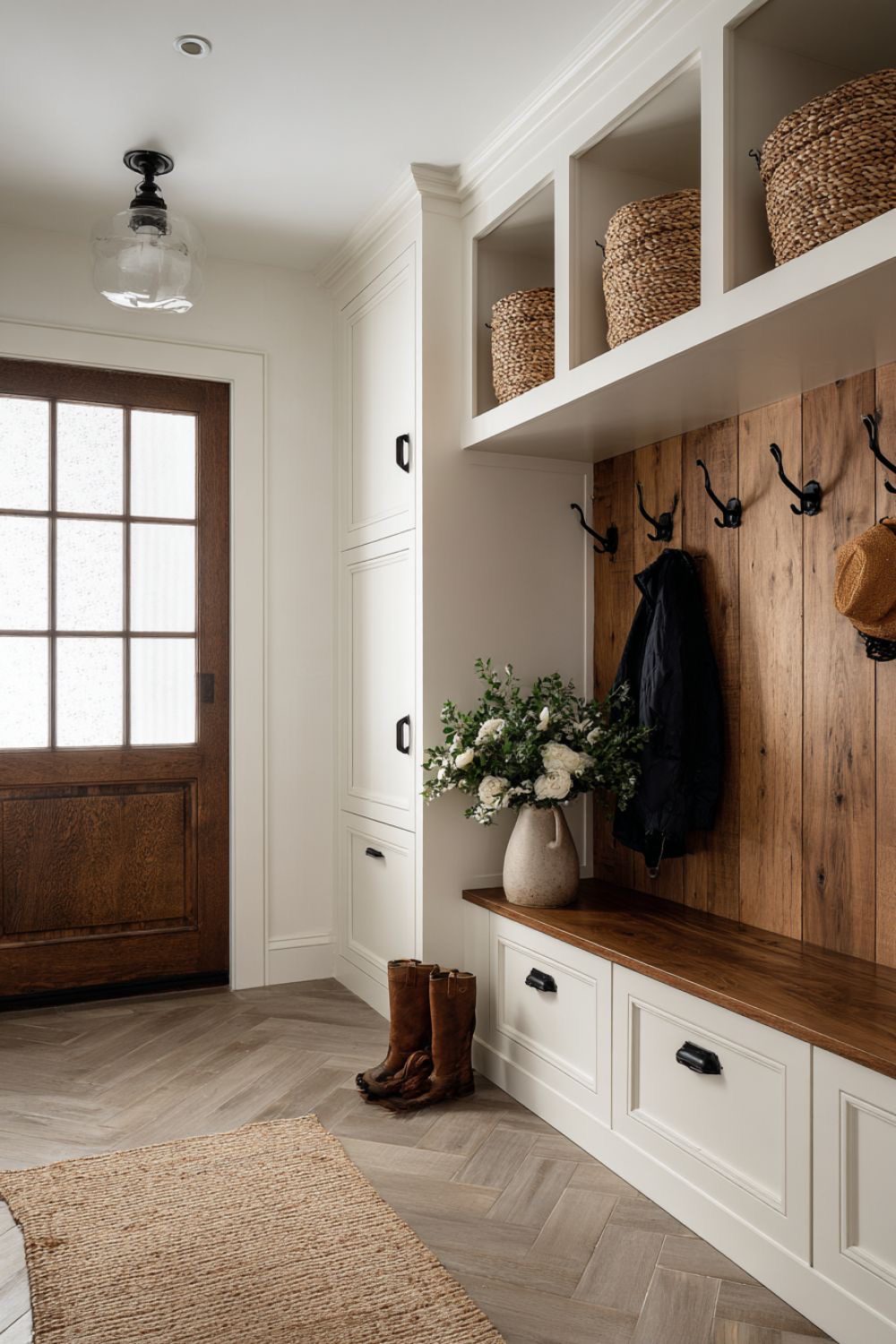
This timeless mudroom design strikes the perfect balance between crisp white cabinetry and inviting wood elements. The bright white keeps the space feeling open and airy, while the warm wood accents add character and comfort, ensuring it remains stylish for years to come.
Key Design Elements
White cabinetry enhances light and creates a clean, uplifting environment
Wood backing and bench introduce warmth and texture to prevent a cold look
Classic, durable design that complements a variety of home styles and stands the test of time
Pro Tip: Incorporate natural wood tones alongside white finishes to create a welcoming mudroom that never feels sterile.
Conclusion
Your mudroom is more than just an entryway; it’s the welcoming heart of your home where functionality meets style. Whether you’re drawn to clever storage solutions, cozy seating, or vibrant accents that brighten the space, now is the perfect time to bring your vision to life. Embrace the opportunity to transform this often-overlooked area into a personalized haven that sets the tone for every day. With a little creativity and inspiration, your mudroom can become a beautiful, organized space that welcomes you and your loved ones home with warmth and ease. So pick your favorite idea, roll up your sleeves, and start turning your mudroom dreams into reality—you deserve a space that feels as inviting as it looks.
Turning your small apartment bedroom into a cozy, stylish retreat might feel like a daunting task, especially when you’re working with a tight budget. But the good news is, creating a space that feels both inviting and personal doesn’t have to cost a fortune or require a complete overhaul. With a little creativity and thoughtful planning, you can transform even the smallest bedroom into a sanctuary where you look forward to unwinding at the end of each day. You don’t need to sacrifice comfort or style—you just need the right approach to make every inch count.
As you start this journey, remember that the magic is in the details. From choosing soft textiles that invite you to relax to arranging furniture that maximizes your space, every choice contributes to an atmosphere that’s uniquely yours. You’ll find that small changes—like adding warm lighting or incorporating meaningful decor—can significantly elevate the ambiance without breaking the bank. Embrace the process as an opportunity to reflect your personality and taste while making your bedroom a true haven, no matter the square footage or budget limitations.
1. Embrace Nature with Indoor Plants
Incorporating plants into your bedroom decor not only enhances the aesthetic but also improves air quality, creating a serene and revitalizing environment. The presence of greenery fosters a sense of calm and connects you with nature, making your personal space feel more inviting.
Key Design Elements
Choose low-maintenance plants like snake plants or pothos for easy care.
Place plants near windows to ensure they receive adequate natural light.
Use decorative pots that complement your bedroom’s color scheme for added style.
Pro Tip: Rotate your plants regularly to ensure even growth and maintain their vibrant appearance.
2. Embracing the Boho Vibe: Cozy, Colorful, and Carefree
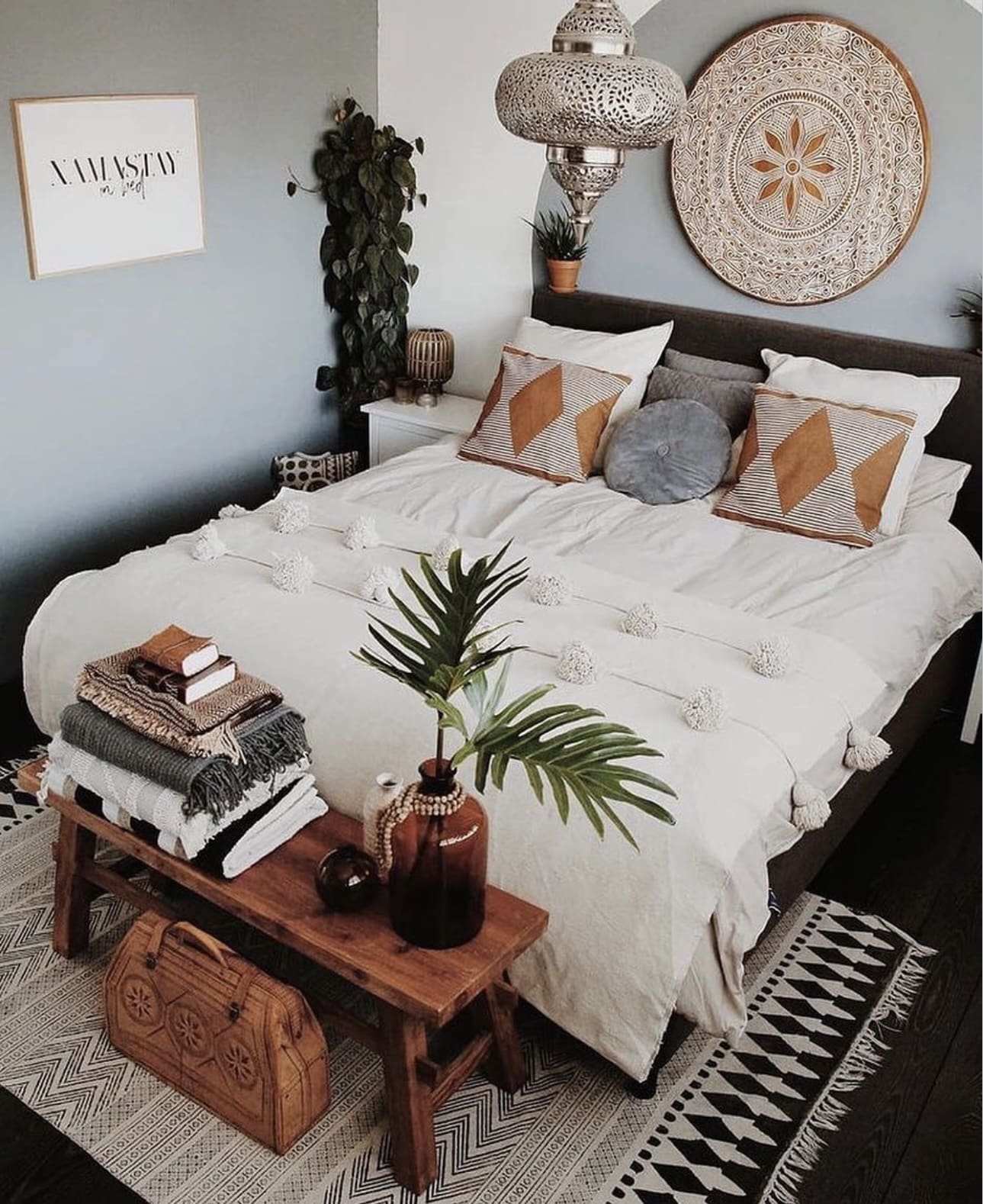
Infuse your bedroom with a laid-back charm by blending rich textures, vibrant patterns, and a mix of natural elements. Think layered rugs, plush cushions, and an abundance of greenery to create a sanctuary that feels both inviting and uniquely personal. This aesthetic is perfect for those who love a relaxed, eclectic atmosphere that sparks creativity and comfort.
Key Design Elements
Incorporate a variety of fabrics like macramé wall hangings, woven throws, and patterned pillows to add depth and warmth.
Place potted plants or hanging gardens throughout the space to bring a touch of nature indoors.
Mix vintage finds with handmade crafts and travel-inspired pieces to build a collection that tells your story.
Pro Tip: Choose warm, earthy colors as a base and layer in pops of jewel tones to keep the room vibrant yet harmonious.
3. Creating a Snug and Productive Workspace
Transform a corner of your bedroom into a charming little nook dedicated to work or creative projects without compromising the room’s relaxing vibe. By choosing a compact desk and cozy seating, you can enjoy productivity in comfort. This setup balances functionality with warmth, making your space both inviting and efficient.
Key Design Elements
Select a compact desk that fits neatly into a corner to maximize room space.
Incorporate soft lighting, like a small lamp or string lights, to create a warm atmosphere.
Add plush cushions or a cozy throw to your chair to combine comfort with style.
Pro Tip: Keep essential supplies organized in stylish containers to maintain a clutter-free and inviting workspace.
4. Showcase Your Style with Floating Shelves
Floating shelves are an elegant solution for adding storage and personality to your bedroom. They allow you to artfully present books, keepsakes, and decorative accents while keeping the space feeling open and airy. This approach maximizes wall space without overwhelming the room’s layout.
Key Design Elements
Mix and match shelf sizes to create visual interest and accommodate different items.
Incorporate plants or small lighting elements to add warmth and texture.
Arrange items by color or theme to create a cohesive and curated look.
Pro Tip: Opt for sturdy brackets and secure wall anchors to safely display heavier objects on your floating shelves.
5. Embrace the Comfort of Rich Fabrics
Incorporating a variety of tactile fabrics into your bedroom instantly elevates the ambiance, creating a welcoming and inviting space. Think beyond just color—mixing materials like plush velvets, soft wools, and intricate weaves brings visual interest and a sense of warmth. These layers not only enhance comfort but also add a touch of sophistication to your decor.
Key Design Elements
Layer a mix of cushions in different materials, such as silk, velvet, and linen, for a dynamic look.
Drape a thick, knitted throw over your bed or chair to introduce a cozy, tactile element.
Choose curtains or rugs with subtle textures or patterns to complement your bedding and furniture.
Pro Tip: Select fabrics in varying weights and weaves to create depth without overwhelming the room’s palette.
6. Elevate Your Space with a Striking Black Feature Wall
Introducing a black feature wall in your bedroom adds a touch of elegance and depth, transforming the room into a sophisticated retreat. This dark backdrop accentuates lighter furnishings and decor elements, creating a visually captivating contrast that feels both modern and timeless.
Key Design Elements
Pair the black wall with metallic accents like gold or brass for a luxe vibe.
Incorporate soft lighting fixtures to balance the darkness and add warmth.
Choose minimalist artwork or mirrors to enhance the wall without overwhelming it.
Pro Tip: Use matte black paint to reduce glare and create a smooth, refined finish that complements a variety of textures.
7. Elevate Your Bedroom with Bold Abstract Expressions
Incorporating abstract artwork into your bedroom design can transform the space into a vibrant, inspiring retreat. These pieces offer a unique way to showcase your individuality while sparking creativity and adding visual intrigue. Let your walls tell a story that complements your personal style.
Key Design Elements
Choose colors in your abstract art that echo or contrast with your bedding and decor to create harmony or striking impact.
Position a large abstract canvas above the headboard to serve as a captivating centerpiece.
Mix different textures and mediums, such as painted canvases and sculptural art pieces, to add depth and interest.
Pro Tip: Opt for oversized abstract prints to instantly energize and modernize your bedroom’s atmosphere.
8. Elevate Your Bedroom with a Stylish Ottoman Bench
Placing an ottoman bench at the end of your bed not only enhances the room’s aesthetic but also serves as a versatile spot for sitting or storing essentials. This piece effortlessly combines comfort with practicality, helping to keep your bedroom tidy and inviting.
Key Design Elements
Choose an ottoman with built-in storage to hide away blankets, pillows, or books.
Match the bench’s fabric or color with your bedding to create a cohesive look.
Use the bench as a convenient place to put on shoes or lay out clothes for the next day.
Pro Tip: Opt for an ottoman with a lift-top lid to maximize hidden storage without sacrificing style.
9. Elegant Drapes for a Cozy Ambiance
Light, flowing drapes effortlessly bring a sense of refinement while gently framing your windows. They help diffuse natural light, making the room feel warm and inviting without overpowering the space. This subtle softness transforms any bedroom into a serene retreat.
Key Design Elements
Choose lightweight fabrics like linen or chiffon for a breezy, delicate effect.
Opt for neutral or pastel shades to maintain a calming atmosphere.
Layer curtains with blinds or shades for added privacy and texture.
Pro Tip: Install curtain rods slightly above the window frame to create the illusion of taller ceilings and more spacious windows.
10. Create a One-of-a-Kind Art Display
Designing a wall filled with your favorite artworks, photographs, and meaningful quotes instantly adds character and warmth to your bedroom. This personalized display transforms a simple wall into a storytelling canvas that reflects your individuality and style. Mixing different sizes and frames can make the space feel dynamic and inviting.
Key Design Elements
Select a cohesive color palette or theme to unify the pieces.
Incorporate a mix of mediums such as prints, canvases, and framed photos.
Use varied frame styles and sizes to add depth and interest.
Pro Tip: Lay out your gallery on the floor before hanging to find the perfect arrangement and balance.
11. Enchant Your Space with Twinkling String Lights
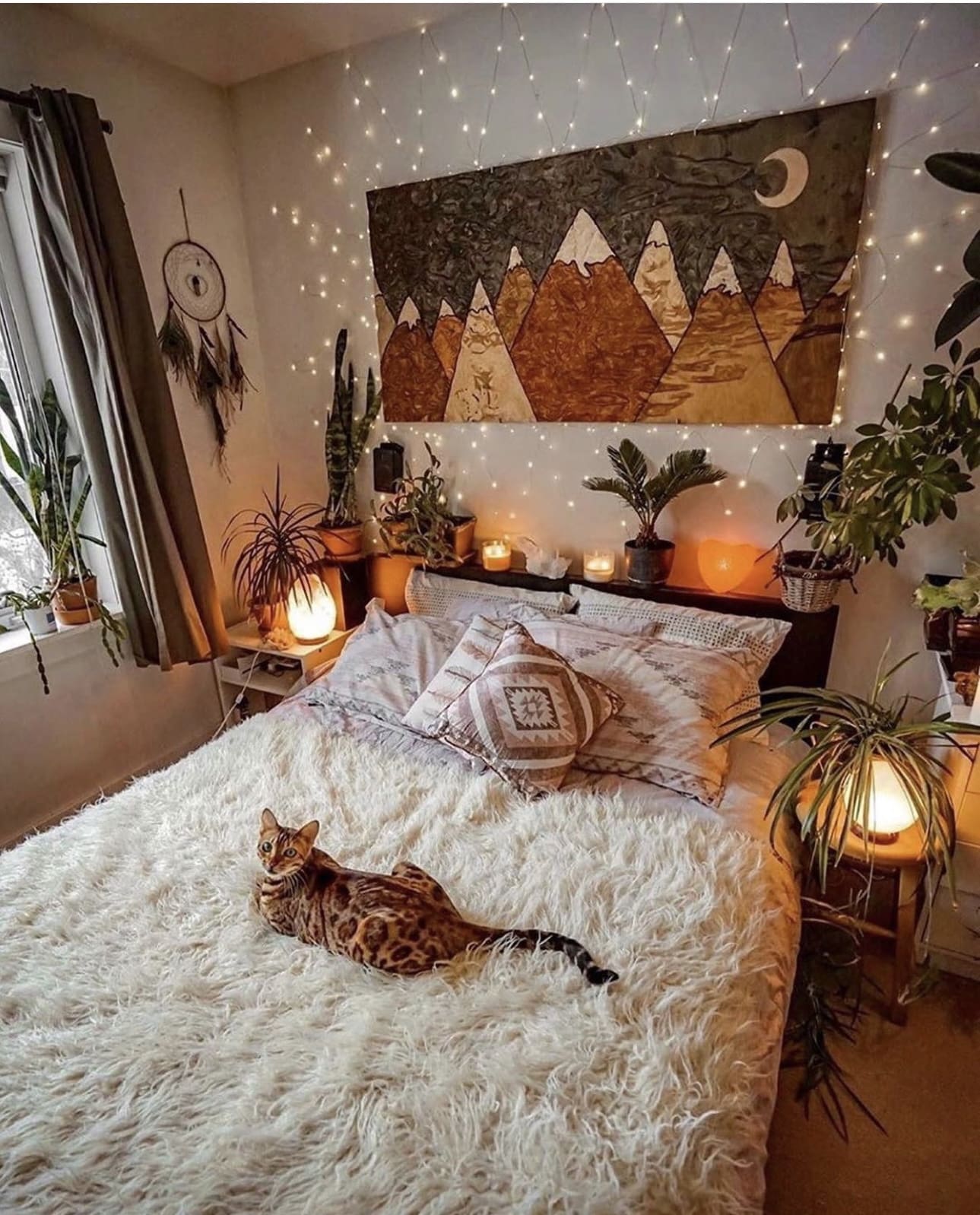
Incorporating string lights into your bedroom creates a gentle, inviting ambiance that instantly soothes the senses. Their delicate illumination is ideal for crafting a peaceful environment where you can relax and recharge after a busy day. These versatile lights also add a whimsical touch that complements any decor style.
Key Design Elements
Drape string lights along the headboard or curtain rods to frame your bed with a cozy glow.
Combine warm white bulbs with sheer fabrics to enhance the soft, dreamy effect in your space.
Use battery-operated string lights for easy placement without worrying about outlets or cords.
Pro Tip: Opt for dimmable string lights so you can adjust the brightness to suit your mood and time of day.
12. Embrace the Glow: Creating Cozy Ambiance with Gentle Lighting
Incorporating gentle, warm lighting into your bedroom design transforms the space into a peaceful sanctuary perfect for unwinding. Utilizing fixtures like table lamps or subtle wall lights can soften the overall mood and invite comfort after a long day. This kind of illumination helps ease the mind and prepares you for rest.
Key Design Elements
Choose lamps with warm-toned bulbs to cast a comforting hue throughout the room.
Position lighting sources near your bed for easy access and a calming effect before sleep.
Use dimmer switches to adjust brightness levels according to your mood and needs.
Pro Tip: Opt for LED bulbs with adjustable color temperatures to seamlessly transition from bright task lighting to soothing amber tones.
13. Enhancing Space with Strategic Mirror Placement
Incorporating mirrors into your bedroom design can dramatically enhance the feeling of spaciousness by bouncing light around the room. This clever trick works wonders in compact spaces, making them appear brighter and more open. Thoughtful mirror placement can transform even the coziest bedroom into a visually expansive retreat.
Key Design Elements
Position mirrors opposite windows to maximize natural light reflection.
Use large, full-length mirrors to add vertical depth and elongate walls.
Consider mirrored closet doors or furniture to seamlessly blend functionality with style.
Pro Tip: Mount a round or oddly shaped mirror above your headboard to create a focal point that visually expands the room.
14. Creating Depth with Cozy Bedding Layers
Build a welcoming and plush bed by artfully stacking different textures and fabrics. Mixing sheets, comforters, and accent throws not only adds visual interest but also invites relaxation and warmth. This approach transforms your bed into a stylish sanctuary that’s perfect for lounging or sleeping.
Key Design Elements
Start with crisp, breathable sheets as your base layer for comfort and freshness.
Add a thick duvet or quilt to bring warmth and a sense of luxury.
Finish with a textured throw or blanket at the foot of the bed to introduce color and softness.
Pro Tip: Choose varying fabric weights and patterns within a cohesive color palette to create a layered look that’s both functional and aesthetically pleasing.
15. Cozy Up with a Soft Headboard
Incorporating a cushioned or tufted headboard transforms your bed into a relaxing nook, perfect for unwinding with a good book or your favorite show. This design not only adds a touch of luxury but also provides essential support when you’re sitting upright. It’s an easy way to boost both comfort and style in your bedroom.
Key Design Elements
Choose plush fabrics like velvet or linen for an inviting texture.
Consider a headboard with deep tufting to enhance softness and visual interest.
Opt for neutral tones to complement various bedding styles and colors.
Pro Tip: Install a headboard that extends slightly beyond the width of your mattress for extra armrest space when sitting up.
16. Embracing Earthy Textures for a Cozy Bedroom
Using natural elements like wood, rattan, and cotton can transform your bedroom into a serene retreat. These materials add a warm, inviting touch and create a soothing, grounded atmosphere. Their organic textures also bring depth and character to the room’s overall design.
Key Design Elements
Incorporate wooden furniture pieces such as bed frames or nightstands for a timeless feel.
Add rattan baskets or light fixtures to introduce a subtle bohemian flair.
Choose cotton bedding or curtains to keep the space soft, breathable, and comfortable.
Pro Tip: Mix and match different natural textures to create visual interest without overwhelming the space.
17. The Versatile Charm of a Compact Coffee Table
Incorporating a small coffee table into your bedroom design creates a multifunctional spot perfect for holding your favorite reads, cozy candles, or a quick snack. This simple addition transforms your space into a cozy sanctuary where everything you need is within arm’s reach, enhancing both comfort and style.
Key Design Elements
Choose a table with built-in storage to keep remotes or magazines neatly tucked away.
Opt for a surface material that complements your bedroom’s color palette and textures.
Use trays or decorative bowls on the table to organize smaller items and add visual interest.
Pro Tip: Place your coffee table near a seating area or at the foot of your bed to maximize its accessibility and functionality.
18. The Art of Piling on Plush Pillows
Transform your bedroom into a cozy retreat by layering an array of throw pillows in different sizes, shapes, and fabrics. This approach not only adds depth and visual interest but also invites you to sink into a space that feels both stylish and inviting. Mixing textures like velvet, linen, and knits can elevate the overall ambiance effortlessly.
Key Design Elements
Combine bold patterns with solid colors to create a balanced yet dynamic look.
Incorporate pillows with varying heights and thicknesses to enhance dimensionality.
Choose a consistent color palette to maintain harmony amidst the variety.
Pro Tip: Rotate your throw pillows seasonally to refresh your bedroom’s vibe without a full makeover.
19. Embrace Earthy Charm with Rattan Accents
Incorporating rattan pieces into your bedroom instantly brings a warm, organic vibe that enriches the space with tactile intrigue. From woven light fixtures to intricately crafted baskets, these elements introduce a subtle natural texture that complements various decor styles. Their lightweight yet sturdy nature makes rattan both a functional and stylish addition.
Key Design Elements
Choose rattan pendant lamps to cast soft, inviting shadows across the room.
Use rattan baskets for stylish storage that keeps clutter at bay while enhancing decor.
Incorporate rattan headboards or chairs to create a cozy, bohemian-inspired corner.
Pro Tip: Pair rattan decor with soft linens and greenery to amplify the tranquil, nature-inspired atmosphere.
20. Embrace Cozy Hues for a Relaxing Bedroom Atmosphere
Choosing warm tones for your bedroom walls creates a naturally inviting and soothing environment. These colors add depth and comfort, making the space feel like a personal retreat. Opting for gentle shades can transform your room into a cozy haven that encourages relaxation and rest.
Key Design Elements
Select earthy colors like terracotta, soft peach, or muted gold for a grounded feel.
Pair warm walls with neutral or complementary accents to maintain balance and avoid overwhelm.
Use matte or eggshell finishes to enhance the softness of warm tones without harsh reflections.
Pro Tip: Test paint samples on your walls during different times of the day to observe how natural light interacts with warm hues before committing.
21. Adding Your Unique Flair
Make your bedroom truly yours by surrounding yourself with items that bring comfort and joy. Whether it’s a stack of your favorite novels, a treasured memento from a special trip, or a cozy robe hung within easy reach, these elements create a space that feels warm and lived-in. Personal touches transform a room from generic to genuinely inviting.
Key Design Elements
Display a collection of books that inspire or relax you on a dedicated shelf or bedside table.
Incorporate meaningful objects, like souvenirs or family heirlooms, where you can easily see them.
Hang soft, inviting textiles such as robes or scarves on decorative hooks to add both function and charm.
Pro Tip: Rotate personal items seasonally to keep your space feeling fresh and reflective of different moods or memories.
22. Embrace Cozy Earth-Inspired Hues
Incorporating warm earth tones such as rich terracotta, deep browns, soft beiges, and muted olives can transform your bedroom into a tranquil retreat. These natural shades promote a sense of comfort and stability, making your space feel both welcoming and serene. By grounding your decor with these colors, you create an inviting environment perfect for relaxation.
Key Design Elements
Layer different textures in similar earthy shades to add depth and warmth without overwhelming the room.
Use natural materials like wooden furniture and woven fabrics to complement the earth-inspired palette.
Introduce greenery or plant elements to enhance the organic vibe and bring life to the space.
Pro Tip: Balance warmer hues with plenty of natural light to keep the room feeling bright and open rather than heavy.
23. Cozy Comfort: The Perfect Rug Beneath Your Bed
Laying a soft, inviting rug beneath your bed transforms the start of your day into a warm and comforting experience, especially when the floor feels chilly. It not only adds texture and style to your bedroom but also provides a gentle cushion for your feet as you rise. This simple addition can elevate both the look and feel of your personal space.
Key Design Elements
Choose a rug with a thick pile for maximum softness and warmth underfoot.
Opt for colors or patterns that complement your bedding and overall room decor.
Ensure the rug extends beyond your bed frame for easy access when getting in and out.
Pro Tip: Select a rug made from natural fibers like wool for durability and a cozy feel that lasts through all seasons.
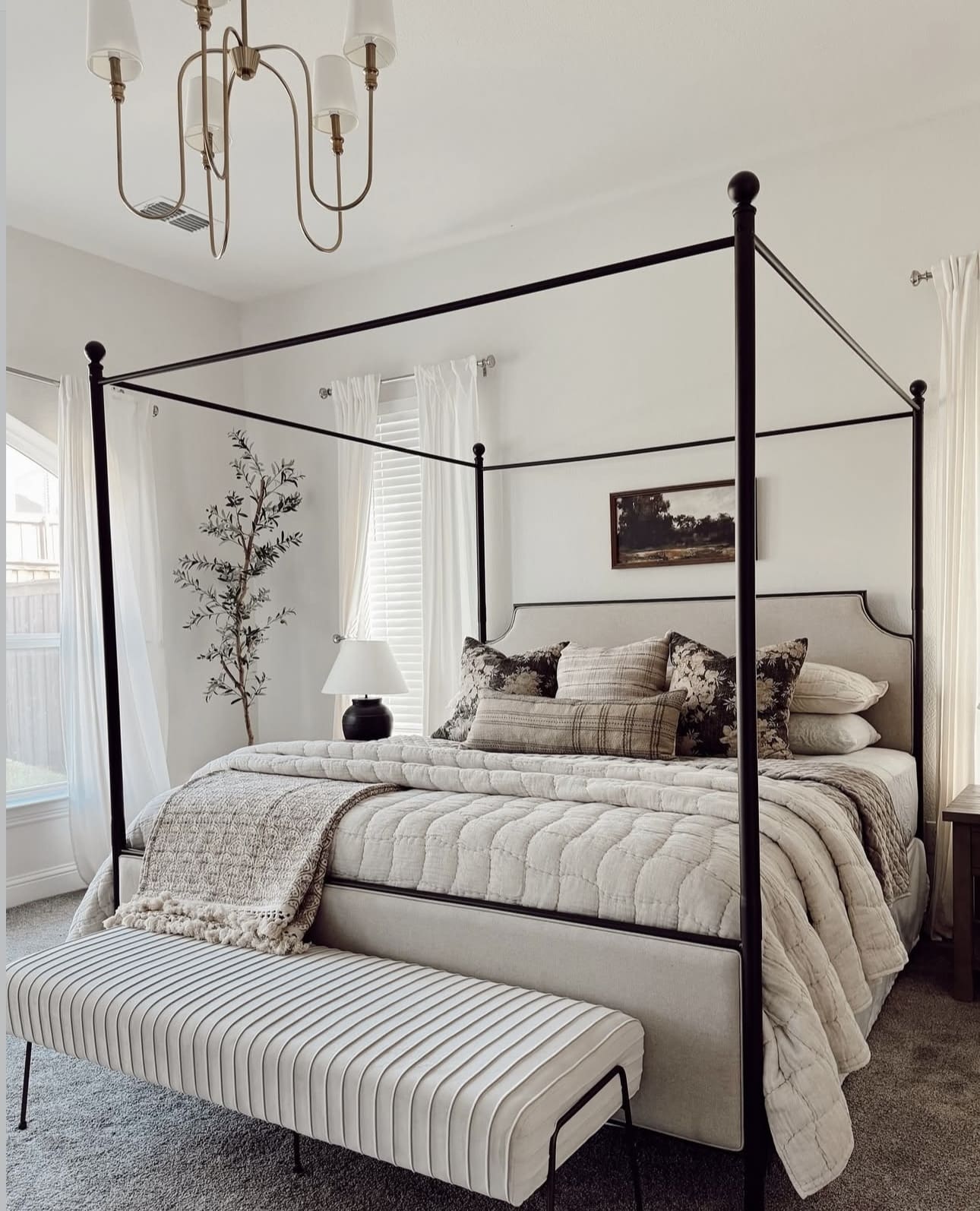
24. Creating a Serene Retreat with a Canopy Bed
Elevate your bedroom ambiance by incorporating a canopy structure that envelops your bed, adding both charm and comfort. Whether you opt for sleek metal frames or soft, flowing fabrics, a canopy can turn your sleeping space into a tranquil oasis. This design invites relaxation while making a bold style statement.
Key Design Elements
Choose lightweight, sheer curtains to maximize natural light while maintaining privacy.
Consider adding fairy lights or lanterns around the canopy for a warm, inviting glow.
Mix and match fabric textures and colors to complement your bedroom’s theme and add depth.
Pro Tip: Secure the canopy curtains with tiebacks to easily adjust light and airflow without sacrificing style.
Conclusion
Creating a cozy apartment bedroom is all about embracing warmth, comfort, and personal touches that make your space truly feel like a sanctuary. Whether it’s layering soft textiles, adding ambient lighting, or incorporating your favorite colors and decor, every small change can transform your bedroom into a restful retreat where you love to unwind. Don’t wait for the “perfect” moment to start—begin with one element that sparks joy and build from there. Your dream cozy bedroom is within reach, and the best part is making it uniquely yours. So gather your inspiration, trust your instincts, and let your creativity flow to craft a space that welcomes you home every day.
There’s something truly magical about a gallery wall—it has the power to transform a plain living room into a vibrant, personal space filled with stories and style. Whether it’s a mix of family photos, art prints, or quirky finds from your travels, a well-curated gallery wall brings warmth and character to your home like nothing else. But if you’ve ever tried to create one, you know it’s easier said than done. Figuring out the right arrangement, choosing frames that complement each other, or simply avoiding that awkward “too cluttered” look can quickly turn what should be a fun project into a frustrating challenge.
That’s where this post comes in. We’ll explore a variety of living room gallery wall ideas designed to inspire and guide you, whether you’re a minimalist or someone who loves an eclectic vibe. From layout tips to color coordination and even how to mix different art styles, we’ll help you find the right look that feels uniquely yours. By the end, you’ll not only feel confident hanging your pieces but also excited to show off a gallery wall that truly transforms your living space into a warm, inviting haven.
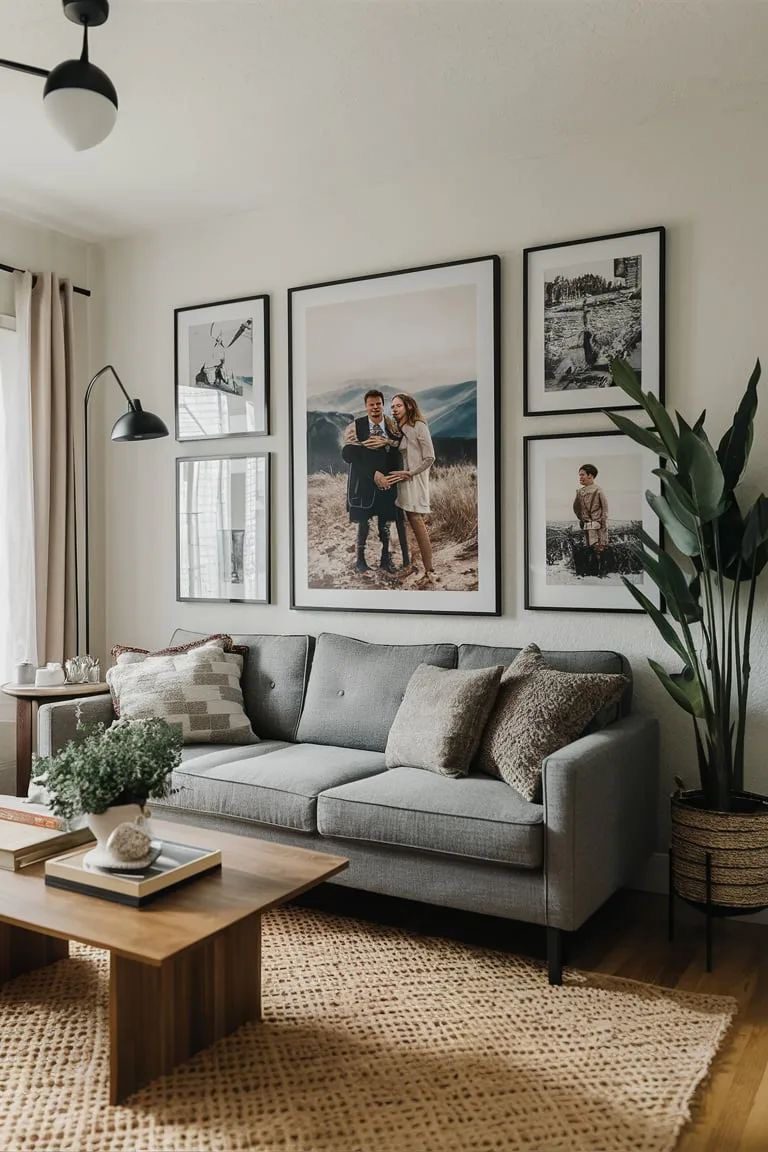
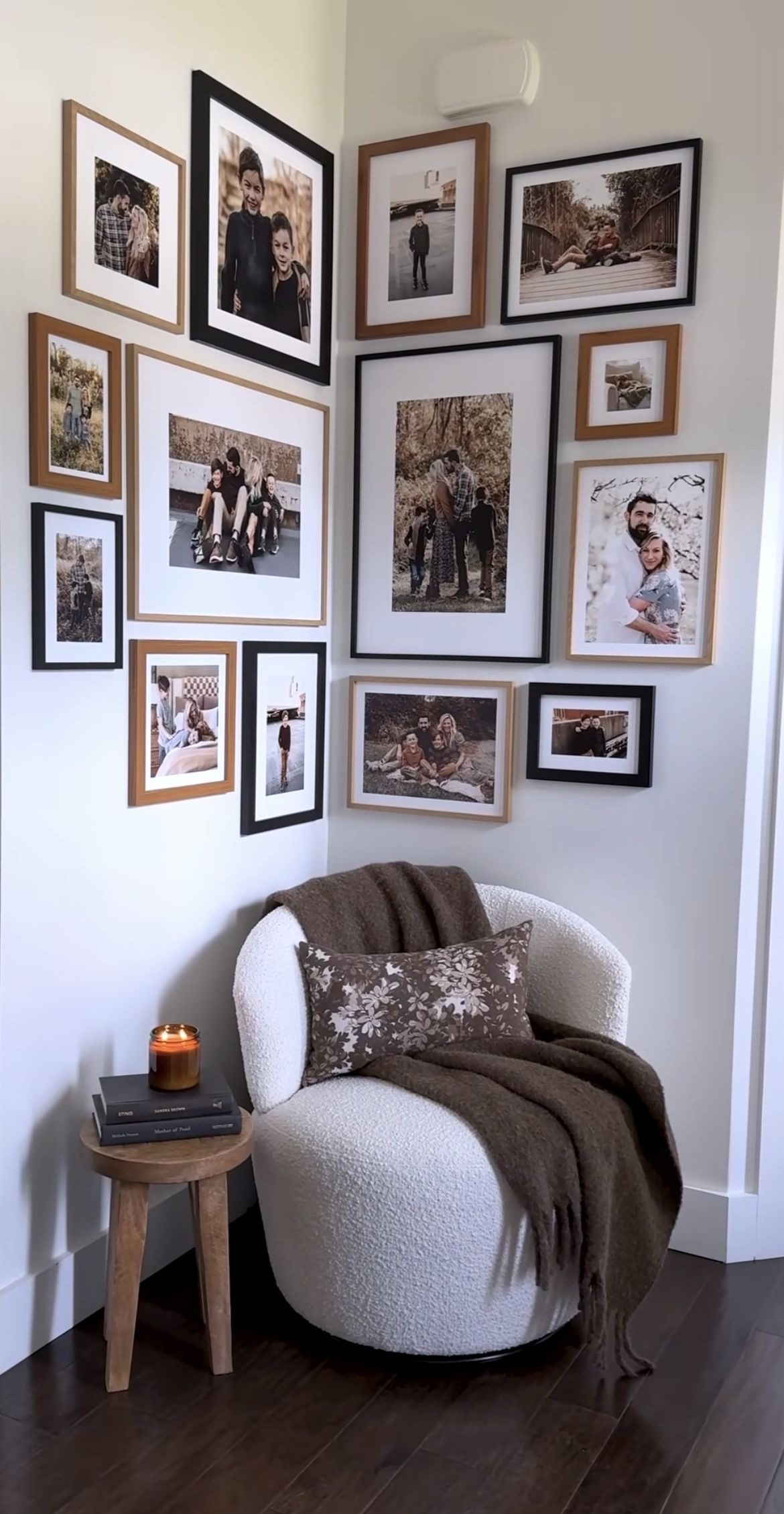
1. How to Create a Harmonious Gallery Wall with Varied Frame Sizes
Combining different frame sizes can add personality and charm to your gallery wall, but maintaining even spacing keeps the overall look cohesive and inviting. This approach strikes a perfect balance—casual enough to feel effortless, yet thoughtfully arranged to showcase your style. It’s ideal for those who want a curated display that feels warm and approachable, rather than rigid or overly structured.
Key Design Elements
Choose frames in various sizes but stick to uniform spacing between each piece to create visual harmony.
Mix and match frame styles and colors to add depth, but keep the arrangement balanced by centering larger frames among smaller ones.
Lay out your gallery wall on the floor first to experiment with the arrangement before hanging anything.
Pro Tip: Use painter’s tape or paper templates on the wall to map out your design and maintain consistent spacing effortlessly.
2. Achieving Harmony with a Symmetrical Gallery Wall
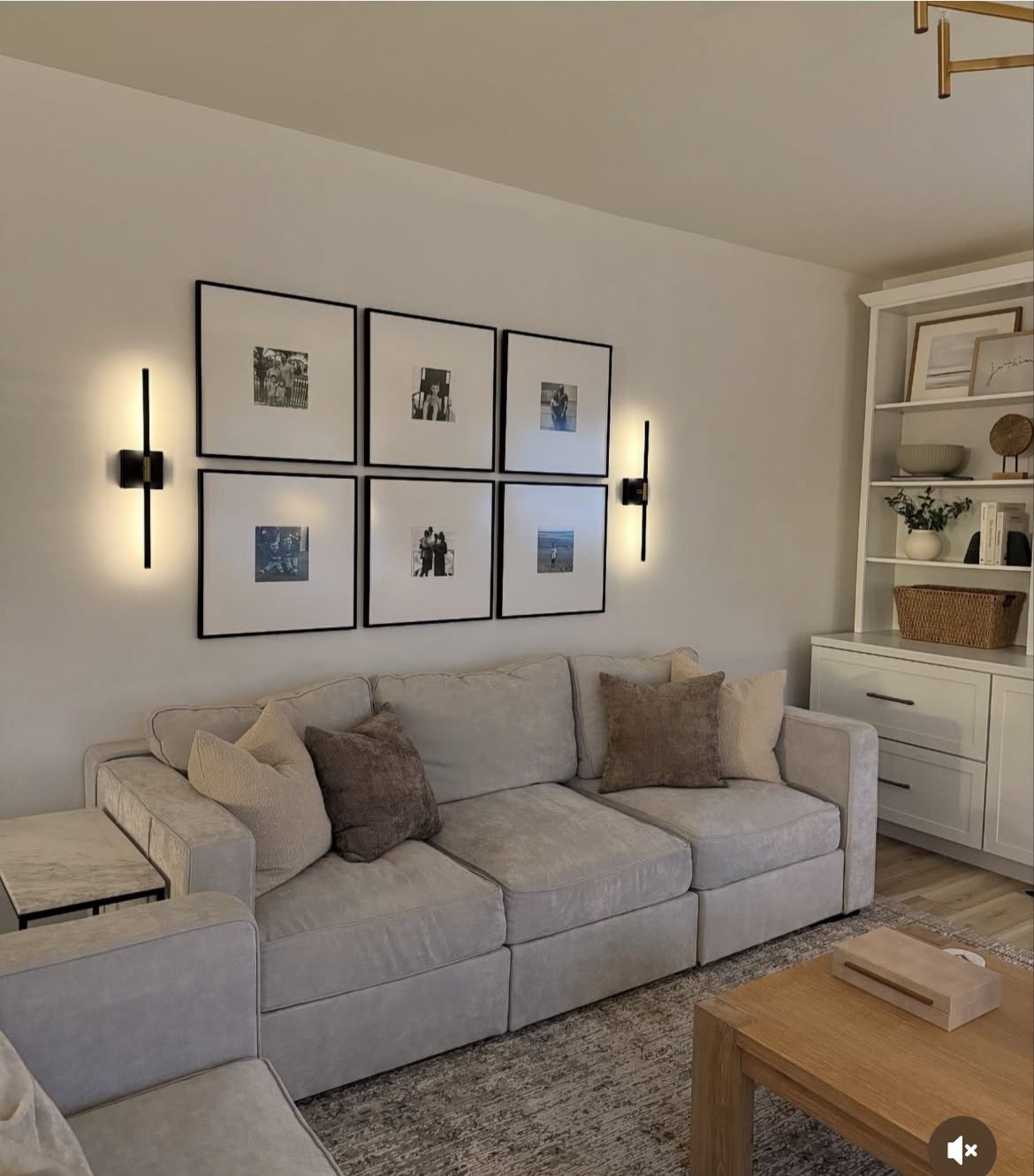
Creating a gallery wall with perfectly balanced arrangements brings a sense of order and sophistication to any room. When each frame is thoughtfully aligned, the space feels intentional and inviting, making it ideal for those who appreciate a neat and cohesive look. This method offers a timeless style that effortlessly enhances your décor without overwhelming it.
Key Design Elements
Arrange frames in matching pairs or evenly spaced grids to maintain visual balance.
Choose artwork or photos with a consistent color scheme or theme to unify the display.
Measure and mark your wall carefully before hanging to ensure perfect alignment.
Pro Tip: Use a level and painter’s tape to map out your layout beforehand, so your gallery wall stays perfectly straight and polished.
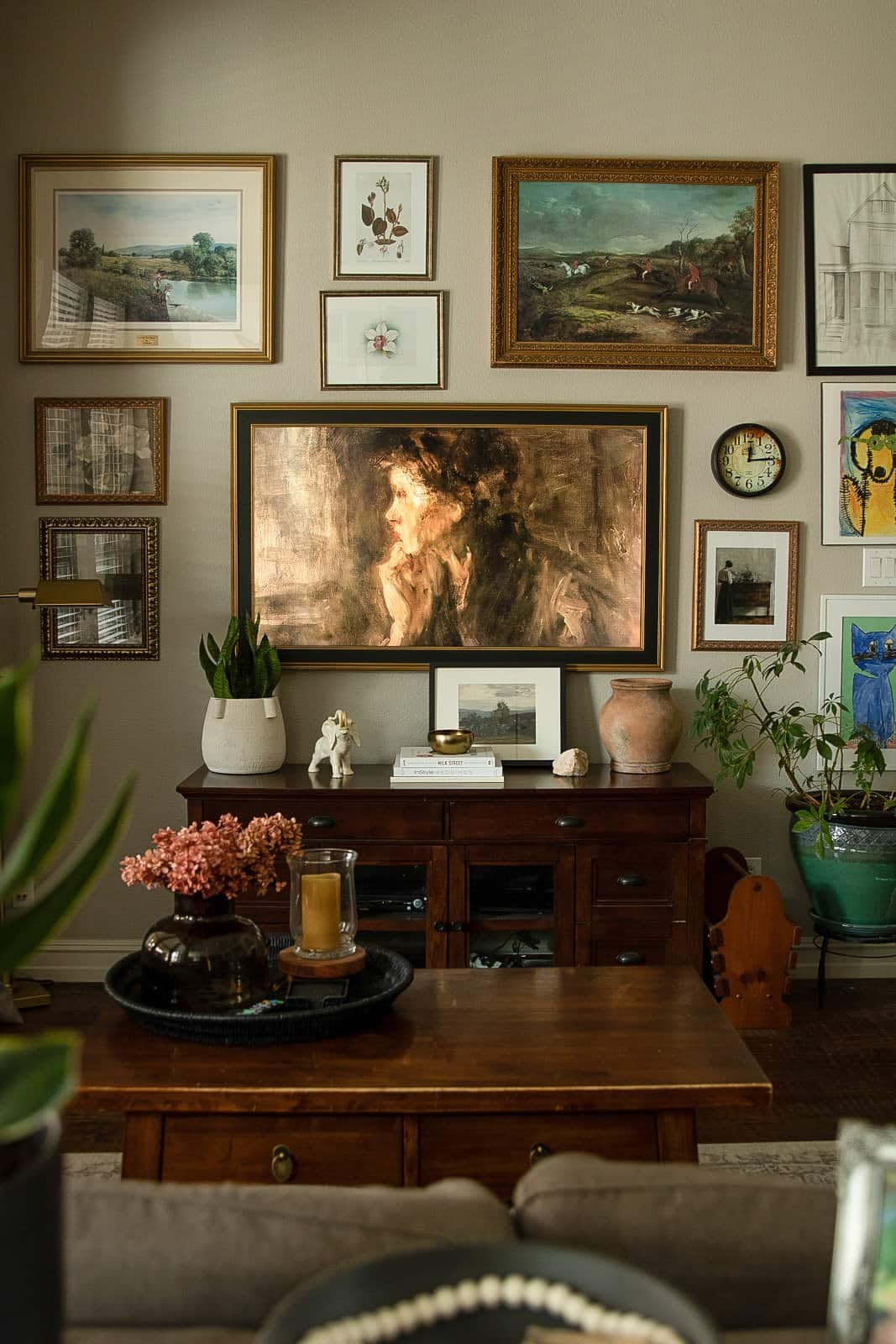
3. How to Use a Bold Centerpiece to Unite Your Gallery Wall
Choosing a standout artwork as the focal point of your gallery wall instantly brings harmony to your display. This central piece draws attention and creates a natural balance, making the surrounding artworks feel thoughtfully curated instead of scattered. It’s a simple trick to prevent your wall from looking chaotic and to add a touch of intentional style.
Key Design Elements
Select one larger or more vibrant piece as the centerpiece to anchor the arrangement.
Arrange smaller artworks around it, ensuring they complement the central piece’s colors and themes.
Keep spacing consistent to maintain a cohesive and polished look.
Pro Tip: Opt for a central artwork with a unique frame or texture to add depth and emphasize its role as the gallery’s anchor.
4. Creating a Thoughtful Gallery Wall Like a True Art Enthusiast
Designing a gallery wall with intention transforms your space into a personal art showcase. Instead of tossing up random pieces, carefully select each artwork to tell a cohesive story, allowing each frame to shine without feeling crowded. This approach works beautifully when the art takes center stage, with your room’s other elements playing a subtle supporting role.
Key Design Elements
Choose artwork that resonates with you and complements one another for a harmonious look.
Leave generous space between frames to give each piece its own spotlight.
Keep surrounding décor simple to ensure the art remains the room’s focal point.
Pro Tip: Opt for consistent framing or matting styles to unify diverse artworks while letting their uniqueness stand out.
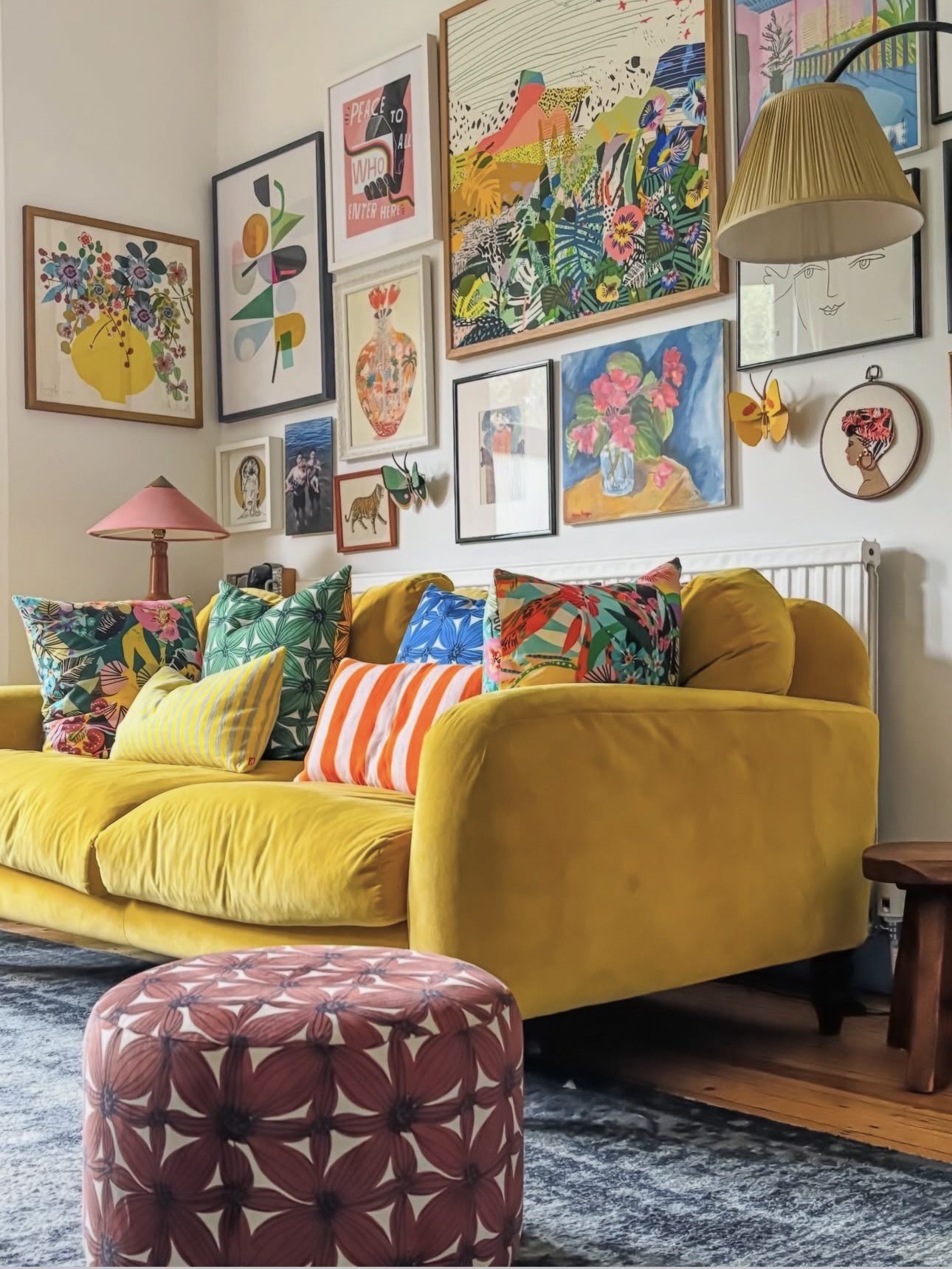
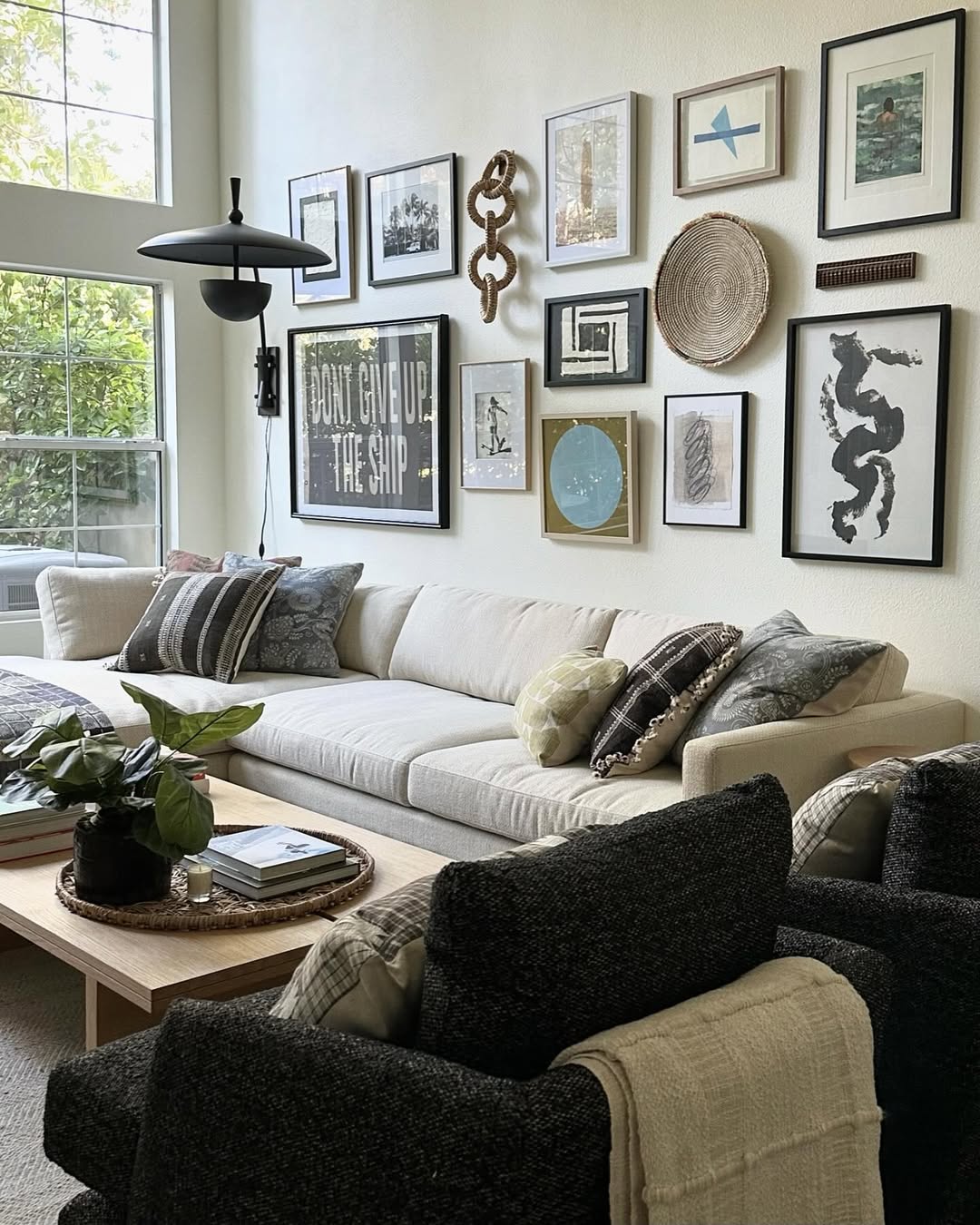
5. Create a Striking Modern Art Wall That Packs a Punch
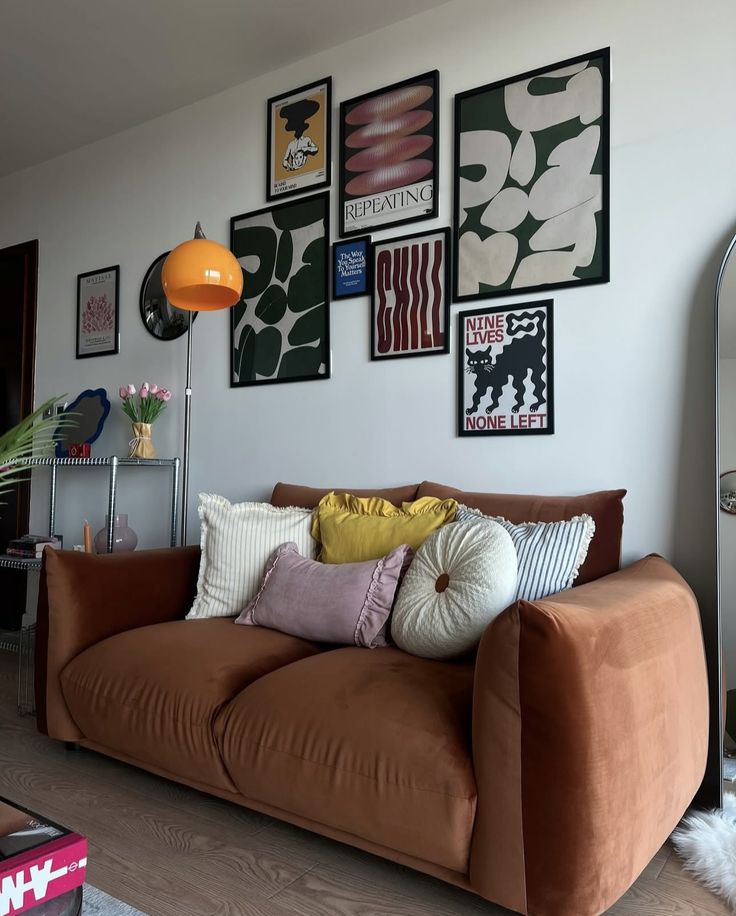
Transform a small corner into a captivating focal point by arranging a collection of vibrant, graphic art pieces. Combining abstract designs, dynamic typography, and a cohesive color scheme brings a polished, gallery-inspired vibe to your space. This approach adds flair without overwhelming the room, making every glance feel intentional and stylish.
Key Design Elements
Choose artwork with bold shapes and contrasting colors to make a strong visual statement.
Stick to a consistent color palette across pieces for a balanced and harmonious look.
Arrange prints closely together to maximize impact within a limited space.
Pro Tip: Use matching frames or mats to unify diverse prints and elevate the overall aesthetic.
6. Create a Chic and Serene Minimalist Shelf Display
Embracing a minimalist approach to shelf styling can transform your space into a tranquil haven. By thoughtfully selecting just a handful of meaningful items, you avoid visual clutter and allow each piece to shine. This technique is perfect for smaller rooms or anyone who loves a clean, intentional aesthetic that feels both stylish and calming.
Key Design Elements
Choose a limited color palette to keep the look cohesive and soothing.
Incorporate a mix of textures like ceramics, wood, or glass for subtle depth.
Leave some open space to let your shelf breathe and maintain a balanced feel.
Pro Tip: Rotate items seasonally to refresh your shelf’s vibe without adding clutter.
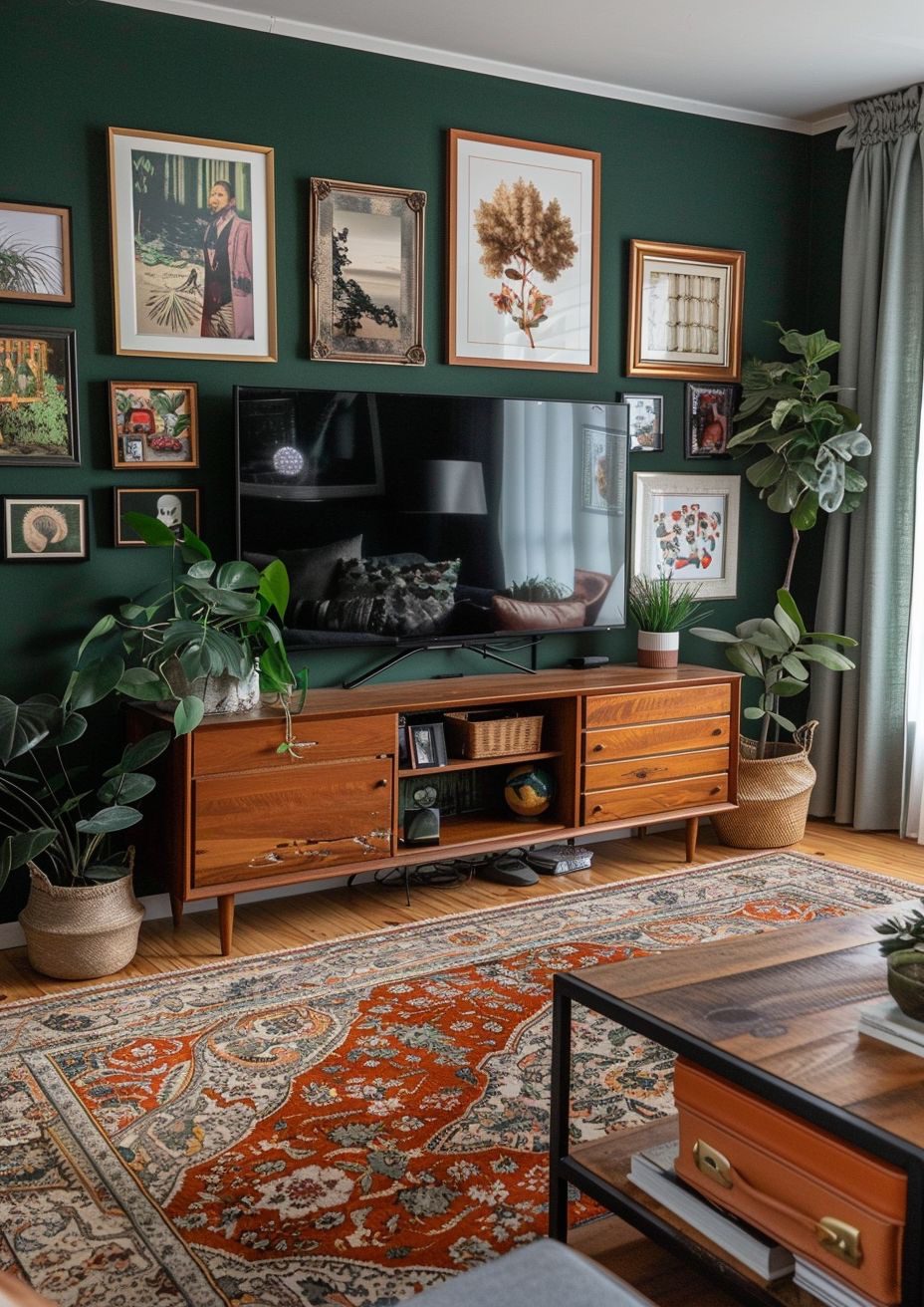
7. Vibrant Eclectic Art Walls: Bringing Your Personality to Life
Combining a variety of colorful prints and artwork breathes instant energy into any room. This approach lets your personality shine through by showcasing pieces that resonate with you, rather than forcing everything to match perfectly. Perfect for neutral furniture settings, an eclectic gallery wall becomes the star of the room, creating a relaxed, authentic vibe that feels effortlessly curated.
Key Design Elements
Choose artwork that speaks to your personal tastes, even if they differ in style or color.
Use a mix of frame styles and sizes to add depth and visual interest without feeling chaotic.
Balance bold pieces with more subtle art to keep the wall lively yet harmonious.
Pro Tip: Anchor your eclectic gallery wall with a common element, like a color or theme, to unify the collection without losing its lively charm.
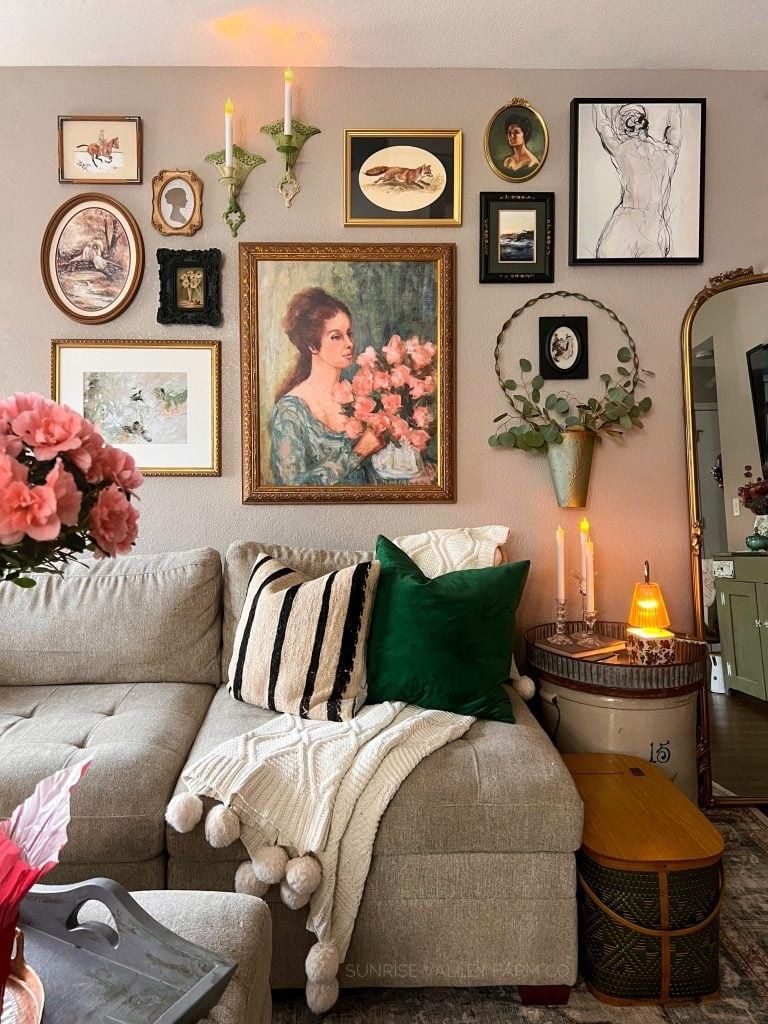
8. Creating a Cozy Vintage Gallery Nook with Gentle Hues
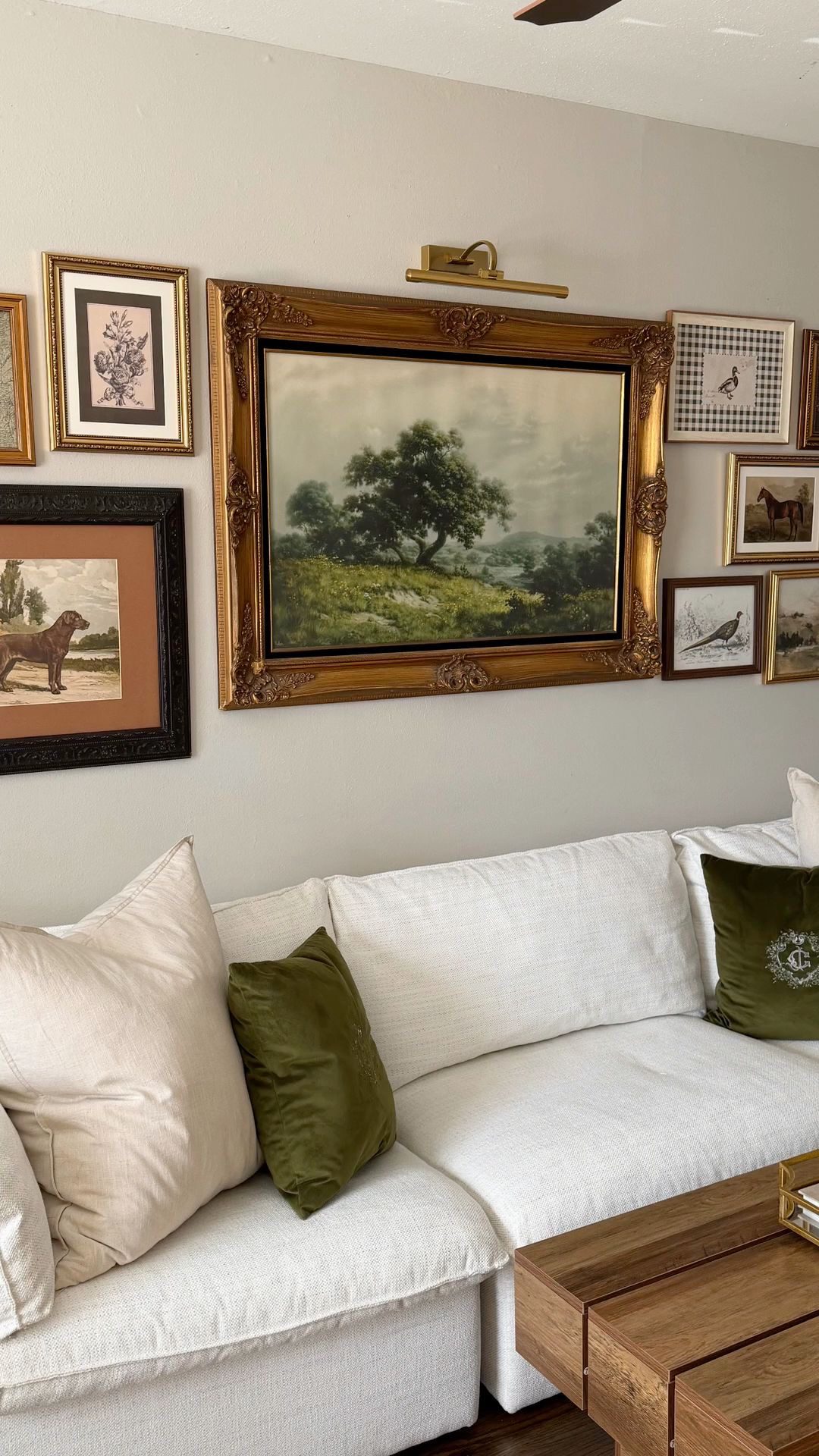
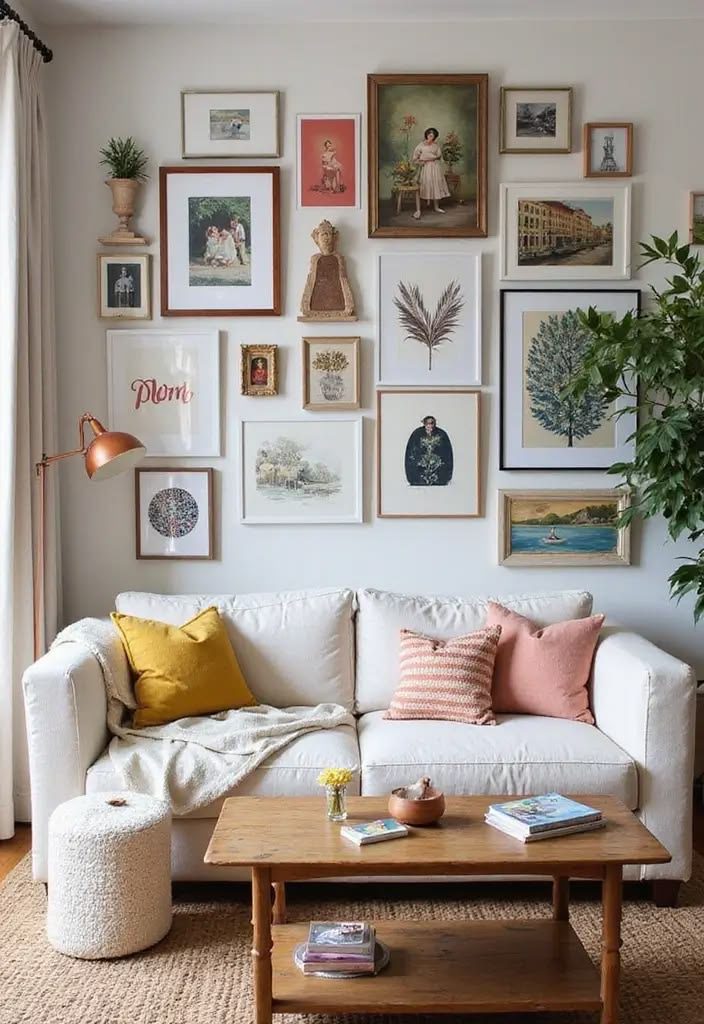
Embrace the charm of soft, muted colors combined with timeless vintage artwork to craft a warm and inviting gallery corner. This style avoids harsh lines and modern starkness, offering a relaxed, lived-in vibe that feels both personal and welcoming. It’s perfect for those who love spaces that tell a story through layered textures and carefully curated pieces.
Key Design Elements
Choose artwork with subtle, nostalgic themes and pair them with frames in soft, weathered finishes.
Incorporate warm, muted wall colors like blush, cream, or light gray to enhance the cozy atmosphere.
Mix different frame sizes and shapes to add visual interest without overwhelming the space.
Pro Tip: Balance vintage pieces with soft textiles like linen or velvet nearby to deepen the inviting, lived-in feel.
9. How to Create a Stunning Horizontal Gallery Wall Above Your Sofa
Extending a gallery wall along the entire length of your sofa instantly grounds your seating area and adds a sense of balance to the room. This approach not only broadens the visual space but also brings a cohesive, thoughtfully designed vibe to your living area. Aligning the artwork either by the top or bottom edges keeps the display neat and polished, while maintaining a relaxed, inviting atmosphere.
Key Design Elements
Arrange your frames in a single horizontal line to create harmony and flow across the room.
Choose artwork or photos with complementary colors and themes for a unified look.
Leave consistent spacing between frames to avoid clutter and maintain visual ease.
Pro Tip: Use a level and painter’s tape to mark your frame placement on the wall before hanging for perfect alignment.
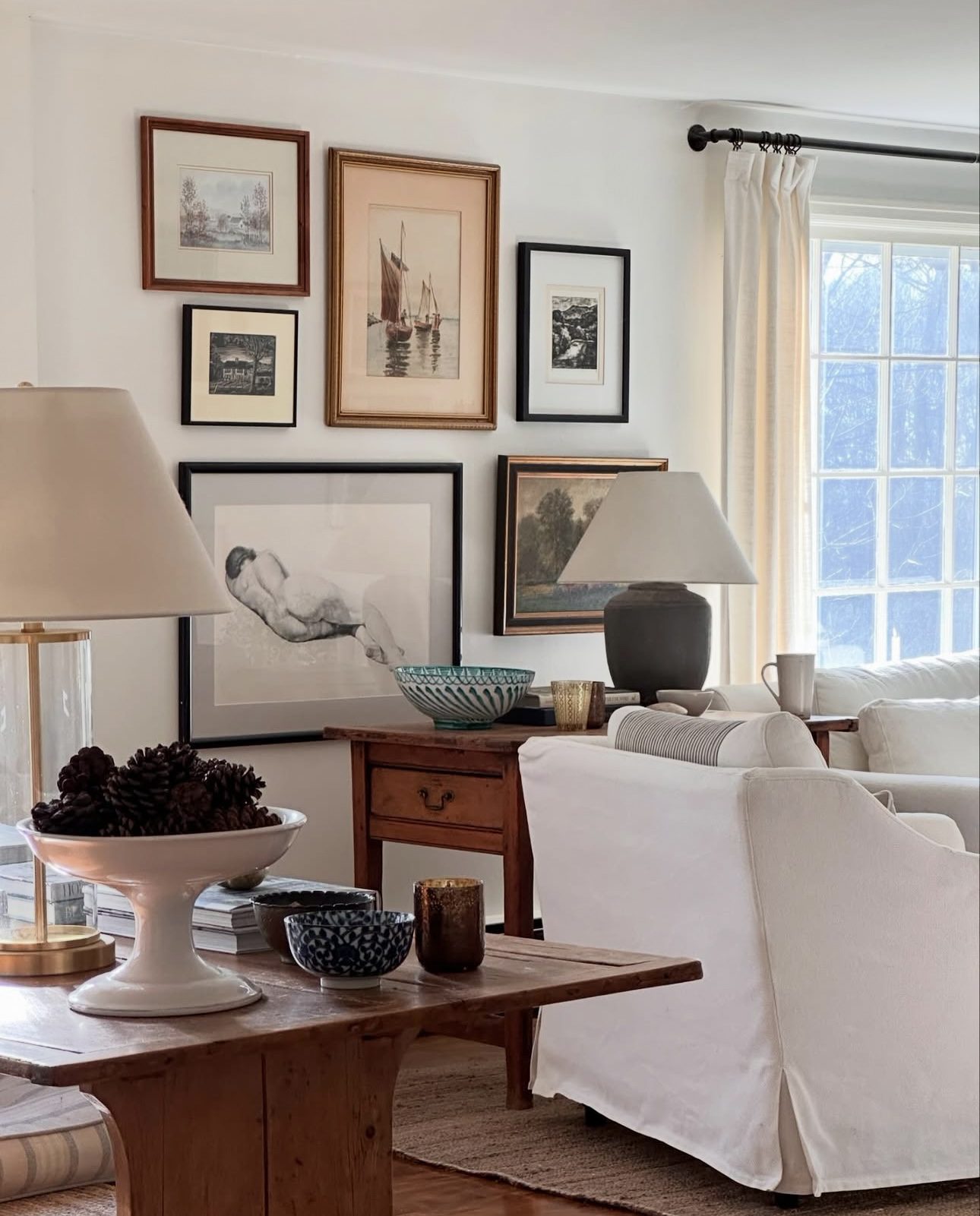
10. Create Cozy Wall Art Arrangements with Furniture Anchors
Placing a variety of frame sizes above key furniture pieces, like a console table or sideboard, brings harmony and warmth to your space. This approach ties your wall decor seamlessly into the room, preventing it from feeling disconnected. Mixing different frame dimensions adds dynamic interest, while the furniture below provides a natural anchor that balances the overall look without relying on rigid symmetry.
Key Design Elements
Use furniture as a visual base to group your artwork for a grounded, cohesive display.
Combine small and large frames to create a lively, textured gallery wall.
Avoid strict symmetry; embrace an organic layout that feels curated but relaxed.
Pro Tip: Start with a central frame above your furniture piece, then layer in smaller frames around it to build depth and flow.
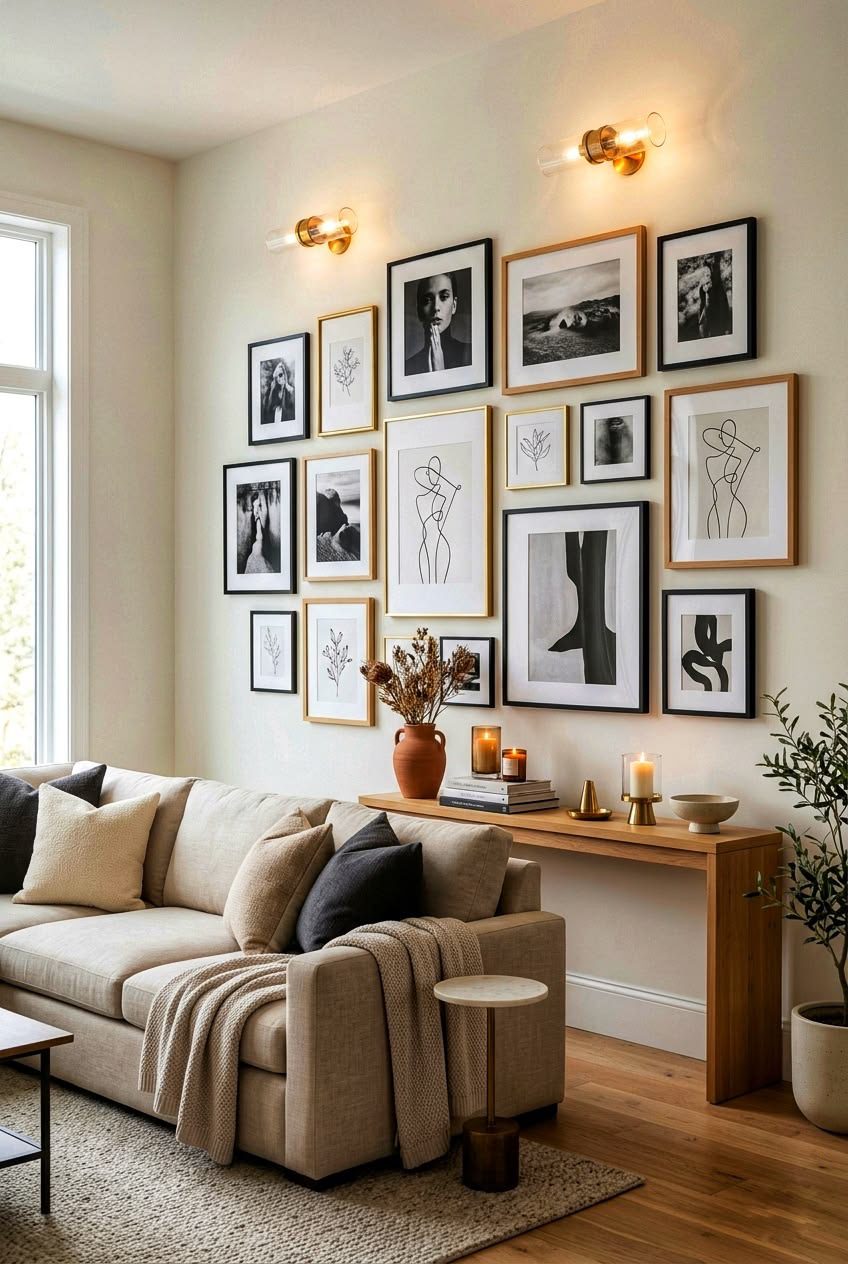
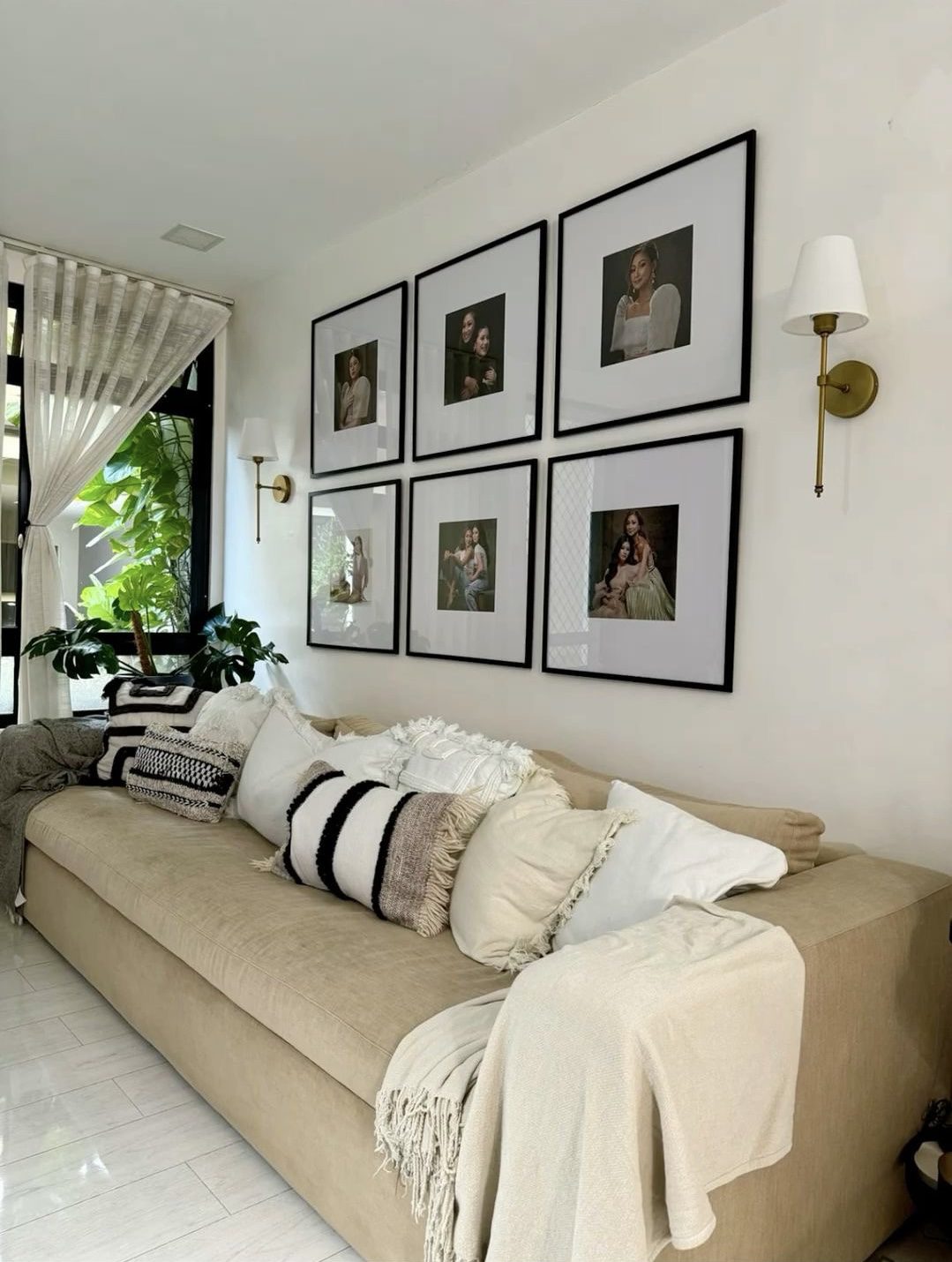
11. Creating a Chic Black and White Gallery Wall That Elevates Your Space
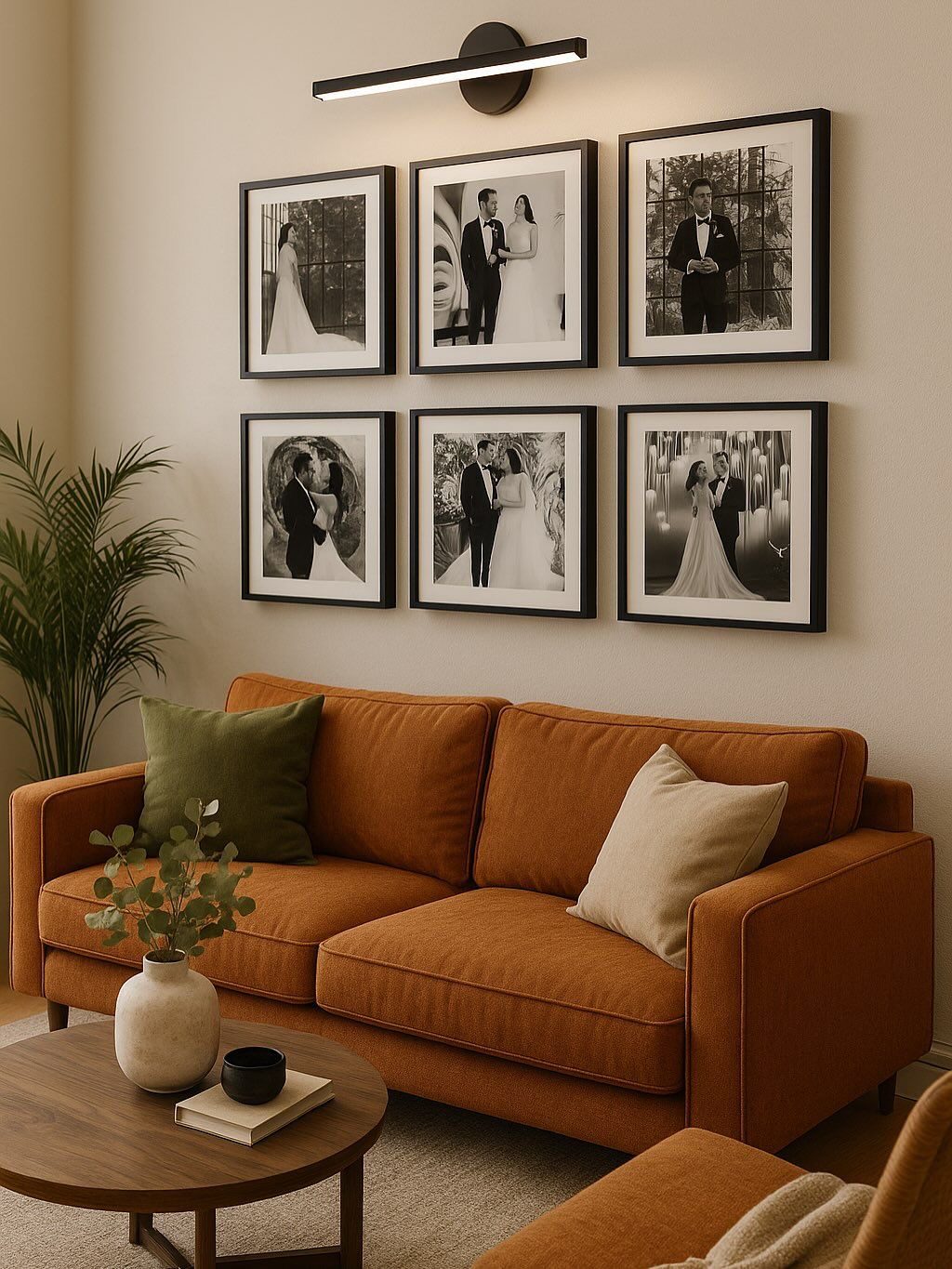
Using sleek black frames paired with minimalist prints instantly adds a polished, cohesive feel to any wall. This timeless combo effortlessly brings order and style, making your gallery look curated rather than cluttered. It’s a perfect choice for contemporary interiors seeking a clean, sophisticated edge.
Key Design Elements
Choose contrasting black frames and simple black-and-white artwork to maintain a unified look.
Arrange your pieces with consistent spacing to enhance the structured vibe.
Mix sizes thoughtfully, balancing larger and smaller prints for visual interest without chaos.
Pro Tip: Opt for matte black frames with white mats to add depth and keep your gallery wall feeling fresh and modern.
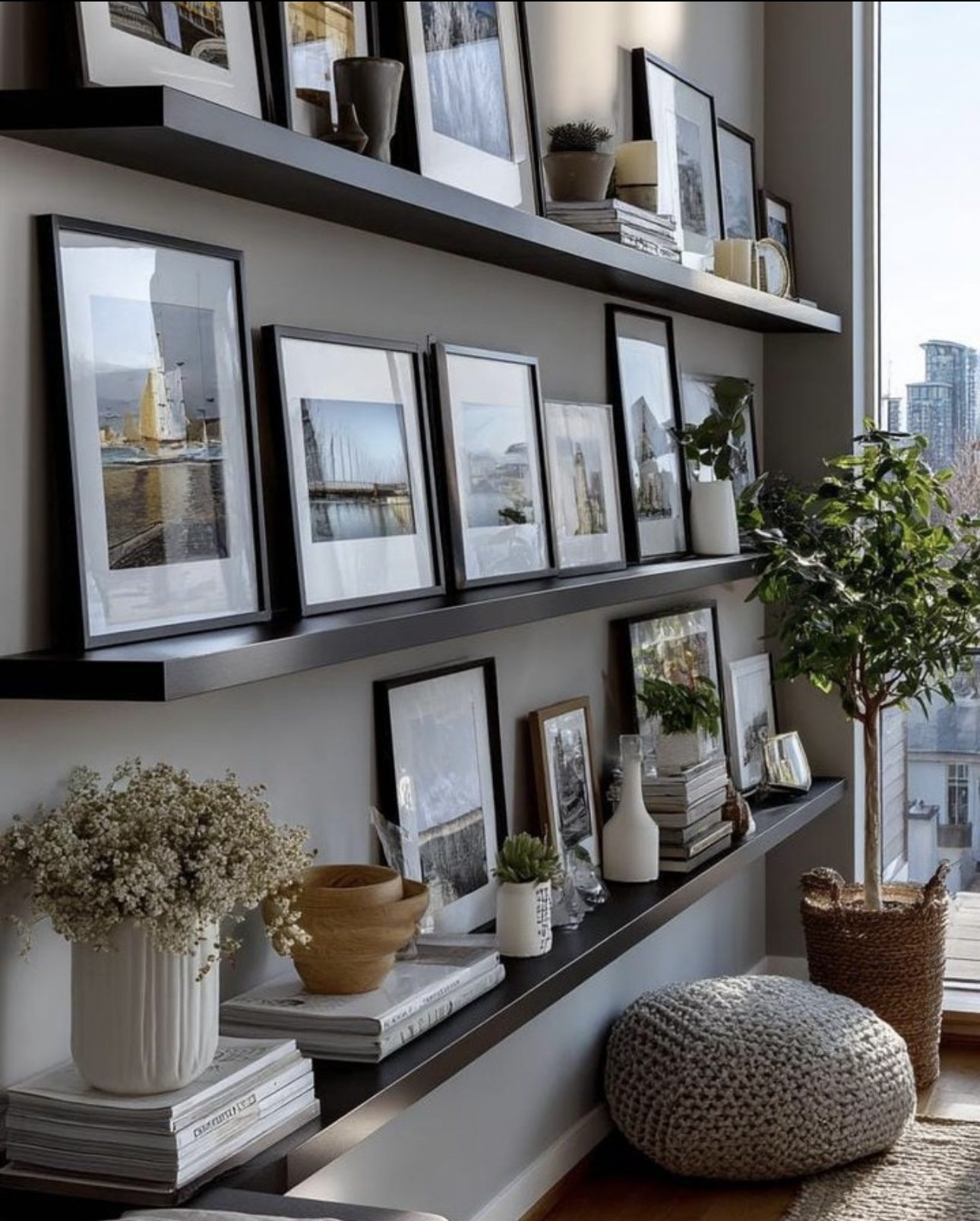
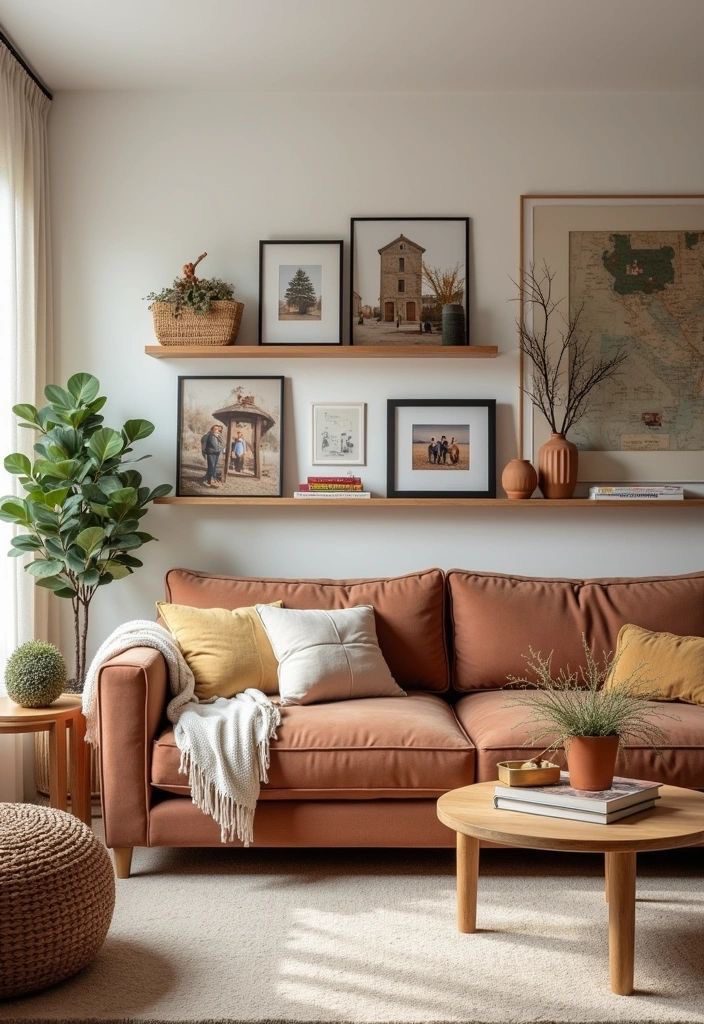
12. Create a Stylish and Flexible Gallery with Floating Shelves
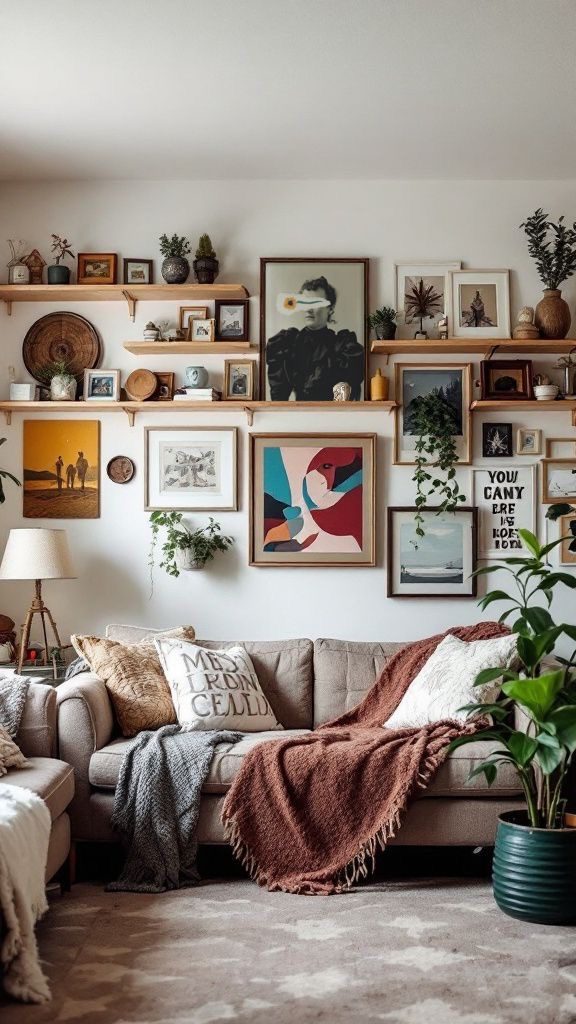
Floating shelves offer a dynamic way to showcase your favorite art and photos without the hassle of nails and hooks. They allow you to layer frames, lean artwork, and easily swap out pieces whenever inspiration strikes. This approach not only adds versatility but also brings a casual, inviting vibe to your space.
Key Design Elements
Mix and match frame sizes by leaning them on the shelf for a layered, dimensional look.
Overlap artwork slightly to create depth and a more curated feel.
Change your display seasonally or whenever you want a fresh update without patching walls.
Pro Tip: Use a variety of shelf lengths to add interest and accommodate different frame sizes effortlessly.
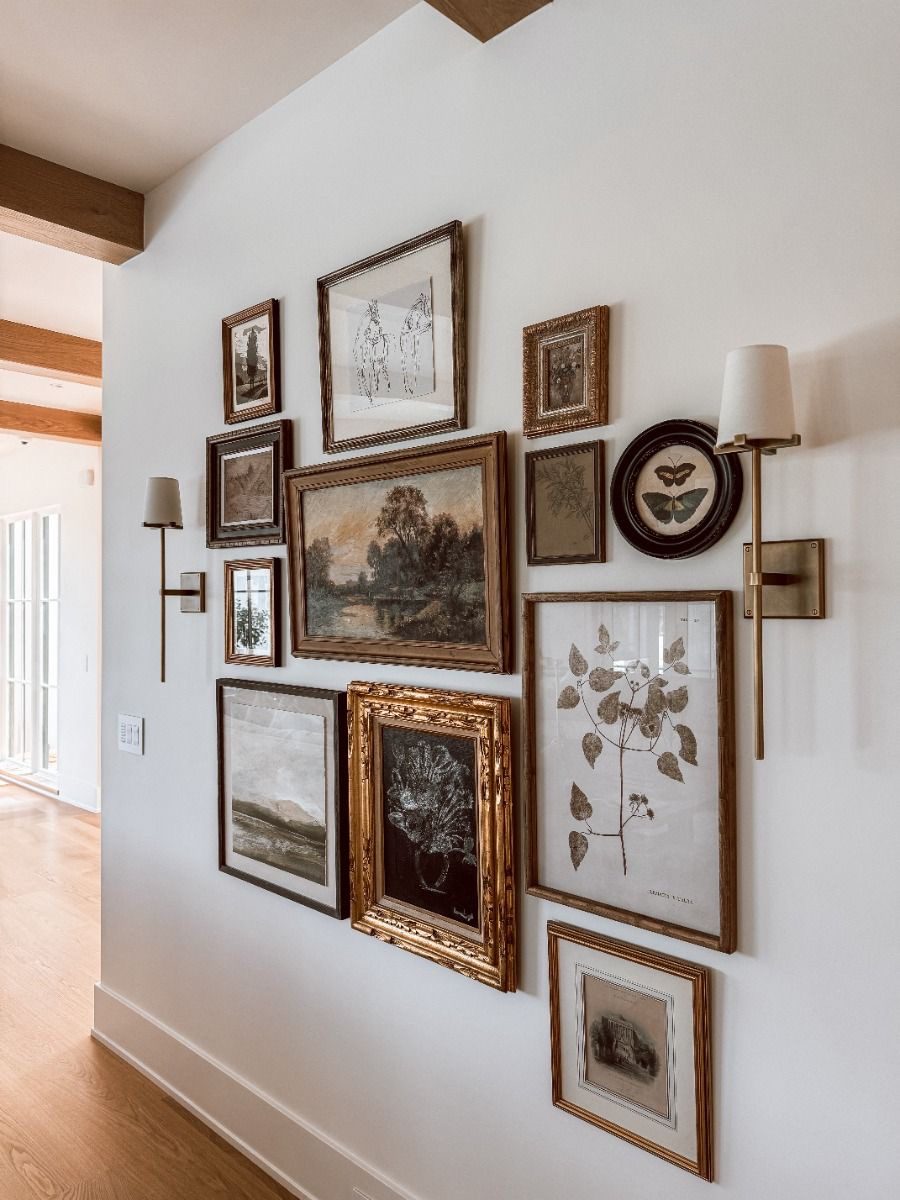
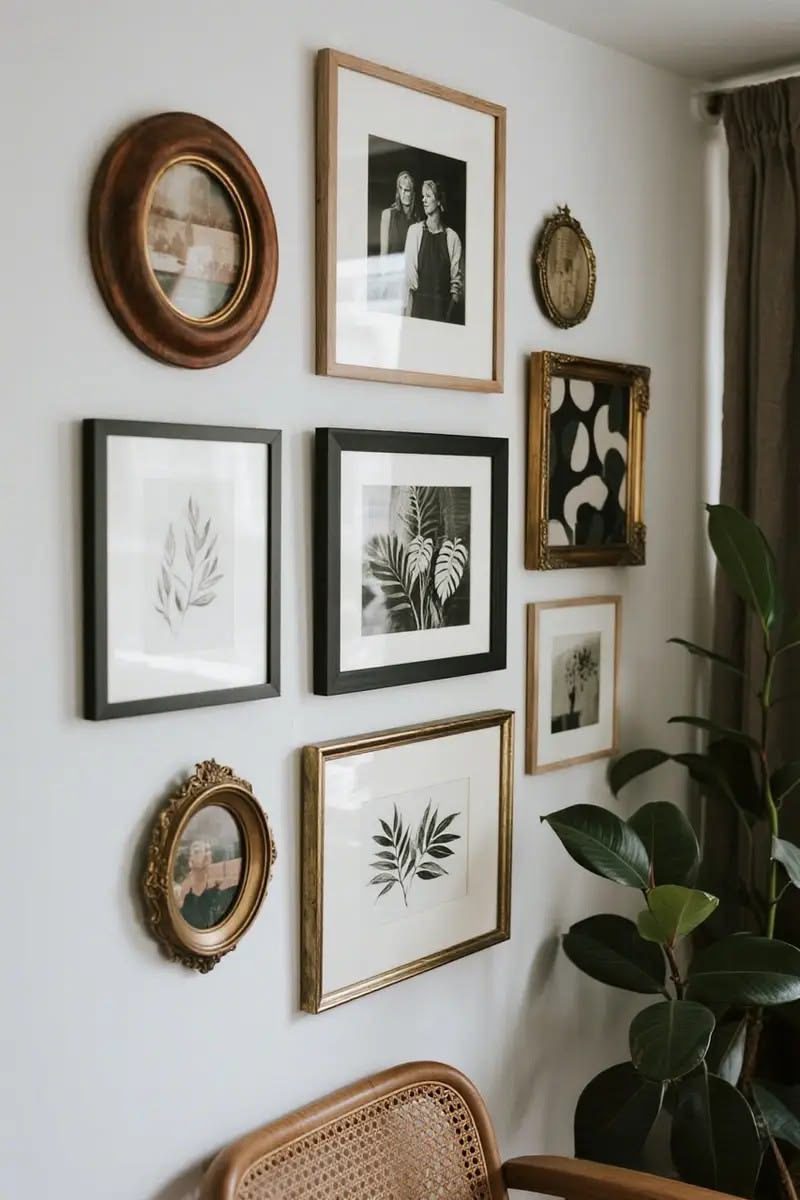
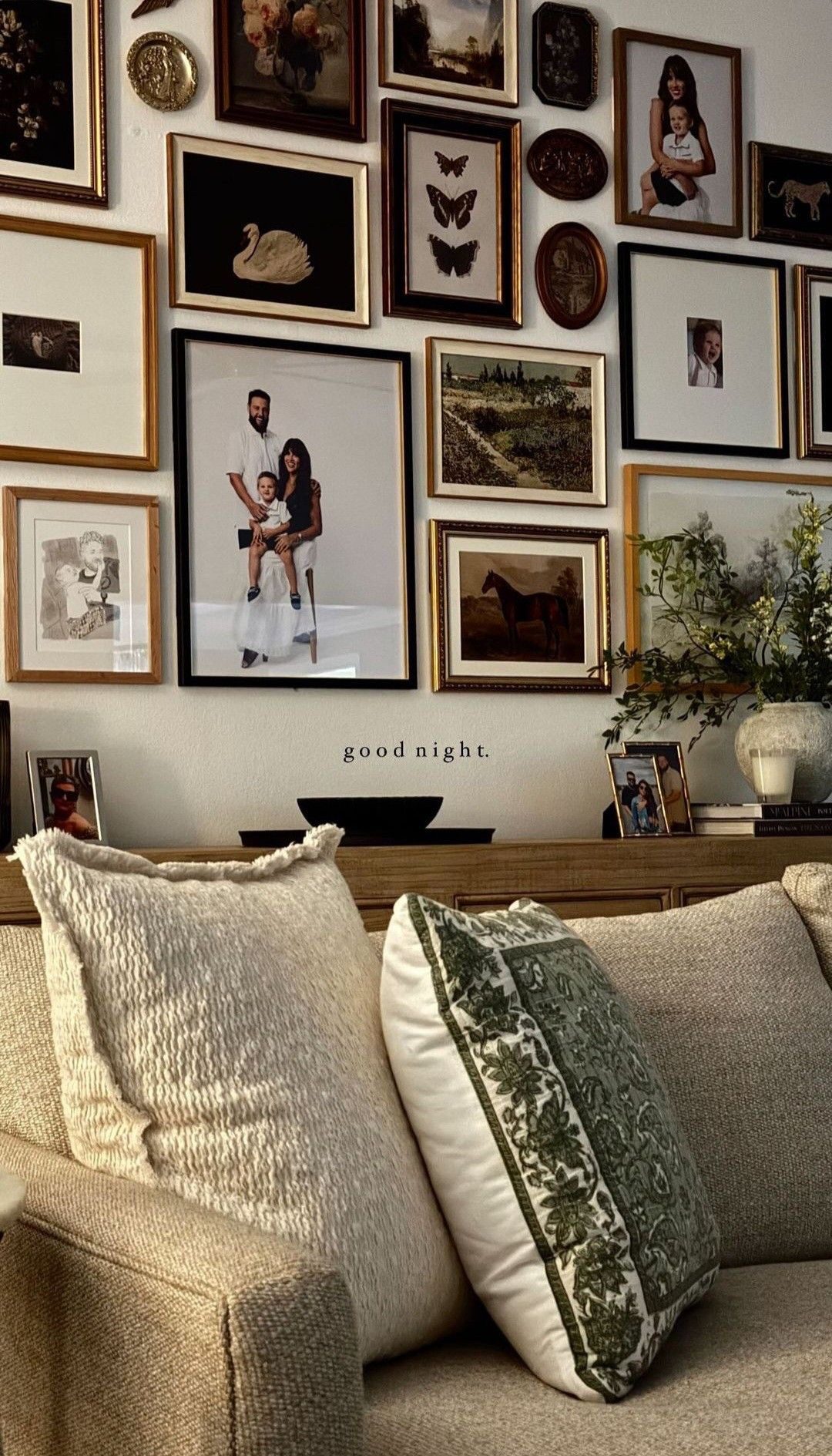
13. Create a Charming Vintage Gallery Wall That Tells Your Story
Crafting a gallery wall with an assortment of vintage-inspired frames brings a unique, well-loved vibe to your space. Mixing various frame sizes, textures, and artwork styles adds depth and personality, making your wall feel effortlessly curated rather than overly styled. Incorporate natural elements like greenery and warm wooden accents to balance the look, keeping it inviting and full of character without feeling cluttered or outdated.
Key Design Elements
Choose one standout piece as the centerpiece to anchor your gallery arrangement.
Mix frames with different finishes and sizes for an organic, collected-over-time feel.
Incorporate small plants or wooden elements nearby to add warmth and soften the overall look.
Pro Tip: Opt for artwork and frames that resonate with your personal history to make your gallery truly one-of-a-kind.
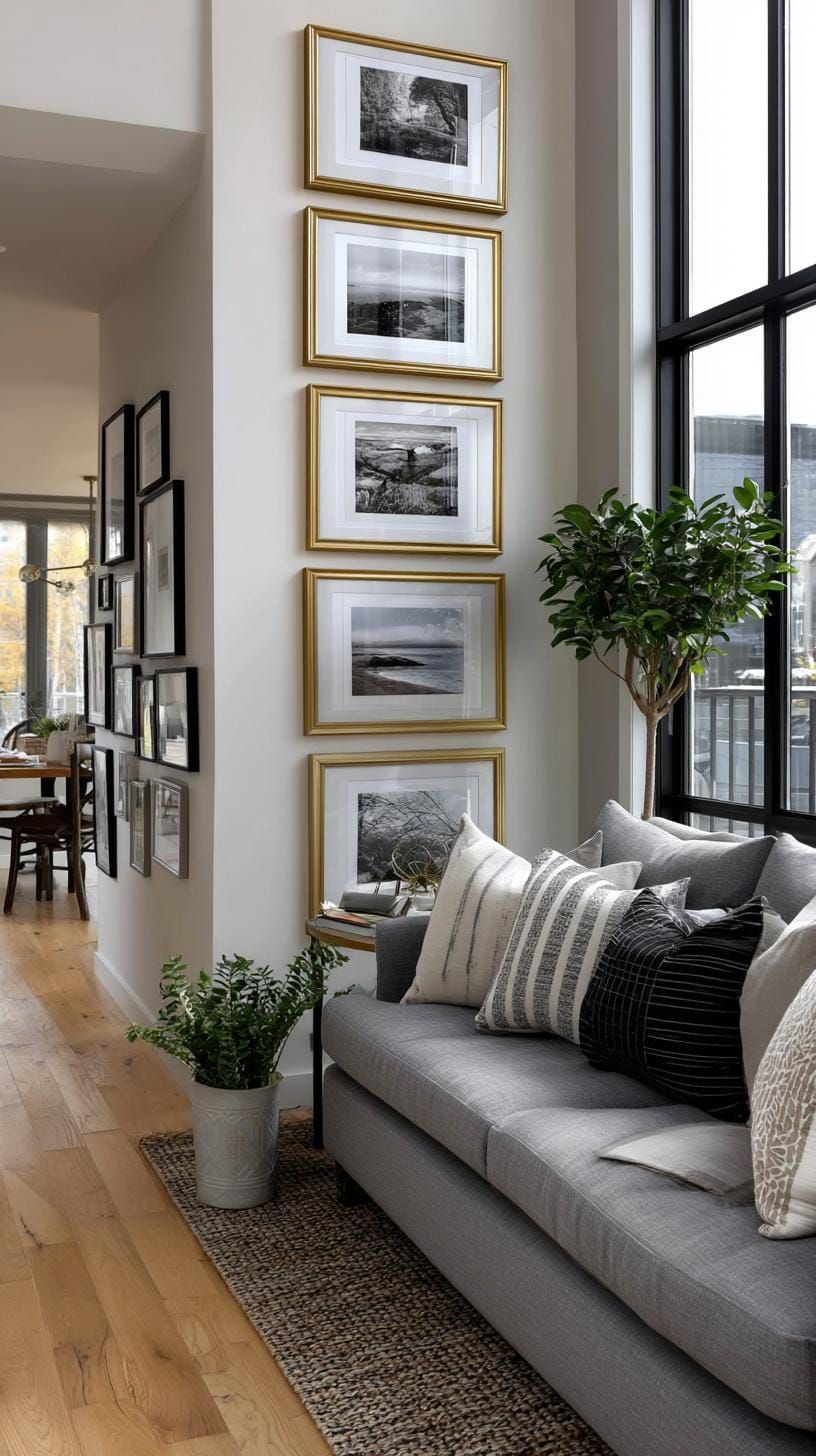
14. Maximize Your Window Nook with a Vertical Gallery Wall
Transform the often-overlooked space beside your window into a stunning focal point by arranging a vertical collection of framed art or photos. This approach not only utilizes that narrow spot efficiently but also naturally guides the eye upward, enhancing the room’s sense of height and harmony. It’s a simple yet impactful way to add personality and balance to your interior.
Key Design Elements
Choose frames of varying sizes but keep a consistent color palette to create visual interest without clutter.
Hang the frames close together vertically to emphasize height and fill the space gracefully.
Consider artwork or photos that resonate with natural light for a vibrant and inviting display.
Pro Tip: Use slim, lightweight frames to keep the look sleek and avoid overpowering the window’s natural charm.
15. How to Create a Vibrant Eclectic Gallery Wall That Tells Your Story
Embrace the beauty of variety by crafting a gallery wall that bursts with character and charm. Mixing diverse artwork, frames, and sizes brings depth and personality to your space. To keep it feeling cohesive, find a unifying element like a shared color palette or similar frame textures that ties everything together without losing its lively spirit.
Key Design Elements
Start with a common thread—choose a color scheme or frame style to maintain harmony.
Mix different art styles and sizes for visual interest and dynamic layering.
Arrange pieces in a way that balances density with breathing space to avoid overwhelm.
Pro Tip: Lay out your gallery wall on the floor first to experiment with arrangements before hanging.
16. How to Create a Striking Gallery Wall with Dark Backgrounds
Using a deep, rich color on one wall can transform your gallery display, making each frame pop beautifully. This approach adds a sophisticated layer of contrast and depth without relying on overpowering art pieces. It’s an easy yet effective trick to elevate your space with a touch of drama while maintaining harmony throughout your room.
Key Design Elements
Choose a dark paint shade that complements your frames and room’s palette for seamless integration.
Mix different frame styles and sizes to enhance visual interest against the moody backdrop.
Keep surrounding decor minimal to let the gallery wall truly shine as the focal point.
Pro Tip: Opt for matte-finish paint on the feature wall to reduce glare and let your artwork take center stage.
17. Creating a Cozy Neutral Gallery Wall with Textural Charm
Pairing neutral-toned art with a variety of gentle textures brings warmth and dimension to your walls without overwhelming the space. This approach strikes the perfect balance between sophistication and comfort, making your gallery feel inviting and well-curated. It’s ideal for those who want an elegant look that’s effortlessly livable day after day.
Key Design Elements
Mix different materials like linen, wood, and matte finishes to add subtle tactile interest.
Choose artwork in soft, muted shades to maintain a serene and unified vibe.
Arrange pieces with varying sizes and frames to create a dynamic yet harmonious display.
Pro Tip: Incorporate natural elements like woven baskets or textured ceramics nearby to enhance the layered effect and tie the room together.
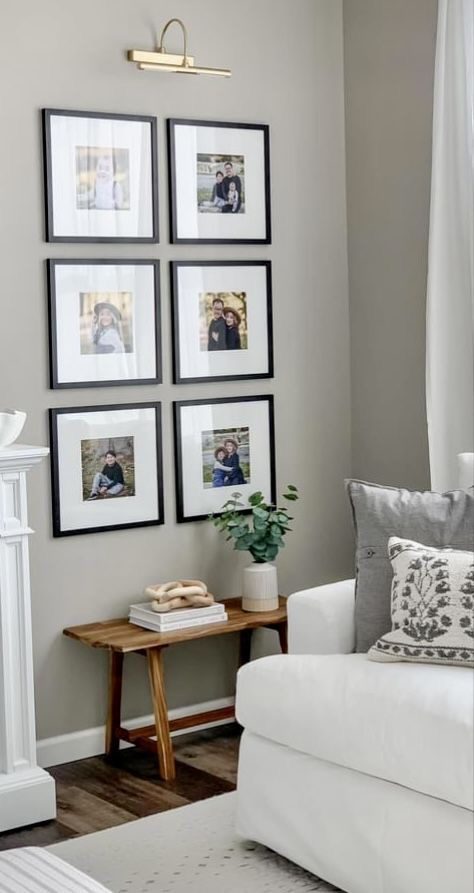
18. Effortless Elegance: Mastering the Clean Grid Wall Gallery
Transform your gallery wall into a harmonious display by embracing the clean grid layout. Using uniformly sized frames creates a seamless, balanced look that brings a sense of order and calm to any space. This approach is perfect for those who appreciate a tidy, refined aesthetic without the stress of complicated planning.
Key Design Elements
Choose frames of identical size and color to maintain a cohesive appearance.
Align edges carefully to create clear, consistent rows and columns.
Plan your layout on the floor first to visualize spacing before hanging.
Pro Tip: Use painter’s tape to mark grid lines on your wall for precise alignment and easy adjustments.
19. Create a Cozy Boho Gallery Wall with Earthy Vibes
Bring warmth and character to your space by crafting a gallery wall filled with rich, earthy hues and organic textures. Combining art prints with woven elements like macramé or baskets adds visual depth and an inviting bohemian spirit. This style shines best when paired with natural materials such as wood, rattan, or soft linen to enhance that relaxed, lived-in charm.
Key Design Elements
Blend framed artwork with textured pieces like macramé hangings or woven baskets for a layered look.
Choose warm colors like terracotta, ochre, and deep greens to evoke a natural, grounded atmosphere.
Complement the gallery wall with furniture and décor made from rattan, wood, or linen to tie the room together.
Pro Tip: Arrange your pieces in an organic, asymmetrical layout to keep the gallery wall feeling casual and effortlessly chic.
20. Create a Cozy Neutral Art Display Above Your Sofa
Decorating the wall above your sofa with a variety of neutral-hued frames brings subtle interest without overwhelming the space. Mixing frame sizes and shapes adds dimension and keeps the arrangement feeling natural and inviting. This approach is perfect for serene living rooms where you want a polished yet effortless vibe that looks thoughtfully curated over time.
Key Design Elements
Choose a range of neutral shades like creams, beiges, and soft grays for a harmonious look.
Incorporate different frame styles and sizes to add depth and avoid a rigid layout.
Aim for a relaxed, collected feel by layering pieces gradually rather than rushing the setup.
Pro Tip: Start with a large central frame and build outward, mixing in smaller pieces to create a balanced, lived-in gallery wall.
21. How to Create a Unique Gallery Wall with Photos and Art
Blending your favorite personal photos with curated artwork transforms any room into a space that truly tells your story. This combination brings warmth and individuality that standard prints just can’t achieve. By choosing frames or colors that complement each other, you can effortlessly maintain a stylish and unified look.
Key Design Elements
Select a consistent frame style or color to tie together diverse pieces.
Mix various sizes and orientations for a dynamic, layered display.
Incorporate meaningful photos alongside art that inspires you.
Pro Tip: Use mats in a matching tone to create visual harmony between photos and artwork.
22. Creative Shelf and Frame Pairings for Effortless Style
Combining shelves with framed artwork opens up endless styling possibilities. This setup allows you to casually lean art, overlap different pieces, and easily refresh your display whenever inspiration strikes. It’s an adaptable approach that feels inviting and laid-back, perfect for those who enjoy updating their space with the seasons or new finds.
Key Design Elements
Mix and match different frame sizes on shelves to create depth and interest.
Lean artwork against the wall instead of hanging to easily swap out pieces.
Layer smaller objects like plants or decor items in front of frames for a dynamic look.
Pro Tip: Use a neutral backdrop on your shelves to make your frames and decor pop without overwhelming the space.
23. How to Create an Inviting Gallery Wall with a Mirror Focal Point
Incorporating a mirror into your gallery wall adds a refreshing visual break that prevents the arrangement from feeling cluttered or overwhelming. It reflects natural light, brightening up cozy or dim rooms while serving as an eye-catching centerpiece that brings harmony to your display without demanding exact symmetry.
Key Design Elements
Choose a mirror with an interesting frame to add texture and character to your gallery.
Place the mirror strategically to enhance natural light flow and make the room feel more spacious.
Surround the mirror with varied artwork or photos to create a balanced, dynamic composition.
Pro Tip: Opt for a round or uniquely shaped mirror to soften the angles and add a graceful touch to your gallery wall.
24. Creating a Cozy Family Gallery Wall with Gentle Neutrals
Combine gentle, muted frames with your favorite family snapshots to craft a serene and inviting gallery wall. This approach brings warmth and personality to your space without overwhelming it, making it ideal for a comfortable living room vibe. The subtle neutral tones unify the display, offering a harmonious look that feels effortlessly put together.
Key Design Elements
Choose frames in soft shades like beige, cream, and light wood to maintain a soothing atmosphere.
Mix candid family photos with simple artwork or meaningful quotes for a balanced and personal touch.
Arrange frames asymmetrically to keep the layout casual and organic, avoiding a stiff, overly curated appearance.
Pro Tip: Incorporate varying textures—like matte and linen finishes—to add depth while staying within your neutral color scheme.
25. How to Stylishly Display Art on Narrow Walls with Vertical Frame Stacking
Using a vertical stack of frames is a clever way to decorate slim wall spaces, especially those beside windows or in tight corners. This approach naturally guides the eye upward, giving your room a sense of height and openness without overwhelming the space. It’s an easy yet effective method to add visual interest and balance to tricky spots where wider gallery walls just won’t fit.
Key Design Elements
Choose frames of varying sizes but keep a consistent color or style for a cohesive look.
Align the frames closely with equal spacing to create a clean, organized feel.
Mix photos, artwork, or prints that complement each other to add personality without clutter.
Pro Tip: Use hidden mounting strips instead of nails for a seamless, floating gallery effect that’s easy to adjust.
26. Elevate Your Walls with Textured Decor for a Dynamic Gallery Look
Incorporating textured accents such as woven baskets, 3D art, or sculptural objects alongside framed prints brings your walls to life with added dimension. This approach prevents your gallery from feeling too uniform or flat, creating a more captivating and personalized display. Mixing different materials and textures lends a thoughtfully layered vibe that truly transforms your space.
Key Design Elements
Combine soft textiles like macramé or woven pieces with sleek frames for contrast.
Introduce small sculptural elements or wall-mounted ceramics to add depth.
Vary shapes and materials to create an engaging, curated gallery wall.
Pro Tip: Balance texture and smooth surfaces to maintain harmony without overwhelming your space.
27. Creating a Serene Gallery Wall with Gentle Hues
Designing a gallery wall with soft, muted tones can instantly brighten your space while maintaining a sense of calm and harmony. These subtle colors seamlessly integrate with your existing decor, making the room feel welcoming and balanced without drawing too much attention. It’s an ideal approach for those who prefer a relaxed, understated vibe that complements a peaceful living area.
Key Design Elements
Choose artwork or frames in pastel or neutral shades to keep the look cohesive and light.
Arrange pieces with ample spacing to avoid clutter and allow the wall to breathe.
Incorporate textures like matte finishes or soft fabrics to add depth without overwhelming the palette.
Pro Tip: To enhance the airy feel, hang your gallery wall near a natural light source to elevate the softness of the colors.
Conclusion
Your living room gallery wall is more than just décor—it’s a beautiful reflection of your story, passions, and style. Whether you choose a sleek modern layout or a cozy eclectic mix, the key is to make it uniquely yours. So pick your favorite idea, gather your treasured pieces, and start creating a gallery wall that inspires you every day. Remember, this is your canvas—let your creativity shine and transform your space into a true expression of you!
Tables are more than just practical pieces of furniture—they’re often the centerpiece of a room, bringing people together while enhancing the overall design of your home. Whether you’re decorating a cozy apartment, updating a spacious dining room, or looking for a versatile solution for a home office, the right table can make a lasting impact. From timeless wooden masterpieces to sleek contemporary styles, these table ideas offer inspiration for every taste and lifestyle.
1. Multifunctional Folding Table
A multifunctional folding table is one of the smartest investments for homes where flexibility is essential. It can easily transition from a dining table to a workstation, crafting station, or extra serving surface when entertaining guests. Once you’re finished using it, the table folds away neatly, freeing up valuable floor space. Many modern designs also include built-in shelving or hidden storage compartments, making them ideal for apartments, dorms, or multipurpose rooms where every inch counts.
2. Rustic Farmhouse Table
A rustic farmhouse table creates an inviting atmosphere with its solid wood construction, natural grain patterns, and handcrafted appeal. Often featuring distressed finishes or reclaimed timber, this style instantly adds warmth and authenticity to any dining room or kitchen. Pair it with matching benches for a casual country look or mix in upholstered chairs for a more refined aesthetic. Its timeless design ensures it remains stylish for years while providing a durable gathering place for family meals and celebrations.
3. Glass-Top Table
For a bright and contemporary aesthetic, a glass-top table is an excellent choice. The transparent surface reflects light throughout the room, making smaller spaces appear larger and more open. Glass also allows decorative bases made of wood, metal, or stone to become focal points in the design. Choose tempered glass for enhanced safety and durability, and pair it with minimalist seating to create a sophisticated look that never feels overwhelming.
4. Extendable Dining Table
An extendable dining table offers remarkable versatility for households that frequently entertain. During everyday use, it remains compact and space-efficient, but hidden leaves or sliding mechanisms allow it to expand when extra guests arrive. This adaptability makes it ideal for growing families, holiday dinners, or dinner parties. Available in styles ranging from traditional wood to sleek contemporary finishes, it combines practicality with long-lasting elegance.
5. Mid-Century Modern Table
Inspired by iconic twentieth-century design, a mid-century modern table features clean lines, tapered legs, and understated sophistication. Rich wood tones such as walnut, teak, or oak create warmth while maintaining a streamlined appearance. Its balanced proportions allow it to blend effortlessly into both modern and vintage-inspired interiors. Whether used in a dining room or living area, this style offers timeless appeal that rarely goes out of fashion.
6. Round Pedestal Table
A round pedestal table maximizes seating comfort by eliminating bulky corner legs and replacing them with a single central support. This design creates generous legroom while encouraging natural conversation among everyone seated around it. It’s particularly well suited for breakfast nooks, small apartments, or intimate dining areas where space is limited. Available in finishes ranging from rustic wood to glossy lacquer, it complements a wide variety of decorating styles.
7. Live-Edge Table
A live-edge table celebrates the natural beauty of wood by preserving the tree’s original contours along its edges. Every piece is unique, featuring distinctive grain patterns, knots, and organic shapes that cannot be replicated. These tables work equally well in rustic cabins, modern lofts, and contemporary homes, especially when paired with simple seating that lets the craftsmanship stand out. The result is a functional work of art that brings nature indoors.
8. Industrial Metal Table
Industrial metal tables combine durability with bold urban character. Constructed from materials such as steel or iron, they often showcase exposed hardware, welded joints, and weathered finishes that contribute to their rugged appeal. Pair them with reclaimed wood accents or leather seating to soften the look while maintaining an industrial vibe. Their sturdy construction makes them suitable for dining areas, offices, workshops, and creative studios alike.
9. Convertible Coffee Table
A convertible coffee table provides exceptional value by serving multiple purposes in one compact piece of furniture. Lift-top mechanisms or expandable designs allow it to transform into a dining surface or workstation within seconds. Hidden storage compartments keep remotes, books, electronics, and blankets neatly tucked away, reducing clutter while maximizing functionality. It’s an especially practical choice for studio apartments and smaller homes.
10. Minimalist Console Table
Simple yet elegant, a minimalist console table adds style without overwhelming a room. Its narrow footprint makes it ideal for hallways, entryways, or behind sofas where space is limited. Use it to display decorative vases, framed artwork, lamps, or everyday essentials while maintaining a clean and uncluttered appearance. The understated design complements modern interiors and allows surrounding décor to shine.
11. Oval Dining Table
An oval dining table combines the spacious seating capacity of a rectangular table with the softer visual appeal of rounded edges. The shape encourages easier movement around the room while creating a welcoming environment for family meals and social gatherings. Its balanced proportions make it equally suitable for traditional dining rooms and open-concept living spaces.
12. Drop-Leaf Table
Drop-leaf tables are excellent solutions for flexible living. Hinged sides can be raised when additional surface area is needed and folded down when space must be conserved. This adaptability makes them perfect for apartments, breakfast areas, or multipurpose rooms where furniture needs change throughout the day. Their classic design remains as practical today as it has been for generations.
13. Gaming Table
Designed specifically for entertainment, gaming tables feature thoughtful additions such as recessed playing surfaces, cup holders, card trays, storage drawers, and cable management systems. These specialized features keep accessories organized while enhancing the overall gaming experience. Whether hosting board games, card tournaments, or role-playing sessions, a dedicated gaming table creates an inviting hub for memorable gatherings.
14. Bistro Table
Compact and stylish, a bistro table brings the charm of a European café into your home or outdoor living area. Its small footprint makes it perfect for balconies, patios, breakfast corners, or intimate dining spaces. Pair it with two coordinating chairs to create a relaxing spot for morning coffee, casual lunches, or evening conversations without requiring extensive floor space.
15. Nested Tables
Nested tables offer outstanding flexibility for modern living rooms. The smaller tables slide neatly beneath the larger one when not needed, conserving valuable space while remaining easily accessible. Pull them apart to accommodate drinks, snacks, decorative displays, or extra guests. Their adaptable nature makes them an excellent solution for homes that prioritize versatility and efficient design.
16. Vintage Distressed Table
A vintage distressed table adds personality through weathered finishes, aged paint, and intentionally worn textures that evoke history and craftsmanship. Whether incorporated into farmhouse, cottage, or shabby-chic interiors, these pieces create warmth and authenticity. Their imperfections become part of their charm, helping establish a comfortable, lived-in atmosphere that feels welcoming and timeless.
17. Marble-Top Table
Marble-top tables are synonymous with elegance and luxury. Each slab features naturally occurring veining patterns that ensure no two tables are exactly alike. Whether serving as a dining table, coffee table, or accent piece, marble provides sophistication while pairing beautifully with brass, wood, or black metal bases. Proper care rewards homeowners with a stunning surface that remains beautiful for decades.
18. Outdoor Picnic Table
An outdoor picnic table transforms patios, gardens, and backyards into gathering spaces perfect for family meals and weekend entertaining. Constructed from weather-resistant wood, composite materials, or recycled plastic, these tables are built to withstand changing seasons. Add cushions, umbrellas, or decorative lighting to create an inviting alfresco dining experience everyone can enjoy.
19. Oval Glass Dining Table
Combining graceful curves with transparent materials, an oval glass dining table creates a refined and spacious atmosphere. The glass reflects light throughout the room while the oval shape encourages conversation and improves traffic flow around the table. Paired with upholstered or minimalist chairs, it delivers an elegant dining setup suitable for both everyday meals and formal occasions.
20. Adjustable-Height Table
An adjustable-height table adapts effortlessly to changing needs by converting from a coffee table to a dining surface or standing desk. Hydraulic lifts or manual mechanisms make adjustments quick and convenient, allowing one piece of furniture to perform multiple functions. This flexibility makes it especially valuable in apartments, home offices, and multifunctional family rooms.
21. Reclaimed Wood Table
Reclaimed wood tables combine environmental responsibility with unique visual appeal. Crafted from salvaged lumber sourced from barns, factories, or older buildings, each piece carries distinctive textures and history. The imperfections, nail marks, and weathered grain contribute to an authentic character that cannot be reproduced with newly milled wood, making every table one of a kind.
22. Carved Wooden Table
A carved wooden table showcases exceptional craftsmanship through detailed patterns and artistic embellishments. From intricate floral motifs to geometric designs, these decorative elements transform functional furniture into statement pieces. Crafted from durable hardwoods, carved tables can serve as elegant dining surfaces or captivating focal points within traditional and eclectic interiors alike.
23. Compact Bar Table
Compact bar tables make excellent use of small spaces by creating stylish dining or entertaining areas without occupying much room. Their elevated height pairs naturally with bar stools and encourages casual conversation over meals or drinks. Available in industrial, rustic, and contemporary styles, they work well in kitchens, studio apartments, and home bars.
24. Concrete Table
Concrete tables introduce bold architectural character through clean lines and minimalist aesthetics. Despite their industrial appearance, many modern designs feature polished finishes and refined edges that suit upscale interiors as well as outdoor settings. Exceptionally durable and easy to maintain, they provide long-lasting performance while serving as striking conversation pieces.
25. Transparent Acrylic Table
Transparent acrylic tables create the illusion of extra space by allowing light to pass freely through their surfaces. This makes them especially effective in small rooms where bulky furniture might feel overwhelming. Despite their delicate appearance, quality acrylic tables are remarkably durable and resistant to everyday wear. Their versatile style complements both contemporary and eclectic décor while maintaining a clean, uncluttered look.
Conclusion
The perfect table does much more than fill an empty space—it enhances your daily routines, supports meaningful gatherings, and reflects your personal design style. Whether you prefer the rustic appeal of reclaimed wood, the sleek sophistication of glass, or the versatility of multifunctional designs, investing in the right table can dramatically improve both the beauty and functionality of your home. By considering your available space, lifestyle, and aesthetic preferences, you’ll find a piece that serves as both a practical necessity and a lasting centerpiece.
A TV stand or console table often serves as the centerpiece of a living room, yet it’s frequently overlooked when it comes to styling. These pieces offer a wonderful opportunity to blend functionality with personal expression, transforming what might seem like just a spot for electronics into a carefully curated display that elevates your entire space. Whether your style leans toward modern minimalism, cozy boho, or timeless elegance, thoughtfully styling your TV stand can instantly refresh your living room and make it feel more inviting and polished.
In this post, we’ll explore creative ways to enhance your TV stand or console table by combining practical storage solutions with chic decorative touches. From layering textures and mixing materials to incorporating artful accessories and greenery, you’ll discover simple yet impactful ideas that can bring harmony and charm to your entertainment area. With a little intention and inspiration, your TV stand can become much more than a piece of furniture—it can be a beautiful focal point that reflects your unique style and makes your living room feel truly like home.
1. Position Decorations Low Around Your TV Stand
Arranging decor pieces at a lower height and away from the television helps maintain a tidy setup while ensuring the screen remains the main attraction. Opt for smaller accents like candles or decorative bowls to enhance the space without overwhelming it.
Key Design Elements
Reduces distractions near the TV
Ideal for petite items like candles and bowls
Keeps the TV screen unobstructed and prominent
Pro Tip: Place decor below the TV stand’s halfway point to keep attention focused on the screen.
2. Create Balance with Symmetry
Arranging decor symmetrically around your TV creates a tidy and harmonious space. Placing similar accents on either side helps maintain an orderly and visually pleasing setup.
Key Design Elements
Place matching objects flanking the TV
Choose pieces that are either the same or complement each other
Ideal for enhancing elegance in formal living areas
Pro Tip: If exact matches aren’t available, align items by height and visual bulk to maintain a balanced appearance.
3. Conceal Wires for a Sleek Look
Achieving a polished and stylish TV setup is much simpler when cables are out of sight. Exposed wires can take away from the overall aesthetic of your space. Taming the mess of cords helps your room feel more organized and visually appealing.
Key Design Elements
Employ cable organizers or clips to keep wires bundled
Guide cords along the back of the furniture or inside the wall
Select cord covers that blend seamlessly with your wall paint
Pro Tip: Tucking a cable management box behind your TV stand can discreetly corral multiple cords, keeping your entertainment area clean and clutter-free.
4. Enhance Your TV Stand with Textured Accents
Incorporating tactile elements such as patterned vases, ornamental beads, or metal chains adds depth and intrigue to your TV stand setup. These textures break up flat surfaces, bringing a dynamic and engaging feel to the space.
Key Design Elements
Patterned or woven vessels instantly introduce texture
Combine smooth finishes with rough materials for striking contrast
Pro Tip: Place a sleek ceramic vase beside a woven basket to achieve an appealing mix of textures.
5. Incorporate Shimmering Metallic Details
Enhance your TV stand by weaving in metallic elements that bring a sleek and sophisticated vibe. Whether it’s gold, brass, silver, or copper, these shiny accents reflect light and add a luxurious feel to your entertainment area.
Key Design Elements
Place metallic candle holders or decorative trays for subtle shine
Combine different metal finishes to create a trendy, layered effect
Use even tiny metallic touches to instantly uplift the display
Pro Tip: Warm tones like brass and gold complement neutral color schemes beautifully, adding warmth and depth to your living space.
6. Incorporate Lush Greenery
Introducing plants to your TV stand instantly infuses the area with vibrant hues and a sense of vitality. Even compact plants can break up the rigid feel of electronic devices, creating a more harmonious and inviting atmosphere.
Key Design Elements
Adds natural color and freshness
Balances the sharp edges of gadgets
Easy-care varieties fit any schedule
Pro Tip: Consider placing a trailing pothos or a petite snake plant, both of which flourish in the dim lighting typical of living rooms.
7. Showcase Cherished Memories
Display a few framed snapshots or meaningful photos near your TV stand to bring a cozy, personalized vibe to your setup. Choose frame styles that complement your overall interior design to maintain a harmonious look throughout the room.
Key Design Elements
Brings warmth and individuality to the space
Easily switch out photos to keep the display fresh
Blends seamlessly with other decorative elements
Pro Tip: Opt for frames with a uniform finish—such as matte black, metallic gold, or natural wood tones—to achieve a polished, gallery-inspired arrangement.
8. Create a Cozy Rustic Vibe
Incorporating rustic design elements brings a welcoming warmth and timeless character to your TV stand. This style pairs perfectly with a laid-back, inviting living space.
Key Design Elements
Feature accents made from reclaimed wood
Include decor with galvanized metal finishes
Display items with a vintage or antique aesthetic
Pro Tip: Placing a petite wooden crate or an old-fashioned lantern can effortlessly infuse rustic charm into your TV area.
9. Use a Rug to Anchor Your TV Stand
Laying a rug beneath your TV stand helps carve out a distinct area for your entertainment setup, bringing a sense of comfort and cohesiveness to the space. It cushions the look of the furniture while harmonizing the room’s overall design.
Key Design Elements
Creates a dedicated zone for the TV setup
Introduces softness and visual warmth to the floor
Unifies the room’s design elements and colors
Pro Tip: Opt for a rug that stretches at least half a foot beyond each edge of the TV stand to ensure balanced proportions.
10. Incorporate Aromatic Candles
Aromatic candles serve as both decorative accents and mood enhancers, adding warmth and inviting aromas to your TV area. Arranged at different levels, they contribute to a snug and charming ambiance.
Key Design Elements
Arrange candles in groups with an odd number for balanced aesthetics
Select fragrances that match the current season’s vibe
Use stylish candle holders to add dimension and elegance
Pro Tip: For a subtle, fragrance-free look, opt for unscented pillar candles in neutral shades that blend seamlessly with your decor.
11. Embrace Minimalism
Maintaining a clean and uncluttered surface on your TV stand helps it stand out as the centerpiece of your space. Opt for a select handful of standout items to elevate the look without overwhelming it.
Key Design Elements
Select 3 to 5 standout accessories
Focus on well-crafted, meaningful pieces
Ensure ample space between each item
Pro Tip: Grouping objects in odd numbers, like three, creates a visually appealing and balanced display.
12. Incorporate a Bold Vase
A bold vase instantly elevates your TV stand by introducing height, vibrant color, and character. Whether adorned with fresh blooms, dried foliage, or left empty, it draws the eye and anchors your decor.
Key Design Elements
Opt for a vase with a unique silhouette or tactile surface
Try filling it with dried pampas or eucalyptus for a natural touch
One large vase creates a stronger visual statement than multiple smaller ones
Pro Tip: Selecting a large matte ceramic vase lends an artistic, gallery-inspired vibe to your arrangement.
13. Incorporate a Decorative Tray for Stylish Organization
A decorative tray helps keep your décor tidy while showcasing your favorite accents like candles and remotes in a cohesive and attractive arrangement. It adds both structure and charm to your TV stand setup.
Key Design Elements
Keeps small items neatly contained
Establishes a central visual anchor
Allows for effortless updates and changes
Pro Tip: Choose a tray with a mirrored or metallic finish to instantly enhance elegance and bounce light around the space.
14. Frame Your TV with Thoughtful Side Accents
Arranging your decorative items exclusively on either side of your television ensures the screen remains the main attraction, free from clutter. This approach not only preserves an unobstructed viewing experience but also elegantly outlines the TV, giving your entertainment area a polished and balanced appearance.
Key Design Elements
Maintains the TV as the central feature
Enhances a sleek and tidy aesthetic
Perfect for modern and minimalist interiors
Pro Tip: Choose tall, narrow pieces like floor urns or slender lamps to flank your TV, adding interest without overwhelming the space.
15. Incorporate a Decorative Storage Box
Using a decorative storage box on your TV stand not only enhances visual appeal but also offers a practical solution for tucking away remotes, chargers, and other small essentials, keeping your space tidy.
Key Design Elements
Keeps everyday items organized and out of sight
Comes in various textures and finishes to match your decor
Can be layered or grouped to create visual interest
Pro Tip: Choose a box with a sleek lacquer or soft fabric covering in a coordinating shade to elevate the sophistication of your display.
16. Incorporate Varied Heights for Visual Appeal
Arranging decor pieces of differing heights on your TV stand enhances its visual texture and dimension. Placing taller objects beside shorter ones guides the eye smoothly across the display, preventing it from looking flat or monotonous.
Key Design Elements
Mix tall, medium, and short items
Combine a lamp, decorative vase, and a small accent piece
Promotes engaging and dynamic visual flow
Pro Tip: Layer your decor by positioning the tallest elements at the back, mid-sized pieces in the center, and smallest items upfront for depth.
17. Incorporate a Cozy Lamp
Placing a compact lamp on your TV stand introduces a gentle, inviting illumination that transforms the space into a comfortable retreat. This subtle lighting helps to counterbalance the harshness often emitted by the television screen.
Key Design Elements
Enhances ambient atmosphere
Balances the visual intensity of the TV
Adds dimension and elevates decor
Pro Tip: Choose a lamp with a soft white bulb around 2700K to achieve a warm and welcoming ambiance.
18. Incorporate a Compact Wooden Dish
A compact wooden dish serves as an understated yet charming addition to your TV stand decor. It can showcase decorative spheres, dried botanicals, or be displayed solo as an artistic element.
Key Design Elements
Multi-functional — perfect for storing small decor items
Brings a touch of natural texture and warmth
Complements greenery and candle arrangements beautifully
Pro Tip: Enhance the wooden dish by filling it with polished river rocks or fragrant dried moss to achieve a calming, nature-inspired vibe.
19. Create Harmony with Coordinated Decor
Arranging similar decorative items on both ends of your TV stand helps maintain a tidy and unified vibe. This balanced setup enhances the visual appeal of your entertainment area, giving your TV wall a refined and intentional style.
Key Design Elements
Establishes an even and polished aesthetic
Simple to implement using pairs of accessories
Works well with a variety of design themes
Pro Tip: Pairing matching elements like vases, lanterns, or bookends can effortlessly bring symmetry to your display.
20. Display Wall Art Next to Your Television
Placing art pieces on the walls adjacent to your TV enhances the overall aesthetic, making the TV space feel more like part of a curated gallery. This technique is particularly effective in spacious living areas where there’s ample wall room.
Key Design Elements
Select artwork that harmonizes with your room’s color scheme
Combine various frame dimensions to create a dynamic gallery vibe
Position art at eye height to draw attention and balance the space
Pro Tip: Opting for monochrome photos or abstract artwork offers flexibility and complements nearly any interior design.
21. Incorporate Books for Style and Dimension
Books bring an effortless touch of height, vibrancy, and personality to your TV stand. Whether you pile them up or place them upright, they serve as a simple yet effective way to occupy empty spots and enhance the overall aesthetic.
Key Design Elements
Introduces varying heights and lively colors
Can be displayed stacked or vertically
Showcases your unique tastes and stories
Pro Tip: Organize your books by color to create a bold and eye-catching arrangement perfect for social media.
22. Incorporate Wooden Art Pieces
Wooden art pieces bring a cozy, organic vibe that balances out the sleek or contemporary look of your TV stand. They introduce both texture and character, making it simple to personalize the space with distinctive elements.
Key Design Elements
Introduces warmth and tactile interest
Balances modern tech aesthetics with natural charm
Comes in a variety of designs and dimensions
Pro Tip: Combine a wooden art piece with a small potted plant to create a harmonious, nature-inspired display.
23. Incorporate Woven Baskets for Stylish Storage
Incorporate woven baskets to tuck away belongings you prefer not to showcase on your TV stand. These baskets introduce a cozy, natural element that enhances the ambiance. Utilizing baskets for storage keeps your space organized and visually appealing without sacrificing practicality.
Key Design Elements
Conceals clutter while keeping essentials within reach
Brings a touch of organic texture and warmth to the decor
Fits seamlessly into TV stands of all dimensions
Pro Tip: Opt for baskets crafted from materials like seagrass or rattan to harmonize with a neutral-toned interior.
24. Incorporate Subtle Neutral Shades
Choosing items in subtle neutral shades helps establish a calm and harmonious atmosphere around your TV setup. These colors seamlessly complement both your television and surrounding decor, providing a versatile backdrop that easily accommodates pops of seasonal or vibrant hues without overwhelming the space.
Key Design Elements
Achieves a classic and unified aesthetic
Allows effortless seasonal refreshes
Complements a variety of interior design styles
Pro Tip: Mix varying tones of ivory, taupe, and soft gray to build a layered and elegant neutral palette.
25. Incorporate Natural Wood Elements
Introducing wooden details to your TV stand creates a cozy and earthy vibe. Whether you choose a petite wooden dish, an intricately carved ornament, or a strand of wooden beads, these features infuse warmth and a touch of nature.
Key Design Elements
Place wooden trays to organize smaller decor pieces
Display carved wooden bowls as striking focal points
Complements a variety of design aesthetics, from contemporary to classic
Pro Tip: Opt for lighter woods like maple or ash to maintain an open and bright atmosphere, or select darker woods such as walnut to bring depth and sophistication.
Conclusion
Transforming your TV stand and console table is an easy yet impactful way to elevate the style of your living room. By thoughtfully incorporating elements like decorative trays, stylish storage baskets, greenery, and curated personal accents, you can create a space that feels both chic and uniquely yours. Don’t be afraid to experiment with textures, colors, and layouts until you find the perfect balance that reflects your personality and enhances your living area’s ambiance.
Remember, your home is a canvas for creativity and comfort—these ideas are just starting points to inspire your own vision. So go ahead, have fun styling your TV stand and console table, and watch your living room transform into a welcoming, stylish haven that truly feels like home. Your perfect space is just a few decorative touches away!
The mudroom has evolved far beyond its humble beginnings as a simple drop zone for muddy boots and wet coats. Today’s modern mudroom designs blend functionality with style, transforming these transitional spaces into organized, inviting areas that set the tone for the entire home. Whether you’re looking to maximize storage, introduce eye-catching details, or create a seamless flow between indoors and out, there’s a wealth of innovative ideas that can elevate your mudroom from overlooked to outstanding.
In this post, we’ll explore 15 creative mudroom design concepts that embody today’s top trends—from sleek minimalism and bold accent walls to cozy farmhouse charm and industrial touches. Whether you prefer the clean lines of Scandinavian style or the practicality of built-in storage and laundry combos, these ideas offer inspiring ways to tailor your mudroom to your lifestyle. Get ready to reimagine this essential space with clever solutions like floating benches, statement lighting, sliding doors, and family zones that keep everyone organized and ready for whatever the day brings.
1. Sleek Steel and Glass Accents for Urban Sophistication
Elevate your mudroom with a chic industrial flair by blending transparent glass features with matte black metal details and visible hardware. This approach creates a stylish, metropolitan space that balances raw edge with refined design.
Key Design Elements
Install matte black metal hooks or an industrial-style coat rack to provide functional storage with attitude.
Incorporate a glass partition or door to visually connect the mudroom while maintaining distinct zones.
Highlight authentic character by leaving bolts and fasteners exposed as part of the décor.
Pro Tip: Imagine a mudroom where a sleek black metal rack is mounted against warm reclaimed timber walls, complemented by a clear glass door that floods the space with daylight. Nearby, a minimalist black bench topped with soft leather cushions invites you to sit and enjoy the urban-inspired ambiance.
2. Unified Hue Harmony
Create a striking and cohesive look by embracing a single color throughout your mudroom. Selecting one hue and exploring its different tones can produce a sophisticated and contemporary vibe. This approach allows for a sleek yet inviting space that feels thoughtfully curated.
Key Design Elements
Pick a primary color palette and apply it consistently on walls, cabinetry, and furniture.
Incorporate a range of tints and shades of your chosen color to add depth and interest.
Introduce elements with varied textures or subtle metallic finishes to enliven the overall design.
Pro Tip: Imagine a serene mudroom bathed in shades of charcoal gray, where the cabinetry, walls, and seating blend seamlessly. Matte black hooks and soft brass fixtures punctuate the space, while natural oak details infuse warmth and balance.
3. Effortless Organization with Slide-Out Storage
Maximize your mudroom’s functionality by integrating slide-out drawers into benches or cabinets. These clever compartments offer concealed storage that helps maintain a neat and streamlined space. Keep daily essentials organized and within easy reach without sacrificing style.
Key Design Elements
Select cabinetry designed with smooth slide-out drawers perfect for storing shoes and backpacks.
Incorporate dividers or trays inside drawers to neatly separate smaller accessories.
Add subtle labels to drawers to quickly identify contents without cluttering the design.
Pro Tip: Picture a contemporary mudroom featuring wide slide-out drawers beneath a cushioned bench, each drawer perfectly lined with shoes and boots arranged in neat rows. A soft, neutral-toned cushion tops the bench, inviting you to sit while providing a clean, modern aesthetic.
4. Nordic Tranquility
Embrace the serene charm of Nordic design by incorporating light timber elements and minimalist forms that create a peaceful, airy atmosphere. Prioritize natural textures and a muted color palette to cultivate a welcoming and harmonious entryway.
Key Design Elements
Choose a pale wood storage bench or open shelving unit to maintain an airy feel.
Paint walls and accessories in soft neutrals such as cream, taupe, and gentle slate tones.
Incorporate inviting accents like a woven throw blanket or a delicate green succulent.
Pro Tip: Imagine a mudroom framed by soft birch wood seating and crisp white paneled walls. A braided jute basket holds plush beige throws, while a small leafy plant in a minimalist pot brings a fresh burst of life to the corner.
5. Rustic Elegance Reimagined
Create a welcoming mudroom that marries the timeless charm of farmhouse style with contemporary design touches. This space combines clean lines and natural textures to achieve a balanced and inviting atmosphere. Embrace simplicity while adding subtle industrial elements for a fresh, updated feel.
Key Design Elements
Install crisp white painted shiplap to evoke classic farmhouse walls with a modern finish.
Incorporate matte black fixtures and warm wooden details to introduce contrast and sophistication.
Use metal mesh baskets or vintage-inspired galvanized containers for functional and stylish storage.
Pro Tip: Picture a bright mudroom featuring gleaming white shiplap walls framing a sturdy wooden bench with a smooth, honey-toned surface. Matte black hooks display woven sun hats and leather totes, while a galvanized metal basket nearby holds a lively arrangement of seasonal blooms, adding a splash of natural color.
6. Sleek Wall-Mounted Seating for Space Efficiency
Installing a wall-mounted bench offers a minimalist solution that maximizes floor area and enhances the mudroom’s modern aesthetic. This design creates an airy, uncluttered environment while providing a functional spot to sit and store essentials.
Key Design Elements
Secure a sturdy bench made from wood or metal directly onto the wall, ensuring the area beneath remains open.
Complement the bench with wall hooks or a slim shelf overhead to keep belongings organized and accessible.
Add plush cushions or fabric accents to introduce warmth and comfort to the crisp design.
Pro Tip: Imagine a streamlined mudroom featuring a wall-hung bench crafted from warm maple wood, its underside revealing clean, white-painted walls that amplify the spacious feel. Bright, patterned pillows rest atop the bench, inviting a cozy yet modern atmosphere.
7. Seamless Mudroom and Laundry Fusion
Maximize your home’s efficiency by blending your mudroom with a laundry zone. This clever layout is ideal for limited spaces, offering a streamlined area that handles both entryway storage and laundry tasks with ease.
Key Design Elements
Install side-by-side front-load laundry machines topped with a durable surface for sorting and folding clothes.
Integrate overhead storage units or open shelving to keep laundry essentials and cleaning products organized.
Designate separate wall-mounted hooks and built-in compartments to keep everyday outerwear distinct from laundry duties.
Pro Tip: Imagine a contemporary laundry-mudroom hybrid featuring crisp white cabinets paired with a rich wooden countertop. Below, the washer and dryer sit flush side-by-side, while sleek black hooks above display neatly hung coats and freshly folded linens.
8. Seamless Storage: Tailored Lockers and Cabinetry
Elevate your mudroom with custom-built storage solutions that blend style and function effortlessly. Designed to fit your space perfectly, these units offer organized compartments for each family member while maintaining a sleek, contemporary vibe.
Key Design Elements
Carefully assess your mudroom dimensions to design cabinetry that maximizes every inch.
Opt for minimalist flat-front doors to enhance the clean, modern look of the space.
Incorporate unique elements like engraved nameplates or distinctive handles for a personal flair.
Pro Tip: Picture a line of built-in storage painted in a tranquil navy hue, featuring smooth flat-panel doors accented by subtle matte black pulls. Hidden compartments keep clutter at bay, while an open alcove proudly displays a vibrant potted plant, adding a refreshing natural touch.
9. Personalized Family Stations
Design a mudroom tailored to your family’s daily rhythm by creating specific areas for everyone. Personalized labels and designated storage keep belongings neat and add a welcoming touch. This approach helps streamline the morning rush with ease and style.
Key Design Elements
Set up separate hooks or cubbies assigned to each family member for their coats and bags.
Incorporate vibrant baskets or containers to neatly hold shoes, gloves, and hats.
Mount a message board or small whiteboard to share notes, schedules, and important reminders.
Pro Tip: Picture a lively mudroom where each family member’s name brightens their colorful storage bins, jackets hang neatly on allocated hooks, and a corkboard displays cheerful notes alongside the week’s plans, creating a space that’s both functional and full of personality.
10. Vibrant Vibes: Eye-Catching Feature Walls
Inject life into your mudroom by introducing a striking feature wall that captures attention. Opt for rich hues like deep teal, emerald, or an artistic wallpaper pattern to elevate the space’s character while maintaining its functionality.
Key Design Elements
Select a vivid paint shade or an intricate wallpaper pattern that resonates with your style.
Designate a single wall to showcase this statement element, making it the room’s centerpiece.
Balance the bold wall with subtle, muted tones in your furnishings and décor to keep the look cohesive.
Pro Tip: Imagine a sleek mudroom where a deep emerald shiplap wall serves as a lush backdrop against crisp white storage benches. Matte black hooks adorn the wall, accented by soft leather totes that add richness and tactile appeal.
11. Seamless Entry Nook Design
Transform an unused spot near your doorway into a chic, functional entry nook without enclosing it with walls. Utilize furnishings and floor coverings to subtly set the area apart while maintaining an open flow.
Key Design Elements
Select a nearby alcove by the door and place a sturdy, easy-to-clean mat to visually anchor the zone.
Incorporate a sleek bench featuring concealed compartments to keep clutter out of sight.
Install a series of wall-mounted hooks or a customizable pegboard to efficiently organize coats and accessories vertically.
Pro Tip: Imagine a cozy corner highlighted by a textured sisal rug beneath a minimalist wooden bench with a hidden drawer. Above, matte black hooks punctuate the crisp white wall, while a woven basket tucked under the bench holds extra footwear neatly.
12. Earthy Touches for a Serene Entryway
Infuse your mudroom with a calming, natural vibe by blending organic materials and muted shades inspired by the outdoors. Elements like rugged stone flooring, warm wood features, and lively greenery create a welcoming sanctuary that reconnects you with nature.
Key Design Elements
Select resilient stone or ceramic flooring in soft, natural hues for longevity and style.
Incorporate a wooden bench featuring raw edges to introduce a handcrafted, organic aesthetic.
Place potted plants or clusters of succulents to bring fresh life and color indoors.
Pro Tip: Imagine a mudroom grounded by textured flagstone floors beneath a handcrafted bench with unpolished wood grains. Cascading hanging plants soften the space, while woven baskets add earthy charm and practical storage.
13. Sleek Simplicity: Subtle Hues and Streamlined Storage
Transform your mudroom into a serene space by focusing on simplicity and soft shades. Opt for muted tones like cream, taupe, or pale gray, and select furnishings that prioritize function without excess detail. Integrate a compact bench with coordinated wall-mounted hooks and floating shelves to maintain an airy, organized environment.
Key Design Elements
Choose a soft, neutral wall color to create a calming backdrop.
Mount floating shelves above a minimalist bench to neatly hold everyday essentials.
Incorporate matching storage containers to discreetly organize smaller belongings.
Pro Tip: Imagine stepping into a tranquil mudroom painted in gentle taupe, where slender floating shelves display uniform fabric bins. A narrow wooden bench topped with a cozy cushion offers a welcoming spot to pause, while a row of neatly arranged hooks showcases jackets and bags in perfect order.
14. Illuminate with Impact
Transform your mudroom by exchanging standard lighting for an eye-catching fixture that doubles as art. Opt for sleek, contemporary designs that blend style with warmth to create an inviting atmosphere instantly.
Key Design Elements
Select a bold lighting piece in finishes like matte black, brushed brass, or crisp white to serve as a focal point.
Prioritize bulbs that emit a cozy, amber glow to enhance the welcoming feel of the space.
Incorporate subtle accent lights, such as LED strips beneath shelving, to add both charm and functional illumination.
Pro Tip: Picture a striking matte black pendant casting a gentle glow over a crisp white mudroom adorned with contrasting black hardware. Warm light seeps from hidden LEDs beneath floating shelves, softly illuminating an array of woven baskets that bring texture and natural warmth to the scene.
15. Contemporary Sliding Door Solutions
Incorporating sliding doors into mudroom designs maximizes space while introducing a chic, modern aesthetic. Opt for streamlined barn doors or discreet pocket doors to create a functional and elegant entryway. These choices blend practicality with stylish sophistication.
Key Design Elements
Choose a barn door painted in matte black or soft white to complement modern interiors.
Select minimalist sliding hardware featuring smooth, linear designs to enhance the contemporary vibe.
Coordinate the door with muted color palettes in the mudroom to maintain a calm and inviting atmosphere.
Pro Tip: Imagine a matte white barn door gliding effortlessly on slender black tracks, unveiling a serene mudroom outfitted with light oak shelves and subtle brass hooks that bring warmth and order to the space.
Conclusion
Transforming your mudroom into a stylish and functional space is more than just a design upgrade — it’s an investment in everyday ease and elegance. By incorporating thoughtful storage solutions, durable materials, and personalized touches, you can turn this often-overlooked area into a welcoming gateway that sets the tone for your entire home. Whether you prefer sleek minimalism or cozy rustic charm, the right mudroom design not only organizes clutter but also enhances your lifestyle, making daily routines smoother and more enjoyable.
Embrace the opportunity to reimagine your mudroom as a true extension of your home’s style and practicality. With the inspiring ideas shared here, you’re equipped to create a space that balances beauty and function effortlessly. Start planning today, and watch how a well-designed mudroom can bring a new level of comfort, efficiency, and joy to your everyday living.
When it comes to kitchen design, size often feels like the ultimate dealbreaker. But here’s a little secret: a small kitchen doesn’t mean sacrificing style or functionality. In fact, these cozy culinary spaces can be some of the most charming and clever rooms in your home. With a bit of creativity and thoughtful planning, even the tiniest kitchen can become a stunning, efficient hub where meals—and memories—are made.
Whether you love sleek modern minimalism, rustic farmhouse warmth, or vibrant eclectic vibes, small kitchens offer a unique canvas to showcase your personal taste. From smart storage solutions to bold color palettes and multi-purpose furniture, there’s a world of inspiring ideas to explore. In this post, we’ll dive into a variety of design styles and practical tips that prove small kitchens not only work—they wow. Ready to reimagine your compact cooking space? Let’s get started!
1. Sun-Kissed Serenity: How Indoor Greenery Elevates Cozy California Kitchens
Imagine a kitchen bathed in natural light, where fragrant herbs thrive on the sill and cascading pothos vines add a touch of effortless charm. This style merges the ease of California living with fresh, vibrant plant life, creating a space that feels both inviting and naturally elegant—like a serene beach day captured indoors.
Key Design Elements
Ceramic herb planter set white
Trailing pothos in hanging macrame
Eucalyptus stems in glass vase
Natural rattan floating shelf
Brass plant mister vintage style
Linen cafe curtains oatmeal color
Terracotta kitchen mat washable
Brushed gold cabinet pulls 4-inch
Pro Tip: For your kitchen walls, choose ‘White Heron’ (Benjamin Moore OC-57) to evoke that airy, sunlit California vibe, offering a bright canvas that highlights every green leaf with magazine-worthy clarity. Apply ‘Saybrook Sage’ (Benjamin Moore HC-114) on open shelving to seamlessly blend your greenery with the kitchen’s architecture, reinforcing a natural, earthy atmosphere. Pro tip: Position your plants near the brightest window spots to maximize growth, and mist them occasionally with a brass mister to keep leaves vibrant and dust-free.
Embrace the timeless allure of Parisian style by transforming your small kitchen into a haven of subtle elegance. Think polished marble countertops paired with curated accents, crafting a look that feels effortlessly sophisticated—like a perfectly balanced ensemble where simplicity reigns supreme.
Key Design Elements
Carrara marble countertop white veined
Marble peel and stick backsplash panel
Brass cabinet knobs antique finish
Crystal pendant light fixture small
Polished nickel bridge kitchen faucet
Ivory linen roman shade window
Marble pattern kitchen mat cushioned
White ceramic canisters gold trim
Pro Tip: For cabinetry, opt for ‘Simply White’ (Benjamin Moore OC-117) to create a soft, buttery backdrop that enhances the natural beauty of marble surfaces without overwhelming the space. Apply ‘Repose Gray’ (Sherwin Williams SW-7015) on your walls to evoke a gentle, art-gallery vibe that complements the refined simplicity typical of European kitchen interiors. Pro tip: Keep your marble looking pristine by resealing it every three months and using a damp cloth for daily cleanups to prevent stains and maintain its polished glow.
3. Timeless Charm: How Brass Accents Refine Compact Kitchens with Subtle Sophistication
That cozy blend of vintage warmth and modern simplicity often admired on design feeds is a dream come true for small kitchens. Incorporating brass fixtures adds a rich, inviting glow that feels effortlessly classic—like slipping on a well-loved leather jacket over sleek denim. This style gracefully balances old-world allure with fresh updates, making limited spaces feel endlessly stylish.
Key Design Elements
Brushed brass cabinet knobs unlacquered
Antique brass cup drawer pulls
Brass bar pull handles 4-inch
Marble hexagon tile backsplash sheet
Brass gooseneck kitchen faucet traditional
Glass front upper cabinet inserts
Cream linen roman shade valance
Vintage brass pendant light fixture
Pro Tip: Choose ‘Revere Pewter’ (Benjamin Moore HC-172) for your cabinet bases to create a balanced greige backdrop that highlights the golden tones of brass while keeping the kitchen feeling bright and spacious. Apply ‘Accessible Beige’ (Sherwin Williams SW-7036) on walls to seamlessly blend cabinetry and surrounding surfaces, visually expanding the room and enhancing flow. Pro tip: To keep your brass hardware gleaming, buff it gently every few months using a mixture of lemon juice and baking soda, restoring its natural luster without harsh chemicals.
The sleek, understated beauty of shaker cabinets is the cornerstone of that effortlessly chic coastal kitchen vibe you see in design spreads. Their simple recessed panel design adds subtle texture and sophistication, making even the coziest kitchens feel open and refined.
Key Design Elements
White shaker style cabinet doors
Brushed nickel cabinet bar pulls
Marble look quartz countertop sample
Beadboard peel and stick backsplash
Polished chrome bridge kitchen faucet
Glass front cabinet door inserts
Woven seagrass kitchen runner rug
Linen roman shade light filtering
Pro Tip: Refresh your cabinetry by painting them with Benjamin Moore’s ‘Simply White’ (OC-117) to capture that iconic Hampton cottage essence—bright, inviting, and perfect for maximizing light in compact kitchens. For walls, opt for Sherwin Williams ‘Sea Salt’ (SW-6204) to introduce a gentle coastal hue that contrasts beautifully with white shaker cabinets, enhancing depth while maintaining a serene ambiance. Pro tip: To create a seamless look, install under-cabinet lighting that highlights the shaker cabinet’s clean lines and adds warmth, making your small kitchen feel larger and more welcoming.
5. Timeless Charm: How Reclaimed Wood Elevates Compact Kitchens with Rustic Elegance
Incorporating reclaimed wood elements adds a sense of history and warmth that transforms a tight kitchen into an inviting, thoughtfully curated space. These natural textures act like subtle, vintage accessories—infusing personality and depth without crowding the design. For smaller kitchens, wood grains naturally lead the eye upward, enhancing the room’s coziness while maintaining an airy feel.
Key Design Elements
Reclaimed wood floating shelf barnwood
Distressed wood kitchen island cart
Rustic wood wall plank panels
Antique brass cabinet pulls farmhouse
Warm bronze kitchen faucet single-handle
Woven seagrass counter stool natural
Cream linen roman shade kitchen
Braided jute kitchen runner rug
Pro Tip: Choose ‘Alabaster’ (Sherwin Williams SW-7008) for your lower cabinets to provide a soft, neutral canvas that highlights the texture and richness of reclaimed wood without competing visually. Apply ‘Edgecomb Gray’ (Benjamin Moore HC-173) on the walls to introduce a gentle warmth that harmonizes with natural wood tones while keeping the overall atmosphere crisp and sophisticated. Pro tip: To keep reclaimed wood accents looking their best, dust them regularly and apply a wood conditioner once a year to preserve their natural beauty and prevent drying or cracking.
6. Tranquil Touch: Embrace Natural Stone Surfaces to Elevate Cozy Kitchens with Subtle Sophistication
The soothing essence of natural stone, often found in serene spa environments, can transform your kitchen into a peaceful haven. Incorporating stone countertops introduces an earthy texture and balanced vibe, making compact kitchens feel effortlessly luxurious yet comfortably inviting—like wrapping yourself in a soft, elegant throw.
Key Design Elements
Marble look contact paper countertop
Natural stone peel stick backsplash
Brushed brass cabinet pulls minimal
Bamboo floating kitchen shelf
Linen roman shade natural weave
Matte black bridge kitchen faucet
Cream wool kitchen runner rug
Ceramic stoneware canister set white
Pro Tip: For cabinetry, opt for ‘White Heron’ (Benjamin Moore OC-57) to introduce a gentle, warm white that mirrors the subtle undertones of natural stone, enhancing the tranquil vibe throughout your kitchen. Choose ‘Agreeable Gray’ (Sherwin Williams SW-7029) on your walls to establish a serene, versatile backdrop that complements and highlights the natural stone features without overpowering them. Pro tip: To maintain a clutter-free and calm atmosphere, incorporate hidden storage solutions that keep essentials tucked away, allowing the natural stone and minimalist design to be the focal points.
7. Eclectic Elegance: How Mixed Metals Elevate Cozy Kitchen Retreats
Blending different metal finishes in a compact kitchen creates an effortlessly chic vibe that feels both intentional and inviting. Much like mixing silver and gold accessories, this trend breaks old style rules, delivering a curated, collected look perfect for intimate culinary spaces. The subtle interplay of metals adds depth and personality without overwhelming the room.
Key Design Elements
Brushed brass cabinet pulls 4-inch
Matte black kitchen faucet gooseneck
Copper pendant light fixture dome
Antique bronze cabinet knob round
Mixed metal floating shelf brackets
Champagne gold drawer handles modern
Black iron pot rack wall-mounted
Brass towel bar kitchen accent
Pro Tip: Start with ‘Simply White’ (Benjamin Moore OC-117) on your cabinets to form a crisp, clean backdrop that allows your varied metal details to shine beautifully. Choose ‘Agreeable Gray’ (Sherwin Williams SW-7029) for your walls to provide a cozy, neutral setting that harmonizes effortlessly with both warm and cool metal tones. Pro tip: To maintain the fresh allure of mixed metals, regularly buff each finish with the right polish—this prevents dullness and keeps the metallic accents gleaming.
8. Timeless Art Deco Elegance: Bold Geometry Elevates Small Kitchens with Luxe Flair
Channel the iconic charm of 1920s New York with a modern twist that makes even the coziest kitchens feel glamorous. Combining striking geometric motifs with shimmering metallic touches creates a stylish, curated look—proof that luxury shines brightest through refined details, not square footage.
Key Design Elements
Gold geometric backsplash tile hexagonal
Emerald green velvet bar stool
Brass cabinet pulls art deco
Black marble contact paper countertop
Sunburst pendant light fixture gold
Mirrored glass cabinet door inserts
Geometric black and white floor mat
Chrome bridge faucet polished finish
Pro Tip: Elevate your cabinetry by applying ‘Salamander’ (Benjamin Moore 2050-10), a rich emerald hue that instantly turns plain cabinets into stunning statement pieces reminiscent of Art Deco jewels. Brighten the room and add a subtle sheen by painting the ceiling in ‘Champagne’ (Sherwin Williams SW 6644), reflecting light and introducing a touch of unexpected opulence. Pro tip: Keep metallic finishes gleaming by buffing brass and chrome elements regularly; this simple upkeep preserves their radiant allure and keeps your kitchen feeling polished.
9. Gentle Modern: Embrace Warm Neutrals to Elevate Cozy Small Kitchens into Stylish Sanctuaries
Blending creamy whites with soft taupe hues brings a soothing, inviting vibe to your kitchen, perfect for those peaceful morning coffee moments. These warm neutral shades act like a chic, timeless layer that instantly expands a small space while wrapping it in subtle elegance and comfort.
Key Design Elements
Cream linen roman window shade
Taupe matte cabinet pulls 4-inch
Warm beige ceramic backsplash tile
Brushed gold pendant light fixture
Natural oak floating kitchen shelves
Ivory textured kitchen runner rug
Cream upholstered counter stool
Stoneware decorative canister set cream
Pro Tip: Refresh your cabinets with ‘White Heron’ (Benjamin Moore OC-57) to achieve a warm white that feels inviting and soft, perfectly balancing natural light without ever appearing too sterile or harsh. Apply ‘Accessible Beige’ (Sherwin Williams SW-7036) on your walls to infuse the room with a gentle warmth, transforming cramped kitchens into intimate, European-inspired cozy spots. Pro tip: Incorporate open shelving with natural wood to add texture and warmth, while keeping the space airy and visually open—ideal for small kitchens aiming for that effortless, lived-in charm.
10. Effortless Elegance: How Light Woods Elevate Cozy Kitchens with Scandinavian Flair
Embrace the inviting glow of soft, pale woods to brighten compact kitchens and visually expand the space. This Nordic-inspired palette mimics the slimming effect of vertical stripes, creating an airy, spacious atmosphere that feels both modern and welcoming.
Key Design Elements
Light oak wood grain cabinet fronts
Birch floating shelves natural finish
White oak butcher block countertop
Brushed brass cabinet knobs round
Ceramic white subway tile backsplash
Linen pendant light drum shade
Ivory cotton roman window shade
Cream wool kitchen runner rug
Pro Tip: Choose ‘Simply White’ (Benjamin Moore OC-117) for your walls to provide a clean, neutral backdrop that highlights the natural beauty of light wood cabinetry while keeping the kitchen feeling fresh and open. Use ‘Alabaster’ (Sherwin Williams SW-7008) on the ceiling to reflect sunlight and foster an airy ambiance, enhancing the serene, minimalist vibe characteristic of Scandinavian design. Pro tip: Incorporate open shelving to showcase natural textures and keep the kitchen feeling uncluttered—this helps maintain the light, breezy aesthetic essential to the Scandinavian look.
11. Bold Minimalism: Matte Black Accents Elevating Compact Kitchens with Urban Chic
Inject a striking, editorial vibe into your small kitchen by pairing matte black fixtures with bright, airy surfaces. This approach channels the elegance of a classic black ensemble—streamlined, confident, and visually slimming—while adding depth that visually expands tight areas. The resulting contrast crafts a dynamic, polished space that feels much larger than its footprint.
Key Design Elements
Matte black kitchen faucet pull-down
Matte black cabinet handles 5-inch
Matte black pendant light industrial
Black metal floating shelves bracket
White quartz countertop veined pattern
Black peel and stick subway backsplash
Black iron bar stool backless
Charcoal geometric kitchen runner rug
Pro Tip: Use ‘Simply White’ (Benjamin Moore OC-117) on your lower cabinets to establish a crisp, luminous base that lets the matte black hardware stand out with striking clarity. Apply ‘Wrought Iron’ (Benjamin Moore 2124-10) on a key wall to cohesively unite your black accents, lending a seamless and sophisticated touch to the room’s palette. Pro tip: For easy upkeep, opt for matte black finishes that resist visible smudges and clean effortlessly with a soft cloth, keeping your kitchen looking sharp without extra effort.
12. Breezy Coastal Elegance: Glass-Front Cabinets That Expand and Elevate Small Kitchens
Bring that breezy, seaside charm seen on your favorite home makeover shows into your cozy kitchen. Glass-front upper cabinets open up the space visually, while elegantly showcasing your finest dishware—much like a curated display in a stylish boutique. This coastal-inspired approach infuses your kitchen with a fresh, vacation-ready atmosphere without the hassle of sand or salt.
Key Design Elements
Glass front upper cabinet doors white
Brushed nickel cabinet cup pulls
Coastal blue peel stick backsplash
Woven rattan pendant light fixture
White ceramic canister set ribbed
Natural jute kitchen runner rug
Linen roman shade light filtering
Rattan wicker basket storage bins
Pro Tip: For the inside of your glass-front cabinets, apply ‘Sea Salt’ (Sherwin Williams SW-6204) to craft a serene coastal backdrop that makes your white dishes stand out like treasures against the shore. Paint the lower cabinetry in ‘Simply White’ (Benjamin Moore OC-117) to maintain a bright and fresh foundation, allowing the upper glass cabinets to shine as the focal point of your kitchen. Pro tip: Display a mix of everyday plates and decorative pieces inside your glass cabinets to keep the look both functional and stylish, and rotate them seasonally to refresh your kitchen’s coastal vibe.
13. Soft Curves & Natural Vibes: Elevating Compact Kitchens with Organic Modern Flair
Imagine a kitchen where edges melt away into smooth, flowing forms, transforming tight quarters into serene, spa-like sanctuaries. This organic modern style pairs gentle curves with natural textures, blending functionality and artistry for a space that feels both grounded and inviting.
Key Design Elements
Curved edge laminate countertop white oak
Rounded corner cabinet doors matte
Oval pedestal kitchen table natural
Sculptural brass cabinet knobs arched
Woven rattan pendant light globe
Organic shaped ceramic kitchen canisters
Soft curve kitchen faucet brushed nickel
Natural fiber rounded kitchen rug
Pro Tip: For cabinets, choose ‘White Heron’ (Benjamin Moore OC-57) to provide a soft, creamy base that highlights the gentle curves without coming off as too stark or cold. Apply ‘Evergreen Fog’ (Sherwin Williams SW-9130) on accent walls to introduce a muted, earthy tone that harmonizes effortlessly with wood elements and organic shapes. Pro tip: Keep your curved surfaces looking fresh by dusting regularly with a microfiber cloth—this maintains their smooth appeal without any heavy upkeep.
14. Timeless Charm: Elevate Compact Kitchens with Elegant Beadboard Detailing
Invoke the cozy warmth of a nostalgic bakery with beadboard paneling that adds both texture and character to small kitchen spaces. This look captures the enduring grace of a grandmother’s cooking haven, refreshed to fit today’s lifestyle. The vertical grooves naturally lift the eye, making tight kitchens feel open and inviting.
Key Design Elements
White beadboard paneling sheets paintable
Vintage brass cabinet knobs round
Marble look laminate countertop white
Porcelain farmhouse apron front sink
Antique brass bridge kitchen faucet
Glass front upper cabinet doors
Cotton roman shade kitchen window
Cream ceramic canister set three-piece
Pro Tip: Coat your beadboard in ‘Simply White’ (Benjamin Moore OC-117) to create a clean, bright foundation that visually expands your kitchen and highlights its classic cottage vibe. Apply ‘Naval’ (Sherwin Williams SW-6244) on the lower cabinetry to add depth and contrast, grounding the room while letting the crisp beadboard paneling shine above. Pro tip: For seamless installation, use a level to keep beadboard panels perfectly vertical and finish edges with caulk for a polished, built-in appearance.
A striking patterned backsplash instantly elevates a small kitchen, infusing it with a curated, worldly vibe reminiscent of a chic boutique retreat. This bohemian-inspired look balances bold, artistic tile designs with elegant simplicity, creating a captivating focal point without overwhelming the space. Think of it as pairing dazzling accessories with timeless wardrobe staples—effortlessly sophisticated and unique.
Key Design Elements
Moroccan patterned ceramic tile backsplash
Hand-painted terracotta backsplash tiles blue
Geometric cement tile kitchen backsplash
Antique brass cabinet knobs ornate
Woven rattan pendant light fixture
Kilim patterned kitchen runner washable
Brushed gold bridge kitchen faucet
Bamboo roman shade natural weave
Pro Tip: For the lower cabinets, choose ‘Salamander’ (Benjamin Moore 2050-10), a deep, earthy green that roots the bohemian vibe and beautifully showcases your vibrant backsplash as the room’s centerpiece. Apply ‘Simply White’ (Benjamin Moore OC-117) on the upper cabinets to introduce a crisp, clean contrast that brightens the space and allows the intricate tile patterns to shine without visual competition. Pro tip: To keep the backsplash looking fresh, apply a high-quality grout sealer once a year and clean the tiles regularly with a gentle, non-abrasive cleanser to preserve their vibrant colors and textures.
16. Effortless Elegance: Discreet Appliances That Elevate Small Kitchen Spaces
Imagine a kitchen where appliances blend flawlessly into the cabinetry, crafting a refined and cohesive look instantly reminiscent of upscale European interiors. By hiding your fridge, dishwasher, and microwave behind custom panels, your compact kitchen gains a spacious, polished feel without clutter. This sleek design approach transforms even the coziest layouts into serene, elegant spaces.
Key Design Elements
Panel ready integrated refrigerator compact
Custom cabinet front dishwasher panel
Built-in microwave trim kit stainless
Soft close cabinet hinges concealed
Touch latch cabinet hardware invisible
Integrated range hood cabinet mount
Handle-free cabinet push mechanism
Under cabinet LED strip lighting
Pro Tip: Opt for ‘Simply White’ (Benjamin Moore OC-117) on your cabinet panels to achieve a flawless, continuous surface where appliances blend effortlessly into the cabinetry, enhancing that sleek, unified aesthetic. Choose ‘Agreeable Gray’ (Sherwin Williams SW-7029) for your kitchen walls to provide a soft, versatile backdrop that balances warmth and neutrality, allowing your streamlined cabinetry to quietly command attention. Pro tip: To maintain this pristine look, regularly inspect and adjust hidden hinges to ensure doors align perfectly, preserving the seamless effect that defines quiet luxury.
17. Sleek Modern Minimalism: Handle-Free Cabinets for Effortless Elegance in Cozy Kitchens
Achieve that flawless, high-end kitchen look often showcased on design shows—even in smaller footprints. Handle-free cabinetry removes distractions just like a perfectly fitted blazer sharpens your look, creating a space that feels both sophisticated and intentional. This style optimizes every inch while evoking the polished feel of a boutique hotel suite.
Key Design Elements
Push-to-open handleless cabinet doors white
Integrated finger pull cabinet fronts matte
Soft-close cabinet hinge system concealed
White quartz countertop seamless edge
Recessed LED under cabinet lighting strip
Slim profile undermount kitchen sink
Minimalist single lever faucet chrome
Flush mount ceiling light fixture modern
Pro Tip: For cabinet surfaces, opt for ‘Simply White’ (Benjamin Moore OC-117) to achieve a sharp, pristine finish that enhances the sleek, handle-free design with a custom-crafted appearance. On kitchen walls, apply ‘Agreeable Gray’ (Sherwin Williams SW-7029) to provide a gentle contrast that highlights the smooth cabinetry as the focal point without overpowering the space. Pro tip: Install soft-close hinges and quality push-to-open mechanisms to maintain the minimalist aesthetic while ensuring your cabinets operate quietly and smoothly.
18. English Manor Charm: Elevate Small Kitchens with Bold Wallpapered Ceilings
Transform your cozy kitchen into a striking sanctuary by styling the ceiling with intricate wallpaper patterns. This clever design choice not only lifts the eye upward to create a sense of spaciousness but also infuses the room with timeless elegance reminiscent of classic English estates. Think of it as an unexpected jewel that instantly upgrades the atmosphere with minimal effort.
Key Design Elements
Floral botanical ceiling wallpaper removable
Wallpaper smoothing tool kit professional
Cream ceramic pendant light fixture
Antique brass cabinet cup pulls
Marble effect peel stick backsplash
Vintage style kitchen faucet brass
Linen roman shade natural ivory
Persian style kitchen runner washable
Pro Tip: For trim and molding, opt for ‘Simply White’ (Benjamin Moore OC-117) to create sharp, clean borders that make your wallpapered ceiling stand out like a framed masterpiece. Apply ‘Evergreen Fog’ (Sherwin Williams SW-9130) on lower cabinets to introduce a deep, moody tone that beautifully complements the ornate ceiling and grounds the space with refined character. Pro tip: Use a sturdy ladder and a wallpaper brush to ensure smooth application, and maintain the ceiling’s visual impact by gently dusting with a microfiber cloth every few months.
In smaller kitchens, crown molding elevates the space from ordinary to a refined retreat reminiscent of an elegant dining room. These architectural flourishes offer the same subtle sophistication as a perfectly fitted blazer, adding a polished touch that enhances every detail around it.
Key Design Elements
Traditional crown molding trim kit
Decorative cabinet door molding strips
Classic ceiling medallion white
Brushed brass cabinet pulls traditional
Crystal glass cabinet knobs antique
Bronze chandelier pendant light classic
Ivory damask kitchen window valance
Persian style kitchen runner rug
Pro Tip: To make crown molding stand out, paint the trim in ‘Simply White’ (Benjamin Moore OC-117) against walls with a warmer hue. This contrast creates a crisp shadow line that highlights the molding’s architectural beauty like delicate jewelry. For a sophisticated two-tone kitchen, paint the lower cabinets ‘Revere Pewter’ (Benjamin Moore HC-172) while leaving the upper cabinets white. This classic combination adds depth and elegance that designers often recommend for a premium look. Pro tip: Keep your crown molding looking sharp by dusting it regularly—aim for every few months—to preserve its crisp lines and prevent buildup that can dull its impact.
20. Sun-Kissed Elegance: Elevate Small Kitchens with Terracotta’s Timeless Charm
Capture the essence of a Mediterranean getaway right in your own home with terracotta tiles that infuse compact kitchens with cozy sophistication. Their warm, earthy hues transform tight spaces into inviting retreats, evoking the rustic beauty of a Tuscan villa without feeling overcrowded.
Key Design Elements
Terracotta hexagon floor tile matte
Terracotta peel and stick backsplash
Warm brass cabinet cup pulls
Butcher block countertop oak finish
Wrought iron pendant light fixture
Natural linen roman shade valance
Olive green ceramic kitchen canister
Terracotta washable kitchen runner rug
Pro Tip: Refresh your lower cabinets with Benjamin Moore’s ‘Avocado’ (2145-10) to introduce a deep, Mediterranean-inspired contrast that beautifully complements the earthy terracotta flooring. Apply Sherwin Williams’ ‘Accessible Beige’ (SW-7036) on your walls to establish a cozy, neutral canvas that highlights the rich tones of your terracotta tiles without competing for attention. Pro tip: To keep your terracotta tiles looking their best, make sure to reseal them each year—this not only preserves their natural beauty but also protects against moisture and stains.
21. Chic Farmhouse Flair: Weathered White Cabinets That Open Up Compact Kitchens with Grace
This kitchen captures the essence of a cozy farmhouse vibe with a modern twist—think effortlessly worn whitewashed cabinetry paired with inviting rustic elements. It’s the perfect balance of homey charm and sleek simplicity, transforming tight quarters into a light-filled, thoughtfully styled space.
Key Design Elements
Whitewashed shaker cabinet door fronts
Brushed brass cup pull handles
White ceramic subway tile backsplash
Farmhouse apron front sink white
Rustic wood floating shelf bracket
Woven seagrass pendant light fixture
Natural linen roman shade valance
Cotton braided kitchen rug cream
Pro Tip: To nail that signature whitewashed look, mix Benjamin Moore’s ‘Simply White’ (OC-117) with water, then brush it on thinly to highlight the wood grain beneath, achieving a timeless weathered effect. For the walls, choose Sherwin Williams’ ‘Agreeable Gray’ (SW-7029)—its warm, neutral tone enhances the cabinetry’s soft finish and adds subtle depth without overpowering the space. Pro tip: Incorporate open shelving with rustic wood brackets to add both storage and visual interest, making small kitchens feel more spacious while showcasing your favorite dishware.
22. French Country Charm: Open Shelving to Elevate Compact Kitchens with Timeless Elegance
Inspired by the inviting warmth seen in French countryside kitchens, this style blends rustic wooden textures with elegant ceramics, creating an inviting mix of old and new. Open shelves breathe life into smaller kitchens, turning them into light-filled, thoughtfully styled spaces that exude effortless grace.
Key Design Elements
Rustic wood open kitchen shelves
Cream distressed floating shelf brackets
White ceramic kitchen canisters set
Antique brass cabinet cup pulls
Farmhouse bridge faucet polished nickel
Linen roman shade natural flax
Toile patterned kitchen runner rug
Wire basket shelf organizer aged
Pro Tip: For the wall behind your open shelving, opt for ‘White Heron’ (Benjamin Moore OC-57) to achieve a subtle, plaster-like finish that highlights your dishware like art against a delicate European-inspired backdrop. Choose ‘Oyster Bay’ (Sherwin Williams SW-6206) on your lower cabinets to introduce a soft, muted sage-green tone that evokes the tranquil spirit of the French countryside without overpowering the overall look. Pro tip: Keep your display fresh by dusting shelves regularly and swapping out ceramics seasonally to maintain a balanced and inviting arrangement.
A mix-and-match vintage vibe brings warmth and history to smaller kitchens, making every inch feel thoughtfully styled. Antique lighting pieces serve as focal points, much like a cherished accessory that turns a simple look into something memorable. This relaxed, curated style shines by embracing imperfection and unique contrasts.
Key Design Elements
Antique brass schoolhouse pendant light
Vintage glass globe ceiling fixture
Aged copper wall sconce articulating
Mismatched ceramic cabinet knobs colorful
Distressed wood floating shelf brackets
Woven rattan kitchen counter stool
Persian style runner rug faded
Linen roman shade natural texture
Pro Tip: Choose ‘Simply White’ (Benjamin Moore OC-117) for your cabinet bases to create a bright, neutral backdrop that highlights your vintage lighting without overwhelming the space. Add depth with ‘Salamander’ (Sherwin Williams SW-6154) on accent areas like pantry doors or trim to evoke a moody, gallery-like atmosphere that makes your antique fixtures stand out. Pro tip: Keep your vintage lighting in top shape by routinely checking wiring connections for safety and gently cleaning glass shades with a microfiber cloth to preserve their glow and charm.
Conclusion
No matter your style or space constraints, these 23 small kitchen design ideas prove that even the coziest corners can be transformed into stunning, functional hubs of your home. Whether you lean towards sleek minimalism, rustic charm, or vibrant eclectic touches, the key is to embrace your unique vision and make every inch count. Remember, a small kitchen isn’t a limitation—it’s a canvas full of creative possibilities waiting to be explored.
So go ahead, choose the ideas that resonate most with you, and start reimagining your kitchen today. With a little inspiration and a dash of boldness, your compact space can become a warm, inviting place where memories are made and meals come to life. Your dream kitchen is within reach—take that first step and transform your space into something truly special!
There’s a unique magic in Japanese garden design that transforms even the tiniest outdoor corners into serene retreats. By blending natural elements like stone, water, and lush greenery with thoughtful simplicity, these gardens invite a sense of peace and reflection the moment you step outside. Whether it’s the gentle trickle of a water feature or the graceful curve of a stone pathway, every detail is crafted to foster calm and connection with nature.
What makes these gardens truly special is their versatility. You can embrace a traditional vibe with koi ponds and lanterns, or opt for a more contemporary approach using clean lines, gravel, and minimalist plantings. Neither feels heavy or overwhelming; instead, they create an effortless balance that feels both intentional and welcoming. Best of all, you don’t need a sprawling yard to capture this essence—just a handful of carefully chosen elements can transform your outdoor space into a tranquil haven that invites you to pause and breathe.
1. Cozy Japanese Garden Entryway
Imagine stepping into a charming garden nook where a slender stone walkway gently weaves through lush greenery, inviting a sense of peace and warmth. Along the path, cozy wooden benches and delicate bamboo accents add a touch of understated elegance, capturing the serene simplicity that defines Japanese garden style. This thoughtfully designed, compact space is perfect for side yards, making every element feel carefully placed and wonderfully harmonious without ever feeling cramped.
2. Curved Path Japanese Garden
Imagine strolling along gently winding stone paths that meander gracefully among carefully trimmed shrubs and vibrant Japanese maples. The soft, rounded shapes of the plants bring a soothing touch, while delicate lanterns and rugged natural rocks evoke the timeless charm of a classic Japanese garden. These flowing curves don’t just enhance beauty—they invite a sense of peace and spaciousness, turning any outdoor area into a serene retreat you’ll love to explore.
3. Bamboo and Rock Meditation Garden
Imagine stepping into a serene retreat where tall bamboo screens gently sway, guiding you along winding gravel trails dotted with thoughtfully arranged stones. This garden embraces simplicity and harmony, using natural elements to cultivate a sense of calm without overwhelming the senses. As evening falls, subtle lighting casts a soothing glow, turning the space into a tranquil sanctuary perfect for quiet reflection.
4. Japanese Water Basin Corner
Imagine a cozy nook where gentle water basins rest amid soft gravel and lush plants, inviting you to pause and unwind. These charming little garden spots are perfect for those smaller side yards or overlooked outdoor areas, making the most of every inch without feeling crowded. Their straightforward design brings a sense of calm and timeless beauty, turning even the tiniest space into a serene retreat.
5. Minimal Courtyard Water Garden
Imagine a cozy courtyard where a modest water element softly ripples amidst smooth, understated stones and a touch of greenery. Embracing the essence of Japanese garden style, this space thrives on simplicity and harmony rather than overcrowding every inch. The soothing melody of flowing water paired with uncluttered openness transforms even the smallest outdoor nook into a peaceful retreat you’ll want to linger in.
6. Stone Circle Zen Garden
Imagine a serene little oasis crafted with gentle gravel, rounded stone edges, and thoughtfully arranged plants that bring the essence of a Japanese garden right to your doorstep. These cozy circular designs are perfect for smaller yards, offering a sense of purpose and harmony without overwhelming the space. Blending smooth stones with understated greenery and earthy materials, this tranquil retreat invites you to pause, breathe, and escape the hustle of daily life.
7. Japanese Courtyard Seating Area
Imagine a serene courtyard where smooth wooden floors meet minimalist seating, inviting you to unwind in a space shaped by classic Japanese style. The openness of the area breathes tranquility, giving the garden a peaceful, spacious vibe that’s both soothing and refreshing. Soft green plants woven among natural wood hues bring a gentle warmth, creating an atmosphere that feels both welcoming and effortlessly refined.
8. Small Water Basin Garden
A petite water basin garden shows how a little space can become a peaceful retreat when thoughtfully arranged. Combining smooth stone basins with lush ferns, gentle gravel, and warm wooden accents brings a soothing, natural vibe that invites quiet reflection. Inspired by Japanese traditions, these gardens celebrate simplicity, where the gentle trickle of water and the rich textures of plants create moments of serene beauty.
9. Pebble Fountain Retreat
Imagine a cozy garden nook where smooth stones gently surround a softly bubbling fountain, inviting a sense of calm and balance. The blend of natural rock surfaces with the soothing trickle of water transforms any outdoor corner into a serene escape. These intimate fountain spaces are perfect for those seeking effortless beauty and a peaceful vibe without the fuss of high upkeep.
10. Tiered Zen Garden Design
Imagine stepping into a serene space where gently tiered beds showcase a harmonious blend of smooth stones, lush moss, and artfully trimmed plants. This thoughtful layering brings depth and movement, making even a cozy garden feel expansive and alive. With warm, subtle lighting and graceful greenery, the setting invites a calm, reflective mood that soothes the soul.
11. Lantern Path Zen Garden
Imagine a tranquil retreat where smooth stone paths meander gently over beds of lush moss and delicate gravel, softly illuminated by the glow of traditional lanterns. This kind of Japanese-inspired garden invites you to slow down and embrace a sense of peaceful rhythm with every step you take. As twilight falls, the warm lantern light casts a soothing ambiance that transforms the space into a serene haven, perfect for quiet reflection and calm moments.
12. Buddha Fountain Garden
Imagine a serene garden where a gentle Buddha figure sits quietly beside a softly trickling stream, inviting a deep sense of calm and reflection. Surrounding lush plants and winding stone walkways blend effortlessly with natural rocks, weaving a peaceful harmony throughout the space. The soothing murmur of water transforms the garden into a tranquil sanctuary, perfect for moments of quiet escape and mindfulness.
13. Stone Lantern Garden Path
Imagine wandering along a gently winding path where smooth stones guide your steps, flanked by carefully shaped plants and timeless lanterns glowing softly. This kind of setting brings that serene spirit of a Japanese garden right to life, inviting you to slow down and breathe in the tranquility. Plush moss and delicate gravel add layers of soothing texture, creating a harmonious space that feels both natural and thoughtfully crafted.
14. Minimal Indoor Zen Courtyard
Imagine a serene indoor oasis where gentle greenery and carefully placed stones invite you to pause and breathe. This cozy Zen courtyard embraces simplicity, bringing a sense of harmony and elegance into even the smallest corners of your home. Soft natural light dances across textured elements, while subtle water features add a soothing touch, creating a peaceful escape without overwhelming the space.
15. Raised Sand Meditation Garden
Imagine a tranquil space where smooth stones and gentle greenery frame carefully raked sand, inviting you to slow down and breathe. This classic Japanese garden design embraces simplicity, offering a peaceful retreat free from distractions. Encircled by warm wooden decking, it becomes a cozy nook that encourages reflection and quiet connection with nature.
16. Modern Japanese Garden Patio
Imagine a gentle stone path weaving through lush, calming plants, softly illuminated to evoke a serene spa vibe. This modern Japanese garden style perfectly balances nature’s simplicity with sleek, contemporary lines, making patios feel both elegant and inviting. Nestled seating areas beside tranquil water elements transform the space into a peaceful sanctuary where you can truly unwind and connect with the outdoors.
17. Modern Japanese Courtyard Garden
Imagine a tranquil courtyard where the delicate hues of Japanese maples blend seamlessly with smooth gravel paths and thoughtfully arranged stones, creating a space that feels both refined and inviting. A charming little pavilion nestled in one corner offers the perfect spot to unwind, turning the garden into a peaceful sanctuary right at home. This style shines because each detail is chosen with care, making the whole scene appear naturally harmonious and effortlessly beautiful.
18. Raised Zen Deck with Japanese Maple
Imagine stepping onto a sleek wooden deck framed by crisp white stones, where a stunning Japanese maple adds a splash of fiery color. This blend of simplicity and nature brings together contemporary style with timeless Japanese garden charm. The open, airy design invites calm and reflection, letting each element shine without overwhelming the senses. With warm wood and gentle greenery, the space feels inviting and serene, proving that beauty truly lies in simplicity.
19. Zen Sand Garden with Lantern
Imagine a serene outdoor sanctuary where smooth sand is gently raked into flowing patterns, inviting a sense of calm and clarity. Delicate stone lanterns and charming little statues provide subtle touches of tradition, enhancing the space without crowding it. Gardens inspired by Japanese design offer a tranquil escape, turning everyday yards into peaceful havens where you can truly unwind and reconnect.
20. Curved Stone Path Zen Garden
Imagine wandering along a gentle, winding path made of broad, natural stones nestled within a bed of fine, raked gravel—this is the heart of a serene Japanese garden. The soft curves invite you to slow down and embrace a sense of peaceful flow, steering clear of anything too rigid or formal. By blending bold rocks with delicate, low-lying plants, the space feels both textured and harmonious, offering a quiet sanctuary that’s open and effortlessly balanced.
21. Japanese Maple Zen Garden
Imagine a backyard where graceful Japanese maples take center stage, their vibrant leaves bringing a soothing burst of color and calm. Surrounding them, soft white gravel, artfully trimmed bushes, and timeless stone lanterns come together to create a space that feels thoughtfully composed and perfectly harmonious. This kind of garden offers a serene retreat that remains enchanting and peaceful through every season, inviting you to slow down and enjoy its quiet beauty.
22. Mini Japanese Lantern
Even a small outdoor nook can be transformed into a serene retreat with a charming Japanese-style lantern as the centerpiece. Gentle lighting paired with smooth gravel and carefully trimmed plants brings a sense of harmony and tranquility. Adding delicate maple saplings and natural elements creates that classic Zen garden vibe, proving that peace and beauty don’t require a sprawling space.
23. Raised Zen Deck Garden
Imagine a serene retreat where smooth wooden decking meets carefully raked gravel, all framed by the fiery hues of a Japanese maple. This fresh twist on a classic Zen garden invites a sense of calm, letting simple shapes and soft colors highlight nature’s subtle beauty. Cozy and minimalist, these intimate garden spaces have won hearts for bringing tranquility outdoors without the hassle of constant upkeep.
24. Small Buddha Garden Corner
You don’t need a sprawling yard to invite calm and reflection into your outdoor space. A cozy nook with smooth river stones, lush plants, and a modest Buddha figure can transform even the smallest corner into a serene retreat. These intimate garden spots have grown in popularity as more of us seek peaceful havens where we can unwind and reconnect with nature.
Final Thoughts
No matter the size of your outdoor space, embracing the essence of Japanese garden design invites a sanctuary of calm and balance into your life. It’s about thoughtful simplicity—where each stone, plant, and ripple of water creates a quiet dialogue with nature. Even the smallest touch, like a lone bamboo shoot or a carefully placed pebble, can evoke a profound sense of harmony and reflection.
Begin your journey with mindful intention, allowing the natural elements to guide you in crafting a garden that speaks to your soul. In this tranquil blend of artistry and nature, you’ll discover not just a beautiful retreat, but a lasting space for peace and inspiration to grow.
There’s something undeniably magnetic about a rooftop space—the way it opens up to expansive skies, city skylines, or tranquil horizons. With the right approach, this often-overlooked area can evolve from a bare platform into an exquisite sanctuary that rivals the elegance of a luxury penthouse. Imagine stepping onto your rooftop at sunset, greeted by plush seating, ambient lighting, and curated greenery that transform the open air into an intimate, stylish escape. This is where urban sophistication meets personal comfort, creating a retreat that feels both exclusive and inviting.
Transforming a rooftop into a high-end oasis is less about grandeur and more about thoughtful layering of textures, colors, and functional design elements. From sleek outdoor furniture to statement décor and subtle architectural features, each piece plays a role in crafting a cohesive, upscale atmosphere. Whether nestled in a bustling city or perched above a quiet neighborhood, your rooftop can become a coveted haven—an elevated experience that turns everyday moments into extraordinary memories. Let’s explore how to harness style, comfort, and ingenuity to create a rooftop retreat that feels as luxurious as it looks.
1. Sleek Geometric Lighting for Rooftop Ambiance
Elevate your rooftop into a captivating evening retreat with striking geometric lighting elements. Hang sharp-edged pendant fixtures above seating areas, either from a pergola frame or tensioned cables spanning the open space. Choose furniture with clean, architectural silhouettes—such as streamlined white chairs or sectional sofas that emphasize modern minimalism. Introduce contrast by incorporating dark-toned or metallic planters filled with spiky tropical greenery, adding vertical interest and texture.
Complete the setting by installing subtle LED strip lights along walkways or beneath furnishings to cast a soft, gallery-inspired glow. This arrangement is perfect for those who appreciate bold lines, stark contrasts, and a sleek, contemporary vibe. You can achieve this look affordably with readily available solar or plug-in geometric lights, while sticking to a monochromatic palette to highlight the interplay of light and structure.
Key Design Elements
Use tension wires or pergola beams to suspend angular pendant lights for an architectural effect.
Select minimalist white or neutral-toned furniture with crisp lines to maintain a modern aesthetic.
Incorporate black or metal planters with spiky tropical plants for added height and textural contrast.
Pro Tip: Opt for LED strip lights under furniture or along pathways to create an inviting, museum-like ambiance without overwhelming the space.
2. Harmonized Hues for Rooftop Revelry
Elevate your rooftop gathering by embracing a seamless color story that ties every element together in perfect harmony. Select a cohesive color scheme—whether soft pastels or vibrant gems—and weave it through your cushions, throws, poufs, rugs, and table settings. A statement fringe umbrella creates an inviting centerpiece, anchoring the space visually while everything else layers effortlessly beneath. Accent the scene with candles and floral arrangements matching your palette to enhance the atmosphere and unify the decor.
This styling approach suits any occasion, from birthday celebrations to bridal showers or laid-back hangouts. Sticking to a single color family ensures your space feels thoughtfully curated and effortlessly stylish. For a gentle, sophisticated vibe, opt for understated, muted tones; or if you want to make a bold impression, rich jewel colors will bring exciting energy to your rooftop retreat.
Key Design Elements
Choose one or two main colors and consistently apply them to textiles, tableware, and décor accents.
Incorporate a standout piece like a fringe umbrella or lantern to serve as a visual anchor.
Use candles and fresh flowers within your color scheme to add warmth and cohesion throughout the space.
Pro Tip: Layer different textures and shades within your chosen color palette to add depth and avoid a flat look.
3. Chic Rooftop Retreats with Shaded Loungers
Create an inviting rooftop oasis inspired by glamorous seaside escapes with cozy lounge nooks that radiate effortless luxury. Start by choosing plush daybeds or cushioned loungers in neutral palettes, then complement them with elegant umbrellas featuring delicate fringe details in warm, sun-kissed hues. Incorporate woven side tables to effortlessly combine practicality and style—perfect for holding refreshing drinks, stylish coasters, or a vibrant bowl of seasonal fruit. Layer in textured rugs or mats beneath each seating area to visually anchor the space and define separate relaxation zones.
Key Design Elements
Opt for cushioned loungers or daybeds in muted tones to evoke a serene, resort-style atmosphere.
Choose fringed umbrellas in natural shades to add a touch of bohemian elegance and provide ample shade.
Place woven side tables nearby to keep essentials like beverages and accessories within easy reach.
Pro Tip: Roll up lightweight throws and towels in a basket to enhance comfort and add a spa-like touch to your rooftop lounge setup.
4. Chic Garden-Inspired Rooftop Brunch
Elevate your weekend mornings by crafting a garden-chic brunch setting atop your rooftop. Start with a circular wooden or woven rattan table, layering it with colorful floral plates that add a playful yet refined touch. Soft pink or peach linen napkins paired with sparkling crystal glassware and antique-style cutlery enhance the sophisticated atmosphere. Complete the look with a floral centerpiece featuring lush peonies, delicate baby’s breath, or fragrant roses arranged in a simple low vase, creating a fresh and inviting focal point. Comfortable seating is key—opt for wicker or cane chairs adorned with plush cushions to encourage leisurely, stylish dining.
What truly sets this rooftop brunch apart is the careful curation of details—combining layered dishware, a harmonious color palette, and thoughtfully chosen accents to transform a casual meal into an elegant experience. Even if space or furniture options are limited, a high-quality linen tablecloth paired with genuine glassware can dramatically uplift the overall feel. Adding a charming beverage tray with sparkling mimosas or a vibrant fruit salad completes the scene, allowing you to host a stunning rooftop brunch that feels effortlessly luxurious.
Key Design Elements
Choose a round wooden or rattan table for a natural, inviting base.
Incorporate floral patterned plates and blush-toned linens to add warmth and charm.
Use low-profile floral arrangements to keep the space open and conversation-friendly.
Pro Tip: Opt for vintage-inspired flatware and real glassware to instantly elevate casual outdoor dining.
5. Glowing Pergola Haven
Transform your rooftop into a chic retreat by outfitting a wooden pergola with cascading string or curtain lights that create a warm, inviting glow. Underneath, set up cream or beige sofas layered with plush pillows and cozy throws to encourage relaxation and comfort. Center the seating area with a sleek marble or rustic wooden coffee table, adorned with flickering candles, decorative trays, and a selection of tall, leafy plants to bring life and texture to the space. This thoughtful combination delivers an effortlessly stylish and serene atmosphere that feels both fresh and timeless.
Designed for all seasons, this luminous pergola lounge effortlessly shifts from bright daylight haven to enchanting evening escape. When the sun sets, the soft lighting and carefully curated decor foster the perfect spot for enjoying a glass of wine, unwinding with friends, or gazing at the stars. Enhance the vibe further by adding a discreet speaker playing gentle tunes, creating a multi-sensory experience that elevates your rooftop into a personal sanctuary. This setup is the epitome of versatile elegance, making every moment spent there feel truly special.
Key Design Elements
Hang warm white string or curtain lights across the pergola for soft, ambient lighting.
Choose neutral-toned seating with ample cushions and throws for ultimate comfort.
Incorporate natural elements like marble tables and leafy plants to balance textures and add sophistication.
Pro Tip: For an extra layer of coziness, install weatherproof outdoor heaters to keep the space inviting during cooler evenings.
6. Golden Hour Hammock Haven
Transform your rooftop into a serene escape with a hammock perfectly positioned to catch the stunning colors of sunset. Opt for a spacious woven hammock hung between sturdy wooden beams or sleek pergola posts, creating a cozy nook for unwinding. Encase the space with lush greenery—think tall palms, cascading ivy, or abundant ferns—to craft a private oasis that invites calm and tranquility. Enhance comfort with plush floor cushions, a lightweight throw, and a small side table to hold your favorite book and a refreshing drink.
This setup is ideal for leisurely afternoons, power naps, or immersing yourself in a captivating novel as the sun dips below the horizon. If space is limited, consider a hanging swing chair or a cocoon-style lounger to replicate that floating sensation without taking up too much room. Soft, ambient lighting such as string lights or lanterns nestled among the plants will add a warm, inviting glow, setting the perfect mood for evening relaxation.
Key Design Elements
Select a hammock made from breathable, weather-resistant fabric for durability and comfort.
Incorporate a mix of tall and trailing plants to create depth and privacy around your seating area.
Use battery-operated or solar-powered lights to safely illuminate your rooftop retreat after dark.
Pro Tip: Anchor your hammock securely with heavy-duty hardware and double-check stability to ensure a safe and stress-free lounging experience.
7. Starlit Cinema Escape
Transform your rooftop into an enchanting open-air theater where cozy meets chic. Hang a lightweight white sheet or position a sleek projector screen against a smooth wall to create the perfect backdrop for your film. Layer plush rugs on the floor and scatter an assortment of poufs, oversized pillows, and soft blankets to craft a welcoming lounge area that invites guests to sink in and relax. Complement the mood with low-profile tables or trays cleverly arranged to hold your favorite snacks, drinks, and softly flickering candles in glass jars, adding a warm, flickering ambiance.
Hosting movie nights outdoors is an effortless way to make your rooftop a go-to spot for memorable gatherings. The blend of casual comfort and stylish touches delights guests and adds a unique twist to your entertainment lineup. With compact, budget-friendly projectors widely available, setting up your own cinema is simpler than ever. For an extra element of fun, curate a themed snack station complete with vintage popcorn buckets and nostalgic treats that will keep your guests coming back for more.
Key Design Elements
Choose a lightweight white sheet or portable screen for easy setup and storage.
Use layered rugs and cushions to create a comfortable, inviting seating area.
Incorporate candles and string lights to enhance the cozy nighttime atmosphere.
Pro Tip: Invest in a projector with built-in speakers or connect a compact Bluetooth sound system to ensure crystal-clear audio for your rooftop cinema experience.
8. Chic All-White Rooftop Dining Elegance
Transform your rooftop into a serene sanctuary with a crisp, all-white dining arrangement that embodies modern minimalism. Begin with a streamlined white table paired with sleek chairs—whether in metal, wood, or molded plastic—tailored to your personal aesthetic. Layer in a gentle linen table runner to introduce subtle texture while maintaining the clean palette. Complement the setting with pristine ceramic dinnerware, frosted candle holders, and accents of gold flatware to infuse a touch of understated luxury, while a delicate eucalyptus garland adds a whisper of greenery that keeps the look fresh and balanced.
This design instantly evokes the vibe of an exclusive rooftop bistro, offering both tranquility and sophistication. Embracing the mantra ‘less is more’ is key, ensuring every element is purposeful and refined. To soften the starkness, incorporate soft, ambient lighting through petite candles or discreet solar lamps that create a welcoming glow as evening falls. Including a few artistic touches, like geometric candle holders or matte-finish vases, elevates the dining space with effortless style and personality.
Key Design Elements
Opt for chairs with clean lines in your preferred material to maintain a cohesive look.
Use a linen runner to add subtle texture without disrupting the monochrome scheme.
Incorporate eucalyptus garlands for a natural contrast that complements the white palette.
Pro Tip: Choose candle holders and vases with interesting shapes and matte finishes to add depth without cluttering your minimalist setup.
9. Chic Canopy Dining Escape
Transform your rooftop into a sophisticated dining retreat by installing a light, airy canopy that blends style with shelter. Opt for a white sailcloth or sheer fabric overhead to create a breezy, inviting atmosphere while protecting your guests from the elements. Anchor the space with a weathered wooden table that exudes rustic charm, and mix in vintage-inspired chairs of varying shapes and finishes to add personality and a relaxed vibe. Accentuate the table with layered linens, amber-tinted glassware, and dried floral arrangements to bring warmth and natural texture to your alfresco setting. A cozy rug beneath the table grounds the area, tying together all the elements into a cohesive and welcoming nook. Perfect for memorable celebrations, languid summer evenings, or twilight dinners, this setup encourages lingering conversation and unforgettable moments. If your rooftop can’t accommodate a full tent, consider a generous fabric awning or a large sunshade as an alternative, then embellish the perimeter with twinkling string lights or hanging lanterns to create an enchanting glow as night falls.
Key Design Elements
Choose lightweight, breathable fabrics for your canopy to ensure comfort and airflow on warm evenings.
Mix and match vintage or eclectic chairs for a personalized, inviting seating arrangement.
Incorporate soft textiles like rugs and runners to add layers of texture and comfort underfoot.
Pro Tip: Enhance ambiance by hanging fairy lights or lanterns around the canopy’s edges to cast a warm, magical glow after sunset.
10. Elevated Escape: Crafting a Serene Rooftop Reading Corner
Transform a quiet spot on your rooftop into a tranquil haven perfect for losing yourself in a good book. Start with a durable outdoor lounge chair outfitted with a plush cushion to invite long, comfortable reading sessions. Layer the area with soft floor pillows and a cozy rug to create a welcoming, defined space. Incorporate a compact wooden shelf to neatly display your favorite novels alongside charming accents such as scented candles or inspirational prints. A petite side table serves as the perfect perch for your drink, a candle, and a small potted plant, adding both function and a touch of nature to the setup.
This cozy retreat is designed to offer a peaceful oasis amid the urban bustle. Embrace a soothing palette of neutral hues and soft fabrics to foster calmness and serenity. Utilize woven baskets to keep extra throws and books organized while maintaining an uncluttered vibe. With these carefully chosen elements, you can enjoy quiet mornings or unwind during sunset with your literary escapes, all from the comfort of your high-rise hideaway.
Key Design Elements
Choose weather-resistant furniture with plush cushions for all-day comfort.
Use textured rugs and floor pillows to anchor the nook and add warmth.
Incorporate storage solutions like woven baskets to keep essentials tidy and accessible.
Pro Tip: Opt for lightweight, movable furniture to easily adjust your nook based on sun exposure or changing moods.
11. Chic Rooftop Fire Gathering
Elevate your rooftop experience with a stylish fire feature that doubles as a captivating centerpiece. Opt for a contemporary firepit crafted from stone or concrete to bring an inviting glow and a modern aesthetic to your outdoor lounge. Surround it with low-profile seating—think cushioned benches or modular sofas—adorned with rich, tactile pillows in shades inspired by nature. Enhance the ambiance by scattering floor lanterns at different heights, which cast dancing shadows and add visual interest, while tall potted plants or ornamental grasses frame the setting, offering privacy and a touch of greenery.
Key Design Elements
Select a firepit with clean lines and neutral materials for timeless appeal.
Incorporate layered seating with plenty of cushions for ultimate comfort.
Use varied lighting sources like lanterns and string lights to create a warm atmosphere.
Pro Tip: For smaller spaces, a portable tabletop fire bowl can provide the same cozy glow without sacrificing style—just remember to verify fire safety rules first.
12. Sun-Kissed Mediterranean Rooftop Vibes
Transform your rooftop into a sun-drenched Mediterranean retreat by incorporating vibrant tile-inspired patterns beneath your feet. If laying down actual tiles isn’t feasible, opt for weather-resistant floor decals or stenciled rugs that evoke the timeless charm of blue and white ceramics. Complement the scene with crisp white bistro chairs, a sleek ceramic-topped table, and understated planters housing fragrant herbs like rosemary, lavender, or even small citrus trees. Keep decor simple and airy to maintain a bright, inviting atmosphere that captures the essence of coastal living.
This setting is perfect for leisurely morning coffees, peaceful midday meals, or focused outdoor work sessions. Introduce cushions in soft tonal shades and clay pots to harmonize with the overall palette. The secret lies in balancing elegance with ease—embracing the simplicity of seaside style while adding curated details to elevate the space. For an extra touch of Mediterranean flair, incorporate lemon-inspired tableware or keep a refreshing spritz close at hand to enliven the experience.
Key Design Elements
Use outdoor floor decals or stenciled rugs to replicate Mediterranean tile patterns without permanent installation.
Choose white bistro seating and a ceramic-top table to complement tile-inspired flooring.
Incorporate fragrant Mediterranean plants like rosemary or citrus trees for authentic ambiance.
Pro Tip: Layer tonal cushions and terracotta pots to subtly echo Mediterranean hues, enhancing cohesion without overwhelming the space.
13. Golden Hour Haven with Cozy Layers
Transform your rooftop into a chic retreat reminiscent of an upscale resort by embracing warm, inviting textures. Begin with a soft, neutral-hued sectional—think creams or soft taupes—and pile on an assortment of pillows crafted from natural materials like linen and cotton to create depth and comfort. Anchor the space with a woven jute rug that adds an earthy, tactile foundation beneath your feet. Introduce a sturdy teak coffee table as a centerpiece, styled with artful stacks of books, elegant ceramics, and a refreshing pitcher filled with citrus-infused drinks for that sophisticated yet laid-back vibe. Surround the area with lanterns placed at varying heights to cast a gentle glow, and complement the scene with sheer white curtains suspended from a wooden pergola, allowing them to sway softly in the breeze for an ethereal effect.
This thoughtfully layered setup elevates any simple rooftop into a serene sanctuary perfect for unwinding during sunset. The palette of warm neutrals creates a seamless backdrop that encourages relaxation and lingering conversations. Don’t underestimate the power of texture—from chunky knit throws to rattan accents—to build a rich, inviting atmosphere. Lighting plays a pivotal role, so incorporate a mix of soft candlelight and solar-powered lanterns to highlight your space’s edges, making it magical well after the sun dips below the horizon.
Key Design Elements
Choose a neutral sectional sofa and layer it with pillows in various natural fabrics for a cozy yet elegant look.
Use a jute rug to add warmth and texture underfoot, grounding your seating area.
Incorporate lanterns and sheer curtains to create ambient lighting and a breezy, relaxed vibe.
Pro Tip: Mix and match textures—like smooth teak, woven jute, and soft linens—to add dimension and a high-end feel to your rooftop lounge.
14. Chic Bohemian Canopy Retreat
Transform your rooftop into a serene bohemian escape by crafting a canopy nook adorned with soft, flowing fabrics in shades like ivory or sandy beige. These airy drapes not only filter the sunlight gently but also create an inviting, ethereal atmosphere. Furnish the space with a blend of Moroccan-style poufs, plush floor cushions, and petite rattan tables to encourage relaxed, intimate gatherings at ground level. Adding textured woven rugs underneath enhances the sense of warmth and visual interest, tying the entire area together seamlessly. Surround your sanctuary with handcrafted macramé lanterns and arrange dried florals or pampas grass in rustic vases to infuse natural charm. Complete the ambiance with a cascade of glowing string lights overhead, perfect for cozying up as the sun sets. This rooftop setup excels as a versatile spot for both leisurely afternoons and lively nights spent with close friends. Its adaptable nature means you can easily combine cherished items, vintage treasures, and budget-friendly boho accents to achieve a harmonious, earthy-toned palette that feels effortlessly stylish and inviting.
Key Design Elements
Choose sheer, neutral-colored fabrics for a light and airy canopy effect.
Incorporate a mix of textured seating like poufs and cushions to create a comfortable lounge area.
Use layered rugs and natural decor elements to add depth and warmth to the space.
Pro Tip: Opt for warm-toned LED string lights to create a soft, welcoming glow without overwhelming the relaxed vibe.
15. Chic Sip Station
Design a stylish nook dedicated to your favorite refreshments by starting with a sleek metal or brass bar cart. Elevate the look with an ice bucket filled with chilled drinks, a selection of sparkling beverages, and elegant glassware to impress your guests. Introduce a pop of color and freshness by adding a petite bouquet of flowers or a sprig of leafy greens. Surround this setup with plush velvet cushions near a marble or mirrored accent table set atop a patterned geometric rug to create an inviting, upscale vibe. This compact corner packs a visual punch and works perfectly for entertaining, romantic evenings, or simply unwinding after a long day. Easily switch up the theme by swapping out drinks to suit the occasion—whether it’s a citrusy margarita, a vibrant mocktail, or a smooth espresso martini, this space adapts effortlessly to your mood and menu.
Key Design Elements
Choose a sturdy, mobile bar cart in brass or polished metal for both function and style.
Incorporate fresh flowers or greenery to add life and color to your drink station.
Use comfortable velvet poufs and a geometric rug to define the space and enhance comfort.
Pro Tip: Keep cocktail tools and napkins neatly stored on the bottom shelf of your cart to maintain a clutter-free and elegant look.
Conclusion
Transforming your rooftop into a penthouse-style retreat is more than just a design project—it’s an opportunity to create a personal sanctuary above the city’s hustle and bustle. With thoughtful touches and a bit of creativity, you can turn this often-overlooked space into a vibrant extension of your home, perfect for relaxing, entertaining, and soaking in breathtaking views. Remember, the most important element is your own comfort and style, so let your rooftop reflect your unique personality and lifestyle.
Now is the perfect time to start bringing your rooftop vision to life. Whether you begin with a cozy seating area, lush greenery, or ambient lighting, each small step will elevate your outdoor experience. Embrace the process, enjoy the transformation, and soon you’ll find yourself spending more moments basking in the fresh air, feeling inspired by the beauty you’ve created just steps from your door.