Minimal homes don’t happen by accident. They’re the result of intentional hiding, not throwing away. In 2026, the most persuasive minimalist interiors rely less on ruthless purging and more on clever concealment: storage that disappears into architecture, furniture, or trim so the eye sees calm surfaces instead of clutter. We’ll unpack the hidden storage trick that keeps homes looking minimal, explain why it works psychologically and practically, and show where to apply it room-by-room. Along the way we’ll share practical design principles, product- and material-focused advice, and budgeting tips so you can make concealed storage both beautiful and affordable. If you want fewer visible bins, better flow, and a cleaner aesthetic without sacrificing everyday function, read on, we’ll give you the tactics that actually work.
What The Hidden Storage Trick Is And Why It Works
The hidden storage trick is simple in concept and powerful in effect: store items in places that don’t read as storage. That might mean drawers under stairs, cavities behind trim, integrated lift-top sofas, or toe-kick drawers in the kitchen. The key is concealment that preserves a room’s silhouette and visual rhythm so the brain interprets the space as calm and intentional. Psychologically, decluttered sightlines reduce cognitive load and stress. Behavioral research shows environments with fewer visible objects improve focus and perceived spaciousness. Practically, concealed storage protects belongings from dust and daily chaos and often increases usable space compared with standalone bins.
Concealment works best when it follows three simple rules: continuity, accessibility, and honesty. Continuity means hidden storage follows the room’s lines and materials so it doesn’t interrupt the aesthetic. Accessibility ensures the storage is used, if something is hard to reach, people stop using it and clutter reappears. Honesty acknowledges that hidden storage should solve real needs rather than be decorative gimmicks: it must fit the items we actually own.
We should also recognize that “hidden” doesn’t equal “invisible.” Good concealed storage announces itself with subtle cues, a seam in a panel, a handle groove, or an opening reveal, so people know where to put things. In short, the hidden storage trick is about designing storage into the bones of a space, not hiding storage behind a mountain of boxes.
Core Design Principles For Effective Concealed Storage
Before we sketch a plan, we need rules that keep concealed storage functional and beautiful. These core design principles guide decisions from placement to materials.
Function-first: Start with the items you need to store. Measure them and plan compartments accordingly. A drawer sized for throw blankets is different from one for board games or chargers. We recommend creating a “use map” that records who uses what, how often, and where, this prevents awkward, unused compartments.
Blend with architecture: Concealed storage reads as an integral part of the room when it uses consistent materials, trim heights, and sightlines. Match baseboard profiles and paint colors where possible: consider hiding doors behind continuous paneling or shiplap to preserve visual flow.
Maintain access: Choose mechanisms that make daily use effortless: full-extension drawers, soft-close slides, lift-assist hinges, and removable dividers. Accessibility also means ergonomics, place heavy or frequently used items at waist height rather than in ceiling-high cabinets.
Layer types of concealment: Combine visible and invisible solutions. Open shelving can coexist with hidden drawers beneath: a built-in bench with a hinged lid plus cubby niches blends immediate access with concealment for seasonal items.
Design for maintenance: Use durable, easy-to-clean materials inside concealed storage, laminate, sealed wood, or powder-coated metal. Ventilation is important for textile storage to avoid stale smells: include perforated panels or small vents where appropriate.
Plan for evolution: Our needs change, babies, hobbies, remote work setups. Design modular concealed storage that can be reconfigured: adjustable shelving, removable dividers, and interchangeable fronts let a system evolve without a full remodel.
High-Impact Room Applications
Not all rooms benefit equally from hidden storage. Some spaces give the best return on effort. Below, we break down effective concealment strategies by room so you can prioritize where to focus your budget and time.
Living Room And Media Areas
Living rooms are where minimalism is most visible, flat surfaces, electronics, books, and consoles can quickly clutter sightlines. Concealed storage strategies here focus on cleaning the horizontal plane while keeping frequently used items within reach.
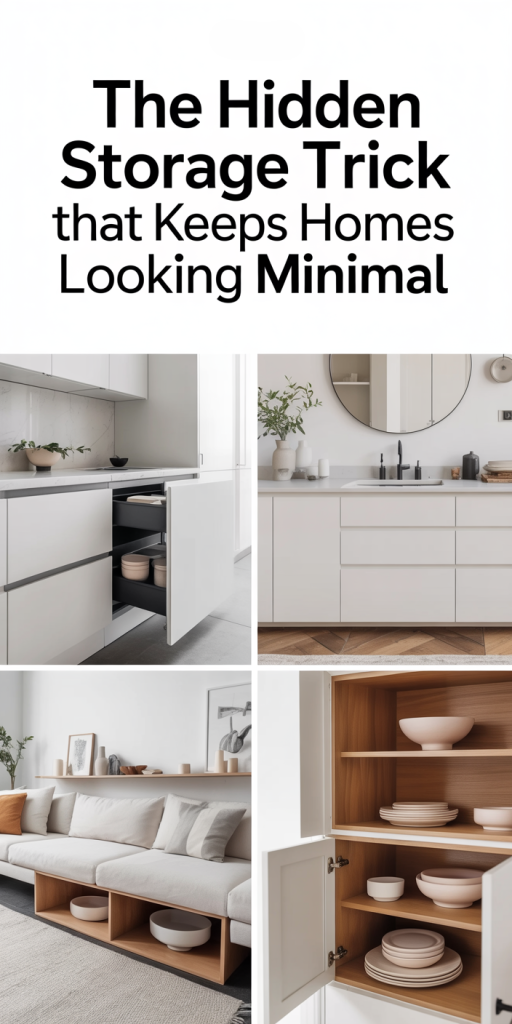
Built-in media walls with flush cabinet doors are a classic solution. We like units with a combination of open display for curated objects and deep concealed drawers for remotes, controllers, cables, and gaming accessories. Integrate wire channels and removable panels for easy equipment access. For sofas, consider models with under-seat storage or lift-top coffee tables that hide blankets and board games. An alternative is a low-profile credenza with soft-close drawers: the continuous top acts as a display space that remains uncluttered because the storage is right beneath.
If you want a super-sleek look, conceal the TV within a cabinet that rises or slides away when not in use. These systems are pricier but transform the room from media hub to minimal living space instantly. Finally, don’t forget floor-level concealment: hidden drawers under benches or window seats are perfect for throws and magazines without interrupting the room’s visual balance.
Kitchen And Pantry Hacks
Kitchens demand clever concealment because function and clutter live so closely together. Small appliances, utensils, and pantry staples can dominate counters: the solution is to integrate storage where it won’t disrupt workflow.
Toe-kick drawers reclaim wasted space under base cabinets for baking sheets, cutting boards, or rarely used pans. Appliance garages, recessed cabinets with roll-up or lift doors, hide coffee makers and toasters while keeping them accessible. Pull-out pantries and narrow vertical cabinets maximize small gaps, offering neat storage for oils, spices, and canned goods.
For pantries, we recommend a mix of labeled opaque containers and pull-out shelving. Opaque containers reduce visual clutter and create uniformity: labels ensure functionality. Consider built-in waste and recycling centers behind cabinet fronts to keep bins out of sight. Also, plan for ventilation if you store root vegetables or bulk goods that need air. Finally, magnetic knife strips and under-cabinet rail systems store tools off the counter without adding visual noise.
Entryway, Mudroom, And Drop Zones
Entryways set the mood of a home, so concealing daily detritus there pays big emotional dividends. The goal is to create a quick action zone where shoes, bags, and mail vanish immediately upon arrival.
Built-in benches with cubbies beneath are foundational, use hinged seats or deep drawers for shoes, winter boots, and umbrellas. Wall panels with integrated hooks hide the hardware when not in use: choose recessed niches with sliding doors for a more seamless look. A shallow concealed cabinet or drawer at waist height is perfect for keys, sunglasses, and masks: add a felt-lined tray or divider so small items don’t rattle around.
For families, consider individual locker systems behind a single facade. Each family member has a labeled compartment for shoes and outerwear, but the exterior reads as a single, tidy wall. Mail organizers that open inward keep paper out of sight and encourage daily sorting rather than piling on top of a console.
Bedroom And Wardrobe Solutions
Bedrooms benefit immensely from concealed storage because our sleeping environment should promote rest. Visible clothing, electronics, and accessories undermine a restful atmosphere: integrated storage restores serenity.
Built-in wardrobes with flush-front panels provide a seamless wall while housing everything from seasonal clothing to luggage. Incorporate modular interiors, shoe racks, tie holders, jewelry drawers, and pull-out shelves, so the exterior can remain minimal while the interior is highly organized. Under-bed drawers or lift-up beds are invaluable for linens and out-of-season clothing: we prefer gas-lift mechanisms for ease.
Nightstands with concealed compartments, hidden drawers or flip-top sections, allow bedside essentials to be nearby but out of sight. If space is tight, consider a wall niche behind the headboard with sliding panels to hide books and chargers. For smaller apartments, multifunctional furniture like an ottoman with storage or a dresser with a fold-out mirror keeps surfaces clear and provides dedicated places for everyday items.
Smart Furniture, Built-Ins, And Architectural Trim Options
Choosing the right mix of furniture, built-ins, and trim details makes concealed storage feel intentional rather than patchy. Let’s break down the best options and how to select them.
Smart furniture: Look for pieces designed first as furniture, second as storage. Sofas with deep seat storage, lift-top coffee tables, and ottomans with internal compartments offer immediate wins. Choose neutral upholstery and consistent hardware finishes so these pieces blend into the larger palette.
Built-ins: Custom millwork is the most seamless approach. Bookcases that transition into closed lower cabinets, window seats with hidden lids, and integrated desk nooks with roll-down doors deliver a unified aesthetic. Customization allows for tailored compartments, but it can be costly, consider semi-custom cabinet systems as a lower-cost middle ground.
Architectural trim tactics: Use reveal lines, continuous panels, and shadow gaps to disguise doors and drawers. Flush doors with magnetic touch latches eliminate visible hardware, while recessed hand grooves read as part of the millwork. We’ve had success using the same veneer or paint across walls and storage fronts: continuity makes the storage recede visually.
Multifunctional trim: Toe-kick drawers, built-in bench bases, and recessed niches in thick walls transform ordinary architectural elements into storage opportunities. These options are often more budget-friendly than full built-ins and can be added incrementally.
Installation, Materials, And Budgeting Tips For Hidden Storage
Concealed storage can be expensive if approached without planning. Here are practical installation, material, and budgeting tips to maximize value and avoid costly mistakes.
Start with a plan and prioritized list. Audit what you own and decide which hidden solutions will deliver the most benefit. Rank projects, tackle the entry and living areas first if daily clutter is the problem, or prioritize kitchen work if countertops are constantly crowded.
Materials: For interiors, use plywood or furniture-grade MDF with edge banding rather than cheap particleboard: they resist sagging and handle hardware better. For visible fronts, choose durable finishes, painted MDF for smooth, flat panels: real wood veneer for warmth: or high-pressure laminate for high-traffic rooms. Hardware matters: full-extension ball-bearing slides and soft-close hinges last longer and feel premium.
Installation: If you’re handy, many solutions are DIY-friendly, toe-kick drawers, bench lids, and simple paneling can be assembled with basic tools. For electrical or structural changes (routed wiring for media walls, lifting mechanisms for TVs), hire pros. Get quotes from multiple contractors and request references for millwork.
Budgeting: Expect custom built-ins to cost 2–3x more than box-store furniture per linear foot. Set aside 10–20% contingency for unforeseen issues. Consider phased implementation: start with smart furniture purchases, then add semi-custom cabinets, and finally invest in full custom millwork when budget allows.
Maintenance and longevity: Choose finishes you’ll want to live with for years. Concealed storage is an investment in daily life: spending slightly more on durable materials reduces long-term replacement costs and preserves resale value.
Conclusion
The hidden storage trick that keeps homes looking minimal is less about hiding everything and more about designing storage that supports daily life without fighting the room’s aesthetic. When we plan around continuity, accessibility, and durability, concealed storage moves from novelty to essential. Start with small wins, a bench with a hinged seat, a few hidden drawers, or a media wall, and watch how quickly the house feels calmer. Over time, incremental investments in built-ins and smart furniture will compound, giving us a home that feels generous and orderly without sacrificing warmth or function.
Leave a Reply