The debate between modern farmhouse and organic modern feels less like interior-design posturing and more like a fork in the road for anyone who owns a home or plans to sell one in the near future. As designers, buyers, and platform algorithms evolve, the choices we make now about finishes, furnishings, and layouts will influence comfort and resale value for years to come. In this piece we’ll unpack both styles, where they came from, what they stand for visually and materially, who’s buying them, and which one looks most resilient through 2026–2031. Then we’ll give practical, actionable tactics to blend or future‑proof a space so it stays relevant without forcing a full remodel every few years.
Why This Style Debate Matters In 2026
We’ve seen design trends come and go, but the stakes feel higher today. Real estate markets are more competitive, buyers are savvier about lifestyle-driven listings, and sustainability has moved from niche to mainstream. That combination means the look of a home can materially affect selling speed and perceived value. In 2026, platforms like Pinterest and Instagram still shape discovery, but search intent has matured, people want homes that feel authentic, comfortable, and low‑maintenance.
Beyond curb appeal, the debate matters because each style signals different priorities. Modern farmhouse says warmth, heritage, and approachable simplicity. Organic modern signals sustainability, material honesty, and a quieter, nature‑connected aesthetic. Buyers hungry for nostalgia and family-friendly layouts tend to gravitate to farmhouse cues: younger, eco‑conscious buyers increasingly prefer the restrained, tactile language of organic modern.
We also need to consider supply-chain and material trends. Wood species, engineered materials, and textile sourcing affect cost and availability: what was easy to source in 2018 isn’t necessarily so today. Regulations and buyer awareness about VOCs (volatile organic compounds) and sustainable manufacturing have nudged demand toward naturally finished woods, plant-based fabrics, and low‑emission paints, elements that tend to favor organic modern’s premise.
Finally, longevity comes down to adaptability. A style that’s easy to layer, update, and personalize without major structural change will fare better in five years. That’s the lens we’ll use: not just which style looks good now, but which one is easier to evolve as tastes and priorities shift.
What Is Modern Farmhouse? Origins, Core Principles, And Visual Language
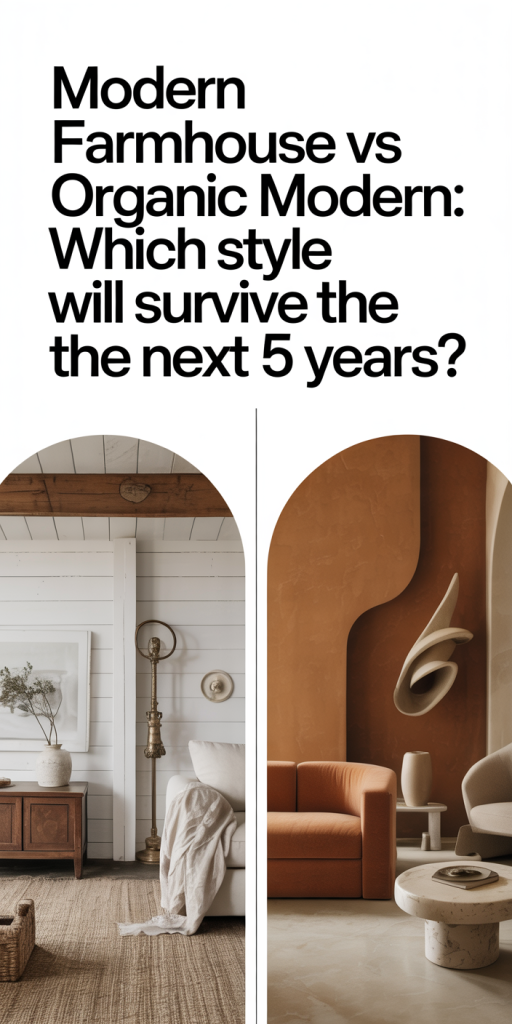
Modern farmhouse is a hybrid: the rustic, utilitarian roots of rural American homes married to streamlined, contemporary proportions. The style exploded into mainstream awareness in the 2010s, helped by TV renovators and social media, and persisted because it promises comfort without clutter. Its essence is familiarity: exposed structural elements, generous gathering spaces, and a palette that balances light neutrals with earthy textures.
Core principles of modern farmhouse include convivial spaces (think large kitchen islands and open-plan living), a focus on function-forward details (aprons, utility sinks, built-in storage), and an aesthetic that reads as collected rather than precious. The architecture often features pitched roofs, board-and-batten or shiplap siding, and large, multi‑paned windows. Inside, you’ll find a mix of antique or vintage pieces with new, durable finishes, an intentional patina that suggests history.
Visually, the style favors contrast: white or cream backdrops against matte‑black or oil‑rubbed bronze hardware, wide‑plank flooring that shows grain, and layered textiles for a cozy effect. Rather than minimalism, modern farmhouse celebrates warmth and a lived‑in look that says “we use this house.” That’s a big part of its appeal to families and buyers seeking psychological comfort from their environment.
Signature Materials, Colors, And Furnishings Of Modern Farmhouse
- Materials: Reclaimed or distressed wood, shiplap, painted brick, galvanized metal, and simple ceramic tiles. Engineered materials are often finished to emulate aged wood when budget or durability requires.
- Colors: Warm whites, soft creams, taupes, and charcoal accents. Pastels are rare: the palette skews toward muted, earthy tones that read as timeless rather than trendy.
- Furnishings: Oversized, comfortable sofas: farmhouse tables with bench seating: wrought‑iron chandeliers or simple pendant lighting: open shelving in kitchens: built‑in banquettes. Accessories are curated to suggest family life, heavy linen throws, woven baskets, and vintage ceramics.
The modern farmhouse’s resilience comes from its emotional resonance: it looks like a place where memories are made. The challenge for longevity is avoiding over‑themed execution, when every room feels like a staged barn. When done with restraint and high‑quality materials, the style can be updated incrementally and remain desirable for years.
What Is Organic Modern? Origins, Core Principles, And Visual Language
Organic modern emerged as a counterpoint to stark minimalism and maximalist pattern trends. It blends mid‑century modern simplicity with biophilic design, prioritizing natural materials, curves, and a soft, tactile aesthetic. The movement gained traction as sustainability and wellness became central to design conversations: materials with lower environmental impact and spaces that foster calm began to matter as much as style.
The core principles are restraint, connection to nature, and sensory comfort. Organic modern reduces visual noise but replaces coldness with texture, soft plaster walls, tactile linens, and sculptural furniture that invites touch. The forms are often rounded rather than rectilinear, and the layout emphasizes flow and daylight.
Visually, organic modern reads like a curated gallery that still feels lived in. Neutral tones dominate, but they are warmer and richer: terracotta, clay, muted sage, and sand. Wood tones are honest and varied, oiled oak, walnut, and bamboo appear alongside renewable materials like cork and hemp. The movement also leans into artisan-made pieces and natural fibers, which align with consumers’ increasing appetite for transparency about origins and manufacturing.
Signature Materials, Colors, And Furnishings Of Organic Modern
- Materials: Oiled and unfinished woods, stone (limestone, travertine), natural plaster, cork, leather, wool, and plant‑based textiles. Recycled glass and low‑VOC finishes are common.
- Colors: Earthy neutrals, sand, clay, warm grays, olive greens, and muted rusts. Accent tones are drawn from nature rather than saturated pigments.
- Furnishings: Sculptural sofas with rounded profiles, low‑slung lounge chairs, simple wooden dining tables with tapered legs, organic ceramic tableware, and woven rugs with subtle texture. Lighting is soft and sculptural, paper shades, blown glass, and hand‑forged metal in muted finishes.
Organic modern’s strength is its alignment with emergent values: wellness, sustainability, and authenticity. Its vulnerability is price and availability, authentic, sustainably sourced materials and artisan pieces can be cost‑prohibitive for mass adoption. Still, the style’s emphasis on longevity and material honesty gives it an advantage when buyers prioritize health and environmental footprint.
Market Trends, Sales Data, And A 5‑Year Forecast
Reading market signals in 2026, we find both styles maintaining strong niches but with different growth vectors. Modern farmhouse retains a broad base, especially in suburban single‑family markets, because it maps neatly onto family‑oriented floor plans and mainstream staging imagery. Organic modern is growing faster in urban and high‑income suburban pockets, driven by younger buyers who prize sustainability and curated simplicity.
Search and social metrics show a slower decline for farmhouse terms than many expected: phrases like “modern farmhouse kitchen” still generate substantial monthly searches. But engagement rates for organic modern content, pins saved, time on page, and shoppable lookbooks, have climbed year over year. That indicates not just curiosity but purchasing intent.
From a resale perspective, homes that feel intentionally designed but not overly themed tend to sell faster. Real estate agents report that neutral, high‑quality finishes (e.g., oiled wood floors, stone countertops, neutral plaster walls) outperform trend‑heavy statements. In practical terms, a modern farmhouse with high‑end, subdued finishes will hold similarly to an organic modern home with durable, low‑VOC materials.
Forecast for the next five years (2026–2031):
- Continued coexistence: Both styles will remain relevant. Modern farmhouse will keep appeal in family-focused markets: organic modern will expand with eco-conscious buyers and urban renovations.
- Niche growth for organic modern: Expect higher year‑over‑year interest in sustainable materials, artisan furnishings, and biophilic features. Incentives for energy efficiency and healthy materials may accelerate this.
- Hybridization: The dominant movement won’t be one style replacing the other but a blending of principles, simplicity, natural materials, and adaptable layouts.
We should note economic variables: material costs, interest rates, and supply chains could shift adoption velocities. If budgets tighten, expect more accessible farmhouse-inspired finishes (painted shiplap, laminate surfaces that mimic wood), which risks visual saturation. Conversely, if sustainability incentives become more mainstream (tax credits, local rebates for healthy materials), organic modern could transition from niche to mainstream more rapidly.
Buyer Demographics, Resale Impact, And Where Demand Is Headed
Buyer profiles are clear: Modern farmhouse skews toward middle‑aged buyers and families seeking functional, warm spaces, often in suburban or exurban locations. These buyers prioritize storage, flexible rooms, and cozy communal areas. On the other hand, organic modern appeals to younger urban professionals, creative households, and buyers willing to invest more in material quality and sustainable credentials.
Resale impact depends on execution. A well‑executed farmhouse remodel that uses neutral, wearable finishes will attract a wide buyer pool. Over‑themed choices, excessive barn doors, heavy shiplap, or overly literal décor, can narrow appeal. Organic modern properties that demonstrate material authenticity, good daylighting, and low‑emission products can command premiums in markets where buyers value health and sustainability.
Where demand is headed:
- Suburbs and family markets: Continued appetite for farmhouse cues, but buyers will expect higher performance (durable surfaces, efficient HVAC, smart storage).
- Urban and affluent markets: Growing demand for organic modern, especially in communities where walkability and sustainable living are selling points.
- Hybrid seekers: A rising segment wants the warmth of farmhouse plus the material honesty of organic modern, think warm wood floors with simple, sculptural furniture and houseplants. This overlap is where most savvy sellers should position properties to maximize buyer reach.
Eventually, demand will reward adaptability. Homes that can be updated with inexpensive surface swaps (paint, lighting, switch plates, textiles) while maintaining a durable, health‑forward baseline will outperform those that require costly overhauls.
How To Decide, Blend, Or Future‑Proof Your Home For Longevity
We recommend a three‑step approach: assess, choose intentionally, and layer for flexibility.
- Assess: Start with your market and lifestyle. Who is most likely to buy your house if you move? If you plan to stay long term, prioritize comfort and values (sustainability, family function). For short‑term resale, aim for broad appeal: neutral palettes, durable materials, and uncluttered spaces.
- Choose intentionally: If you favor modern farmhouse, dial back on literal motifs. Keep the warm neutrals and robust textiles, but pick hardware, lighting, and cabinetry styles that read as contemporary rather than period costume. If you prefer organic modern, invest in tactile finishes and a few statement pieces rather than furnishing the whole house with high‑cost artisanal items. Choose timeless proportions: a well‑proportioned island, generous windows, and a logical flow between rooms.
- Layer for flexibility: This is the future‑proofing sweet spot. Use changeable elements to communicate style and reserve permanent, high‑cost choices for neutral, long‑wearing options.
- Paint and wall finishes: Opt for neutral or slightly warm bases. Consider plaster or low‑sheen paints that feel tactile. Paint is the easiest, cheapest rebrand.
- Hardware and lighting: These are quick swaps. Matte‑black or brushed‑nickel can read modern farmhouse or organic modern depending on surrounding textures.
- Flooring: Choose durable wood or engineered wood in mid tones. Wide planks with natural grain read well for both aesthetics and resale.
- Textiles and furniture: Use these to pivot a room’s identity. Linen slipcovers, woven baskets, and a reclaimed‑wood table lean farmhouse: sculptural sofas, clay pottery, and a sisal rug tip toward organic modern.
- Greenery and biophilic touches: Houseplants, living walls, and natural daylight are universal value‑adds. They signal health and care regardless of stylistic camp.
Practical examples:
- Kitchen: Pair a simple shaker or slab‑front cabinet in a warm off‑white with an oiled‑wood butcher‑block shelf and a stone composite countertop. That combination reads as both approachable and material‑honest.
- Living room: Keep a neutral, tactile base (wool rug, linen sofa) and swap accent tables, an antique pine trestle table for farmhouse warmth or a sculptural walnut table for organic modern refinement.
Budgeting tip: Spend where it matters long-term, flooring, windows, and HVAC, and save on decorative items that can be replaced for a few hundred dollars. This strategy lets us adapt to shifting tastes with minimal investment.
Finally, document choices. Keep receipts, material names, and care instructions for sustainable or specialty items, buyers and future owners will value provenance and maintenance clarity.
Conclusion
Both modern farmhouse and organic modern are here to stay, but not in isolation. The coming five years will favor homes that combine the emotional warmth and functionality of farmhouse design with the material integrity and wellness focus of organic modern. Our best advice is pragmatic: choose durable, health‑forward materials for permanent elements and use paint, lighting, hardware, and textiles to express style. That way, whether trends shift toward nostalgia or nature, your home remains comfortable, marketable, and genuinely yours.
Leave a Reply