Empty walls are one of the fastest ways a room feels unfinished, yet they’re also the easiest place to create personality and drama. In 2026, oversized art remains our go-to trick: one well-chosen piece can anchor a living room, elevate a bedroom, or create a gallery-worthy entry without weeks of redesign. In this guide we’ll walk through why oversized art works, how to choose the right size and scale for your space, what to look for in color and material, and practical hanging and styling advice. We’ll include budget-friendly DIY options and lightweight alternatives so you can get the statement look even in tricky spaces like renters’ units. Read on for the measuring rules, placement hacks, and styling moves that make oversized art feel intentional, not just big.
Why Oversized Art Works So Well
Oversized art grabs attention the way a headline does in a newspaper: it gives the eye somewhere to land and instantly sets a tone. Psychologically, large-scale pieces help us define space, they create an anchor point that unifies furniture, color, and lighting. That’s why a single large painting, photograph, or textile can solve multiple design problems at once: it fills negative space, introduces scale, and conveys mood.
There’s also an architectural impact. Walls are vertical planes, when left bare they make rooms feel empty and under-considered. A large artwork transforms a flat plane into a focal wall, improving perceived proportions and making the room feel curated. In open-plan homes, oversized pieces can visually separate zones (dining vs. living) without physical barriers.
From an aesthetic standpoint, oversized art lends confidence. It reads as intentional design rather than an afterthought. But the success of this trick depends on proportion, placement, and content: size alone won’t rescue a room if the piece competes with furniture or clashes with the palette. That’s why we focus not just on finding big art, but on choosing the right big art for your space and lifestyle.
How To Choose The Right Size And Scale
Choosing the right size is more science than guesswork. The core rule we use is simple: large art should relate to the surrounding architecture and furniture. Too small and it looks lost: too big and it overwhelms. Follow these practical, repeatable steps.
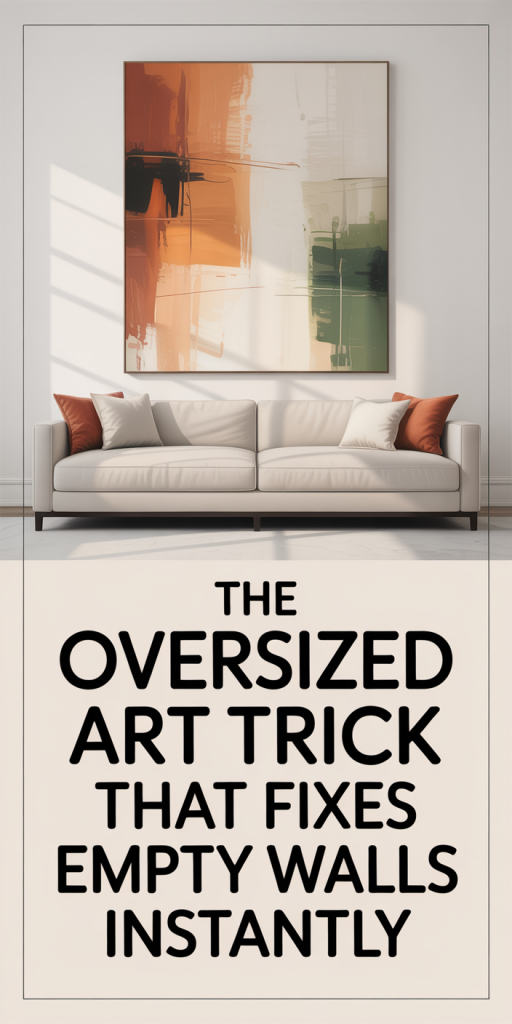
Measure first. Take wall width and height, note nearby furniture, and measure ceiling height. A common living-room guideline: the artwork’s width should be roughly 60–75% of the sofa width when hung above a couch. For example, a 84-inch sofa pairs well with a piece about 50–62 inches wide. For walls without furniture, aim for a piece that leaves a margin of at least 6–12 inches on each side (depending on wall size) so it doesn’t look cramped.
Vertical scale matters too. Don’t forget sightlines: when hanging above furniture, the bottom edge of the art should sit about 6–10 inches above the furniture top. If the art is the main feature of an empty wall, place its center at eye level, usually around 57–60 inches from the floor, but adjust if you have higher ceilings or primarily seated/viewing positions.
Consider ceiling height. With low ceilings (8 feet), avoid extremely tall pieces that run into crown molding: horizontal oversized art often works better. With high or vaulted ceilings, lean into vertical formats to emphasize height. In rooms with scale mismatches (tiny furniture with big walls), use multiple stacked pieces, a large textile, or a wide console to bridge proportion.
Finally, think about balance. If you have a visually heavy piece on one wall, balance it with a grouping or a sculptural object on the opposite side rather than trying to match size exactly. Scale is a relationship, not an isolated number, and once you measure, you’ll be surprised how many oversized pieces actually fit your space perfectly.
Picking The Perfect Artwork: Color, Style, And Mood
Once size is settled, color and style determine whether a piece integrates harmoniously or fights the room. We recommend starting with mood: what feeling do we want this wall to evoke? Calm and minimal, bold and dramatic, warm and cozy, or modern and crisp? Your choice guides color, composition, and subject.
Color strategy matters. Pull one or two accent colors from existing textiles (throw pillows, rugs) and use the oversized art to amplify them. If your palette is neutral, a large, colorful artwork can become the focal point: conversely, if your room already has vibrant patterns, a subdued monochrome piece can provide visual rest.
We also consider tonal balance. Large fields of high-contrast color read more aggressively at scale: soft gradients and textured neutrals feel more calming. If you have wood tones and warm metals, choose art with warm undertones to create cohesion. For cool, modern rooms with lots of glass and chrome, consider cooler palettes or high-contrast black-and-white photography.
Choose a style that fits the architecture and your lifestyle. Abstracts are forgiving with scale and can be easier to live with in family homes since they don’t demand narrative. Figurative or landscape works add warmth and storytelling, while graphic prints and typographic pieces give a contemporary edge.
Finally, consider permanence. Very personal or overly trendy work may feel tiring at scale. If you’re investing in a large piece, we prefer art that can evolve with the room, either because it’s classic in palette and form or because it’s easy to swap out in a large but lightweight format.
Framing, Hanging, And Lightweight Alternatives
Framing and hardware choices determine whether an oversized piece looks polished and stays put. Let’s break down framing styles and hanging methods that work in modern homes, including renter-friendly approaches and lightweight alternatives.
Framing options
- Floater frames: Give canvases a clean, contemporary border without covering edges.
- Slim metal frames: Great for prints and photography: they read modern and minimal.
- No frame (gallery wrap): Can be the freshest look, especially with large canvases where the edge is part of the composition.
Hanging hardware basics
- French cleats: Two interlocking angled strips that distribute weight across a wide section of wall, ideal for heavy or large pieces.
- D-rings and braided steel wire: Common for framed works: ensure wire and screws are rated above the artwork’s weight.
- Picture rails: Historic and adaptable: they allow easy repositioning without new holes.
Wall anchors and studs
- Always anchor heavy pieces into studs when possible. Use a stud finder and lag screws for pieces over ~30–40 pounds.
- For drywall-only hanging, use heavy-duty hollow-wall anchors rated for the load. Toggle bolts and molly bolts can hold substantial weight if installed correctly.
Lightweight alternatives that still read oversized
- Foam core or gatorboard prints: These offer the visual impact of a large print at a fraction of the weight.
- Fabric prints on dowels: Lightweight and renter-friendly: hang from a single hook or rod.
- Peel-and-stick murals: Great for renters and temporary needs: they cover large areas without permanent hardware.
- Paper or vinyl art taped or clipped: Works for gallery walls or layered looks if you want flexibility.
Lighting and finishing touches
- Dedicated picture lights or adjustable track lighting can elevate the piece and reduce reflection on glass.
- For extremely large works, consider mounting a French cleat across two studs and using multiple attachment points to keep the artwork flush to the wall.
We recommend planning the hanging method before buying. Ask the seller about weight, framing options, and recommended hardware. When in doubt, choose a lightweight substrate or a professional installer, oversized scale looks best when it’s secure and properly framed.
Styling The Room Around Your Oversized Piece
Once your oversized artwork is in place, the next step is to style the room so the piece feels integrated rather than pasted on. We think of the artwork as a hub that spokes, furniture, lighting, and accessories should orbit it.
Anchor with furniture: Place a sofa, console, or credenza beneath the artwork to create a relationship. If the piece is large and heavy on color, keep immediate furnishings simpler in tone and texture to avoid visual competition.
Layer with lighting: Use directional lighting to highlight surface texture or color shifts. For large pieces, consider two smaller adjustable sconces or a discreet picture light to wash the surface evenly. Avoid single harsh overheads that create glare.
Echo colors and shapes: Pull one or two colors from the artwork into textiles (a throw, a rug) and a smaller accent piece (vase, lamp) to build cohesion. Repeating a shape, round mirror, angular coffee table, can also reinforce composition and rhythm.
Balance with negative space: Don’t overfill the wall with too many objects. One oversized piece usually needs breathing room. If you want more visual interest, add a smaller shelf or sculptural object nearby rather than another large framed work.
Consider scale elsewhere: Large art can make small accessories look out of place, balance by using a few larger decor items (oversized vase, substantial lamp) rather than many tiny knickknacks.
Create a vignette: If the piece sits above a console, style the surface with layered objects, a stack of books, a medium-height lamp, and a low sculpture, keeping a clear center point beneath the artwork.
Make it intentional for traffic flow: If the oversized piece sits in a corridor or near a doorway, ensure it won’t be bumped by passing furniture or carted items. If it’s in direct sunlight, consider rotating pieces seasonally or choosing UV-resistant materials.
By styling around the art thoughtfully we make the piece feel like the room’s deliberate centerpiece, not an afterthought. It’s about rhythm and restraint: let the artwork lead, and let other elements support.
Conclusion
Oversized art is a quick, high-impact way to fix empty walls and give a room instant personality. When we measure for proportion, choose materials that fit our lifestyle, and plan hanging and lighting carefully, large pieces elevate a space without feeling showy. Whether we buy, DIY, or use lightweight alternatives, the key is to let scale, color, and placement work together. Try the measuring rules, test with paper templates, and then commit, a single well-placed oversized piece can change how an entire room reads, and in 2026 it remains one of the most efficient design moves we can make.
Leave a Reply