Living small doesn’t mean living cluttered. As more of us choose tiny homes, vans, and compact apartments, the challenge becomes how to create a calm, functional environment out of limited square footage. In this guide we’ll share practical tiny home organization tips that actually work, strategies born from real experiments, design principles, and everyday habits. You’ll learn how to edit your belongings compassionately, use vertical and hidden storage, pick multi-functional furniture, and build routines that keep your space feeling serene. These aren’t trendy hacks: they’re sustainable practices tuned for 2026 living: efficient, low-stress, and adaptable. Read on and you’ll walk away with a clear plan to turn your small space into a calm home that supports how you want to live.
Principles Of Calm Tiny Home Design
Designing for calm in a tiny home begins with a few core principles that guide every decision we make. First: intention. Every object, surface, and layout choice should support the life we want to live, not just fill space. Second: visual quiet. Calm spaces reduce visual noise through limited color palettes, consistent materials, and a handful of meaningful items rather than many competing ones. Third: clear pathways. Even small homes need unobstructed movement: a clear circulation path makes a place feel larger and less stressful. Fourth: adaptability. Our needs change, work zones, sleep arrangements, and storage demands vary, so flexible solutions matter.
We also prioritize sensory balance. Calm isn’t only visual: it’s about sound, texture, and air. Soft textiles, warm lighting, and a few plants can offset hard edges and compact proportions. Finally, ecosystem thinking: storage and organization must be part of daily routines. A well-placed drawer is worthless if we don’t maintain it. When we apply these principles consistently, small spaces stop feeling squeezed and start feeling intentional, quiet backdrops that let life happen with less friction.
Declutter Strategically: What To Keep, Donate, And Store
Decluttering is the foundation of calm in tiny homes, done right, it frees space and reduces decision fatigue. But decisive editing can be emotionally charged, so we approach it with structure and compassion. Begin by sorting items into three categories: keep (daily-use essentials and things that bring clear joy), donate/sell (items in good shape that we no longer need), and store (seasonal or infrequent-use pieces). Use a timer: work in 20–30 minute sessions to avoid burnout, and tackle one zone at a time, kitchen drawers, then clothing, then paperwork.
Be honest about frequency of use. If we haven’t used something in six months and it’s not seasonal or sentimental, it probably doesn’t belong in a tiny home. Photograph sentimental items before letting them go: a digital memory often preserves value without taking physical space. For things we decide to store, choose compact, labeled containers and a single, designated storage spot, scattered boxes defeat the purpose. Finally, set realistic disposal plans: schedule donation pickups or drop-offs so items leave quickly. The faster things exit the home, the sooner we feel the benefit.
How To Edit Your Belongings Quickly And Compassionately
Editing doesn’t have to be brutal. We use a blend of objective criteria and gentle techniques to move fast without regrets. Start by asking three quick questions for each item: Have I used it in the last six months? Do I own an adequate replacement? Does it add meaningful value or joy? If the answer is no to two or more, it’s a candidate to leave. Keep decision rules simple to avoid second-guessing.
Use compassion, not shame. Many of us hold items for complex reasons, memory, guilt, or imagined future use. We acknowledge those feelings, then separate the memory from the object: photograph, write a note, or keep a single representative item rather than the whole set. If parting is hard, box items for a ‘maybe’ period (30–90 days) and store the box out of sight: if we don’t open it, we donate the contents. Editing quickly requires momentum, play upbeat music, set a timer, and celebrate small wins. Editing well is less about ruthless minimalism and more about aligning possessions with present needs.
Rotation, Seasonal Storage, And The One-In/One-Out Rule
Rotation and seasonal storage let us keep tiny homes functional year-round without overcrowding. We maintain a compact seasonal kit: off-season clothing in vacuum bags, holiday décor in slim bins, and bulky outdoor gear in a dedicated loft or external storage locker when possible. Label bins clearly and list contents on the lid, so we can find things without unpacking several boxes.
The one-in/one-out rule is simple but powerful: when we bring a new non-essential item home, we remove one similar item. It prevents slow accumulation and creates a built-in decision moment, do we actually need this new thing? For families sharing a tiny home, make the rule household policy so everyone follows the same standard.
Rotation also extends to daily-use items. Keep frequently used kitchen tools within reach and move specialty gadgets to labeled storage. Every 3–6 months, do a quick scan: if stored items haven’t been needed, consider donating them. That ongoing pruning keeps our small space from becoming a storage museum and helps maintain the calm we built during the initial declutter.
Maximize Vertical And Hidden Storage Without Clutter
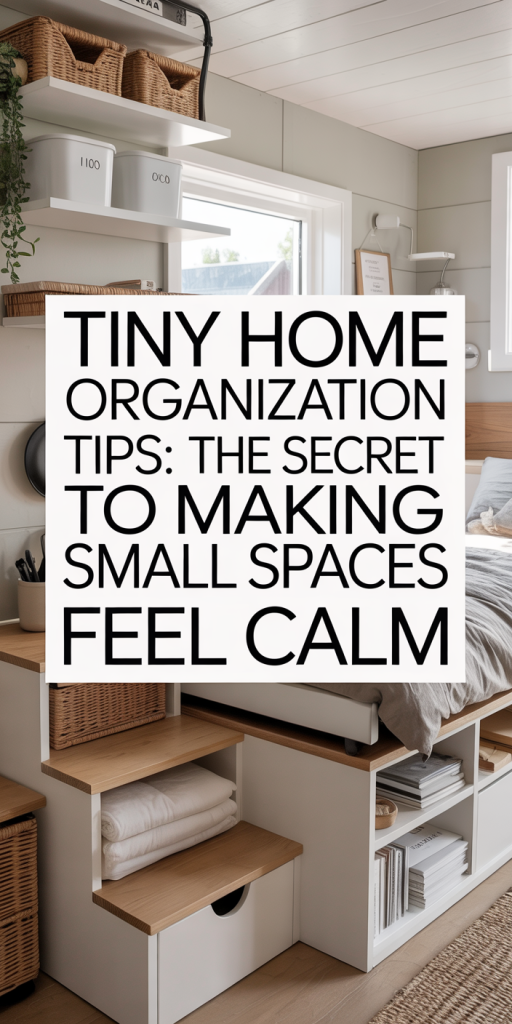
When floor area is precious, vertical and hidden storage are our best friends. Think upward: tall cabinets, floor-to-ceiling shelving, and wall-mounted racks free the floor and create the illusion of height. Use slim, deep shelves for books and décor, and reserve open shelving for items that contribute to calm: too many exposed items read as clutter. Integrate closed cabinetry lower down to keep visual lines tidy.
Hidden storage, under-bed drawers, toe-kick drawers beneath kitchen cabinets, bench seating with internal bins, keeps necessary items accessible but out of sight. We also repurpose unexpected vertical zones: the back of doors for shoe or accessory organizers, the side of kitchen islands for spice rails, and high narrow shelves for light seasonal items. Magnetic strips and pegboards on walls organize tools, utensils, and craft supplies without bulky containers.
When installing vertical systems, maintain balance and proportion. Heavy items should sit lower for safety and visual anchoring. Use consistent hardware and finishes to create cohesion. The goal is functional density: holding more without making the space feel crowded or chaotic.
Multi-Functional Furniture And Thoughtful Zoning
In tiny homes, every furniture piece should earn its place. Multi-functional furniture multiplies usefulness: beds with storage drawers, fold-down desks, sofa beds, and tables with nesting chairs. When selecting pieces we ask, what does this do at minimum three times per day or significantly improve our comfort? If the answer is no, we look for alternatives.
Thoughtful zoning lets us define purpose within compact footprints. Rather than rigid rooms, we create zones: a sleep zone, a work/desk nook, a dining/meal zone, and a relaxation area. We define zones with furniture arrangement, rugs, lighting, and subtle visual cues like shelving orientation. Zoning helps the brain categorize activities, which reduces cognitive load and supports calm.
We also favor pieces that collapse or reconfigure: drop-leaf tables expand for guests then tuck away: murphy beds free daytime floor space: rolling carts serve as mobile prep stations or office storage. Investing a bit more in a convertible, high-quality piece often pays off through years of efficient use and fewer replacements.
Choosing Convertible Pieces And Defining Flexible Zones
Choosing the right convertible pieces requires honest assessment of daily routines. We start by mapping how we use the space across a typical day: when we work, cook, socialize, and sleep. From that map we identify when areas need to transform. For instance, a daytime work area that converts to an evening dining spot benefits from a small folding table and a chair that stacks or tucks away.
When picking convertible pieces, check durability and ease of transition. Mechanisms should be smooth and secure, annoying hardware kills the usefulness of convertible furniture. Evaluate weight (lighter options are easier to move) and storage footprint when folded. For zoning, use rugs to anchor areas, and adjust lighting layers, task lights for work, warm ambient lights for relaxation. Open shelving can act as a soft divider between zones while providing storage. The net effect: flexible zones let one small space do many jobs, and when transitions are quick and intuitive, the home stays calm rather than feeling like a compromise.
Smart Organization Systems, Habits, And Routines
Organization systems are only as good as the habits that support them. We pair built-in systems with daily and weekly routines that keep maintenance low-effort. Start with clear homes for everything, every item should have a named place. Use labeled containers, drawer dividers, and consistent trays so returning things becomes instinctive. For visible surfaces, adopt a one-minute rule: if a flat surface has something out of place, spend one minute returning items to their zones.
Create low-friction routines: a five-minute tidy before bed, a weekly 20-minute surface reset, and a monthly inventory of stored bins. Use checklists during season changes to rotate clothing and swap storage. Digital reminders help until routines feel automatic: calendar blocks for decluttering sessions or seasonal swaps reduce procrastination.
We also use habit stacking, attach a small organization habit to an existing daily routine. For example, after morning coffee we put away any dishes left out: after showering we spot-check the laundry basket. Habit stacks make maintenance frictionless. Eventually, organization in tiny homes is less about perfect systems and more about reliable tiny actions that prevent disorder from accumulating.
Use Color, Light, And Texture To Create A Calm Atmosphere
A calm tiny home is more than tidy storage, it’s an atmosphere crafted with color, light, and texture. We favor cohesive, restrained color palettes that visually expand space: warm neutrals, soft pastels, or monochrome schemes with a single accent hue. Light colors reflect more light and reduce visual busyness, but contrast and accents add personality without clutter.
Layered lighting is crucial. Combine ambient light (overhead fixtures), task lighting (under-cabinet strips, reading lamps), and accent lights (LED strips, small spotlights) to control mood. Dimmable fixtures let us shift energy from productive daytime to relaxed evening. Natural light is a premium, keep windows unobstructed, use lightweight window treatments, and place mirrors strategically to bounce daylight into darker corners.
Texture softens compact proportions. Introduce tactile elements, wool throws, woven baskets, linen curtains, to add warmth and depth without adding objects. Choose materials intentionally: built-in wood tones, matte metals, and fabric finishes that coordinate across zones. The goal is a curated sensory experience: calm, tactile, and visually cohesive, where every element earns its place.
Conclusion: Maintain Calm In Your Tiny Home Long Term
Sustaining calm in a tiny home is an ongoing practice, not a one-time project. By following core design principles, decluttering with compassion, maximizing vertical and hidden storage, choosing multi-functional furniture, and building simple daily routines, we create a resilient system that supports calm living. Remember: small, consistent actions, one-in/one-out decisions, a five-minute nightly tidy, seasonal rotation, deliver the biggest returns.
As we move through 2026, flexibility and intention are our best tools. Tiny home living asks us to be deliberate about what matters and to design spaces that reflect that clarity. Adopt these tips, adapt them to your rhythms, and you’ll find a small space can feel expansive, slow, and calm, exactly what home should be.
Leave a Reply