Category: Interior Design

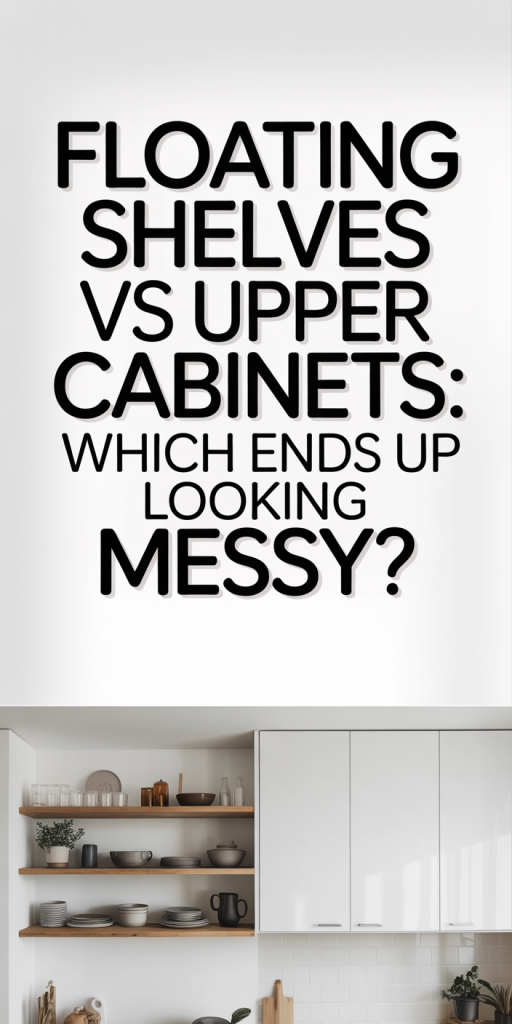
  • Floating Shelves Vs Upper Cabinets: Which One Looks Messy Faster — And How To Prevent It In 2026

    We’ve all stood in a kitchen or living room and felt a subtle judgment from the room: is this tidy or chaotic? The debate between floating shelves and upper cabinets isn’t just about aesthetics or storage capacity, it’s about perceived messiness, daily maintenance, and how our habits interact with the built environment. In 2026, design trends emphasize minimalism and multifunctional spaces, but the question remains: which solution tends to look messy faster, and what practical steps can we take to prevent that? In this text we’ll break down the visual dynamics of open shelving and closed cabinetry, inspect common failure modes, compare real‑world scenarios, and give actionable recommendations so you can pick the option that stays looking intentional, not cluttered.

    How Floating Shelves Affect Perceived Messiness

    Open systems like floating shelves change the rules of visual organization. Because they put objects on display, everything stored becomes part of the room’s composition. That can be a strength, well‑styled shelves create personality, but it’s also a liability: any misaligned mug, unsorted stack of mail, or tall jar will immediately register as visual noise. We want to make clear that perceived messiness is not just about the number of items: it’s about contrast, rhythm, and hierarchy. Floating shelves demand curation. Without it, they show every lapse in habit.

    Floating shelves also expose maintenance issues that closed storage hides. Dust collects on top of items, oils from cooking cling to ceramic, and fingerprints mar glassware. In small apartments or open‑plan homes, the shelf becomes an accidental display of our daily life, and our lapses in tidiness. Because the shelves sit at eye level, irregularities are amplified: a crooked frame or mismatched bowl pulls more attention than it would inside a cabinet.

    That said, shelves can be deliberately designed to minimize that “messy” look. Choosing a consistent material palette, limiting the number of objects per linear foot, and creating deliberate negative space all reduce visual clutter. We’ll dig into practical styling methods in the next sub‑section, but the key takeaway here is simple: floating shelves make messiness visible: they don’t necessarily cause it. Our habits and the styling framework we apply determine how quickly they look unkempt.

    How Upper Cabinets Affect Perceived Messiness

    Upper cabinets operate on a different psychological principle: concealment. Because doors hide contents, they act as a buffer between our habits and the room’s visual impression. From across the room, a wall of cabinets reads as neat if the faces are clean, regardless of what’s inside. That’s a major advantage for anyone who values a tidy aesthetic with minimal daily upkeep.

    But, cabinets introduce other messiness risks. Closed storage can encourage a “out of sight, out of mind” mentality. If we shove things in without systems, interiors become chaotic over time: mismatched containers, expired food, and tangled kitchen tools accumulate. The result is a different kind of messiness, functional messiness, that may not show immediately but increases time and friction when we search for things.

    There’s also the issue of cabinet facades. Scuffed doors, sticky handles, and misaligned hinges are visible cues of neglect. Where floating shelves broadcast item-level disorder, cabinets broadcast surface‑level wear. Choosing durable finishes, easy‑to‑clean hardware, and consistent door styles reduces the chance that cabinets look messy from a distance.

    In short, upper cabinets trade visible clutter for hidden chaos risks. If we’re disciplined about interior organization and regular purging, cabinets can preserve a calm room aesthetic. But without systems, they quietly accumulate inefficiency and frustration.

    Head-To-Head Scenarios: Which Option Looks Messy Faster In Real Life

    Let’s walk through three realistic scenarios to see which option tends to look messy faster.

    Scenario 1, Daily routine kitchen in a busy family home: With kids and fast mornings, items are frequently handled. Floating shelves here show disorder quickly: cereal boxes, lunchboxes, and school art appear on display. Upper cabinets, by contrast, maintain a tidy look because doors hide the detritus. Winner for appearance: upper cabinets, but only if interiors are organized to prevent functional chaos.

    Scenario 2, Small urban apartment with one tidy occupant: Someone who values design and practices daily tidying can make floating shelves look intentionally curated. Because the occupant is disciplined, shelves rarely get overloaded and become a deliberate stylistic feature. Upper cabinets would also appear tidy, but they sacrifice the personality that shelves provide. Winner for appearance: floating shelves, when habits are strong.

    Scenario 3, Open‑plan kitchen living space used for entertaining: Floating shelves create a dynamic focal point but also amplify any lapse during hosting. Guests notice mismatched glasses or a stack of plates. Upper cabinets keep the social space visually calm, although host stress might lead to hidden mess inside. Winner for appearance: upper cabinets generally, unless the host commits to styling rules for shelves.

    Across these scenarios, floating shelves generally look messy faster when daily habits are inconsistent or when many people use the space. Upper cabinets look tidy faster from a distance but can hide compounding internal disorder. So the real determinant is behavior: how we use the space and the routines we create.

    Design, Use, And Maintenance Factors That Tip The Balance

    Several design, use, and maintenance factors nudge the messy‑faster scale toward one option or the other. Recognizing which of these apply to our home helps us make a better choice.

    Design factors:

    • Material and finish: Dark glossy shelves show dust and fingerprints more than light matte cabinets. Easy‑clean finishes (laminate, sealed wood) reduce surface maintenance.
    • Shelf depth and height: Deep, high shelves invite item stacking and forgotten objects. Shallow, eye‑level shelves encourage curated displays.
    • Integration of storage: Built‑in drawers, pull‑outs, and concealed bins reduce clutter in either system.

    Use factors:

    • Household habits: Multi‑user households with different standards of tidiness favor closed cabinets. Single, organized occupants can leverage shelves for expression.
    • Frequency of access: Items used daily benefit from open storage for convenience: infrequently used items belong behind doors.
    • Entertaining style: If we entertain often, a visually calm backdrop matters: cabinets win unless shelves are consistently styled.

    Maintenance factors:

    • Cleaning cadence: Shelves demand more frequent surface cleaning: cabinets require periodic interior audits.
    • Systems in place: Labeling, standardized containers, and containment baskets tip the scale toward cabinetry success: simple styling rules and a quick daily tidy favor shelves.

    When we evaluate these factors honestly, the best choice becomes clearer: it’s not universal. Instead, it’s a function of design choices, how we live, and how often we’re willing to maintain the chosen system.

    Practical Recommendations: Choose Based On Lifestyle, Space, And Habits

    We recommend making a decision matrix based on three questions: Who uses the space, how is it used, and how much time will we commit to upkeep? Below are practical, actionable recommendations matched to common lifestyles.

    • For busy families: Prioritize upper cabinets. They preserve a tidy visual field with minimal daily effort. Invest in interior organizers (pull‑out shelves, clear bins) and schedule quarterly purges. Use lower open shelving for a limited set of kid‑friendly items in labeled baskets.
    • For design‑minded singles or couples: Choose floating shelves if you’re willing to commit to styling rules. Keep 2–3 curated vignettes, limit color variety, and adopt a 5‑minute nightly tidy. Use one closed cabinet for overflow and less attractive items.
    • For small kitchens / studio apartments: Mix both. Use upper cabinets for pantry and utility storage and floating shelves for a curated selection of dishes or cookbooks. This hybrid approach maximizes both aesthetic and function in tight spaces.
    • For avid entertainers: Lean toward cabinets for the bulk of storage to maintain calm during gatherings: dedicate a single open shelf with high‑quality glassware or decorative objects for personality.
    • For rental properties or resale considerations: Cabinets are safer for broad appeal because potential buyers or renters often prefer low‑maintenance aesthetics. Floating shelves can be a selling point for the right market but require buyer appreciation for styling.

    Implementation tips regardless of choice:

    • Create 1–2 household rules: e.g., “no mail or keys on shelves” or “shelf items must be in groups of three.”
    • Use shallow baskets and clear labeling inside cabinets.
    • Keep a donation bin handy to remove seldom‑used items.
    • Schedule brief weekly maintenance windows rather than occasional deep cleans.

    These recommendations are about aligning design with behavior. When we pick storage that matches our habits and commit to small recurring actions, neither shelves nor cabinets need to devolve into mess.

    Conclusion: Choosing The Right Solution To Minimize Mess Over Time

    Both floating shelves and upper cabinets have predictable strengths and weaknesses. Shelves make every object part of the room’s visual story and hence show mess quickly without consistent curation. Upper cabinets protect the room’s appearance but can hide functional disorder unless we carry out organizational systems. Our recommendation: don’t pick purely on aesthetics, pick based on how you live. If you want the personality of open shelving, build simple containment and micro‑maintenance habits. If you crave a calm visual field, choose cabinets but invest in interior organization and periodic audits. Either way, a small set of rules and regular, bite‑sized maintenance will keep your space looking intentional rather than messy well into 2026 and beyond.

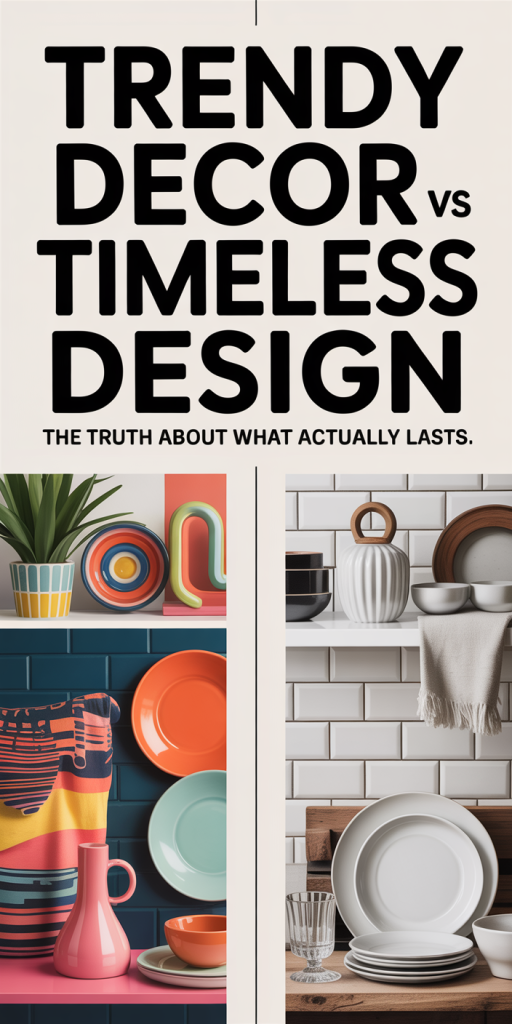
  • Trendy Decor vs Timeless Design: How To Build Rooms That Still Look Great In 10 Years

    Trendy decor vs timeless design is a debate we encounter every time a new color, material, or furniture silhouette dominates Instagram feeds and showrooms. We love the excitement of fresh ideas, but we also hate wasting money on something that will look dated in a few seasons. In this text we’ll cut through the noise and give practical guidance so your rooms feel current now and confident a decade from today. We’ll explain why trends spread, outline the core principles that make design endure, and offer a reliable method for deciding which trends are worth adopting. Along the way we’ll show how to mix a few spirited, trendy accents with a durable, classic foundation, where to invest your budget, and how to source more sustainably. If you want interiors that age gracefully without being boring, you’re in the right place.

    Why Trends Catch On—and Why They Fade

    Trends move fast because they answer short-term cultural or technological needs, new materials, celebrity or influencer endorsement, and a collective desire for novelty. Think about the explosion of terrazzo after influencers started showing it in kitchens and bathrooms: it felt fresh, photogenic, and accessible. That combination, visual appeal plus easy adoption, fuels rapid spread.

    But trends also fade for predictable reasons. First, overexposure breeds fatigue. When everyone has the same vase, it stops signaling individuality. Second, many trends are stylistic reactions: they’re born from a reaction to what came before and will swing back when preferences shift. Third, practical shortcomings surface, cheap materials yellow, finishes scratch, or a trendy silhouette proves uncomfortable. Those failures accelerate decline.

    We should also consider the role of media cycles. Fast fashion and fast interiors amplify ephemeral ideas: when retailers and influencers push a look, demand spikes, inventory floods the market, and the trend collapses as the novelty disappears. That’s not inherently bad, trends can inject energy into design, but recognizing this lifecycle helps us decide whether to commit our time and money. If the appeal is purely visual and tied to a moment, it’s probably a short-lived trend. If it responds to deeper cultural shifts, like sustainability, wellbeing, or new ways of living, it has a better chance of lasting.

    Core Principles Of Timeless Design

    Timeless design isn’t about avoiding style: it’s about building a resilient foundation that supports style changes without feeling wrong. Here are the principles we return to again and again:

    • Proportion and Scale: Furniture and architectural elements need to fit the room’s size and sightlines. Well-proportioned pieces look intentional across eras. A too-small sofa in a large living room screams trend-driven mistake.
    • Quality of Materials: Natural materials, wood, stone, wool, linen, metal, age with dignity. We prefer materials that develop patina instead of those that show rapid wear or cheap coatings that peel.
    • Neutral Frameworks: Walls, floors, and major built-ins in neutral or restrained palettes create a backdrop for changing accents. Neutrals don’t mean bland: they’re simply more adaptable.
    • Simplicity of Form: Clean silhouettes and restrained detailing are less likely to date. A simple round dining table can carry an accent-heavy era or a minimal one.
    • Functional Comfort: Timeless pieces meet human needs, supportive seating, sensible lighting, storage that actually works. Comfort isn’t negotiable if something is supposed to last.
    • Subtle Ornamentation: Small, well-crafted details, moulding, a thoughtful joinery, quality hardware, add character without shouting a trendy motif.

    These principles give us permission to layer bolder choices (art, textiles, lighting) and change them without overhauling the whole space.

    How To Tell If A Trend Will Last

    Not every trend is fleeting. We can evaluate a trend’s longevity by looking at several indicators: cultural relevance, production infrastructure, and design adaptability. Apply this checklist before investing.

    • Cultural Relevance: Does the trend connect to broad, long-term shifts, demographics, work patterns, sustainability, or technology? Trends aligned with these deeper shifts often persist. For instance, the need for home offices has durable roots after widespread remote work adoption.
    • Production and Craftsmanship: Is the trend supported by quality makers or only fast, disposable producers? When skilled artisans or established manufacturers embrace a look, it gains staying power because the pieces are made to last.
    • Versatility: Can the trend be expressed in both subtle and bold ways? A motif that reads as both accent and core element is more adaptable and hence likelier to endure.
    • Price and Perceived Value: Higher price doesn’t automatically equal longevity, but when a trend translates into investments that hold value, well-made furniture, timeless rugs, it’s less likely to be written off quickly.
    • Cross-Cultural Appeal: Trends with appeal across regions and generations tend to survive. Fads tied to a narrow niche or platform often fade as that niche moves on.
    • Historical Precedence: Look back. Some trends resurface cyclically: if a current idea resembles a previous era but with meaningful updates, it may return as a longer-term revival rather than a one-season craze.

    By scanning these signals, we can assign a practical probability of longevity and then decide whether to scale our commitment up (buy an investment piece) or keep it small (try a pillow or lamp).

    Smart Ways To Mix Trendy Accents With Timeless Pieces

    Blending trendy accents with timeless bases is the easiest path to interiors that feel alive without being transient. Our approach is to treat the room like a wardrobe: invest in classics, and rotate accessories as seasons and tastes change. Here are rules we follow:

    • Start with the Big Three: floors, fixed millwork, and main upholstery. Keep these durable and neutral. Trends should play out in rugs, cushions, artwork, and lighting.
    • Limit Trend Volume: Use the 80/20 rule, about 80% classic elements, 20% trendy accents. That’s flexible, but it prevents trends from overwhelming the room’s identity.
    • Choose Exchangeable Trends: Opt for items that are easy and affordable to swap: slipcovers, throw pillows, area rugs, lamps, and small side tables.
    • Cohesive Color Story: Even when introducing bold, trendy colors, we anchor them with neutrals or recurring accent tones across the room so swaps feel intentional.
    • Use Statement Pieces Sparingly: A single striking lamp or sculptural chair can read as both modern and timeless if its form is strong. Avoid an entire room built around one trendy material.
    • Layer Textures: Mixing classic textures (wool, linen, leather) with trend-forward materials (lucite, terrazzo, neon finishes) keeps interest while balancing risk.
    • Test Before Commit: Borrow, rent, or buy secondhand to trial a trendy item. If it still feels right after a season, consider upgrading to a higher-quality version.

    Following these tactics lets us refresh a space frequently without major expense or waste. Trends become playful accents, not expensive obligations.

    Room-By-Room Practical Examples For Balancing Trend And Classic

    Living Room:

    • Classic foundation: neutral sofa in a durable fabric, hardwood floors, simple built-ins.
    • Trendy accents: a bold geometric rug, a sculptural accent chair in a daring color, seasonal pillows. If the chair ages poorly, it’s replaceable without touching the sofa.

    Kitchen:

    • Classic foundation: quality cabinetry, timeless hardware finishes (matte black, brass, or chrome), stone countertops.
    • Trendy accents: patterned wallpaper on a single wall, open shelving with curated ceramics, colored small appliances. Keep countertops and cabinets durable so the kitchen’s core integrity stays intact.

    Bedroom:

    • Classic foundation: a well-made bed frame, neutral bedding base, blackout curtains for function.
    • Trendy accents: throw blankets, luminescent bedside lamps, graphic headboard panels that can be swapped.

    Bathroom:

    • Classic foundation: reliable plumbing fixtures, neutral tile field, good ventilation.
    • Trendy accents: statement mirrors, colored grout, decorative lighting. Because bathrooms face moisture, prioritize durable finishes for the core and use trend pieces where moisture exposure is minimal.

    Home Office:

    • Classic foundation: ergonomic chair, adjustable desk, smart storage.
    • Trendy accents: colorful task lighting, patterned rug, inspirational prints. This balance keeps the workspace functional while letting personality show.

    We aim for one to three trend-led objects per room. That number keeps the conversation lively without dominating the space’s DNA.

    Where To Invest, How To Maintain, And Sustainable Sourcing For Longevity

    When planning a room that should last, we focus investment on items that are used daily and hard to replace. Here’s our prioritized list and maintenance advice:

    Where to Invest:

    • Seating: Sofas, lounge chairs, and dining chairs should be well-made. Good frames, quality suspension, and replaceable cushions extend usable life.
    • Beds and Mattresses: These affect health and wear constantly: investing here pays off.
    • Durable Flooring: Real wood, high-quality stone, or well-specified engineered floors age better and can be refinished.
    • Custom or Built-In Storage: Well-designed storage prevents clutter and reduces the need for frequent replacements.

    How to Maintain:

    • Follow Manufacturer Care: Use recommended cleaners and maintenance intervals: it prolongs warranties and material life.
    • Rotate and Refinish: Rotate rugs and cushions to even out wear: refinish wood surfaces periodically instead of replacing.
    • Repair Before Replace: We prioritize repairs, reupholstering a beloved sofa or replacing hardware is usually cheaper and more sustainable than buying new.

    Sustainable Sourcing:

    • Buy Secondhand or Vintage: High-quality older pieces often outperform new mass-market furniture. We search consignment stores, auction sites, and local marketplaces.
    • Choose Reputable Makers: Support brands with transparent supply chains and ethical manufacturing. Certifications and clear material disclosures matter.
    • Prefer Natural, Recyclable Materials: Solid wood, metal, natural fibre rugs, and stone have clearer end-of-life options. Avoid composite materials with unknown recycling pathways.

    Making conscious sourcing decisions reduces waste and often lands us with better-made items that continue to look great. That’s both economically and environmentally smarter in the long run.

    Conclusion

    We don’t need to treat trends as threats, when handled thoughtfully they enliven our homes without turning them into short-lived stages. By building a neutral, well-crafted foundation and allocating a small, playful portion of each room to trends, we get the best of both worlds: rooms that feel alive today and still look intentional in ten years. Prioritize proportion, material quality, and repairability: test trends cheaply before upgrading: and favor sustainable sourcing whenever possible. Do that, and the next time a flashy new look appears on feeds, we’ll be ready to try it without panic, or buyer’s remorse.

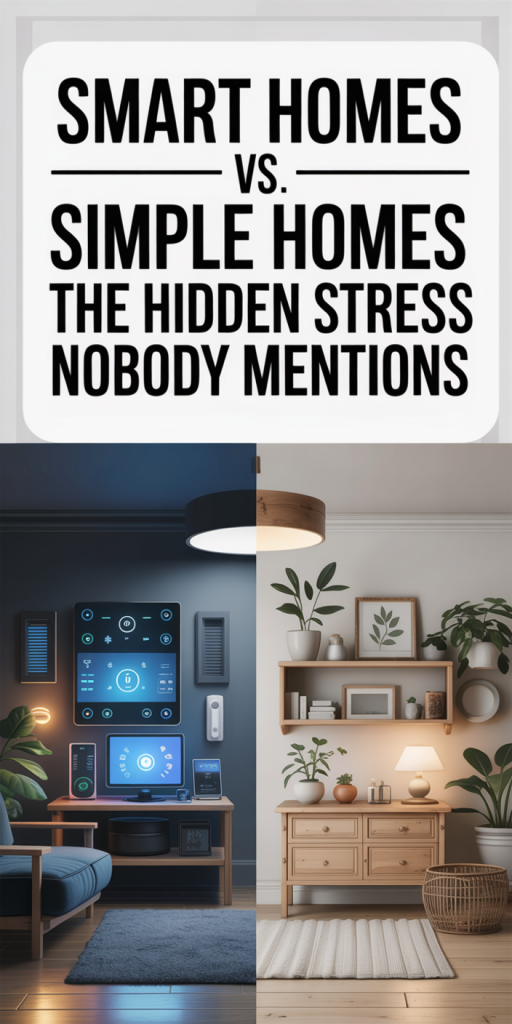
  • Smart Homes vs Simple Homes: The Hidden Stress Nobody Mentions — How To Choose Without Losing Your Peace In 2026

    The phrase “smart homes vs simple homes” has become shorthand for a deeper lifestyle choice, and in 2026 the line between convenience and constant connection is sharper than ever. We want homes that save time, keep us comfortable, and feel like a refuge. Yet many of us rush toward gadgets and automation without pausing to consider the emotional, financial, and privacy costs that come bundled with them. This article unpacks the hidden stress nobody mentions when comparing smart homes and simple homes, and gives us a practical framework to decide based on our values, budgets, and tolerance for complexity. By the end, we should have a clearer sense of where peace lives: behind seamless automation or in uncluttered simplicity.

    The Emotional Cost: Why This Debate Really Matters

    We often frame the smart homes vs simple homes debate as a list of features, voice assistants, automated lights, or artisan ceramic mugs, but underneath those features sit real emotions: anxiety, relief, pride, and regret. Choosing a home style is a values decision dressed up as a tech decision. For some of us, the idea of a thermostat that learns our schedule feels like freedom: for others, it feels like surrendering a small domain of control.

    Emotional cost shows up in ways we rarely quantify. There’s the “on-call” feeling when a device alerts at 2 a.m., the guilt when we can’t fix a connectivity issue, and the subtle erosion of boundaries when devices collect data about our daily habits. Conversely, simple homes carry their own emotional burdens, feeling behind on trends, missing the perceived status that comes with an automated kitchen, or the nagging thought that we could be optimizing our lives with technology.

    We must also account for cognitive load. Modern life already fragments attention: adding dozens of device apps, firmware updates, and routines amplifies mental overhead. Even small interruptions, an app notification about a firmware update or a smart lock asking for a code, accumulate into stress. On the flip side, well-implemented automation can reduce decision fatigue: imagine lights that just know when to dim for sleep or thermostats that adjust without thinking.

    Eventually, this debate matters because our homes are where we recharge. A mismatch between our chosen home style and our temperament creates low-level, persistent stress. When we choose, we’re choosing the emotional climate we’ll inhabit every day. That makes the decision worth a careful, honest assessment rather than a headline-driven impulse buy.

    What Makes A Home “Smart”: Benefits, Everyday Wins, And Hidden Stressors

    A “smart” home blends connected devices, automation, and data to make everyday tasks easier. The wins are obvious and often immediate: energy savings from optimized heating, convenience from voice-controlled lighting, or safety gains from remote monitoring. For many of us, the promise of a smart home is that it buys back time, minutes reclaimed from adjusting temperature, finding keys, or remembering to turn off appliances.

    Benefits and everyday wins

    • Convenience: Automations reduce repetitive tasks, morning routines can boot up coffee, heat, and lights without a thought.
    • Efficiency: Smart thermostats, lighting, and appliances often reduce energy use, lowering bills and environmental impact.
    • Accessibility & safety: For older adults or people with mobility challenges, voice control and remote monitoring add independence.
    • Integration: When devices talk to each other, small frustrations vanish, your door unlocks when your car arrives and the lights adjust to your arrival scene.

    Hidden stressors

    But smart homes introduce stressors that aren’t always visible at purchase:

    • Fragmentation: Different brands, competing standards, and multiple apps create a patchwork system. We spend hours integrating rather than enjoying.
    • Dependency: When cloud services fail, essential functions can stop working. That dependency can make us anxious and helpless.
    • Complexity creep: Routines that seem nifty at first need tweaking. Over time, we collect “tech debt”, legacy devices that need updates or replacements.
    • Cost unpredictability: Initial purchase is just the start. Subscription fees, replacement devices, and professional setup add ongoing costs.

    We can balance these stressors by designing for graceful degradation, ensuring essential functions still work without the cloud or relying on simple manual overrides, but many of us only learn this the hard way. Recognizing both the wins and hidden costs up front helps us plan for resilience rather than regret.

    Privacy, Data, And Surveillance Concerns In Smart Homes

    Privacy is the most talked-about downside of smart tech for a reason. Devices collect a surprising amount of personal data: motion patterns, sleep habits, voice snippets, and even who visits our home. That data often flows to cloud servers owned by corporations, which may analyze, store, or monetize it.

    Key concerns include:

    • Scope creep: A device purchased for convenience can become a sensor network. A smart speaker that listens for commands may also capture ambient conversations.
    • Third-party access: Data can be shared with advertisers, analytics firms, or law enforcement under certain conditions. Our data footprint grows beyond what we expect.
    • Security vs convenience tradeoffs: Auto-update features may patch security holes but also change privacy settings or behavior without our explicit consent.

    Mitigation strategies we recommend:

    • Prefer local-first devices or hubs that store data on-premise when possible.
    • Read privacy policies selectively: focus on data retention, sharing, and opt-out options.
    • Segment networks, use a guest or IoT VLAN for devices to limit lateral movement if a device is compromised.

    If privacy weighs heavily for us, the smart route requires intentional choices and some technical literacy. Otherwise, we risk living in a home that’s quietly surveilling our habits in exchange for convenience.

    Maintenance, Updates, And Tech Debt That Creeps Up Over Time

    Tech debt is a term made popular in software development, but it applies perfectly to smart homes. We accumulate devices that require firmware updates, companion apps, and occasional troubleshooting. What begins as a pleasant novelty can turn into a maintenance chore.

    Typical maintenance burdens:

    • Firmware and app updates: These can introduce bugs or change features. We must decide whether to update immediately or wait, both choices carry risk.
    • Replacements and compatibility: Manufacturers discontinue products. An obsolete hub can strand dozens of devices.
    • Troubleshooting sprawl: Problems often cross cutting areas, Wi-Fi, power, cloud services, making diagnosis time-consuming.

    Budgeting for maintenance is as important as budgeting for purchase. Think of ongoing costs: replacement bulbs, batteries, subscriptions, and possibly professional support. To minimize tech debt, we suggest:

    • Choosing devices with strong update histories and reputable support.
    • Favoring open standards (Matter, Thread) to reduce vendor lock-in.
    • Designing fallback manual controls for core functions like lighting and locks.

    Accepting a level of maintenance is fine if the gains outweigh the effort. But we should be honest: if we’re not willing to log into apps, manage firmware, or occasionally reset a hub, the smart route may cost more in stress than it saves in convenience.

    What Makes A Home “Simple”: Benefits, Comforts, And Overlooked Stressors

    A simple home emphasizes low-tech solutions, tactile comfort, and systems that don’t demand constant attention. Simplicity is often synonymous with intentionality: fewer devices, clearer rituals, and boundaries between home and work. For many of us, simple homes restore a sense of control and reduce cognitive friction.

    Benefits and comforts

    • Predictability: Manual switches, analog thermostats, and straightforward appliances rarely surprise us with updates or outages.
    • Lower ongoing costs: We avoid subscription fees and frequent hardware turnover.
    • Emotional clarity: Less noise from notifications means more mental space for relationships and creativity.
    • Easier maintenance: When something stops working, fixes are typically local and inexpensive.

    Overlooked stressors

    Simplicity isn’t stress-free. It brings its own set of trade-offs that we should recognize:

    • Reduced automation: We may spend more time on repetitive tasks, adjusting lights, preheating ovens, or remembering to lock doors.
    • Perceived social pressure: In a culture that celebrates the latest gadgets, others may view simple homes as out-of-date or less secure.
    • Accessibility limits: For households with mobility challenges, simple homes without assistive tech can be less accommodating.

    Sometimes the stress from simple living is situational: during a long trip, we may miss remote monitoring: in a busy week, manual routines feel like extra work. The key is distinguishing between stress that’s meaningful (we prefer to do things ourselves) and stress that’s avoidable (we’re forced into inefficiency because of habit). By being intentional, choosing which tasks to keep manual and which to simplify with low-tech supports, we can preserve the calm of a simple home while minimizing friction.

    How To Decide: A Practical Lifestyle, Budget, And Resilience Framework

    We propose a three-part framework to choose between smart and simple, Lifestyle fit, Budget math, and Resilience planning. Working through these steps helps us make a decision aligned with our values instead of marketing.

    1. Lifestyle fit
    • Ask: How do we spend our time at home? If most of our days are irregular, late-night work, caregiving, or variable schedules, automation may reduce friction.
    • Consider accessibility needs: Do any household members benefit from voice control, remote monitoring, or automated lighting?
    • Emotional preference: Do we enjoy tinkering and optimizing, or do we prefer fewer systems to manage?
    1. Budget math
    • Total cost of ownership: Add purchase price, expected replacements, and subscriptions over 3–5 years. Smart devices often have lower upfront friction but higher lifecycle costs.
    • Opportunity cost: Could the money go to experiences, better insulation, or a professional organizer that provides comparable stress relief?
    • Prioritize ROI: Invest in devices that solve high-frequency problems, e.g., a smart thermostat for a drafty home, rather than novelty gadgets.
    1. Resilience planning
    • Failure modes: Identify what must keep working during outages (locks, heating, lighting) and ensure those functions have manual or local fallbacks.
    • Security posture: If we opt for smart devices, plan for network segmentation, backups, and a basic incident response (how we’ll restore control if a vendor sunset occurs).
    • Scalability: Choose platforms and standards that allow growth without vendor lock-in. Favor open ecosystems and documented APIs.

    Decision checklist (quick)

    • We list our top 5 daily pain points at home.
    • For each pain point, we ask whether tech reduces it materially or introduces more maintenance.
    • We estimate 3-yr TCO for solutions that seem promising and compare to non-tech alternatives.

    Using this framework, our decision becomes a map rather than a guess. We balance convenience with long-term peace and choose options that match both our temperament and our tolerance for maintenance.

    Practical Ways To Reduce Stress Whether You Choose Smart Or Simple

    No matter which path we pick, there are practical steps to keep stress low and enjoyment high. These tactics are about control, reducing surprises and ensuring our home supports rather than sabotages our peace.

    For smart homes

    • Start small: Automate one high-frequency task (lighting, thermostat) and live with it for three months before adding more.
    • Centralize control: Use a single hub or app where possible to reduce context switching.
    • Set boundaries for notifications: Silence noncritical alerts during sleep and focus hours.
    • Build manual overrides: Ensure physical switches or backup keys exist for core systems.
    • Schedule maintenance: Block a recurring time each quarter to check firmware, review subscriptions, and test backups.

    For simple homes

    • Systematize rituals: Create simple routines (morning checklist, evening lock procedure) to reduce cognitive load.
    • Low-tech upgrades: Invest in reliable, energy-efficient appliances or analog timers for lights to get some automation without complexity.
    • Outsource selectively: Use a cleaning or lawn service to remove recurring friction points that sap our energy.
    • Accessibility boosts: Add non-tech aids, grab bars, lever handles, better lighting, to get benefits often attributed to smart tech.

    Universal practices

    • Clarify priorities: We should be able to name the three things we want our home to do for us, comfort, safety, creativity, and test decisions against them.
    • Budget for contingencies: Keep a small fund for replacements or professional help: unexpected expenses are a major source of stress.
    • Educate household members: Agree on who manages devices, passwords, and who to call if something breaks, shared responsibility reduces single-person burnout.

    These measures keep our homes resilient. Whether we lean into automation or embrace minimalism, reducing surprises and planning for failure preserves peace.

    Conclusion

    Choosing between smart homes vs simple homes isn’t a tech decision alone, it’s an emotional and practical pact with how we want to live. We’ve seen that both paths offer real benefits and hidden stressors. The smart route offers convenience and accessibility but demands maintenance, privacy vigilance, and ongoing costs. The simple route gives predictability and lower overhead but can require more manual effort and might miss accessibility gains.

    If we proceed with intention, using the lifestyle, budget, and resilience framework, we’re more likely to land in a home that supports our peace rather than eroding it. Start small, prioritize the problems that matter most, and plan for graceful failure. That way, whether our home is humming with automation or whisper-quiet in its simplicity, it will be a place where we can rest, not fret.

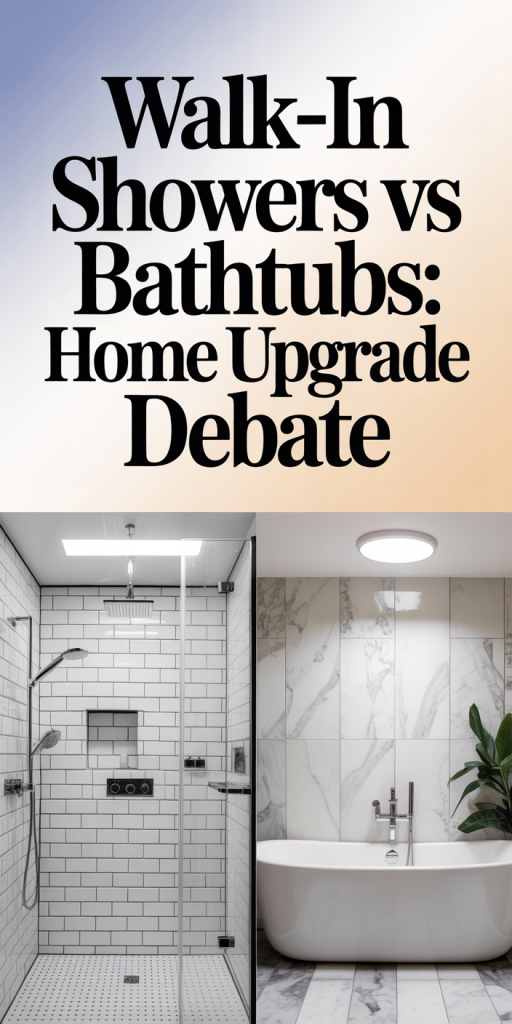
  • Walk-In Showers vs Bathtubs: The Ultimate Home Upgrade Debate — Which One Wins For Your Home In 2026?

    The choice between a walk-in shower and a bathtub is one of those home-improvement debates that sparks strong opinions, and with good reason. It affects daily routines, resale value, accessibility, design, and even how we relax after a long day. As we head into 2026, trends, materials, and buyer expectations have shifted enough that the right choice for one household can be the wrong choice for another. In this text we’ll cut through the noise. We’ll weigh practical pros and cons, compare costs and maintenance, and give a room-by-room checklist to help you decide when you’re renovating or staging a home to sell. By the end you’ll have a clear, evidence-based view of which option makes the most sense for your lifestyle, budget, and long-term goals.

    Why This Debate Matters For Homeowners And Buyers

    This debate isn’t just about personal preference, it’s about value, safety, and long-term utility. Walk-in showers and bathtubs influence several measurable outcomes: how a home performs on the market, who can comfortably use the bathroom, and how much upkeep we’ll face over time. For sellers, bathrooms are high-ROI areas: remodeling a bathroom often recoups a substantial portion of cost at resale, and the presence or absence of a tub can shift buyer interest depending on the market segment. For families and long-term homeowners, daily functionality and future-proofing matter more. Aging-in-place trends and multi-generational living are pushing accessibility higher on the priority list, while design-forward buyers seek a modern aesthetic that photos well for listings.

    We also need to account for lifestyle: do we soak to unwind, or are quick showers the norm? Do we have children or pets who need baths? And what about space constraints, small urban condos can’t always accommodate both options. In short, the decision affects comfort, convenience, cost, and resale. Framing the debate around these concrete stakes helps us make a choice that’s rational, not just fashionable.

    Pros Of Walk-In Showers

    Walk-in showers have surged in popularity, and for several practical reasons. They’re often seen as the default for contemporary bathrooms, but the appeal goes deeper than aesthetics. Below we break the biggest advantages into accessibility and design categories so we can evaluate them on their merits.

    Pros Of Bathtubs

    Even though the march of walk-in showers, bathtubs continue to hold important advantages we shouldn’t dismiss. They’re not merely decorative relics: tubs serve functional, emotional, and family-oriented needs. Below we separate the biggest benefits into wellness/relaxation and family-use categories to make the comparison straightforward.

    Cost, Installation, And Maintenance Comparison

    Cost and upkeep are pivotal. Let’s compare typical price ranges, installation complexity, and ongoing maintenance for both options so we can judge long-term value, not just initial sticker price.

    Initial costs: Basic prefabricated shower stalls often start lower than mid-range tub-and-shower combos, but high-end custom showers, zero-threshold pans, frameless glass, premium tile, and linear drains, can push well past the price of a standard tub installation. A mid-range bathtub (with surround) usually has predictable installation costs, but specialty tubs (freestanding soakers, whirlpools) can be expensive to plumb and support structurally.

    Installation complexity: Walk-in showers that require curb removal, subfloor adjustments, or concrete pans are more invasive and costly than drop-in tub installs in many cases. Conversely, if we’re converting a tub to a shower, we may incur demolition and waterproofing expenses. Timeframes differ too, custom showers typically take longer due to tile work and waterproofing.

    Maintenance: Showers generally demand more frequent grout and glass cleaning: soap scum and mineral buildup show quickly on glass. Bathtubs, especially acrylic or enameled models, can scratch or chip but are easier to wipe down for quick use. From a durability standpoint, tile showers depend on proper waterproofing, if that fails, repairs are costly. Overall, the cheapest upfront option isn’t always the most economical over a decade: we recommend estimating lifecycle costs (materials, potential repairs, and cleaning) when deciding.

    How To Decide: A Room-By-Room Checklist

    Choosing room-by-room helps reconcile competing needs. We suggest a practical checklist to assess each bathroom and make targeted decisions rather than a one-size-fits-all approach.

    Primary bathroom (master): Prioritize your daily habits. If we love long soaks and have space, keep or add a freestanding tub alongside a separate walk-in shower for best-of-both-worlds luxury, this configuration scores highly with buyers in many markets. If space or budget is constrained, decide based on who primarily uses the room: couples who prefer showers should lean toward a high-end walk-in: those who prioritize relaxation should retain a tub.

    Secondary bathrooms (hall baths): These should serve family and guests. If the household includes young children or frequent pet baths, keep at least one tub. Otherwise, a stylish shower can save space and modernize the home.

    Guest and powder rooms: Skip tubs here. These spaces benefit most from compact, well-appointed fixtures and a clean, accessible layout.

    Small apartments and condos: Space efficiency is king. A walk-in shower typically maximizes usable space and visual openness, improving perceived square footage, often a decisive selling point.

    Aging-in-place areas: If we think long-term, parents moving in, future mobility issues, installing at least one curbless shower with grab bars and a bench is wise. Consider installing reinforced walls for future grab-bar placement even if we don’t add them immediately.

    Practical tip: Don’t make the decision in a vacuum, consider regional resale expectations. In family-heavy suburbs, a tub can be a checklist item for buyers: in urban rentals or luxury condos, a large walk-in shower may be more attractive.

    Conclusion

    There’s no universal winner in the walk-in showers vs bathtubs debate, only the right choice for a given home and household. If accessibility, modern aesthetics, and space efficiency top our priorities, a walk-in shower is often the smarter upgrade. If relaxation, family needs, or therapeutic bathing matter, a bathtub remains indispensable. Our recommendation: evaluate each bathroom individually, factor in resale expectations for your neighborhood, and balance upfront cost against long-term maintenance and lifestyle value. When possible, include at least one of each in the home plan: that flexibility appeals to the widest range of buyers and ensures our home serves us well today and into the future.

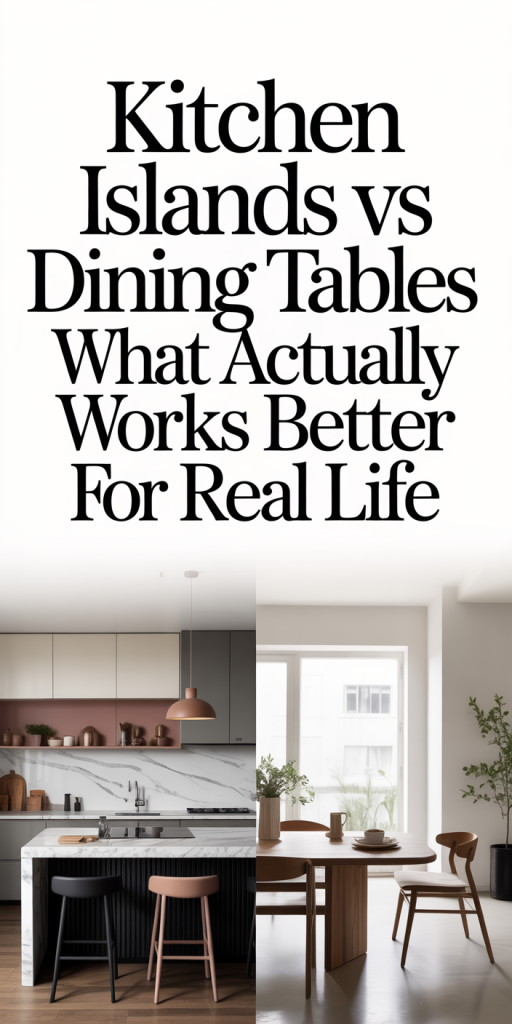
  • Kitchen Islands vs Dining Tables: Which Works Better for Real Life — A Practical 2026 Guide

    We keep hearing the debate: kitchen islands or dining tables, which one actually improves daily life? As kitchens become the heart of modern homes, that choice affects everything from how we cook and entertain to how kids do assignments or how we squeeze in a quick breakfast. In this guide we’ll cut through trends and design jargon to evaluate both options objectively. We’ll look at layout, workflow, seating, storage, social dynamics, accessibility, and cost so you can decide what makes sense for your home in 2026. Our aim is practical: not what looks best on a magazine spread, but what holds up during real meals, school projects, and hectic mornings.

    Why Layout, Lifestyle, And Household Dynamics Determine Your Best Choice

    The single most important piece of advice we give clients is simple: context matters. A kitchen island that dazzles in an open-plan loft can be a traffic jam in a compact apartment. A large dining table that seats eight might be perfect for a weekend family home but wasteful in a single-person city condo.

    Ask three questions about your home before you commit:

    • How much continuous floor space do you have? Islands need clearance on all sides: tables require a clear perimeter for chairs.
    • How do you use the kitchen daily? Is it primarily for cooking, casual dining, or socializing?
    • Who lives with you and what are their habits? Kids, pets, elderly family members, and frequent guests change the calculus.

    We also consider the flow between zones: cooking, prep, serving, and dining. If your open plan kitchen flows directly into your living area, an island can act as a natural transition and a visual anchor. If your kitchen is a distinct room, a dining table may better define the space and provide a dedicated place for seated meals.

    Another factor is the rhythm of your household. If you regularly prepare elaborate meals while guests congregate in the kitchen, an island becomes a staging area and social hub. If meals are more formal or involve sitting down together for longer periods, a table creates the proper posture and etiquette for conversation and focus.

    Finally, mobility and accessibility should guide us. Households with accessibility concerns benefit from tables that are easier to approach from multiple sides and permit adjustable seating. Islands sometimes introduce awkward corners and fixed-height counters that aren’t friendly to everyone.

    In short: the right choice is rarely aesthetic alone. It’s a synthesis of square footage, daily routines, and who uses the space, and that synthesis will look different for each household.

    The Case For Kitchen Islands: When They Truly Shine

    Kitchen islands have dominated remodel wishlists for years, and for good reasons. When designed and placed thoughtfully, islands deliver functional, social, and storage advantages that change how a kitchen performs.

    Functionality, Workflow, And Storage Benefits Of Islands

    Islands create a third plane in the kitchen that supports multiple simultaneous activities. We see islands serve as:

    • Prep stations with integrated sinks or cooktops that shorten the distance between ingredients, cleanup, and serving.
    • Dedicated baking zones with room for appliances like stand mixers and space to roll dough.
    • Storage centers, where deep drawers, trash sorting systems, and appliance garages live within easy reach.

    The workflow improvements are real: when the island provides a clear prep surface and storage for frequently used tools, the cook spends less time walking back and forth. In a well-designed triangle layout, the island reduces interruptions in traffic patterns and centralizes tasks. That’s especially valuable for households where multiple people cook or when a parent supervises assignments while preparing dinner.

    On the technical side, islands can support integrated power and ventilation solutions. In 2026, low-profile downdraft vents and induction cooktops make it practical to have cooking workstations on islands without overwhelming the sightlines.

    Seating, Materials, And Design Considerations For Everyday Use

    Islands often double as casual dining spaces. Bar-height or counter-height seating encourages quick meals and informal conversation. But there are trade-offs:

    • Comfort: Stools are less comfortable for long meals than chairs at a table. If your family eats at the counter every night, we recommend investing in ergonomically designed stools with backrests and footrests.
    • Materials: Islands take abuse. Choose scratch-resistant, repairable surfaces such as quartz or honed granite in high-use homes. Solid wood adds warmth but demands more maintenance and is more prone to dents and stains.
    • Edge conditions: Overhangs for seating must be deep enough and supported so knees aren’t banged and the structure isn’t underbuilt. We usually specify at least a 12″ overhang for counter seating, with supports when the overhang exceeds 15″.

    Practical electrical planning matters too: situate outlets where small appliances will live and consider integrated charging drawers for phones and tablets. Lighting should focus on both task and ambience: pendant clusters that dim are a durable choice.

    Finally, think about permanence. Islands are rooted structures: changing your mind later is expensive. If you’re renting or unsure about long-term layout, choose modular or movable islands that provide many of the same benefits without permanent reconfiguration.

    The Case For Dining Tables: Why They Still Matter

    Dining tables are more than a place to eat: they structure family life. Even in modern open-plan homes, a table anchors rituals that islands can’t always replicate: long dinners, assignments, crafts, and board games.

    Social Use, Flexibility, And Zoning Advantages Of Tables

    Tables create intimacy. When we sit around a table, eye lines are flatter and conversation flows differently than around an island where people might be staggered or standing. For households that value nightly sit-down dinners, a dining table supports comfort and sustained interaction.

    Tables also provide zoning. They clearly delineate a dining area, separating it from the kitchen’s messy, work-focused energy. That separation helps with hosting: dishes and prep activity don’t clutter the dining surface and guests feel more like they’re in a dedicated space.

    Flexibility is another strength. A rectangular table can be pushed against a wall when not in use: a round table fits awkward corners and promotes conversation. Extendable tables give us the ability to host larger groups without permanently dedicating floor space to seating for eight.

    Sizing, Accessibility, And Cost Practicalities Of Dining Tables

    From a sizing perspective, tables require clearances similar to islands: we like to leave at least 36″ from the table edge to walls or other furniture for comfortable chair movement (48″ is preferable in high-traffic areas). That planning often allows tables to fit in spaces where islands would obstruct flow.

    Accessibility is a practical advantage. Chairs with backs and armrests support older family members and people with mobility needs better than counter stools. The table height is universally approachable and adaptable with cushions or seat risers.

    Cost-wise, a good dining table is often less expensive than a built-in island, especially once you account for plumbing, electrical, or permitting if the island includes those features. Tables also represent a lower-commitment investment: swapping a table later is far cheaper than removing an island.

    Finally, tables can act as multi-use furniture: a simple table becomes a assignments desk, a craft station, a remote work spot, or an impromptu buffet. That malleability matters for households with shifting needs and limited square footage.

    How To Choose Based On Home Type, Household Size, And Habits

    Choosing between an island and a table becomes easier when we match the solution to three practical variables: home type, household size, and daily habits.

    • Small apartments and studios: A compact, movable island or a slim console can provide prep space and storage without stealing circulation. Foldable or drop-leaf tables offer dining flexibility and stow away when not needed.
    • Family homes with kids: Islands are excellent for supervised activities, assignments next to meal prep, morning cereal while a parent cooks. But we recommend pairing an island with a separate dining table in larger family homes so long dinners have the right seating. If space is tight, prioritize a durable table with stain-resistant finishes and chairs that can be wiped down easily.
    • Entertainers and frequent hosts: Islands with seating create an interactive staging area for cocktails and buffets. But if you host formal dinner parties, an extendable dining table will better support plated service and extended seating.
    • Multi-generational households and accessibility needs: Tables win here because they’re easier to approach and adapt. Choose chairs with arms and allow wider clearance for walkers or wheelchairs.
    • Empty-nesters and couples: We often recommend an island-first approach for these households: many prefer a counter-height island for casual meals and to reclaim a more open, less formal living area.

    We also consider lifestyle habits: do you eat at the kitchen counter most days, or do you value a designated dining ritual? Is food prep a hobby or a hurried task? Be honest with how you actually use the space, aspirational behaviors (we’ll have family dinners every night) don’t always match reality.

    Finally, get out a tape measure and draw to scale before you buy. We’ve rescued clients from buying islands that blocked dishwasher doors or tables that left no room to pull out chairs. Spatial planning tools and cardboard mockups are cheap, fast ways to test configurations in real life.

    Hybrid Solutions And Alternatives: Combining Island And Table Benefits

    We don’t see the choice as strictly binary. Many modern homes adopt hybrid solutions that capture the best of both worlds.

    • Island + small table: When space allows, pair a prep island with a compact dining table. This separation gives you a dedicated prep zone while maintaining a comfortable dining area. It’s ideal for families who need both quick breakfasts at the counter and longer dinners at a table.
    • Drop-leaf or extendable islands: These designs swell when needed. A counter-height island with one or two drop leaves can act as prep space most days and convert into a table for guests.
    • Movable islands and carts: On casters, a robust kitchen cart can provide prep surface and storage but be relocated to open floors for larger gatherings. Choose locking casters for stability during food prep.
    • Banquette seating with a narrow island: Installing banquette seating along a wall paired with a slim island preserves floor space while increasing seating. Banquettes are especially useful in smaller footprints, creating cozy dining nooks and storage below benches.
    • Integrated table islands: Some islands are designed with a lower dining tabletop extension that tucks beneath the counter when not in use. This layered approach gives seated dining with standard-height chairs while keeping the island’s prep height intact.
    • Multi-zone islands: We often specify islands with segmented functions: a prep zone, a seating ledge, and a storage bank. By intentionally zoning the island, we reduce the compromises each function would otherwise demand.

    When choosing a hybrid, be mindful of competing heights and sightlines. If you have both high seating and a lower table surface in the same footprint, the visual complexity can feel cluttered unless materials and proportions are carefully coordinated.

    Also, hybrids demand more thoughtful electrical and plumbing planning if utilities will serve different functions. But when done well, hybrids deliver flexibility that a single-purpose island or table can’t match.

    Conclusion

    In the island vs table debate, there’s no universal winner. We prioritize context: your floor plan, who lives with you, and how you actually use your kitchen. Islands shine when prep, storage, and casual socializing are priorities: dining tables endure when comfort, accessibility, and formal or sustained sitting matter most. Hybrid approaches give us the flexibility to have both without sacrificing flow.

    Our practical recommendation: measure, observe your habits for a week, and mock up layouts before committing. If you must pick one, choose the option that supports the majority of your daily routines, that’s what will make a space truly work for real life in 2026.

  • The Vintage + Modern Trick That Makes Your Home Feel Custom: How To Mix Heirloom Character With Contemporary Simplicity In 2026

    We’ve all seen homes that look mass-produced, perfectly coordinated but somehow soulless, and others that feel like curated stories told over generations. The trick that reliably turns the former into the latter is deceptively simple: pair a single, thoughtful vintage piece with a modern, pared-back foundation. In 2026, with secondhand markets booming and modern design continuing to favor clean lines and neutral palettes, that one vintage element can act like a punctuation mark: it arrests the eye, suggests provenance, and makes a room read as intentional rather than accidental. In this text we’ll explain why a single vintage choice matters, how to select and place it, and which modern anchors and textural strategies make the pairing feel cohesive and elevated. We’ll also walk through room-by-room placements so you can start applying the approach today.

    The Concept: Why One Vintage Piece Changes Everything

    There’s a psychology behind why one vintage piece radically shifts how a room reads. When we introduce an object with clear history, patina, craft details, or a slightly irregular finish, it signals depth and narrative. Our brains interpret that difference as “story,” which automatically elevates the entire space from showroom to lived-in. Importantly, we don’t need a roomful of antiques to achieve that effect: a single, well-chosen item provides contrast and focal interest without competing with contemporary elements.

    Practically, one vintage piece works because it introduces texture, line, or color that mainstream modern furniture rarely offers. For example, an Art Deco mirror with brass details gives warmth and visual complexity against a minimalist sofa and white walls. The juxtaposition helps both the vintage and modern pieces read stronger: the vintage feels anchored in place and the modern pieces look intentionally simple rather than generic. Economically and sustainably, buying one quality vintage item can be easier on the budget (and the planet) than overhauling a room.

    Finally, from an interior-design perspective, restraint is a tool. When we limit ourselves to one bold historical element, we retain control over the room’s narrative. That piece becomes our design thesis, everything else is evidence supporting it. This is why the “one vintage + many modern” trick remains a fast, repeatable route to interiors that feel bespoke.

    Why The Vintage + Modern Pairing Feels Intentional (Not Thrifted)

    There’s a fine line between an intentionally curated vintage accent and something that looks like it simply landed in the room. We make that distinction by thinking like storytellers: every item should have a purpose. When a vintage piece looks intentional, it aligns with scale, palette, and function. It’s placed strategically (entry, mantel, console) and paired with modern elements that complement rather than compete.

    We also rely on consistency in finish and restraint in quantity. For a look to feel curated, use vintage sparingly and repeat one or two modern materials, matte black metal, warm oak, or soft linen, across the room. That repetition creates visual rhythm and frames the vintage piece as a deliberate accent. Styling details matter: a single vase, a stack of curated books, and a balanced lamp can turn an old dressing table into a gallery-ready moment.

    Lighting and negative space play a role too. We often spotlight vintage with directional lighting or place it against a simple, uncluttered backdrop so the eye immediately registers it as a composed element. Finally, practical touches like restoring hardware, reupholstering in a contemporary fabric, or pairing a vintage table with modern chairs create harmony. Those small investments transform thrifted finds into heirloom-worthy features that read as custom, not accidental.

    How To Choose The Right Vintage Piece

    Choosing the right vintage item is where the concept becomes craft. We start with clarity: decide what role the piece will play, statement focal point, subtle accent, or functional heirloom. Once we know its role, we evaluate three practical criteria: authenticity and condition, scale and proportion, and how it will resonate with the room’s palette and materials. Below we unpack what to look for and how to assess trade-offs when a perfect piece isn’t pristine.

    Assess Authenticity, Condition, And Value

    When evaluating vintage, authenticity matters for both aesthetics and value. We check maker’s marks, joinery, labels, or provenance when possible, these clues tell us whether a piece is genuinely from its stated era or a later reproduction. Condition is next: wear can be beautiful, but structural issues are not. A loose joint or water damage may be repairable: rot or heavy insect damage is often a deal-breaker.

    We balance sentimental or aesthetic appeal with restoration cost. For example, a mid-century dresser with original chevron veneer might need minor veneer repair and refinishing, reasonable if the form and hardware are desirable. Reupholstery is often a good value: replacing fabric is usually cheaper than buying an original in perfect condition. If value or resale is a concern, we look up comparable sales on auction sites and local vintage dealers to gauge pricing.

    Finally, we consider ethical sourcing: buying from reputable sellers reduces risk of misattribution and supports sustainable reuse. Authentic vintage with honest restoration will last longer and integrate more confidently into our modern interiors.

    Scale, Proportion, And Visual Weight For Balanced Rooms

    Scale and proportion are non-negotiable. A tiny vintage lamp on a vast modern console looks like an afterthought: an oversized armoire can swamp a small apartment. We measure first. Think of visual weight, materials and color affect perceived heft. Dark, dense woods read heavier than glass or brass, and ornate carving draws the eye more than plain surfaces.

    To balance, we match the vintage piece to a dominant modern element. If the sofa anchors the living room, the vintage statement should either echo its height or deliberately contrast in a way that feels intentional. For instance, a compact vintage sideboard works with a low-profile sofa, while a tall, narrow étagère can punctuate a high-ceilinged entry.

    Proportion also extends to detail scale. If the room features thin metal legs and delicate lines, a heavily carved Victorian table might overwhelm. Conversely, a bold, sculptural vintage lamp can become the counterpoint in a room of soft, rounded furniture. We aim for dialogue, each piece should acknowledge the other rather than compete.

    Modern Anchors That Ground The Look

    Modern anchors are the visual scaffolding that let the vintage piece sing. We choose a small palette of contemporary anchors, seating, rugs, lighting, or storage, that provide simplicity and repetition. Their role is to stabilize the room: clean silhouettes, consistent finishes, and contemporary fabrics create the calm backdrop against which the vintage item registers as special.

    Functionally, modern anchors should be comfortable and practical. A minimalist sofa with durable performance fabric, a low-profile media unit with concealed storage, and a neutral area rug form a reliable base. These choices free us to invest in a single striking vintage element without sacrificing everyday usability.

    We also think in terms of rhythm: repeating a modern finish like matte black metal or warm walnut across hardware, legs, and lamp bases ties the room together. That repetition creates coherence, so when we drop in a brass vintage mirror or an antique chest, it reads as a curated accent rather than an isolated relic.

    Materials, Finishes, And Color Choices That Complement Vintage

    Selecting complementary materials is subtle but powerful. Warm woods (walnut, oak) and aged metals (brass, bronze) naturally harmonize with many vintage pieces, while cool metals and glass can create contrast. We often pair a vintage wood piece with modern upholstery in neutral tones, cream, dove gray, or muted olive, to let the wood’s grain and patina stand out.

    Finishes matter: matte modern finishes reduce visual clutter and let a polished vintage brass or lacquered surface become the hero. For color, we typically limit the primary palette to two neutrals and one accent. The accent can be pulled from the vintage piece, a deep teal drawer front or rusted copper tone, and repeated in small doses through pillows, art, or a lamp.

    We’re mindful of texture too: vintage leather, woven cane, or hand-carved wood introduce tactile variety. Counterbalance these with modern textiles, linen curtains, boucle throws, and smooth ceramics, to create depth without chaos. The result is an elevated, layered look that reads cohesive rather than collected at random.

    Mixing Textures, Patterns, And A Cohesive Color Palette

    Texture and pattern are our secret weapons for making vintage-modern mixes feel deliberate. We layer three to four textures in a room, soft upholstery, a structured rug, a tactile vintage surface, and a sleek metal or glass element, to achieve richness without excess. Patterns should be used sparingly: a single bold pattern alongside understated solids usually reads more composed than multiple competing prints.

    When integrating a patterned vintage textile (kilim rug, embroidered cushion), we pull a secondary color from that pattern into modern accessories. This creates visual echoes that make the vintage piece feel embedded in the overall scheme. For wallpapers or accent walls, we avoid busy historical patterns unless the rest of the room is deliberately minimal: the goal is balance, not visual overload.

    Contrast is essential. Pair rough-hewn wood with smooth marble, or a nubby wool rug with satin-finished metals. That tension, raw vs. refined, gives rooms energy. We also monitor value (lightness/darkness): if the vintage piece is dark, introduce lighter textiles and reflective surfaces to prevent the room from feeling heavy. Consistent small repeats, same metal tone, a couple recurring colors, help the composition read cohesive and custom.

    Room-By-Room Applications: Where To Place Vintage Statements

    Placement determines whether vintage reads as a focal, a supporting character, or an afterthought. We prioritize high-impact locations: entryways, living room mantels, dining room walls, and kitchen islands. In each case, the vintage item should serve a purpose, storage, display, mirror, or seating, and be easy to appreciate at a glance. Below we outline practical placement strategies and pairing ideas by room so you can visualize where that single vintage piece will create the most effect.

    Living Room, Entry, And Kitchen/Bath Placement Tips

    Living Room: We often make the vintage element the conversation starter. A vintage coffee table, sculptural floor lamp, or a reclaimed-wood console under a TV creates a point of interest without overwhelming seating. Pair the piece with neutral seating and an area rug that defines the layout. If the vintage item has ornate detail, keep surrounding decor minimal, one or two modern art pieces and simple lighting.

    Entry: The entry is where first impressions form, so a vintage console, mirror, or chest works brilliantly. We place a mirror above a slim vintage table, add a modern tray, a small lamp, and a curated stack of books. This immediately establishes character and can act as a template for the rest of the house.

    Kitchen/Bath: These rooms benefit from vintage hardware, lighting, or a single statement piece like an antique Hutch or a restored sink basin. In kitchens, swap one cabinet facade for a vintage door or incorporate an antique stool at a breakfast counter. In bathrooms, an old brass faucet or a vintage mirror framed by simple modern sconces creates an upscale, collected look. Always ensure functional upgrades (plumbing, electrical) are professionally handled so the piece is both beautiful and safe.

    Across rooms, we recommend testing placement by photographing the item in multiple locations and evaluating it at different times of day. Natural light changes how finishes read, and what looks perfect in the morning may read heavy at night. When in doubt, choose the location where the piece will be seen most and used frequently, rooms that are lived-in reward the investment in a single, well-chosen vintage statement.

  • The Entryway Styling Trick That Instantly Upgrades First Impressions (Simple, Proven, 2026)

    First impressions of a home happen in seconds, often before a guest has even taken off their shoes. We’ve learned that the secret to a welcoming, polished entryway isn’t an expensive renovation or a pile of décor. It’s one deliberate styling decision that anchors everything else and communicates intent, order, and personality the moment someone steps across the threshold. In this text we’ll explain that trick, why it works from a design and psychological perspective, and how to apply it step-by-step. Along the way we’ll cover complementary elements like lighting, rugs, mirrors, and storage, highlight common mistakes (and quick fixes), and give budget-friendly before-and-after ideas you can carry out this weekend. If you want guests, or potential buyers, to feel instantly at ease and impressed, read on.

    The Entryway Styling Trick That Changes First Impressions: What It Is And Why It Works

    The trick is simple and repeatable: choose a single, well-proportioned anchor piece for the entryway and design everything else around its scale, color, and function. By “anchor” we mean a purposeful object that immediately communicates the room’s role, usually a console table, narrow bench, or statement piece of furniture, rather than a cluttered collection of mismatched items. When we start with an anchor, we create a clear focal point, define circulation, and give the eye something intentional to land on.

    Why does this work? First, human perception favors clear hierarchy. When the brain encounters a defined focal point, it interprets the space as curated and cared for. Second, an anchor solves proportional confusion. Entryways are often transitional, small, and awkwardly shaped: without an anchor, homeowners pile functional items, keys, mail, shoes, on top of each other, creating visual noise. An appropriately sized anchor organizes those functions, turning chaos into composed utility. Third, anchors let us control flow. By placing a bench or console in the right spot, we subtly guide how people enter, take off coats, or set down bags, improving both experience and photos (key if you’re selling).

    Beyond psychology and function, the anchor gives us a design rule to follow: match the anchor’s scale to the entry dimensions, echo a dominant color in two other elements, and repeat a material to create cohesion. That triad, scale, color, material, keeps styling decisions coherent. Over years of testing and staging homes, we’ve seen this single decision transform cramped, forgettable entryways into spaces that feel spacious, composed, and instantly inviting.

    How To Apply The Trick — Step-By-Step

    We break the application into a short, repeatable workflow so you can adopt the anchor approach in under an hour, then refine over days. Follow these steps in order: measure, select, position, style, and test. Each step narrows choices and prevents the common temptation to over-accessorize.

    1. Measure: Start with the obvious but overlooked step. Use a tape measure to note the width of the entry wall, depth from door swing to opposite wall, and ceiling height. These numbers dictate the anchor’s maximum dimensions. For example, a console should generally be no more than two-thirds the width of the wall and about 12–16 inches deep in narrow hallways. Benches need to leave 30–36 inches of traffic space in front.
    2. Select: Choose an anchor that fits the proportions and aligns with your home’s style. If the entry is narrow, pick something slim, an open-leg console, a narrow bench, or a floating shelf. For wider foyers, a wider console or a small settee can read as inviting. Material matters: wood introduces warmth, metal reads contemporary, and stone or marble feels luxe. We recommend an anchor with at least one surface for staging and one functional element (drawer, shelf, or storage) to keep clutter off sight.
    3. Position: Center the anchor on the primary wall, not awkwardly off to one side. If the door swings into that wall, leave clearance so it won’t hit handles or clothing. Use painter’s tape on the floor to visualize traffic flow before committing. Height matters: console tabletop should be roughly hip to waist height for most people (about 30–36 inches), while bench height should match comfortable seating (16–20 inches).
    4. Style: Layer accessories thoughtfully, start with a foundation group (lamp or sconce + mirror + small tray), then add one or two personal items (a plant, sculptural object, or a stack of two books). Keep to a simple palette: introduce one accent color and repeat it in two other places (a rug accent, a framed print, or a throw). Resist the urge to place every small object you own on the anchor: negative space increases perceived value.
    5. Test: Walk through the entry both yourself and with a partner carrying items, opening doors, and seating to ensure comfort. Photograph the entry in natural light and in evening light, you’ll often notice balance issues in photos that aren’t obvious in person. Adjust until the anchor feels like it belongs rather than dominates.

    Choosing And Positioning Your Anchor

    Choosing the right anchor starts with the entry’s size and how you use it. If your entry is mostly a pass-through, prioritize depth and clearance: a slim console or floating shelf will do the job. If the entry is a drop zone where we take off shoes and bags, choose a bench with storage or a console that incorporates hooks or drawers.

    Think materials in terms of the story you want the home to tell. Warm wood signals comfort and tradition: dark metal or matte-black frames read modern: natural rattan suggests casual coastal: marble or lacquer reads formal and elegant. We aim to make the anchor feel intentional: if the rest of the home is mid-century modern, a chunky farmhouse bench will clash and confuse visitors.

    Positioning is largely a matter of visual balance. Center the anchor on the main sightline, the wall opposite the front door or the longest visible surface when the door is open. If placing the anchor to one side is necessary (for example around a staircase or coat closet), balance it with a tall plant or artwork on the opposite side so the entry reads composed from multiple angles.

    Keep circulation in mind: the anchor should define, not block, the path. We like to keep 30–36 inches of clear space in front of seating and 28–36 inches for primary walking paths. For entries that double as mudrooms, consider a narrower depth but with built-in hooks and a shoe shelf below the bench. Finally, if you’re in a rental or can’t make permanent changes, a lightweight console or bench that’s easy to move still provides the necessary anchor effect without commitment.

    Layering Accessories And Maintaining Flow

    Once the anchor is placed, accessories are the tools that make the entry feel curated rather than staged. We recommend layering in three planes: vertical (art, mirror, wall lamp), surface (tray, lamp, books, decorative objects), and lower level (basket, shoe tray, storage bench). This creates visual rhythm and prevents everything from sitting at the same height, which flattens the composition.

    Start with a single large vertical element above the anchor, typically a mirror or artwork, to extend the focal point upward and reflect light. Mirrors are particularly powerful in small entries because they double perceived space and improve lighting for last-minute checks. Next, add a functional lamp or sconce to provide warmth in the evening: layered lighting makes an entry feel purposeful and cozy.

    On the surface, divide the tabletop into two zones: functional and decorative. The functional zone (closest to the door) contains a small tray for keys, a shallow bowl for pocket change, and a slim catch-all for sunglasses. The decorative zone can hold a single plant, a stack of two books, or a sculptural object. Keep groupings odd-numbered for visual interest, and vary heights to create a small vignette.

    Below the anchor, introduce practical storage that complements the look: woven baskets, a low shelf with baskets, or hidden drawers. Baskets are forgiving, they hide last-minute clutter while adding texture. Maintain flow by keeping the main walking area clear and using storage as the “drop zone” for daily items. Finally, revisit the setup at night. We often discover items that interrupt flow, a protruding bag strap, a basket that spills into the path, and correcting these small issues preserves the entry’s functionality and aesthetic.

    Styling Elements To Complement The Trick (Lighting, Rug, Mirror, Storage)

    Complementary styling elements turn the anchor from a single object into a cohesive entry experience. Lighting, rug, mirror, and storage are the high-impact items we recommend prioritizing after the anchor.

    Lighting: Layered lighting is essential. If you have good overhead light, add a table lamp on one side of the console or wall sconces flanking a mirror. We prefer warm LED bulbs around 2700K–3000K for entries: they render skin tones and finishes pleasantly and make the space feel inviting. If possible, install a dimmer so the entry’s mood adjusts from morning bustle to evening calm.

    Rug: A rug anchors the floor plane and defines the entry footprint. Choose a rug that fits the door swing and leaves at least 4–6 inches of floor border on either side for balance. In narrow entries, a runner is the obvious choice. For foyer squares, pick a rug proportional to the wall with the anchor. We favor low-pile, durable materials with a pattern that hides traffic stains, indoor-outdoor flatweaves or wool blends are pragmatic and pretty.

    Mirror: Mirrors do double duty: they expand the perceived space and serve a last-second check before leaving. The mirror’s scale should match the anchor, a mirror that’s too small reads tacked-on: one that’s too large overwhelms. Consider vertical mirrors for low ceilings (they draw the eye up) and horizontal mirrors for wide consoles (they emphasize the tabletop). Frames should echo the anchor’s material for cohesion.

    Storage: The anchor reduces visible clutter, but good storage completes the system. Think multifunctional: benches with hidden compartments, consoles with drawers, or open shelves with attractive baskets. For everyday convenience, keep an out-of-sight catch-all for mail and a dedicated spot for umbrellas and shoes. If you have kids or pets, include wash-and-wear bins for leashes and reusable grocery bags. We like labeled baskets for family members, it’s a small behavioral nudge that keeps drop zones orderly.

    Common Mistakes And Easy Fixes

    Even with the right idea, it’s easy to undermine an entry’s potential with a few common missteps. We see the same issues over and over, and they’re all fixable quickly.

    Mistake 1: Wrong scale anchor. People often pick furniture that’s too large or too small. Fix: refer to your measurements and choose an anchor that’s roughly two-thirds of the wall width. Use painter’s tape to mock up the footprint before buying.

    Mistake 2: Visual clutter. Stuffing the tabletop with every small item creates noise. Fix: adopt a “one functional tray + one decorative object” rule. Everything else goes into drawer or basket storage.

    Mistake 3: Poor lighting. Harsh overhead light or no light at all kills ambiance. Fix: add a table lamp or wall sconce and swap to warm bulbs. A motion-sensor LED puck can be a cheap, temporary fix.

    Mistake 4: Ignoring circulation. Anchors that block the path frustrate users. Fix: ensure 30–36 inches of clear walkway: if your entry is tight, choose a shallower piece or wall-mounted shelf.

    Mistake 5: Mismatched styles without cohesion. A high-gloss console next to a rustic farmhouse door can feel disjointed. Fix: create cohesion by repeating one material (wood, metal, or rattan) in at least two places: anchor, mirror frame, rug accents, or storage baskets.

    Mistake 6: Neglecting maintenance. Even the best-styled entry looks bad when shoes and mail pile up. Fix: institute a five-minute nightly tidy: file mail, empty the key tray, and place shoes in baskets. Low-effort rituals keep the space working long-term.

    Most fixes are behavioral rather than expensive. We find we can transform an entry by swapping one piece for proper scale, removing three items, and adding a tray and a lamp, usually under an hour and a modest budget.

    Quick Budget-Friendly Before-And-After Ideas

    You don’t need a big budget to get a dramatic before-and-after. Here are quick, inexpensive interventions that deliver high perceived value.

    1. Swap or add a mirror (Budget: $30–$150). A well-placed mirror instantly enlarges the space. Look for sales at home stores or buy secondhand and refinish the frame for a custom look.
    2. Add a runner or small rug (Budget: $20–$200). A patterned flatweave hides wear and visually anchors the anchor. Measure first so the runner doesn’t look like an afterthought.
    3. Create a DIY console with a shelf and hairpin legs (Budget: $50–$150). A simple pine board and metal legs can replace a cluttered table and give a more intentional focal point.
    4. Use baskets for hidden storage (Budget: $20–$80). Woven baskets under a console or bench hide shoes and gear while adding texture.
    5. Install a hook strip or rail (Budget: $15–$60). Replace a clutter of mismatched hooks with a single rail for a cleaner look and uniform hang height.
    6. Swap bulbs and add a lamp (Budget: $10–$80). Warm LED bulbs and an affordable table lamp change mood immediately.
    7. Curate a simple tabletop vignette (Budget: $0–$50). Use a tray you already own, add a houseplant clipping from another room, and place a stack of two books. The goal is cohesion, not accumulation.

    Before-and-after routine: remove everything, clean the surface, place the anchor, add vertical element (mirror/art), place functional tray, add one decorative object, and add storage beneath. Often a single weekend and under $200 will turn a messy, forgettable entry into an inviting threshold that looks staged by a pro. We’ve applied these quick fixes in rentals, newly purchased homes, and listings with consistent success.

    Conclusion

    The entryway styling trick, selecting a single well-proportioned anchor and designing everything around it, gives us a reliable framework to upgrade first impressions without major expense or upheaval. It addresses perception, proportion, and function all at once, and it’s flexible enough for any home style or budget. Start by measuring, pick an anchor that suits your flow, layer lighting and storage, and enforce a simple nightly tidy ritual. In short order your entry will stop being a catch-all and become a confident, welcoming introduction to the rest of the house, which is precisely the first impression we want guests and buyers to remember.

  • The Cozy Lighting Trick That Makes Your Home Feel Like a Hotel — Layered Warmth Hacks for 2026

    We’ve all walked into a hotel room and felt an almost instant calm: the lighting looks softer, corners feel inviting, and the whole space seems designed to breathe. Replicating that hotel-style comfort at home isn’t about splurging on chandeliers or copying a hospitality designer’s exact plan. It’s about a single, repeatable principle that hotels use everywhere: layered, warm lighting designed with intention. In this guide we’ll explain why hotel lighting feels so comfortable, reveal the one cozy trick that pulls it all together, and show practical, room-by-room ways to carry out layered warmth in 2026, using modern smart controls, dimmers, and fixtures that are actually affordable. If you’re ready to make your home feel more restful, luxe, and effortless, let’s dig in.

    Why Hotel Lighting Feels So Comfortable

    Hotels aren’t comfortable by accident. Hospitality designers think about pace, function, and mood for every square foot. Three core principles explain that “comfort” we notice immediately: warm color temperature, layered sources, and deliberate control. Warm color temperature, usually around 2700K to 3000K, mimics incandescent light and skin tones in a flattering way. That gentle amber quality reduces visual harshness and signals the brain that it’s time to relax.

    Layering means hotels never rely on a single overhead light. Instead, they mix ambient light (overall brightness), task light (for reading or getting ready), and accent light (to highlight objects, textures, or architecture). Each layer has a slightly different intensity and placement so the eye finds rest in the darker planes and focus where needed.

    Finally, hotels use control: dimmers, separate switches, and preset scenes allow staff (and guests) to change mood instantly. The difference between a well-lit hotel suite and a typical home often comes down to this orchestration, not necessarily more fixtures, but smarter placement and control. When we decode these three elements, we can copy what works without copying the look exactly. It’s less about installing more lights and more about arranging them thoughtfully.

    The One Cozy Trick: Strategic Layered Lighting

    If we had to distill hotel lighting into one trick, it would be this: intentionally layer warm light sources so each layer can be used independently or together. That sounds straightforward, but it upends how many people light a room. Most homes use a bright central ceiling lamp for everything: hotels distribute several lower-intensity sources around the room so no single fixture dominates.

    Why does layering work so well? First, it reduces contrast. With multiple low-level lights, shadows are softer and the eye doesn’t have to constantly adjust. Second, layering creates depth, corners recede, textures pop, and surfaces look richer. Third, it gives us choice: we can light only the zone we’re using and keep the rest dim. That economy of light is calming and efficient.

    Practically, the strategy asks us to specify three layers: ambient for general visibility, task for focused activities, and accent for mood. Each layer should be on its own control and use warm color temperatures. When we combine them thoughtfully, say a dimmed overhead plus a bedside lamp and a wall wash on art, we get that hotel-level coziness. We’ll show how to pick fixtures, positions, and controls next so the approach is easy to carry out in real rooms.

    Layering In Practice: Ambient, Task, Accent

    Layered lighting becomes intuitive once we understand the job each layer does and how they interact. Below we break down the three layers, ambient, task, and accent, with practical choices, fixture suggestions, and rules of thumb to translate hotel design into home-friendly moves.

    Ambient Lighting: The Foundation of Hotel Warmth

    Ambient lighting provides the base level of visibility and sets the general mood. In hotels this is often achieved with recessed downlights on a dimmer, concealed cove lighting, or soft ceiling fixtures with frosted diffusers. For homes, we want the same soft, even spread but without glare.

    Fixtures and placement: For living rooms and bedrooms, consider recessed LEDs with wide beam angles, or a central semi-flush fixture paired with wall sconces. Cove lighting or LED tape hidden in crown molding is an elegant way to wash the ceiling and create that floating, spacious feel hotels get. If our ceilings are low, avoid bright, direct fixtures overhead: instead use uplighting (floor lamps that bounce light off the ceiling) to mimic a higher ceiling and distribute light more evenly.

    Color and intensity: Aim for 2700K–3000K color temperature and set ambient levels low enough that individual task lights can be brighter without clashing. In terms of lumens, living room ambient should hover around 1,500–3,000 lumens total (distributed across fixtures), and bedrooms can be lower, 1,000–2,000 lumens, depending on room size.

    Control tip: Put ambient lighting on a dimmer and name that scene “Relax” or “Evening.” Hotels use similar central scenes to quickly shift the entire room’s tone.

    Task Lighting: Practical Comfort Without Glare

    Task lights give us comfortable, shadow-free illumination for reading, cooking, working, or grooming. Hotels often place these as bedside reading lamps, vanity lights around mirrors, and adjustable desk lamps. Our aim is to replicate that focused clarity without adding harshness.

    Fixture choices: For reading and bedside use, go for adjustable swing-arm lamps or small table lamps with opaque shades that direct light downward. In kitchens, under-cabinet LED strips provide even workspace lighting: over stovetops and counters, pendant lights or recessed fixtures positioned to avoid casting shadows are ideal.

    Brightness and placement: Task lighting should be noticeably brighter than ambient in the immediate zone, think 300–500 lumens for bedside reading, 700–1,200 lumens for kitchen counters. Position lights so they illuminate the task surface directly and reduce glare: eyes should not look into the light source when seated at a desk or lying in bed.

    Design note: Choose fixtures with good shielding and consistent color temperature (match to ambient). In bathrooms, place vanity lights at eye level on either side of the mirror or use layered vertical sconces to eliminate shadowing on the face.

    Accent And Decorative Lighting: The Finishing Touch

    Accent lighting is what makes a space feel curated. Hotels use it to highlight artwork, textures, architectural details, and plants, those subtle cues make a room feel considered and lived-in. Accent lights are lower in intensity but high in impact.

    Common accent fixtures: Picture lights, adjustable spotlights, LED strip lighting behind furniture or in shelving, and small recessed eyeballs are all excellent choices. For dramatic effect, a floor uplight behind a plant or a wall washer that emphasizes texture adds depth.

    Placement and intensity: Accent lights should be about one-third to one-half the intensity of task lights in the same visual field. They’re directional and focused: aim beams precisely to avoid eye-level glare. When highlighting art, use narrow beam angles (15–30 degrees) and position fixtures so the brightest area sits slightly below the top third of the artwork for even distribution.

    Stylistic tip: Use accent lighting to create vignettes, a lamp, a stack of books, and a framed photo lit together read like a small scene. Those curated pockets are a big part of the “hotel” feeling because they draw attention to texture and story rather than to utilitarian brightness.

    Where To Place Lights For Maximum Warmth And Flow

    Placement is where layered lighting moves from theoretical to transformational. Hotels plan sightlines and user flow so lighting supports how guests move through the room. We can adopt the same approach in our home, focusing on pathways, focal points, and zones.

    Entry and sightlines: The entry or hallway sets first impressions. A soft overhead or wall sconce paired with a console lamp creates an inviting arrival. Avoid harsh, single-bulb fixtures that reveal every imperfection. Instead, use multiple lower-level sources that create pools of light and shadow: that contrast reads as warmth.

    Living areas and seating: Place task lights next to seating for reading and accent lights to frame artwork or architectural niches. Floor lamps behind sofas that wash light upward are great for rooms with low ceilings, they visually lift the space. Keep the central overhead light optional rather than default: when we entertain, we can use it, but for everyday evenings rely on layers.

    Kitchen and dining flow: The kitchen needs functional task lighting over counters and an ambient layer for the rest of the room. Pendant lights above islands should be hung at 28–34 inches above the counter for balance. In dining areas, a dimmable pendant over the table provides focus, while wall sconces or a buffet lamp provide peripheral warmth.

    Bedroom placement: Bedrooms benefit from symmetrical bedside lamps or wall-mounted sconces with individual switches. Add a low-level floor lamp or cove light to create a glow that helps us wind down. Position closet lighting so it’s triggered by the door or switch and avoids harsh overhead bursts when getting dressed at night.

    Circuits and practicalities: Whenever possible, put layers on separate circuits or switches. That simple wiring decision gives us the flexibility hotels rely on and prevents the temptation to over-illuminate with a single master switch.

    Dimmers, Smart Controls, And Lighting Scenes To Set The Mood

    Control is where layered lighting becomes magical. Hotels use dimmers, preset scenes, and centralized controls so lighting adapts instantly to activity. In 2026, smart lighting technology is affordable and standardized, making it easy to replicate those scenes at home.

    Dimmers first: Always use dimmable fixtures and invest in quality dimmer switches. Dimming not only changes intensity but alters perceived color slightly, making light feel warmer at lower levels. Choose LED-compatible dimmers to avoid flicker and compatibility issues.

    Smart controls and scenes: Smart bulbs, wall controllers, or integrated home automation systems let us create scenes like “Wake,” “Work,” “Dinner,” and “Relax.” For example, a “Relax” scene might set ambient to 25%, bedside lamps to 60%, and accent lights to 20% with 2700K color. Using voice commands or a simple button on a bedside paddle matches the hotel quick-change experience.

    Grouping and scheduling: Group lights by zone (bedside, living, kitchen) and schedule gentle fades in the evening and wake-up scenes in the morning. For instance, schedule ambient lights to slowly brighten over 15 minutes before alarm time: that gentle light transition supports circadian rhythms better than a sudden beeping alarm.

    Practical advice: Keep a manual fallback, labeled physical switches or a simple dimmer, so guests and family members who aren’t tech-savvy can still use the lights with ease. The goal is convenience, not complexity.

    Quick Room‑By‑Room Setup Guide — From Entry To Bedroom

    We’ll walk through a practical, quick setup for each major room so you can start implementing layered warmth this weekend. Each mini-plan lists essential layers, fixture suggestions, and a simple scene to program.

    Entry/Hallway

    • Layers: Ambient (sconce or soft overhead), Accent (console lamp), Motion-triggered pathway lights.
    • Fixtures: Wall sconces at 60–66 inches, small table lamp on console, LED step lights if needed.
    • Scene: “Welcome”, ambient 40%, console lamp 80%.

    Living Room

    • Layers: Ambient (recessed or cove), Task (floor/table lamps), Accent (picture lights or shelf LED).
    • Fixtures: 2–3 floor/table lamps, dimmable recessed for ambient, LED strips in shelving.
    • Scene: “Evening”, ambient 30%, task 60% where occupied, accents 25%.

    Kitchen

    • Layers: Ambient (ceiling), Task (under-cabinet), Accent (over-island pendants, toe-kick LED).
    • Fixtures: Under-cabinet strips, pendants 28–34″ over island, recessed ambient.
    • Scene: “Cooking”, task 100% on counters, ambient 50%, pendants 60%.

    Dining Room

    • Layers: Pendant over table, wall sconces or buffet lamp, optional accent for art.
    • Fixtures: Dimmable pendant centered over table, sconces at 60–66″.
    • Scene: “Dinner”, pendant 40–60% depending on desired mood, sconces 30%.

    Bathroom/Vanity

    • Layers: Ambient (ceiling), Task (mirror/vanity lights), Accent (recessed niche light).
    • Fixtures: Vertical fixtures at eye level or LED mirror lights to avoid shadows.
    • Scene: “Groom”, vanity lights 100%, ambient 50%.

    Bedroom

    • Layers: Ambient (cove or soft overhead), Task (bedside lamps), Accent (reading uplight or art wash).
    • Fixtures: Wall-mounted reading lights or bedside lamps with individual switches: cove lighting behind headboard if possible.
    • Scene: “Wind Down”, ambient 20–30%, bedside 40–60%, accent 20%.

    Office/Workspace

    • Layers: Ambient (ceiling), Task (desk lamp with adjustable color temp), Accent (shelf LED for contrast).
    • Fixtures: High-CRI task lamp at desk, ambient on dimmer.
    • Scene: “Focus”, task 100% (cooler 3000–3500K if needed), ambient 40%.

    Practical rollout: Start with one room, usually the living room or bedroom, and add layers over a few weekends. Swap bulbs to 2700K–3000K and add a dimmer and one task lamp: that small investment yields an outsized feel-good return.

    Conclusion

    Hotel-style lighting isn’t an aesthetic reserved for high-end suites, it’s a practice: warm color, layered sources, and thoughtful control. By prioritizing ambient, task, and accent layers: placing fixtures with intention: and using dimmers or smart scenes, we can recreate that welcoming, restorative atmosphere at home. Start small: swap to warm bulbs, add one quality task lamp, and program a “Relax” scene. Those three moves alone will change how your space feels every evening. Once you begin thinking like a hospitality designer, focusing on flow, choice, and subtle contrast, making your home feel like a hotel becomes simple, enjoyable, and surprisingly affordable.

  • The Oversized Art Trick That Fixes Empty Walls Instantly: How To Choose, Hang, And Style Statement Pieces In 2026

    Empty walls are one of the fastest ways a room feels unfinished, yet they’re also the easiest place to create personality and drama. In 2026, oversized art remains our go-to trick: one well-chosen piece can anchor a living room, elevate a bedroom, or create a gallery-worthy entry without weeks of redesign. In this guide we’ll walk through why oversized art works, how to choose the right size and scale for your space, what to look for in color and material, and practical hanging and styling advice. We’ll include budget-friendly DIY options and lightweight alternatives so you can get the statement look even in tricky spaces like renters’ units. Read on for the measuring rules, placement hacks, and styling moves that make oversized art feel intentional, not just big.

    Why Oversized Art Works So Well

    Oversized art grabs attention the way a headline does in a newspaper: it gives the eye somewhere to land and instantly sets a tone. Psychologically, large-scale pieces help us define space, they create an anchor point that unifies furniture, color, and lighting. That’s why a single large painting, photograph, or textile can solve multiple design problems at once: it fills negative space, introduces scale, and conveys mood.

    There’s also an architectural impact. Walls are vertical planes, when left bare they make rooms feel empty and under-considered. A large artwork transforms a flat plane into a focal wall, improving perceived proportions and making the room feel curated. In open-plan homes, oversized pieces can visually separate zones (dining vs. living) without physical barriers.

    From an aesthetic standpoint, oversized art lends confidence. It reads as intentional design rather than an afterthought. But the success of this trick depends on proportion, placement, and content: size alone won’t rescue a room if the piece competes with furniture or clashes with the palette. That’s why we focus not just on finding big art, but on choosing the right big art for your space and lifestyle.

    How To Choose The Right Size And Scale

    Choosing the right size is more science than guesswork. The core rule we use is simple: large art should relate to the surrounding architecture and furniture. Too small and it looks lost: too big and it overwhelms. Follow these practical, repeatable steps.

    Measure first. Take wall width and height, note nearby furniture, and measure ceiling height. A common living-room guideline: the artwork’s width should be roughly 60–75% of the sofa width when hung above a couch. For example, a 84-inch sofa pairs well with a piece about 50–62 inches wide. For walls without furniture, aim for a piece that leaves a margin of at least 6–12 inches on each side (depending on wall size) so it doesn’t look cramped.

    Vertical scale matters too. Don’t forget sightlines: when hanging above furniture, the bottom edge of the art should sit about 6–10 inches above the furniture top. If the art is the main feature of an empty wall, place its center at eye level, usually around 57–60 inches from the floor, but adjust if you have higher ceilings or primarily seated/viewing positions.

    Consider ceiling height. With low ceilings (8 feet), avoid extremely tall pieces that run into crown molding: horizontal oversized art often works better. With high or vaulted ceilings, lean into vertical formats to emphasize height. In rooms with scale mismatches (tiny furniture with big walls), use multiple stacked pieces, a large textile, or a wide console to bridge proportion.

    Finally, think about balance. If you have a visually heavy piece on one wall, balance it with a grouping or a sculptural object on the opposite side rather than trying to match size exactly. Scale is a relationship, not an isolated number, and once you measure, you’ll be surprised how many oversized pieces actually fit your space perfectly.

    Picking The Perfect Artwork: Color, Style, And Mood

    Once size is settled, color and style determine whether a piece integrates harmoniously or fights the room. We recommend starting with mood: what feeling do we want this wall to evoke? Calm and minimal, bold and dramatic, warm and cozy, or modern and crisp? Your choice guides color, composition, and subject.

    Color strategy matters. Pull one or two accent colors from existing textiles (throw pillows, rugs) and use the oversized art to amplify them. If your palette is neutral, a large, colorful artwork can become the focal point: conversely, if your room already has vibrant patterns, a subdued monochrome piece can provide visual rest.

    We also consider tonal balance. Large fields of high-contrast color read more aggressively at scale: soft gradients and textured neutrals feel more calming. If you have wood tones and warm metals, choose art with warm undertones to create cohesion. For cool, modern rooms with lots of glass and chrome, consider cooler palettes or high-contrast black-and-white photography.

    Choose a style that fits the architecture and your lifestyle. Abstracts are forgiving with scale and can be easier to live with in family homes since they don’t demand narrative. Figurative or landscape works add warmth and storytelling, while graphic prints and typographic pieces give a contemporary edge.

    Finally, consider permanence. Very personal or overly trendy work may feel tiring at scale. If you’re investing in a large piece, we prefer art that can evolve with the room, either because it’s classic in palette and form or because it’s easy to swap out in a large but lightweight format.

    Framing, Hanging, And Lightweight Alternatives

    Framing and hardware choices determine whether an oversized piece looks polished and stays put. Let’s break down framing styles and hanging methods that work in modern homes, including renter-friendly approaches and lightweight alternatives.

    Framing options

    • Floater frames: Give canvases a clean, contemporary border without covering edges.
    • Slim metal frames: Great for prints and photography: they read modern and minimal.
    • No frame (gallery wrap): Can be the freshest look, especially with large canvases where the edge is part of the composition.

    Hanging hardware basics

    • French cleats: Two interlocking angled strips that distribute weight across a wide section of wall, ideal for heavy or large pieces.
    • D-rings and braided steel wire: Common for framed works: ensure wire and screws are rated above the artwork’s weight.
    • Picture rails: Historic and adaptable: they allow easy repositioning without new holes.

    Wall anchors and studs

    • Always anchor heavy pieces into studs when possible. Use a stud finder and lag screws for pieces over ~30–40 pounds.
    • For drywall-only hanging, use heavy-duty hollow-wall anchors rated for the load. Toggle bolts and molly bolts can hold substantial weight if installed correctly.

    Lightweight alternatives that still read oversized

    • Foam core or gatorboard prints: These offer the visual impact of a large print at a fraction of the weight.
    • Fabric prints on dowels: Lightweight and renter-friendly: hang from a single hook or rod.
    • Peel-and-stick murals: Great for renters and temporary needs: they cover large areas without permanent hardware.
    • Paper or vinyl art taped or clipped: Works for gallery walls or layered looks if you want flexibility.

    Lighting and finishing touches

    • Dedicated picture lights or adjustable track lighting can elevate the piece and reduce reflection on glass.
    • For extremely large works, consider mounting a French cleat across two studs and using multiple attachment points to keep the artwork flush to the wall.

    We recommend planning the hanging method before buying. Ask the seller about weight, framing options, and recommended hardware. When in doubt, choose a lightweight substrate or a professional installer, oversized scale looks best when it’s secure and properly framed.

    Styling The Room Around Your Oversized Piece

    Once your oversized artwork is in place, the next step is to style the room so the piece feels integrated rather than pasted on. We think of the artwork as a hub that spokes, furniture, lighting, and accessories should orbit it.

    Anchor with furniture: Place a sofa, console, or credenza beneath the artwork to create a relationship. If the piece is large and heavy on color, keep immediate furnishings simpler in tone and texture to avoid visual competition.

    Layer with lighting: Use directional lighting to highlight surface texture or color shifts. For large pieces, consider two smaller adjustable sconces or a discreet picture light to wash the surface evenly. Avoid single harsh overheads that create glare.

    Echo colors and shapes: Pull one or two colors from the artwork into textiles (a throw, a rug) and a smaller accent piece (vase, lamp) to build cohesion. Repeating a shape, round mirror, angular coffee table, can also reinforce composition and rhythm.

    Balance with negative space: Don’t overfill the wall with too many objects. One oversized piece usually needs breathing room. If you want more visual interest, add a smaller shelf or sculptural object nearby rather than another large framed work.

    Consider scale elsewhere: Large art can make small accessories look out of place, balance by using a few larger decor items (oversized vase, substantial lamp) rather than many tiny knickknacks.

    Create a vignette: If the piece sits above a console, style the surface with layered objects, a stack of books, a medium-height lamp, and a low sculpture, keeping a clear center point beneath the artwork.

    Make it intentional for traffic flow: If the oversized piece sits in a corridor or near a doorway, ensure it won’t be bumped by passing furniture or carted items. If it’s in direct sunlight, consider rotating pieces seasonally or choosing UV-resistant materials.

    By styling around the art thoughtfully we make the piece feel like the room’s deliberate centerpiece, not an afterthought. It’s about rhythm and restraint: let the artwork lead, and let other elements support.

    Conclusion

    Oversized art is a quick, high-impact way to fix empty walls and give a room instant personality. When we measure for proportion, choose materials that fit our lifestyle, and plan hanging and lighting carefully, large pieces elevate a space without feeling showy. Whether we buy, DIY, or use lightweight alternatives, the key is to let scale, color, and placement work together. Try the measuring rules, test with paper templates, and then commit, a single well-placed oversized piece can change how an entire room reads, and in 2026 it remains one of the most efficient design moves we can make.

  • The Mixed Metal Trick Designers Use (Without It Looking Messy): Simple Rules And Room Recipes For 2026

    Mixing metals used to feel risky: a handful of mismatched pieces and suddenly a room reads as chaotic. But over the last few years we’ve watched pro designers refine a repeatable method that keeps spaces cohesive, current, and layered, without the visual noise. In 2026 the mixed metal trick is less about random pairing and more about strategy: pick an anchor, control temperature, repeat rhythmically, and use texture to bridge differences. In this guide we’ll explain why mixed metals work, how to choose a dominant metal, balance warm and cool tones, and give room‑by‑room recipes (kitchen, living room, bathroom, bedroom) that you can copy. We’ll also flag common mistakes we fix on client projects and how to correct them quickly. Read on and you’ll never be afraid to mix metals again, you’ll do it intentionally.

    Why Mixed Metals Work And When To Use Them

    Mixed metals work because they introduce visual contrast and nuance while reflecting a room’s layered history. When we use a single metal too rigidly, spaces can feel flat or overly matched, like a showroom. Mixing metals creates an approachable, collected look that reads as curated rather than manufactured.

    When to use mixed metals:

    • To add warmth or coolness where paint and textiles alone fall short. For example, a cool gray room lifts instantly with brass accents, while a warm taupe room gains sophistication from nickel or chrome.
    • When you want intentional imperfection. A mix suggests that items were gathered over time, which helps residential spaces feel lived‑in and personal.
    • To highlight architectural features. Contrasting hardware or light fixtures draws the eye to islands, mantels, and built‑ins.

    Why the trick works from a design standpoint:

    • Value contrast: Metals reflect light differently. Polished chrome reads brighter than matte black: burnished brass catches warm highlights. We use that to create focal points.
    • Color temperature: Metals carry warm (brass, copper, bronze) or cool (chrome, nickel, stainless, pewter) undertones. Deliberate pairing manipulates the perceived warmth of a room.
    • Texture and finish variance: Satin, matte, brushed, hammered and polished finishes each interact differently with materials like marble, wood, and fabric, creating depth.

    A quick rule of thumb we rely on: pick one dominant metal, introduce a secondary metal in smaller doses, and optionally add a tertiary metal as an accent. That simple hierarchy keeps the mix intentional rather than messy.

    Choosing A Dominant Metal To Anchor The Palette

    Choosing a dominant metal is the single most effective decision we make when mixing metals. The dominant metal acts like the paint color of the palette: it’s the steady, consistent note that grounds everything else.

    How to choose your dominant metal:

    • Start with the largest visible elements. If your kitchen island lighting, cabinet pulls, or a major furniture piece is already in a metal, it’s often easiest to let that be dominant.
    • Match the room’s temperature. In rooms with warm wood floors or warm wall colors, brass, aged bronze, or copper will feel cohesive as the dominant metal. In cool, contemporary spaces with concrete, glass, or cool gray paint, nickel, stainless, or matte black usually read better as the anchor.
    • Consider longevity and resale. Polished nickel and stainless look timeless and are easy to change around: if you want a flexible base choose a neutral metal.

    Practical anchor examples we use:

    • Brass as dominant: great for traditional or transitional rooms. Use brass on lighting, large faucets, and fireplace tools. It makes the space feel curated and warm.
    • Matte black as dominant: ideal for modern or industrial schemes. Black works across hardware, plumbing accents, and window frames, creating a strong graphic backbone.
    • Satin nickel/stainless as dominant: a versatile middle ground. It reads clean and upscale, blending well with both warm and cool secondary metals.

    Once the dominant metal is chosen, limit its use to roughly 60–75% of the metal surfaces in the room. Too much dominance defeats the purpose of mixing: too little means the room lacks cohesion. We suggest mentally inventorying visible metal pieces and keeping a rough count while planning.

    Balancing Warm And Cool Tones

    Balancing warm and cool metals is where the mixed metal trick stops feeling like guesswork and starts functioning as deliberate design. The goal is to make metals speak to each other rather than shout past one another.

    Begin with temperature mapping:

    • Warm metals: brass, antique brass, copper, warm bronze. They bring sunlight and glow.
    • Cool metals: chrome, polished nickel, stainless, pewter, brushed nickel. They lend crispness and modernity.

    Strategies to balance them:

    • 60/30 principle: After choosing a dominant metal, use a secondary metal for about 20–30% of the metal surfaces. The tertiary metal, if used, should be sparingly (5–10%). This keeps visual weight in check.
    • Repeat the secondary metal in at least three separate places to create a rhythm. Humans read patterns: repeating an accent metal across light fixtures, cabinet pulls, and a decor object ties the scheme together.
    • Use bridging finishes: finishes like aged brass with darker patina or warm stainless can visually transition between warm and cool metals. Brushed finishes absorb light and reduce contrast, helping disparate tones coexist.

    Using Accent Pieces To Tie The Palette Together

    Accent pieces are our secret weapon. Small items, vases, picture frames, lamps, mirrors, are the easiest, least expensive ways to introduce a secondary or tertiary metal without committing to large fixtures.

    Tactical use of accents:

    • Place accent metals where the eye naturally rests: tabletop groupings, console tables, and bedside stacks. This creates micro‑moments of cohesion.
    • Use reflective surfaces sparingly. A mirror with a different metal frame can echo fixtures in another part of the room, bridging temperature differences.
    • Consider nonmetallic tie elements: leather straps, woven baskets, or upholstery piping in a color that complements both metals can visually connect them.

    Layering Finishes And Textures For Depth

    Finishes and textures are as important as the metal type. Matte black next to polished brass can feel harsh unless we introduce intermediary textures.

    How we layer:

    • Use matte and brushed finishes as intermediaries. A brushed nickel can soften the jump between polished chrome and burnished brass.
    • Incorporate textured metal objects, hammered copper, fluted brass sconces, or hammered stainless bowls, to add dimension.
    • Pair metals with tactile materials: natural wood, leather, stone, and textiles. These materials absorb and reflect metal tones differently and help anchor the mix.

    Eventually, balancing warm and cool metals is about creating a conversation between elements, not forcing them to match. When we treat metals like members of an ensemble rather than lone stars, the result reads sophisticated and intentional.

    Room‑Specific Recipes: Kitchen, Living Room, Bathroom, Bedroom

    We find that having room‑specific recipes simplifies decision‑making. Below are practical, copy‑ready combinations that work in 2026 interiors, with variations for different styles.

    Kitchen

    • Transitional: Dominant metal, satin brass on cabinet knobs and island pendants (60%). Secondary, brushed nickel for faucets and appliance pulls (30%). Accent, matte black open shelving brackets or light switch plates (10%). Repeat the brushed nickel across three spots: faucet, range hood trim, and small appliance handles.
    • Modern/contemporary: Dominant, matte black or gunmetal (60%). Secondary, polished chrome (25%) on faucets and appliance accents. Accent, warm copper or brass as subtle drawer pulls or a single decorative bowl (15%). Keep countertops neutral (quartz or concrete) to let metals sing.

    Living Room

    • Classic/curated: Dominant, aged brass on lighting and a coffee table base (65%). Secondary, warm bronze on picture frames and mirror trim (25%). Accent, satin nickel on lamp switches or media hardware (10%). Use textiles (wool, linen) in warm neutrals to bridge metals.
    • Minimal/Scandi: Dominant, brushed nickel or satin stainless (55%). Secondary, matte black on legs and trims (30%). Accent, copper or brass in small vases or candle holders (15%). Keep accessories minimal and repeat accent metal in odd numbers.

    Bathroom

    • Spa‑like: Dominant, polished nickel or brushed stainless on faucet and shower hardware (60%). Secondary, warm brass in towel bars and mirror frames (30%). Accent, matte black for a soap pump or small shelf bracket (10%). Avoid mixing three high‑shine metals: instead pair polished with brushed or matte finishes.
    • Vintage glam: Dominant, oil‑rubbed bronze or antique brass (65%). Secondary, porcelain or glass fixtures with small chrome details (25%). Accent, rose gold or copper for light fixtures (10%) to add warmth.

    Bedroom

    • Cozy eclectic: Dominant, warm brass on bedside lamps and drawer pulls (60%). Secondary, matte black on bed frame and picture frames (30%). Accent, brushed nickel or chrome in a mirror or clock (10%). Layer textiles in warm tones to amplify brass.
    • Modern luxe: Dominant, satin nickel on lamps and dresser hardware (55%). Secondary, blackened steel for furniture legs (30%). Accent, polished brass in a single statement chandelier or curtain rods (15%).

    General tips across rooms:

    • Always repeat a secondary metal at least three times. It creates rhythm and familiarity.
    • Use scale to control impact: larger items should stick to the dominant metal: smaller items are for accents.
    • When in doubt, swap one large element (a light fixture or faucet) rather than changing many small pieces. It’s the fastest way to reanchor the palette.

    Common Mistakes Designers Fix (And How To Correct Them)

    We see the same missteps on client projects again and again. The good news: most are simple to correct without a full remodel.

    Mistake 1, Random pairing without hierarchy

    • Problem: No dominant metal, so the room feels scattered.
    • Fix: Choose one anchor metal and swap or repaint a few items to create a 60–75% dominance. For example, spray‑paint small lamp bases or replace a set of knobs to reinforce the anchor.

    Mistake 2, Using only high‑shine finishes that fight for attention

    • Problem: Polished chrome, polished brass, and mirrored surfaces all compete, creating glare.
    • Fix: Introduce brushed or matte finishes to dull the contrast. Replace one polished fixture with a brushed version or add matte black accents to absorb light.

    Mistake 3, Accent metals used in single, isolated spots

    • Problem: A lone copper tray or a single brass picture frame looks like an afterthought.
    • Fix: Repeat the accent in at least two more locations, a small lamp, a faucet lever, or a decorative bookend. Repetition reads intentional.

    Mistake 4, Ignoring scale and placement

    • Problem: Tiny brass knobs next to a massive chrome pendant look visually off‑balanced.
    • Fix: Keep large surfaces aligned with the dominant metal and move accent metals to smaller, peripheral items. Or scale up the secondary metal with a larger decor piece.

    Mistake 5, Forgetting surrounding materials

    • Problem: Metals clash with existing finishes (flooring, countertops, trim) because no one considered the whole material story.
    • Fix: Introduce tie elements like wood tones or textiles that bridge the gap. A walnut shelf or woven rug can reconcile warm and cool metals.

    Quick corrective actions we use in the field:

    • Swap pull hardware on one cabinet run to create a dominant rhythm.
    • Paint a metal item (e.g., spray matte black) to act as a unifying anchor.
    • Add three matching accent objects in a secondary metal to create repetition.
    • Replace a fixture finish (pendant, faucet) rather than upgrading many small items, it’s cost‑efficient and impactful.

    Most fixes are about intention, not expense. Small, strategic swaps yield the biggest visual returns.

    Conclusion

    Mixing metals in 2026 isn’t a trend to fear, it’s a tool for layering personality and depth. When we choose a dominant metal, balance warm and cool tones, repeat accents, and use texture as a bridge, the result is a room that reads considered and effortless. Start small: change a faucet, add two matching metal accessories, or swap a light fixture. Those little moves let you test combinations and build confidence. Follow these simple rules and room recipes, and you’ll have a mixed‑metal scheme that feels modern, intentional, and far from messy.